
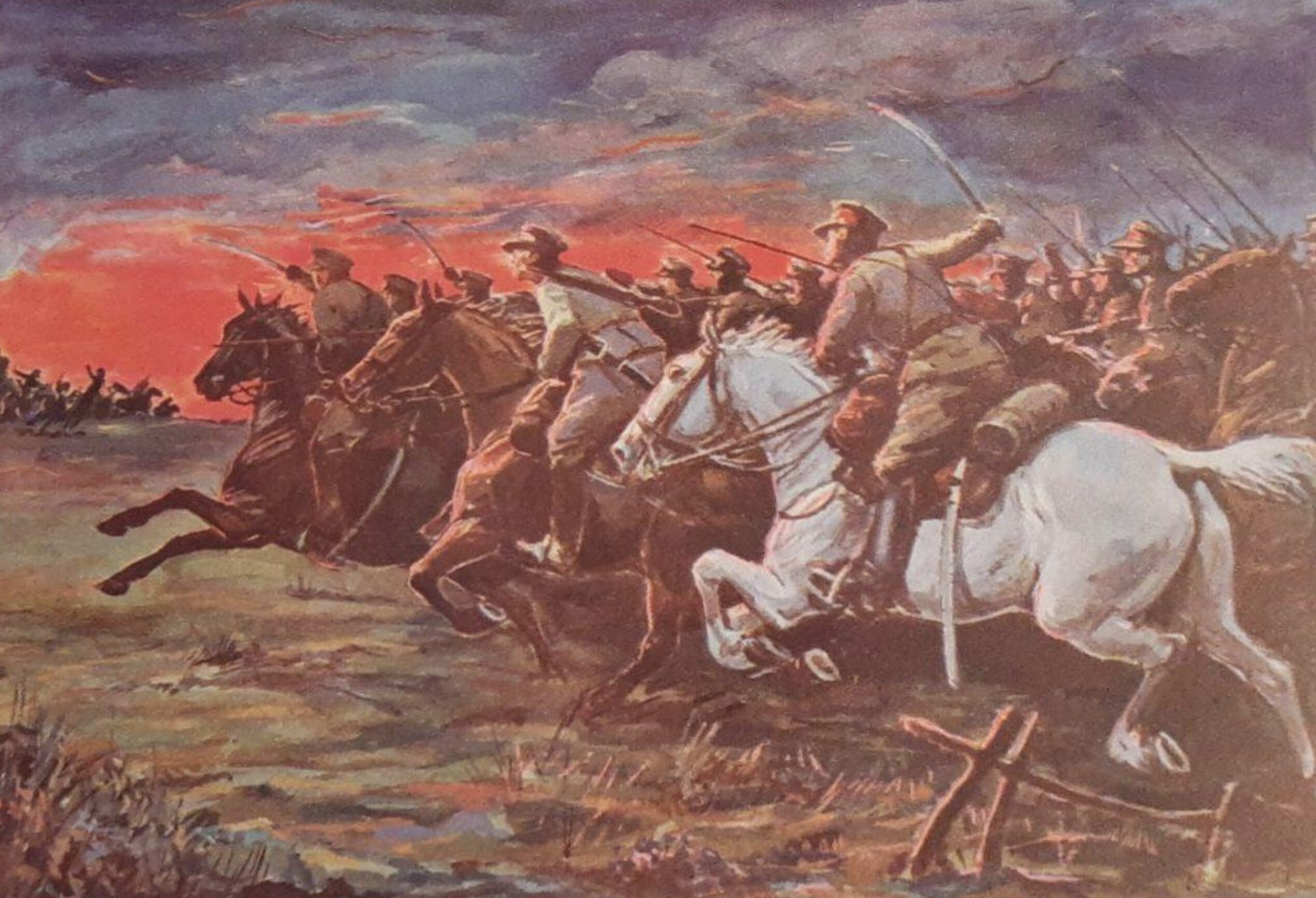
Europe has already learned to kill with machine guns and from the air. However, in the East, thousands of people still believed in the speed of horses and sabers.
At dawn on 31 August 1920, the future looked strangely old-fashioned on the fields near Komarów. Beyond the low hills came the sound of bugles, and then the ground began to tremble beneath thousands of hooves. Europe already knew the tank, the military aircraft and the industrial slaughterhouse of trench warfare. Yet east of Zamość, the outcome of a major military operation was still about to be decided by men charging toward the enemy with sabres in their hands.
This was no costumed epilogue to the 19th century. The First Cavalry Army of Bolshevik commander Semyon Budyonny was one of the Red Army's most dangerous formations, and Colonel Juliusz Rómmel's Polish 1st Cavalry Division stood across its line of retreat. One side was trying to find a way out of the encirclement; the other was trying to seal it shut. The battle that would later be described as the last great clash of cavalry was, in fact, something even more interesting - a moment when the old way of war showed that it was not yet dead, even though it already knew its time was running out.
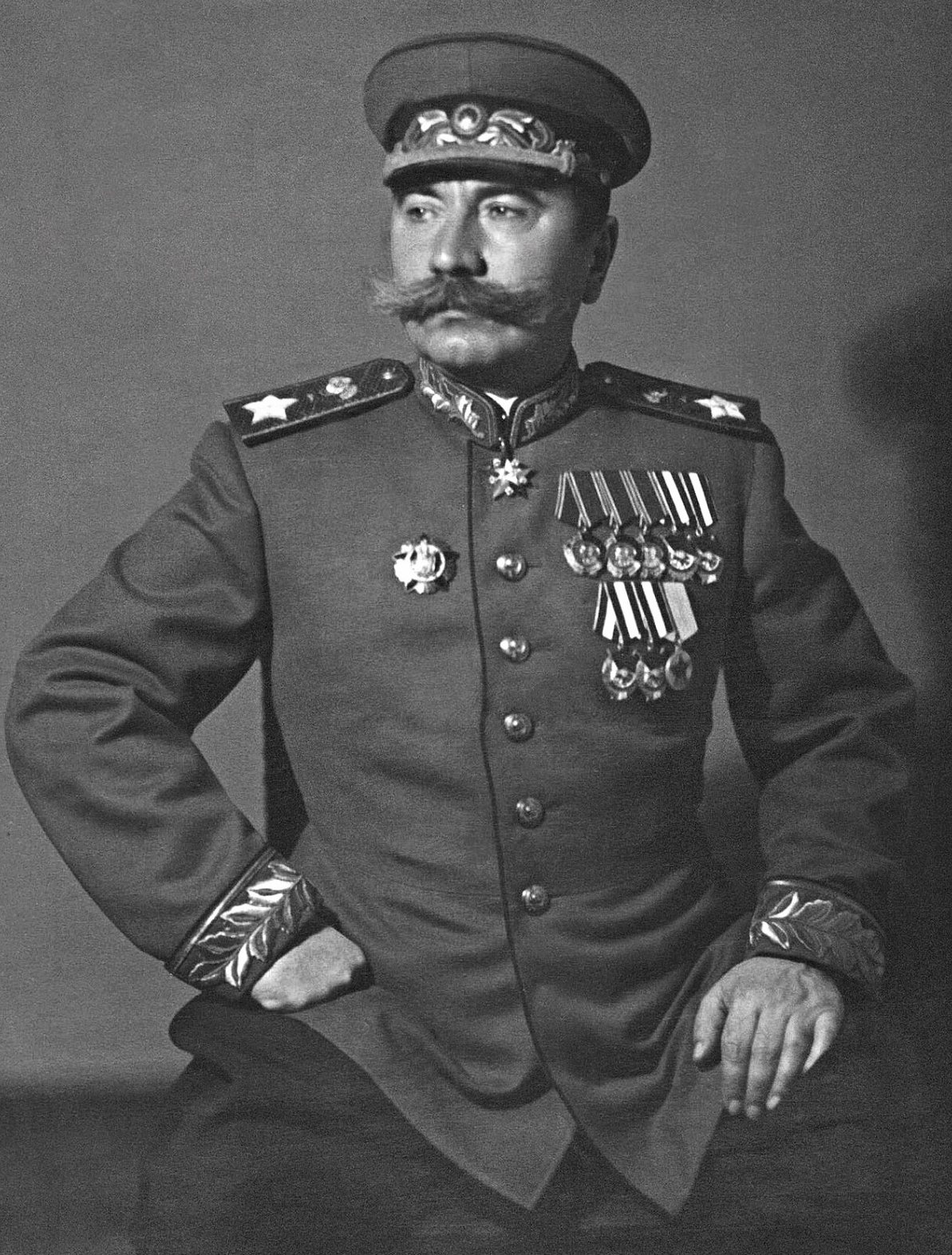
The Polish-Soviet War was fought across a landscape where the borders of collapsed empires were still being drawn by force of arms. The restored Polish state was trying to secure a broad eastern buffer, while the Bolsheviks believed the revolution could be carried westward toward Germany. In mid-August, the main Soviet offensive had been shattered outside Warsaw (something we wrote about recently; see: The Gates Where Revolution Did Not Pass: Warsaw 1920 and the Few Days that Changed the Political Destiny of Europe), but the war in the south was not over. Budyonny's army was still threatening Lviv before turning toward Zamość in an attempt to endanger the Polish rear.
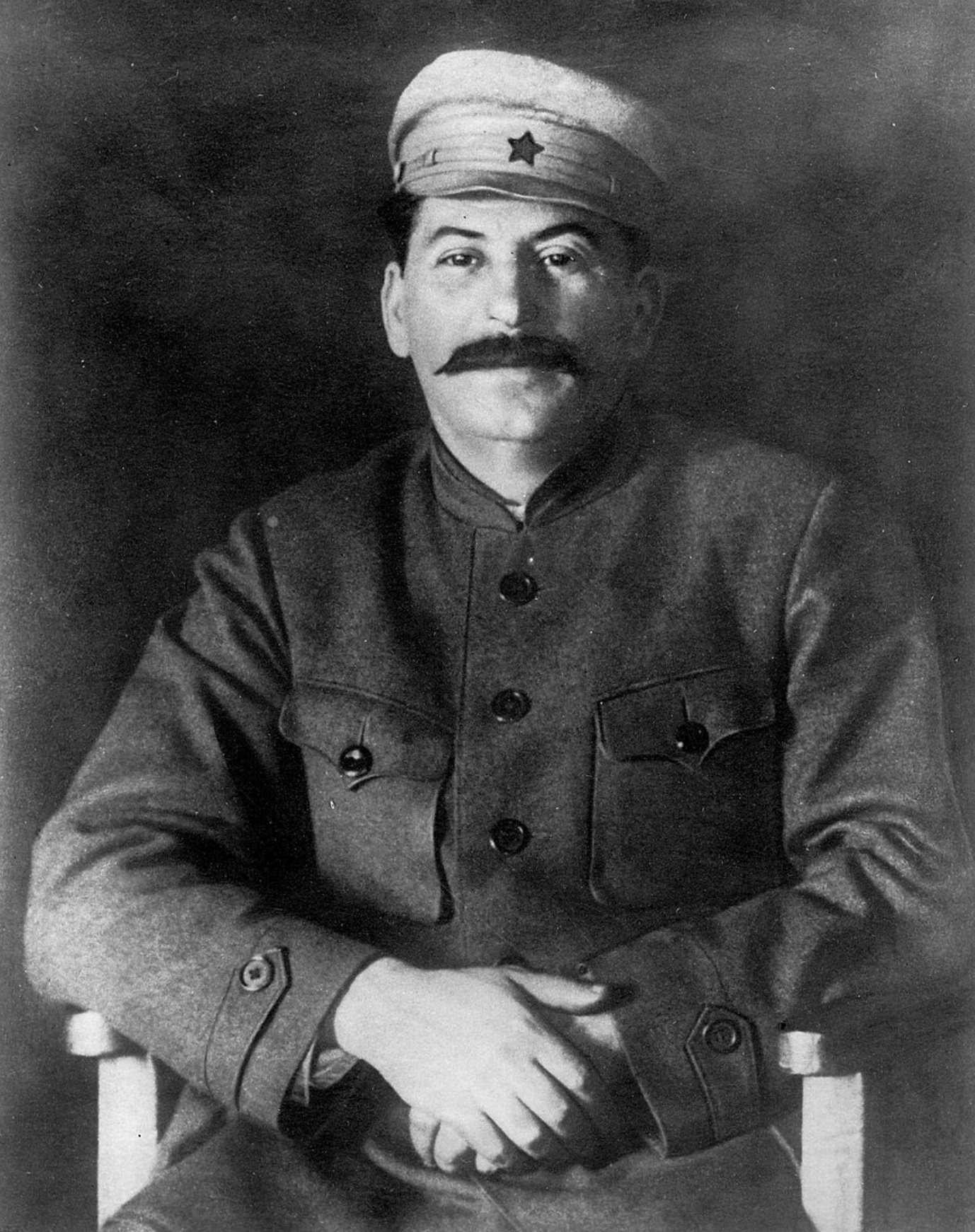
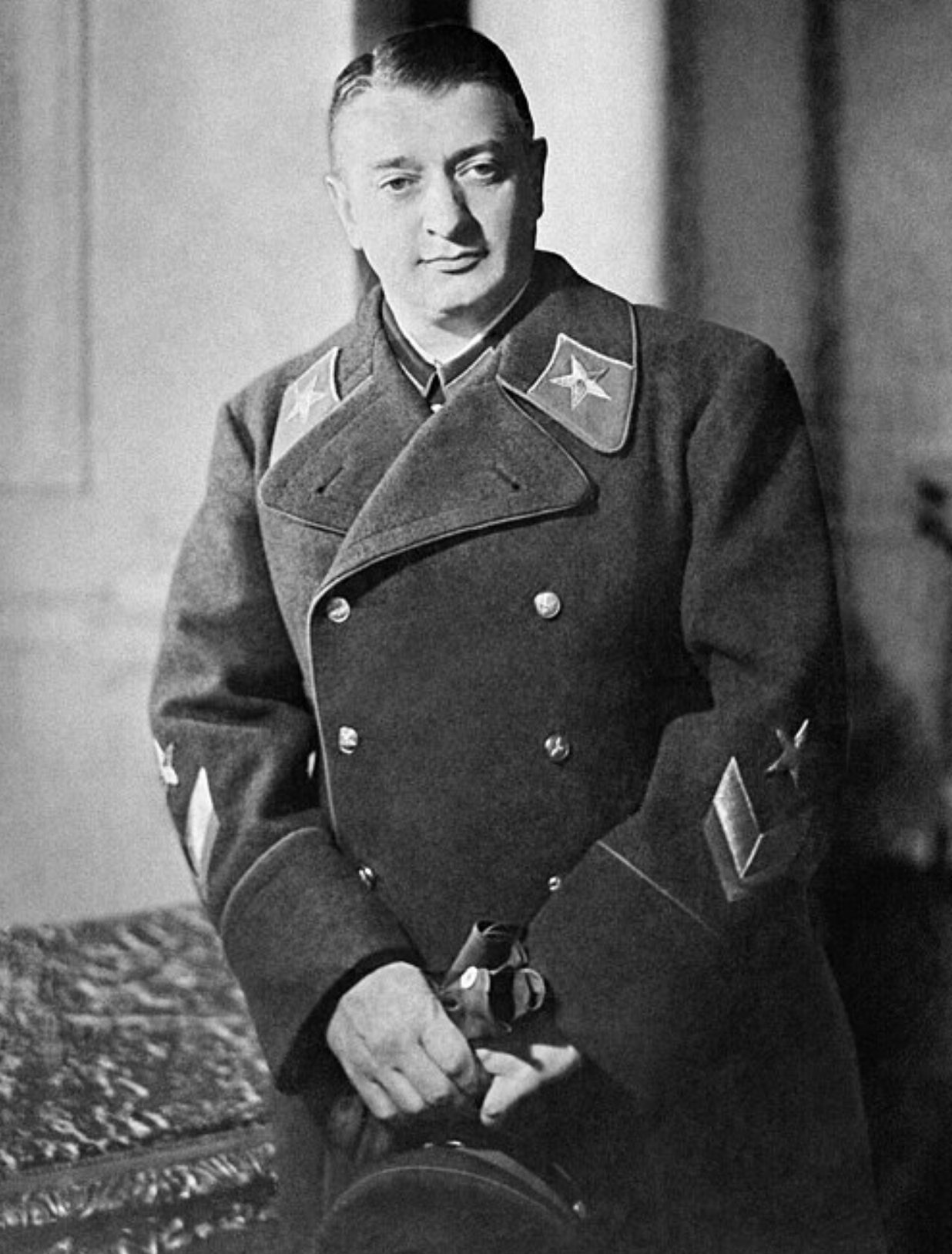
Its absence from the decisive battle outside Warsaw later became the subject of Soviet recriminations and decades of historical debate. The command of the Southwestern Front, where Joseph Stalin himself served as political commissar, remained fixated on capturing Lviv even as Western Front commander Mikhail Tukhachevsky demanded Budyonny's army in the north. By the time the Konarmiya, the "Red Cavalry", finally began moving, the strategic moment was already slipping away. Stalin would later become a master at rewriting the past, but in 1920 he was not yet powerful enough to erase his own mistakes from it completely.
The very word cavalry can mislead a modern reader. The Konarmiya was not some mounted horde that had wandered out of the Napoleonic era through an administrative error. According to a report dated 25 August, it had roughly 11,500 "sabres" - the contemporary term for combat-ready cavalrymen. It fielded 51 artillery pieces, more than 300 machine guns and nearly 17,000 horses. Its men could move rapidly on horseback and then dismount to fight on foot when necessary. It was a kind of mechanized army before mechanization and engines.
Across the vast spaces of Eastern Europe, the horse was transport, logistics and weapons platform all at once. It could cross terrain that might stop a truck, but it could not withstand machine-gun fire or barbed wire. Budyonny's greatest ally, therefore, was often not the sabre but speed. His cavalrymen would find a gap in the front, pour into the enemy rear and create panic far beyond what their numbers alone justified. The reputation of the Konarmiya functioned almost like an extra division in its own right.
By the end of August, however, that reputation was already wearing thin. Budyonny's men had been fighting almost without interruption for months, while losses among their horses had reduced the mobility of the entire army. The attempt to capture Zamość delayed them further. The city was defended by Polish troops and the Ukrainian 6th Sich Rifle Division under Colonel Marko Bezruchko. Trenches had been dug around the city, two lines of barbed wire had been laid, and armoured trains patrolled the railway lines.
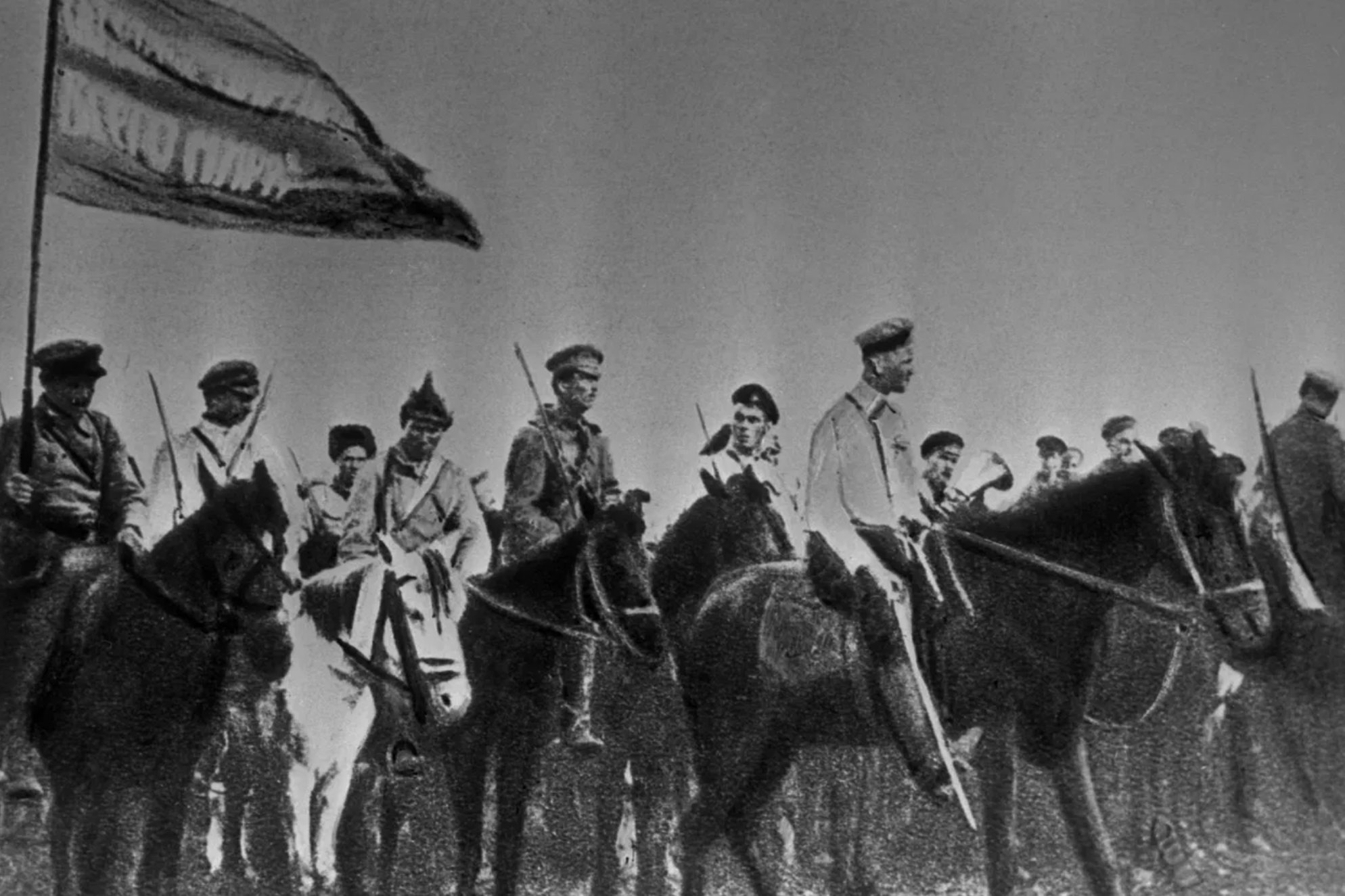
Later Polish national narratives often pushed the Ukrainian role to the margins. One Polish officer would subsequently claim that he had been the true commander of the defence, but surviving orders show that Bezruchko held overall command.
Early on the morning of 31 August, Soviet attacks on the city stopped. Reconnaissance patrols discovered that Budyonny's formations were preparing to retreat eastward - precisely where the Polish command hoped to trap them. The plan was not some romantic cavalry charge but the destruction of the Konarmiya inside an encirclement. Infantry was closing the approaches from the north and east, while the 1st Cavalry Division under Polish officer Juliusz Rómmel advanced from the south. Despite the almost identical surname, he had no connection to the German field marshal Erwin Rommel, the future "Desert Fox" of the Second World War.
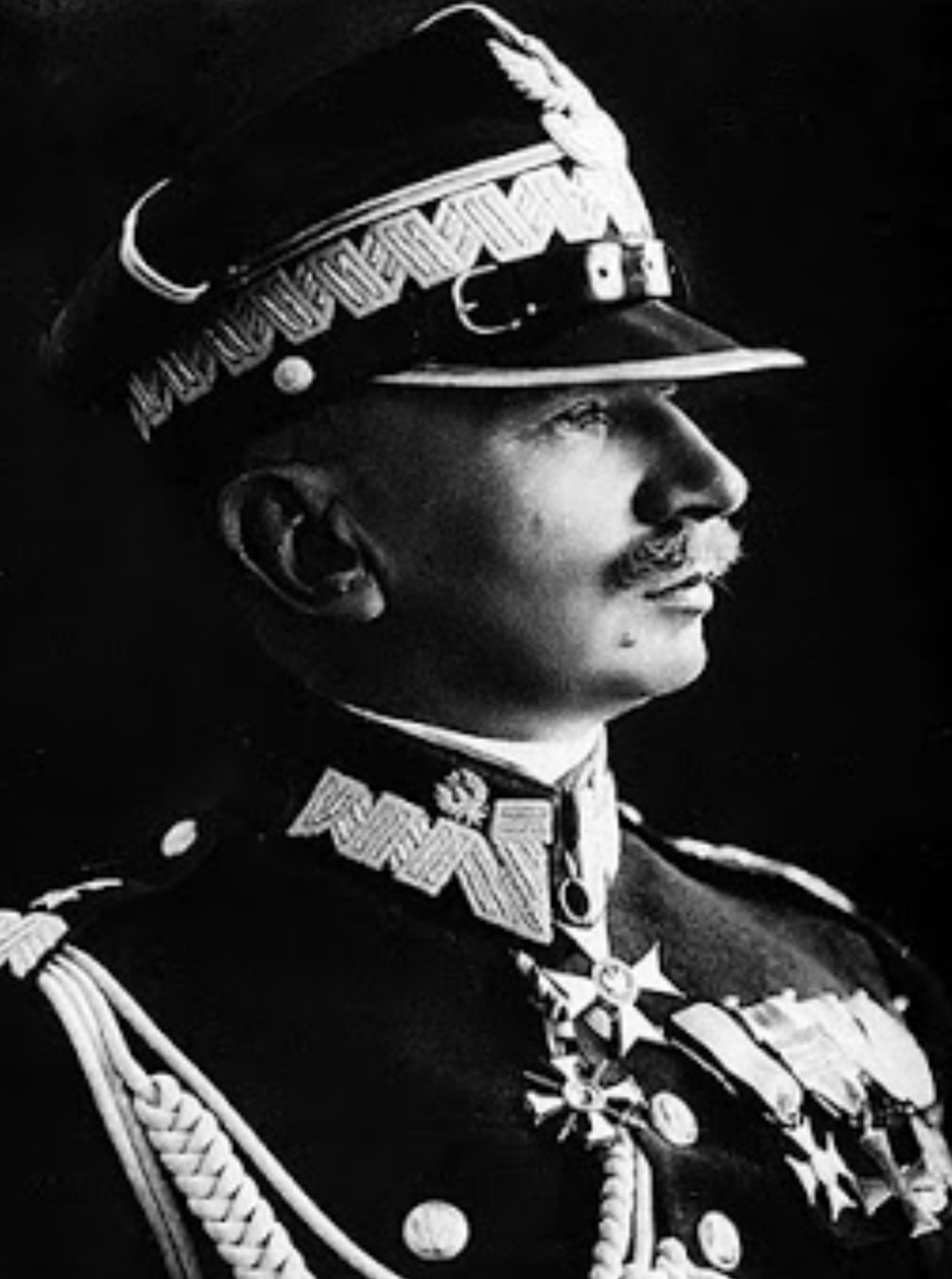
The Polish VII Cavalry Brigade struck first near Wolica Śniatycka without waiting for the division's other brigade. It broke through Soviet positions and cut one of the retreat routes. Budyonny responded by sending in Iosif Apanasenko's 6th Cavalry Division. Before noon, the battlefield had dissolved into a succession of cavalry charges, countercharges and artillery fire. Units would scatter, regroup and charge again. From a distance it might have looked like history brought back to life. Up close, it was a slaughterhouse for men and animals.
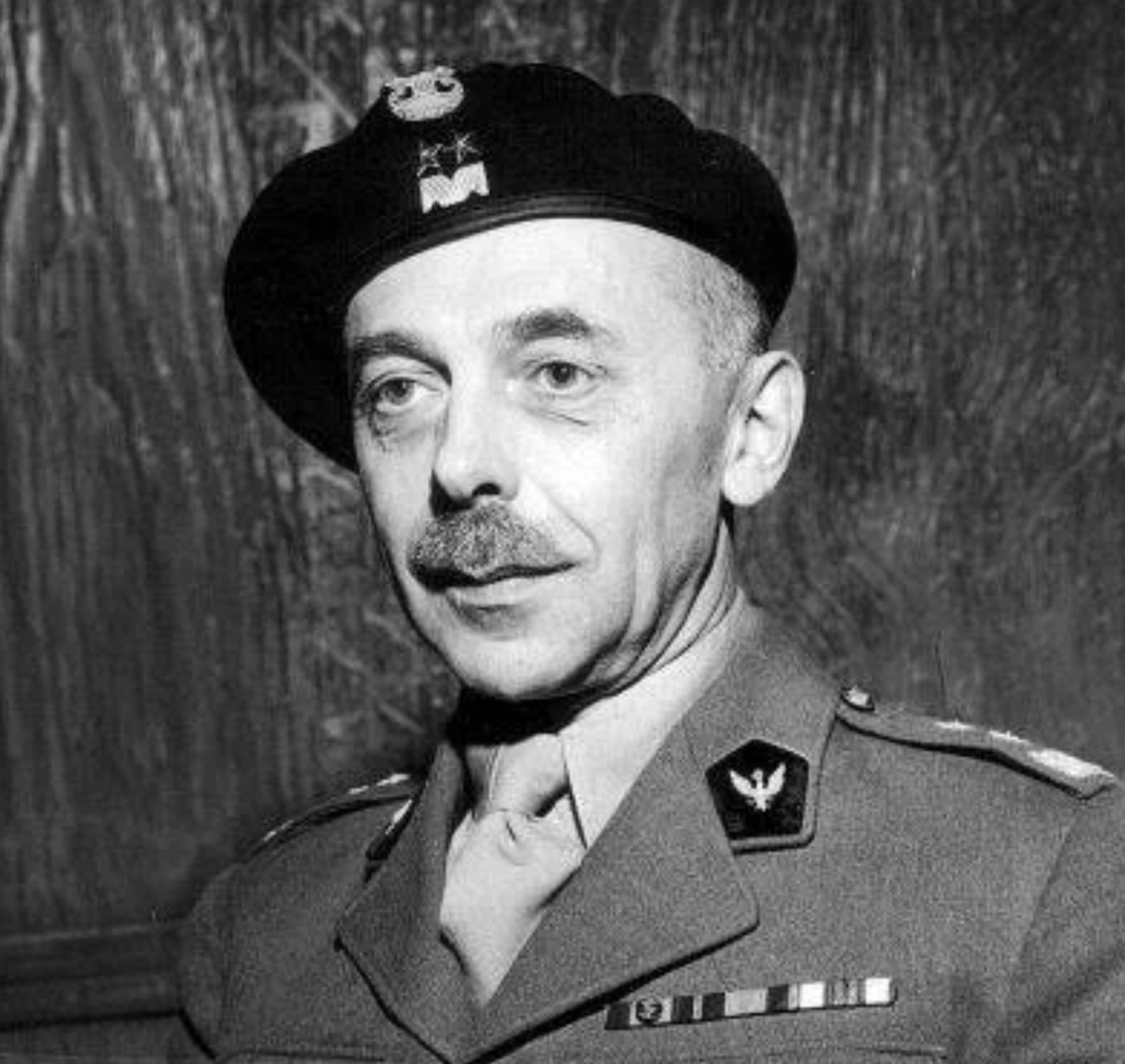
Among the Polish officers was Tadeusz Komorowski, the future commander of the Home Army during the Warsaw Uprising of 1944. Komarów thus brought together two periods of Polish history on a single battlefield - the war in which the state was struggling simply to remain alive, and the war in which it would once again be erased between Germany and the Soviet Union.
Around noon, it seemed that the trap might close. After spotting a Soviet column near Niewirków, Rómmel sent the VI Brigade in that direction, abandoning the original axis of attack assigned to him by General Stanisław Haller. The manoeuvre came close to producing a spectacular result. Budyonny and his army headquarters suddenly found themselves dangerously near the fighting. The Soviet commander was forced to take shelter in a nearby forest.
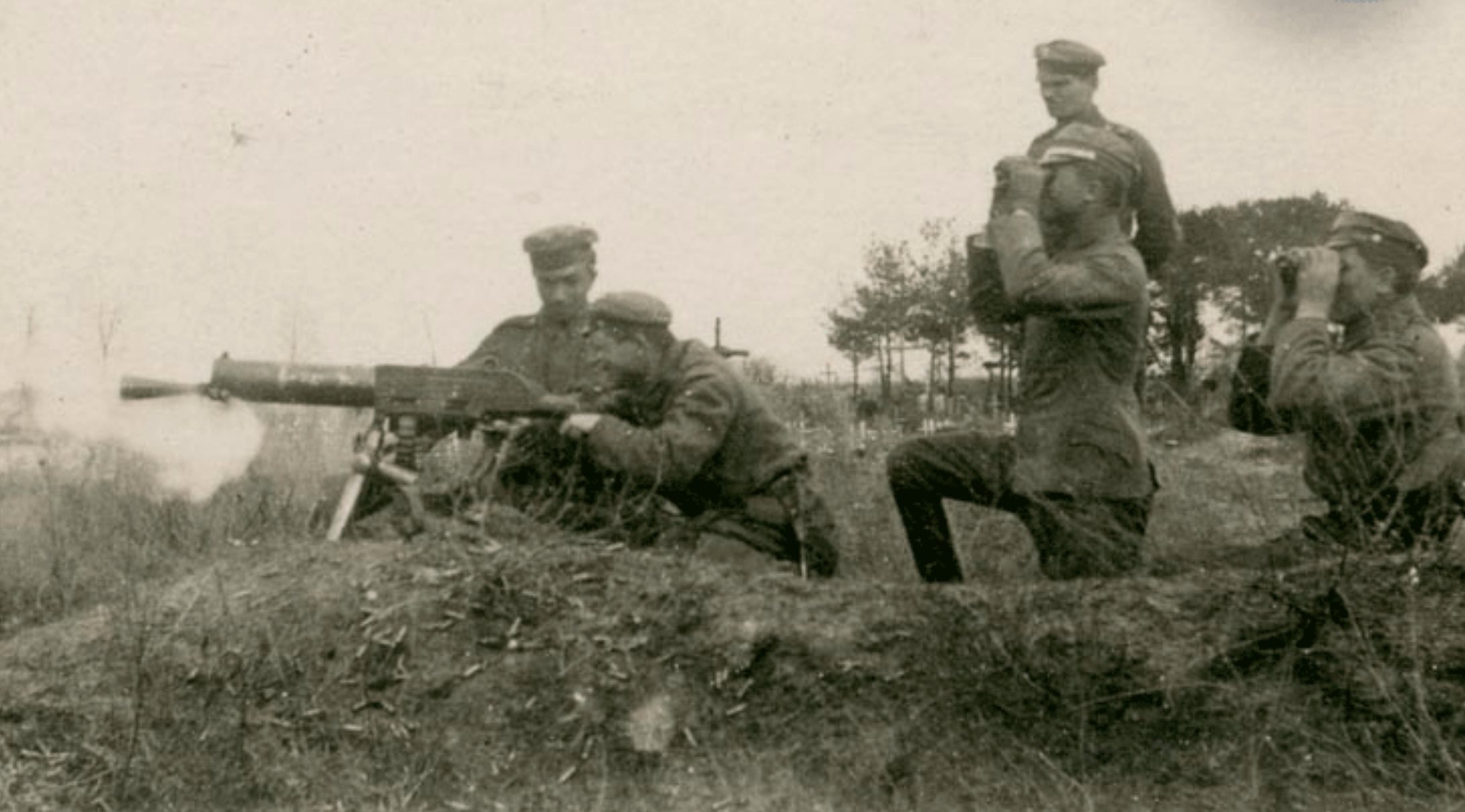
But the battle soon changed direction yet again. Fresh Soviet forces arrived, Polish artillery began running short of shells, and Rómmel and his chief of staff disagreed over when to commit the reserves. The order to the VII Brigade did not arrive until around five in the afternoon. Its men were already exhausted, but they went forward again. The 2nd *Chevau-légers Regiment and the 8th and 9th *Uhlan Regiments held off the more numerous Soviet cavalry with a series of countercharges until the arrival of the 1st Krechowce Uhlan Regiment.
The decisive moment came with the charge of the 8th Regiment under Polish cavalry officer Kornel Krzeczunowicz, supported by arriving units of the VI Brigade. The Soviet lines broke and began to retreat. The Poles held the battlefield but lacked the strength for a major pursuit. Their division suffered several hundred killed and wounded, along with roughly 700 dead horses. Soviet losses were reportedly higher, but no reliable figure can be established.
Budyonny's army was not destroyed. Over the following days it managed to break through toward the Bug River, partly because of mistakes made by other Polish commanders. Even so, at Komarów it lost both the initiative and much of its aura of invincibility. Soon afterwards it was withdrawn from the Polish front. It was a Polish victory, but not the neat ending of a legend in which the enemy disappears down to the last cavalryman.
Was Komarów really the last great cavalry battle? Not quite. Mounted troops would fight again, and arguments over the horse and the engine would continue for years. It is more accurate to call Komarów one of the last major battles in which large cavalry formations collided with one another in mounted charges.
Even the scale of Komarów was later somewhat exaggerated. One Polish military-historical study notes that Rómmel proved highly effective at promoting his own victory through his memoirs. A good battle, much like a good political career, usually benefits from a good memoir.
Riding with Budyonny's army during the campaign was Isaac Babel, the Jewish writer from Odesa and a war correspondent with the Red Army. His diary would later become the basis of "Red Cavalry", one of the great works of Russian modernist literature.
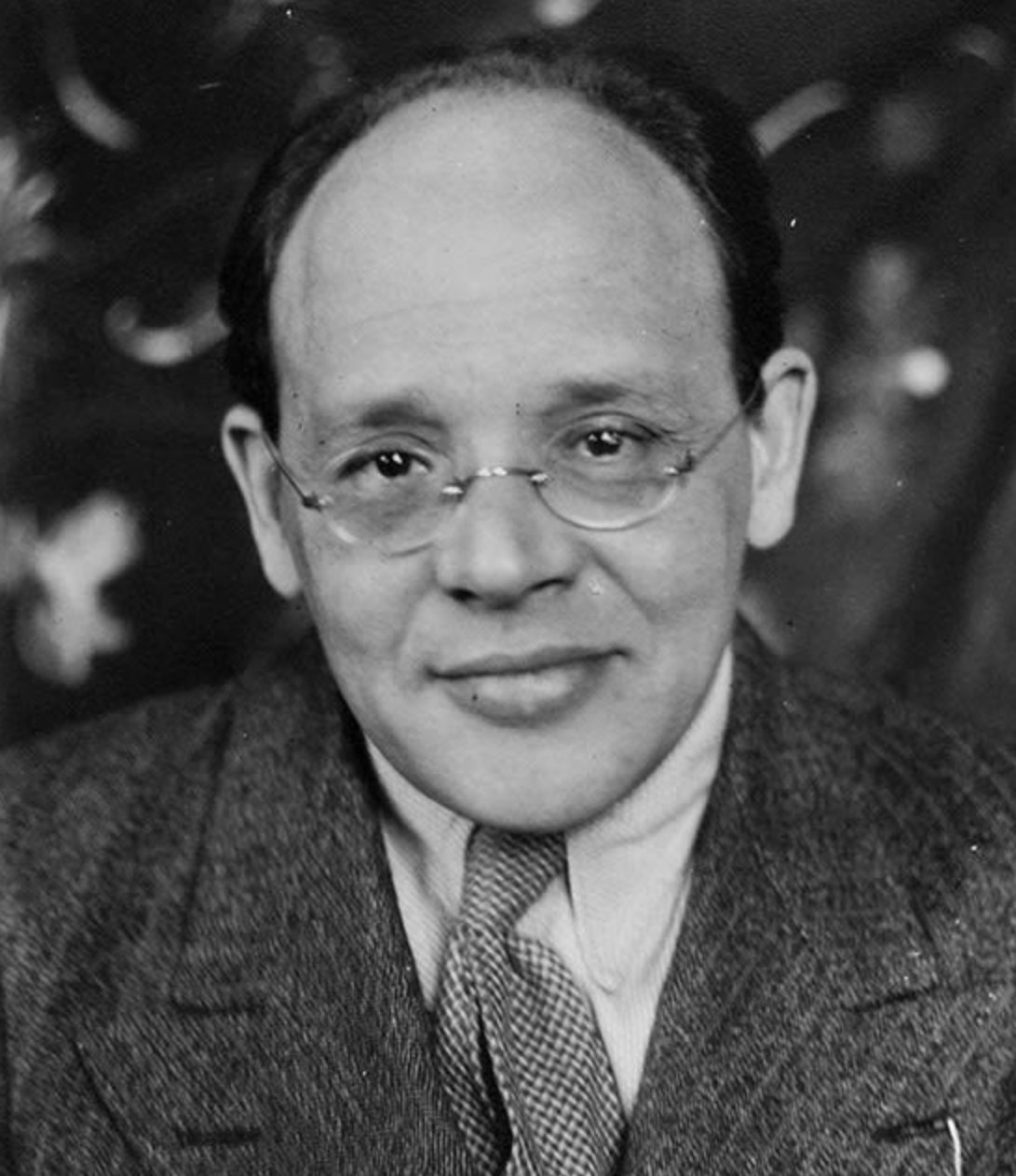
Babel was simultaneously fascinated by the courage of the cavalrymen and repelled by the violence he witnessed. After the failure at Zamość, he wrote of exhaustion, disintegration and a sense that something darker lay ahead.
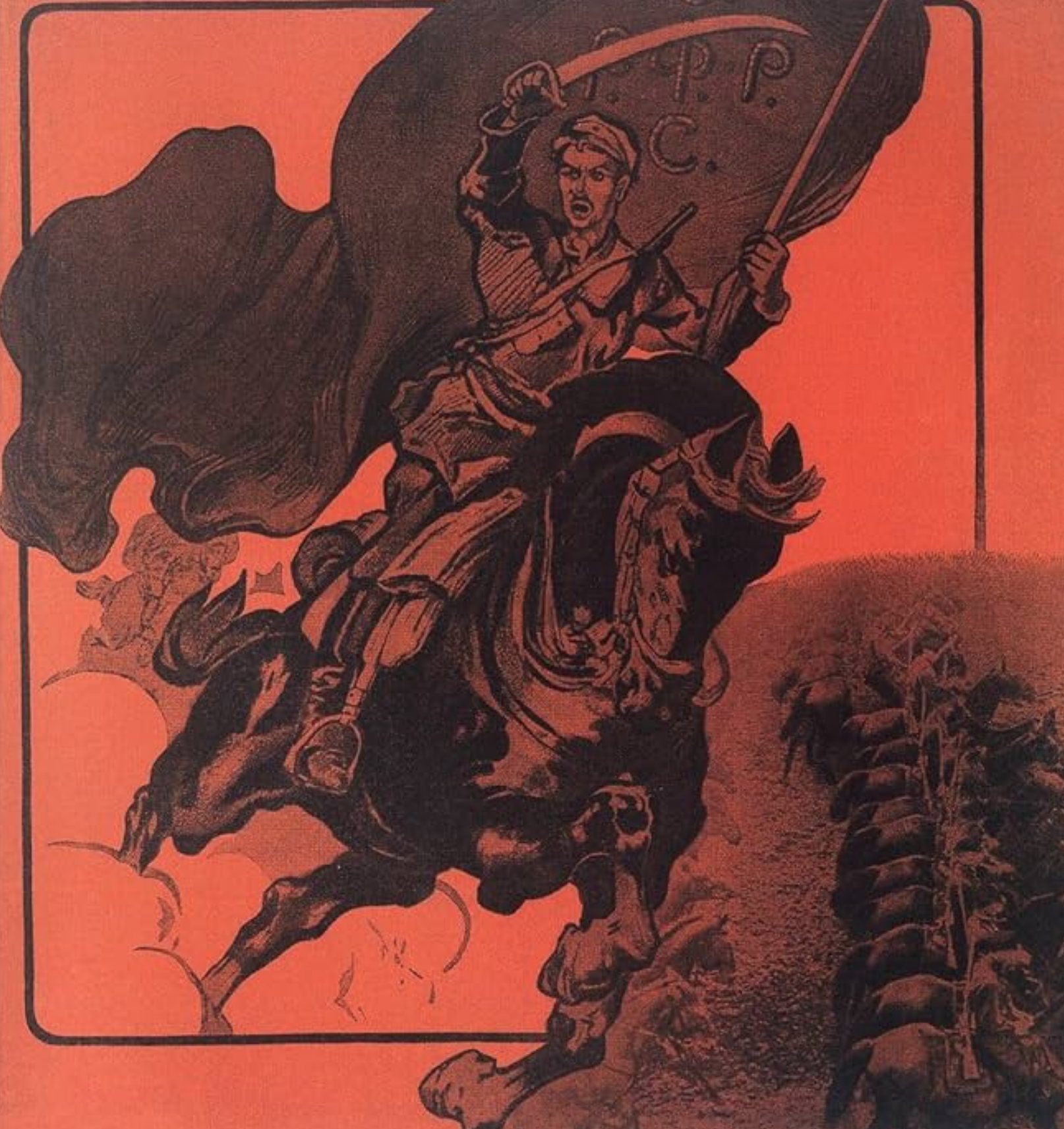
Two decades later, that future caught up with him. Stalin's regime had him arrested, tortured and executed. The cavalrymen he described survived in literature, while their chronicler disappeared into the sealed world of the Soviet secret police. As usual, the revolution first needed its poets, and then their files.
No, Polish uhlans did not charge Hitler's tanks with sabres
Twenty years after Komarów, Polish cavalry would return to a European battlefield - and become the protagonist of one of the most persistent myths of the Second World War. According to a story repeated for decades, Polish cavalrymen were so desperate and so hopelessly naïve in their attempt to stop the German Blitzkrieg in September 1939 that they charged tanks with sabres. The image was almost too perfect: medieval Poland against mechanized Germany. There was only one problem. It never happened.The myth grew largely out of a real clash at Krojanty on 1 September 1939, the first day of the German invasion. There, the 18th Pomeranian Uhlan Regiment under Polish officer Kazimierz Mastalerz encountered German infantry and launched a mounted charge. The attack succeeded in surprising and scattering some of the German soldiers. Only afterwards did German armoured vehicles arrive and open fire with machine guns, forcing the Poles to withdraw and inflicting losses. The Poles did charge with sabres - but against infantry, not tanks.
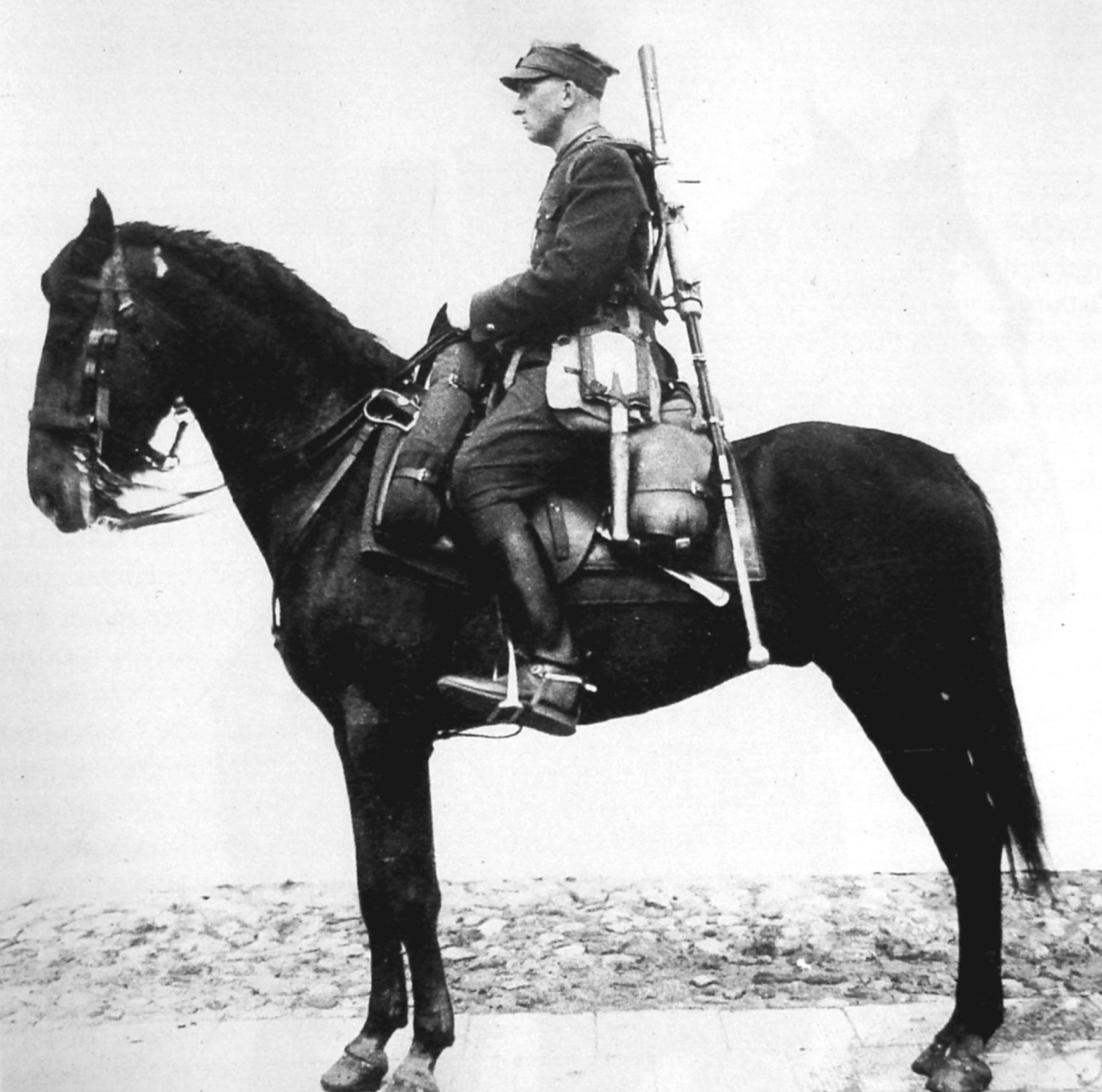
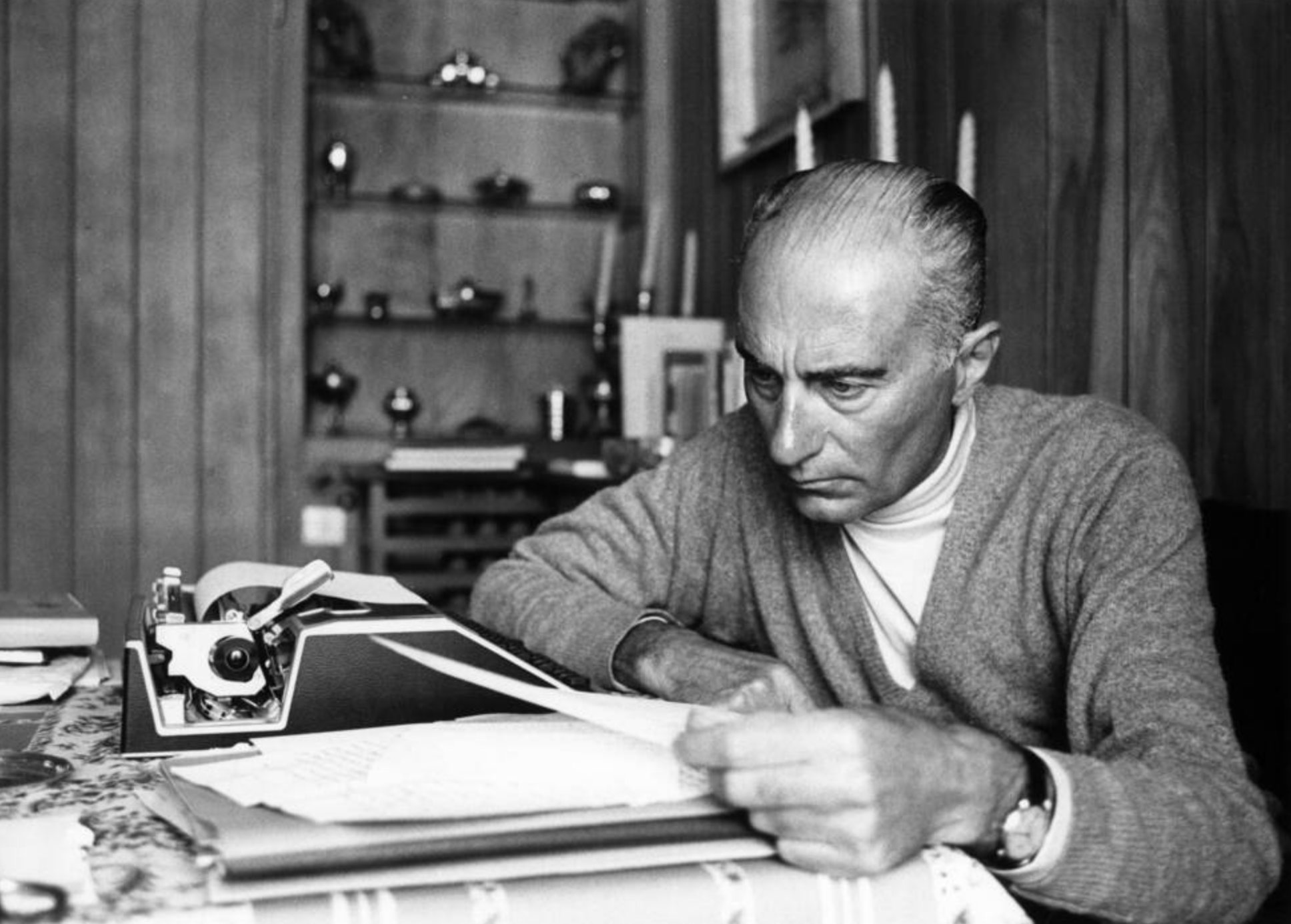
Komarów, then, was more than a picturesque farewell to the sabre. It was a scene from a transitional age in which old technology had not yet become folklore and the new had not yet fully conquered the battlefield. The cavalrymen that morning did not believe they were taking part in the closing scene of an era. To them, the horse was an engine, the sabre a practical weapon, and victory a matter of the next few hours.
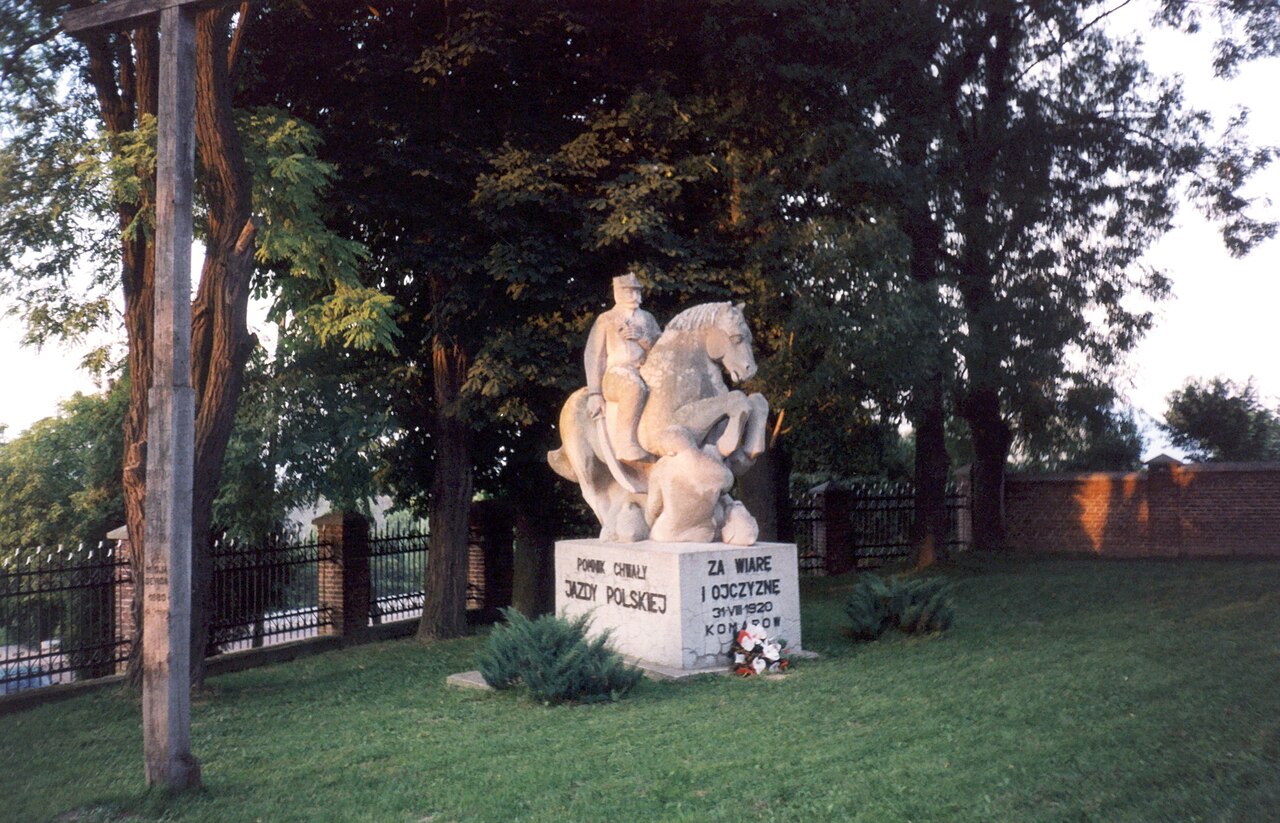
The future, however, did not arrive in the saddle. Motorized columns would soon take over cavalry's role, radio would replace the bugler, and the tank would borrow the idea of the charge and give it tracks. But on 31 August 1920, European history could still be heard before it appeared over the horizon - like the thunder of hooves beyond a hill.
Sources
- Ipn.gov.pl Największa bitwa polskiej jazdy w XX wieku https://ipn.gov.pl/pl/historia-z-ipn/228011%2CNajwieksza-bitwa-polskiej-jazdy-w-XX-wieku.html
- Encyclopedia.1914-1918-online.net Polish-Soviet War 1920-1921 / 1.0 / encyclopedic - 1914-1918-Online (WW1) Encyclopedia https://encyclopedia.1914-1918-online.net/article/polish-soviet-war-1920-1921/
- Muzeumwp.pl Bój pod Komarowem; Muzeum Wojska Polskiego w Warszawie https://muzeumwp.pl/timeline/boj-pod-komarowem/
- Encyclopedia.yivo.org The YIVO Encyclopedia of Jews in Eastern Europe https://encyclopedia.yivo.org/article.aspx/Babel_Isaac
- Polishhistory.pl August 1920: how Poland saved Europe from Bolshevism – Polish History https://polishhistory.pl/august-1920-how-poland-saved-europe-from-bolshevism/
- Muzeum1939.pl Kawaleria przeciw czołgom – kłamstwo, które stało się mitem | #M2WSwirtualnie — Muzeum II Wojny Światowej w Gdańsku https://www.muzeum1939.pl/aktualnosci/kawaleria-przeciw-czolgom--klamstwo-ktore-stalo-sie-mitem-m2wswirtualnie-11310
- Polska-zbrojna.pl Komarów – gwóźdź do trumny Konarmii https://www.polska-zbrojna.pl/home/ArticleShow/32025
- Armyupress.army.mil Naslov nije pronađen https://www.armyupress.army.mil/Portals/7/Hot%20Spots/Documents/Russia/Russo-Polish%20War%202.pdf
Comments