
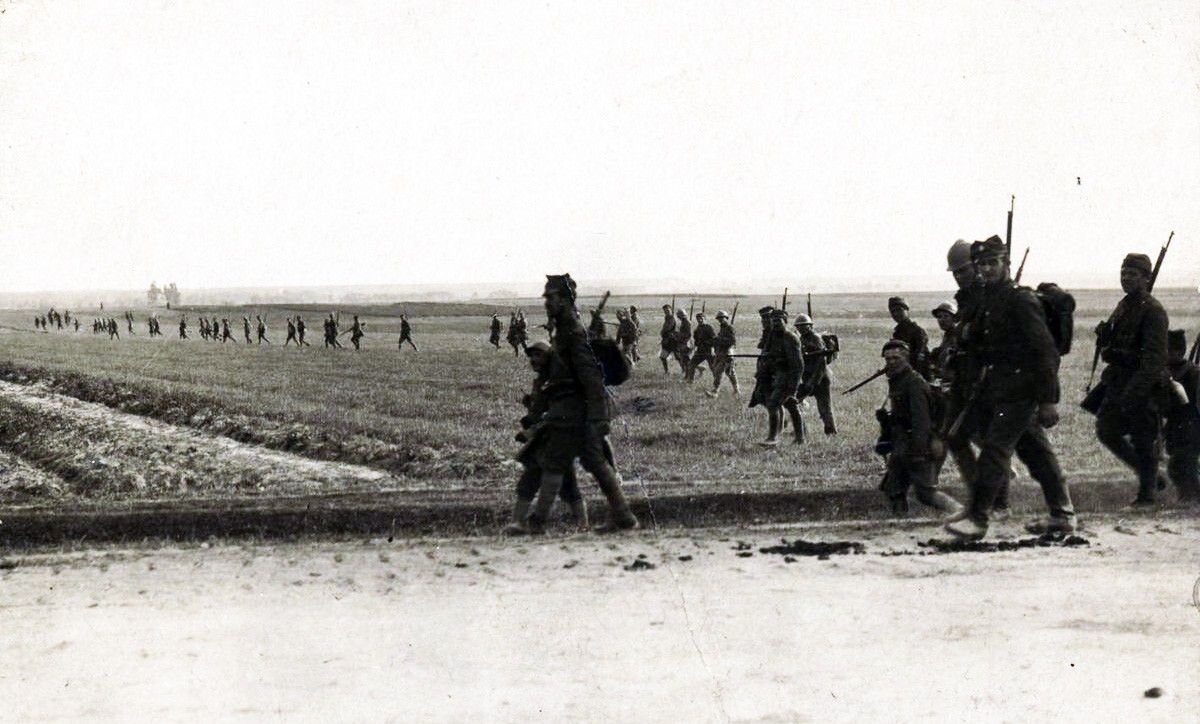
In August 1920, the revolution had cavalry, artillery and a road leading toward Berlin. The Red Army had reached the outskirts of Warsaw, capital of a state that had returned to the map of Europe only 21 months earlier. Beyond the Polish trenches lay more than a city.
They were the gateway to Germany, the industrial heart of the continent and home to a workers’ movement far better organized than anything found in the overwhelmingly agrarian Russia where the Bolsheviks had seized power.
The decisive fighting began on August 13 around Radzymin and Ossow, so close to the capital that the war was no longer a line on a military map but the sound of artillery audible from the city. In Bialystok, the Bolsheviks had already assembled the nucleus of a future Soviet government for Poland. The Poles would later call their victory the Miracle on the Vistula. Miracle, of course, is a useful word when intercepted messages, badly positioned armies and audacious command decisions are too untidy for a national legend.
A Europe where the war had never really ended
To understand why the governments in Paris and London were so alarmed by the Red Army’s approach to Warsaw in the summer of 1920, it helps to forget for a moment the neat schoolbook chronology in which the First World War ended on November 11, 1918. For millions of people between Berlin and Moscow, the war did not end that day. It merely broke apart into a dozen smaller wars. Four great empires disappeared – German, Austro-Hungarian, Russian and Ottoman – and territories they had controlled for centuries suddenly found themselves without universally accepted borders and without an answer to the uncomfortable question of who, exactly, had a right to which city. Historians therefore often describe the years from 1918 to 1921 in Central and Eastern Europe as a kind of "war after the war."In the west, the victorious powers were trying to construct a new order through peace conferences. Georges Clemenceau, the French prime minister, was concerned above all with protection against a future Germany. David Lloyd George, the British prime minister, was more wary of weakening Germany too much and of Poland’s territorial ambitions. U.S. President Woodrow Wilson arrived in Paris with the ideas of national self-determination and the League of Nations. The problem was that the peoples of Central and Eastern Europe were so thoroughly intermingled that almost every new national border created a new national minority. Versailles could recognize the restored Polish state and define its frontier with Germany, but in 1919 it still could not draw Poland’s eastern border with any finality. That map would have to be settled on the ground.
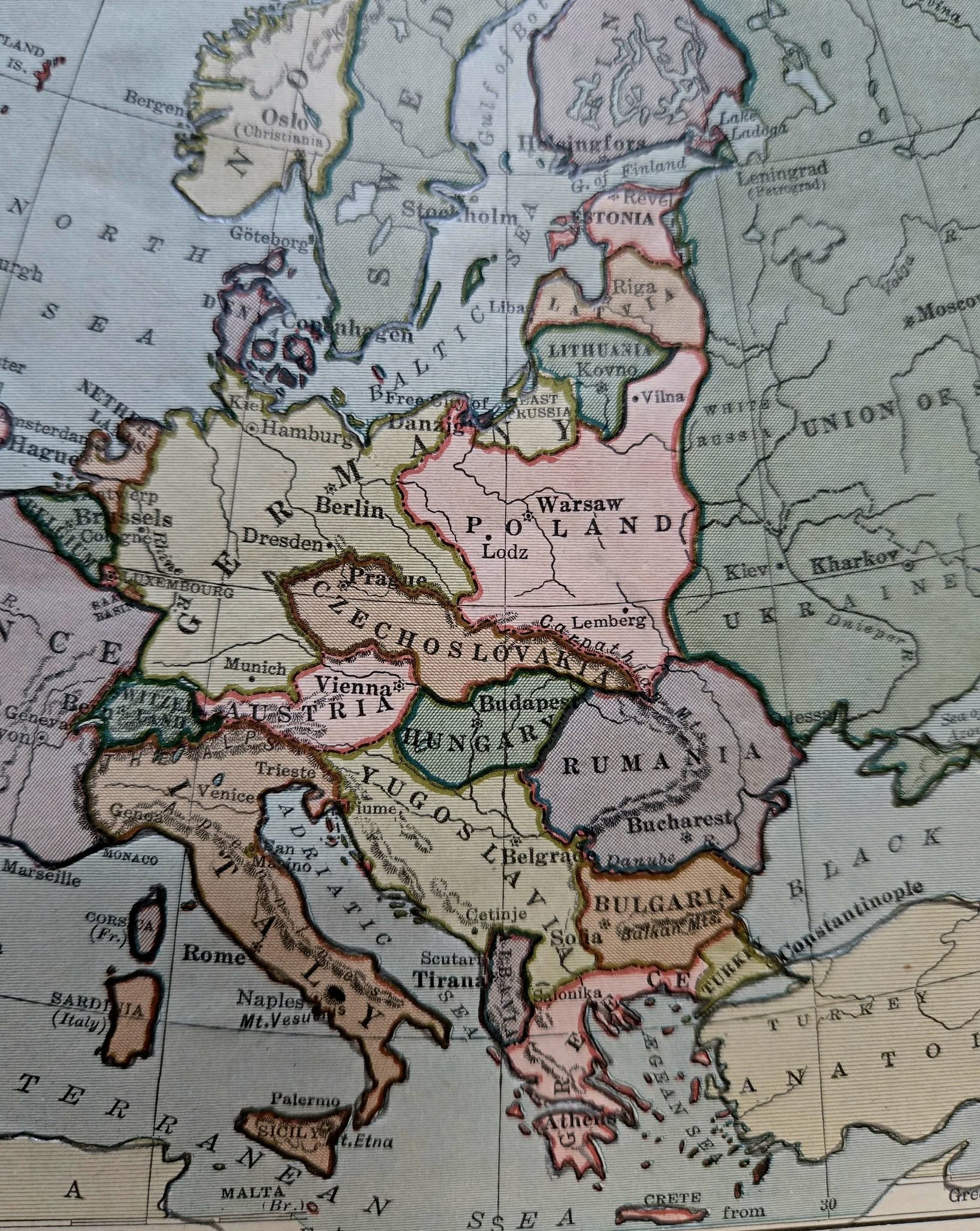
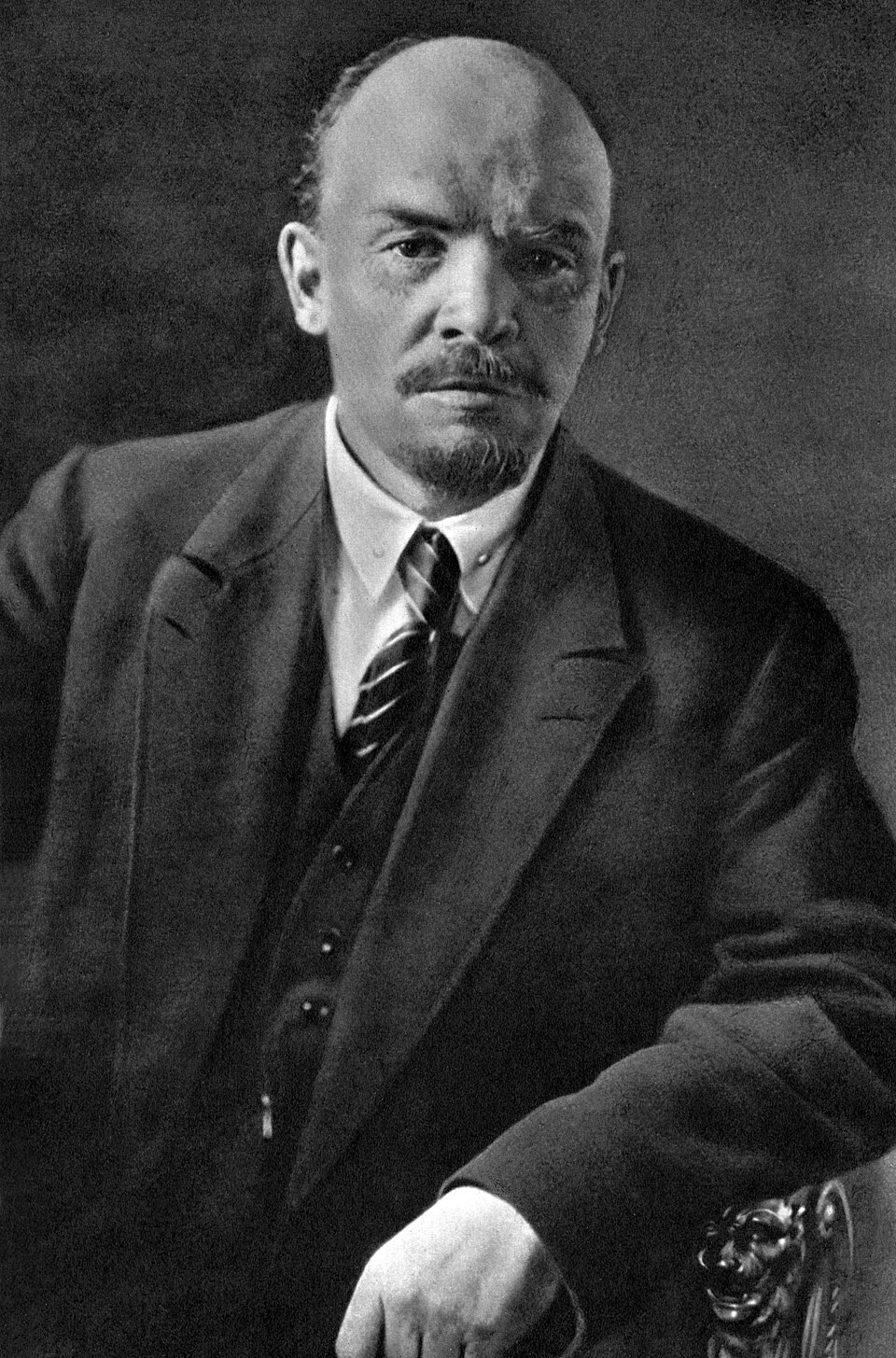
An even more convincing demonstration that revolution could spread beyond Russia had appeared in Hungary. In March 1919, communist Bela Kun proclaimed the Hungarian Soviet Republic. It survived only a few months, but for Europe’s governments it was an unpleasantly concrete precedent – the Soviet system no longer existed only in Russia. Kun’s regime collapsed after an unsuccessful war with Romania, and Romanian troops entered Budapest on August 4, 1919. Just one year later, the Red Army was approaching Warsaw. When Western diplomats spoke of revolution potentially spreading into Central Europe, they still had Budapest and the short-lived Bavarian Soviet Republic fresh in their minds.
Farther east, the situation was more chaotic still. Vladimir Lenin and the Bolsheviks controlled Moscow and Petrograd, but the Russian Civil War was not yet completely over. They were still opposed by various White armies, national movements and local forces, while foreign intervention troops were gradually withdrawing. Ukraine had experienced several governments, occupations and armies within the space of only a few years. There was no firm line separating "Russia" from a stable Europe. Instead there was a vast political vacuum in which two visions of the future collided – the national states born from the collapse of empires and a Bolshevik revolution that insisted those national borders were merely temporary scenery in a much larger class struggle.
That is why Warsaw in 1920 meant far more than another dispute over Poland’s borders. Beyond Poland lay Germany, and beyond Germany the rest of industrial Europe. The Western powers saw the chain of new states – Poland, the Baltic countries, Czechoslovakia and Romania – as part of a belt that could simultaneously contain Germany and keep Bolshevik Russia away from the continent’s center. Lenin viewed the same geographical space almost exactly the other way around. To him, it was an obstacle separating the Russian revolution from the German proletariat.
In other words, in August 1920 Europe still did not know what kind of Europe it was going to become. Versailles existed on paper, but its order had not yet taken root. Revolutions collapsed and erupted again, states came into existence while their borders were still moving, and armies settled questions that diplomats had failed to resolve. In that world, news that the Red Army had reached Warsaw did not sound like a distant war on Europe’s periphery. It could sound like the opening of the next phase of a war that, at least in the east of the continent, had never truly ended.
The Battle of Warsaw was the climax of a war that does not fit neatly into a simple story of aggressor and victim. After the First World War, three great empires in Europe collapsed – the German, Austro-Hungarian and Russian empires. In Eastern Europe, borders were drawn less with pencils than with rifles. Polish statesman Jozef Pilsudski envisioned a federation of states between Germany and Russia that would include an independent Ukraine, Lithuania and Belarus. In the spring of 1920, he forged an alliance with Ukrainian leader Symon Petliura and launched an offensive toward Kyiv. The city was captured in early May, but the expected Ukrainian uprising against the Bolsheviks never materialized. The Red Army then began advancing west.
Pilsudski did not intend to recreate the old Polish-Lithuanian Commonwealth in its original form, but he certainly wanted Poland to become the center of a broad East European political space. The Bolsheviks offered a different universal project. Their federation was not supposed to emerge from agreements between states, but from a revolution of the working classes led from Moscow. For Ukrainians, Belarusians and Lithuanians, history had brought a turning point and a choice they could not escape. They were peoples to whom two grand visions offered liberation, provided they accepted somebody else’s map.
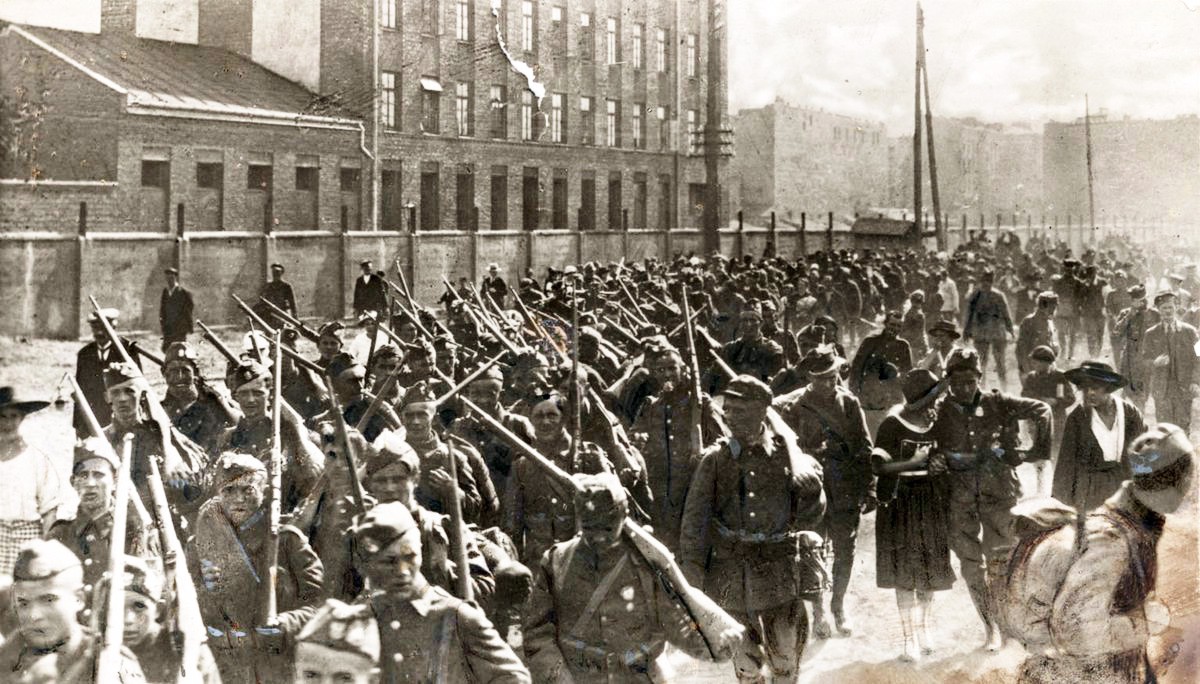
But as we have already seen, for Vladimir Ilyich Lenin, the Bolshevik leader, Poland was not the final objective. The Russian Revolution had survived the civil war, but the Bolsheviks knew they ruled an economically exhausted and weakly industrialized country. Their long-term hope was Germany. Before the war, its Social Democratic movement had around a million members, powerful trade unions and the largest parliamentary group in the Reichstag. The German Revolution of 1918 had overthrown the monarchy, and as late as 1920 the country was still convulsed by coups, general strikes and armed workers’ rebellions. In the Ruhr, just a few months before the Battle of Warsaw, a Red Army of workers numbering in the tens of thousands had already taken shape.
Lenin therefore saw the campaign in Poland as an attempt to connect the Russian Revolution with the crisis in Germany. After the defeat, he openly said that the Soviet advance toward Warsaw had shaken the order created by the Treaty of Versailles and that Germany had begun to "boil." He also argued that a Soviet Poland would have demolished the French security system built around a chain of new states between defeated Germany and Bolshevik Russia. In other words, the Red Army was not merely shifting a border. It was meant to serve as the military catalyst for a Europe-wide revolution.
The young Soviet commander of the Western Front, Mikhail Tukhachevsky, urged his soldiers to march over the "corpse of White Poland" and onward toward a global conflagration. He had reason to be confident. His forces had advanced hundreds of kilometers over the summer while the Polish army retreated almost without pause. In Moscow, people began speaking of historical remnants that history itself would soon sweep away.
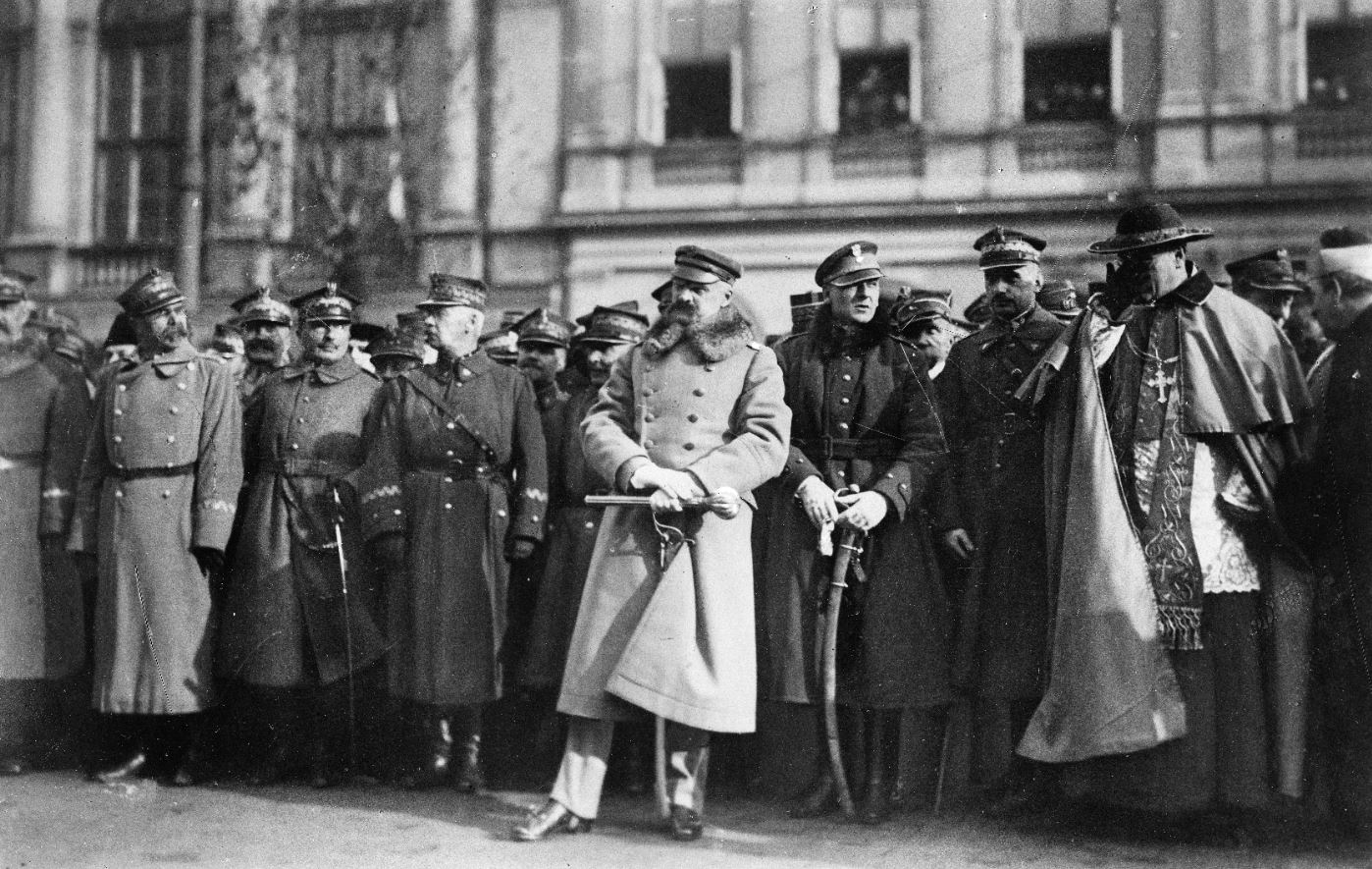
But historical necessity still has to eat, sleep and receive orders. Tukhachevsky’s troops reached Warsaw exhausted. Their supply lines stretched far to the east, communications between armies were poor, and the Soviet Western and Southwestern fronts were not operating as a single force. Semyon Budyonny, commander of the First Cavalry Army, remained tied down in the fighting for Lviv. The delay in turning his forces north reflected disputes over command and conflicting priorities within the Soviet leadership. The Polish army therefore faced a dangerous enemy, but also one whose component parts were drifting farther and farther apart.
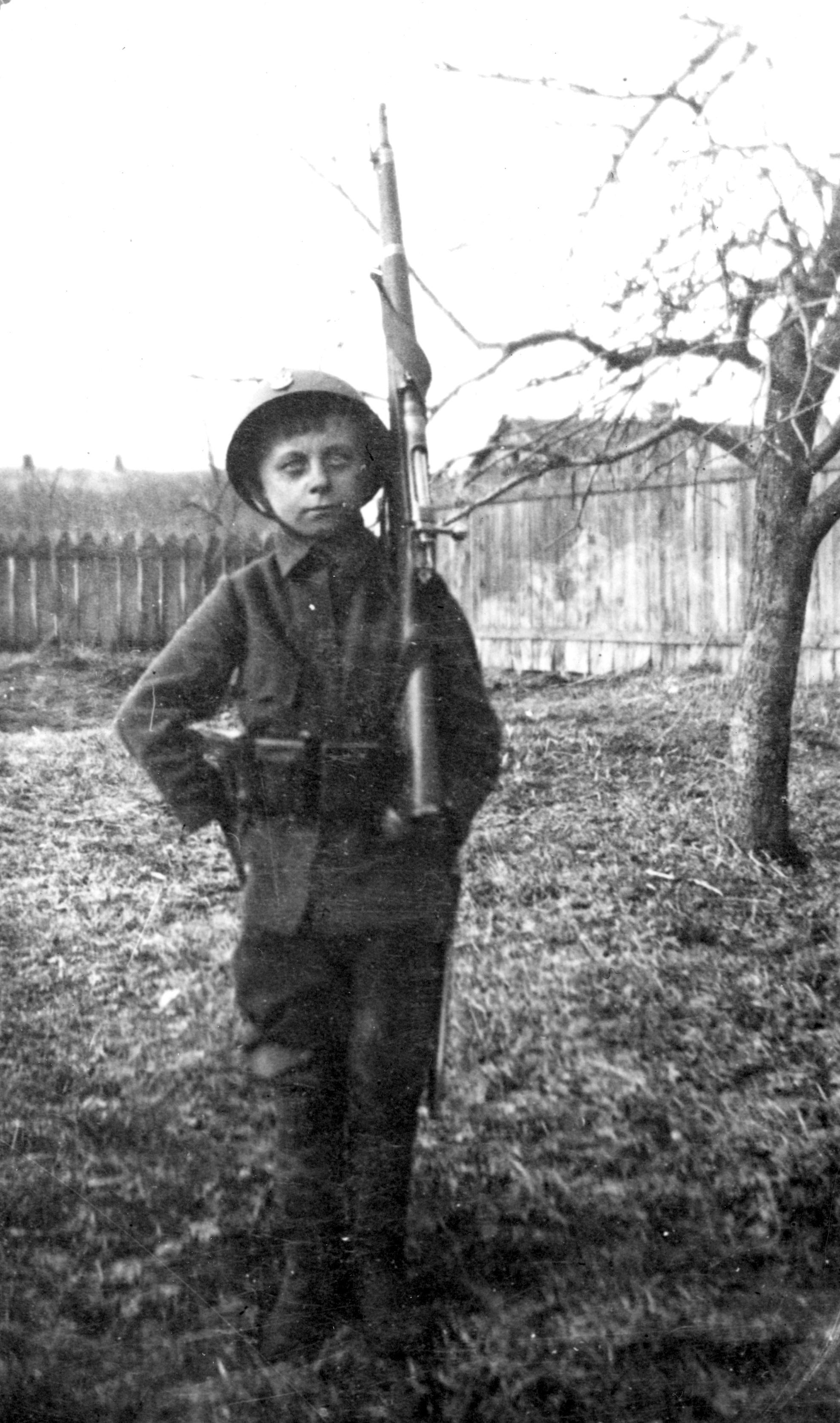
Meanwhile, Warsaw was filling with soldiers who only a few weeks earlier had never expected to wear a uniform. Among them was sixteen-year-old Marian Zielinski, who reportedly walked some 300 kilometers with two school friends to enlist. Such anecdotes can easily become sentimental ornaments of national history, but they reveal something important about the atmosphere of those days. The Polish state was young, politically divided and militarily exhausted. Yet faced with the immediate prospect of disappearing once again, it managed to mobilize tens of thousands of new volunteers.
The Polish plan was not based on stopping the Red Army head-on along the entire front. Warsaw had to hold long enough for a decisive advantage to be created somewhere else. In the north, General Wladyslaw Sikorski’s Fifth Army launched a counterattack across the Wkra River. The main blow was being prepared south of the city, along the Wieprz, where Pilsudski concentrated a maneuver group intended to break through the weakly defended gap between the two Soviet fronts. Tadeusz Rozwadowski, chief of the Polish General Staff, also played an important role in developing the plan. Later politics would try to assign the glory to a single man, as politics so often does when a collective achievement needs to be turned into a monument.
The man who stayed in Warsaw – and became pope two years later
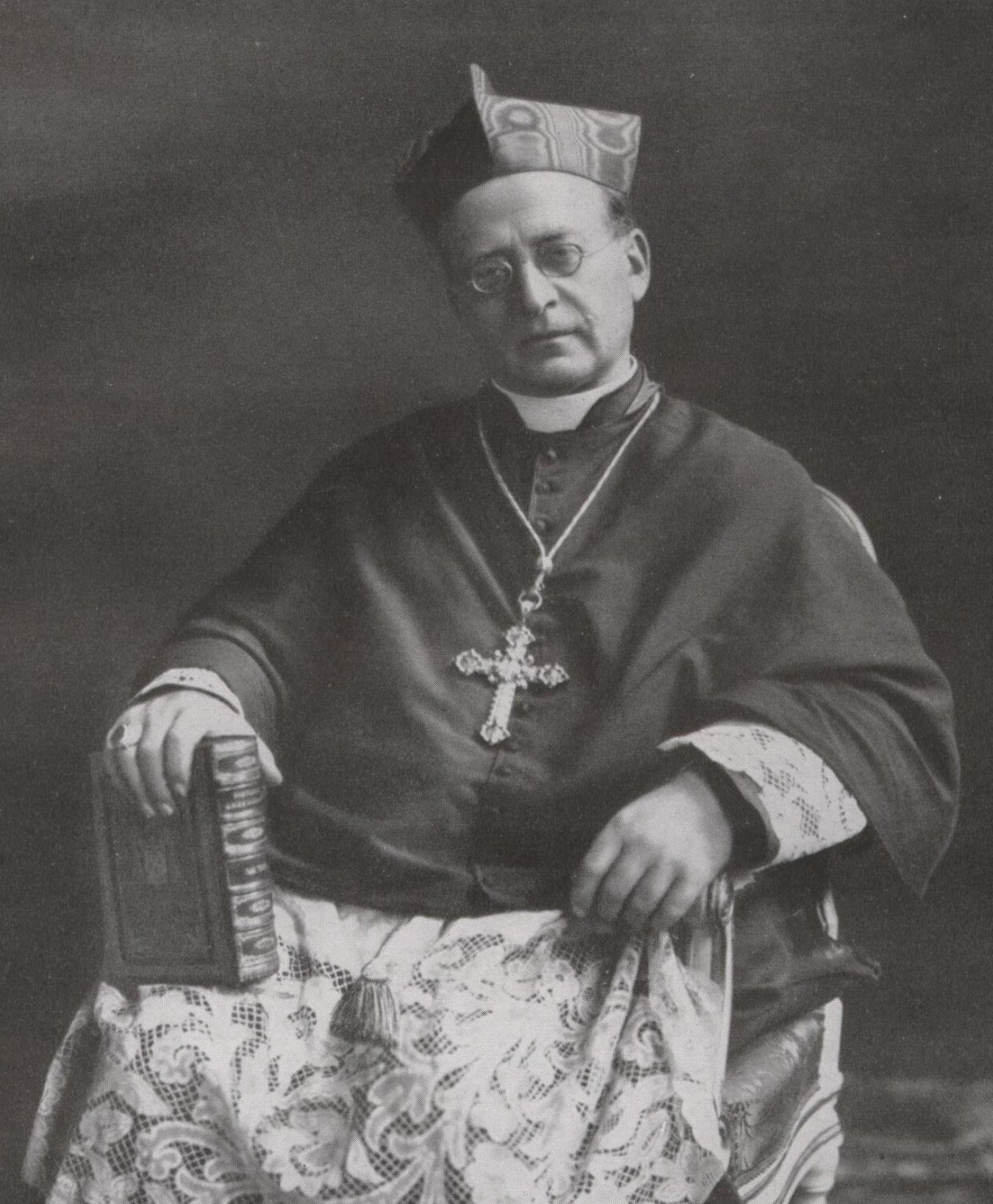
As the Red Army approached Warsaw in August 1920, leaving the city was an entirely understandable diplomatic decision. Much of the foreign diplomatic community did precisely that. One of those who remained was Achille Ratti, an Italian archbishop and the Holy See’s apostolic nuncio to Poland. His route into diplomacy had, in fact, been rather unusual. He was a respected scholar and librarian, formerly prefect of the Vatican Library, whom Pope Benedict XV had sent to the newly restored Poland in 1918.Ratti understood perfectly well what a Soviet capture of Warsaw might mean for a senior representative of the Catholic Church. According to the testimony of a Dominican superior who was in Warsaw at the time, Ratti said after morning Mass that he understood the gravity of the situation and had already offered his life to God. He stayed at his post. This did not mean that the entire diplomatic corps had fled – among those who remained were Italian envoy Francesco Tommasini and British diplomat Edgar Vincent, Lord D’Abernon – but Ratti’s decision soon acquired an almost symbolic status.
The Poles also possessed an advantage that Tukhachevsky never fully appreciated. Their signals intelligence service had been intercepting and decrypting Soviet communications for months. A central figure in this effort was Jan Kowalewski, a Polish officer and cryptologist who assembled a team of mathematicians and linguists. Among them was the renowned mathematician Waclaw Sierpinski. According to a later story, Kowalewski cracked one of the first codes while filling in for a colleague who had gone to his sister’s wedding, drawing inspiration from Poe’s story "The Gold-Bug" (in which the protagonist uses frequency analysis to decipher an encoded message that ultimately leads him to buried pirate treasure). The story may have been polished in the retelling, but the decrypted telegrams were real. Surviving documents show just how deeply the Polish command had penetrated Red Army communications.
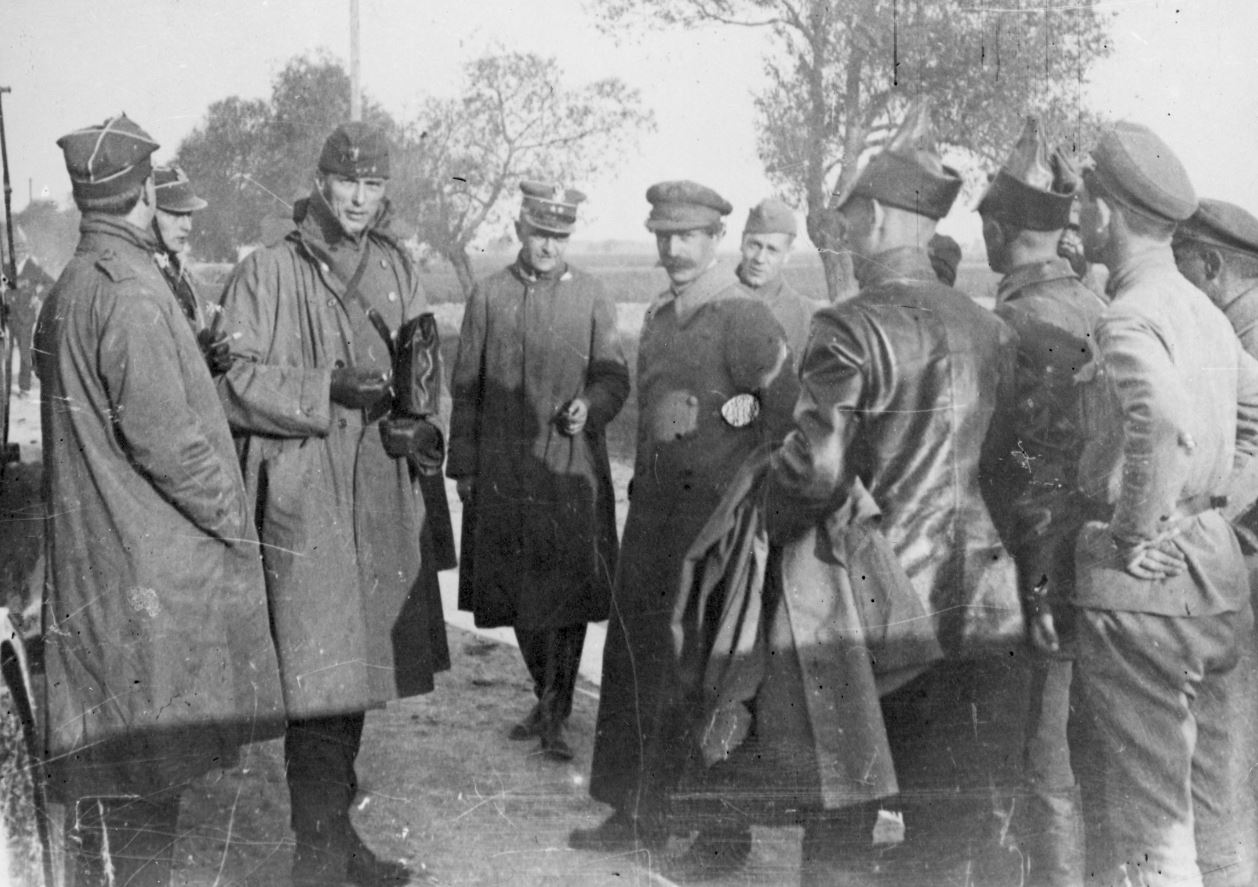
On August 16, Pilsudski’s force struck from the Wieprz. Instead of the strong resistance they had expected, the Poles found the Soviet flank almost completely exposed. Polish units drove north, severing communications and moving into the rear of armies that were still attacking Warsaw. From his headquarters hundreds of kilometers away from the battlefield, Tukhachevsky realized the scale of the danger too late. Within days, the Soviet advance became a retreat, and then a rout. Tens of thousands of soldiers were captured, while some units crossed into East Prussia, where they were interned by the Germans.
Did Warsaw really "save Europe from communism", as the battle is often said to have done? The U.S. Army still emphasizes that the Polish victory halted the spread of revolutionary communism toward Germany and the rest of the continent. It is a powerful claim, but counterfactual history has no archives. By August 1920, Germany’s revolutionary wave was already receding. The Communist Party was divided, its uprisings had been defeated, and most German workers were not waiting for Tukhachevsky to arrive as their liberator. A Soviet entry into Germany might have ignited a revolution, but it could just as easily have triggered a nationalist mobilization against Russian troops.
What the defeat before Warsaw did take away from the Bolsheviks was something very concrete: the opportunity to test their theory with several hundred thousand soldiers behind it. Revolution would thereafter have to return to slower methods – party organization and political crises within individual countries. The Red Army no longer looked like a vehicle that could simply drive through Central Europe.
Warsaw did not prove that revolution was impossible, nor that the Versailles order was stable. That order would soon reveal itself to be almost spectacularly unstable. What Warsaw showed was something else, and perhaps something more important: that supposed historical inevitability can be stopped by an unguarded flank, an intercepted radio message and a few days in which one exhausted country refused to disappear. The revolution was not over, but neither did it make it through those gates.
Sources
- Ipn.gov.pl Bitwa, która uratowała niepodległość – rocznica Bitwy Warszawskiej https://ipn.gov.pl/pl/historia-z-ipn/227478,Bitwa-ktora-uratowala-niepodleglosc-rocznica-Bitwy-Warszawskiej.html
- Archiwa.gov.pl 100. rocznica Bitwy Warszawskiej https://archiwa.gov.pl/100-rocznica-bitwy-warszawskiej/
- Encyclopedia.1914-1918-online.net Post-war Societies (East Central Europe https://encyclopedia.1914-1918-online.net/article/post-war-societies-east-central-europe/
- History.army.mil Historical Perspectives of the Operational Art https://history.army.mil/portals/143/Images/Publications/catalog/70-89-1.pdf
- Unesco.org Documents of Polish radio intelligence from the period of the Battle https://www.unesco.org/en/memory-world/documents-polish-radio-intelligence-period-battle-warsaw-1920
- Europeafrica.army.mil The 1920 Battle of Warsaw: 24th Military Intelligence Battalion's Staff Ride https://www.europeafrica.army.mil/ArticleViewNews/Article/1481757/the-1920-battle-of-warsaw-24th-military-intelligence-battalions-staff-ride/
- Marxists.org Speech Delivered At The Ninth All-Russia Conference Of The Russian Communist Party September 22, 1920 https://www.marxists.org/archive/lenin/works/1920/sep/22.htm
Comments