
A modest message from CERN opened the door to a network no one owned. Only later came the gatekeepers, the walls, and the algorithms.
The most consequential public launch in media history had no stage, no logo, and not even any investors. At 2:56:20 p.m. GMT on August 6, 1991, British computer scientist Tim Berners-Lee replied to a question in the alt.hypertext discussion group—one of the old internet newsgroups, for those who remember them. He explained that the WorldWideWeb project aimed to make it possible to link to "any information anywhere," admitted that its code was still only a prototype, and almost casually added that collaborators were welcome. One of the most far-reaching announcements of the 20th century looked like a note from a man searching for a few colleagues to help him finish an incomplete project.
The web was not invented that day. The first server, browser, and website were already running inside CERN, the European particle physics laboratory near Geneva. What changed that day was the audience: a tool created for scientists was being offered to strangers beyond the laboratory walls. That transition contains the great historical irony of the web. It would become the foundation of enormous private empires, even though it was not conceived as an empire at all, but as a new kind of freedom.

CERN in the late 1980s certainly did not suffer from a shortage of knowledge. Its problem was that the knowledge was scattered in all the wrong places. Physicists from many countries worked on different computers and stored their documentation in systems that could not communicate with one another. Berners-Lee’s problem was almost prosaically administrative: how could someone find the right document, the person who had written it, and its latest version before everything became outdated again?
That frustration produced a paper titled "Information Management: A Proposal" in March 1989. His supervisor, British physicist and CERN manager Mike Sendall, wrote the now-famous assessment "vague but exciting" on its cover and allowed him to continue working. In 1990, Belgian systems engineer Robert Cailliau helped formalize the project.

It is important to distinguish the web from the internet. The internet already existed as a network that connected computers and carried data between them. The web added a simple, shared system to that infrastructure. A URL gave a document an address. HTTP told computers how to request it, while HTML allowed one piece of text to lead to another. The invention’s real power lay in the way these elements worked together without requiring permission from any central gatekeeper.
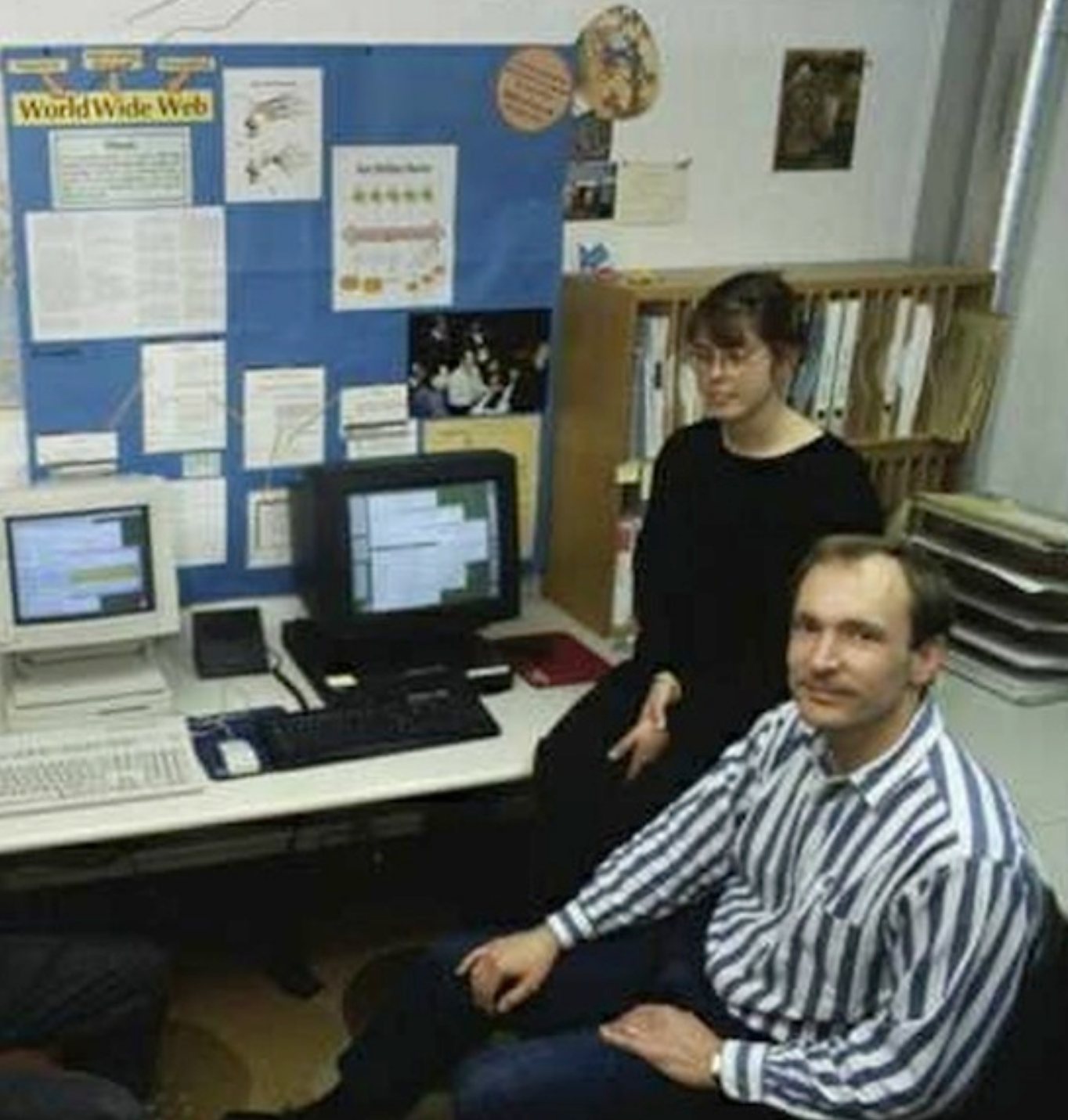
The first web server was a NeXT computer in Berners-Lee’s office. A warning written on it in red letters instructed people not to switch it off. The first website offered no news, shopping, or entertainment. It explained what the World Wide Web was, how to find documents, and how to set up a server of your own. In other words, the first content published on the web was a manual teaching its readers how to stop being merely readers.
That was no accidental detail. Berners-Lee’s first browser was also a website editor. The original vision did not divide the world rigidly into authors and audiences, much less into platforms and "content creators." Today’s technology industry likes to claim that it has "given people a voice," as though speech were a feature that a platform generously included in its user package. The early web began with a simpler assumption: a voice did not need to be granted by whoever owned the stage, because no one was supposed to own the stage.
The First Photograph on the Web Had Nothing to Do With Science
The image most often described as the first photograph published on the World Wide Web did not show a particle collision, a diagram of an accelerator, or the face of a Nobel Prize winner. It showed four women in glittering dresses, posed like a slightly kitschy pop group from the 1960s. They were called Les Horribles Cernettes, a parody band associated with CERN. Their songs were about physicists, computers, and women whose partners preferred spending their nights with particle accelerators rather than at home.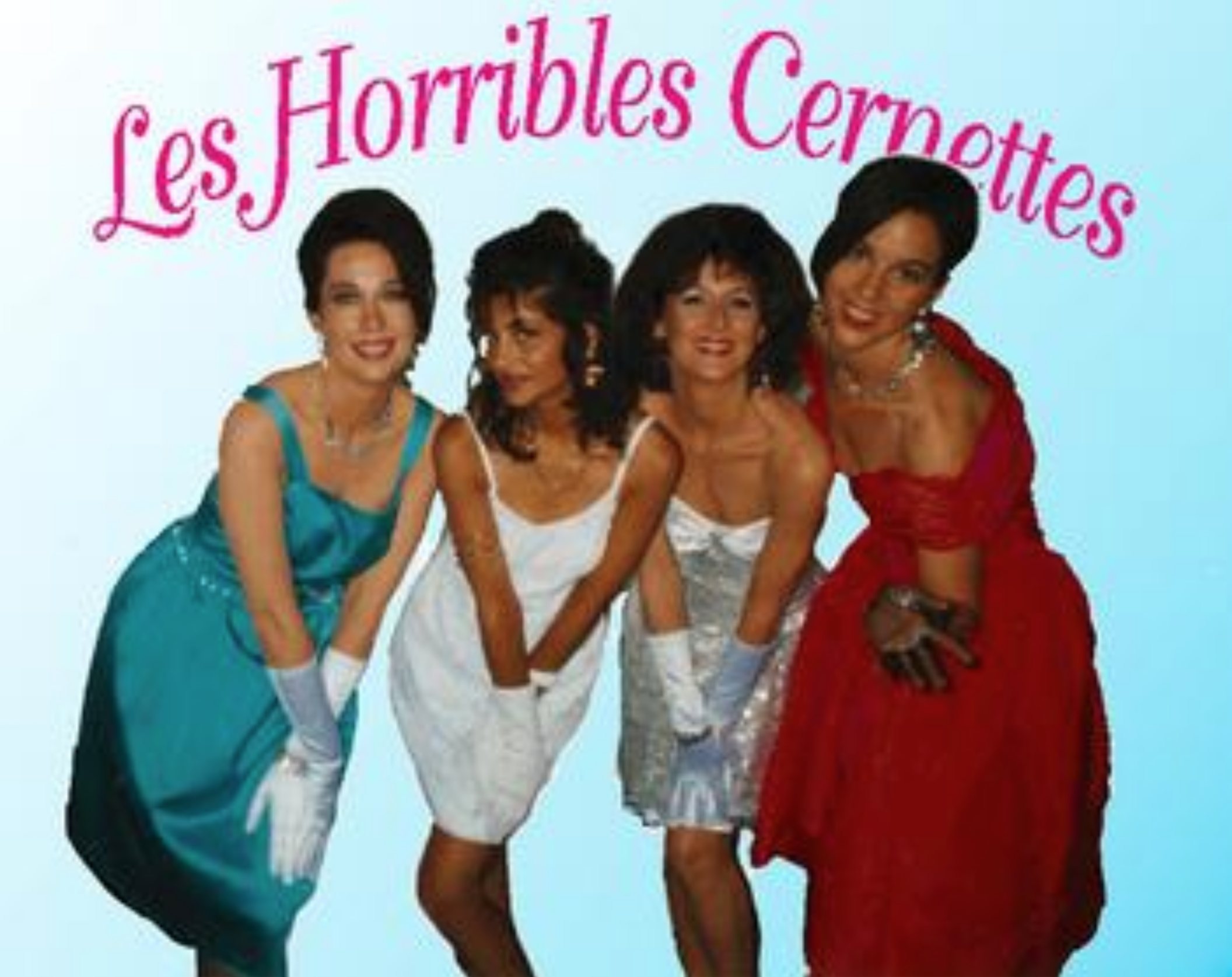
The claim that it was literally the first photograph on the web should nevertheless be treated with some caution. Even the people involved can no longer reconstruct the precise order in which the earliest images appeared, and de Gennaro later pointed out that the web had been capable of serving image files from the beginning. It is safer to say that the Cernettes were the first band on the web and that their photograph was among its earliest images.
The symbolism is striking. The web emerged from one of the world’s most important centers of scientific research, yet its first famous image did not show a scientific discovery. It showed a joke, a band, and meticulously styled hair. It was almost as though the network were already trying to explain to its creators that it would not remain an obedient library for physicists. Humanity had been given a new infrastructure for exchanging knowledge, and almost immediately someone uploaded a photograph of a band. In retrospect, it is difficult to imagine a more convincing preview of what the internet would become.
The announcement on August 6 was therefore more important than any ceremonial inauguration could have been. Berners-Lee was replying to Nari Kannan, a participant in the alt.hypertext group who had asked whether a system existed for retrieving information from different sources. Berners-Lee offered a browser for the NeXT computer and a text-based browser that could run on almost any machine. The code was available from CERN’s server, and the project was looking for people willing to bring it to other systems and fields.
Nor is the myth of the lone genius enough to explain what happened. British computer scientist Nicola Pellow created the line-mode browser that made the web accessible beyond the small number of people who owned NeXT computers. Cailliau provided organizational support, while other programmers and outside volunteers ported the code to new systems.
The decisive moment came on April 30, 1993, when CERN placed the core web software in the public domain, allowing anyone to use, modify, and distribute it. This was a decision about who would be allowed to build the future. At roughly the same time, Gopher—then a serious rival to the web—was placed under a cloud when the University of Minnesota announced licensing fees for commercial server software. In that largely forgotten contest, the web did not win simply because it was better. It also won because it did not put a tollbooth at the entrance.
The Internet Could Have Looked Like Gopher
In the early 1990s, it was far from certain that the World Wide Web would become the internet’s dominant interface. Its most serious competitor was called Gopher, a system developed in 1991 by a team at the University of Minnesota. While the web connected documents through open-ended hyperlinks, Gopher organized information into orderly hierarchical menus. Users did not "surf" from one association to another. They moved downward through a set of digital filing cabinets. On the slow connections and monochrome screens of the time, the system was clear, fast, and often more pleasant to use than the early web.In other words, the digital future could have resembled an enormous library with every shelf precisely labeled. The web offered something less orderly but far more powerful: any document could lead to any other document, regardless of where it belonged in an imagined hierarchy. Gopher showed users a route that someone else had arranged in advance. The web allowed them to turn aside. That difference would eventually prove decisive, but in 1992 Gopher still appeared to be a serious contender for the standard through which people would access information on the internet.
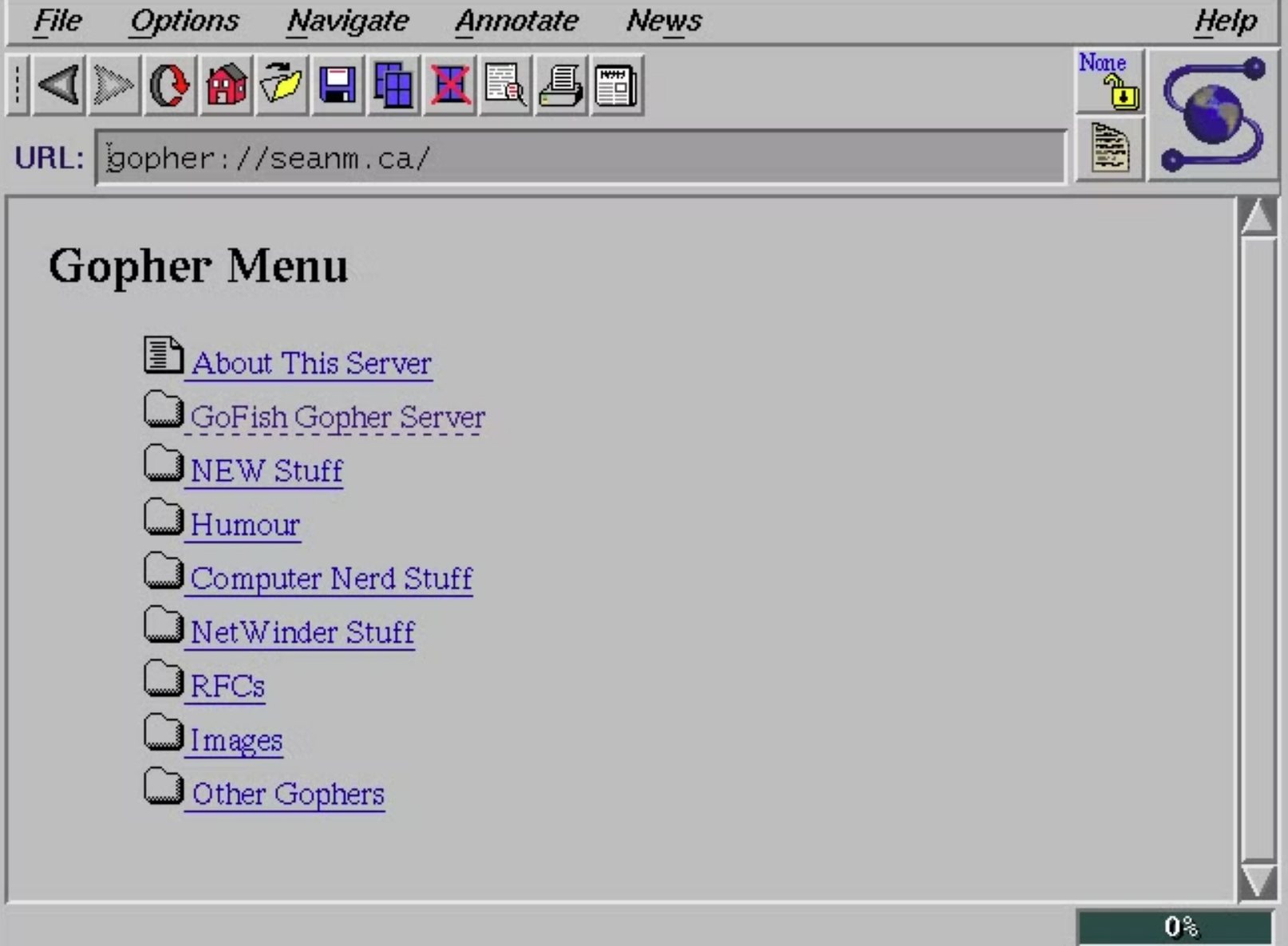
Licensing alone did not kill Gopher. The web was more flexible, and the Mosaic browser soon made it more visually attractive and easier to use. Nevertheless, the University of Minnesota’s decision gave developers a very practical reason to invest their energy elsewhere. Gopher never disappeared completely and still survives today as a small digital subculture, but it never again posed a serious threat to the web.
Openness, of course, did not prevent commercialization. It accelerated it. Any company could launch a website, any programmer could write a browser, and any publisher could connect its content to the rest of the network. In 1993, Mosaic made the web accessible to a much wider audience. Advertising, online shops, and the browser wars soon followed. The open land began acquiring owners, but the roads still belonged to everyone.
Over time, however, the way people travelled along those roads began to change. An early hyperlink was a human recommendation: the author of one page consciously directed readers toward another. Today’s feed turns recommendations into invisible decisions made by systems designed to maximize attention and keep users from leaving. Pages still have addresses, but platforms increasingly determine what appears, in what order, and before how many pairs of eyes. The web’s formal openness has survived, while the user’s practical autonomy has been severely weakened, although users themselves are often barely aware of it.
Decades later, Berners-Lee would describe the concentration of power, the market in personal data, and systems designed to trap people inside individual platforms as the opposite of the decentralized spirit on which the original web had been built.
Still, 1991 should not be romanticized as a lost digital Eden. The early web was available only to a narrow group of people with access to university and research computers. It was technically demanding and socially much smaller than the word "worldwide" might suggest.
Yet those who witnessed that period will agree that a golden—or at the very least, a special—age existed before social networks, algorithms, and the other "guides" that now direct our movement through the web. In the late 1990s, the internet still felt exotic and almost surreal. Today, the internet as we once knew it is barely recognizable, and its founding idea—perhaps it is time to admit it—is no longer there.
Sources
- Home.cern A short history of the Web – Home | CERN https://home.cern/science/computing/the-birth-of-the-web/short-history-web/
- W3.org Qualifiers on Hypertext links... https://www.w3.org/People/Berners-Lee/1991/08/art-6484.txt
- Webfoundation.org Sir Tim Berners-Lee invented the World Wide Web in 1989. https://webfoundation.org/about/vision/history-of-the-web/
- Computerhistory.org Inventing the Web https://www.computerhistory.org/revolution/the-web/20/385
- Ahro.slac.stanford.edu Early Web Chronology and Documents (1991-1994) | SLAC Archives, History & Records Office https://ahro.slac.stanford.edu/wwwslac-exhibit/early-web-chronology-and-documents-1991-1994
- The Atlantic The Story Behind the First Photograph Ever Posted on the Web https://www.theatlantic.com/technology/archive/2012/07/the-story-behind-the-first-photograph-ever-posted-on-the-web/259655/
Comments