
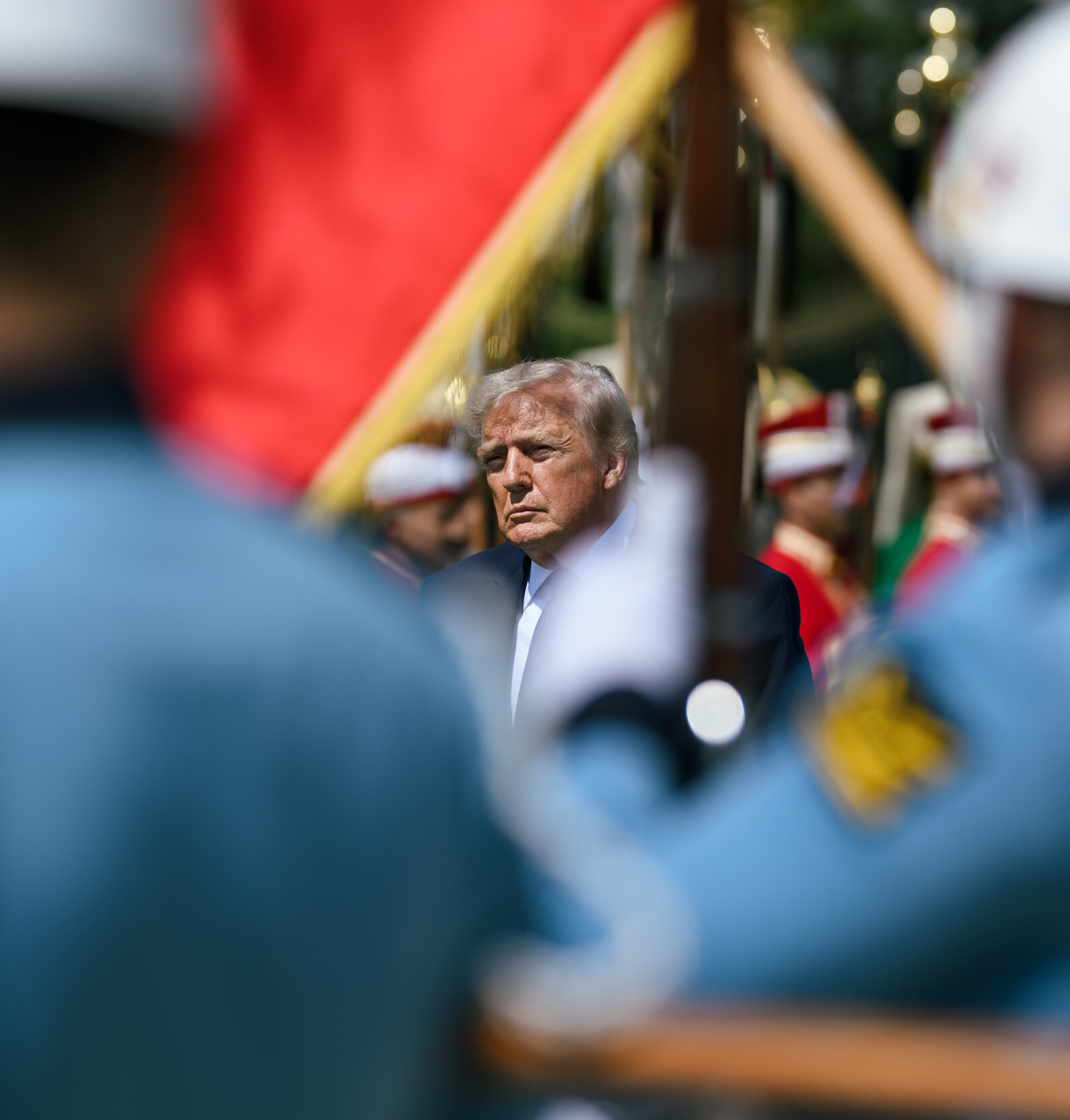
A third term may be all but impossible under the law, but US politics has long shown that political will often come before discovery of legal loopholes.
Jiang Xueqin, the increasingly prominent Chinese-Canadian educator and online geopolitical commentator known as "Professor Jiang" (whom we recently profiled at length; see: The Viral Prophet of the American Century’s Collapse), has acquired an almost prophetic reputation in recent months. During the presidential campaign, he predicted that Donald Trump would return to the White House and that the United States would move toward a major confrontation with Iran. Many will naturally argue that neither outcome was especially difficult to foresee, but those predictions are precisely what made Jiang’s name.
His method is highly distinctive, which certainly helps explain his popularity. Jiang describes it as a combination of historical patterns, geopolitical incentives and "game theory." It is not conventional academic forecasting, but it is compelling enough to have attracted a large audience. That brings us to his latest claim: that Trump will, "one way or another," secure a third presidential term. The prediction is intriguing, even if it is legally unconvincing, because it touches the exposed nerve of the current American political moment: what happens when the constitutional rules remain unchanged, but political actors become increasingly willing to test the limits of their enforcement?
At first glance, the answer should be straightforward. Trump was elected in 2016 and again in 2024, while the 22nd Amendment to the US Constitution states that no person may be elected president more than twice. Formally changing that rule would require another constitutional amendment, and Article V establishes an extraordinarily demanding process: approval by two-thirds of both houses of Congress, or a convention requested by two-thirds of state legislatures, followed by ratification by three-quarters of the states. That would be an almost insurmountable obstacle for any amendment that appeared to have been written for the benefit of one man, particularly in a deeply polarized country where half the political system already fears an authoritarian turn.
Trump’s politics, however, have never operated solely within the boundaries of what is formally possible. They begin by creating noise, then familiarity, and finally the impression that what seemed unthinkable yesterday has somehow become a perfectly plausible option today.
In an interview with NBC, Trump said he was "not joking" about seeking a third term and claimed that "there are methods" for doing so, though he declined to explain them. At the same time, his official merchandise store was selling "Trump 2028" hats bearing the slogan "Rewrite the Rules," an obvious reference to the Constitution. Steve Bannon, one of Trump’s earliest and most committed supporters, has likewise insisted that "there is a plan." All of this may be little more than provocation, symbolic merchandising and an attempt to keep opponents permanently off balance. Yet in American politics over the past several years, the line between performance and policy has repeatedly proved alarmingly thin.
Ulysses S. Grant and the Forgotten Third-Term Bid of 1880
The idea of an American president attempting to return to the White House after serving two terms did not begin with Donald Trump. Nearly a century before the adoption of the 22nd Amendment, Ulysses S. Grant — Union war hero and president from 1869 to 1877 — sought the Republican nomination for a third term. At the time, the Constitution did not prohibit him from doing so. The only real barrier was the political tradition established by George Washington when he stepped down after eight years in office.After leaving the White House, Grant embarked on an extensive world tour during which he was received almost like an American monarch. Upon his return, his allies — members of the powerful Republican faction known as the Stalwarts — attempted to make him a presidential candidate once again. They argued that after years of political scandal, social unrest and the still-unhealed wounds of the Civil War, the country needed a figure whose authority transcended ordinary partisan conflict.
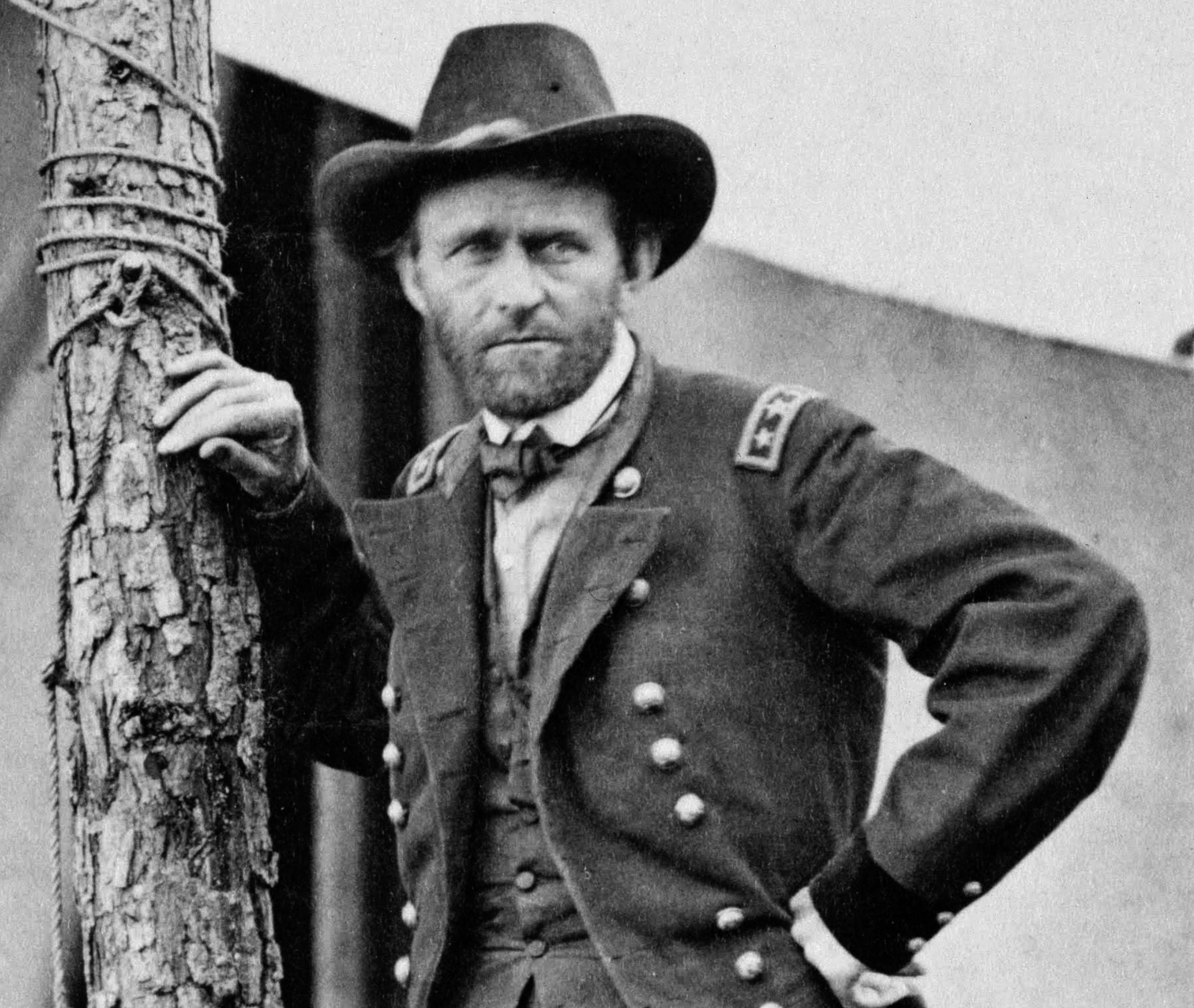
As noted, there was no constitutional provision at the time preventing a third term. What stopped Grant was political culture: the conviction that not even the country’s most celebrated general and a former president should be allowed to rise above the republican tradition of limited power. With Trump, the situation is almost exactly reversed. Today there is an explicit constitutional prohibition, but the political culture that is supposed to make that prohibition unquestionable has become considerably weaker. Grant’s failure is therefore a reminder that the American system has never rested on the text of the Constitution alone. It has also depended on the willingness of elites, political parties and the public to respect a boundary even when it might conceivably be circumvented by legal means.
The first and most frequently discussed scenario is the so-called vice-presidential loophole. Trump would not run for president, but for vice president alongside a loyal Republican candidate. After winning the election, that candidate would simply resign, allowing Trump, now vice president, to assume the presidency. The 25th Amendment does indeed provide that the vice president becomes president upon the president’s death, resignation or removal from office. But the 12th Amendment immediately presents an obstacle: anyone constitutionally ineligible to serve as president is also ineligible to serve as vice president. Therefore, if the 22nd Amendment makes Trump ineligible for another presidential term because he has already been elected twice, the most straightforward interpretation is that he would also be ineligible for the vice presidency.
There is, however, a narrow and potentially dangerous legal nuance. The text of the 22nd Amendment states that no person may be "elected" president more than twice. It does not explicitly say that such a person may never again "serve" as president after reaching the office through succession. Over the years, some legal scholars have therefore considered hypothetical scenarios in which a twice-elected president might return to power not by being elected president again, but through a vice-presidential or succession arrangement. More recent legal scholarship generally concludes that such a maneuver would violate the purpose of the 22nd Amendment. Yet the fact that the question can be debated at all demonstrates that the US Constitution does not enforce itself. It requires interpreters, courts, election officials, Congress and sufficient political will to ensure that its rules are upheld.
Franklin Roosevelt and the Moment War Broke the Tradition
Before Franklin Delano Roosevelt, no American president had ever won a third term. The Constitution did not prohibit it, but ever since George Washington there had been an almost sacred unwritten rule that presidents should step down after eight years. Roosevelt broke that tradition in 1940, at a moment when Europe was already at war, France had been defeated, Britain was under German attack and the American public was divided between isolationism and the fear that the conflict would eventually cross the Atlantic.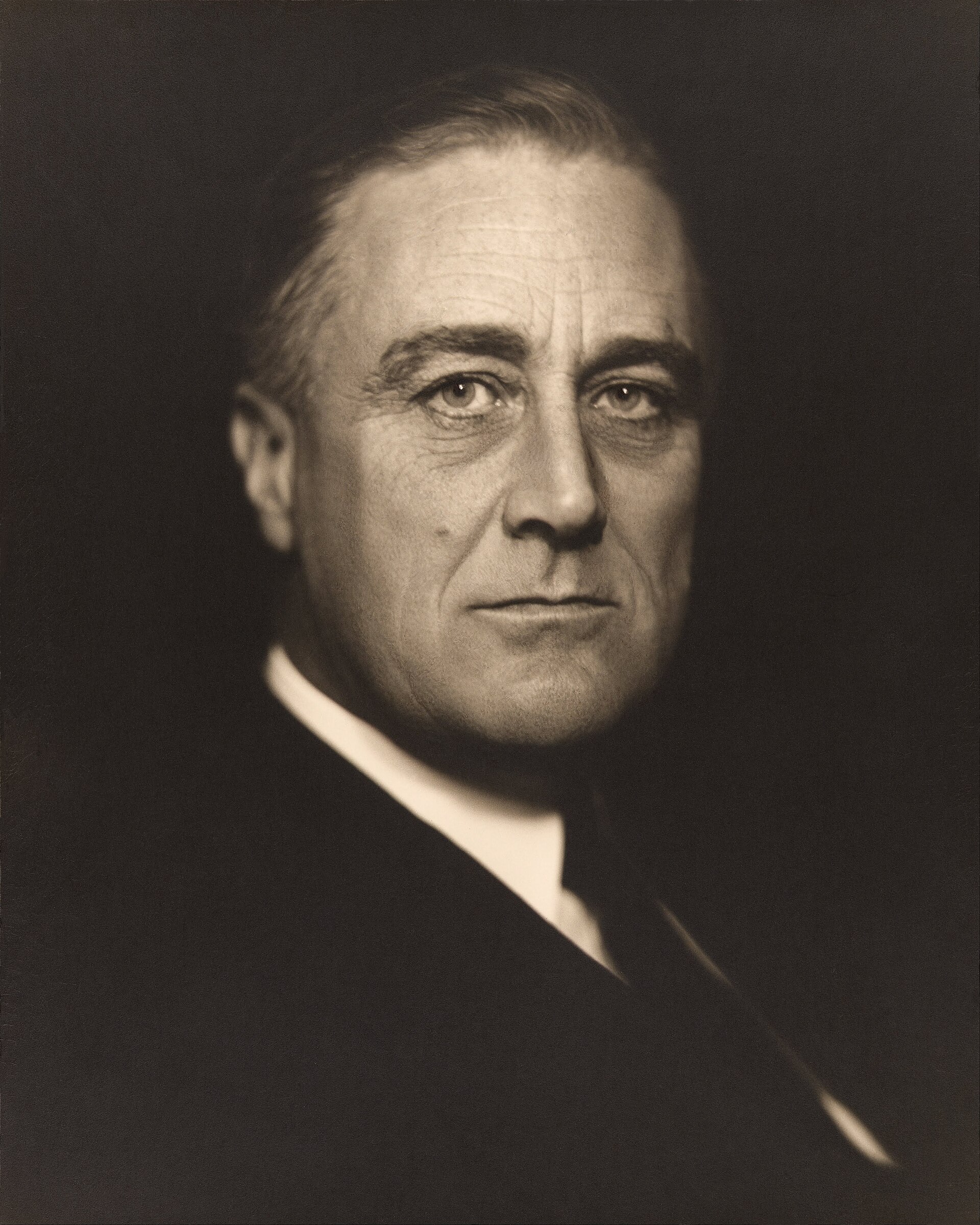
His example illustrates why wartime crises are so attractive to any government seeking to extend its political lifespan. War does not automatically abolish elections, but it changes how voters perceive continuity, loyalty and risk. A president is no longer merely a party candidate, but the commander-in-chief, the embodiment of the state and the guarantor of stability. What might appear in peacetime to be a dangerous concentration of power can be presented during wartime as responsibility and necessity.
Roosevelt’s fourth term lasted only a few months, but the experience of his prolonged presidency led Republicans and some Democrats to transform an unwritten tradition into a constitutional prohibition. The 22nd Amendment was proposed in 1947 and ratified in 1951.
Trump himself later acknowledged that it was, as he put it, "pretty clear" that he was not permitted to run again. But this is a politician who frequently changes his position and who had spent the preceding months flirting with very different interpretations.
The theory of a vice-presidential candidacy would almost certainly collide quickly with the 12th Amendment. In other words, the legal door is almost entirely closed. But Trump’s political style consists of standing before a closed door for long enough that part of the public begins to believe it is merely an unjust barrier obstructing the will of the people.
Jiang’s second scenario is even more dramatic: a state of war or a major foreign-policy crisis that would allow Trump to remain in power through emergency authority. This scenario is even weaker as a matter of constitutional law. The United States held presidential elections during the Civil War and both world wars. A president cannot simply cancel an election, and the 20th Amendment clearly states that the terms of the president and vice president end at noon on January 20. War, a state of emergency or a military crisis does not automatically produce additional years in the White House.
Yet in a country that has already experienced January 6, a crisis would not necessarily take the form of a conventional coup. It would be enough for a sufficient number of political actors to reject defeat or the established order, while enough institutions hesitated, calculated or became frightened.
Truman’s Almost-Forgotten Exception
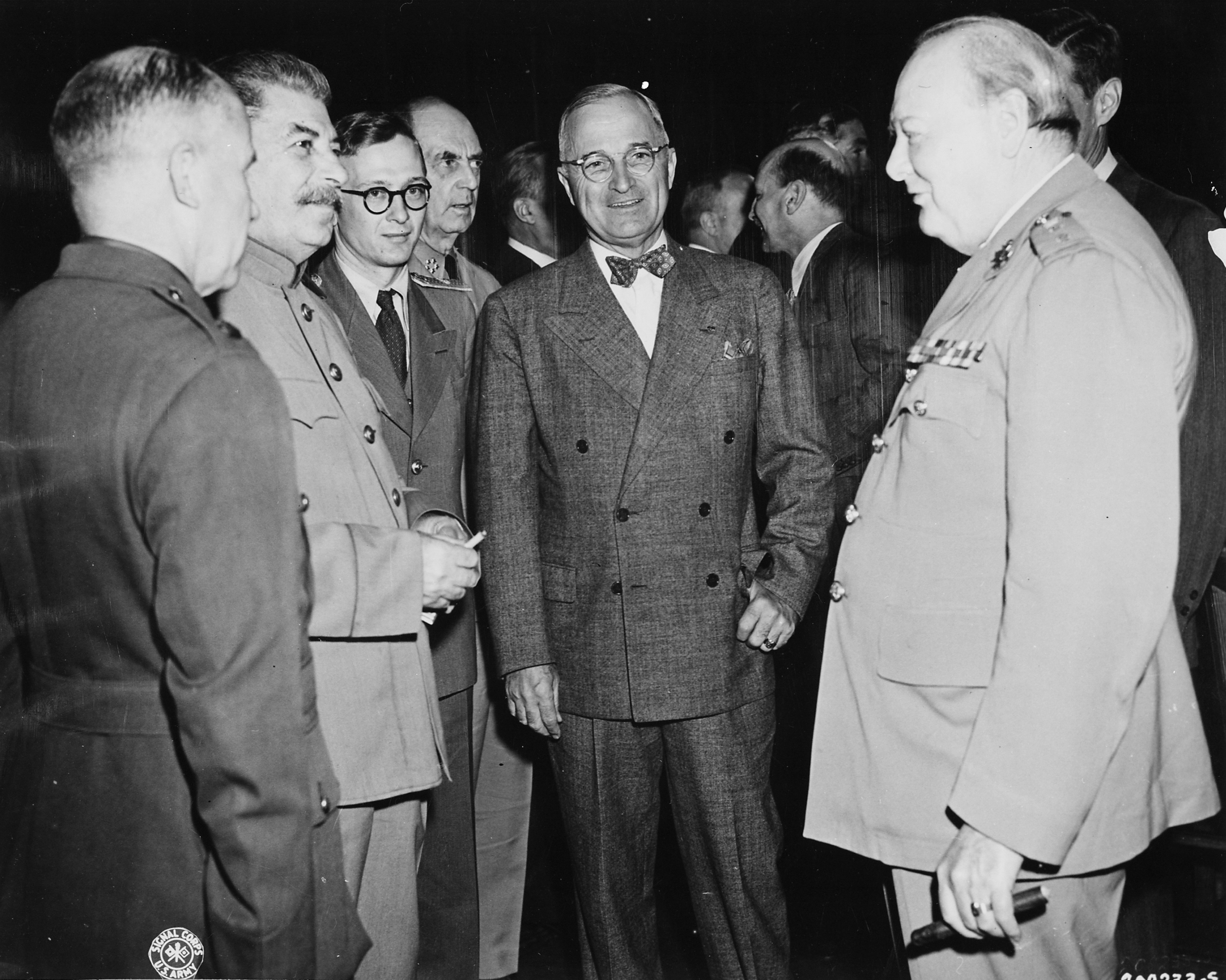
When the 22nd Amendment limited American presidents to two elected terms in 1951, its text included one carefully designed exception. The new rule did not apply to the president who was in office when Congress proposed the amendment. That president was Harry Truman, who entered the White House after Roosevelt’s death in April 1945, completed nearly all of his fourth term and then won a term of his own in 1948.Without that exception, Truman would have been ineligible to run again under the new rule. Because he had served more than two years of Roosevelt’s term, he would have been permitted to win only one additional election — which he had already done in 1948. For political and constitutional reasons, however, Congress decided that the restriction would not be applied retroactively to the sitting president. Truman was therefore entirely free to seek another full term in 1952, even though victory would have allowed him to spend nearly twelve years at the head of the country.
Jiang may be overstating the likelihood of his specific prediction, but not necessarily the broader direction in which events are moving. A third Trump term is unlikely to emerge from a clever legal maneuver. It is even less likely to result from a straightforward wartime extension of presidential power. But it cannot be dismissed as a political project designed to manufacture a permanent state of exception: an atmosphere in which Trump is presented not as an "ordinary president limited by term restrictions," but as an indispensable leader fighting internal enemies, the migrant threat, the "deep state," China, Iran or some new global shock that he may even have helped to create. Within such a narrative, the two-term limit becomes, in the eyes of his supporters, less a constitutional boundary than a bureaucratic obstruction to a "historic mission."
American democracy has long lived on its own mythology of institutional resilience. That mythology was not entirely hollow. The system did survive the Civil War, assassinations, the Great Depression, two world wars, Watergate and numerous other crises. But the problem today is different. The United States is no longer a self-confident industrial republic able to rely on an expanding middle class, triumphant productive capitalism and a relative consensus among its elites. It is an empire under pressure, a society marked by deep class contradictions and a state that finds it increasingly difficult to finance its global dominance without fueling political radicalization at home. In such an environment, the personalization of power does not appear as an accidental eccentricity, but as a symptom.
The conclusion must therefore remain twofold. Legally, a third Trump term would be extraordinarily difficult to achieve and would almost certainly be blocked by the 22nd Amendment, the 12th Amendment and the structure of the electoral calendar itself. Politically, however, the possibility should not be dismissed as a mere joke. Not because the most likely scenario is that Trump will simply refuse to leave the White House on January 20, 2029, and everyone will allow him to remain there, but because the boundaries of American politics have already been shifting for years through precisely this kind of "impossible" declaration — first ridiculed, then normalized and finally transformed into the subject of serious legal debate. The odds are not high. But in a country that is simultaneously a nuclear superpower, a polarized society and an anxious empire in relative decline, neither are they low enough to be dismissed lightly.
Sources
- Constitution.congress.gov U.S. Constitution - Twenty-Second Amendment | Resources | Constitution Annotated | Congress.gov | Library of Congress https://constitution.congress.gov/constitution/amendment-22/
- Reuters Trump says he is not joking about third presidential term | Reuters https://www.reuters.com/world/us/trump-says-he-is-not-joking-about-third-presidential-term-2025-03-30/
- Constitution.congress.gov Amdt25.1 Overview of Twenty-Fifth Amendment, Presidential Vacancy and Disability https://constitution.congress.gov/browse/essay/amdt25-1/ALDE_00013871/
- South China Morning Post Jiang Xueqin, the viral ‘prophet’ predicting the world’s fate from a Beijing classroom | South China Morning Post https://www.scmp.com/news/china/politics/article/3348289/jiang-xueqin-viral-prophet-predicting-worlds-fate-beijing-classroom
- Reuters Top House Republican sees no path forward for third Trump term | Reuters https://www.reuters.com/world/us/no-path-amend-constitution-allowing-trump-third-term-us-house-leader-says-2025-10-28/
- Brennancenter.org Canceled Election https://www.brennancenter.org/our-work/research-reports/canceled-election
Comments