
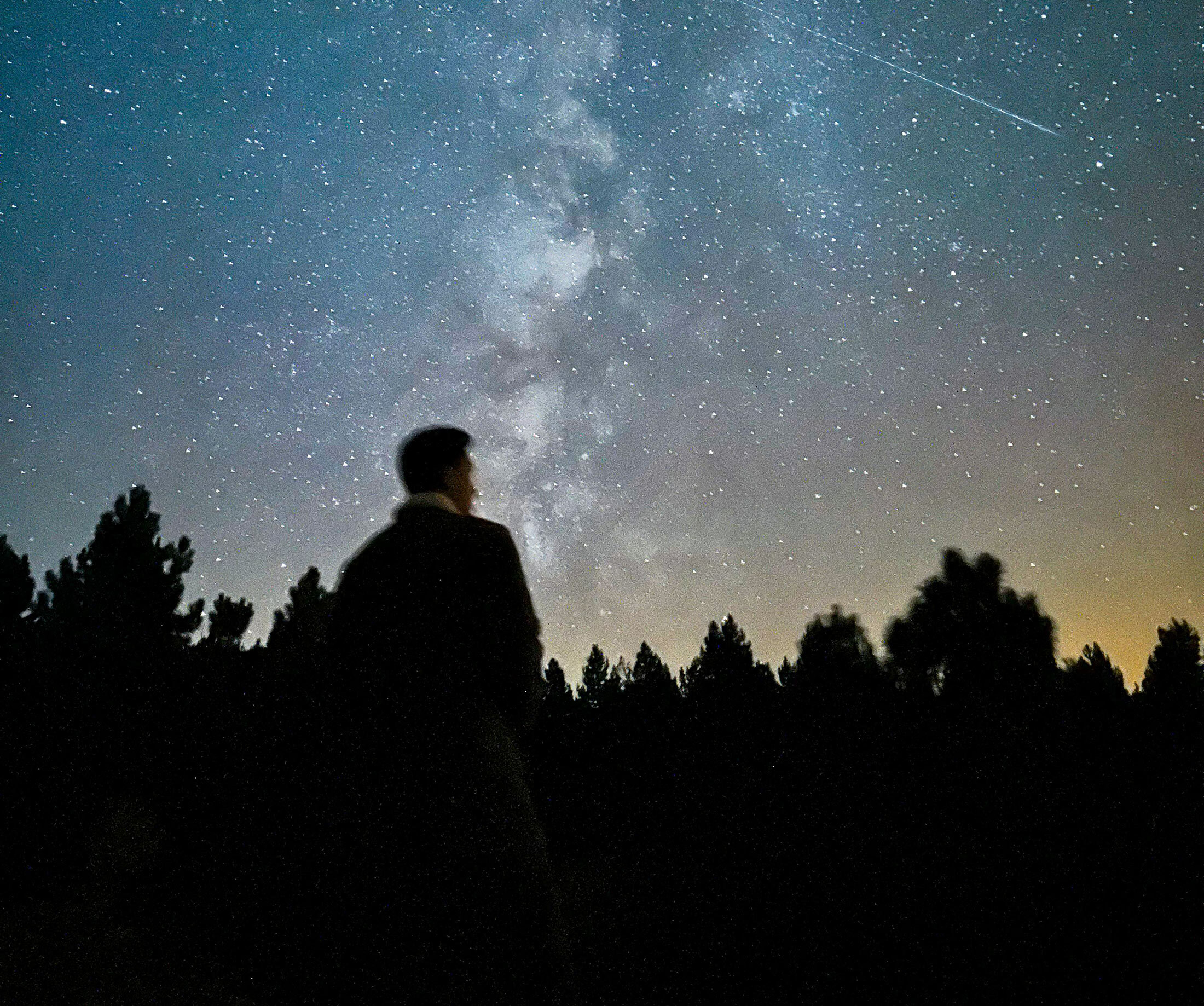
Sometimes a coincidence happens so precisely that even when reason can explain it, it's still hard to believe that everything was purely accidental.
What if you are a genuine skeptic, a materialist in the sense that anything supernatural is, by definition, not "natural" to you, yet at the same time you have not—at least not yet—turned into a lump of rock rolling indifferently across another rock in space? I always think of The X-Files and its famous "I Want to Believe" slogan. Not as some wedge driven between agnosticism and atheism, but as a very personal mental paradox, something closer to: "It would be nice if..."
Because even once almost everything has been explained to us, from lightning to solar eclipses, that still does not erase the part of us that quietly longs for something strange, unfinished, unresolved. The fascination with the unknown remains alive, except sometimes it feels as though it has nowhere left to go. Whatever happens, we are always one click away from an explanation—an annoyingly precise one. I would not want it any other way, but neither would I want to euthanize that desire for something incomplete and undiscovered inside myself.
Over time, a person can easily begin to feel as though they live in the tiny overlap between two rather large circles, somewhere between stone and vapor, hardened unbelievers and blind believers. And if that space between them really is so small, perhaps that does not matter. Maybe it is simultaneously enormous as a field for exploration, for poking around in something that belongs to both worlds. Wouldn’t that be fascinating? Something almost magical, but something science—or preferably a scientist with an impressively famous name—might actually have something to say about?
There is no anniversary involved here, nor was this planned, but ever since the last article (see: Synthetic Jung Is Destroying Reason) that dealt with Jung, the man has been constantly on my mind—which is, as you will see, the perfect little anecdote for exactly what we are about to discuss today.
We are going to talk about coincidences—or perhaps "coincidences." Because some coincidences, without quotation marks, have the decency to pass unnoticed. Others seem to arrive at such an impossibly precise moment that, for a few seconds, the world stops looking indifferent.
Imagine this. You think about someone you have not spoken to in years, and your phone rings with their name on the screen. You dream about an unusual symbol and then see it somewhere you have never noticed it before. You are thinking about a decision that could change your life, you open a book at random, and there is a sentence describing exactly what you are considering. Reason tells you it is coincidence. Something inside you nevertheless asks: all right, but why now? How did that happen?
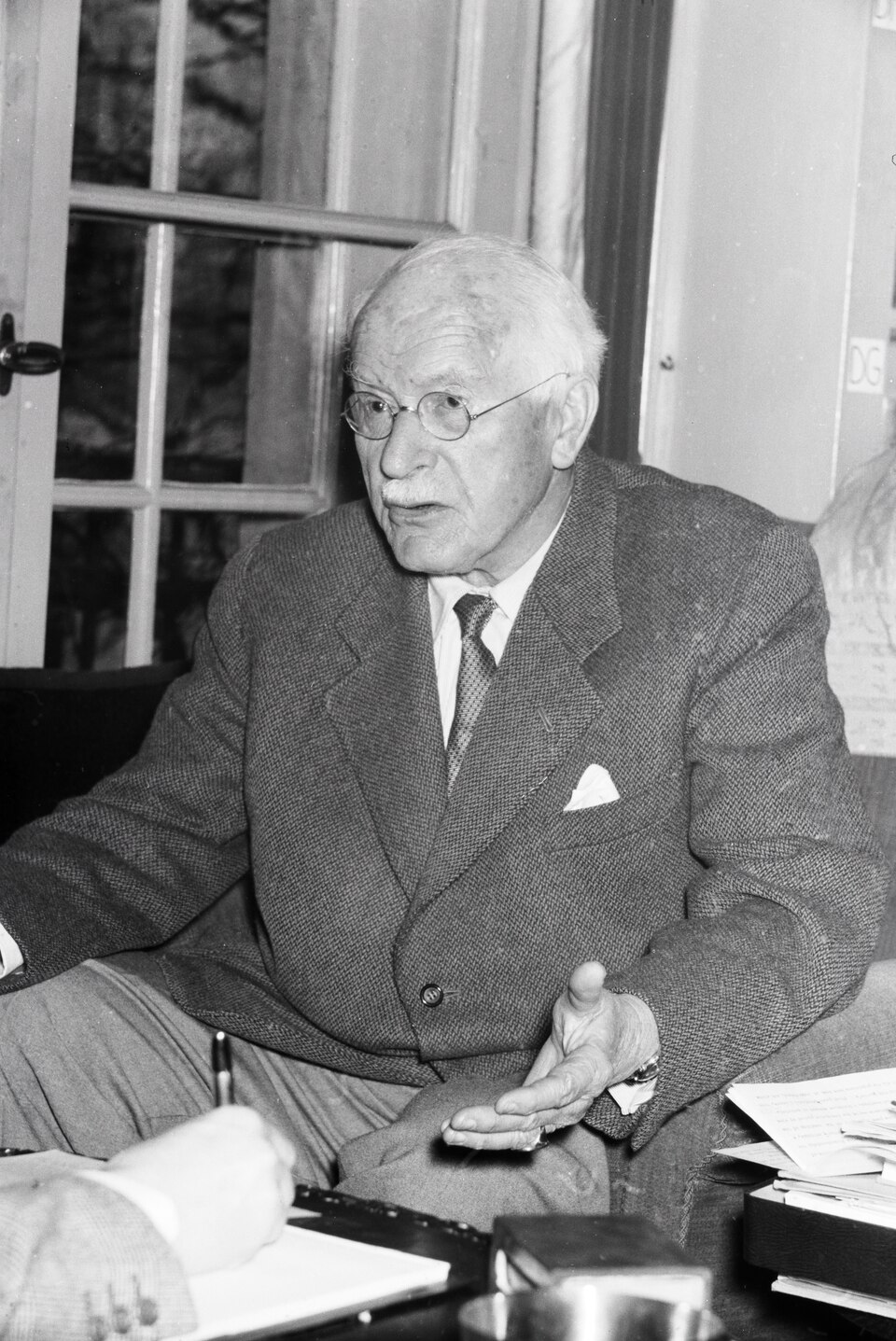
Most people know the feeling long before they know its name. The internet has turned it into an industry of angel numbers, "messages from the universe," and videos in which every supermarket receipt is treated like a cosmic telegram. But the original idea of Carl Gustav Jung, the founder of analytical psychology who apparently refuses to leave us alone these days, was considerably more demanding. Jung was not asking whether the universe sends us cute little instructions. He was asking whether an inner event and an outer event might sometimes be connected not by cause, but by meaning.
For this phenomenon, he used the word synchronicity.
What is it? Apart from that excellent 1983 Police album ("Synchronicity")—yes, including "Mother"; do not skip it!—the simplest definition is this: synchronicity is a meaningful coincidence between something happening in the psyche and something happening in the outside world, where no causal link between the two can be identified.
In other words, your thought did not cause the phone call. Your dream did not summon the insect you found the following morning. And yet the person experiencing both events feels that they somehow belong to the same story. Jung therefore called synchronicity an "acausal connecting principle." He began developing the concept in the late 1920s, used the term publicly in 1930, and published its mature formulation in 1952. Not bad when you consider that three decades of thought are about to be squeezed into an article of five cards.
But there is an important distinction here, one that popular interpretations almost always flatten. "Acausal" does not mean that the events themselves have no causes. A phone call has a cause, just as a dream does. An insect lands on a window because of entirely earthly circumstances. Jung’s claim was that one event did not produce the other, but that meaning, as experienced by the observer—in other words, by us—binds them into a single whole. Synchronicity is therefore not the same thing as a miracle. It does not suspend the laws of nature. It merely suggests that causality may not be the only way human beings experience order.
Jung’s most famous example is almost too perfect not to arouse suspicion. He was treating a young patient who, in his description, was "stuck in rigid rationalism." During one session, she told him about a dream in which she had been given a golden scarab—a beetle associated in ancient Egypt with the sun and renewal. At that very moment, something began tapping against the window. Jung opened it and caught a golden-green rose chafer, a European beetle that bears a fair resemblance to a scarab. He handed it to his patient. According to Jung, the incident broke through her psychological defenses and finally allowed the therapy to begin moving forward properly.
One beetle, of course, did not overthrow physics. But something changed in that room. Jung was interested not merely in the improbability of the coincidence, but in its psychological effect. An external event appeared as a living version of an internal image at precisely the moment the patient needed some kind of transformation. Was it evidence of a deeper structure of reality, or simply an extraordinarily well-timed coincidence? Jung leaned toward the first possibility. A more cautious reader can remain firmly with the second while still admitting that the coincidence became a symbol with real consequences.
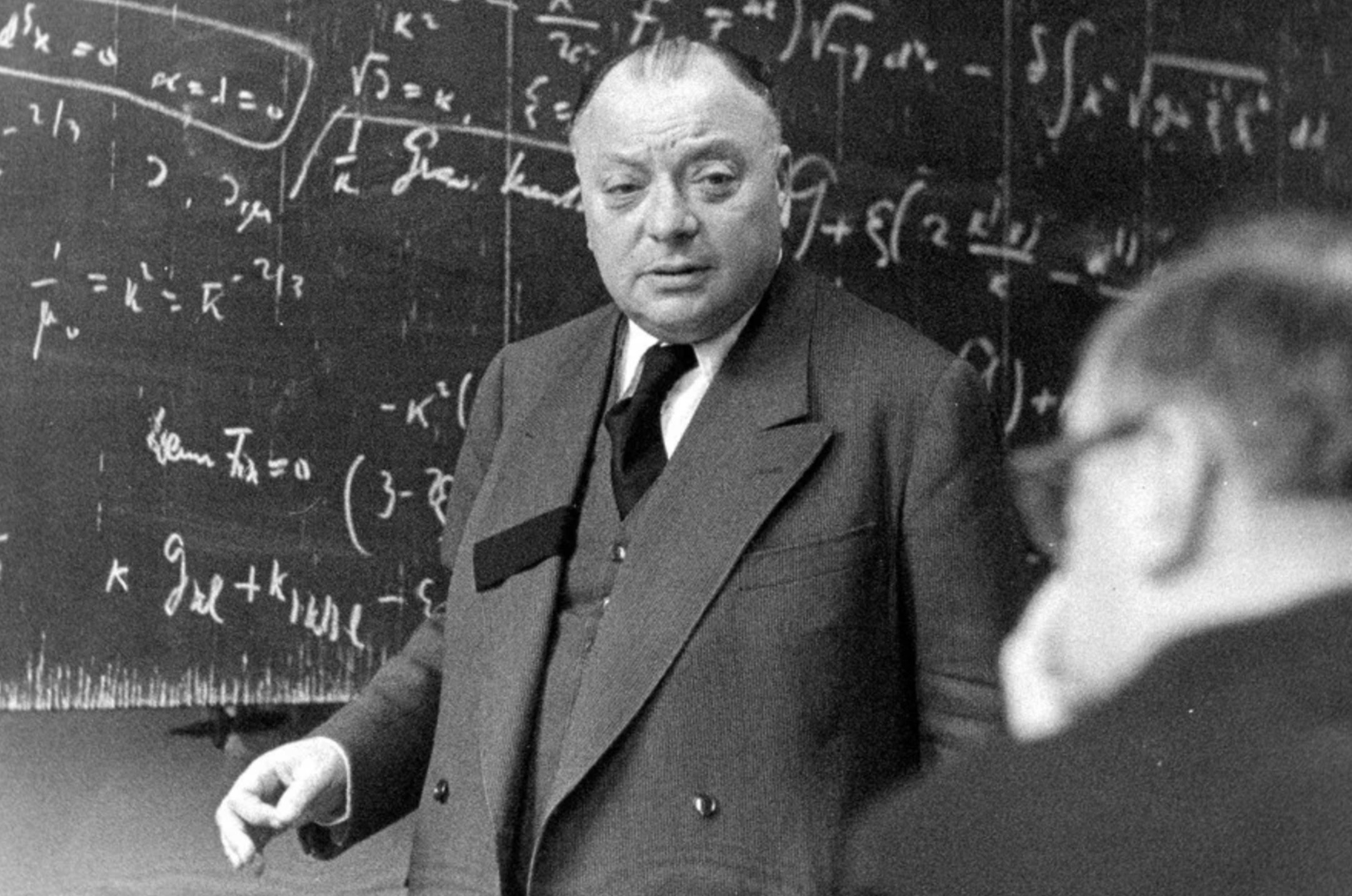
For years, Jung discussed these questions with Wolfgang Pauli, the Austrian physicist who won the Nobel Prize in Physics in 1945. Pauli was not some drawing-room mystic who happened to like the word "energy." Far from it. He was one of the great minds of quantum physics. The two men explored the possibility that psyche and matter might not be completely separate worlds, but different expressions of some deeper unity. In such a framework, synchronicity would be a moment in which those two faces of reality reveal themselves as connected.
This is where the modern internet would dump a bucket of quantum glitter over the whole thing and declare the mystery solved. It is not. Quantum physics does not prove that thoughts attract events, that the "frequency" of your desires can order you a romantic partner, or that the universe keeps an accounting ledger of our intentions. Pauli’s involvement shows that the question seriously interested a major physicist. It does not show that synchronicity has been experimentally confirmed.
Pauli, the Number 137 and the Strangest Hospital Room in Physics
There are numbers physicists use for calculations, and then there are numbers that begin to haunt them. For Wolfgang Pauli, that number was 137. More precisely, it is the approximate reciprocal of the fine-structure constant, denoted by the Greek letter α, one of nature’s fundamental dimensionless constants. It determines the strength of electromagnetic interaction—the force that allows electrons to remain bound to atomic nuclei, light to interact with matter, and the world to possess chemistry as we know it. Its reciprocal is approximately 137.036. Why that particular value? The question fascinated physicists for decades, and Pauli was close to obsessed with it.The number was especially seductive because it had no unit. It is not 137 metres, seconds, or kilograms, quantities defined using human conventions. It is a pure number built into the way electromagnetism behaves. In other words, intelligent beings on the other side of the universe could use completely different systems of measurement and would still arrive at the same α. To Pauli—a man capable of being both a ruthlessly rational physicist and Jung’s conversation partner on archetypes—such a constant seemed almost like a crack through which one might glimpse the architecture of reality. Physicists had found the number. What they had not found was an elegant explanation for why nature had chosen precisely that value.
Then, in 1958, Pauli developed pancreatic cancer and was admitted to the Red Cross Hospital in Zurich. When his final assistant, Swiss theoretical physicist Charles Enz, visited him there, Pauli drew his attention to something that had clearly struck him. Had Enz noticed the room number? It was 137. Enz later recorded the incident in his biography of Pauli. Pauli died in that room on December 15, 1958, at the age of 58.
Of course, room 137 caused nothing. Hospitals have numbered rooms, and a gravely ill man had to end up in one of them. Statistically speaking, the story may end right there. But if we are looking for an almost textbook example of what Jung meant by synchronicity, it is difficult to find a better one. A man spends decades thinking about one of the strangest numbers in physics, discusses meaningful coincidences with Jung, and then spends the final days of his life behind a door bearing that very number. Nothing caused anything—and yet everything looks as though it belongs to the same story. Jung would probably have found the entire point precisely there, in that difference between cause and meaning.
Jung did, however, attempt—something that says quite a lot about his curiosity—to find numerical support for his ideas by analyzing the horoscopes of married couples. The results did not survive statistical scrutiny. It is actually an instructive failure. Synchronicity concerns rare, personally charged events, while statistics searches for repeatable patterns. Jung tried to build a bridge between those two worlds, but astrology did not prove to be particularly sturdy construction material.
The skeptical response, meanwhile, is a powerful one. Human beings underestimate just how many opportunities for coincidence an ordinary life produces. Did you know, for example, that in a group of only 23 people there is already a greater than 50 percent chance that at least two will share a birthday? It feels strange because we instinctively compare one person against 365 possible days, forgetting how many different pairs can be compared. Our lives work in much the same way. Every day we experience thousands of thoughts, encounters, images, impressions and memories. When two of them line up in a striking way, we remember the hit. We do not keep records of all the moments when we thought about someone and that person did not call.
Psychology has a term for this tendency: apophenia, the perception of meaningful patterns among events that may in fact be unrelated. Add confirmation bias and selective memory to the equation. But a brain that searches for patterns is not a defective brain. An animal that mistakenly detects a predator in rustling grass wastes a small amount of energy. One that dismisses a real predator as a statistical coincidence may not get another chance. Evolution was not particularly generous toward indifference to patterns.
Modern research therefore tends not to ask whether the universe is actually sending messages. Instead, it studies the experience of meaningful coincidence as a psychological phenomenon. Diary studies involving 169 participants found, interestingly, that a positive mood on one day predicted a greater number of perceived coincidences the following day. Another series of studies involving more than 200 participants found an association between such experiences and greater engagement in creative activities. The mechanism remains unclear, but the conclusion is intriguing: what we notice also depends on the state we are in when we look.
And this is where a space opens up between gullibility and banal mockery. Saying that an event is statistically possible does not mean it is psychologically meaningless. A person might accidentally run into an old friend while contemplating whether to quit their job, and that friend might offer them a new opportunity. There is no need to assume that the cosmos arranged the meeting. But it is equally shallow to insist that "nothing happened" simply because we can describe the causal chain that brought both people to the same place. Coincidence and meaning are not mutually exclusive.
The problem begins when synchronicity stops being an invitation to reflect and becomes some kind of external command. If every repeated number becomes an instruction, every song on the radio a prophecy, and every unpleasant encounter evidence of a hidden conspiracy, then a person is no longer using symbols to understand themselves. They are using the world as a screen onto which they project their own fears and desires. Social-media algorithms are delighted to help. Watch one video about 11:11 and the platform will happily deliver an entire celestial bureaucracy to your feed. That is not synchronicity. That is a recommendation system wearing a halo.
A more mature relationship with the idea begins with a different question. Not: what is the universe ordering me to do? But: why did this particular event produce so much meaning in me? What was I already feeling but had not admitted to myself? What inner theme suddenly appeared in an external form? This approach does not require believing that thoughts control matter. It is enough to accept that the psyche can make use of events much as it uses dreams—it takes whatever is available and turns it into an image of its own condition.
Perhaps Jung did not discover a secret seam stitching mind and universe together. Perhaps he simply gave an unusually precise name to the moment when coincidence becomes a mirror. But that would hardly be a trivial discovery. Modern culture is exceptionally good at explaining how things happened and much less certain when asked what they mean to us. Synchronicity survives in that gap. As a reminder that human life is not made only of causes. It is also made of events that find us at the moment we are ready to understand them.
The universe may not have sent the message. But that does not mean a message was never created.
Sources
- Onlinelibrary.wiley.com Psyche, Matter and Synchronicity https://onlinelibrary.wiley.com/doi/abs/10.1111/j.1465-5922.1995.00571.x
- Irep.ntu.ac.uk Exploring the meaning in meaningful coincidences: an interpretative phenomenological analysis of synchronicity in therapy - IRep - Nottingham Trent University https://irep.ntu.ac.uk/id/eprint/34620/
- Jstor.org Synchronicity: An Acausal Connecting Principle. https://www.jstor.org/stable/j.ctt7s94k
- Academic.oup.com No Time to be Brief: A scientific biography of Wolfgang Pauli https://academic.oup.com/book/25794
- Physics.nist.gov Current advances: The fine-structure constant https://physics.nist.gov/cuu/Constants/alpha.html
- Pubmed.ncbi.nlm.nih.gov Structural Aspects of Synchronistic Moments in Psychotherapy-Findings of an Empirical Study of Synchronicities in Psychotherapy and Psychoanalysis1 - PubMed https://pubmed.ncbi.nlm.nih.gov/38214301/
- Pmc.ncbi.nlm.nih.gov An underexplored pathway to life satisfaction: The development and validation of the synchronicity awareness and meaning-detecting scale - PMC https://pmc.ncbi.nlm.nih.gov/articles/PMC9885050/
- Onlinelibrary.wiley.com Beyond synchronicity: the worldview of Carl Gustav Jung and Wolfgang Pauli https://onlinelibrary.wiley.com/doi/10.1111/j.0021-8774.2004.00496.x
Comments