
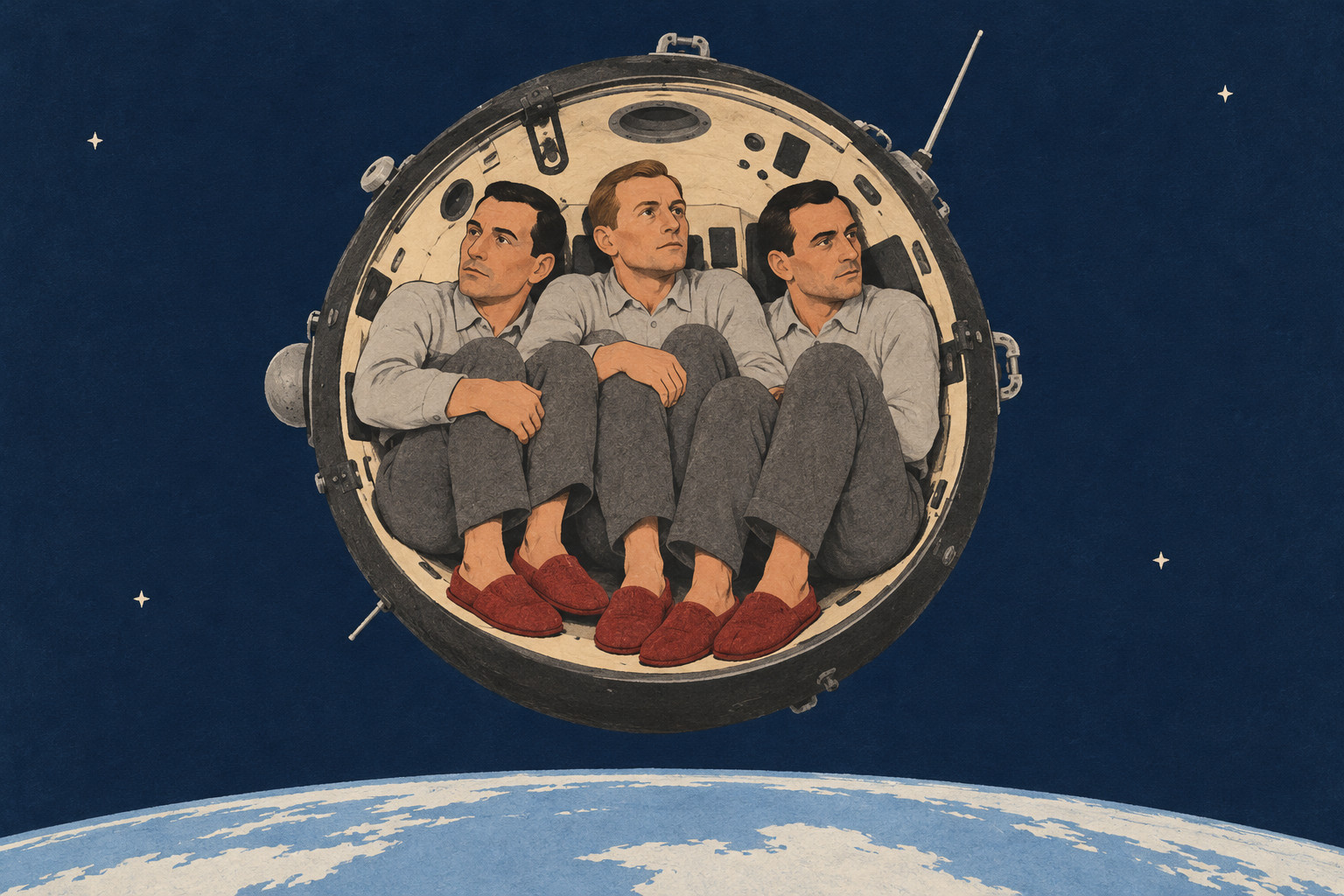
At the top of the rocket, each of the three Soviet cosmonauts removed his blue jacket and boots, slipped on a pair of slippers and squeezed into the capsule wearing light gray woolen trousers and a shirt. In photographs, they look less like men about to leave Earth than passengers preparing to spend the night on a train. It was not because spaceflight had suddenly become safe enough to attempt in shirtsleeves. There was simply no room in the capsule for pressure suits.
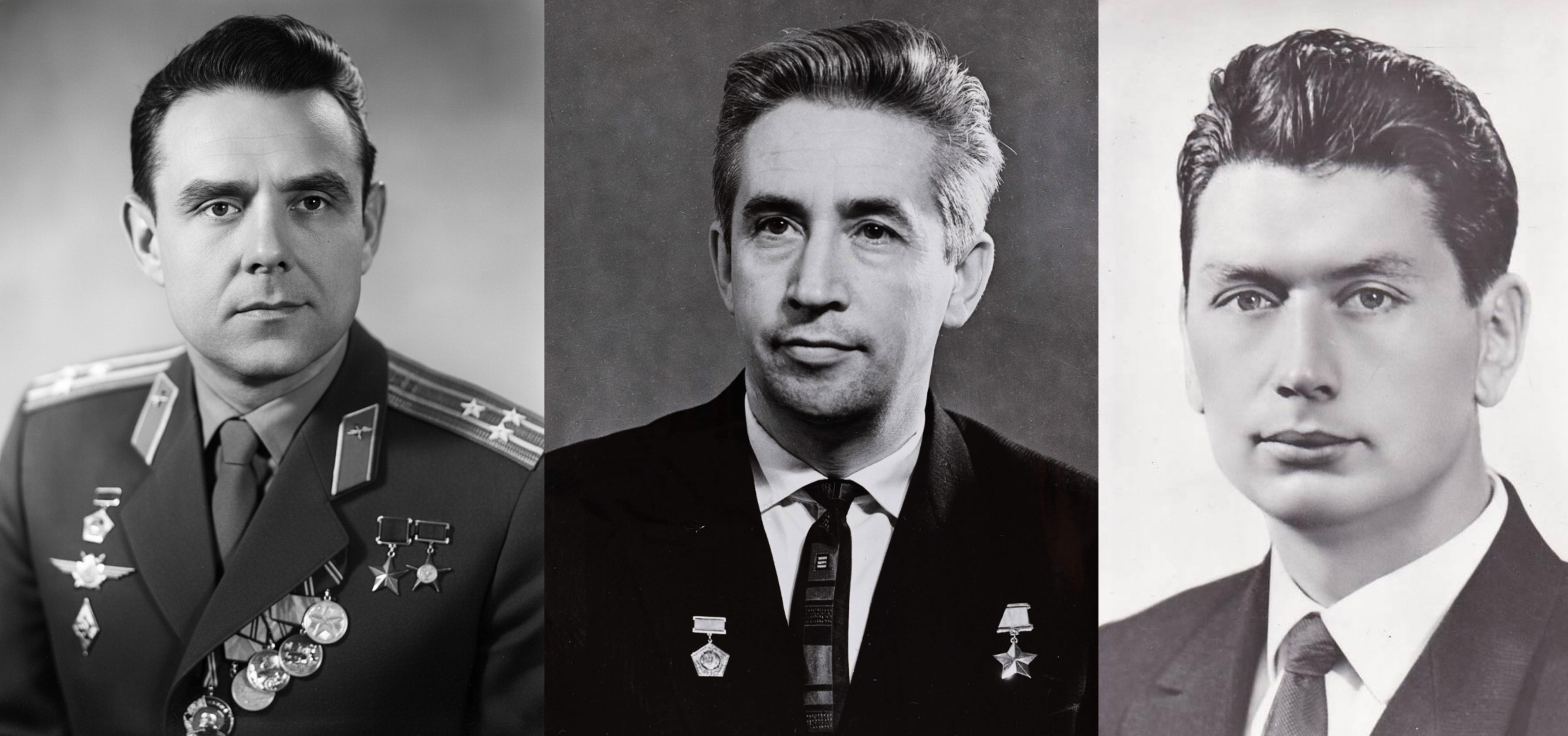
Vladimir Komarov, Konstantin Feoktistov and Boris Yegorov settled into a spacecraft derived from Vostok, which had been designed for just one person. If the cabin had lost pressure, all three would have died. During the first few dozen seconds after launch, they had no realistic means of escape. Nor could they eject from the capsule before landing, as earlier cosmonauts had done. Instead, they depended on a new landing system that had been successfully tested in space only once before their flight.
Voskhod 1 therefore belongs to a particularly instructive category of historical events: it was a successful gamble. Failed gambles usually lead to investigations, new rules and the names of the dead. Successful ones enter the history books as proof of courage and technological superiority. The fact that nothing went wrong can easily obscure the fact that almost nothing was allowed to go wrong.
Komarov’s Next Gamble
Vladimir Komarov emerged from Voskhod as the first person to command a multi-person spacecraft. In April 1967, he was due to claim another first: aboard Soyuz 1, he would become the first person to fly into space twice. But the new spacecraft was not yet ready for such a demonstration. All three previous uncrewed tests had ended with serious malfunctions, and the problems continued as soon as Komarov reached orbit.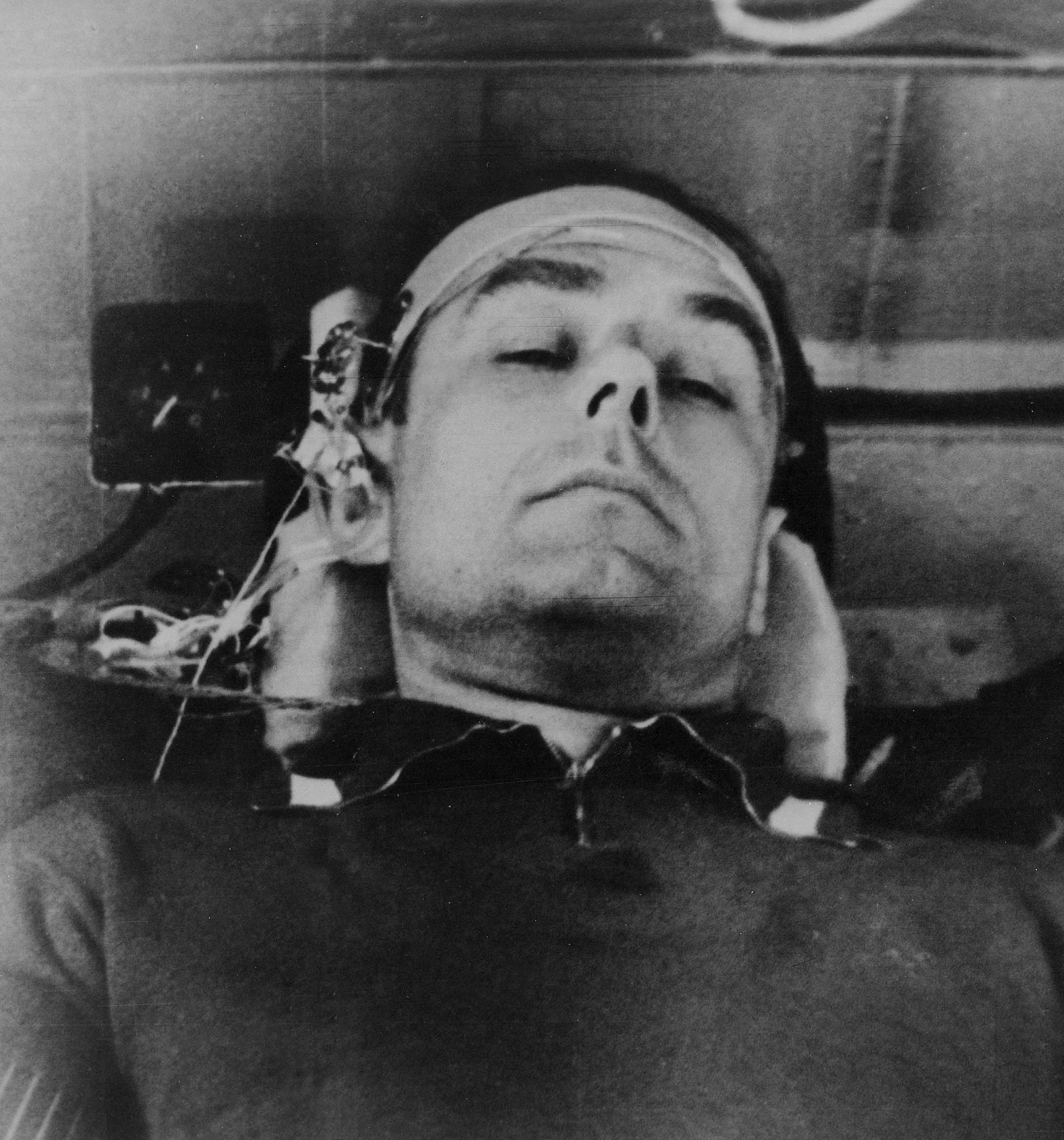
Komarov thus became both the first person to complete two spaceflights and the first to die during a space mission. The difference between Voskhod 1 and Soyuz 1 was not the presence of political pressure or the crew’s willingness to accept risk. The difference was that the chain of improvisations held together the first time and broke the second. Voskhod’s success could be celebrated as proof that the limits were there to be stretched. Soyuz demonstrated that physics does not remember previous victories.
Three Men Before the Americans Could Send Two
In 1964, the space race did not yet look like a straight road to the Moon. It resembled a giant scoreboard. The Soviet Union had launched the first satellite, the first man and the first woman into space. The United States was preparing Gemini, a two-person spacecraft intended to develop the skills needed to change orbits, rendezvous and dock with another spacecraft, and endure long missions in space. The first true Soviet multi-person spacecraft, the future Soyuz, was not yet ready. Moscow therefore found a shortcut: it would send three men before the Americans could send two.
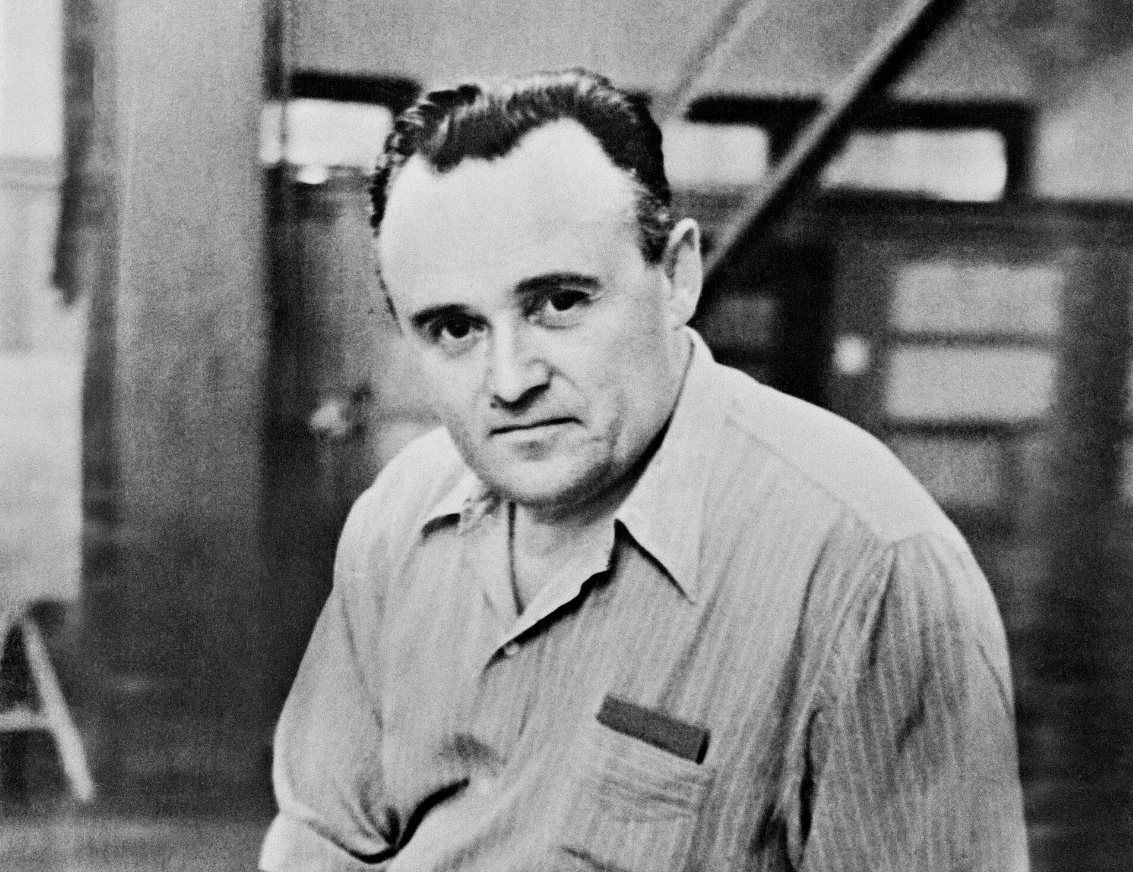
Later popular accounts attributed the entire idea to Soviet leader Nikita Khrushchev. The documents tell a somewhat messier story, but the political motive is beyond dispute. The Soviet leadership wanted another spectacular first, and chief designer Sergei Korolev accepted the challenge. At that point, a newspaper headline had effectively become one of the design requirements. The engineers were no longer calculating only what needed to be added to the spacecraft. They also had to determine what could be removed.
Voskhod’s external dimensions remained almost identical to those of Vostok. The large ejection seat with its personal parachute was removed and replaced by three shock-absorbing couches arranged in a cramped triangle. The main instrument panel was no longer directly in front of the commander, but off to his left. According to General Nikolai Kamanin, who oversaw Soviet cosmonaut training, each crew member had roughly one-fifth of the space and air that a single person had enjoyed aboard Vostok.
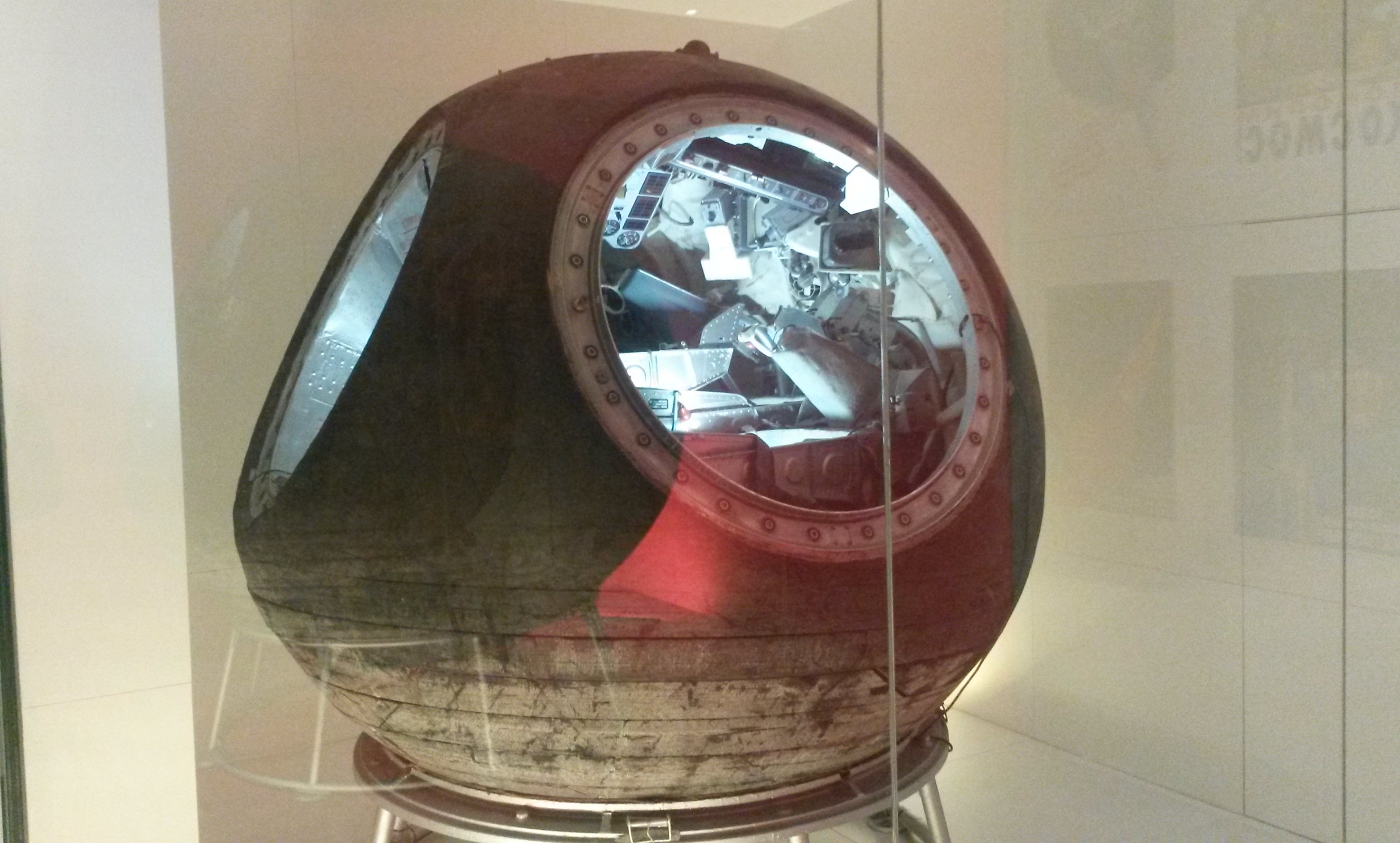
As already noted, pressure suits were not declared unnecessary because of some great advance in safety. They simply did not fit. Military doctors and sections of the Soviet Air Force opposed the decision, but Korolev’s design bureau pushed it through under the pressure of the deadline. Soviet propaganda would later present the shirtsleeve flight almost as proof of the new spacecraft’s comfort. It was a Cold War sleight of hand perfectly suited to its era: a safety flaw had been rebranded as a technological advantage.
Five Days Between Dummies and Human Beings
Yet Voskhod was not merely a sham assembled from three seats and effective propaganda. Because the crew had to remain inside the capsule all the way to the ground, engineers developed a new soft-landing system. Parachutes would slow the capsule, while a probe about 1.2 meters long would touch the ground a moment before impact. That contact triggered a small rocket motor in the parachute harness, almost eliminating the capsule’s remaining speed. A backup retrorocket was also added because three people could not spend days waiting for the natural decay of their orbit to bring them back into the atmosphere.
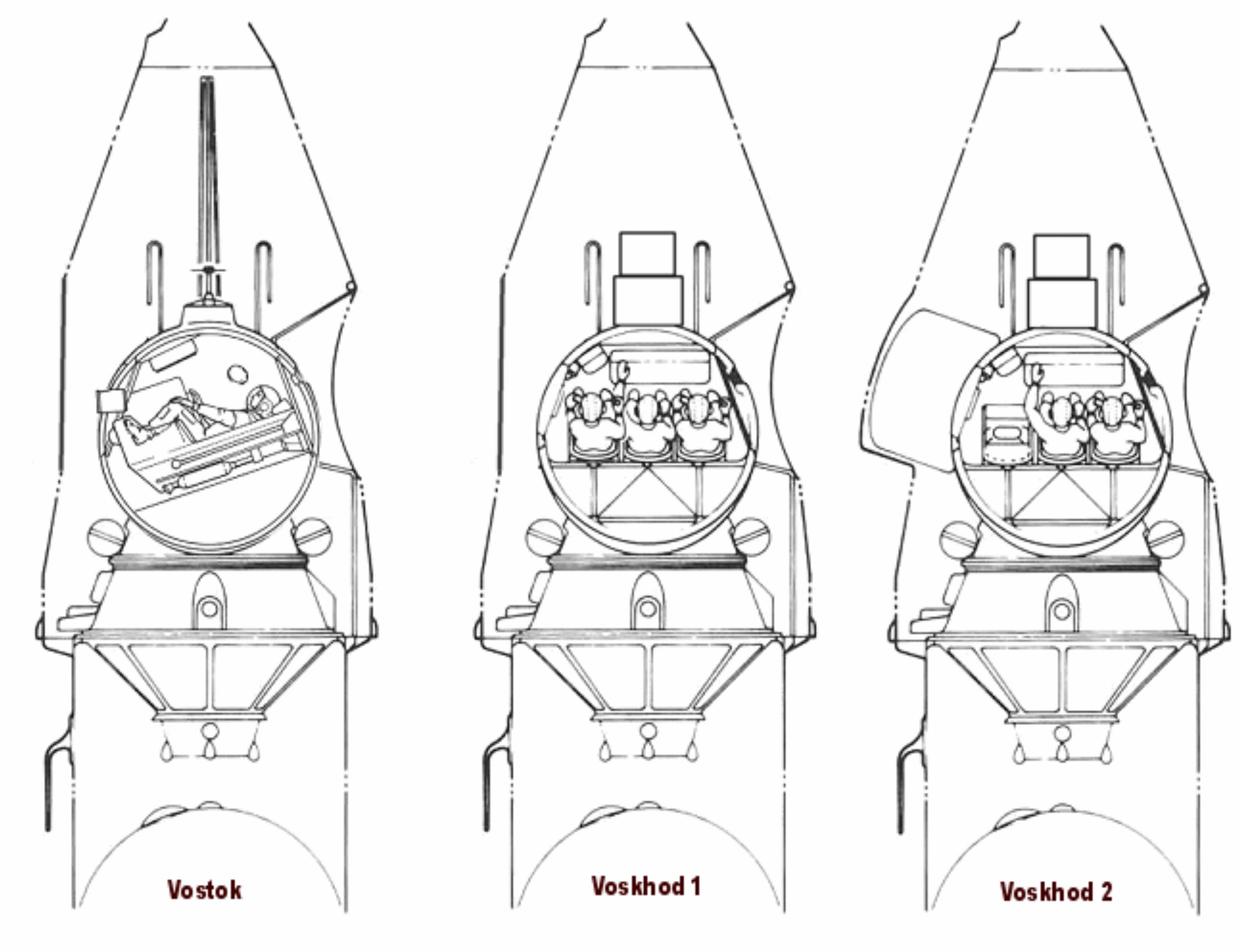
The pace of development was nevertheless astonishing. During a test on September 6, the cover of the parachute compartment failed to open and the capsule was destroyed. This was no ordinary mock-up, but the historic Vostok 2 re-entry capsule in which Gherman Titov had orbited Earth in 1961. A new test succeeded on October 5. The uncrewed Kosmos 47, carrying three dummies, launched the following day and returned on October 7. Five days later, human beings were placed inside an almost identical spacecraft. Soviet engineers did not ignore testing. Politics simply gave them days where a more reasonable program would have allowed months.
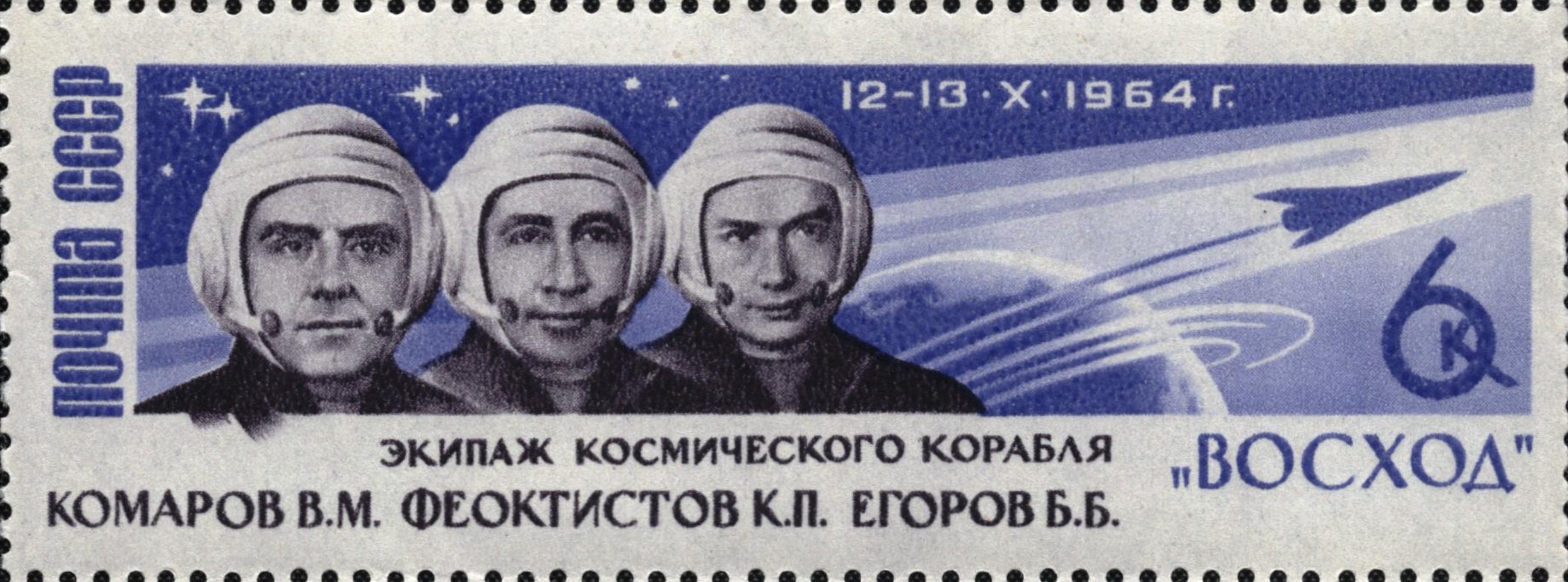
The crew itself showed that the mission had a purpose beyond setting another record. Komarov was an experienced military pilot and the mission commander. Feoktistov was an engineer who had helped develop both Vostok and Voskhod, meaning that he literally carried his own engineering work into space. Yegorov was a physician. For the first time, the people entering orbit were not all pilots, but a small team of specialists intended to demonstrate that the future of spaceflight would belong to scientists, doctors and engineers. The mission also began to loosen the Soviet Air Force’s monopoly over the selection of cosmonauts.
The Man a Point-Blank Bullet Could Not Stop
Konstantin Feoktistov was sixteen when he joined Soviet forces as a scout during the German occupation of Voronezh. On one mission, he was captured by a German patrol. An officer shot him in the head at point-blank range and left him among the dead, but the bullet passed through his chin and neck without striking anything vital. Badly wounded, the boy managed to crawl away and return to Soviet lines.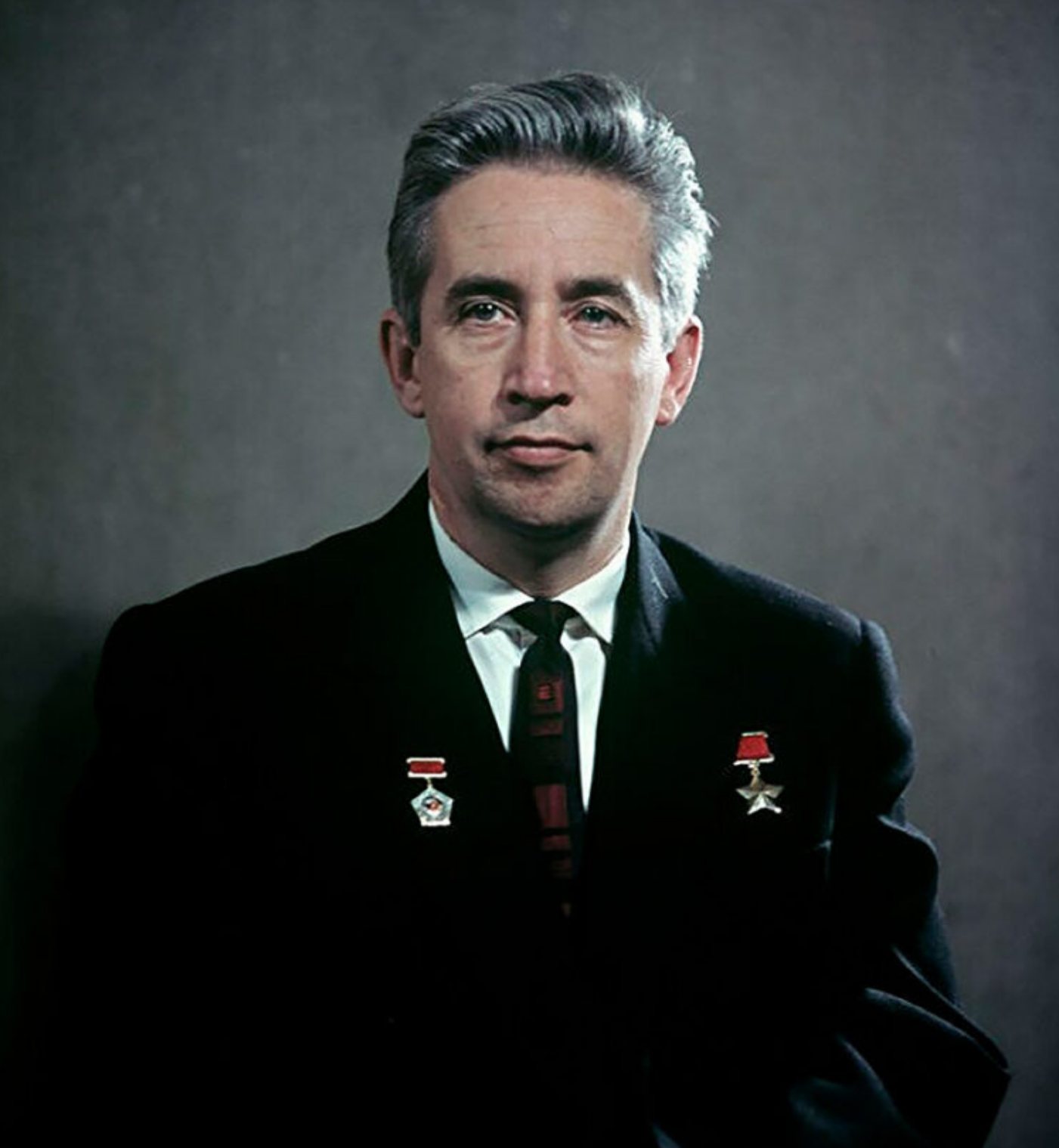
Aboard Voskhod 1, he became the first civilian scientist in orbit and the first Soviet cosmonaut who was not a member of the Communist Party. His life encapsulates one of the Soviet century’s strangest transformations: the boy who survived a bullet fired by an occupying army became an engineer for the state that would ultimately send him beyond Earth. Inside a capsule without a pressure suit, he once again depended on an exceedingly narrow margin between survival and disaster—this time partly aboard a machine he had designed himself.
Sixteen Orbits and Two Open Parachutes
Voskhod 1 launched on October 12, 1964, and remained in space for 24 hours and 17 minutes, completing 16 orbits of Earth. Komarov monitored the spacecraft’s systems, Feoktistov observed Earth and tested navigation procedures, while Yegorov studied how the human body responded to weightlessness. Feoktistov and Yegorov both experienced dizziness when they moved their heads suddenly, a useful reminder that expertise on Earth did not guarantee immediate adaptation to orbit. From the outside, however, the picture was perfect: the Soviets had sent three people into space before the Americans had managed to send two.
The tension returned during the landing. When a recovery aircraft spotted the capsule descending beneath its parachutes, Korolev’s most urgent question was whether the pilot could see one open canopy or two. A single canopy would mean excessive speed, and any failure of the final rocket braking system could seriously injure the crew. After an agonizing pause, confirmation came that both parachutes had opened. Then came the report that the capsule was on the ground and that three men were standing beside it, waving. Only then did the control room erupt in celebration.
Voskhod won the headline, but Gemini would build the far more substantial program. Beginning in March 1965, American crews practiced maneuvering, orbital rendezvous and docking—the very skills without which Apollo could never have reached the Moon. The Soviets would fly just one more Voskhod mission, during which Alexei Leonov became the first person to walk in space. All other planned Voskhod flights were canceled in favor of Soyuz. Korolev’s colleague Boris Chertok would later describe Voskhod as a tactical victory that pushed strategically more important work aside.
Khrushchev’s Heroes, Received by Brezhnev
The mission ended with a final twist that might have been written by a political satirist. While Voskhod orbited Earth, Komarov spoke with Khrushchev, who wished him a safe return and said he looked forward to meeting the crew. At the same time, Khrushchev’s opponents in Moscow were preparing to remove him. After the landing on October 13, the customary congratulatory call never came. Khrushchev was formally ousted the following day, and the cosmonauts’ prepared speech had to be rewritten. When they finally arrived in Moscow for their ceremonial reception on October 19, the man who had turned their mission into a test of national prestige was no longer there to greet them. In his place stood Leonid Brezhnev.
They had launched as Khrushchev’s heroes and appeared before the public as Brezhnev’s. Perhaps no other spaceflight has revealed the nature of political prestige so precisely: almost everything is risked to create a moment meant to live forever in history, yet the government that commissioned it may not survive long enough to attend the celebration.
Sources
- NASA Early Space Stations https://www.nasa.gov/podcasts/houston-we-have-a-podcast/early-space-stations/
- NASA History Division Rockets and People, Volume III: Hot Days of the Cold War https://www.nasa.gov/wp-content/uploads/2015/04/636007main_RocketsPeopleVolume3-ebook.pdf
- Smithsonian National Air and Space Museum Fifty Years of the Russian Soyuz Spacecraft https://airandspace.si.edu/stories/editorial/fifty-years-russian-soyuz-spacecraft
- RussianSpaceWeb Mission of Voskhod spacecraft (Voskhod-1) https://www.russianspaceweb.com/voskhod.html
- RussianSpaceWeb The USSR launches world's first space crew https://www.russianspaceweb.com/voskhod-landing.html
- Space.com Voskhod program: The Soviet Union's first crewed space program https://www.space.com/voskhod-program.html
- IBM Project Gemini https://www.ibm.com/history/gemini
- U.S. Department of State, Office of the Historian Telegram From the Embassy in the Soviet Union to the Department of State https://history.state.gov/historicaldocuments/frus1964-68v14/d52
Comments