
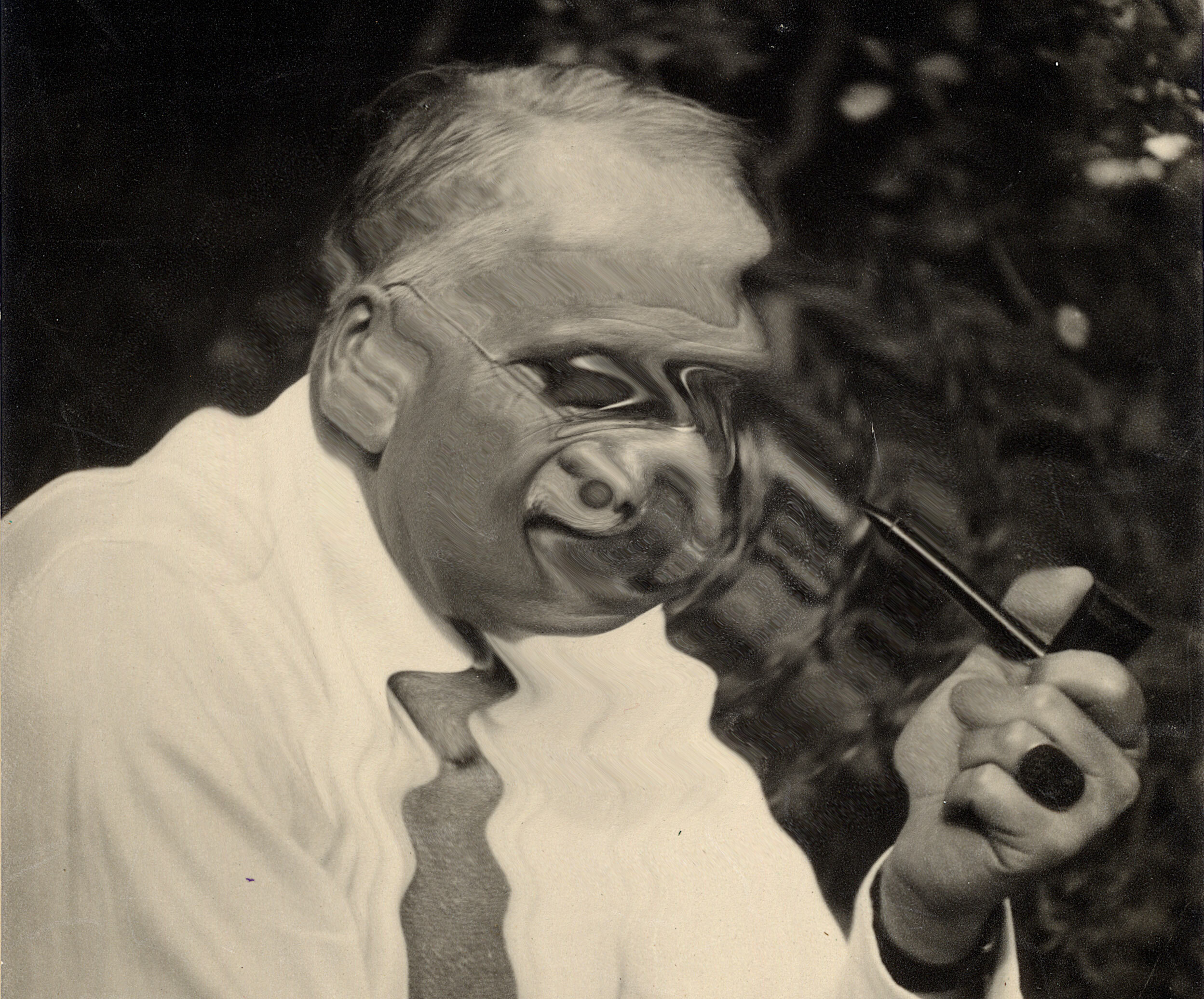
At two in the morning, he is on YouTube. Maybe his phone is lying next to his pillow; maybe he is sitting in a darkened room while everything else sleeps. It hardly matters. In that state, he listens to a calm, deep voice floating over a soft musical backdrop as carefully chosen images and scenes drift across the screen. The title promises that Carl Gustav Jung himself, the famous Swiss psychiatrist and founder of analytical psychology, is about to explain why his friends pulled away precisely when he began working on himself. The answer is seductive, to say the least. They did not leave because he had become difficult, suspicious or withdrawn. They left because, he is told, "his growth threatens them". His former weakness made them feel safe; now his newfound awareness supposedly forces them to confront their own stagnation. The man who, at this hour, should probably be fast asleep is no longer lonely — he is awakening, in every sense of the word. Or at least he thinks he is.
But it is not that simple. In fact, the truth may be almost brutally inverted. The voice may not belong to a human being at all, while the claims attributed to Jung are simultaneously close to and very far from anything the famous Swiss thinker actually said. The story about some Jungian patient who happens to sound remarkably like the viewer may never have happened. The sentences come from none of Jung's books. Behind the video there is almost certainly no psychologist, and perhaps not even a person willing to put their name to what has just been said. But for the viewer, it is already too late. A new interpretation has entered his life — emotionally precise and dangerously flattering. Artificial intelligence has not merely fed him a false fact. It has given him a false model of his own psyche.
We have written before about AI "slop", about how the entire internet is effectively choking beneath the weight of artificially generated nonsense and absurdity (see: The Internet Is Dead. The Internet Remains Dead. And We Killed It). But this is something else and, as you have probably already guessed, considerably more dangerous than ordinary AI hallucinations.
In fact, we are not even talking about mistakes here. We are talking about an AI model performing its assigned task perfectly. Somewhere, someone asked for a text about Jung that had to be dark, dramatic and preferably full of hidden threats. Why would anyone write such a prompt? The answer is simple: because someone figured out that jealous friends, repressed aggression and secret enemies would attract and hold a viewer far longer than a careful explanation of analytical psychology. The model supplied the material, a synthetic voice gave it authority, and the algorithm found a vulnerable audience which, judging by the publicly visible view counts, numbers in the millions.
Of course, to understand what we are talking about, you almost have to become that consumer yourself at two in the morning. Once upon a time, in the pre-AI era — something we are apparently already discussing with nostalgia — this could even be interesting. You might learn something new, stumble across some unexpected insight. You could find genuinely good podcasts about Nietzsche, Freud, Jung or whoever else appealed to you within that broad intellectual universe.
Today? Try it. Or, if this is not already one of your habits, perhaps don't. Because you will either end up disappointed or, if you are not careful, accidentally plug your brain into someone's insidious little half-slop, half-pseudoscientific AI corner of the internet, which does not care about you in the slightest. It cares about the coins piling up through clicks, views and engagement.
The people creating these channels do not necessarily set out to destroy anyone's mental health. That is merely an unfortunate side effect. It is enough that they are willing to accept the possibility as a cost of doing business. Their goal is the click. The damage stays with the viewer.
Consider just one example among countless others. The roughly half-hour video begins with an alleged Jung anecdote about a patient "who frightened him" because outwardly he appeared almost perfectly good. No source is given, naturally. Soon comes the claim that people do not resent our weakness but rather the possibility that we might outgrow them. Friends appear who secretly enjoy our insecurity, along with helpers who need us to remain broken. Jung's name still hangs over the text, but almost nothing recognizably Jungian remains beneath it. His name has simply become a stamp placed on a product of contemporary internet paranoia.
Jung's actual concept of the shadow was more serious and far less cinematic. Jung did not use the shadow to describe some secret ability to detect evil motives in other people. He meant the parts of our own personality that the ego does not want to acknowledge. Those parts may be selfish or aggressive, but they can also contain suppressed courage or creativity. Encountering the shadow is a moral problem for Jung precisely because it forces a person to admit that what they despise may not exist only outside them, but within them as well.
And this is where the extent to which "synthetic Jung" has inverted the original becomes immediately obvious. The real Jung might ask why a particular quality in another person affects us so intensely, and what we may have projected onto them. AI Jung tells us that we have finally become enlightened enough to see through their hidden intentions. See the enormous difference? One path leads to an uncomfortable suspicion of oneself — but a suspicion that can lead to deeper and more complete introspection. The other leads to a pleasant suspicion of everyone else.
One of the greatest dangers is something people often struggle to recognize: taking a fragment of established knowledge — preferably something old, prestigious and impressive-sounding — and attaching something new to it, something only loosely connected, in the service of a new agenda or goal. If it spreads far enough, it can become a psychological weapon of mass destruction. We know what this looks like when, for example, someone takes a sacred text and begins layering a particular dark interpretation onto it. That is practically a recipe for religious extremism.
But religion is hardly the only thing vulnerable to this process, even if it possesses a particular capacity for mass propagation. Anything "important" can be degraded, and if the distorted version can be sold as sufficiently authentic, it can do enormous damage.
In the example above, this is not a harmless simplification but a self-sealing psychological trap. A friend has drifted away? Your progress threatens them. Your partner says you have become cold? They were accustomed to controlling the old version of you. Your family suggests professional help? They cannot tolerate your awakening. See the pattern? Every objection to the theory becomes further evidence that the theory is correct. The viewer gets a miniature cult delivered in a single video.
For someone who is lonely, depressed or already beginning to lose trust in other people, this kind of content can accelerate a psychological collapse. It will never tell them that perhaps they need a psychiatrist, a psychotherapist, or at the very least an honest conversation with someone willing to disagree with them. Instead, it tells them that their isolation is "proof of growth". Suspicion becomes "intuition", grandiosity becomes "individuation", and broken relationships become "courageous boundary-setting".
How dangerous is it? That depends on who you are — or, more precisely, what state you happen to be in at that particular moment. For some people, content like this absolutely can do serious psychological harm. It can trap them in a world where every relationship is nothing but a struggle for power, every compliment is a strategy and every criticism an attack on their authenticity.
It can reinforce paranoid ideas, help persuade someone to reject the people closest to them, and delay genuine help. One striking statistic is that the American Psychological Association reported this year that 97 percent of psychologists surveyed believed chatbots could unintentionally reinforce negative behaviours or "delusional beliefs". We are not talking about a chatbot here, but the mechanism is closely related: a machine confirms exactly the narrative that a good therapist would challenge, or at the very least place in context.
Perhaps, you might say, psychologists are panicking because machines threaten to take their jobs. Maybe some of them are. But that changes neither the fact nor the nature of what we can see with our own eyes. Everything that once possessed some kind of intellectual or psychological power, from Jung to Stoicism, is being turned into clickbait porridge. Anything worthwhile is increasingly buried beneath layer after layer of garbage. That should be alarming for more reasons than we can count.
Artificial intelligence does not merely falsify an author; it buries the author beneath endless imitations of itself. Search for Jung on YouTube today and you will often encounter an endless sediment of channels using his face, his name and a handful of familiar concepts. The original has not been banned. It has simply been submerged beneath products that are shorter, darker and more emotionally palatable. The "real Jung" can still be found — here, for example, is an interview with him from 1957 — but there you have an actual person saying actual things. You have to listen to him. You have to wait for him to finish a thought. If you have grown accustomed to the "quick fix" that algorithms have been training us to expect for years, you may find the experience dull enough to put you to sleep.
Yes, we could say that the "proper way" is to put down the screen, go to a library and simply borrow a book by Jung. But realistically, how many people are going to do that? They either cannot be bothered or believe they do not have the time. Instead, they will type "Jung shadow self" into YouTube and let the first result — or the one with the best thumbnail — massage their brain for the next hour, until they either fall asleep or remember that they are supposed to be doing something productive with their life.
And YouTube does something no book can do. After one video comes another, then another. "Why People Hate You When You Awaken." "Why Awakened People End Up Alone." "Signs Your Shadow Has Taken Control." Different titles repeat the same message until it no longer feels like the opinion of an anonymous channel but an entire school of psychology. A lie told once looks suspicious. A lie distributed across fifty videos begins to resemble a consensus. YouTube itself openly states that viewing history influences future recommendations — something you have almost certainly noticed — meaning that one accidental click can easily become the beginning of an entire thematic stream.
Meanwhile, viewers increasingly have no obvious reason to suspect that the voice they are hearing belongs to a machine. Synthetic narration no longer needs to sound robotic. A 2025 study published in PLOS One found that listeners identified cloned voices as human about as often as they did genuine human recordings (!). So this is not simply a problem of elderly people supposedly failing to understand technology. Human beings in general are unreliable detectors of artificial voices, and calm narration accompanied by a black-and-white photograph of Jung can very easily create the impression of documentary authority.
The Real Jung: The Shadow Is Not an Explosion, but an Integration
For Jung, confronting the shadow is not an invitation to "unleash your dark side". Still less does it mean that after some kind of psychological awakening a person should become colder, more aggressive or convinced that they can finally see the hidden motives of everyone around them. The shadow is first and foremost what we do not want to acknowledge as part of ourselves — the envy that does not fit our image of ourselves as good people, the anger we were taught to regard as improper, the desire for power that clashes with our self-image as modest. But good things can be pushed into the shadow as well: determination, ambition, sexuality, creativity or the ability to say no.Integrating the shadow therefore does not mean letting it take control. Someone who acknowledges their own aggression does not have to become aggressive. Quite the opposite: they may for the first time learn to use that energy to establish boundaries instead of remaining silent for years and then exploding one day. Someone who acknowledges their own selfishness does not necessarily become more selfish; they may simply stop disguising their own interests as selflessness. Integration is the process by which the unconscious becomes conscious enough that it no longer has to operate behind our backs.
That may be the greatest difference between Jung and his modern internet caricature. Synthetic Jung often says: stop restraining yourself, abandon the people who are holding you back, trust your newly discovered darkness. The real Jung was much more uncomfortable. He did not grant permission for an explosion; he demanded responsibility. The shadow is not an excuse for the worst things in us. It is an attempt to ensure that the worst things in us — along with the best things we unnecessarily buried — no longer rule us from the dark.
The most bizarre detail of all lies in the platform's own rules. YouTube requires labels for certain kinds of realistic synthetic content, but says that using generative artificial intelligence for a script, structure, title or thumbnail does not necessarily have to be disclosed to viewers. A fake tornado above a real city must be "labelled". A fake interpretation of your subconscious can pass as "production assistance". Yet the script is precisely what is being sold here. The photograph of a dead psychiatrist is merely the packaging.
Jung is almost the perfect dead man for this industry. His concepts sound familiar while remaining elastic enough to be stretched almost indefinitely. His actual books, meanwhile, are demanding, sometimes contradictory and do not offer a quick psychological fix after fifteen minutes. Synthetic Jung has no such problem. Every day he discovers another secret, neatly divided into seven chapters.
Real work with the shadow should make a person more cautious about their own projections and less certain of easy judgments about others. Synthetic shadow work does the opposite. It tells viewers that their distrust is wisdom, their loneliness proof of superiority, and every damaged relationship the price of awakening. At two in the morning, then, they are not encountering the hidden half of their own personality. They are encountering someone else's business model — and allowing it to move into their head.
Comments