
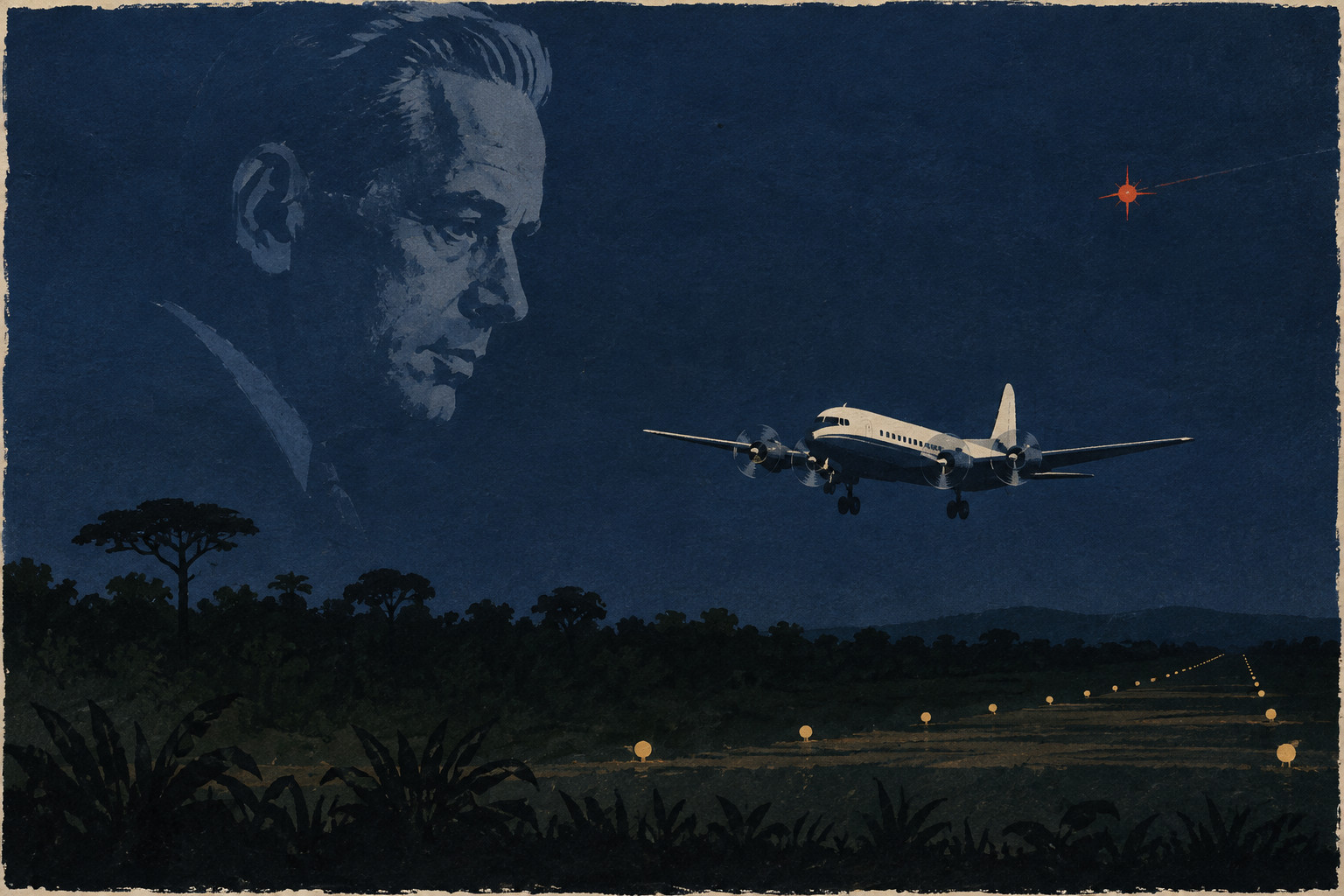
The last message from the aircraft did not sound like the prelude to disaster. About ten minutes after midnight, the crew of the four-engined DC-6B radioed air traffic control: "Your lights are in sight. We are over Ndola and descending." They were cleared to land, and then the radio fell silent. There was no distress call, no report of mechanical trouble. The aircraft, named Albertina, simply never appeared above the runway.
The wreckage was not found until around 3 p.m., in woodland roughly 15 kilometres from the airport in what is now Zambia. Fifteen people were dead, while Harold Julien, a badly burned UN security officer, was still showing signs of life. He died six days later. The mystery therefore began not with some exotic conspiracy theory, but with a series of very concrete questions. Why had an experienced pilot flying a properly configured aircraft descended into the treetops? Why did the search not begin until long after sunrise, even though no fewer than 18 military aircraft were available for search operations at the airport? And why were some witnesses not questioned with the seriousness the event demanded?
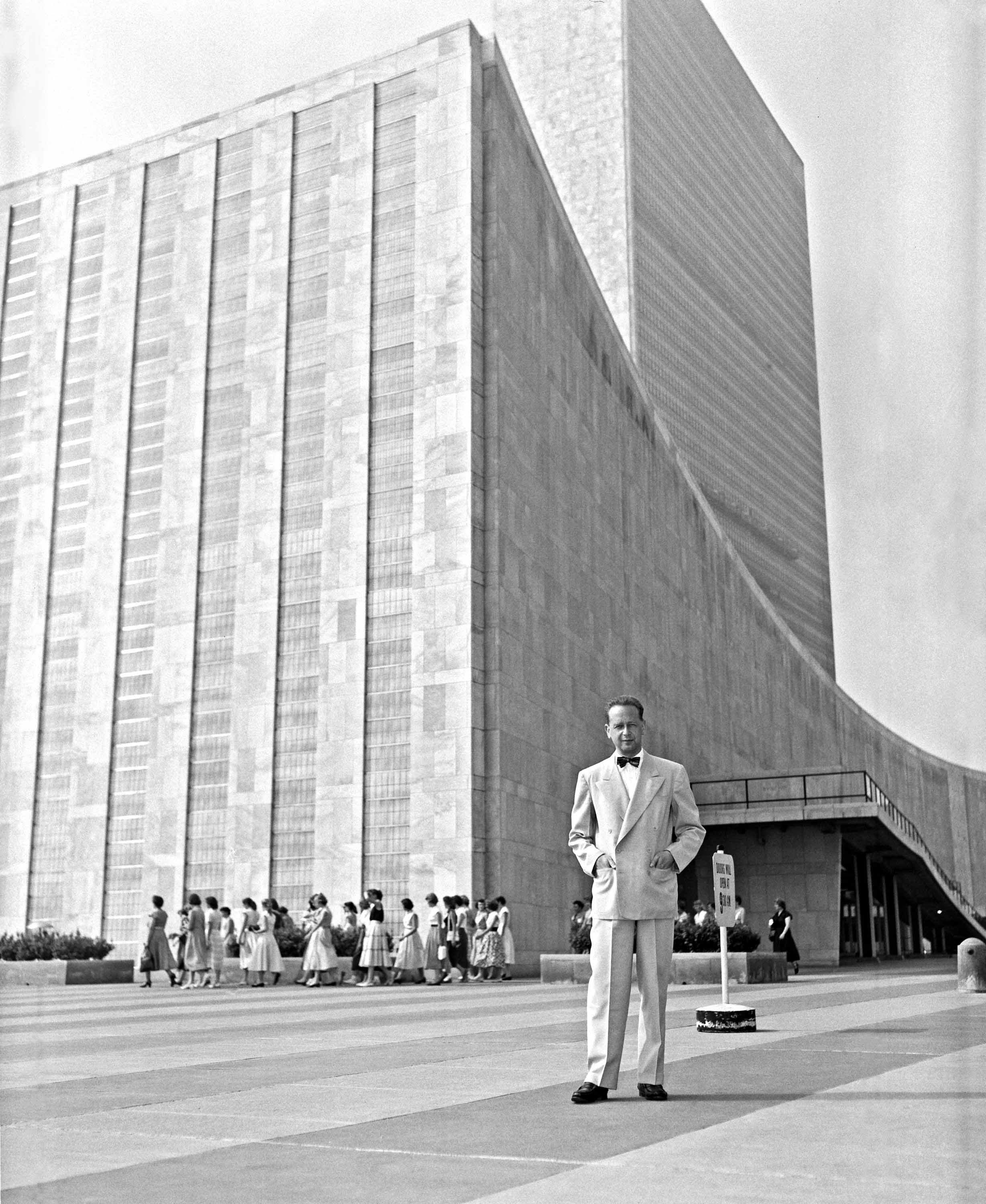
The man they were waiting for in Ndola that night was never supposed to become so powerful. When he was chosen as the UN’s second secretary-general in 1953, the great powers regarded the 47-year-old Swedish economist as an acceptable compromise and a suitably unobtrusive administrator. What they got was something else entirely. Dag Hammarskjöld turned the UN Secretariat into an independent political force, helped create armed peacekeeping forces after the Suez Crisis and insisted that international civil servants owed their loyalty to the UN Charter rather than to their own governments.
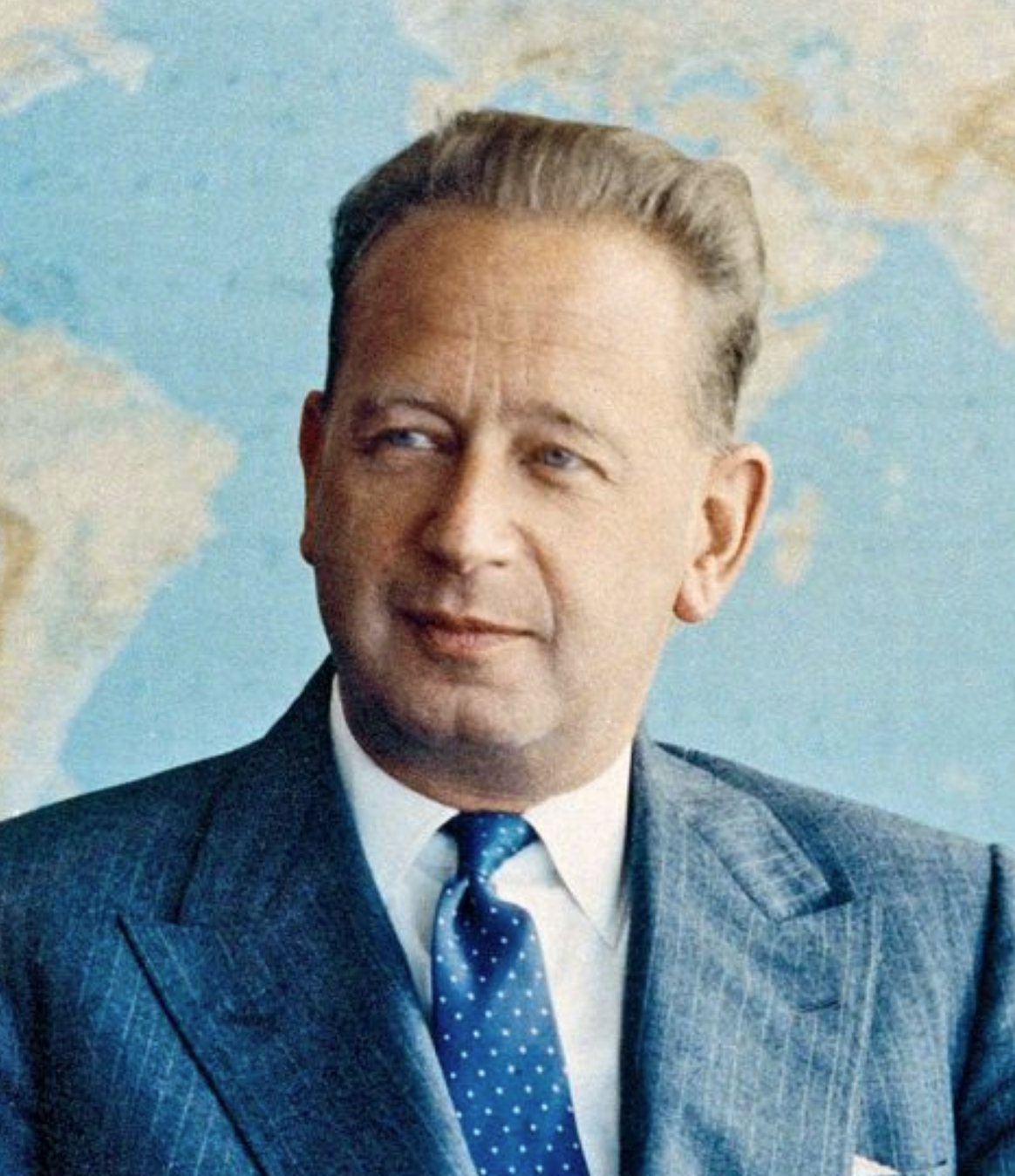
He was an unusual combination of cool bureaucrat and almost medieval mystic. He translated poetry, belonged to the Swedish Academy, photographed the Himalayas and helped shape the quiet meditation room at UN headquarters. When Soviet leader Nikita Khrushchev demanded his resignation in 1960 and called for a three-member executive representing the major power blocs to replace the office of secretary-general, Hammarskjöld replied that the man did not matter, but the institution did. A few months later, he would show just how seriously he meant it.
The book found after his death
After Hammarskjöld’s death, a typescript that almost no one in his public life had known about was discovered in his New York apartment. Alongside it was an undated letter to the Swedish diplomat Leif Belfrage. These writings, he explained, were the only true portrait of him that could ever be drawn, and his friend was free to publish them if he believed they had value. Hammarskjöld described the manuscript as a kind of white paper recording his negotiations with himself — and with God.Vägmärken, literally "waymarks" or "markers along the road," was neither a diary of political meetings nor a secret chronicle of the United Nations. Written between 1925 and August 1961, it consists of brief meditations, fragments of prayer, aphorisms and verse exploring solitude, pride, duty and renunciation. Behind the diplomat’s reserve emerges a man who does not try to deny his own ambition, but continually interrogates it: does the office serve him, or does he serve the office? Does he accept responsibility for the sake of others, or for the image he has of himself?
The book was published in Swedish in 1963, followed a year later by an English translation produced by Leif Sjöberg and the poet W. H. Auden. It finally explained what his contemporaries had been unable to see behind his almost icy composure. Hammarskjöld’s mysticism was not an escape from politics, but his private method of enduring its burden: an attempt to turn power into service and the loneliness of office into discipline. The final entries were written only a few weeks before his flight to Ndola.
Congo, Katanga and a neutrality surrounded by enemies
His fatal test came in the Congo. The vast Belgian colony became independent on 30 June 1960, with almost no properly prepared civil administration and no army capable of holding the country together. Within days, the armed forces mutinied, Belgium sent troops back into the country and, on 11 July, mineral-rich Katanga declared its secession under the leadership of Moïse Tshombe.
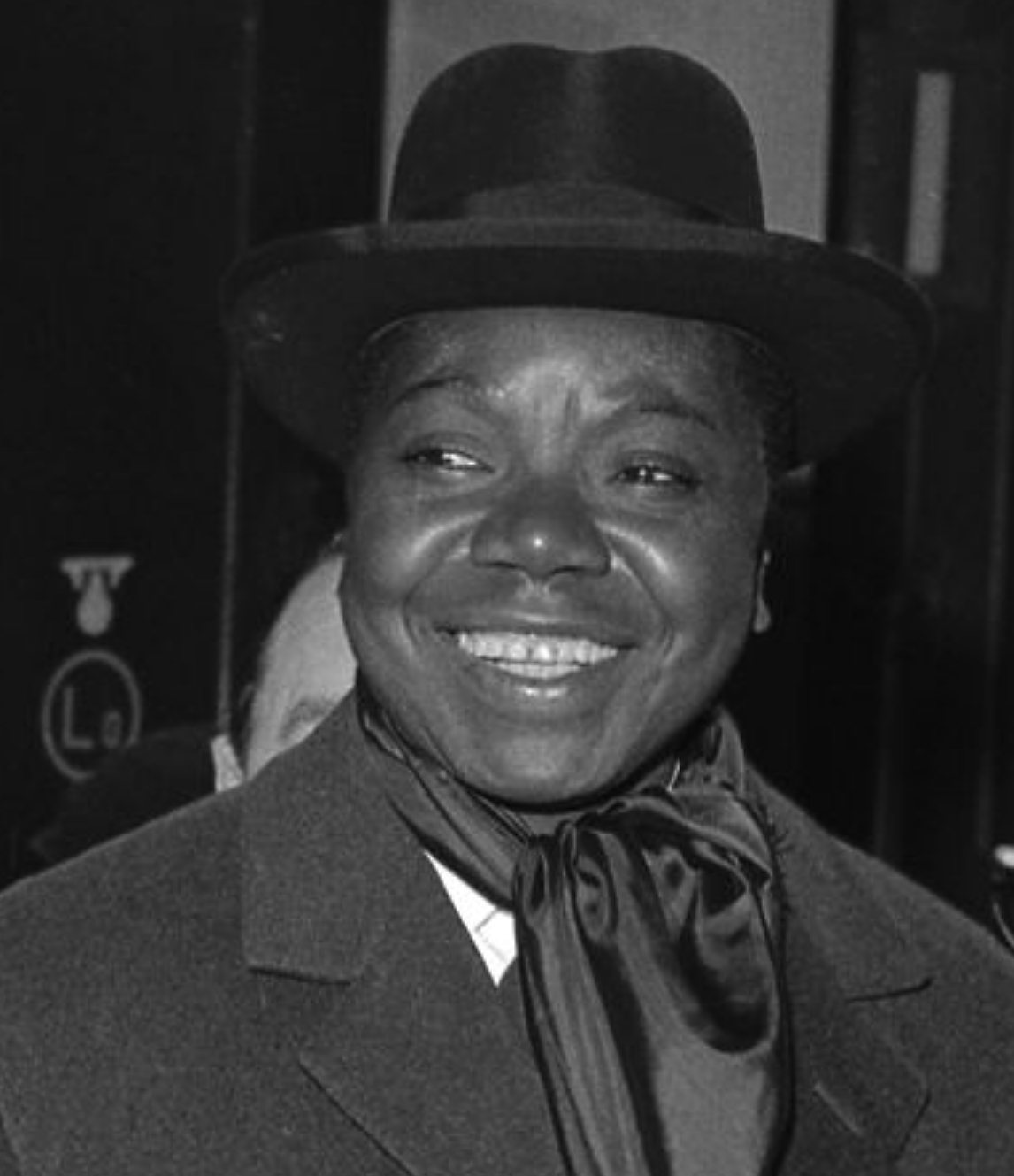
Katanga was not merely a rebellious province. It was the new country’s treasury. Its mines produced copper, cobalt and uranium, and ore from the Shinkolobwe mine had been one of the key sources of uranium for the American atomic bomb project. Tshombe’s regime was sustained by revenue from Union Minière du Haut-Katanga, Belgian advisers and foreign mercenaries. Colonialism was formally retreating, but its commercial interests, military connections and security networks were not disappearing at the same speed.
Hammarskjöld’s role was neither flawless nor straightforward. Congolese prime minister Patrice Lumumba wanted the UN to help the central government crush the secession. Hammarskjöld refused to turn the peacekeeping force into Lumumba’s army, infuriating Moscow and a number of African states. After Lumumba was overthrown and murdered in Katanga in January 1961, a shadow of suspicion fell over the entire mission. Yet Hammarskjöld was simultaneously becoming more outspoken in his opposition to Katanga’s secession and the foreign mercenaries protecting it. In Cold War Africa, neutrality did not mean having no enemies. It often meant having enemies on every side precisely because you were neutral.
In September 1961, the UN’s Operation Morthor, conceived as a strike against the mercenaries and the secessionist apparatus, escalated into open warfare on the streets of Élisabethville. How extensive an operation Hammarskjöld had personally authorised remains disputed. He maintained that he had first learned of its launch from a Reuters report. Whatever the truth, an operation conducted by his organisation had inflamed a conflict he now had to stop. He therefore decided to fly to Ndola himself and attempt to negotiate a ceasefire with Tshombe.
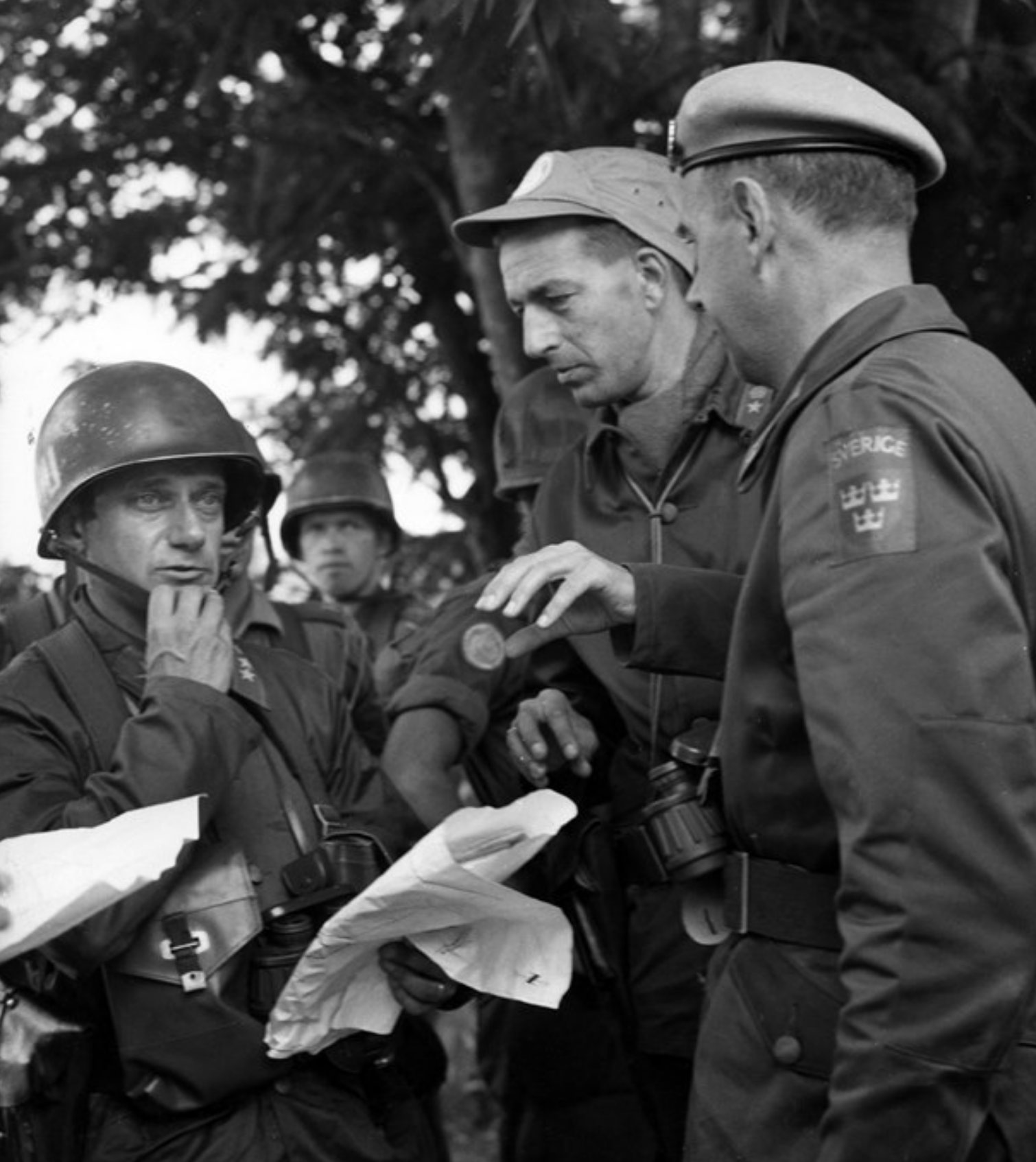
The flight was secret. The official flight plan listed a false destination, the route skirted part of the Congo and the crew maintained radio silence for much of the journey because of fears of a Katangese combat aircraft. The danger was not abstract. The previous night, a bullet had struck Albertina’s engine cowling as it took off from Élisabethville. The damage was repaired, and the aircraft was inspected and declared fit to fly.
The physical evidence from the crash site appeared to support a simple explanation. The landing gear was down and locked, the flaps were set for approach and the engines had been operating normally. The aircraft struck the treetops almost level, lost its left wing and overturned. The initial forensic investigation found no evidence of a fire before impact. Pilot error, fatigue or a misjudgement of altitude therefore never ceased to be plausible explanations.
A black-hole approach
A night-time approach can be at its most dangerous precisely when the runway is clearly visible. If there are no illuminated houses, roads, terrain features or recognisable horizon between the aircraft and the runway, the pilot sees only a rectangle of lights suspended in darkness. The brain then has no peripheral reference points with which to judge altitude or the angle of descent. In aviation, this phenomenon is known as a black-hole approach.The resulting illusion works insidiously. The pilot believes the aircraft is above the correct glide path and lowers the nose or increases the rate of descent to "correct" the approach. In reality, the aircraft is descending below the safe angle. It is not out of control, its engines need not have failed and there may be no obvious reason in the cockpit to issue a distress call. That is precisely why modern pilots facing such conditions are trained to trust their instruments and visual glide-slope indicators even when the view through the windscreen tells them that everything is fine.
The pattern of Albertina’s impact is consistent with what would now be called controlled flight into terrain: the aircraft was configured for landing and entered the treetops almost level. That does not prove that the crew fell victim to an optical illusion. The same evidence could mark the end of a misjudged altitude, a disrupted approach or a manoeuvre prompted by an external threat. The "black hole" therefore does not solve the mystery. It merely explains how one of its seemingly impossible scenarios — a sound aircraft, an experienced pilot and silence over the radio — could nevertheless have occurred.
Flashes in the sky and witnesses no one wanted to hear
Yet this explanation did not close the case. Before his death, Harold Julien told medical staff and police about an explosion, flashes and an order to turn the aircraft. He was gravely injured, in shock and under medication, so his statements were not always consistent. Evidence later emerged, however, suggesting that Rhodesian intelligence had instructed hospital staff not to discuss what he had said. His account may not prove that an attack took place, but it can no longer simply be dismissed as the delirium of a dying man.
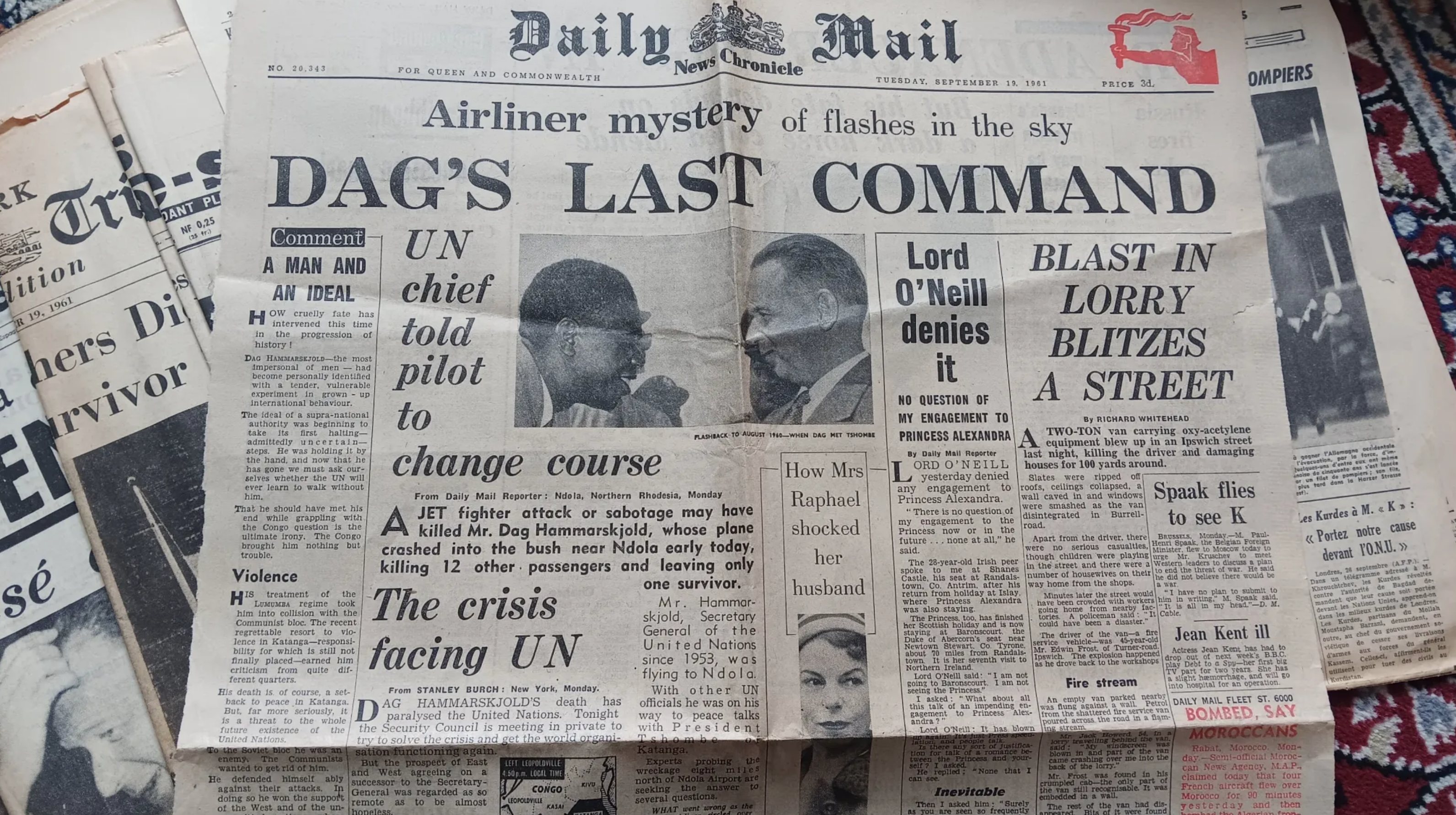
Further suspicion arose from African witnesses who reported seeing a smaller aircraft near Albertina, a bright light and a flash in the sky. The early investigations took place within a colonial system that did not give their testimony equal weight. Some accounts were contradictory and may simply have described the lights of the DC-6 itself, but not all of them could be easily dismissed. Avikat, the Katangese air force, possessed aircraft, improvised airstrips and foreign pilots capable of flying at night. The pilot most frequently accused, Belgian mercenary Jan van Risseghem, has never been conclusively linked to the crash. Later testimony and alleged confessions conflict with his alibi and disputed flight records.
The first Rhodesian inquiry failed to establish a specific cause, while the second arrived at pilot error as the most likely explanation through a process of elimination. The UN commission of 1962 was more cautious. It found insufficient evidence to confirm any of the competing theories, but it could not rule out human error, sabotage or an external attack. The case was therefore formally left open.
The man in the cockpit: who was Jan van Risseghem?
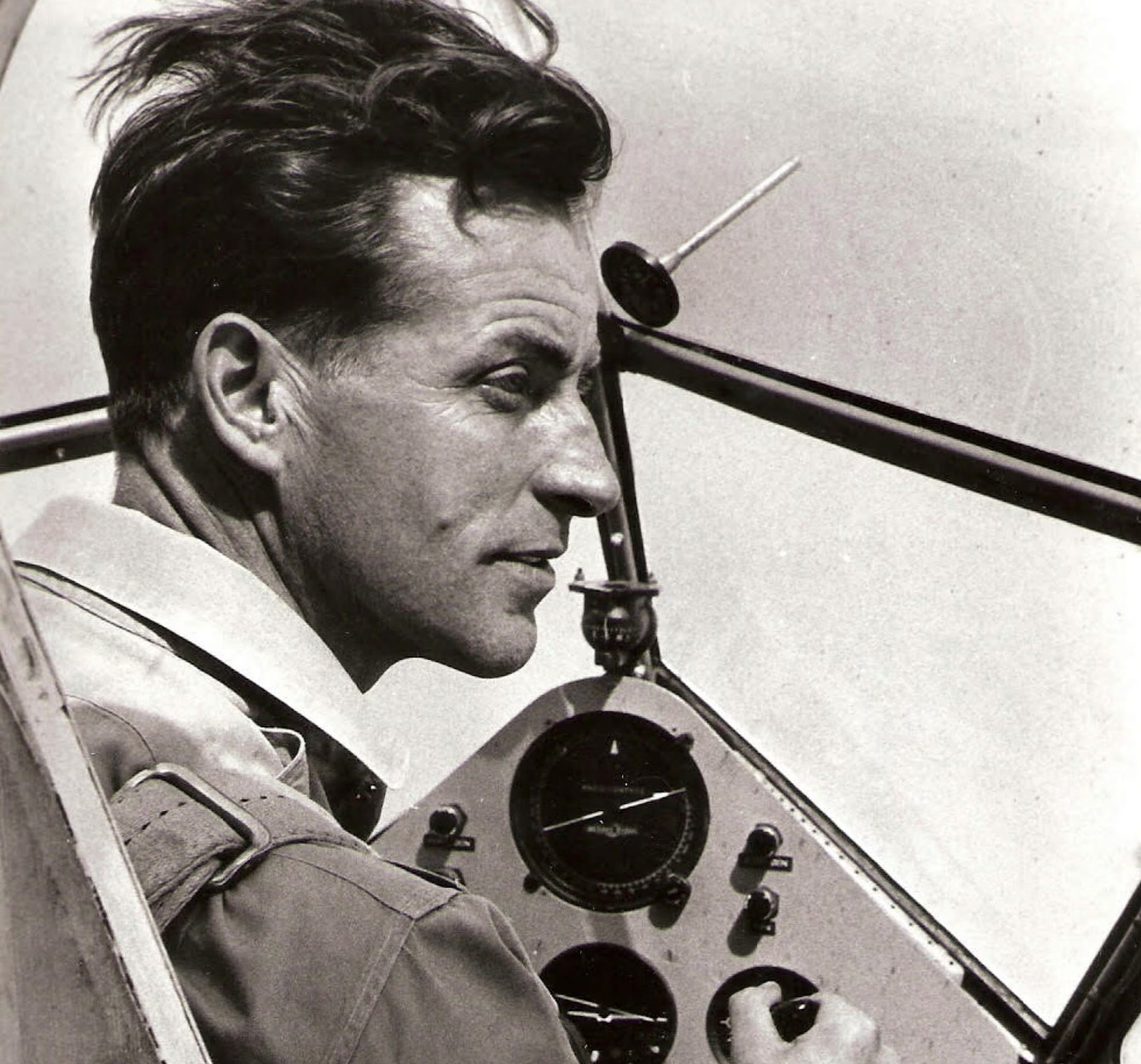
Jan van Risseghem was not some random name plucked from the ranks of mercenaries who flooded into the Congo in the early 1960s. He was an experienced Belgian pilot of British descent, trained for exactly the kind of night-time operation that would have been required to intercept Hammarskjöld’s aircraft. As a teenager, he escaped Nazi-occupied Belgium, reached England via Portugal and, together with his brother, joined the Belgian resistance and underwent flight training with Britain’s Royal Air Force. After the war, he took a job with the Belgian airline Sabena before leaving for Katanga in 1961.Officially, he was supposed to serve as a civilian instructor for Avikat, the air force of the breakaway province. In an interview recorded in the 1990s by Swedish aviation historian Leif Hellström, however, Van Risseghem described a much broader role. He spoke of meetings with Katangese leader Moïse Tshombe, the conversion of transport aircraft into bombers and plans for possible attacks on cities. Recounting one conversation with Tshombe, he referred to himself as the leader’s "air commander." He also claimed to have been one of the very few Avikat pilots capable of flying at night.
The most serious allegation against him came from Pierre Coppens, a Belgian paratrooper who met him in 1965, when Van Risseghem was working at a parachuting centre. Coppens told the makers of the documentary Cold Case Hammarskjöld that, over the course of several conversations, the pilot had confessed to being ordered to shoot down an aircraft. He allegedly did not know who was on board.
According to Coppens’s recollection, Van Risseghem described the operation in detail. He had allegedly carried out the attack in a Fouga Magister, a small jet trainer and light combat aircraft that Katanga also used against UN forces.
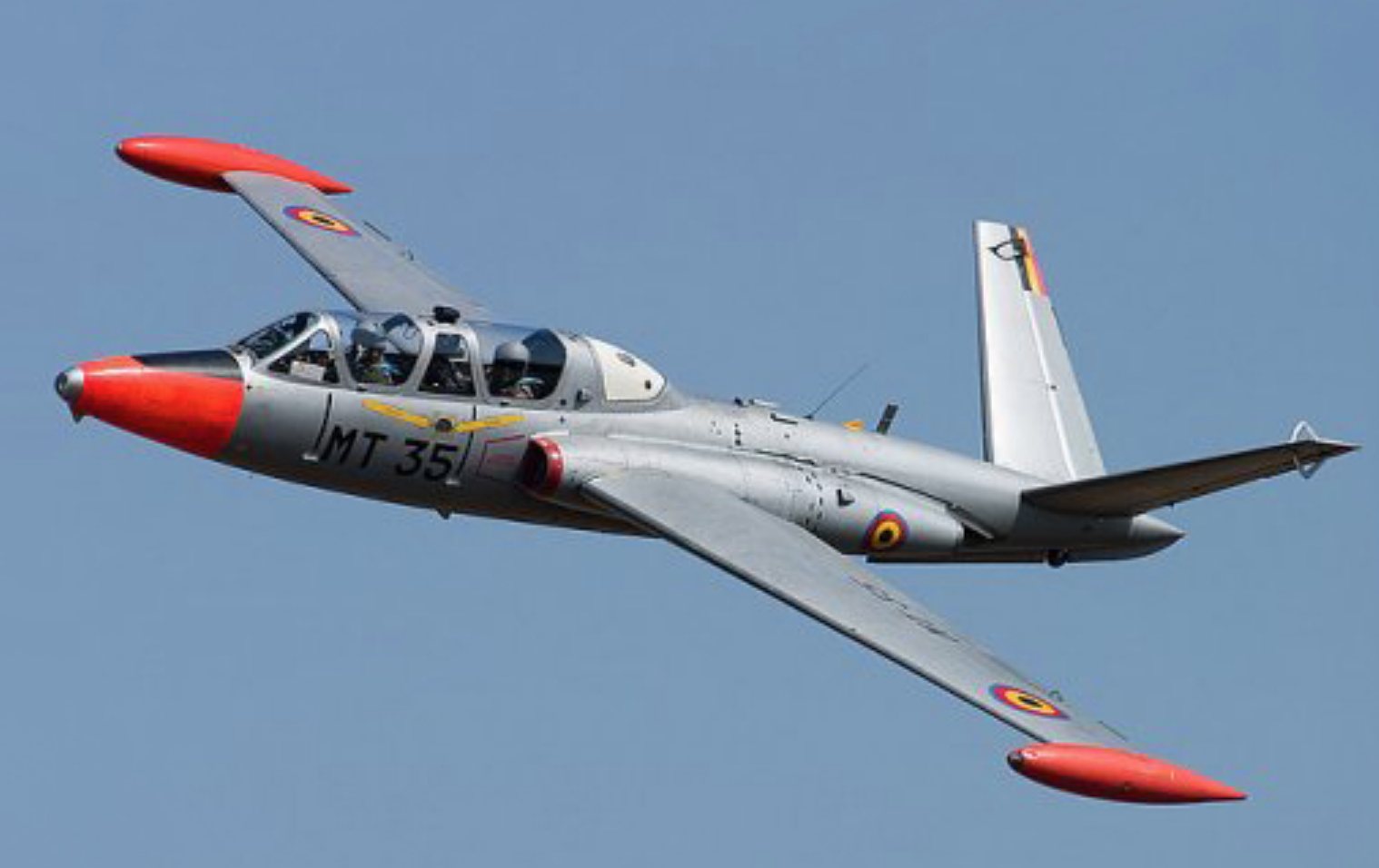
Coppens said he asked him only once whether he felt any remorse. Van Risseghem allegedly replied: "Sometimes in life, you have to do things you do not want to do. But an order is an order."
That, however, does not amount to a confession in the legal sense. The conversations were neither recorded nor written down at the time they supposedly occurred, and Coppens did not speak publicly about them until decades later. By his own account, he initially thought Van Risseghem was merely telling war stories. Only later did he conclude that the pilot had been serious. Van Risseghem died in 2007, 12 years before the documentary was released, and therefore had no opportunity to respond to the allegation or undergo formal questioning.
His family firmly rejected the possibility that he had taken part in the attack. His flight logs also appeared to show that he was not flying for Katanga in early September 1961. The documentary’s filmmakers, however, claimed to have found false names and locations in those records, making them unreliable as a definitive alibi. Another mercenary pilot, Roger Bracco, did not believe that Van Risseghem had shot down Albertina, although he acknowledged that the flight logs contained names he himself could not identify.
The most intriguing part of the story is that suspicion did not first fall on Van Risseghem decades later. At 11 a.m. on 18 September 1961, US ambassador to the Congo Edmund Gullion sent Washington a confidential telegram raising the possibility that Hammarskjöld’s aircraft had been shot down by a Belgian pilot. The name was recorded incorrectly as "Vak Riesseghel," but researchers believe it almost certainly referred to Jan van Risseghem. Gullion urged that pressure be placed on the Belgian and Rhodesian authorities to ground the pilot. In another telegram sent two days before Albertina crashed, he relayed a civilian pilot’s report that Van Risseghem had flown a dangerous manoeuvre close to his aircraft in a Katangese jet. The dispatch was unavailable to the original investigators, and Van Risseghem was never questioned.
Neither Coppens’s account nor Gullion’s telegram proves by itself that Van Risseghem was the attacker. No combat order has been found, nor any reliably confirmed take-off record, ammunition fragments or the name of the person who supposedly gave him the command. Yet when combined with witness accounts of a second aircraft, flashes in the sky and possible intercepted radio transmissions, they explain why his name keeps resurfacing in every new investigation. In its 2024 report, the UN likewise concluded that an external attack or threat remained a credible possible explanation for the crash — but it has never formally identified Jan van Risseghem as the man who brought down Hammarskjöld’s aircraft.
The answer may still lie in sealed archives
New testimony and archival research brought the case back before the UN decades later. Mohamed Chande Othman, a former chief justice of Tanzania, led the most extensive new investigation. In his latest detailed report, published in 2024, he concluded that an external attack or threat remained a credible possibility. That does not mean the UN determined that the aircraft had been shot down. Sabotage and unintentional human error are still listed among the remaining possibilities.
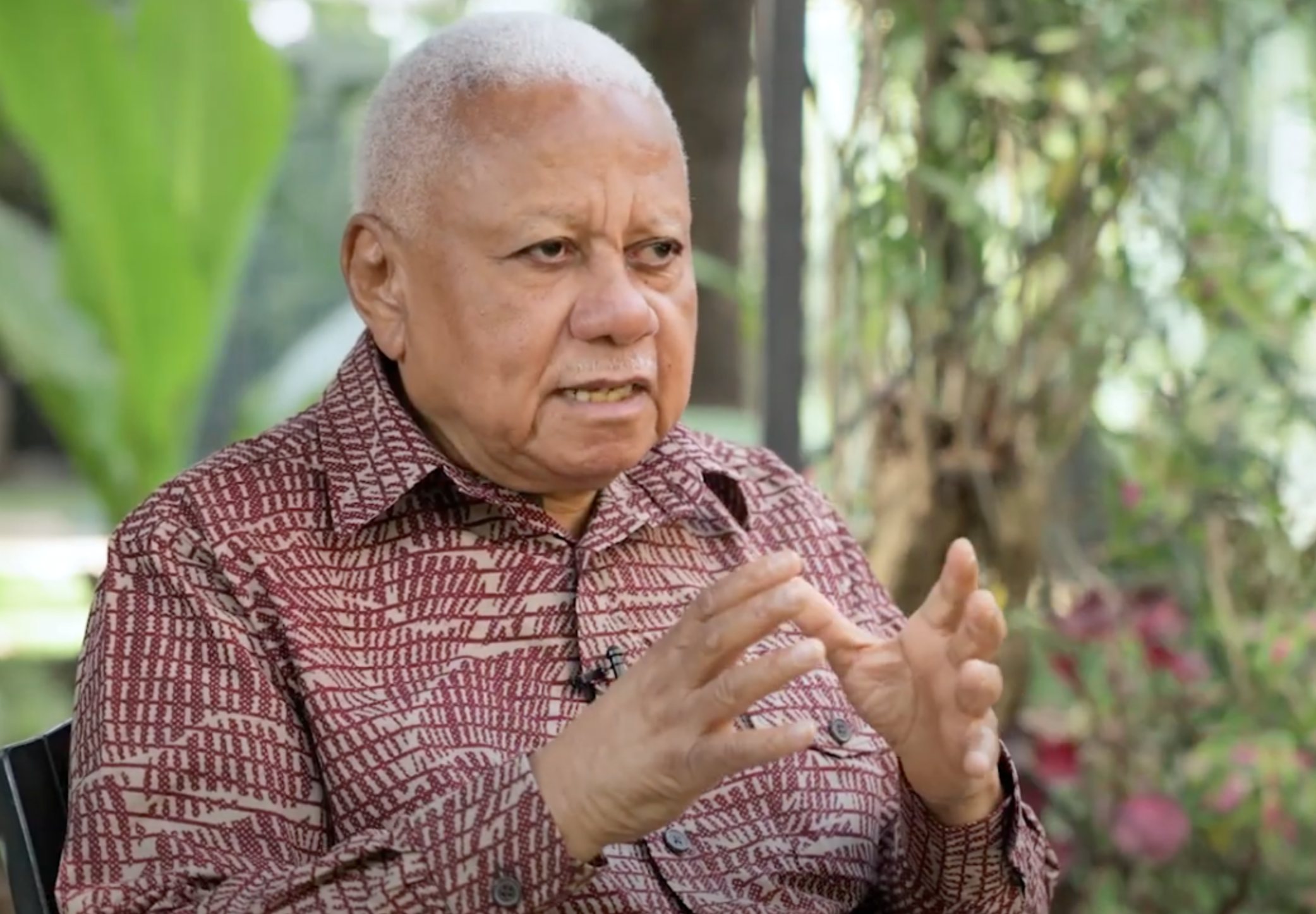
Perhaps the most troubling conclusion is a different one. Othman considers it almost certain that government archives still contain specific and crucial information that has never been handed over to investigators. He singled out the United States, the United Kingdom and South Africa, referring primarily to intelligence records and possible intercepted communications from the night of the crash. Those countries maintain that they have cooperated, yet many precise questions have gone without precise answers. In December 2024, the UN General Assembly therefore extended the investigation once again.
Sixty-five years after the crash, the most honest answer is that an assassination has not been proven — but neither has an accident been convincingly explained. An official UN statement issued this month likewise describes the case as unresolved. Hammarskjöld once said that the United Nations was not created to take humanity to heaven, but to save it from hell. Somewhere between the runway lights at Ndola and the darkness of the African forest, he vanished while trying to do precisely that. The institution for which he died has survived, after a fashion, but its greatest mystery is still waiting for governments to open their archives.
Sources
- Dag Hammarskjöld Foundation Dag Hammarskjöld’s life and legacy https://www.daghammarskjold.se/dag-hammarskjold/dag-hammarskjold/
- Dag Hammarskjöld Foundation Crash investigations and the death of Dag Hammarskjöld https://www.daghammarskjold.se/dag-hammarskjold/death-dag-hammarskjold/
- United Nations
- Permanent Mission of Sweden to the United Nations Introduction by Sweden of a draft resolution extending the Dag Hammarskjöld investigation https://www.swedenabroad.se/en/embassies/un-new-york/current/news/introduction-hammarskjold-investigation--resolution/
- Aircraft Owners and Pilots Association Black Hole Approach https://www.aopa.org/training-and-safety/air-safety-institute/accident-analysis/featured-accidents/epilot-asf-accident-reports-black-hole-approach
Comments