
We often understand the world through the lens of the past. We know how thoroughly the great powers once “rearranged” vast regions that are still struggling with the consequences today. The most obvious example is the Middle East and the age of British colonialism, when “lines in the sand” were drawn across the region, creating ethnic and political conflicts that have never truly subsided.
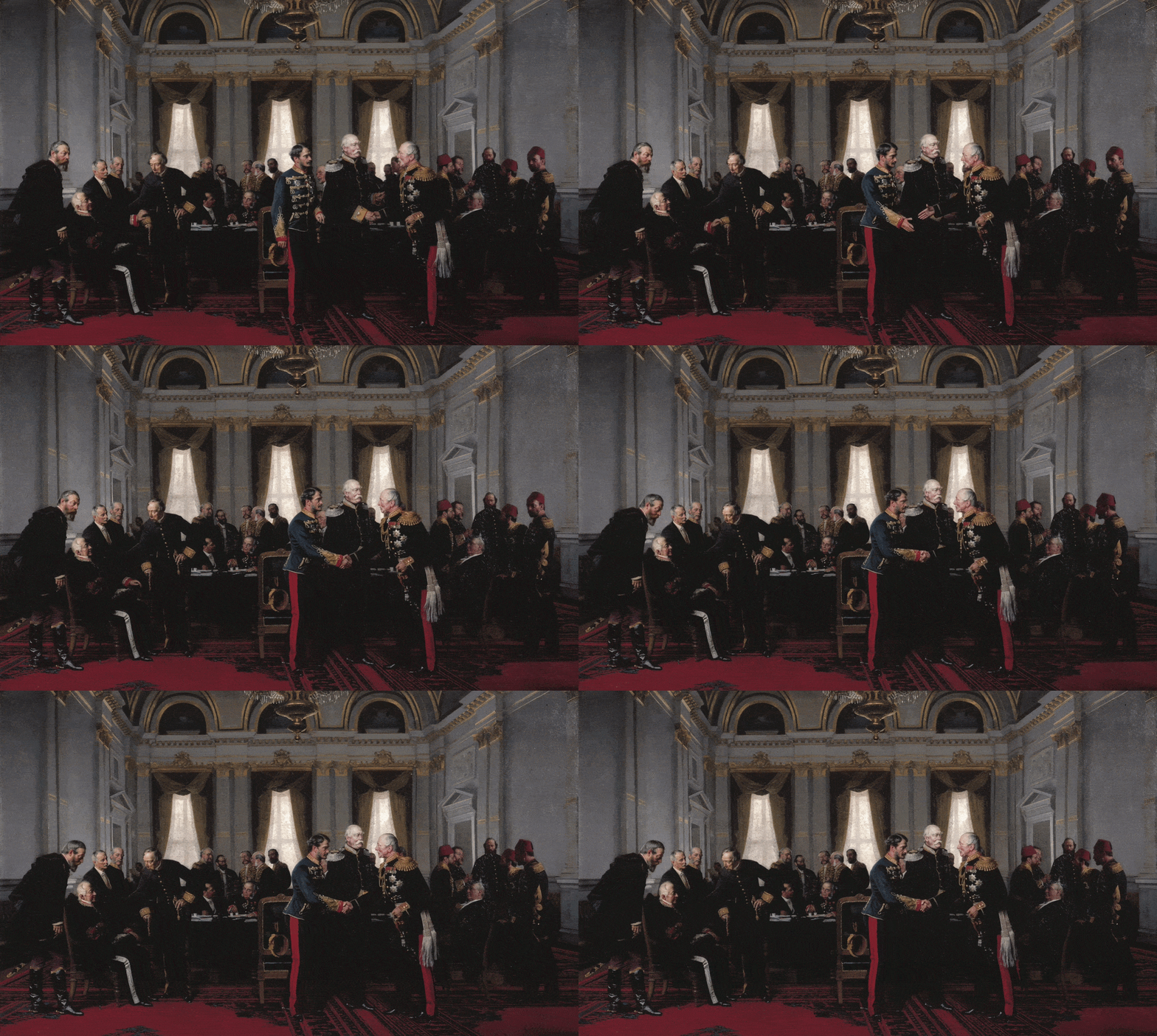
But today we turn to terrain that is far closer and far more familiar. On July 13, 1878, a treaty was signed in Berlin that appeared to bring one crisis to an end. In reality, it was an elegant European method of distributing that crisis across other people’s lives. That day, the Balkans became less a region than a document—and a document laid out on the table before men observing it from a safe distance.
The final version of that late-19th-century treaty declared that the powers had assembled to preserve the “European order” following the war and the preliminary *Treaty of San Stefano. That phrase alone contains the entire logic of the age...
In practice, the “European order” meant that London did not want Russia gaining access to the warm seas, Vienna did not want a large Slavic bloc on its doorstep, and St. Petersburg did not want to admit that a military victory won at enormous cost was now being reduced through diplomacy. Otto von Bismarck, the German chancellor and host of the congress, presented himself as an “honest broker.” It was an elegant phrase for a man determined to prevent someone else’s fire from reaching his own house. The congress lasted from June 13 to July 13, bringing the interests of Austria-Hungary, Britain and Russia into direct confrontation, while the Ottoman Empire increasingly resembled the owner of an estate whose creditors were discussing how to divide it.
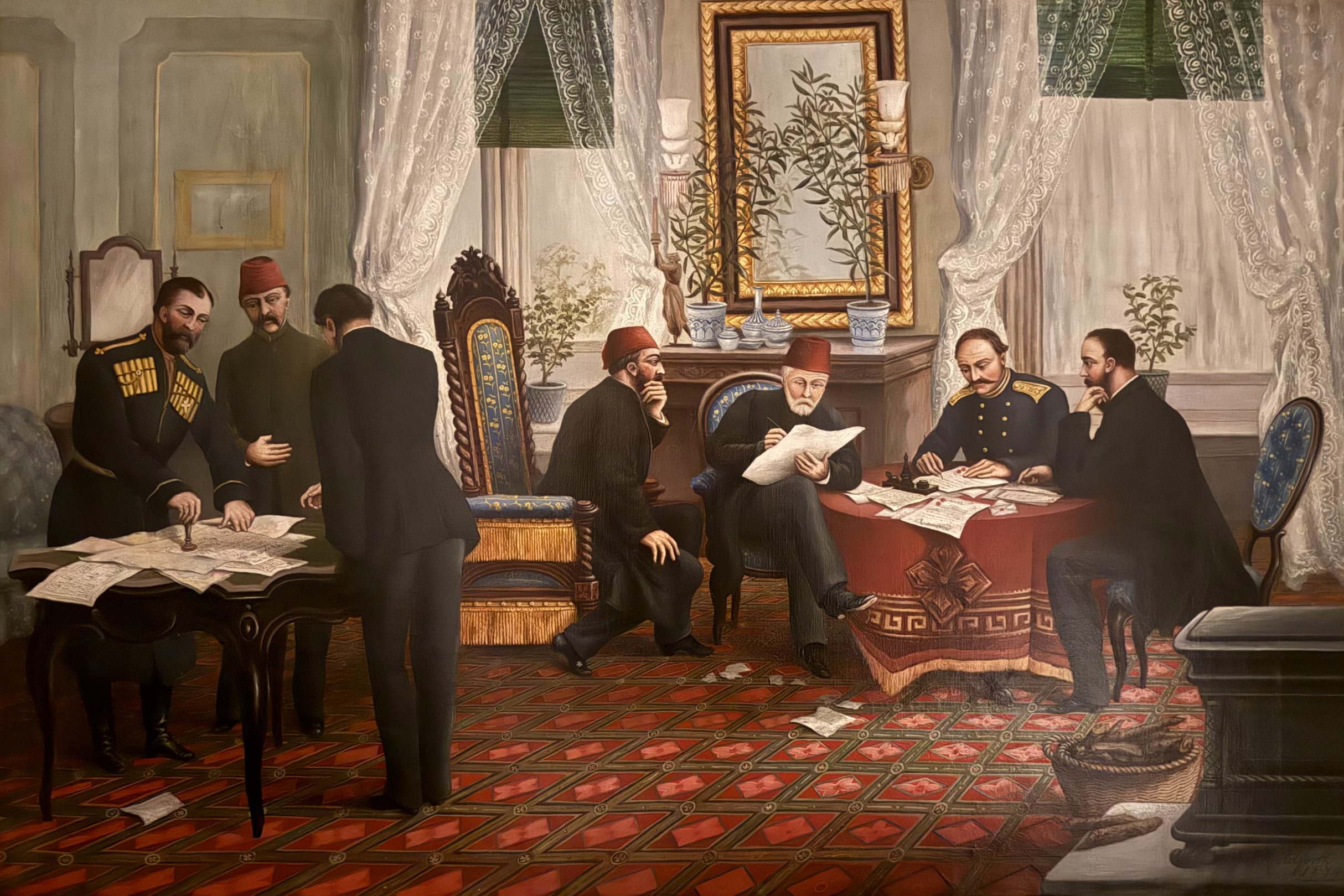
The first task was to dismantle San Stefano. After defeating the Ottomans, Russia had imposed a settlement in March 1878 that envisaged a large Bulgaria extending to the Aegean Sea. Russian diplomacy described it as the liberation and protection of Slavic and Orthodox peoples. To Britain, however, it looked like a Russian route to the Mediterranean. To Austria-Hungary, it was a cause for panic: an enormous Slavic territory under Russian influence would suddenly appear along its southern frontier.
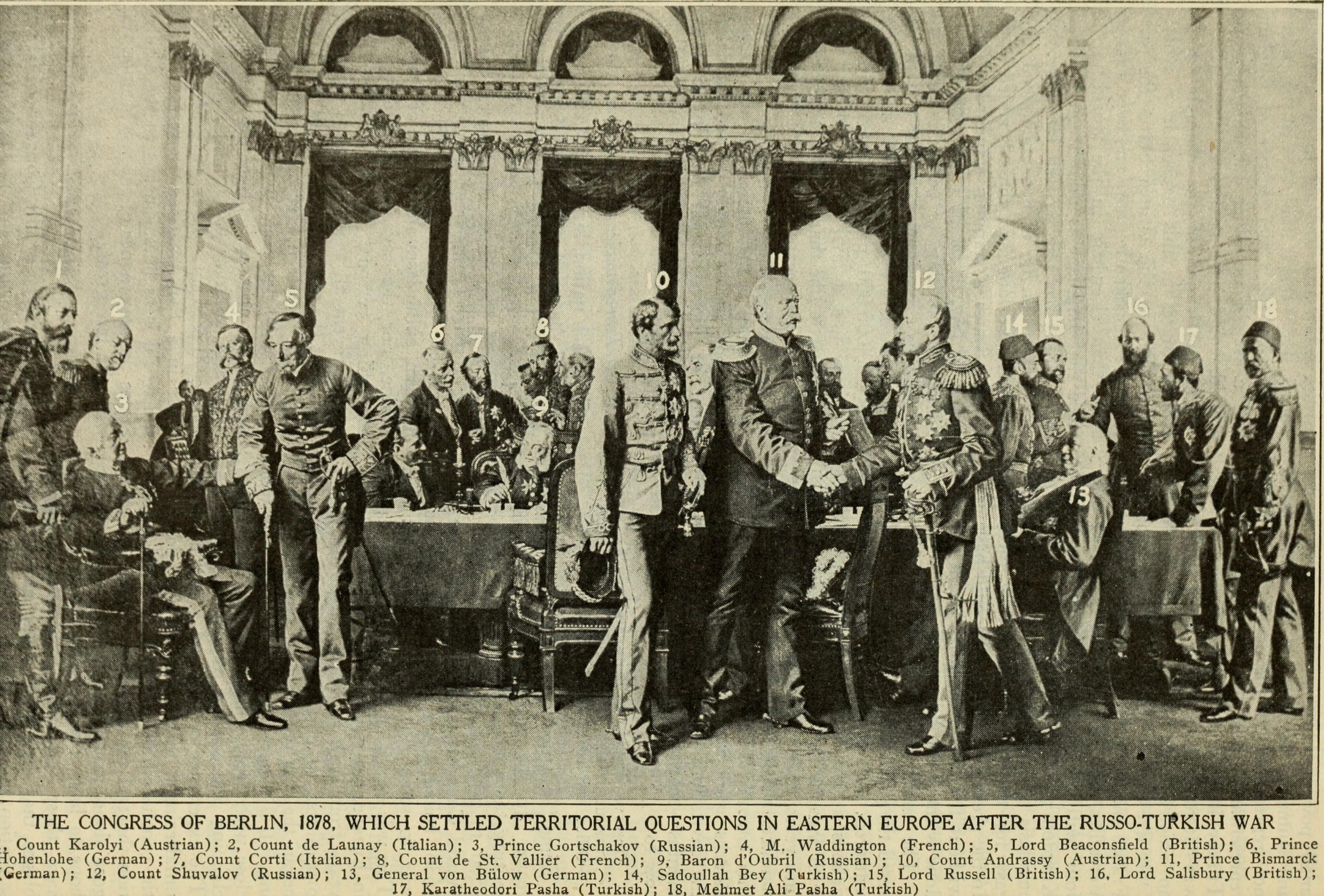
While the delegates spoke of principles, Britain had already secured the occupation of Cyprus on June 4, before the congress had even formally opened. Cynical, perhaps, but instructive: empires speak most eloquently about balance once their shipping routes are safely under control.
The Treaty of Berlin therefore reduced and divided Bulgaria. Bulgaria became an autonomous principality under the sultan’s suzerainty, Eastern Rumelia remained under more direct Ottoman authority, and Macedonia was returned to Ottoman administration. In other words, the problem was not solved. It was merely distributed with greater precision. The Bulgarian national question was given a form that would generate lasting frustration—and in politics, frustration often outlives institutions. On the map, everything looked reasonable. On the ground, it conveyed a different message: national aspirations would be recognized only to the extent that they did not disturb someone else’s navy, intelligence service or imperial vanity.
The Bulgarian National Question: The Map That Became a Trauma
For Bulgarians, the Treaty of Berlin was especially bitter because it came only a few months after San Stefano, which had promised a large autonomous Bulgarian state. This imagined country would have included not only present-day Bulgaria, but much of Macedonia and access to the Aegean Sea. For the Bulgarian national movement, it was more than a diplomatic construction. It was the first moment when centuries of Ottoman rule seemed likely to end with the creation of a large national state.Berlin cut that vision apart. What had looked like liberation in March 1878 became a source of profound frustration by July. In Bulgarian political memory, the Treaty of San Stefano consequently became more than a treaty. It became a lost map, an almost mythical proof that the “true” Bulgaria had once existed, had briefly been recognized, and had then been taken away.
And this Bulgarian state had emerged after nearly half a millennium of Ottoman rule, from 1396 to 1878.
The wound had a long future. The unification of Bulgaria and Eastern Rumelia in 1885 was the first attempt to revise the Berlin settlement, but Macedonia remained unresolved. It would later become the central point of conflict among Bulgaria, Serbia, Greece and the Ottoman Empire. The Balkan Wars of the early 20th century did not emerge from nowhere. They grew partly from the belief that European diplomacy had closed the congress in 1878 without closing the question. It had merely passed the problem on to the next generation—a favorite method of wise statesmen who prefer not to pay the price of their own wisdom.
Serbia, Montenegro and Romania received international recognition of their independence, undoubtedly a major achievement for their national movements. But even this victory was not a simple story of self-determination. Every recognition came with conditions, borders, debts and obligations to an order defined by others. The treaty’s articles reveal the cold logic of diplomatic management: a state is recognized, and then immediately instructed on how it must treat religions, minorities, Ottoman property and international interests. Freedom arrived, but with terms and conditions attached.
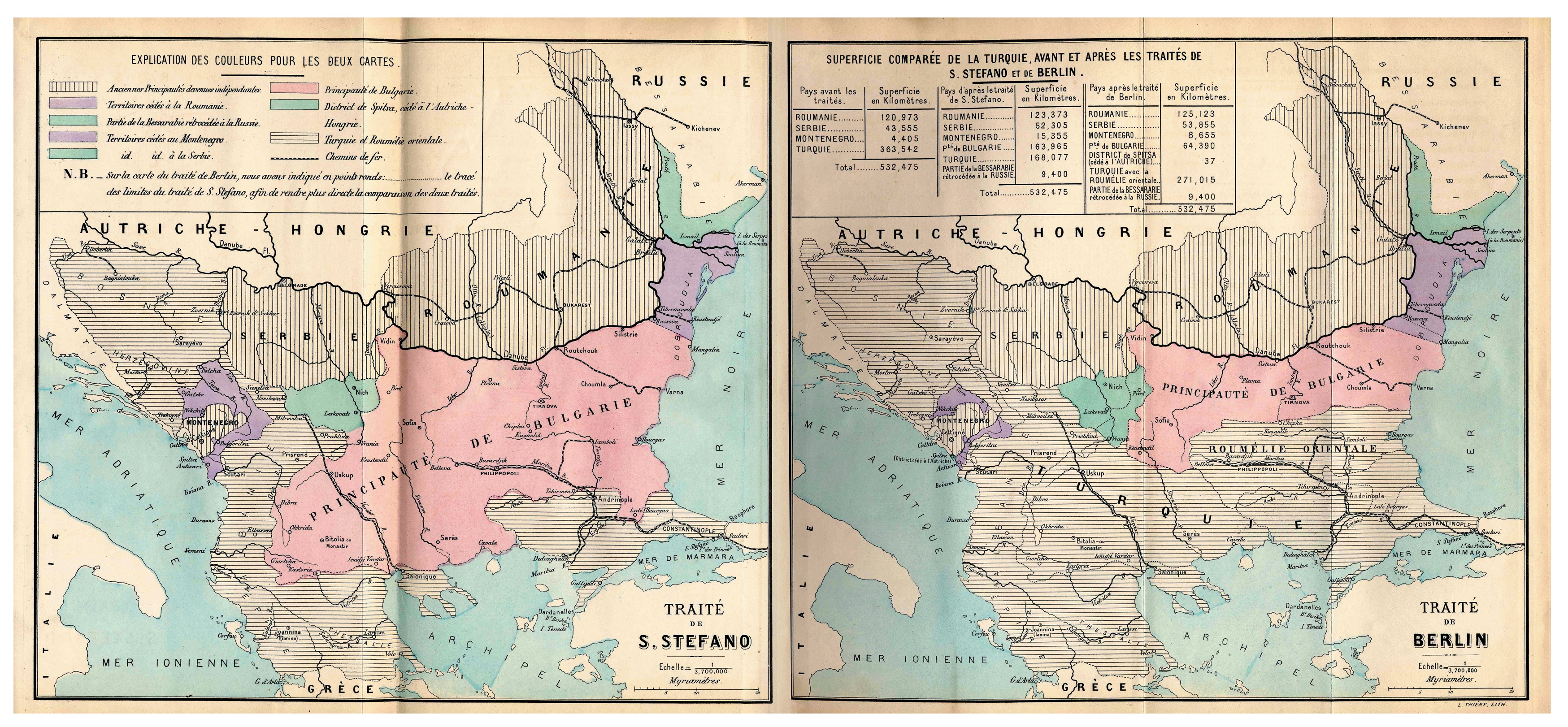
Berlin’s most politically dangerous decision concerned Bosnia and Herzegovina. Berlin did not “create” the country, nor did Bosnia emerge from the diplomatic ink of the great powers in 1878. Its history extended far deeper, from medieval statehood through centuries of Ottoman rule. But the Treaty of Berlin transformed its international position. Under Article 25, Austria-Hungary was authorized to occupy and administer Bosnia and Herzegovina, while formal sovereignty remained with the Ottoman Empire. It was legal acrobatics worthy of dying empires: the territory nominally remained under the sultan but in reality passed into Vienna’s hands.
Vienna thus gained entry into Bosnia, but also inherited a problem that would prove larger than the province itself. The Sanjak of Novi Pazar, a narrow territory separating Serbia from Montenegro, remained strategically important precisely because it prevented the two Slavic states from joining together. There were no accidental lines in this geography. Every border served a military or political purpose.
The document naturally also spoke the language of 19th-century liberalism. It referred to freedom of religion, civil rights and equal access to public office. These provisions should not be dismissed entirely as hypocrisy, since in some places they did carry genuine weight. But there remained a profound difference between rights written in a diplomatic chamber and rights expected to survive in a village, market town or city where the government could change overnight. In Berlin, Europe liked to imagine that history could be organized through treaty clauses. The Balkans soon reminded Europe that people read treaties differently when a foreign army is marching through their courtyard.
Who Profited—and Who Lost?
In the short term, Britain once again emerged as the greatest beneficiary. It did not acquire territory in the Balkans, but it achieved what mattered most strategically: it blocked Russia’s advance toward the Mediterranean and dismantled the large San Stefano Bulgaria that would have fallen under powerful Russian influence. At virtually the same moment, Britain also secured Cyprus, which mattered far more to London than any Balkan sentiment. The British were playing imperial chess, and they played it with remarkable coldness.Austria-Hungary gained most visibly, receiving the right to occupy and administer Bosnia and Herzegovina. It looked like a major prize: Vienna could move deep into the Balkans, control the territory between Serbia, Montenegro and the Adriatic, and obstruct the expansion of Serbian and Russian influence. Yet it was also a poisoned gift. Vienna gained territory but inherited a national question it did not know how to resolve. What appeared in 1878 as an expansion of imperial power would eventually become one of the cracks through which the monarchy began to disintegrate.
Germany benefited diplomatically. Bismarck did not seek Balkan territory for Germany; he sought stability in Europe and a German role as arbiter. Berlin became the place where the continental order was decided. Of course, an honest broker in politics usually means someone who understands his interests so well that he does not even need to state them.
Russia, paradoxically, lost after winning. It had defeated the Ottoman Empire militarily, only to see the results of that victory cut down by diplomats in Berlin. San Stefano Bulgaria had been Russia’s greatest prize, but Berlin reduced, divided and neutralized it. In Russian memory, the congress therefore remained a humiliation: Russian blood had been spilled, but the British and Austrians redrew the map.
The Ottoman Empire lost, but less than it might have. After San Stefano, Ottoman rule in Europe appeared to be collapsing at an accelerating pace. Berlin returned some territory and bought the empire additional time, particularly in Macedonia. It was not a victory, merely a postponement of defeat. But in diplomacy, even postponing defeat can count as success.
Resistance came quickly, as expected. An American diplomatic report from Constantinople noted only a few months after the treaty that the Austro-Hungarian occupation of Bosnia and Herzegovina was being “resisted at every step.”
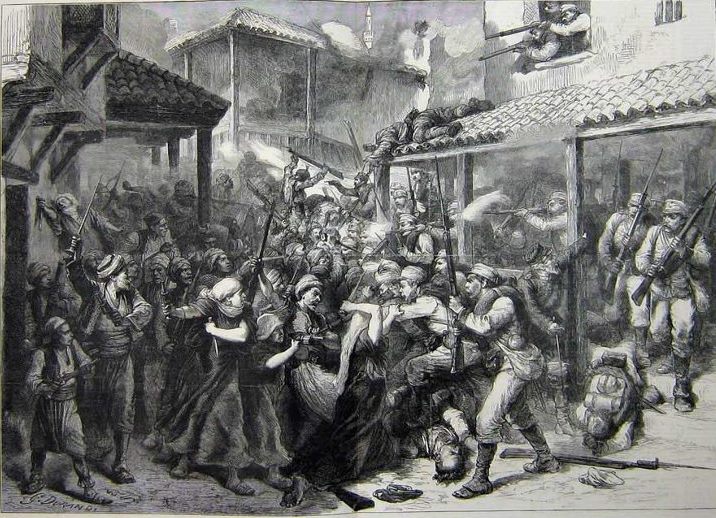
One detail in particular reveals how weak the treaty was once it left the page. Mehmed Ali Pasha, an Ottoman marshal and one of the treaty’s signatories, was sent after the congress to suppress resistance in Albanian lands. In Gjakova, in western Kosovo, he was met by an uprising and then by death. Drawing-room diplomacy had encountered the local rifle. In a single image, this is the entire history of the Treaty of Berlin.
The Balkans, however, were not a mute child of European history. The region had its own movements, armies, committees and newspapers. It had ecclesiastical programs and dynastic ambitions. Its elites knew perfectly well how to use the rhetoric of the great powers whenever it suited them. But Berlin reinforced a dangerous habit: local aspirations became legitimate only after receiving approval from someone far away. When that approval was withheld, aspiration turned into trauma. This is how a political culture of constantly correcting “historic injustice” takes shape, because every map becomes someone’s proof that history was once stolen from them.
Why Did Russia Allow Its Military Victory to Become a Partial Defeat?
Russia had defeated the Ottoman Empire militarily in 1878, but it was not strong enough to impose the political results of that victory on Europe by itself. The Treaty of San Stefano represented the maximum Russia could extract from the defeated Sublime Porte, but not from Britain, Austria-Hungary and the wider system of great powers. In other words, the Russian army had reached the outskirts of Constantinople, but Russian diplomacy could not force London and Vienna to accept a Balkan order shaped according to Russian wishes.The greatest problem was the proposed Greater Bulgaria. Formally, it would have remained autonomous under the sultan. In reality, it would almost certainly have become a Russian satellite. For Britain, this raised the prospect of Russian access to the Mediterranean and greater pressure on the imperial routes to India.
Russia had won the war against the Ottomans, only to encounter one of the oldest rules of European diplomacy: you may defeat a weaker adversary, but you must not alarm the stronger spectators too much.
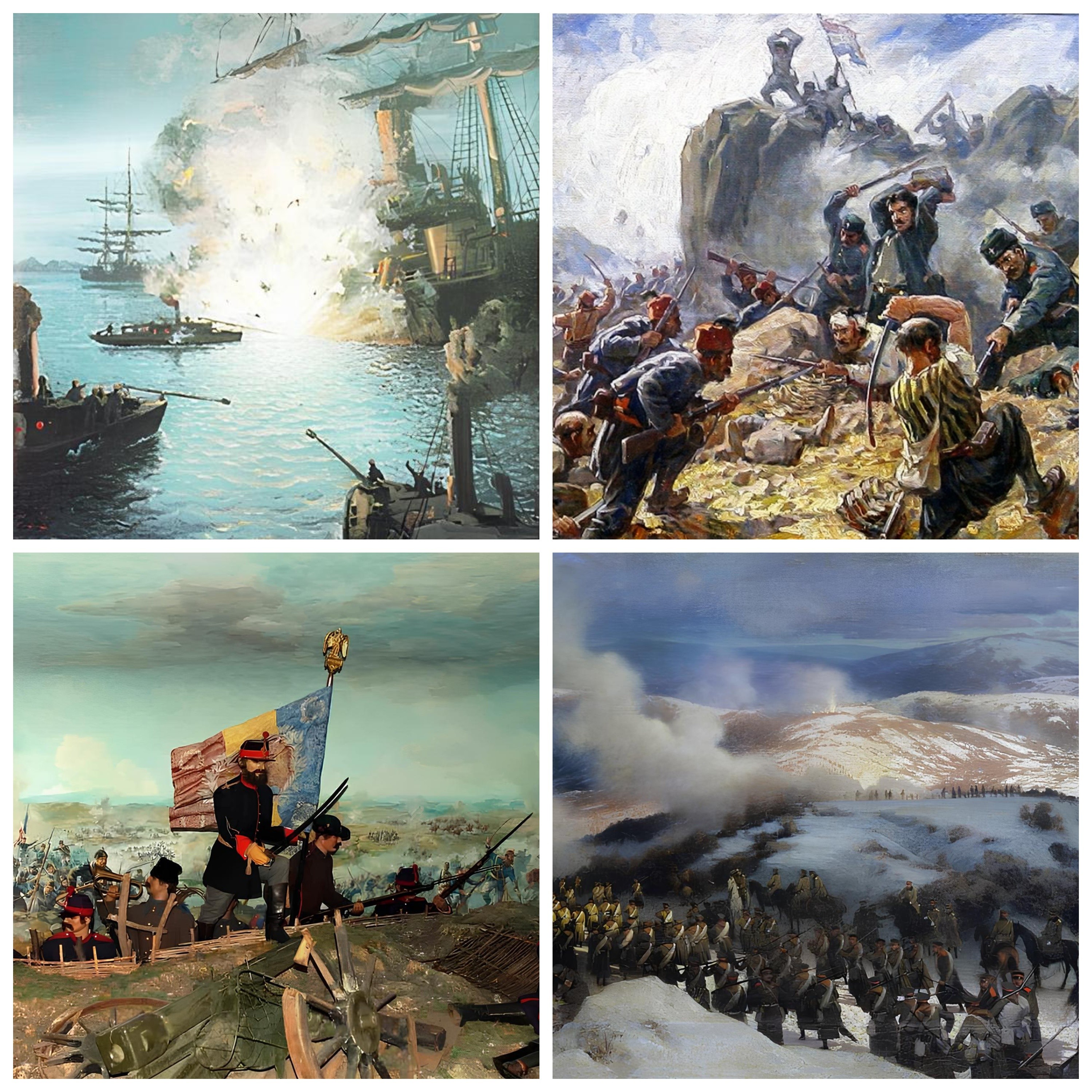
Russia was also exhausted. The war of 1877–1878 had been difficult, expensive and bloody, particularly during the Siege of Plevna. Tsar Alexander II could have attempted to defend the Treaty of San Stefano at any cost, but doing so would have risked a new conflict with Britain and Austria-Hungary, perhaps even a wider European war. Russia had not forgotten the Crimean War, when Britain and France had intervened on the Ottoman side. At Berlin, it was therefore choosing between a bad peace and the danger that its military victory might disappear into an even greater defeat.
It should also be remembered that Russia did not leave Berlin empty-handed. It acquired territories in the Caucasus, including Kars, Ardahan and Batum, and recovered southern Bessarabia. But the main political prize—Greater Bulgaria—had been dismantled and fragmented.
In essence, Russia defeated the Ottoman Empire and signed a peace treaty with it, only for the European powers to declare, “No, you cannot do that,” and transform the Treaty of San Stefano into the Treaty of Berlin a few months later.
Some may still ask why the Ottoman Empire had “given” Russia control over Greater Bulgaria in the first place. The answer is that it had not done so voluntarily. It signed a preliminary peace under enormous pressure after suffering military defeat. By the end of the war of 1877–1878, the Russian army was in an exceptionally strong position, virtually at the gates of Constantinople.
The Treaty of Berlin did not single-handedly cause every later Balkan war, nor can a straight line be drawn from the congress to Sarajevo in 1914. History is not a tram route. But the treaty gave institutional form to grievances that would return for decades. Russia was humiliated. Austria-Hungary entered Bosnia, opening a question that would erupt with the annexation of 1908 and then again in the crisis leading toward the First World War. Bulgaria learned that “national unification” was a project still waiting to be completed. Europe, as so many times before and since, learned far too little.
That is why July 13, 1878, is more than another date in the chronology of diplomacy. It marks the day when the Balkans became a mirror of a broader European weakness: the ability to arrange other people’s destinies with extraordinary precision and almost no humility. Borders were not merely drawn. They were translated into memories, fears and political myths. And once borders have been drawn inside people’s minds, they are far more difficult to revise than any line on a map.
Sources
- Jstor.org Three Ottoman Pashas at the Congress of Berlin, 1878 https://www.jstor.org/stable/44157733
- History.state.gov Historical Documents - Office of the Historian https://history.state.gov/historicaldocuments/frus1878/d523
- Alexandriabrief.com 180 years ago today, Congress voted to give Alexandria back to Virginia https://www.alexandriabrief.com/180-years-ago-today-congress-voted-to-give-alexandria-back-to-virginia/
- Meer.com Otto von Bismarck and the Balkans | Meer https://www.meer.com/en/63657-otto-von-bismarck-and-the-balkans
- Academia.edu Deosmanisation of Bosnia and Herzegovina between 1878 and 1918 on the Example of Sarajevo https://www.academia.edu/115447348/Deosmanisation_of_Bosnia_and_Herzegovina_between_1878_and_1918_on_the_Example_of_Sarajevo
- Content.ecf.org.il Great Britain, Austria-Hungary, France, Germany, Italy, Russia and Turkey https://content.ecf.org.il/files/M00935_TreatyOfBerlin1878ExcerptsEnglish.pdf
Comments