
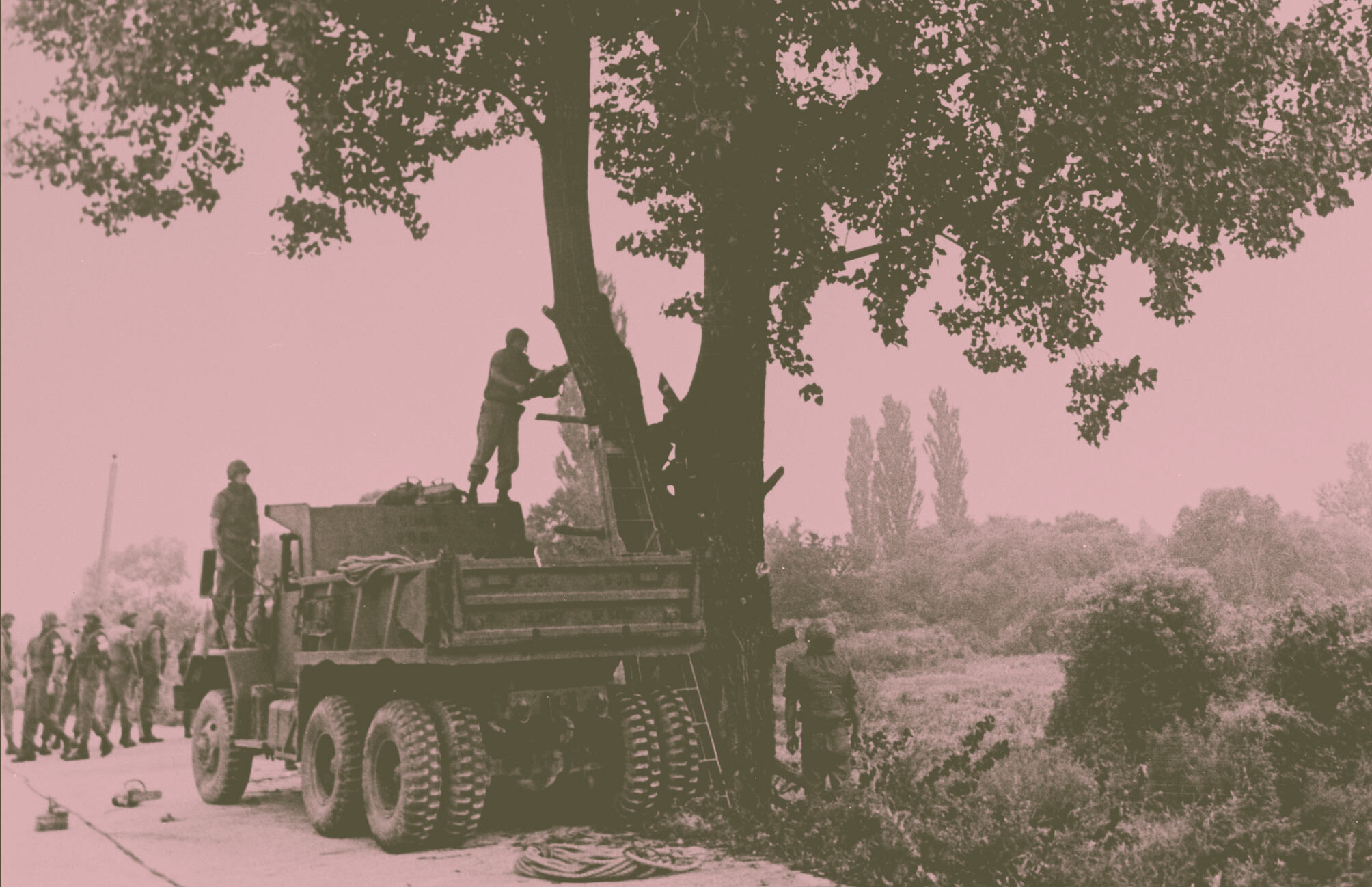
At dawn on August 21, 1976, twenty-three American and South Korean military vehicles headed toward a poplar tree in Panmunjom on the Korean Peninsula. Two teams of engineers carried chainsaws. Infantrymen and South Korean special forces surrounded them, while helicopters and artillery stood ready. B-52 bombers flew demonstration missions overhead, and the aircraft carrier USS Midway was moving toward the peninsula. The objective of the largest display of military force since the 1953 Korean armistice could be summed up in a single sentence: turn a tree into a stump.
Three days earlier, that same poplar had become the site where two American officers were killed. From that moment on, it was no longer merely obstructing the view between two guard posts. It was blocking the way out of a crisis. Washington had to show that its soldiers could not be killed without consequences, while Pyongyang had to decide whether it was prepared to defend a tree with machine guns.
The Korean War never ended with a peace treaty. In 1953, it was merely frozen by an armistice, leaving the village of Panmunjom as a place where peace was performed every day before an armed audience. Inside its Joint Security Area, guards from both sides moved among one another. The Military Demarcation Line ran through the area, but there was no physical barrier marking it. Americans, South Koreans and North Koreans encountered one another just a few paces apart, beside the Bridge of No Return and the conference buildings where talks were held about an armistice that had never become a genuine peace.
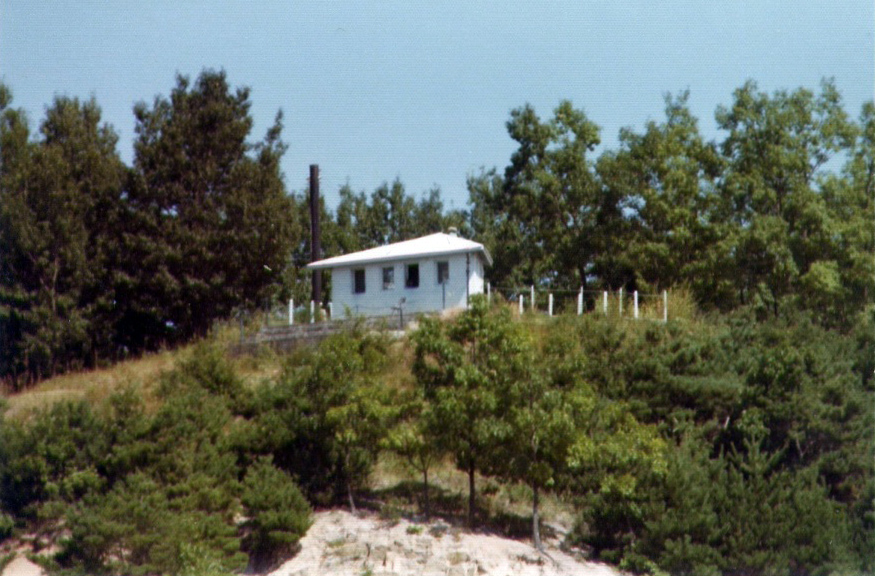
But what exactly happened? The poplar tree blocked the line of sight between an American observation post and a checkpoint near the bridge. That isolated position was surrounded by North Korean guard posts, which led American troops to nickname it "the loneliest outpost in the world." The original plan had been to cut the tree down, but the North Koreans objected. UN Command therefore decided merely to trim its branches. Almost anywhere else, this would have been a job for a municipal maintenance crew. In Panmunjom, even landscaping was diplomacy by other means.
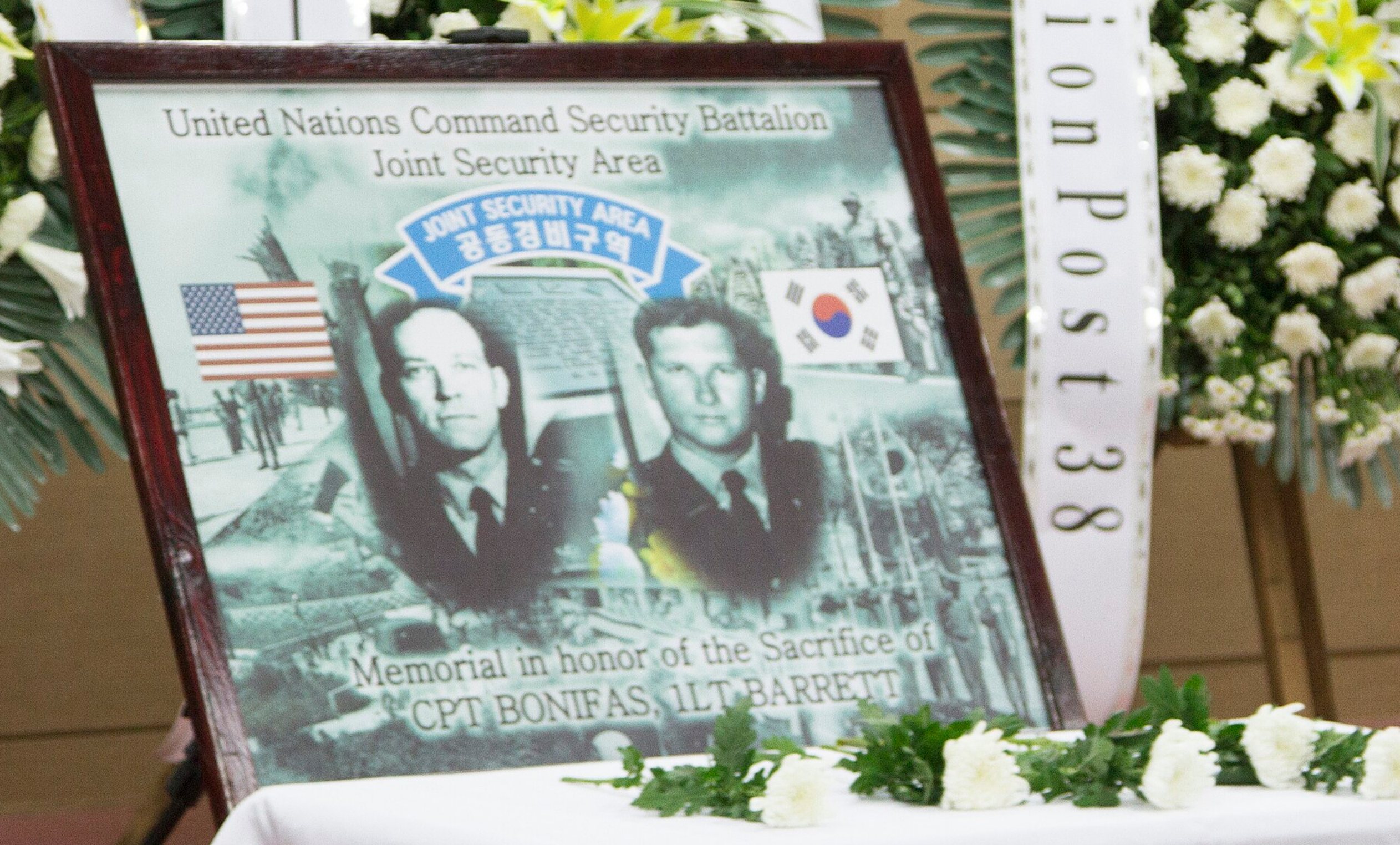
On the morning of August 18, five Korean workers arrived at the site with a small American-South Korean escort. The group was led by U.S. Captain Arthur Bonifas and First Lieutenant Mark Barrett. North Korean Lieutenant Pak Chul, known to the Americans by the nickname Bulldog, initially watched the work. He then ordered it stopped and called for reinforcements. Bonifas ordered the trimming to continue.
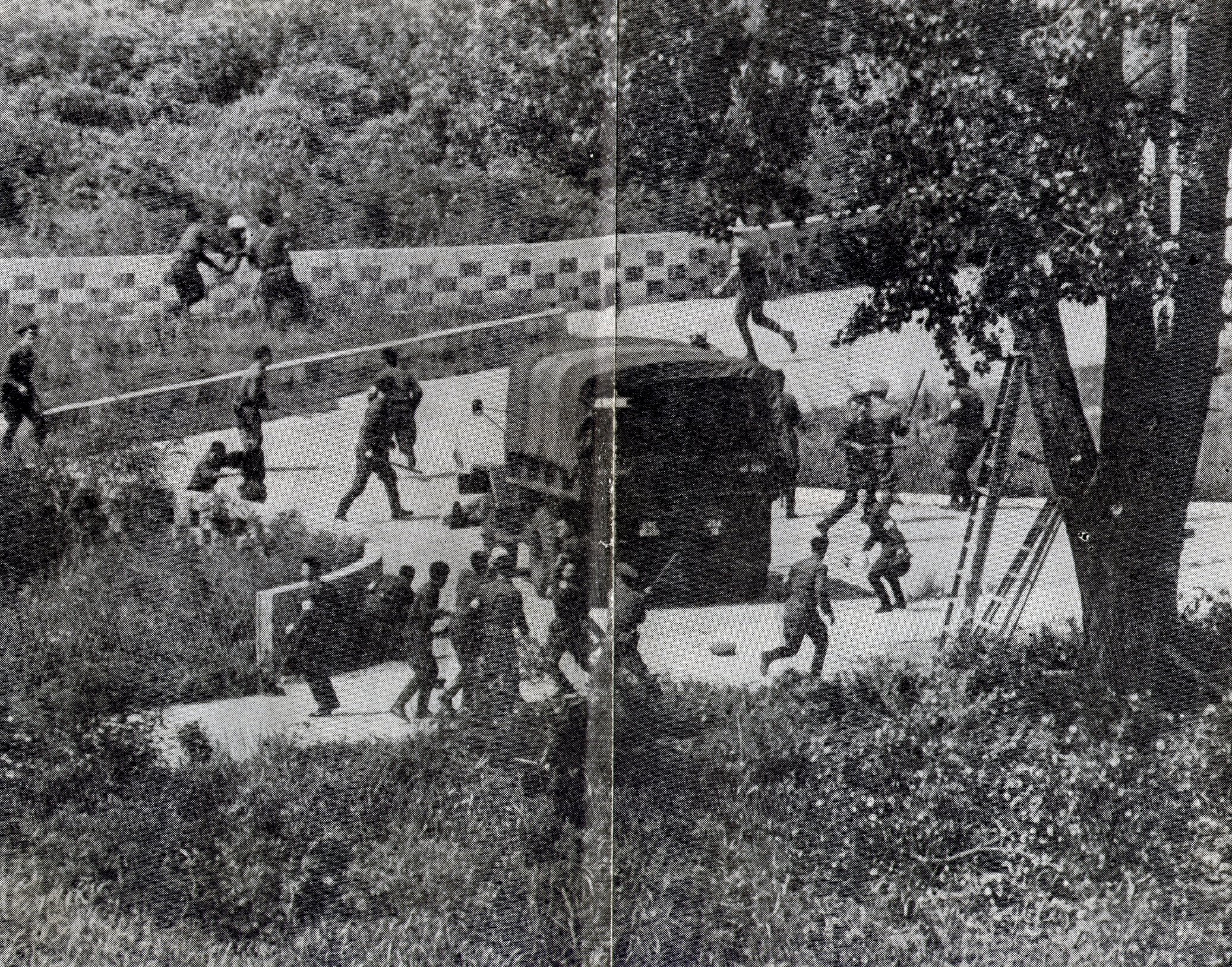
The attack began suddenly. North Korean soldiers grabbed axes dropped by the workers and charged the outnumbered group with them and with clubs. Bonifas and Barrett were killed, while several American and South Korean soldiers were injured. The entire assault lasted only a few minutes. Despite the firearms carried by both sides, no one used them — partly because of the zone's strict rules, and partly because the attack unfolded too quickly for any coherent command to emerge from the chaos.
The killings were captured on camera from a nearby observation post. U.S. Captain Larry Shaddix shot the scene on 35-millimeter Ektachrome film, but there was no laboratory in South Korea capable of developing it. The film was therefore rushed to Japan and returned the following morning so the photographs could be placed on the table in front of the North Korean delegation. In the analog age, evidence that the world might be sliding toward another war first had to travel by air mail and pass through a photo lab.
News reached Washington far more slowly than the gravity of the event might suggest. U.S. Secretary of State Henry Kissinger did not learn of the killings until the following morning. At the emergency meeting that followed, he was told that "the mechanism had failed" and that senior officials simply had not been informed.
The CIA assessed the incident as a deliberately staged provocation, although it left open the possibility that the killings themselves had not been planned in advance. North Korea in 1976 was not yet the internationally isolated state it would later become. At the Non-Aligned Movement conference in Colombo, Pyongyang was trying to build support for the withdrawal of American forces from South Korea and the abolition of UN Command. Perceptions of American weakness after the fall of Saigon were an important part of the calculation. Kissinger warned that if Washington failed to respond, the North Koreans would begin to see the United States as a "paper tiger from Saigon."
Declassified White House records today read as though nuclear strategy had briefly been handed over to a committee on landscaping. Options included shelling North Korean barracks, carrying out a covert operation along the coast and striking an industrial target. Admiral James Holloway even raised the possibility of hitting the tree itself with a laser-guided bomb. One official proposed sending in a man on a bicycle carrying explosives...
Park's plan: send in 50 black belts and let the North Koreans make the first move
The day after the two American officers were killed, General Richard Stilwell met South Korean President Park Chung-hee at the Blue House. Park believed that a simple display of military power would not impress Pyongyang. The North Koreans, he argued, needed to be "taught a lesson" — but without firearms.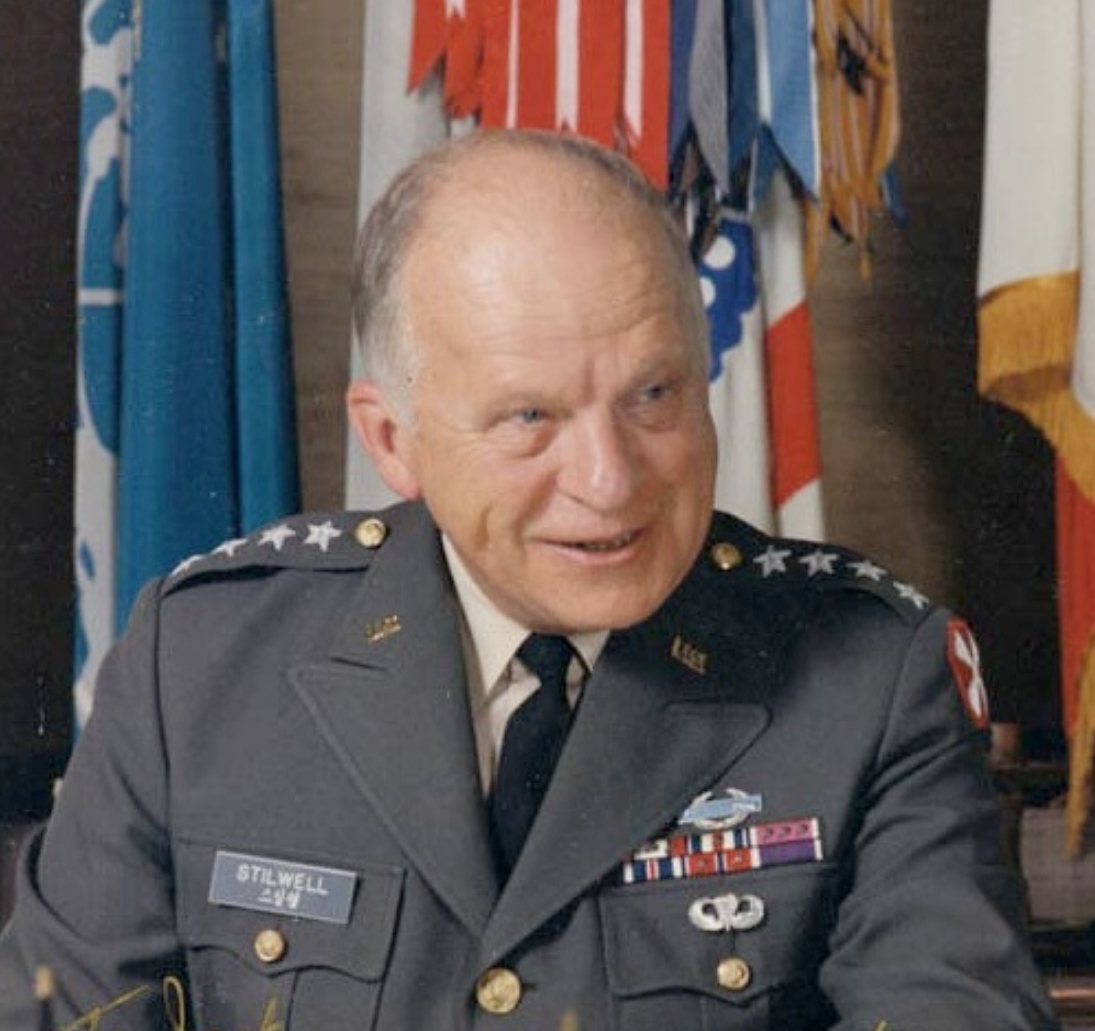
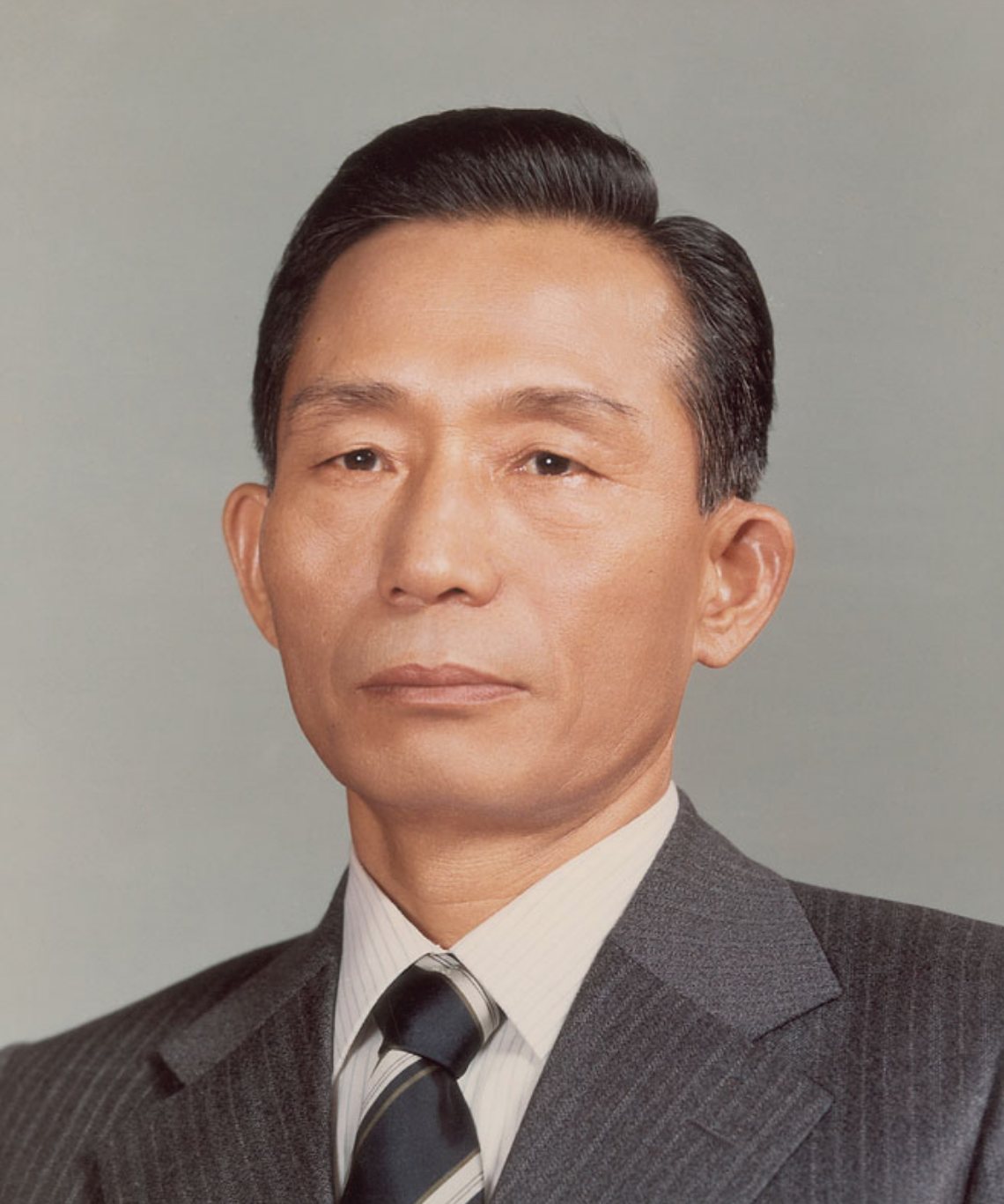
It was an almost absurd attempt to calibrate violence with precision. B-52 bombers, fighter aircraft and an aircraft carrier were being readied in the background, while at the same time officials were considering whether the crisis might be controlled by allowing dozens of commandos to fight with fists and clubs — provided nobody reached for a rifle.
Kissinger, meanwhile, rejected the idea of inviting the world's press in advance to watch the tree being cut down, arguing that the spectacle would look excessively theatrical. A few hours later, Washington approved what was probably the most theatrical tree-cutting operation in history. President Gerald Ford rejected a broader attack on North Korean targets but authorized an operation designed to demonstrate a willingness to escalate without crossing the threshold into open war.
The operation was named "Paul Bunyan", after the giant lumberjack of American folklore. The plan devised by U.S. General Richard Stilwell rested on surprise, speed and the avoidance of direct combat. American forces in South Korea were raised to DEFCON 3. At the center of the operation were sixteen military engineers, but the broader task force involved more than 800 personnel.
Helicopters and combat aircraft hovered above the zone. The B-52s' flight path was deliberately chosen so that North Korean radar would detect them. F-4 fighters and F-111 bombers were deployed to Korea, while USS Midway moved closer to the peninsula. The nominal objective was to remove the poplar. The real objective was to convince Pyongyang that any attempt to stop the work could unleash something far larger than a confrontation over a tree.
The convoy set out at 6:48 a.m., and the operation began at seven. UN Command informed the North Koreans only a few minutes later, by which time the vehicles were already inside the zone. North Korean reinforcements soon arrived by bus. Soldiers set up machine guns and took up positions, but they did not open fire.
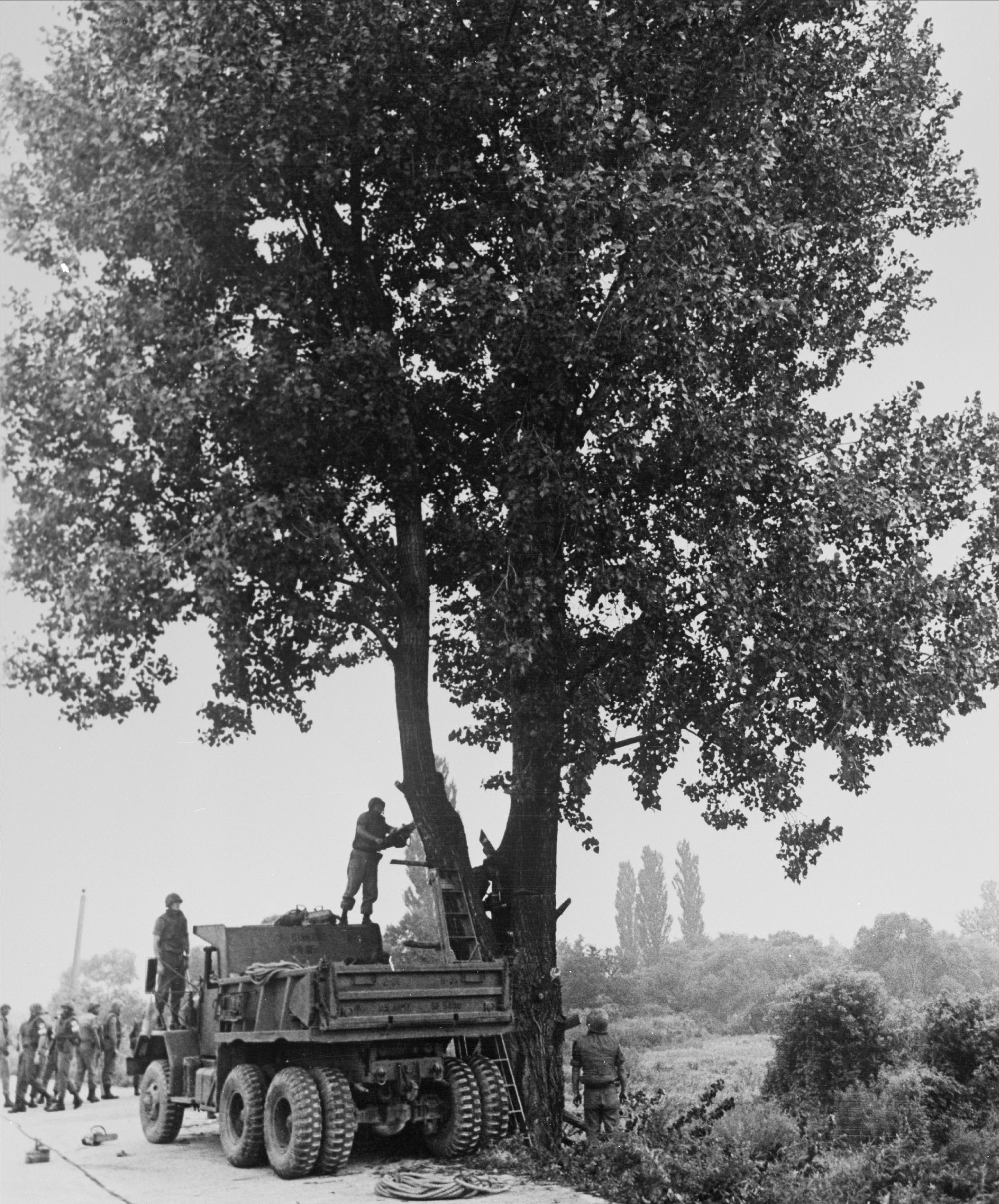
The South Korean engineers started their chainsaws. Within 42 minutes, the enormous crown was gone and only a tall stump remained. North Korean soldiers watched the entire operation from the other side. What unfolded before them was a carefully choreographed threat — large enough to be credible, but limited enough to leave them a way to back down.
That same day, North Korean leader Kim Il-sung sent a message expressing regret over the incident. Washington later described it as the closest thing to a direct apology Pyongyang was prepared to offer. A new agreement soon followed. Troops from the two sides would no longer be allowed to move freely throughout the Joint Security Area, North Korea removed four of its positions from the southern side, and a visible Military Demarcation Line was drawn through Panmunjom. The Bridge of No Return was also closed. In other words, only after an incident that nearly destroyed the armistice did Panmunjom cease to be truly "joint."
It was across the boundary created in the aftermath of the poplar incident that North Korean leader Kim Jong-un stepped toward South Korean President Moon Jae-in in 2018, during a moment of optimism that would prove short-lived. One of the most famous images of modern Korean diplomacy therefore unfolded along a line that, four decades earlier, a chainsaw had helped draw.
Operation "Paul Bunyan" was therefore more than a bizarre story about overwhelming military power being deployed against a tree. It was an exercise in precisely calibrated escalation. The Americans chose a target small enough to accomplish but visible enough for victory to carry political meaning. North Korea could back down without signing a surrender, while Washington could claim it had refused to accept humiliation.
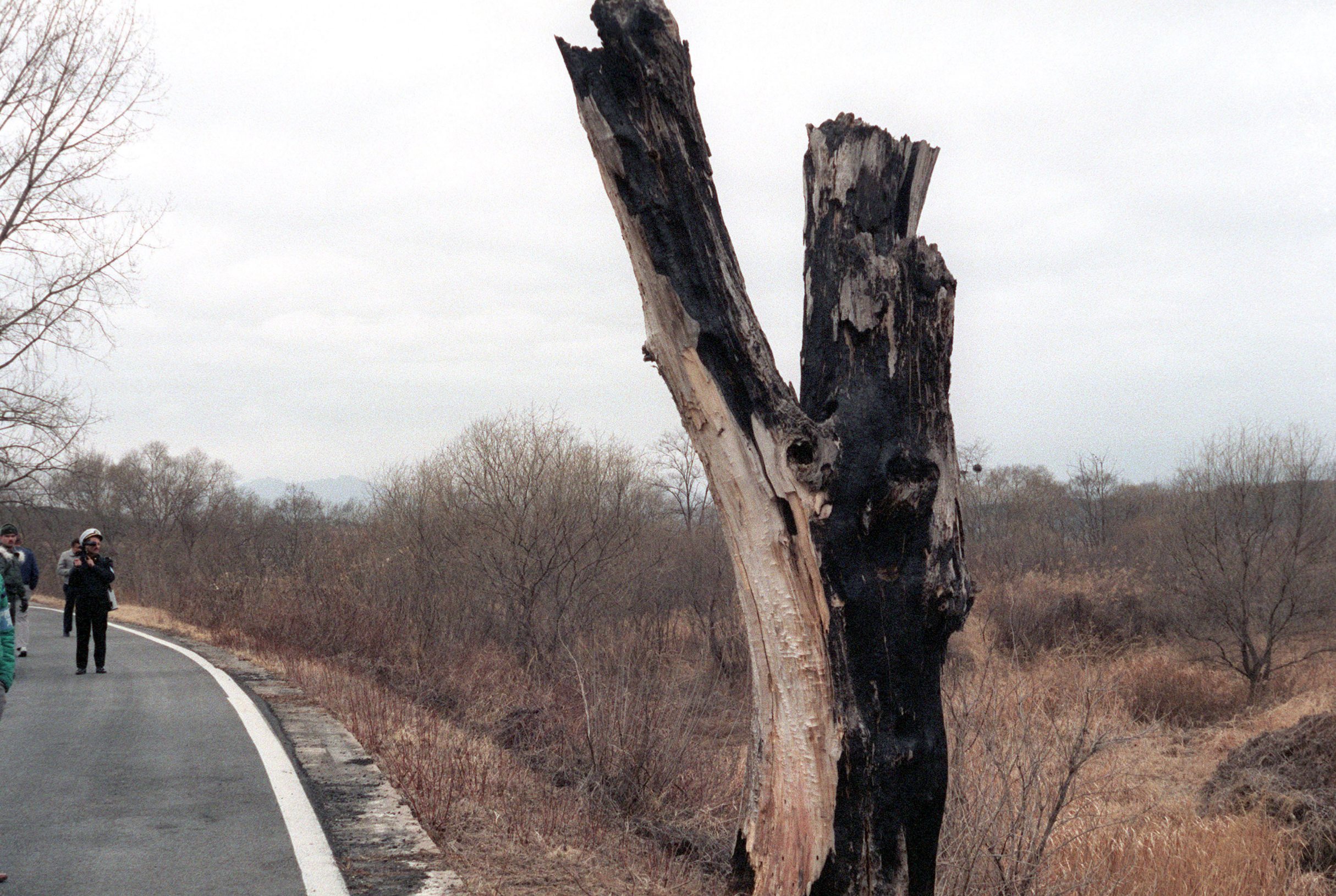
The stump remained in place until 1987, when it was replaced by a bronze plaque dedicated to Arthur Bonifas and Mark Barrett. At Panmunjom, peace was saved with chainsaws — but only because the bombers behind them were impossible to miss.
Sources
- History.state.gov Historical Documents - Office of the Historian https://history.state.gov/historicaldocuments/frus1969-76ve12/d285
- Unc.mil DMZ Ceremony to Honor U.S. Soldiers Killed in Korean Axe Murder Incident https://www.unc.mil/News/News-Stories-Press-Release/Article/4278352/dmz-ceremony-to-honor-us-soldiers-killed-in-korean-axe-murder-incident/
- Magazine.atavist.com Axes of Evil https://magazine.atavist.com/2018/axes-of-evil-north-korea-dmz-tree-murders
- Nsarchive.gwu.edu Office of the Historian, Headquarters Strategic Air Command, History of Strategic Air Command 1 July 1975-31 December 1976, Historical Study No. 161, Volume I, 15 July 1976, Top Secret, excised copy, excerpt | National Security Archive https://nsarchive.gwu.edu/document/20805-27
- The Atlantic The ‘God Damn’ Tree That Nearly Brought America and North Korea to War https://www.theatlantic.com/international/archive/2018/06/axe-murder-north-korea-1976/562028/
- Pbs.org FRONTLINE/WORLD . North Korea - Suspicious Minds . Face-Off: A Short History of the U.S.-North Korea Conflict - 1976: An Axe Fight Nearly Triggers War | PBS https://www.pbs.org/frontlineworld/stories/northkorea/1976.html
- Archives.go.kr 국가기록원>기록물열람>통합검색>국정분야주제별검색>분야별주제검색 https://www.archives.go.kr/next/newsearch/listSubjectDescription.do?id=009721&sitePage=
- Panmuntour.go.kr Axe Murder Incident https://www.panmuntour.go.kr/nlgn/pblc/guidance/eng/epoch.do
Comments