
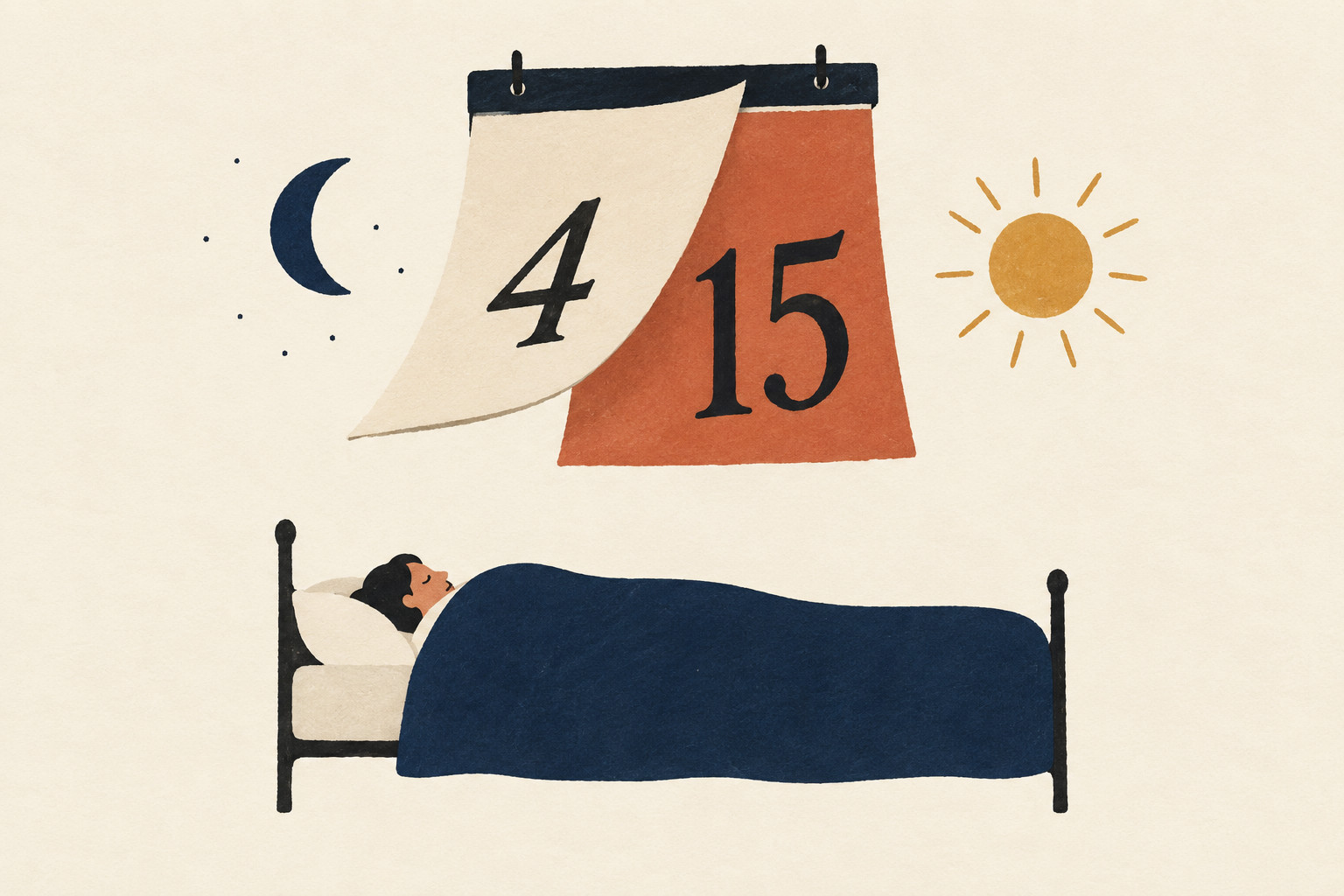
If you went to bed in Rome or Madrid on the evening of Thursday, 4 October 1582, you woke the next morning to Friday, 15 October. The Sun rose at the expected time, people slept their usual number of hours, and no one aged ten days overnight. Only ten dates had vanished. Thursday was followed by Friday, but 5 October was no longer allowed to exist. Along with it, the 6th, the 7th and every other date through 14 October were erased.
And yet the day that did not exist was taking place perfectly normally elsewhere. While a resident of Rome called that Friday 15 October, someone in London woke up on 5 October. England had not yet adopted the new calendar. Two people could live through the same day beneath the same sky yet record two different dates in their documents. Europe had more than rival rulers and rival churches. It also had rival presents.
Teresa of Ávila died between two calendars
One of the most celebrated women in Catholic history died at the very edge of this calendrical abyss. Teresa of Ávila, the Carmelite nun, mystic and religious reformer, died in the Spanish town of Alba de Tormes on the evening of 4 October 1582. When dawn came a few hours later, the date was not 5 October but 15 October. Her death and the morning that followed belonged to two consecutive days, yet the numbers separating them make it seem as though her body spent ten days waiting for time to catch up.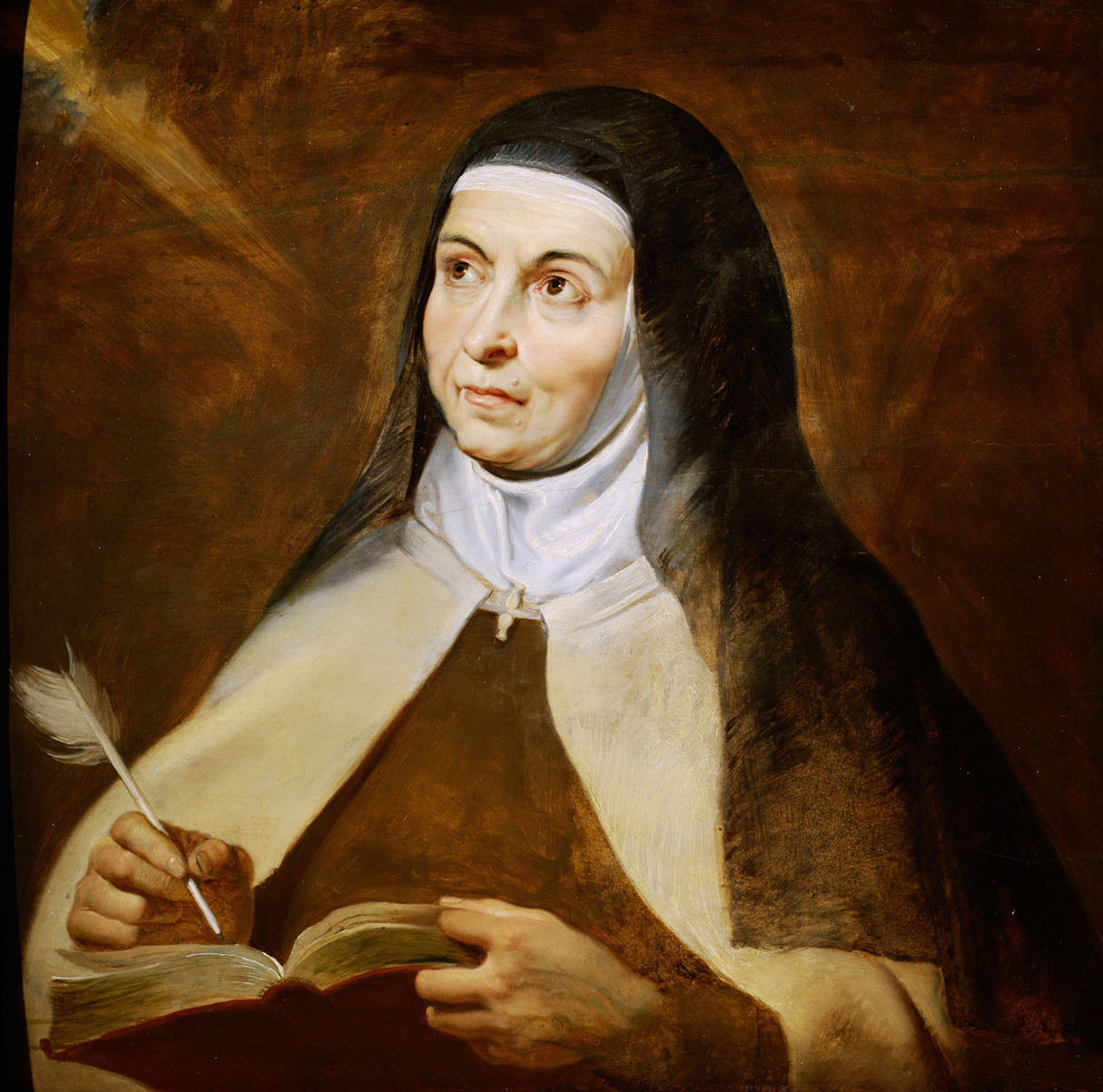
That detail reveals why calendar reform was more than the replacement of one table with another. We tie every human life to dates of birth, death and remembrance, yet Teresa’s final hours showed how easily those seemingly fixed numbers can become detached from the time a person actually lived.
This is precisely why the story of the ten missing days is far more than an odd historical footnote. It reveals something we almost never notice. Time is a natural phenomenon, but the date is a human institution. The Earth turns without consulting popes, kings or parliaments. Yet it is authority that decides which number we write on a contract, a gravestone or a birth certificate. The calendar is a map of time, and in 1582 people discovered that the map could be redrawn while the landscape continued to move.
Shakespeare and Cervantes did not die on the same day
William Shakespeare and Miguel de Cervantes are often said to have died on the same day, 23 April 1616, as though literary history itself had written the perfect closing line. The reality is far more interesting. Cervantes died in Madrid on 22 April and was buried the following day, which is why 23 April is often associated with his death. Shakespeare’s death was indeed recorded as 23 April, but according to the Julian calendar still used in England.Spain’s 23 April under the Gregorian calendar was 13 April in England. Shakespeare’s English 23 April corresponded to 3 May in Spain. The two writers therefore did not die on the same day: different calendars and approximately eleven real days separated their deaths. The same number on paper concealed two different points in time.
This is why historians add the labels Old Style and New Style to many dates from this period. Without them, even the most precise-looking date can be ambiguous. Yet the myth of their shared date of death proved so appealing that 23 April became World Book Day. Here, the calendar did more than record history: it created a symbol that survived even after we discovered that it was not literally true.
The twelve minutes that shifted spring
The problem began much earlier, with a reform that was almost perfect. The Julian calendar, introduced in the time of the Roman statesman Julius Caesar, assumed that a year lasted 365 days and an additional six hours. Every fourth year therefore received an extra day. The system was simple and remarkably accurate for its time. But the tropical year, the cycle tied to the changing seasons, lasts approximately 365 days, five hours and 49 minutes. The difference is less than twelve minutes a year—harmless until repeated more than a thousand times.
The Julian calendar consequently drifted out of step with astronomical reality by roughly one day every 128 years. By the end of the sixteenth century, the spring equinox was falling around 11 March on the calendar, even though the Church’s calculations were based on 21 March. The seasons, of course, had not gone anywhere. What had shifted was the label with which people tried to pin them down.
The Church was not worried about the timing of the spring sowing. Farmers knew when the soil was warm enough without consulting astronomical tables. The problem was Easter, whose date was determined through the relationship between the spring equinox, Sunday and ecclesiastical tables of the phases of the Moon. The further the calendar drifted from the sky, the less reliable the system became. It was a peculiar kind of theological problem with a decimal cause.
A papal bull against calendrical drift
The solution did not simply occur to Pope Gregory XIII, although the calendar would bear his name. The foundations of the reform were devised by the Calabrian physician and astronomer Luigi Lilio. After his death, his brother Antonio brought the proposal to Rome, where it was further developed by the German Jesuit mathematician Christoph Clavius. A papal commission then spent years checking the calculations. In February 1582, Gregory formally adopted their system in the papal bull Inter gravissimas.
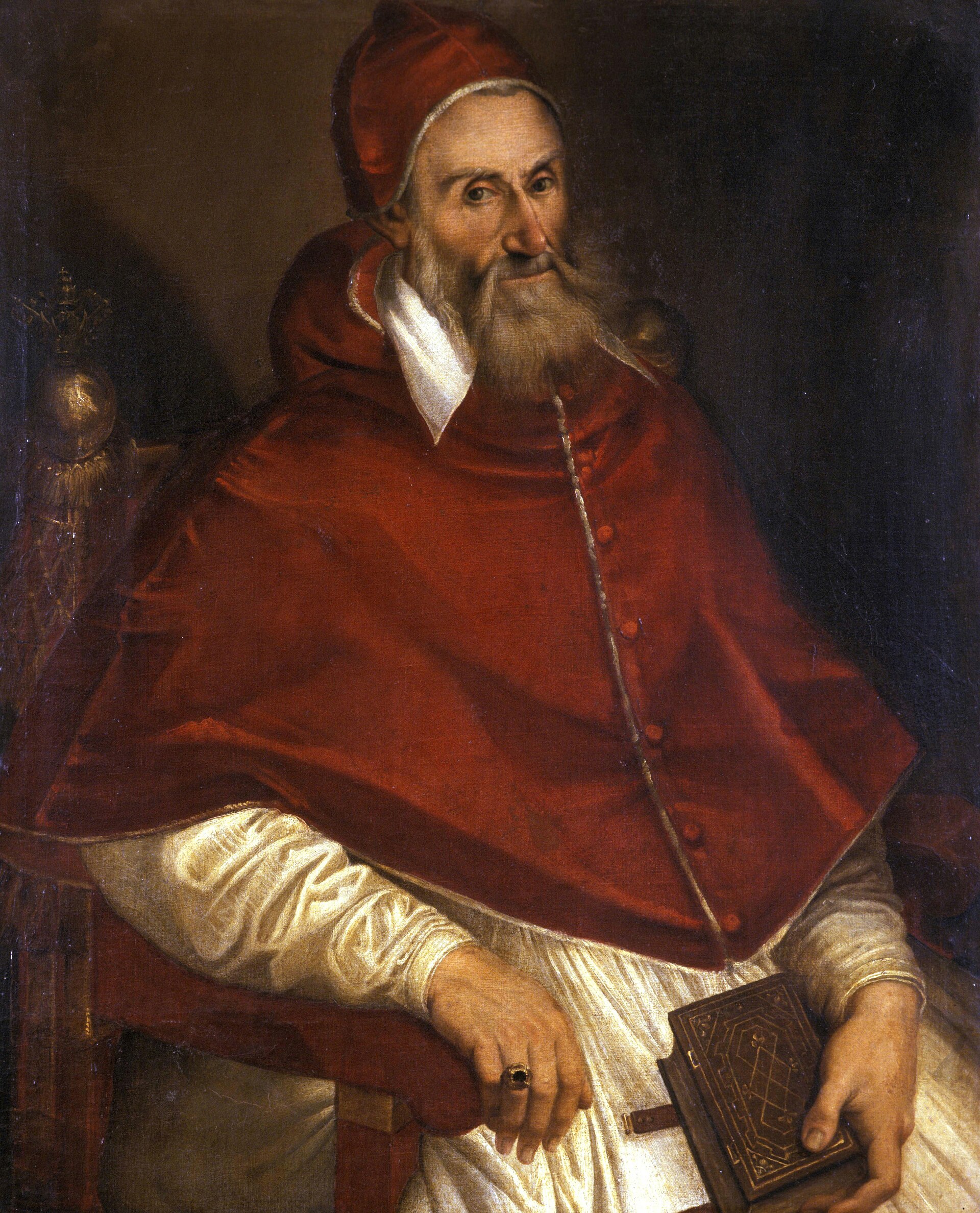
The reform had two parts. First, the error that had already accumulated had to be removed in a single stroke. It was therefore decreed that 4 October 1582 would be followed immediately by 15 October. This brought the calendar back into roughly the same relationship with the seasons that it had had at the time of the Council of Nicaea. But simply erasing ten dates was not enough. Had the old rules remained in place, the error would immediately have begun accumulating again.
The Julian calendar added 29 February every fourth year without exception. The Gregorian calendar retained that basic rule but added a small mathematical twist. Years divisible by 100 are not leap years unless they are also divisible by 400. That is why 1600 and 2000 had a 29 February, while 1700, 1800 and 1900 did not. We will encounter the next such correction in 2100, which will have only 365 days despite being divisible by four. Every 400-year period therefore contains 97 leap years instead of the Julian calendar’s 100.
Does that mean our present calendar is finally perfect? Not quite. The average Gregorian year lasts 365.2425 days, while the tropical year governing the cycle of the seasons lasts approximately 365.24219 days. The difference is only about 26 seconds a year. That is vastly smaller than the error in the Julian calendar, but even 26 seconds becomes significant if allowed to accumulate over several millennia. According to current calculations, the Gregorian calendar will drift out of step with the seasons by a full day after approximately 3,300 years. Counting from the reform of 1582, the problem would become noticeable sometime in the fifth millennium, around the year 4900. The precise moment cannot be calculated quite so neatly because the length of the tropical year is itself changing very slowly.
No official correction has yet been prescribed for this future error. Under the rules now in force, even the year 4000 should be a leap year because it is divisible by 400. Astronomers and mathematicians have proposed making it a common year instead, and doing the same with every subsequent year divisible by 4000. That would bring the calendar even closer to astronomical time, but the proposal has never been internationally adopted. Humanity, then—if by some miracle it survives—still has almost two thousand years in which to quarrel over a single 29 February.
The papal bull also shows that its authors clearly understood how astronomy could become a social problem. Gregory XIII explicitly stipulated that no one should suffer financial harm from the deleted dates in annual or monthly payments. If a dispute arose, the judge was to extend the payment deadline by ten days. Even when time itself is being reformed, someone still has to calculate the rent. The order of the heavens may have been abstract, but debts remained painfully earthly.
A Europe with more than one present
The pope could impose the calendar on the Papal States and the Catholic Church. He could only invite the rest of the world to adopt it. Spain, Portugal and the Polish–Lithuanian Commonwealth did so in the first wave, as did many of the states then occupying the Italian Peninsula. France switched a few months later, with 20 December following immediately after 9 December. Protestant countries resisted a reform that had come from Rome, even though its mathematics was sound. The calendar thus became another border in an already divided Christian world.
Nor did the lands of present-day Croatia adopt the new reckoning in a single move. The Kingdom of Croatia and Slavonia accepted it in 1587, five years after the first wave. Calendrical boundaries followed political ones, so the date could depend on who ruled the city in which a document had been written. For a historian, an old date is therefore never just a number. The first question must be: whose number is it?
The longer countries waited, the more days they had to erase. Britain skipped eleven days in 1752, while Russia skipped thirteen in 1918. This is the source of the apparent paradox of the October Revolution. The Bolsheviks seized power on 25 October according to the calendar then used in Russia. Under the Gregorian calendar, it was 7 November. The revolution did not move from October to November. Only the temporal address of the event changed.
Precision defeated pride
The Gregorian calendar did not triumph because one pope possessed authority over time. It triumphed because it was more accurate, and because a common date became more important than religious pride in a world of trade, diplomacy and ever-faster communication. It is not enough to have a good calendar. The people with whom you sign contracts, dispatch ships or arrange meetings must use it too.
Today, when we glance at a phone screen, we treat the date almost like a meteorological fact. The fifth of October seems every bit as real as the sunrise. Yet the Sun would rise without us, whereas 5 October exists only because we have agreed to call it that. Gregory XIII did not take ten days of anyone’s life away. He did something perhaps even stranger: he showed that authority cannot stop time, but it can change overnight where we believe ourselves to be within it.
Sources
- Inter Gravissimas Inter Gravissimas: Proclamation of the Gregorian Calendar (1582) https://fourmilab.ch/documents/calendar/IG_Latin.html
- Royal Observatory of Belgium The Gregorian calendar https://robinfo.oma.be/en/astro-info/calendar/the-gregorian-calendar/
- Hrvatska enciklopedija kalendar https://www.enciklopedija.hr/clanak/kalendar
- Franciscan Media Saint Teresa of Avila https://www.franciscanmedia.org/saint-of-the-day/saint-teresa-of-avila/
- Folger Shakespeare Library Shakespeare and Cervantes: 400 Years Later https://www.folger.edu/blogs/shakespeare-and-beyond/shakespeare-and-cervantes-400-years/
- UNESCO World Book and Copyright Day 2021 - Writers celebrate with UNESCO https://www.unesco.org/en/articles/world-book-and-copyright-day-2021-writers-celebrate-unesco
- UK Legislation Calendar (New Style) Act 1750 https://www.legislation.gov.uk/apgb/Geo2/24/23
- Boris Yeltsin Presidential Library Принят декрет о переходе РСФСР на григорианский календарь https://www.prlib.ru/history/619010
Comments