
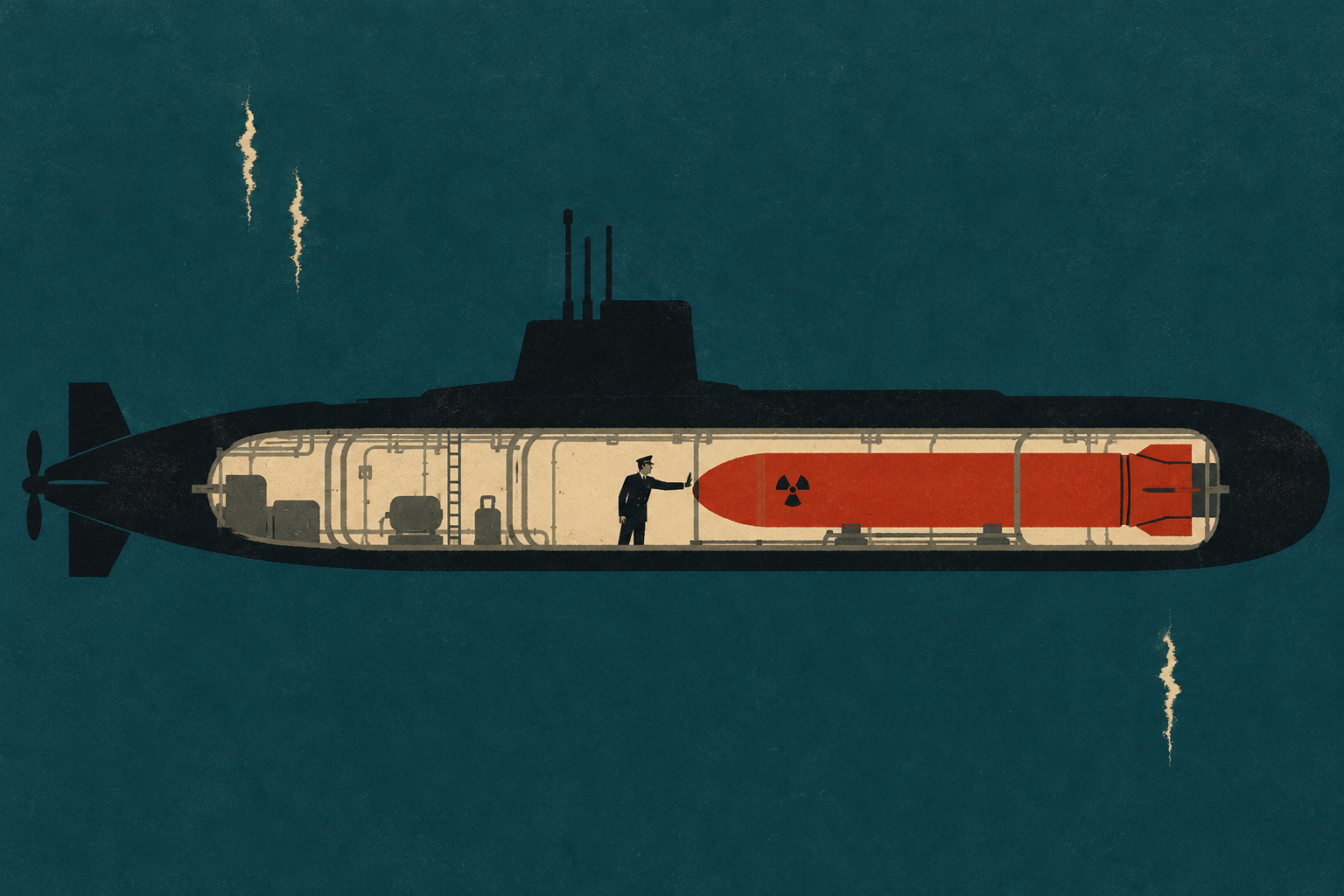
Aboard an overheated submarine cut off from Moscow, explosions sounded like war. One officer refused to turn uncertainty into proof.
Nuclear war nearly began neither in the Kremlin nor the White House. It almost began inside an overheated metal tube beneath the Sargasso Sea, among men who were struggling to breathe, passing out and listening to explosions against the hull of their submarine. To the American sailors on the surface, they were signaling charges. To the Soviet sailors below, they might have been the opening blows of World War III.
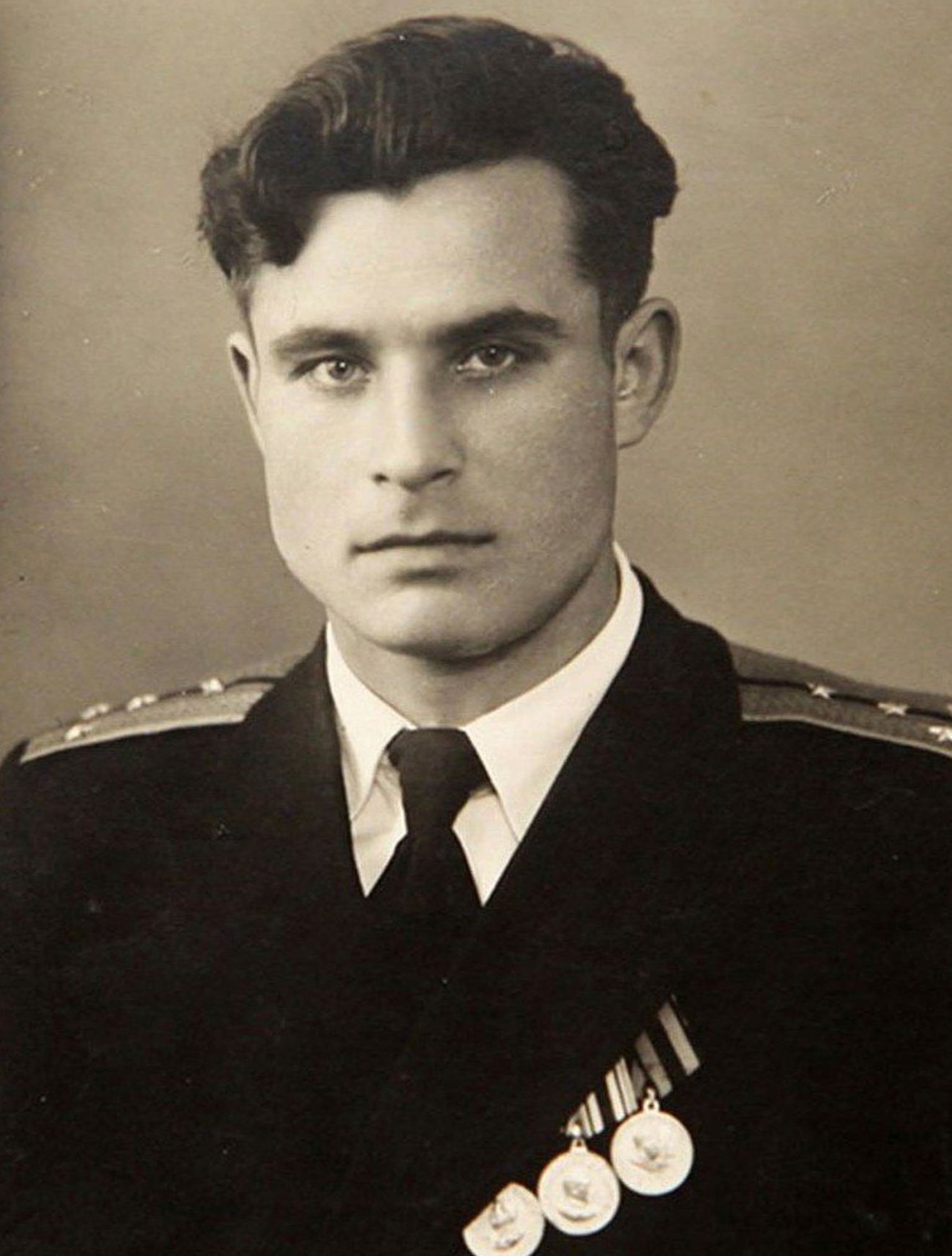
In such a place, reason did not look like some lofty virtue of statesmanship. It looked like a man who, amid the heat, noise and fear, said that they still did not know enough to kill millions. That man was 36-year-old Soviet naval officer Vasili Arkhipov. He did not know that war had not begun. That was precisely why he refused to let uncertainty become proof that it had.
It was October 27, 1962, the day that would become known as the "Black Saturday" of the Cuban Missile Crisis. Over Cuba, a Soviet missile shot down an American U-2 reconnaissance aircraft, killing its pilot, Rudolf Anderson. Another U-2 strayed into Soviet airspace that same day. In Washington, preparations were under way for a possible attack on Cuba, while Kennedy and Khrushchev exchanged messages whose tone shifted faster than diplomats could interpret their intentions. An agreement would be reached the following morning, but on October 27 no one yet knew that it would come.
A wrong turn over the Arctic
While B-59 was hiding beneath the Atlantic, another American U-2 was collecting air samples over the Arctic in search of evidence of Soviet nuclear tests. Its pilot, Charles Maultsby, lost his bearings and crossed the Soviet border near Chukotka. At the height of nuclear tension, Moscow could see an American spy plane deep inside its territory on radar, with no way of knowing whether it had arrived there by accident or as the advance scout of an attack.Soviet fighters were scrambled to intercept it. When Washington realized what was happening, American F-102s armed with nuclear-tipped air-to-air missiles were sent from Alaska toward the U-2. Pilots from the two superpowers were now heading toward one another carrying weapons that could have turned even a local encounter into an event of incomparably greater proportions. With the help of radio instructions, Maultsby eventually found his way back and landed in Alaska.
Inside the submarine, a signaling charge sounded like an attack, over the Arctic, a navigational error looked like a possible provocation. The two incidents were not part of the same plan, but they shared the same mechanism: each side had to interpret the other’s ambiguous actions before enough information became available. "Black Saturday" was so dangerous precisely because catastrophe could have been assembled from events that no one had intended to connect.
Hiroshima in the belly of a submarine
Beneath the surface, the crisis was even more dangerous: those involved had less information but equally destructive weapons at their disposal. B-59 was one of four Soviet Foxtrot-class diesel-electric submarines that had left Kola Bay for Cuba in early October. Each carried a single nuclear torpedo with a yield comparable to that of the bomb dropped on Hiroshima. The US Navy did not know this. The most terrifying weapon in the entire naval pursuit was therefore aboard the vessel whose crew knew the least about what was happening in the world above.
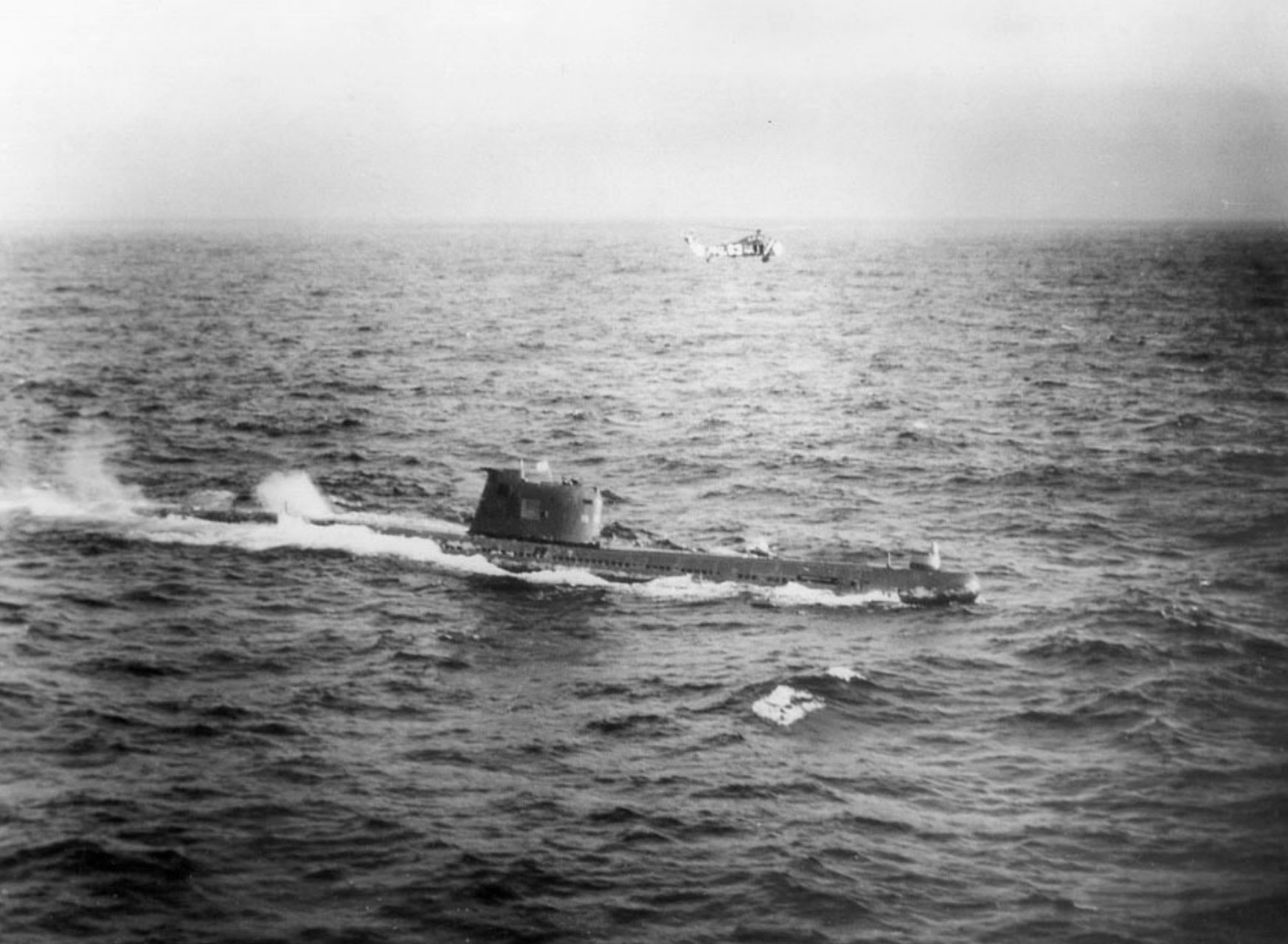
The submarines had been designed for the cold waters of the north, not the tropical heat of the Atlantic. Their ventilation systems could not cool the interior. According to the later testimony of officer Vadim Orlov, temperatures inside B-59’s compartments reached between 45 and 50 degrees Celsius, climbing as high as 60 in the engine room. Carbon dioxide levels approached the threshold at which they became life-threatening. The batteries were nearly depleted, only emergency lighting remained on, and sailors were passing out one after another.
Nuclear deterrence is often described as cold mathematics. That evening, the calculations were being made in sweat, stale air and the last drops of electricity.
What heat and carbon dioxide do to judgment
The temperature aboard B-59 was not merely a backdrop to the psychological pressure. In extreme heat, the body attempts to regulate its temperature by sweating more heavily and sending more blood to the skin. Without sufficient water, dehydration follows, along with a racing pulse, weakness and growing difficulty maintaining concentration. What looks from the outside like a question of self-control becomes, from within, a struggle by the body simply to keep functioning.At the same time, the carbon dioxide exhaled by the sailors was accumulating inside the sealed hull. Elevated concentrations can cause headaches, shortness of breath, dizziness, drowsiness and confusion—and, at sufficiently high levels, loss of consciousness. A brain under such strain has no calm space in which to weigh ambiguous signals. Every explosion reaches a man who is already struggling to think clearly and assess risk.
The decision aboard B-59 therefore cannot be understood as an orderly strategic debate relocated beneath the sea. It was being made by men whose cognitive abilities were being eroded by heat stress, foul air, sleep deprivation and fear. Nuclear doctrine assumes a chain of command, rational assessment and controlled escalation, but at the very end of that chain there is always a biological body under unimaginable strain.
Signals that sounded like war
B-59 needed to surface to recharge its batteries and establish communications, but above it was an American anti-submarine task force centered on the aircraft carrier USS Randolph. The American ships began dropping small practice depth charges. Their intention was not to destroy the submarine, but to force it to surface and identify itself.
Washington had notified the Soviet government of the procedure in advance. The message, however, evidently never reached the submarine commanders. Inside B-59, the detonations did not sound like naval etiquette. Orlov later compared them to sledgehammer blows against a metal barrel. For hours, the crew tried to escape, with no reliable contact with Moscow and no way of knowing whether peace still held.
When the submarine finally surfaced, it was met by powerful searchlights, low-flying American aircraft and warning shots splashing down alongside the hull. B-59’s commander, Valentin Savitsky, was exhausted and blinded by the glare. According to later testimony, he believed that the attack might already have begun. He ordered an emergency dive and the preparation of the "special" torpedo, as the Soviets called the weapon with a nuclear warhead.
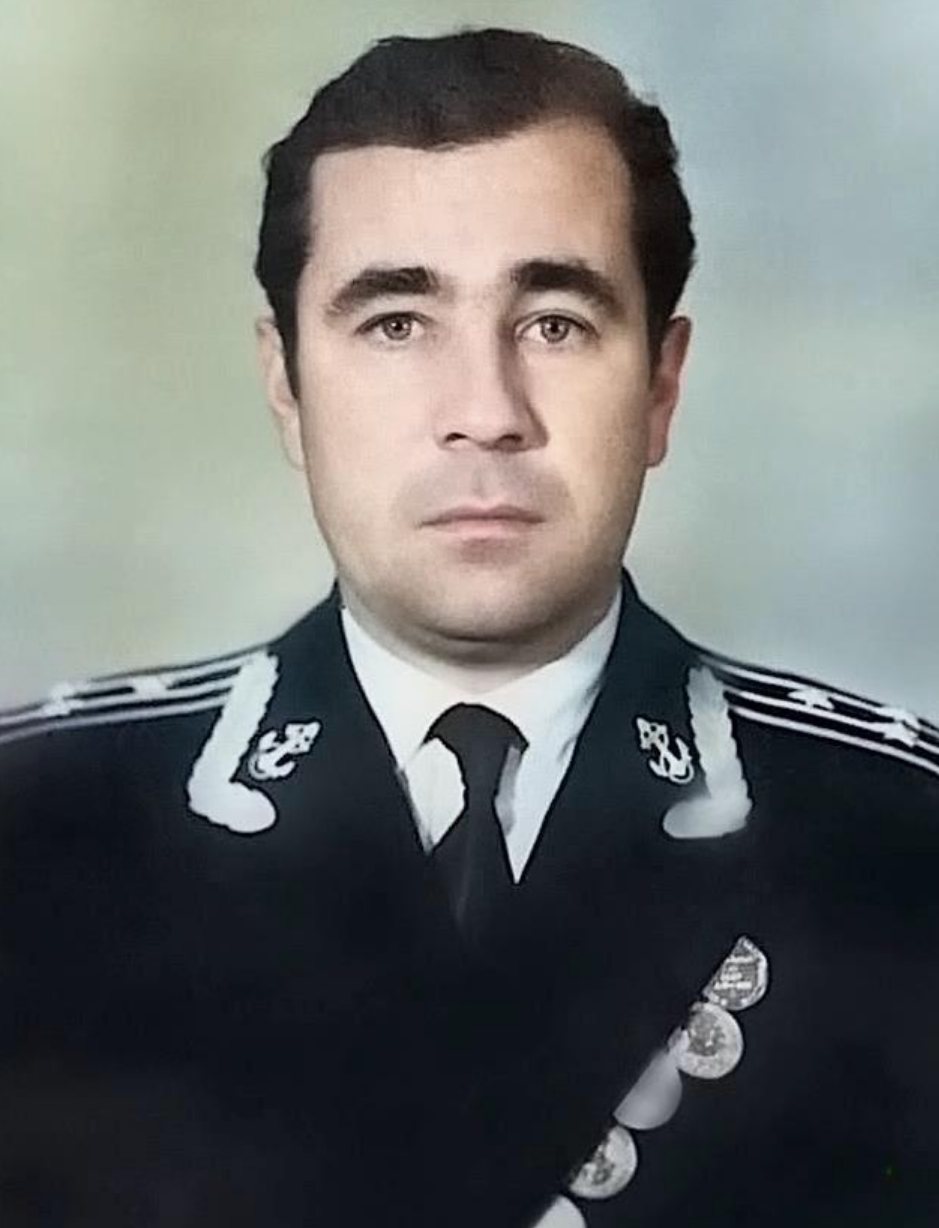
This was where Arkhipov became decisive. He was neither an ordinary crew member nor a chance observer. As chief of staff of the 69th Submarine Brigade, he held the same rank as Savitsky and was one of the most senior officers in the entire group. From the conning tower, he noticed something that was easy to miss amid the chaos: the American aircraft were firing beside the submarine, not at it. The ships were attempting to signal B-59, not sink it.
Arkhipov urged Savitsky to abandon the emergency dive and helped him reassess the situation. According to later reconstructions of the incident, the order to prepare the nuclear torpedo never even reached the officer responsible for launching it. B-59 signaled back to the Americans, remained on the surface long enough to recharge its batteries and later withdrew. The nuclear torpedo was not fired.
The true story, without the cinematic vote
The story was later polished into a perfect dramatic scene: three officers vote, two want to fire, and Arkhipov alone says no. The use of the weapon may indeed have required the consent of all three senior officers, but the surviving evidence does not permit such a clear conclusion. No transcript of the discussion exists, accounts differ, and Arkhipov himself, in his only public statement on the incident in 1997, mentioned neither his own veto nor the word "nuclear." He spoke only of several crucial minutes during which it became clear that the Americans were signaling.
That does not diminish his role. On the contrary, it makes it more convincing. History rarely unfolds like a vote aboard a submarine in a film. More likely, one exhausted man began making a catastrophic decision while another contradicted him forcefully and persistently enough to stop it.
Arkhipov had already experienced a nuclear disaster. A year earlier, he had served as deputy commander of the Soviet submarine K-19 when its reactor cooling system failed. Crew members were forced to improvise a repair and received lethal doses of radiation. It is impossible to know how much that experience influenced his decision aboard B-59, but to Arkhipov, nuclear danger was not merely a flash drawn on a military map. He had already watched technological haste, secrecy and military obedience destroy human bodies.
Even today, no one can prove that firing the torpedo would inevitably have triggered an all-out nuclear war. History does not allow experiments with alternative endings. But a nuclear explosion in the middle of an American fleet, on a day when one U-2 had already been shot down and an invasion of Cuba was under consideration, would have opened a path that no one could reliably control. The claim that the superpowers would have remained rational is not a conclusion. It is merely an article of faith.
When uncertainty remains uncertainty
The Cuban Missile Crisis is usually remembered as the moment when John F. Kennedy and Nikita Khrushchev finally stepped back from the abyss. That is an important part of the story. But beneath the Atlantic, their intentions counted for little. Down there, a warning and an attack sounded almost identical, and the fate of the world depended on the judgment of men who were thirsty, exhausted and cut off.
Arkhipov could not know that war had not broken out. But he did not turn that lack of knowledge into proof that it had. On October 27, the system of nuclear deterrence did not save itself. Perhaps the world was saved because one man allowed uncertainty to remain uncertainty.
Sources
- National Security Archive The Underwater Cuban Missile Crisis at 60 https://nsarchive.gwu.edu/briefing-book/russia-programs/2022-10-03/soviet-submarines-nuclear-torpedoes-cuban-missile-crisis
- National Security Archive "Notes Taken from Transcripts of Meetings of the Joint Chiefs of Staff, October-November 1962," Secret, Notes made in 1976 and typed in 1993 https://nsarchive.gwu.edu/document/29345-oct-27-joint-chiefs-notes-cuban-missile-crisis-oct-27-62
- Office of the Historian, U.S. Department of State The Cuban Missile Crisis, October 1962 https://history.state.gov/milestones/1961-1968/cuban-missile-crisis
- John F. Kennedy Presidential Library and Museum October 27, 1962 - Cuban Missile Crisis https://microsites.jfklibrary.org/cmc/oct27/
- The New Yorker The Day Nuclear War Almost Broke Out https://www.newyorker.com/magazine/2020/10/12/the-day-nuclear-war-almost-broke-out
- CDC/NIOSH Heat-related Illnesses https://www.cdc.gov/niosh/heat-stress/about/illnesses.html
- CDC/NIOSH NIOSH Pocket Guide to Chemical Hazards: Carbon dioxide https://www.cdc.gov/niosh/npg/npgd0103.html
- International Atomic Energy Agency Stranica: 35
Comments