
Europe has an almost textbook-perfect answer to the question of when the Second World War began: September 1, 1939, with Germany’s invasion of Poland. That answer is correct, but only if you are looking at the globe from Warsaw, London, or Paris. Turn it toward Beijing, Nanjing, or Manchuria, and the clock of history starts ticking earlier.
There, the coming world war announced itself with a shot beside an old stone bridge, built long before modern states had learned how to produce catastrophe at an industrial pace.
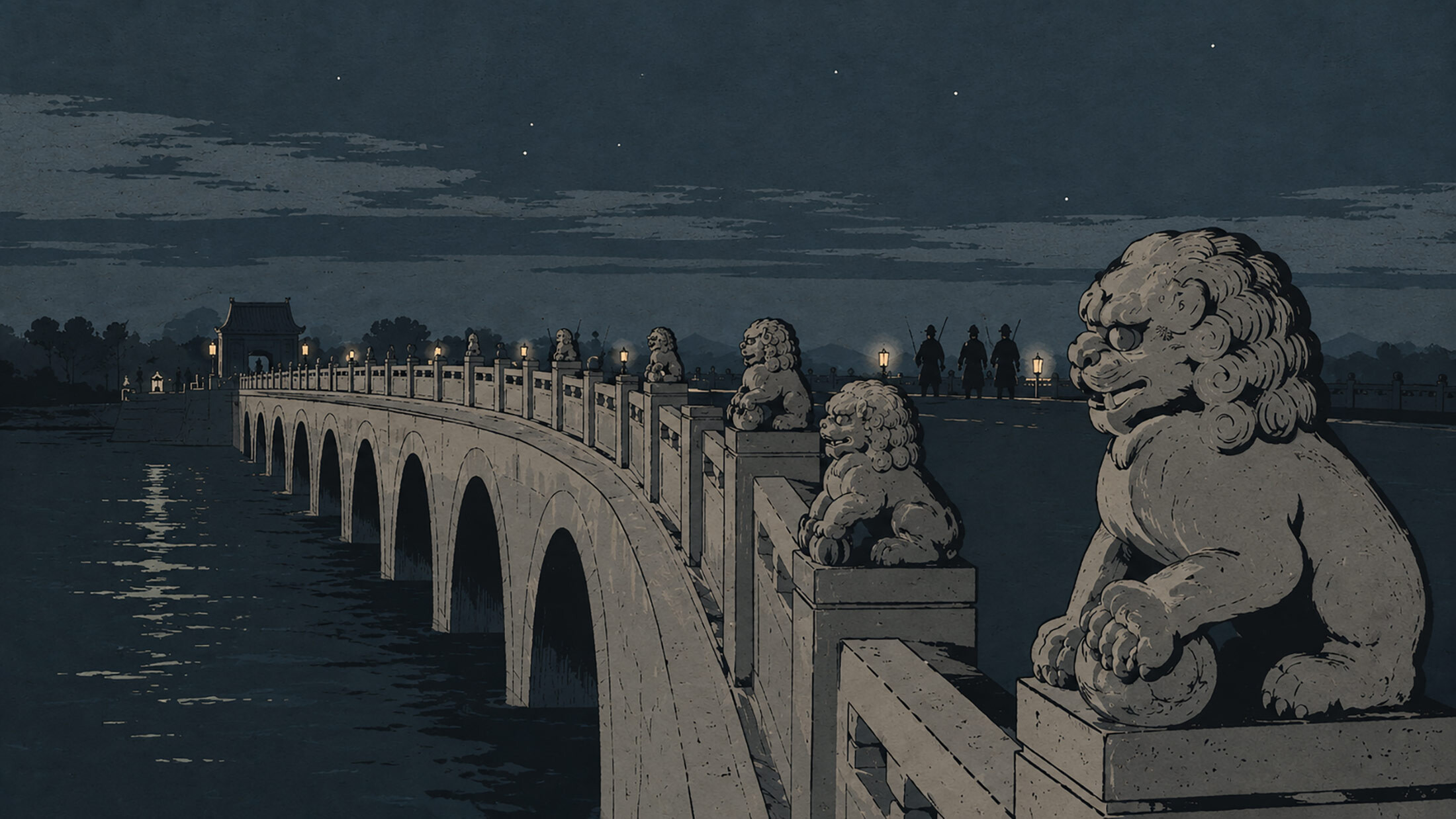
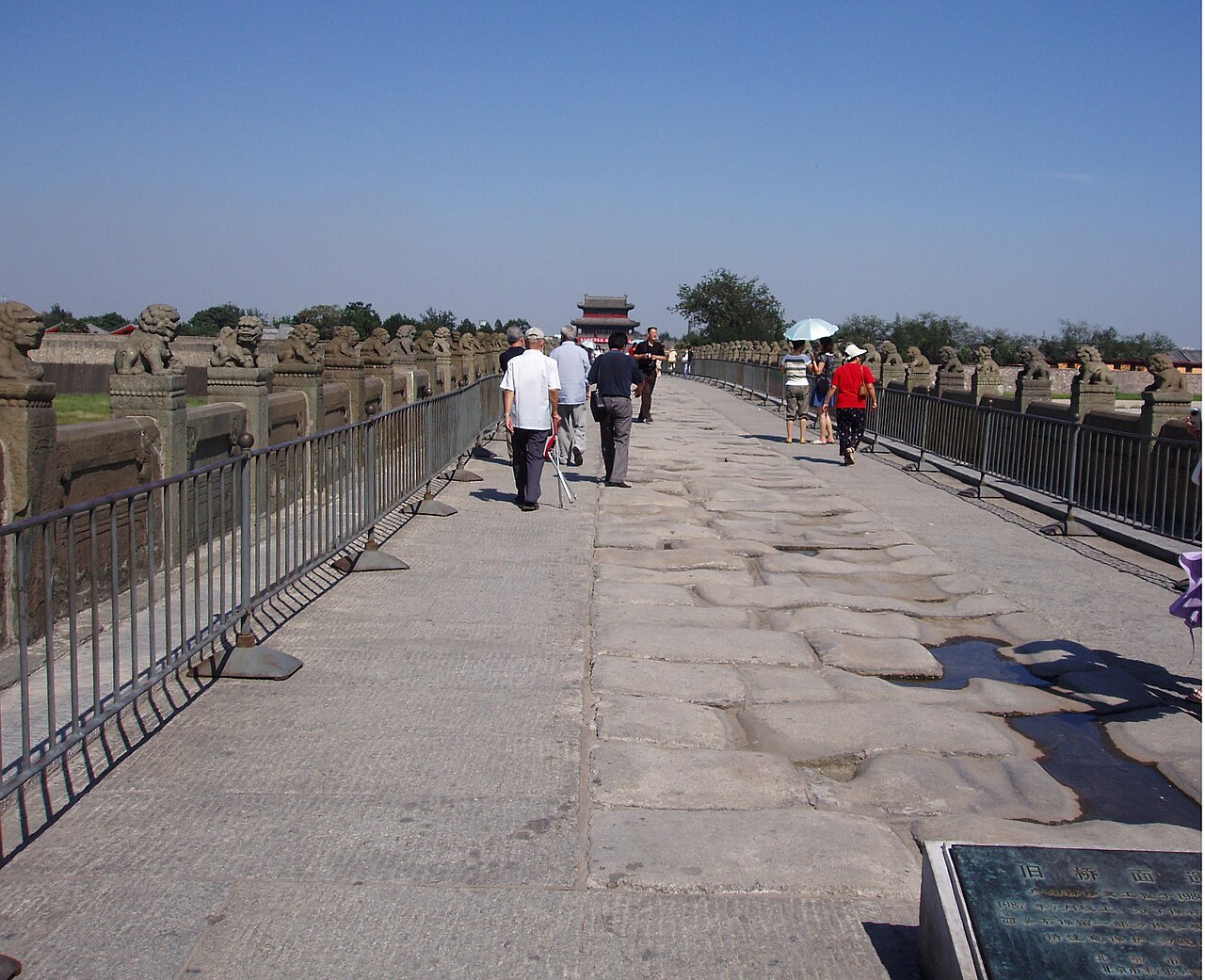
That bridge was the Marco Polo Bridge, or Lugou Bridge, southwest of what was then Beiping and is now Beijing. It did not look like the stage on which an era would begin. It was a stone crossing from the 12th century, with eleven arches and balustrades lined with carved lions. Marco Polo made it famous in the West through his travel writings, which is a fine irony in itself: Europe gave the bridge the name by which it would be remembered, but understood far too late what had actually happened there.
On the night of July 7, 1937, Japanese troops were conducting military exercises near the fortified town of Wanping. In an already tense atmosphere, a shot rang out. The Japanese then reported that one of their soldiers was missing and demanded entry into Wanping to search for him. The Chinese refused. The soldier soon returned, but the mechanism had already been set in motion.
American diplomatic reports from the time noted that it would probably never be known for certain who fired the first shot, but also that the Japanese side bore responsibility for the outbreak of the clash, since it had been carrying out night maneuvers under such circumstances right next to a Chinese garrison.
The lions no one can count
Stone lions stand on Lugou Bridge. Not one or two, like decorative relics of old architecture, but an entire little army of stone animals. The official number most often given today is 501, but in Beijing it was long said that they were "impossible to count." The reason is not just their sheer number. Some of the lions have cubs hidden beneath their paws, on their backs, or in the folds of the stone, so tiny that the eye can easily pass over them.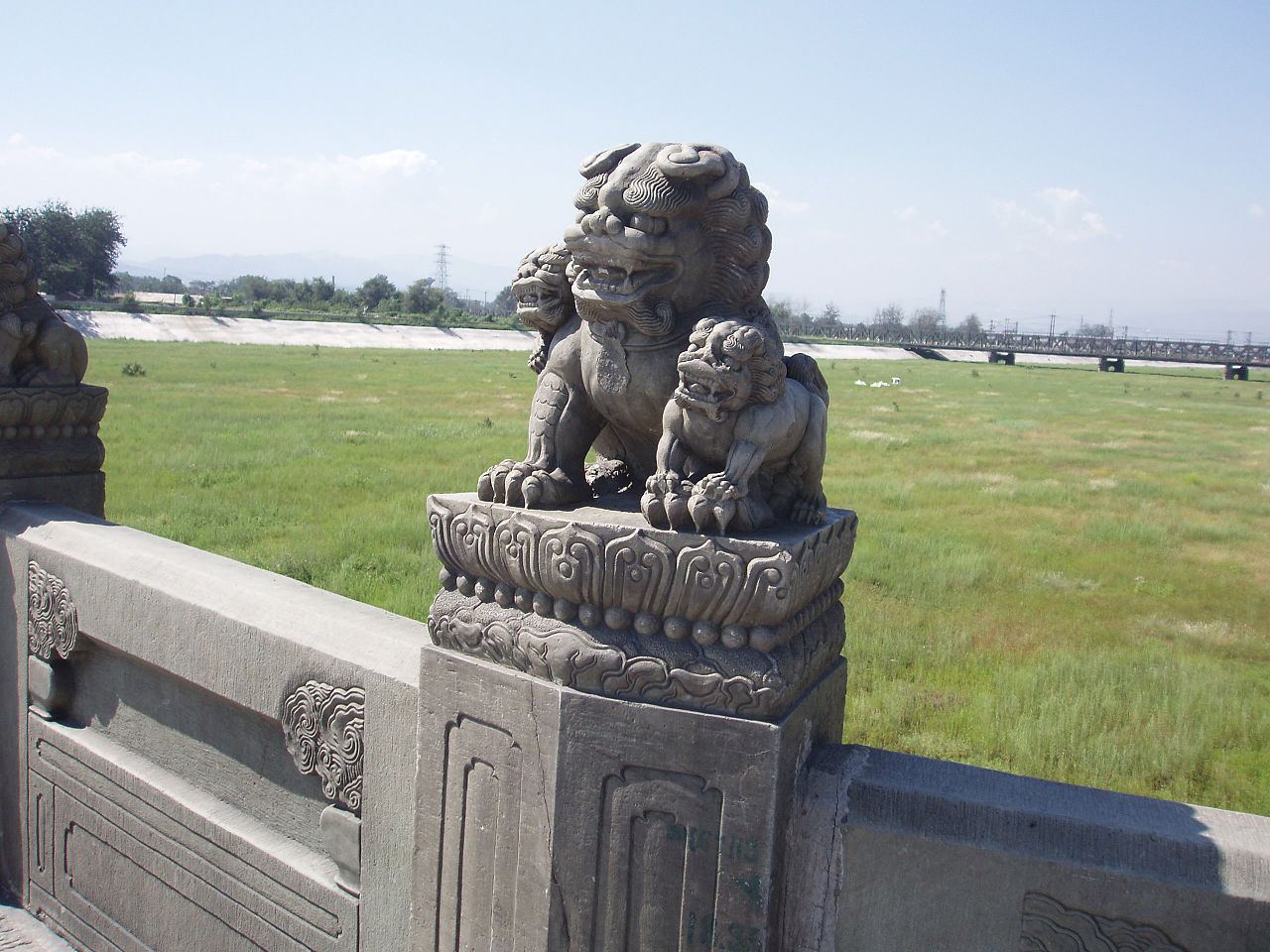
It is one of those historical scenes that seem almost banal as they unfold. A missing soldier. A disputed exercise. A right of passage. Negotiations that drag on too long. But it is also a reminder that wars rarely begin the way we later imagine them, with the great drumroll of destiny and a clear label attached. More often, they begin as a bureaucratic dispute with bayonets in the background.
The word "incident" sounds somewhat cynical. In the East Asian politics of the 1930s, however, it was a very convenient term for something far more serious: a test of force, an expansion of influence, and a way of measuring how much more the other side would swallow.
And China had already been swallowing a great deal for years. In 1931, Japan had occupied Manchuria after the Mukden "Incident" and created the puppet state of Manchukuo there. Northern China was coming under ever stronger pressure from the Japanese army, while the Chinese state, led by Chiang Kai-shek, the head of the Kuomintang, was trying to maintain the appearance of unity amid internal divisions, warlords, and conflict with the Communists. The Marco Polo Bridge did not create Japanese imperialism, any more than a match creates gasoline. But it was the moment when the flame finally caught.
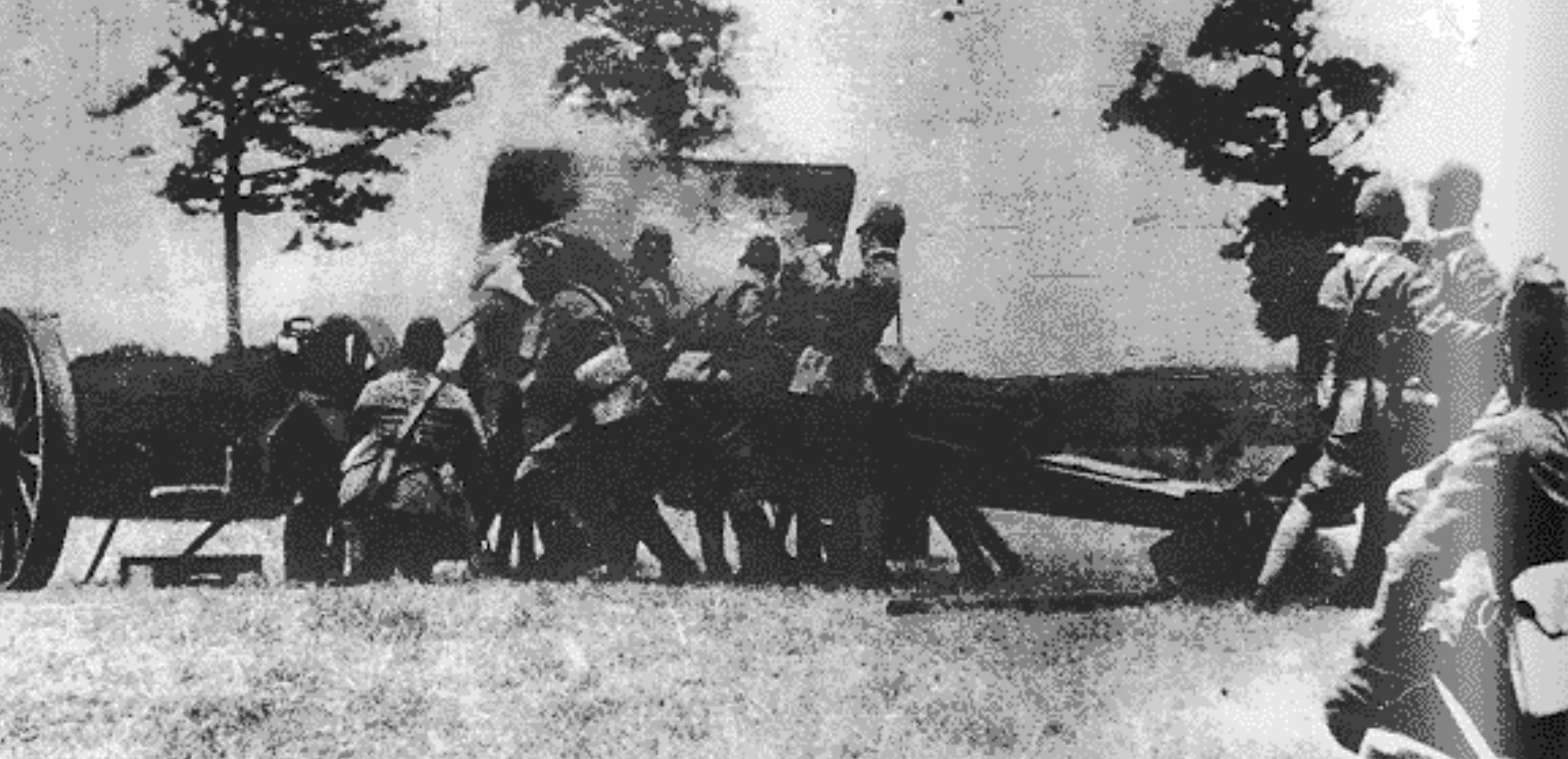
After the clash at the bridge, there was no return to the familiar, uneasy routine of crises that temporarily subsided. The Japanese army used the event as a pretext to expand operations in northern China. By the end of July, Beiping and Tianjin had fallen. In August, the war reached Shanghai, and in December 1937 Nanjing, then the Chinese capital, became the site of one of the most notorious mass atrocities of the 20th century. Officially, the Marco Polo Bridge Incident marked the beginning of the Second Sino-Japanese War, which was fought before and during the Second World War and ended only with Japan’s surrender in 1945.
The city that fell, and only then began to die
Nanking, now more commonly rendered as Nanjing, fell on December 13, 1937. The Japanese army did not merely capture the Chinese capital. In the weeks that followed, the city became a place of mass executions, rape, looting, arson, and the humiliation of its population. Captured Chinese soldiers were killed, as were civilians who were often declared to be enemies in disguise. The logic of occupation turned into the logic of an unpunished hunt.The massacre was so terrible that many who set out to learn the details may give up almost at the beginning.
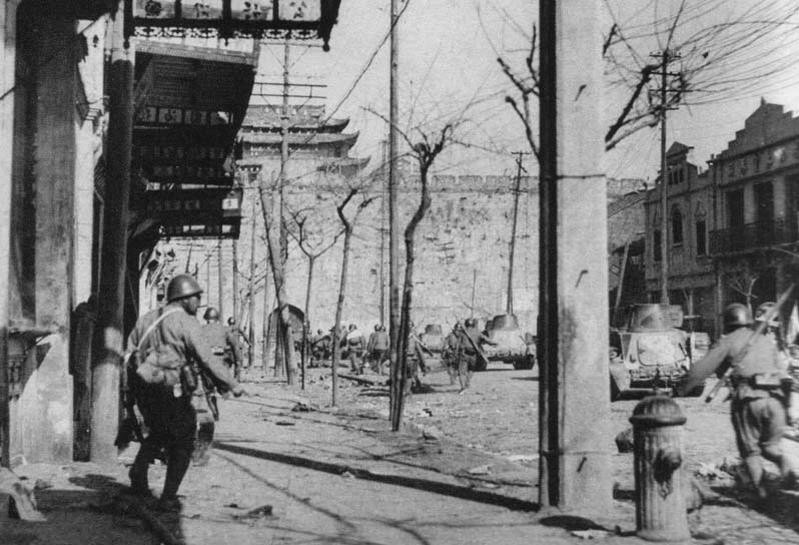
There is another important detail: some of the survivors were protected by foreigners in the so-called International Safety Zone. Among them was John Rabe, a German businessman and member of the Nazi Party, who in Nanjing paradoxically became one of the key witnesses to Japanese crimes and the savior of thousands of Chinese civilians. History sometimes has that uncomfortable sense of irony: in a city being swallowed by military brutality, a Nazi was remembered as a humanitarian.
That is why the question "when did the Second World War begin?" is not only a question of dates. It is a question of perspective. For European memory, 1939 remains unavoidable, because that was when Nazi Germany destroyed the order on a continent that had long considered itself the center of the world. But for millions of people in China, war already meant bombed cities, columns of refugees, occupation, and an army arriving with a project of subjugation. In other words, the "world war" did not suddenly become global only when the shooting started in Europe. It was simply then that the world that writes most of the textbooks finally realized that the war concerned it too.
Historians can, understandably, disagree about the beginning. Some will say 1931, with Japan’s occupation of Manchuria. Some will say 1937, with the open war between Japan and China. Some will say 1939, with Poland. Some will say 1941, when regional wars merged into a global inferno after Germany’s invasion of the Soviet Union and Japan’s attack on Pearl Harbor. The National WWII Museum interprets the Second World War in precisely this way: as a series of regional wars that by 1941 had fused into a truly global conflict.
Even so, in this picture China ceases to be a backdrop to the "Pacific War" and becomes one of its main starting points. Japan’s inability to break China quickly exhausted the empire and pushed it toward ever riskier decisions.
The war that opened at the Marco Polo Bridge was not an Asian addendum to a European tragedy. It was one of its beginnings, written in a different script and paid for in a different geography of suffering.
Perhaps that is why the Marco Polo Bridge is such a powerful symbol. Bridges, in their simplest logic, are supposed to connect two banks. This one connected two eras: the restless 1930s and total war. It connected a local clash with a global catastrophe. And it showed that history often does not begin where we most like to begin telling it, but where people first began to fall.
Sources
- Origins.osu.edu The Marco Polo Bridge Incident (1937) https://origins.osu.edu/read/marco-polo-bridge-incident-1937
- History.state.gov Historical Documents - Office of the Historian https://history.state.gov/historicaldocuments/frus1937v03/d484
- Nationalww2museum.org The Road to Pearl Harbor: The Long Fuse https://www.nationalww2museum.org/war/articles/road-to-pearl-harbor-the-long-fuse
- Sfi.usc.edu Nanjing Massacre https://sfi.usc.edu/collections/nanjing-massacre
- Nationalww2museum.org History Through the Viewfinder https://www.nationalww2museum.org/war/articles/history-through-viewfinder-6
- Bjft.gov.cn Lugou Bridge-Fengtai District People's Government Of Beijing Municipality https://www.bjft.gov.cn/ftq/Visiting/202111/b5f0c53ed6264a799edd5d26b597c046.shtml
Comments