
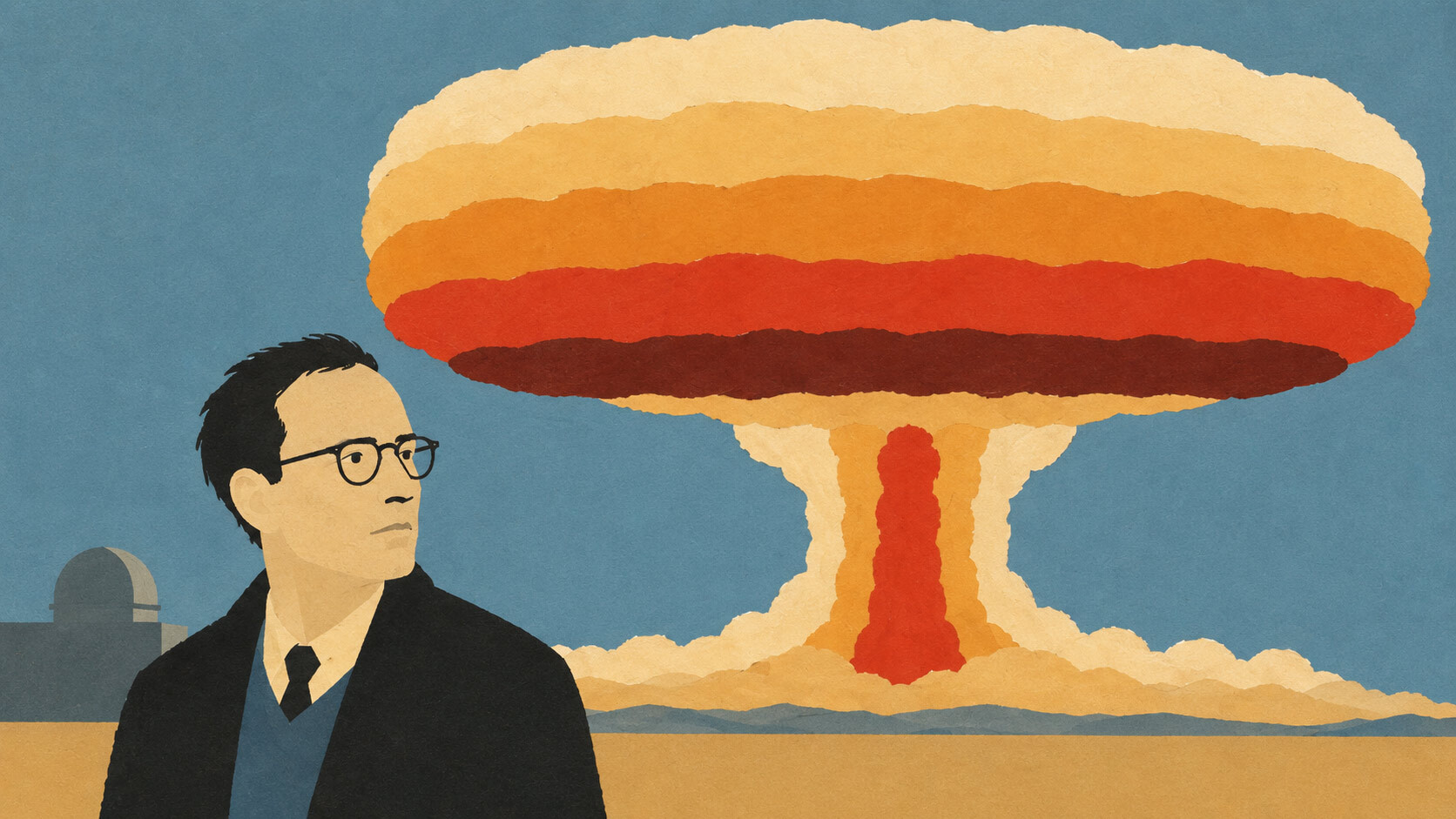
Four days before the bomb had even exploded, Soviet Premier Georgy Malenkov rose before the Supreme Soviet and announced that the United States no longer held a monopoly on the production of the hydrogen bomb. The scientists gathered at the test site in the Kazakh steppe listened to the speech over the radio. Andrei Sakharov, the Soviet physicist and one of the device’s principal creators, later recalled that the announcement would have made them even more nervous had they not already been stretched to the breaking point. The Soviet state, in other words, had declared a historic triumph first and then asked nature to confirm it.
On the morning of August 12, 1953, the RDS-6s was detonated atop a steel tower at the Semipalatinsk Test Site. The tower vanished, leaving a crater behind, while the surrounding ground was fused into yellowish glass. The blast yielded roughly 400 kilotons of TNT — about twenty times the power of the bomb dropped on Nagasaki. No city disappeared that morning, but one important American illusion did: the belief that a technological lead in manufacturing the end of the world could somehow be preserved indefinitely.
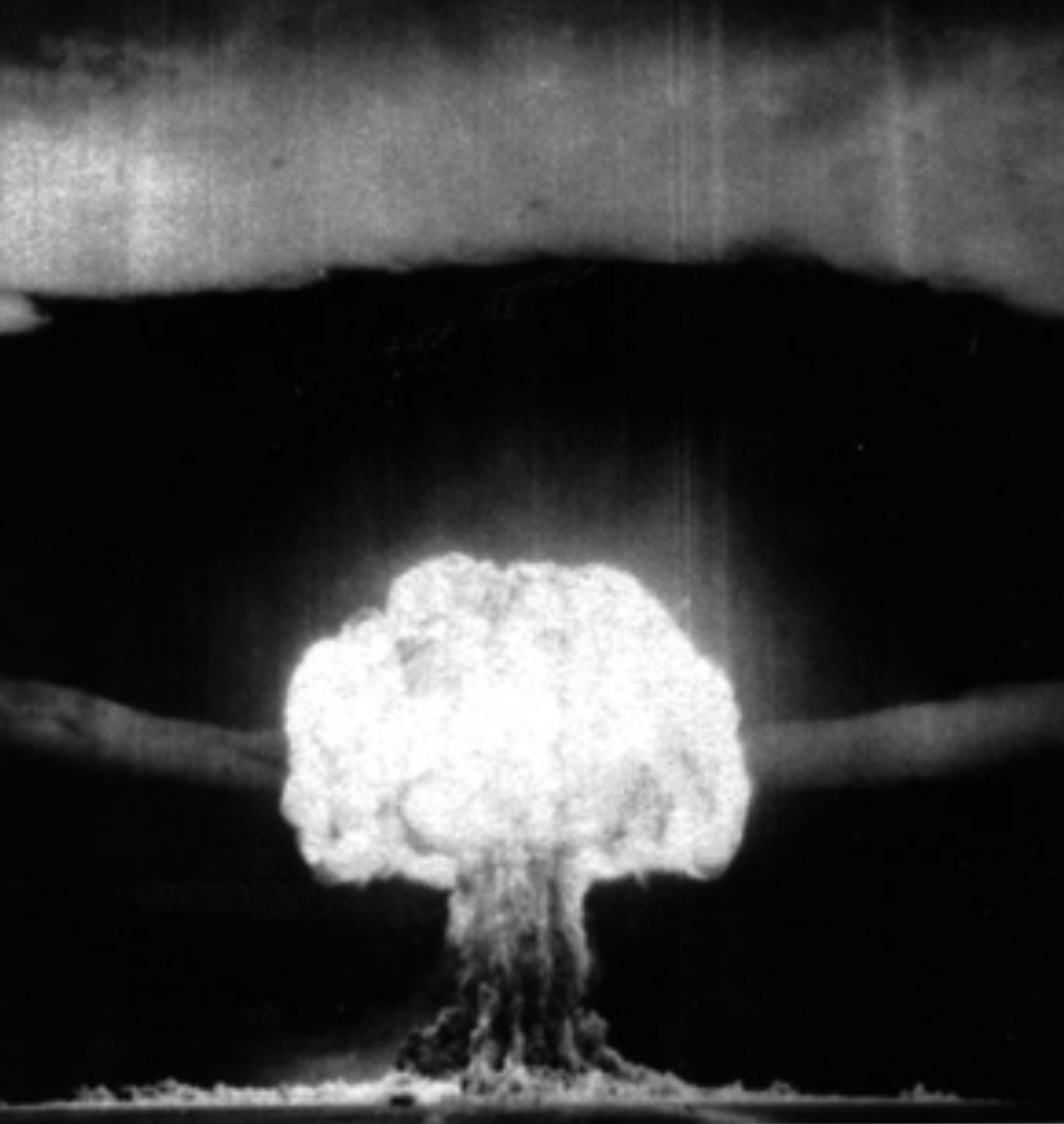
America’s nuclear monopoly had, in fact, already been dead for four years. The Soviet Union detonated its first atomic bomb in August 1949, prompting U.S. President Harry Truman to accelerate development of a vastly more powerful thermonuclear weapon. The hydrogen bomb was supposed to restore America’s strategic distance — not merely by giving it more bombs, but by placing an entirely new category of destruction in its hands. In November 1952, the American Ivy Mike test proved such a device was possible. The explosion exceeded ten megatons, but the device itself weighed around 80 tons and required enormous cryogenic equipment. It looked less like a weapon that could be loaded into a bomber than an industrial plant designed to explode.
The RDS-6s was far less powerful, but it had an uncomfortable advantage. The test device weighed roughly four and a half tons and could fit into a casing comparable to that of an existing Soviet atomic bomb. In other words, the Americans had been the first to produce an enormous thermonuclear explosion, but the Soviets had demonstrated something that looked much more like an actual weapon. Washington still possessed a larger arsenal, a more advanced air force and far greater operational experience. Yet it no longer had exclusive ownership of the most destructive future imaginable.
Inside the RDS-6s was a design with an almost harmless nickname: the "Sloika," after a Russian layered pastry. Around a uranium-235 core were alternating layers of fusion fuel and uranium-238. The atomic explosion at the centre initiated thermonuclear reactions, which produced fast neutrons that in turn caused additional fission in the surrounding uranium. Sakharov developed the basic concept of the layered arrangement, while physicist Vitaly Ginzburg proposed using solid lithium deuteride, a fuel that made the device considerably more practical.
This is where the debate begins over whether the RDS-6s was truly a hydrogen bomb. Roughly 80 percent of its yield came from fission and only about 20 percent from fusion. The RDS-6s did not have two separate stages and could not be scaled almost without limit, as later thermonuclear weapons based on the Teller-Ulam principle could. The Soviet Union would build its first such two-stage weapon, the RDS-37, but not until 1955. American physicists therefore described the RDS-6s as an exceptionally powerful fission bomb enhanced by fusion. Technically, the distinction was justified. It would have been small comfort, however, to a city beneath a 400-kiloton explosion.
Nor is the familiar story that the Soviets simply stole the American bomb quite sufficient. Spy Klaus Fuchs, the German-born British physicist who worked on the Manhattan Project, did indeed pass Moscow information about early American thermonuclear research. But those concepts ultimately proved flawed. Soviet documents released later indicate that the Sloika was not a copy of the American solution, but a different route toward the same terrifying destination.
American military superiority did not suddenly disappear on August 12. What changed was the psychology of the confrontation. President Dwight Eisenhower soon publicly acknowledged that part of the Soviet explosion’s power had come from thermonuclear reactions and concluded that the Soviets possessed a weapon far more powerful than earlier atomic bombs. A few months later, he delivered his "Atoms for Peace" speech before the United Nations, attempting to present nuclear energy as a field for international cooperation. It was a noble proposal, but also an acknowledgement of reality: the secret of the atom could no longer be locked back inside an American safe.
Sakharov observed the explosion from a distance of about 45 kilometres. After the test, he drove toward the epicentre and briefly stepped out of the vehicle wearing a light protective suit. Melted earth crunched beneath his feet. Nearby, he saw a scorched and blinded steppe eagle, which an officer killed to end its suffering. The scene sounds almost too symbolic, but Sakharov did not become a dissident that day. Instead, he became the youngest full member of the Soviet Academy of Sciences. He received the Stalin Prize, a car and a dacha. The Soviet system knew very well how to reward a conscience before, as we shall see, it eventually had to begin persecuting it.
The change came gradually. After the 1955 test of the much more powerful RDS-37, Sakharov made a sincere toast at a banquet, expressing the hope that their devices would henceforth explode only above test sites and never above cities. Marshal Mitrofan Nedelin, the military commander overseeing the tests, answered with brutal clarity: scientists made the weapons; the state decided where they would fall. Sakharov later wrote that the exchange changed the way he thought. He began studying the consequences of radioactive fallout, campaigning against atmospheric testing and — as if the two questions inevitably belonged together — speaking openly about political freedom. His 1968 essay turned him into a public opponent of the Soviet authorities. In 1975 he received the Nobel Peace Prize, and in 1980 he was exiled to the closed city of Gorky.
Sakharov began counting people who would never know why they died
The most disturbing result Andrei Sakharov arrived at had nothing to do with the force of an explosion. It concerned people who would die decades or centuries later, far from any test site, with no possible way of connecting their illness to a bomb. By the mid-1950s, the Soviet physicist who had helped create thermonuclear weapons had begun studying what happened after the flash was gone. He became particularly interested in carbon-14, a long-lived radioactive isotope produced in the atmosphere by nuclear explosions and then absorbed into the global carbon cycle — into plants, animals and eventually human bodies.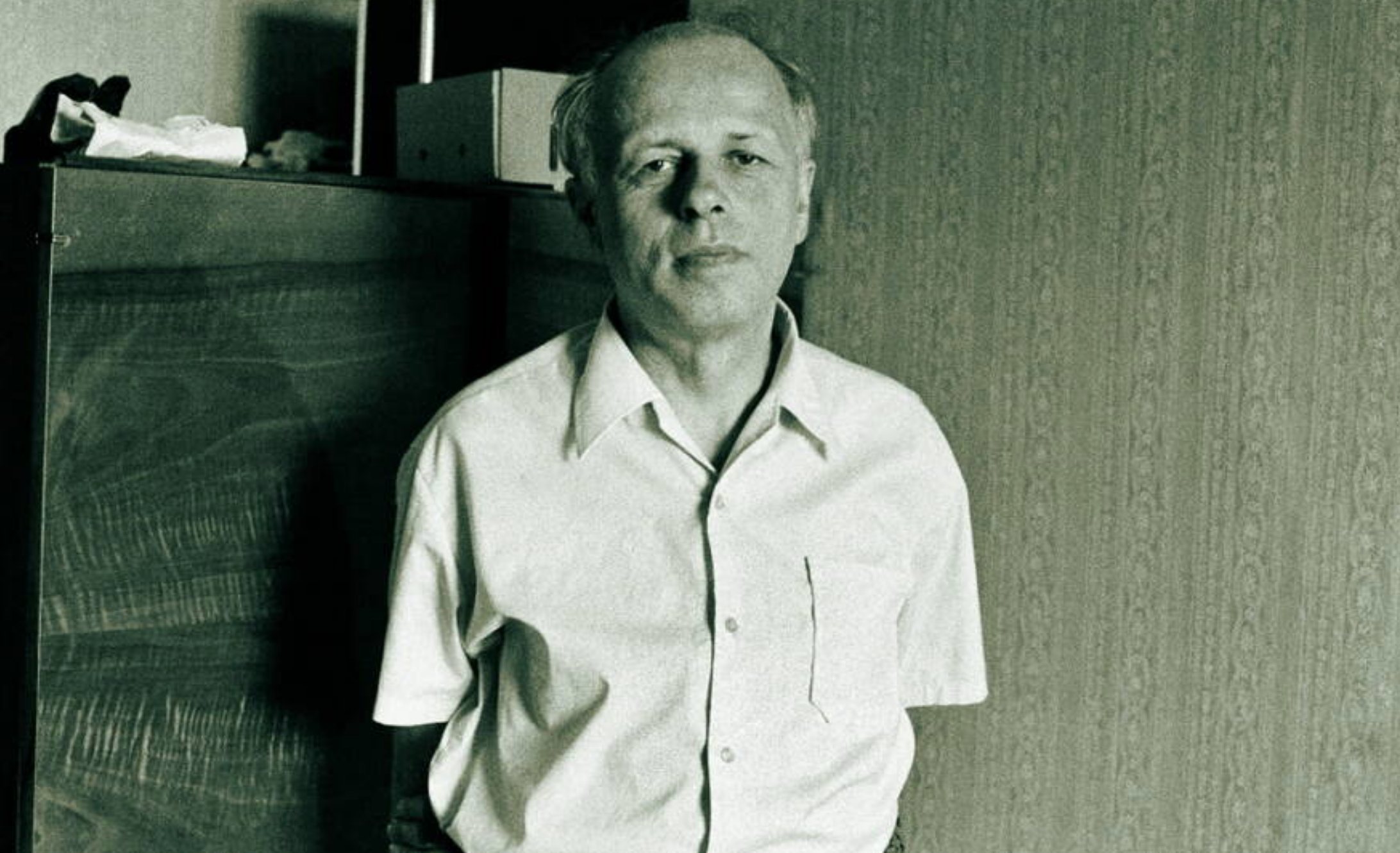
This also began to change Sakharov’s understanding of a scientist’s responsibility. Born in Moscow in 1921, by his mid-thirties he was one of the brightest stars of the secret Soviet nuclear programme. He enjoyed an extraordinary position within the system, receiving state decorations and privileges that most Soviet citizens could scarcely imagine. But the mathematics of radioactive fallout created a problem that politics could not simply declare out of existence. If a tiny dose of radiation does not kill any identifiable person immediately, but slightly increases the probability of illness across an enormous population, then statistically someone will still die because of that explosion. For Sakharov, the conclusion was uncomfortable but unavoidable: a state cannot claim that an atmospheric nuclear test has no victims simply because it does not know their names. He later described his work on this subject as an important stage in the formation of his moral views on nuclear testing.
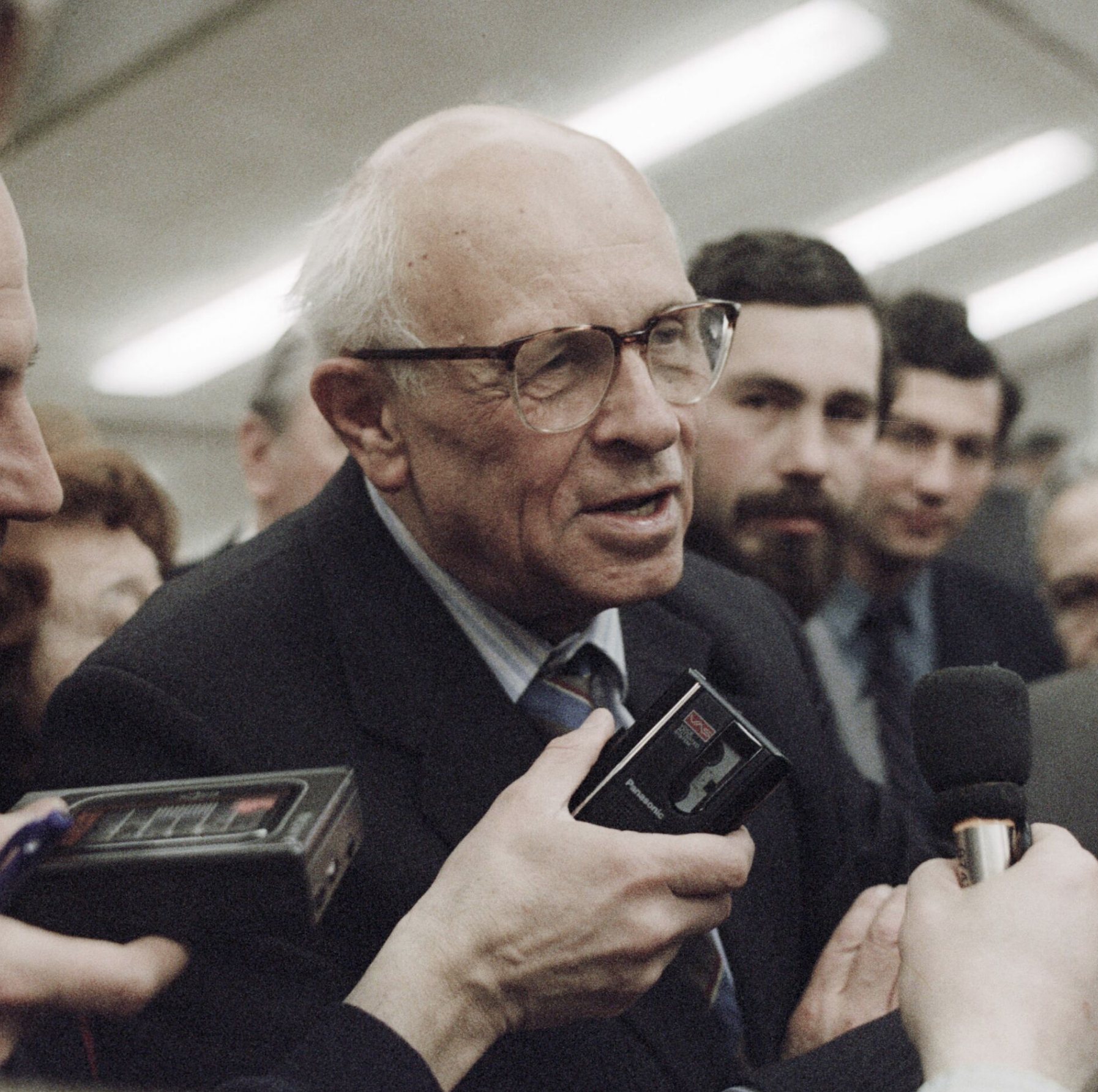
His conflict with the Soviet state eventually expanded far beyond nuclear policy. He defended political prisoners, demanded freedom of thought and openly criticised the system. In 1975 he received the Nobel Peace Prize, but the authorities refused to let him travel to Oslo. After he condemned the Soviet invasion of Afghanistan in 1979, the state finally lost patience. Without trial, he was exiled in 1980 to the closed city of Gorky, today Nizhny Novgorod, where the KGB kept him under constant surveillance for nearly seven years. His apartment did not even have a telephone. In December 1986, Mikhail Gorbachev personally called him and told him he could return to Moscow.
Sakharov lived to see perestroika and in 1989 became a deputy in the newly created Congress of People’s Deputies, where he demanded the repeal of the constitutional provision guaranteeing the Communist Party a monopoly on power. On December 14, he delivered another speech calling for genuine political opposition, then spent hours giving an interview to documentary filmmakers about the nuclear tests of his youth. He returned home to prepare a speech for the following day. Late that evening, he died of a heart attack in his Moscow apartment. He was 68. Three months later, Article 6 of the Soviet Constitution was amended, formally ending the Communist Party monopoly whose abolition he had demanded until the final day of his life.
For the people living around Semipalatinsk, the balance of terror was never an abstract theory of geopolitics. Between 1949 and 1989, no fewer than 456 nuclear tests were conducted at the site, including dozens of atmospheric and surface explosions. The radioactive signature of the August 1953 test could still be detected in the soil decades later. The great powers got their strategic balance. The people of Kazakhstan got disease, contaminated land and a legacy that never found its way into official declarations about preserving peace.
The RDS-6s, then, was not the moment of full nuclear equality. The Soviet Union still could not destroy the United States as easily as the United States could strike it. But it demonstrated that every American technological advantage would sooner or later be caught. In a balance of terror, perfect equality was unnecessary. It was enough to be dangerous enough.
And the man who helped open the Soviet Union’s door to the thermonuclear age spent the rest of his life warning where that door led. His biography is therefore not a simple story of redemption. It is the story of how a brilliant mind could become both an architect of state power and its most dangerous moral witness.
Sources
- Ahf.nuclearmuseum.org Soviet Hydrogen Bomb Program - Nuclear Museum https://ahf.nuclearmuseum.org/ahf/history/soviet-hydrogen-bomb-program/
- Pbs.org Soviet Tests | American Experience | Official Site | PBS https://www.pbs.org/wgbh/americanexperience/features/bomb-soviet-tests/
- Physicstoday.aip.org The secret of the Soviet hydrogen bomb https://physicstoday.aip.org/features/the-secret-of-the-soviet-hydrogen-bomb
- Ctbto.org 20th Anniversary of Closure of Semipalatinsk test site https://www.ctbto.org/news-and-events/news/20th-anniversary-closure-semipalatinsk-test-site
- Tandfonline.com Radioactive Carbon from Nuclear Explosions and Nonthreshold Biological Effects https://www.tandfonline.com/doi/full/10.1080/08929880903368682
- Nobelprize.org Andrei Sakharov / Biographical https://www.nobelprize.org/prizes/peace/1975/sakharov/biographical/
Comments