
The most dangerous lie history tells about great men is not that they were geniuses, but that they had to win. Today, Gaius Julius Caesar can seem like a man who entered Rome almost as a force of nature: first the Rubicon, then civil war, then dictatorship, then knives in the Senate. A neat, elegant story. Except reality, as usual, was messier and far more interesting.
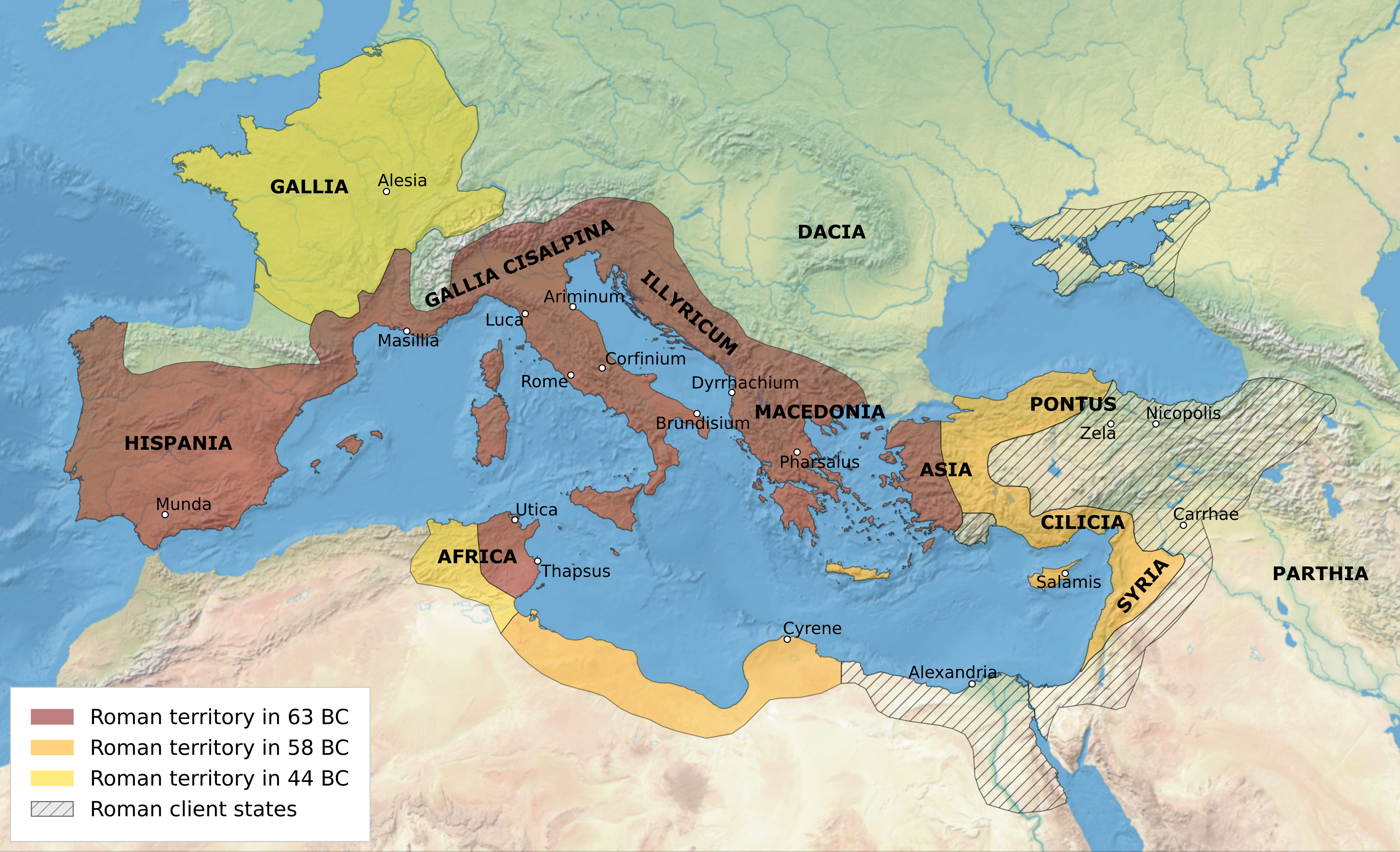
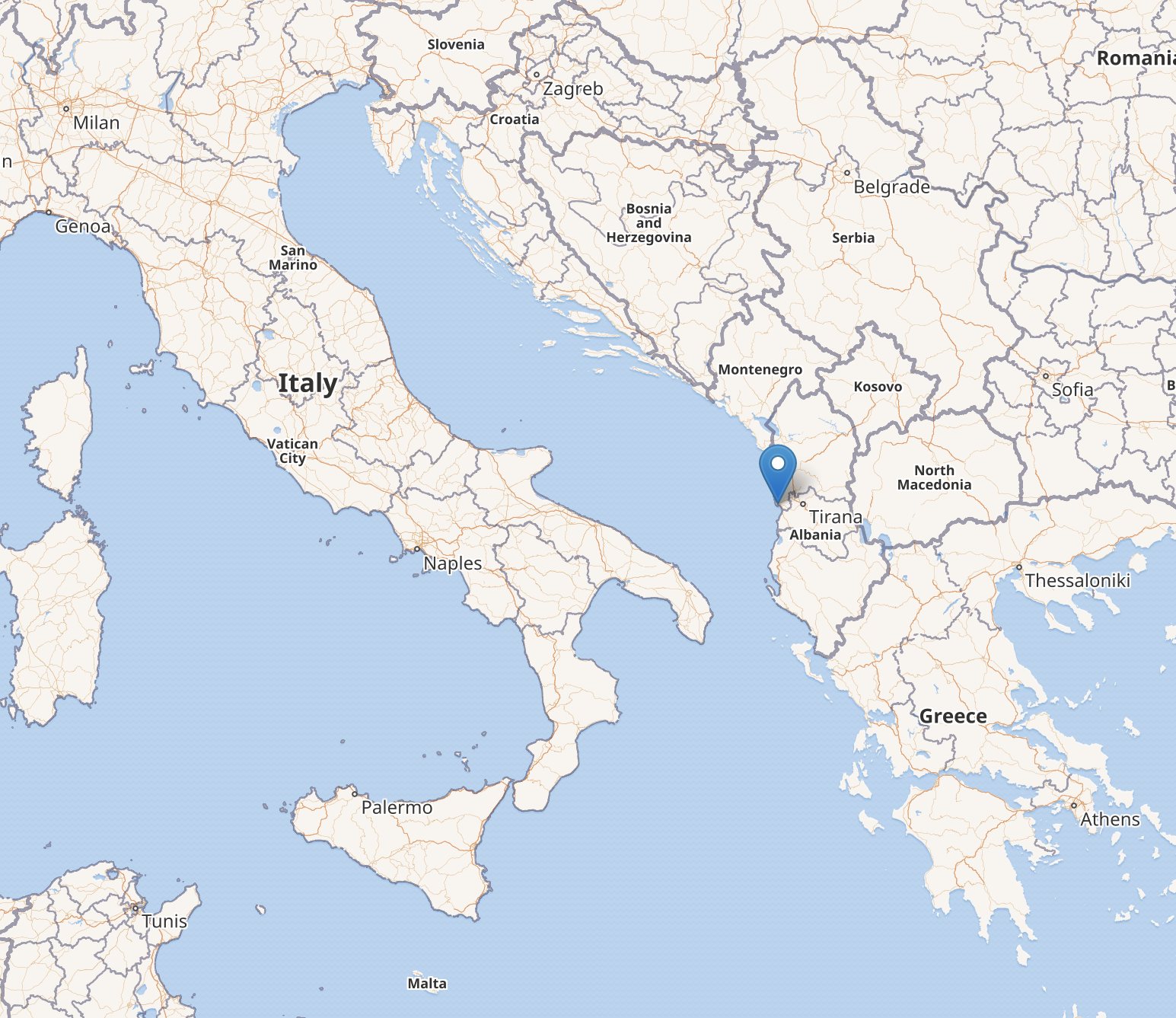
On July 8, 48 BC — in a period that modern accounts, because of the Roman calendar, do not always calculate in exactly the same way (Livius, for example, places the battle on July 7 by the Roman calendar, while other modern chronologies put it around July 10) — near Dyrrhachium, today’s Durrës in Albania, Caesar came very close to catastrophe. There, Gnaeus Pompeius Magnus, better known as Pompey the Great, dealt him a defeat that could have changed the history of Rome.
And this was no minor threat. It was that deeply uncomfortable moment in which the future master of the world had to retreat and hope his enemy would not realize just how close victory was.
Dyrrhachium, meanwhile, was more than a picturesque city on the Adriatic coast. It was the starting point of the Via Egnatia, the Roman road that connected the Adriatic with Macedonia and the Aegean, making it a logistical key to the war in the east. After crossing the Rubicon and taking Italy in 49 BC, Caesar turned his attention to Pompey, who had withdrawn across the Adriatic and was gathering an army there with the support of much of the senatorial camp. Pompey had the sea, supplies, and time. Caesar had veterans, audacity, and the kind of confidence that in politics often looks like strategy until it reveals itself to have been a gamble.
Caesar’s plan at Dyrrhachium was bold to the point of arrogance. Instead of withdrawing before a larger and better-supplied Pompeian force, he tried to trap Pompey with a system of fortifications and ramparts, cut him off from food, and turn his superior cavalry into an expensive ornament.
According to ancient sources, lines of embankments, trenches, and redoubts rose around the city, and for a time the war turned into a dark engineering duel. This was Caesar in his purest form: a man who did not solve a problem by avoiding it, but by building a wall around it.
But walls have one unpleasant quality: they are only as strong as their weakest point. Pompey learned where that point was thanks to two Gallic cavalry commanders, Raucillus and Egus, who defected from Caesar’s camp after being accused of embezzling their men’s pay. Their betrayal was not romantic, but war rarely is.
They gave Pompey exactly what he needed most: information about an unfinished section of Caesar’s lines near the sea. Pompey then attacked simultaneously by land and sea, sent light troops behind Caesar’s positions, and forced his men into retreat.
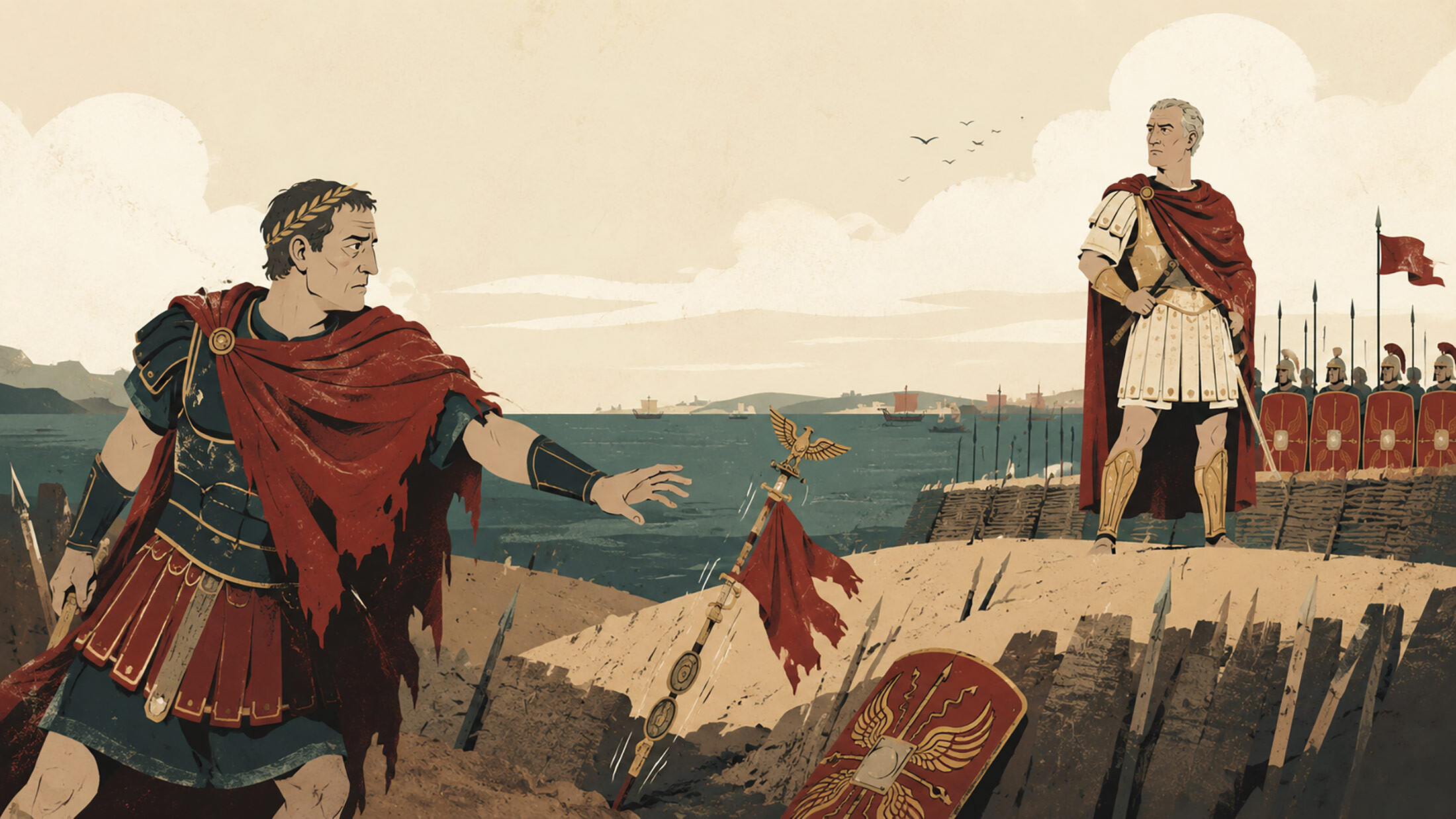
Then came the thing Caesar’s biographers rarely put in the foreground: panic. The Ninth Legion came under heavy pressure. Reinforcements caught the fear of those already fleeing, and in the chaos men fell, standards were lost, and reputations collapsed. Caesar tried to stop the fugitives by grabbing their military standards, but according to Plutarch, some simply threw them away and kept running. Caesar himself, in The Civil War, records a loss of 960 men, including 32 military tribunes and centurions, as well as 32 lost standards. That may not sound enormous for an ancient battlefield, but for Caesar it was almost obscene. His army was not supposed to look like an ordinary army.
And it is here that history pauses for a few seconds.
Pompey had won. Caesar was shaken. His men were retreating. But Pompey did not press the attack to the end. Perhaps he suspected an ambush. Perhaps he was being cautious. Perhaps he could not believe that Caesar really was that vulnerable.
Plutarch records a line from Caesar that sounds like a venomous judgment on his opponent: "Today the victory would have been the enemy’s, if he had had a winner for a commander." Behind the cynicism lay a serious realization. Caesar, Plutarch writes, spent that night in his tent convinced that he had commanded badly.
After Dyrrhachium, Caesar withdrew toward Thessaly. Pompey’s camp, inflated by its own success, began to believe the war was practically over. That is the dangerous phase of every victory, the moment when you stop seeing your opponent as a problem and start seeing him as proof of your own destiny. A month later, on August 9, 48 BC, at Pharsalus, Caesar defeated Pompey’s larger army and turned the war around. Pompey fled to Egypt, where he was soon murdered.
That is why Dyrrhachium deserves to be remembered. Not because Rome fell there, but because it shows how little was missing for things to have gone differently. Caesar was not inevitable. He was an extraordinarily capable man who survived a day on which he made a mistake, while his opponent did not know what to do with the opportunity in front of him. History, in other words, is not written only by the victors. Sometimes it is also written by those who, after defeat, are lucky enough for the enemy to hesitate.
Sources
- Penelope.uchicago.edu Civil Wars by Julius Caesar https://penelope.uchicago.edu/Thayer/E/Roman/Texts/Caesar/Civil_Wars/3C%2A.html
- Livius.org Siege of Dyrrhachium (49/48 BCE) https://www.livius.org/articles/battle/siege-of-dyrrhachium-48-48-bce/
- Lexundria.com Plutarch, Life of Caesar 39 https://lexundria.com/plut_caes/39/prr
- Lexundria.com Plutarch, Life of Pompey 65 https://lexundria.com/plut_pomp/65/prr
- Pen-and-sword.co.uk The Battle of Dyrrhachium (48 BC) https://www.pen-and-sword.co.uk/The-Battle-of-Dyrrhachium-48-BC-Hardback/p/20407
- Classics.mit.edu The Internet Classics Archive | The Civil Wars by Julius Caesar https://classics.mit.edu/Caesar/civil.3.3.html
- Persee.fr Caesar's Peace Overtures to Pompey https://www.persee.fr/doc/antiq_0770-2817_1993_num_62_1_1172
- Ancientportsantiques.com Caesar’s Crossing of the Adriatic Countered by a Winter Blockade During the Roman Civil War https://www.ancientportsantiques.com/wp-content/uploads/Documents/PLACES/Adriatic/Paleste-Longhurst2016.pdf
Comments