
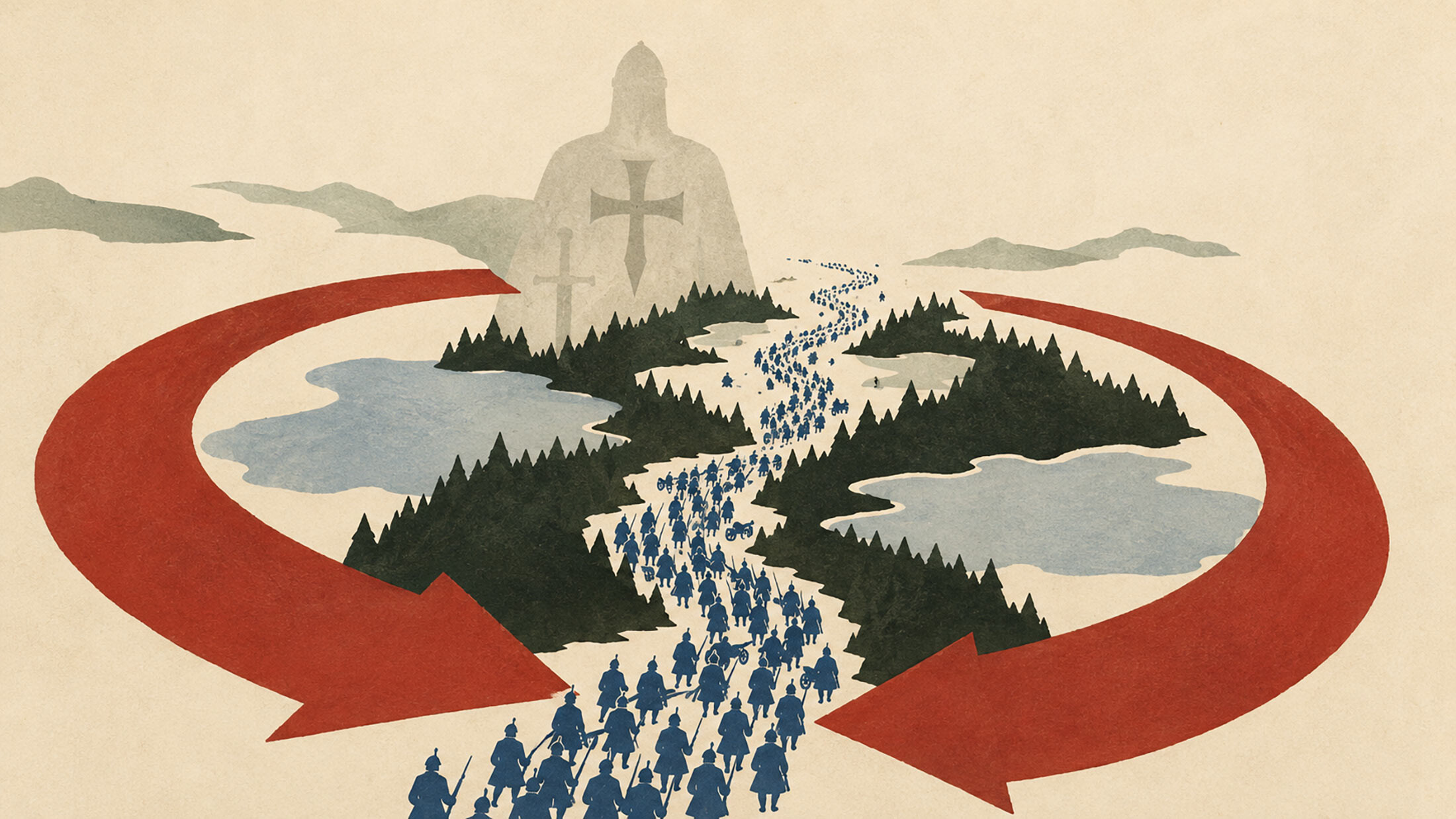
On this day, August 26, 1914, a battle began that would first destroy an army and then appropriate the memory of an entirely different war. The Battle of Tannenberg in 1914 was not actually fought at Tannenberg. Most of the fighting took place closer to Allenstein, today’s Polish city of Olsztyn, but military geography was no match for political theatre. The victors needed more than the name of a place. They needed an answer to a defeat that German national memory had carried for five centuries...
As exhausted Russian soldiers advanced through the forests and between the lakes of East Prussia, the German staff was reading their orders almost like the morning newspaper. Russian radio stations were transmitting crucial messages in plain text, while German railways shifted entire corps faster than Russian headquarters could determine where its own units were. By the time the trap closed around General Alexander Samsonov’s Russian Second Army, all that remained was to manufacture the heroes and give the victory a name old enough to make it look like destiny.
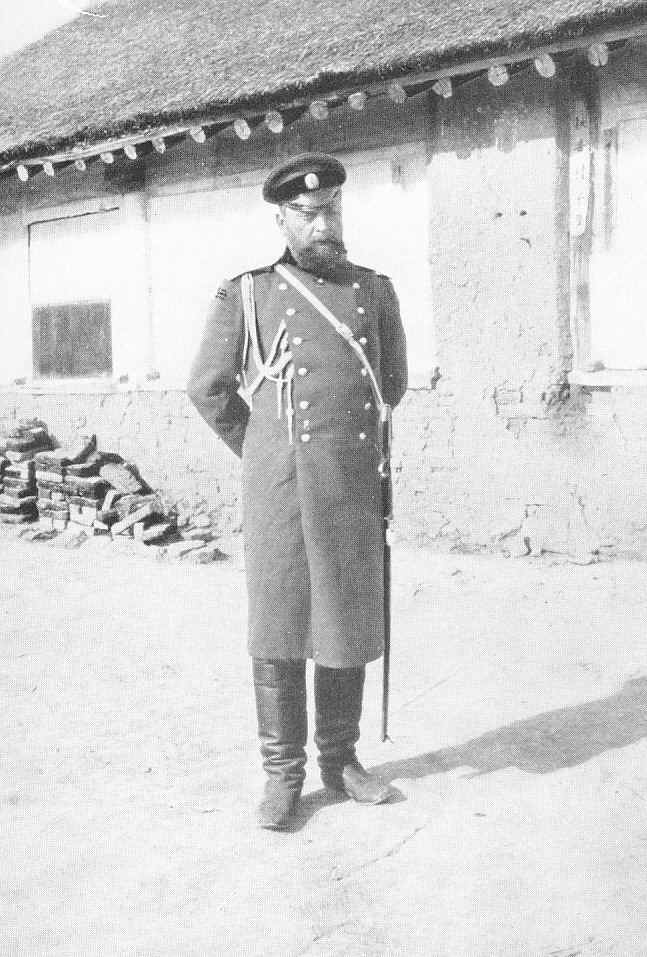
The First World War was not yet a month old. Germany had committed the bulk of its forces against France, calculating that the enormous Russian Empire would be slow to mobilize. Russia, however, moved sooner than expected, partly to relieve pressure on the French. Two armies entered East Prussia. The First, commanded by Russian General Paul von Rennenkampf, advanced from the northeast. The Second, under Samsonov, pushed in from the south. On a map, they looked like the jaws of a pair of pincers about to crush the German Eighth Army. On the ground, they were two separate masses of troops stretched along poor roads and divided from one another by the Masurian Lakes.
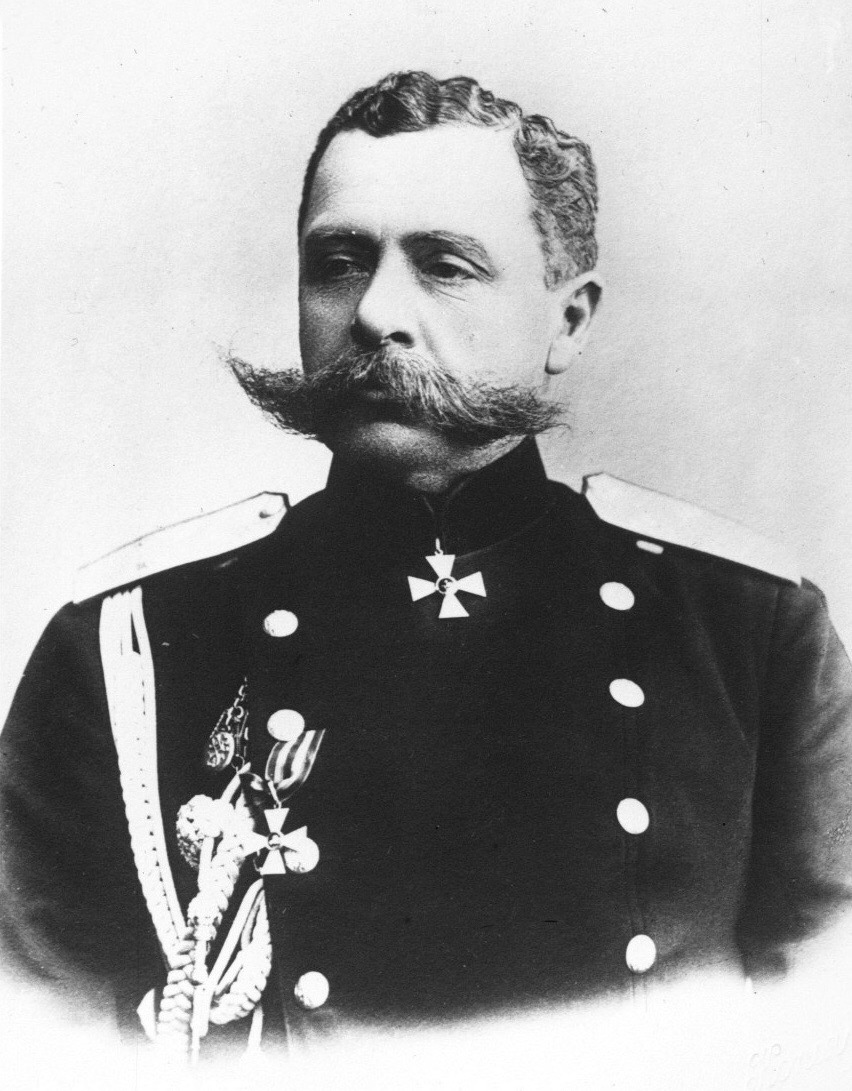
After the Russian success at Gumbinnen on August 20, German commander Maximilian von Prittwitz lost his nerve and proposed retreating behind the Vistula. Berlin removed him. In his place came the 66-year-old retired Prussian general Paul von Hindenburg, accompanied by General Erich Ludendorff. The legend that later grew around them portrayed two military geniuses arriving at the last possible moment and understanding the entire battle at a glance. Reality was less romantic. German staff officers, most notably Max Hoffmann, had already begun preparing the concentration of forces against Samsonov.
This was, above all, a battle of systems. Russian railways used a broader gauge than German ones, meaning trains could not simply continue across the border. The deeper Samsonov advanced into East Prussia, the farther he moved away from his supply hubs. Food, ammunition and information all lagged behind the infantry. Germany, by contrast, had a dense railway network near the frontier, allowing it to shift soldiers, guns and shells rapidly from one end of the battlefield to the other. For the Russians, East Prussia was a distance that had to be crossed on foot. For the Germans, it was a railway timetable.
The fistfight between two Russian generals that almost certainly never happened
One of the most irresistible explanations for the Russian catastrophe at Tannenberg begins almost a decade earlier, on a railway platform in Manchuria. According to a story repeated for decades in history books, Russian generals Alexander Samsonov and Paul von Rennenkampf met at Mukden station after the defeats of the Russo-Japanese War in 1905. Samsonov supposedly accused Rennenkampf of failing to come to his aid in battle, the argument turned into a fistfight, and the two officers parted as sworn enemies.The story was particularly useful to German staff officer Max Hoffmann, an expert on Russia who had served as a German military observer during the war against Japan. Hoffmann later claimed that his knowledge of the generals’ mutual hatred allowed the Germans to take an enormous gamble in 1914: concentrate their forces against Samsonov in the belief that Rennenkampf would not hurry to rescue a man he despised. It became an almost perfect historical anecdote. Tannenberg had not been lost merely because of trains, radios and poor command, but because of punches thrown nine years earlier on a railway platform at Mukden.
There is only one inconvenient problem: the fight almost certainly never happened. Historian Holger Herwig has pointed out that Rennenkampf was in hospital recovering from a combat wound at the time the supposed incident took place, while more recent studies of the Russian campaign explicitly reject the idea that his conduct at Tannenberg was driven by a personal feud with Samsonov. The two generals may well have disliked each other, but Rennenkampf’s delayed movement had far more prosaic causes: orders from his superiors, a mistaken assessment of German intentions, exhausted troops and chaotic communications. The legend survived because it offers something real history rarely does: a single dramatic moment capable of explaining the destruction of an entire army. Hundreds of kilometres of failing logistics are difficult to tell as a story. Two generals punching each other on a railway platform are much easier to remember.
That logistical advantage became deadly when combined with a Russian communications disaster. Field telephone lines could not keep pace with the advance, and radio was forced to perform a task for which the Russian system was poorly prepared. Trained operators were in short supply and encryption was slow, so some orders were simply transmitted in plain text.
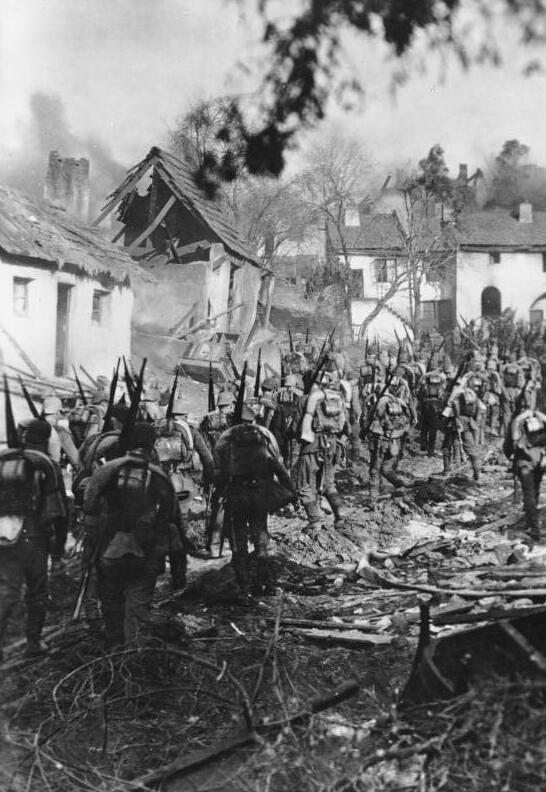
The Germans therefore learned that Rennenkampf was not hurrying toward Samsonov and that a dangerous gap had opened between the two Russian armies. Interception alone did not encircle a single soldier, but it gave German headquarters something almost as valuable: the confidence to gamble.
On August 26, the German wings began closing the trap. In the west, General Hermann von François resisted pressure to attack before his heavy artillery had arrived. Once it did, he smashed the Russian left flank and advanced toward Neidenburg. In the east, German corps pressed against the Russian right. Samsonov’s centre continued moving toward Allenstein, unaware that its line of retreat was steadily becoming the German rear. The plan did not unfold perfectly. François repeatedly ignored Ludendorff’s orders, while German commanders still feared Rennenkampf might suddenly appear behind them.
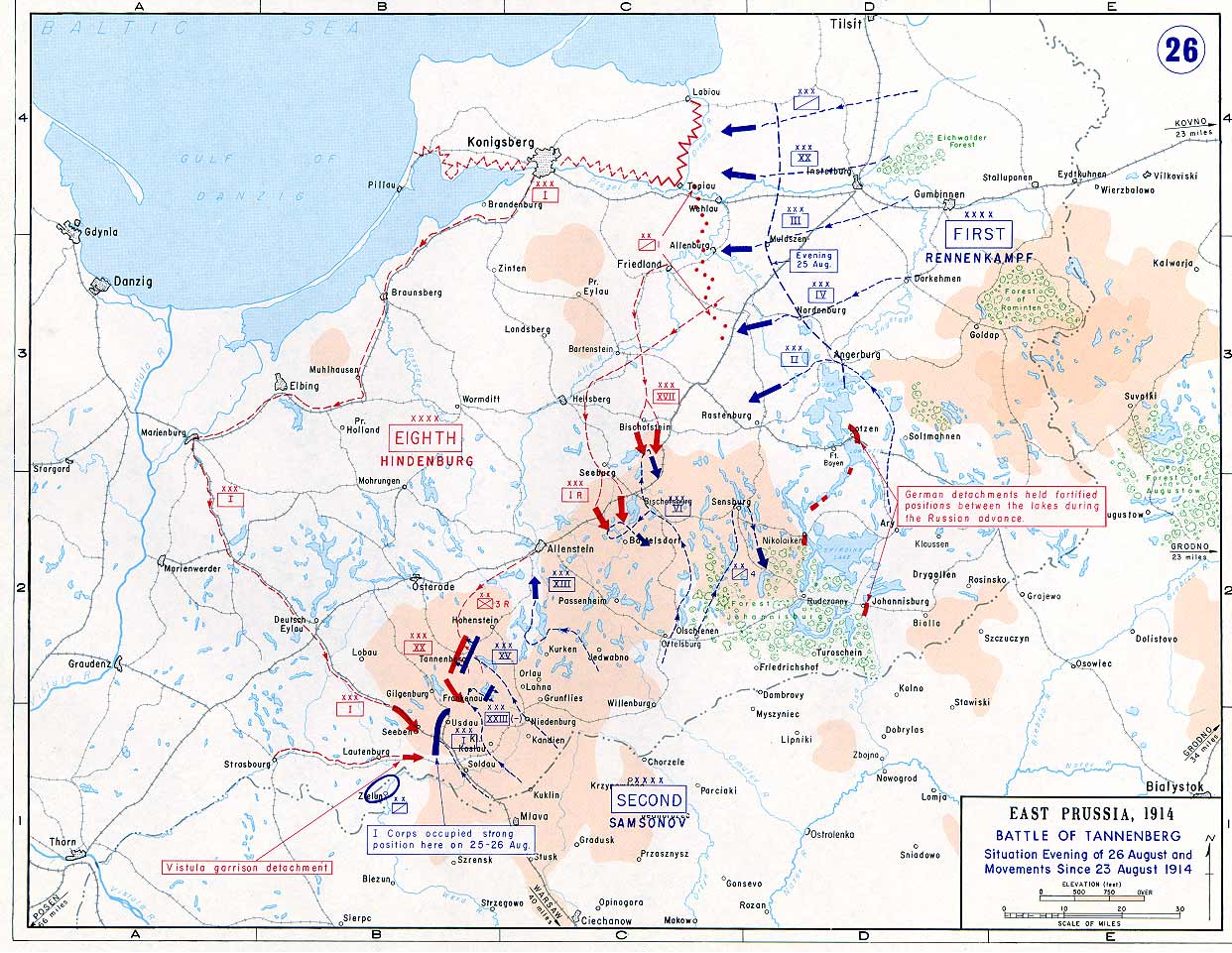
Only on August 28 did Samsonov begin to understand what had happened to his flanks two days earlier. Perhaps nothing captures his defeat better than that: a man can nominally command an army of more than a hundred thousand soldiers and still live two days behind his own battle. By the time he ordered a retreat, Neidenburg was already in German hands, communications with his corps were collapsing, and the roads south had been cut. Tens of thousands of soldiers wandered through the forests with no clear orders, little food and no idea where the rest of their army was.
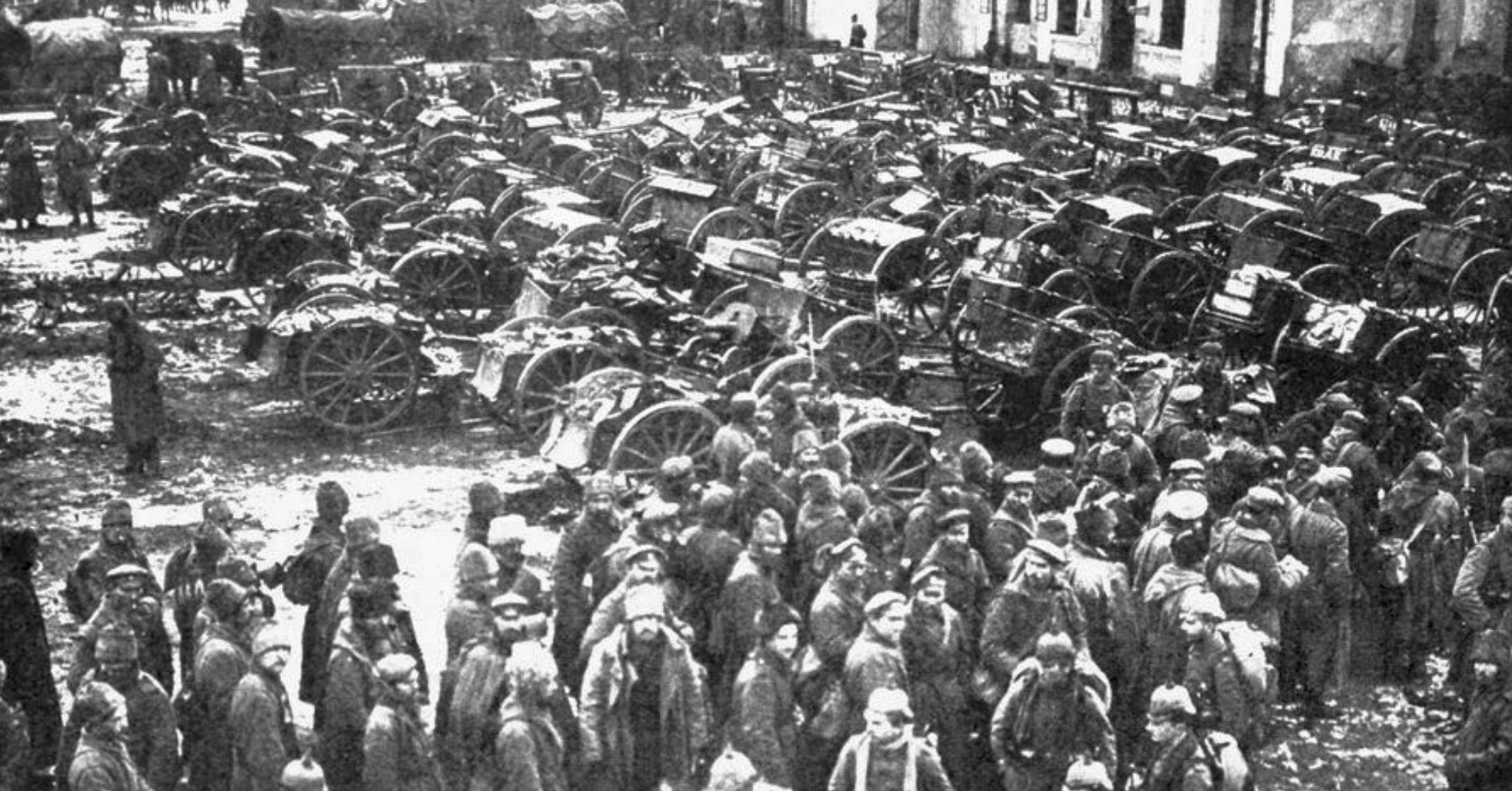
During the night of August 29–30, Samsonov attempted to escape the encirclement with a small group of officers. In the woods near Willenberg, he became separated from his companions and shot himself. According to commonly cited estimates, the Germans captured between 92,000 and 95,000 Russian soldiers, while tens of thousands more were killed or wounded. The Second Army ceased to exist as a fighting formation. Hindenburg and Ludendorff became national heroes, although Hoffmann later punctured their glory with one venomous anecdote. While leading officers around the battlefield, he would point out the place where Hindenburg had slept before the battle, the place where he slept after it, and the place where he slept during it.
Then came the name. In 1410, a combined Polish-Lithuanian army inflicted a crushing defeat on the Teutonic Order in one of the largest battles of medieval Europe. The Poles remember it as Grunwald, the Lithuanians as Žalgiris, while German tradition associated it with Tannenberg. So when the 1914 victory over the Russians needed a name, one was chosen that was geographically inaccurate but politically perfect. A victory at Allenstein could save East Prussia. A victory at Tannenberg could supposedly avenge the defeat of 1410.
The general was identified by a locket containing a portrait of his wife
When Alexander Samsonov disappeared into the forest on the night after the catastrophe at Tannenberg, his officers heard a gunshot but were unable to find his body in the darkness. German soldiers and local residents later discovered the dead Russian general and buried him near the place where he had died. For some time, there was no certainty in Russia about what had happened to him. The commander of an army that had virtually ceased to exist had vanished along with the final hours of his life.The story took an unusual turn the following year. Samsonov’s wife, Ekaterina Alexandrovna Samsonova, who was working as a Red Cross nurse, received permission during a mission to Germany to search for her husband’s grave. In East Prussia she questioned local residents until she found a miller who had taken part in the burial of an unidentified Russian officer. He showed her an object removed from the body: a gold locket engraved with the words "Remember us". Inside was a photograph of Ekaterina and their children, Vladimir and Vera. For the widow, there could no longer be any doubt about whose body lay in the unmarked grave.
The grave was located, Samsonov’s remains were exhumed, and he was eventually returned to Russia and buried on the family estate. There is something almost uncomfortably precise about the way the story of Tannenberg ends. Armies there were counted in the hundreds of thousands, orders vanished into the ether, and entire corps disappeared among forests and lakes. In the end, the identity of the man who was supposed to command it all was confirmed by a tiny object he had carried around his neck: a photograph of the wife and children to whom he never returned...
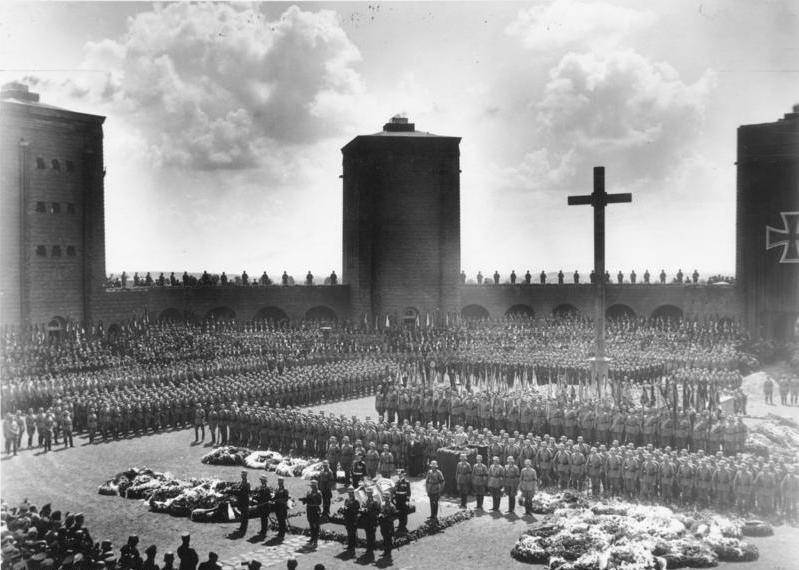
The battle thus acquired a significance far greater than its actual strategic effect. Russia had not been knocked out of the war, Rennenkampf’s First Army still existed, and the Eastern Front was far from settled. Yet Hindenburg became an almost mythical saviour of the nation. The glory of Tannenberg followed him all the way to the presidency, from which he appointed Adolf Hitler chancellor of Germany in 1933. Tannenberg did not, of course, produce Nazism, but it did help create the authority of an old soldier supposedly standing above parties, parliament and ordinary politics.
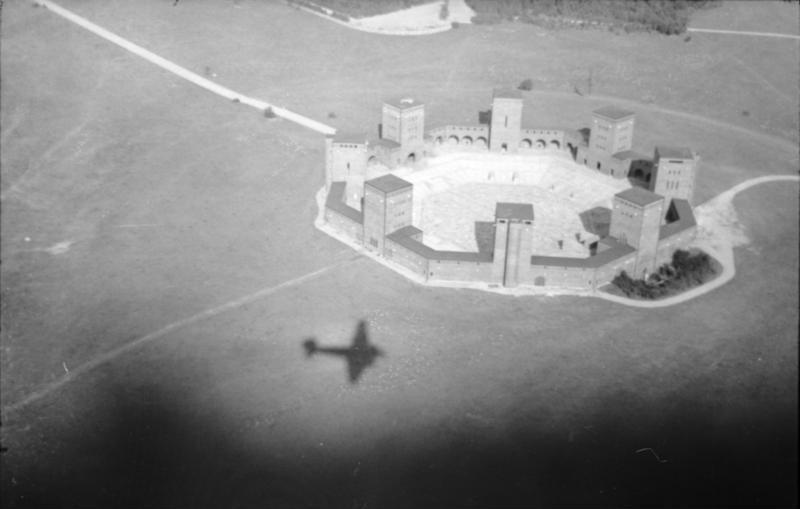
In 1927, the enormous Tannenberg Memorial was built nearby, a fortress-like structure of eight towers. The Nazis transformed it into a national shrine and Hindenburg’s mausoleum. During the German retreat in 1945, the Wehrmacht itself demolished the monument to prevent it from falling into the hands of the Red Army.
The myth began when a victory appropriated someone else’s geography and ended when its guardians blew up their own shrine. Sometimes history writes a final sentence so precise that cynicism has nothing left to add.
Sources
- Encyclopedia.1914-1918-online.net Tannenberg, Battle of / 1.1 / encyclopedic - 1914-1918-Online (WW1) Encyclopedia https://encyclopedia.1914-1918-online.net/article/tannenberg-battle-of-1-1/
- Ww1.nam.ac.uk Battle of Tannenberg - National Army Museum, London https://ww1.nam.ac.uk/timeline/battle-tannenburg/
- Encyclopedia.com Tannenberg, Battle of | Encyclopedia.com https://www.encyclopedia.com/history/encyclopedias-almanacs-transcripts-and-maps/tannenberg-battle
- Dhm.de Gerade auf LeMO gesehen: LeMO Das lebendige Museum Online https://www.dhm.de/lemo/kapitel/erster-weltkrieg/kriegsverlauf/tannenberg-1914
- Muzeum-grunwald.pl Wystawy stałe https://muzeum-grunwald.pl/oferta-edukacyjna/wystawy-stale/
- Historynet.com What We Learned From Tannenberg, 1914 https://historynet.com/learned-tannenberg-1914/
- Nsa.gov The Beginnings of Radio Intercept in World War I https://www.nsa.gov/portals/75/documents/news-features/declassified-documents/cryptologic-spectrum/beginnings_radio_intercept.pdf
Comments