
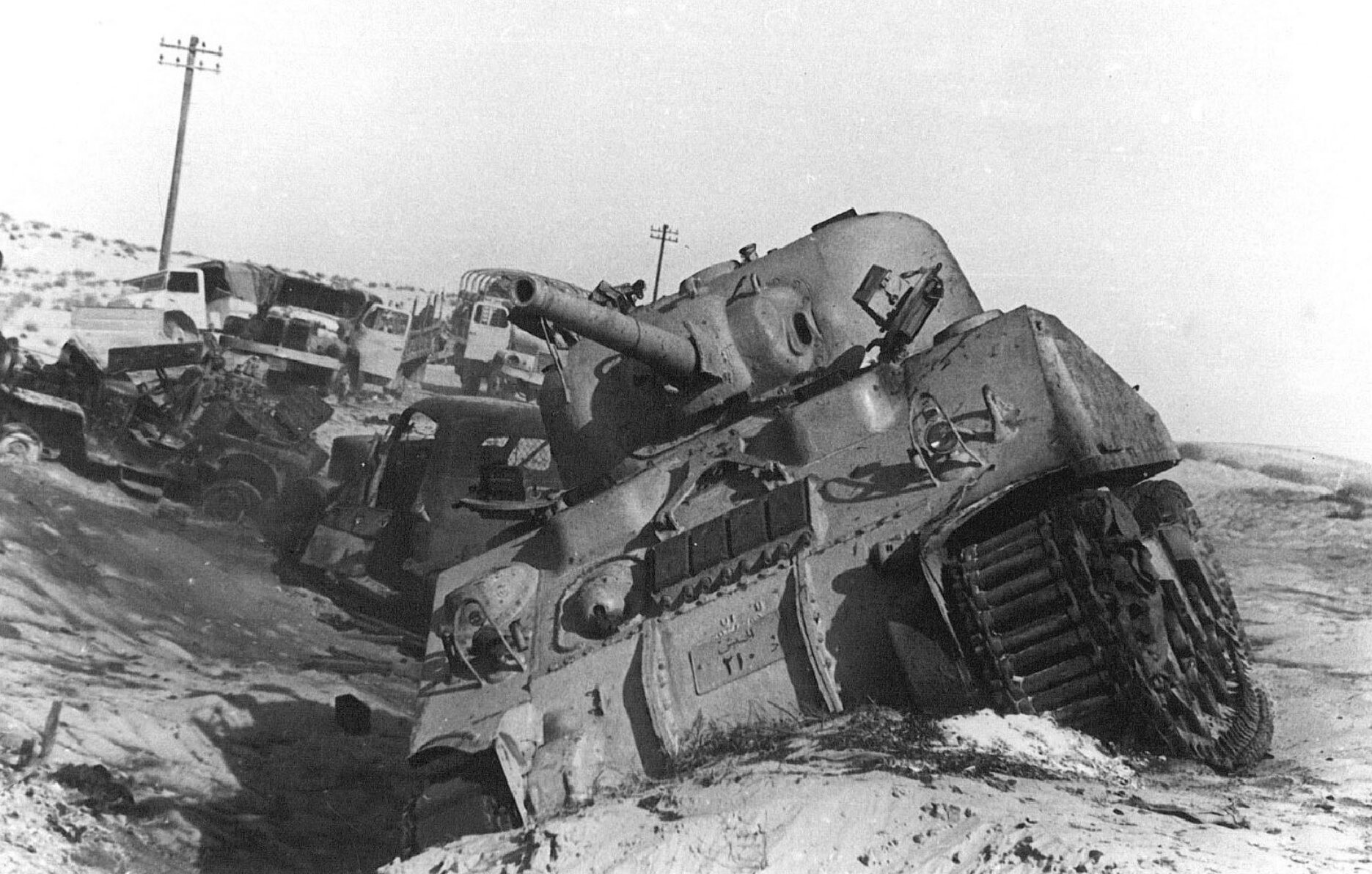
Britain and France posed as neutral mediators, even though they had already agreed with Israel on an attack, the rejection of an ultimatum and an intervention.
The war began on October 29, 1956, but its script had been completed five days earlier. As Israeli paratroopers descended over Sinai and armored columns advanced westward, the world watched the outbreak of another Arab-Israeli conflict. Britain and France, however, were not concerned powers that events would gradually draw into the crisis. They were waiting for their cue.
The following day, London and Paris issued what appeared to be a symmetrical ultimatum to Egypt and Israel. Both sides were ordered to stop fighting and withdraw their forces from the Suez Canal. But only Egypt was required to surrender key positions along the canal to British and French troops. The deadline was 12 hours. Egyptian President Gamal Abdel Nasser was, of course, expected to refuse. His refusal was not a failure of diplomacy but its prearranged outcome.
The Canal, the Dam and the Humiliation of an Empire
To understand the audacity of the plan, it is necessary to go back several months. The last British troops had left the canal zone in June 1956, ending a military presence that had lasted nearly three-quarters of a century. Just six weeks later, Nasser nationalized the company that operated the canal. He promised compensation to its shareholders but also announced that revenue from shipping would be used to finance the Aswan High Dam after Washington and London withdrew their funding offer. To Egypt, this was an assertion of sovereignty. To Britain, it looked as though a former colonial possession had seized the treasury, a vital trade artery and a symbol of empire in a single stroke.
British Prime Minister Anthony Eden regarded Nasser as a kind of Middle Eastern Mussolini who had to be stopped before he grew even more powerful. The French had an additional reason to confront him. Egypt supported Algeria’s National Liberation Front, and Paris believed that bringing down Nasser would also weaken the uprising in Algeria. Israel had grievances of its own: Egypt’s military buildup, cross-border attacks and restrictions on navigation through the Straits of Tiran.
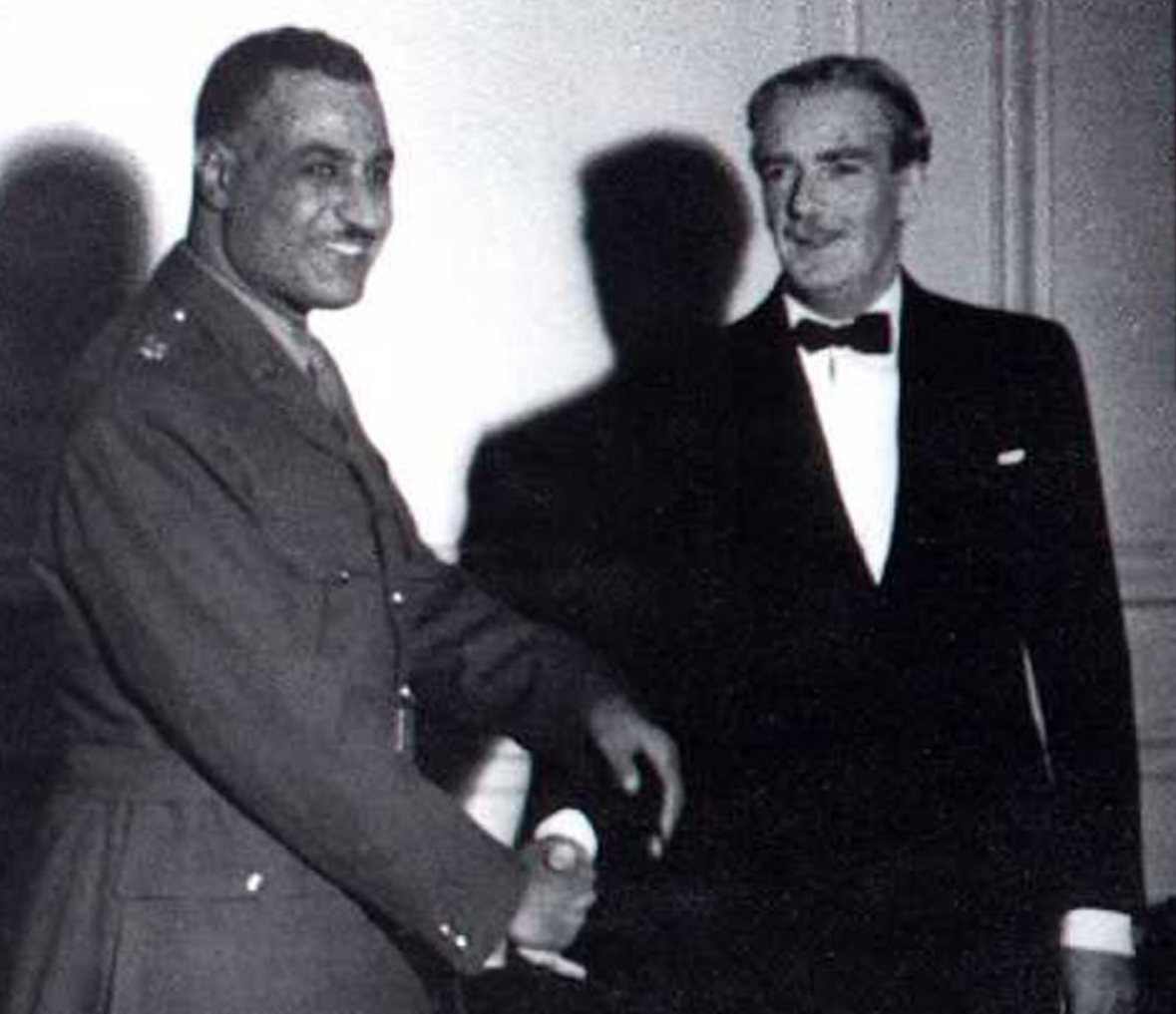
Thus emerged an alliance founded not on trust but on the convergence of three fears. Britain feared the loss of its imperial standing. France feared that Nasser’s anticolonialism would set North Africa ablaze. Israel feared a shift in the regional military balance. Their common denominator was Cairo.
The Secret Script Written in a Villa at Sèvres
Representatives of the three countries met from October 22 to 24 at a secluded villa in Sèvres, outside Paris. Israeli Prime Minister David Ben-Gurion insisted that the agreement be put in writing because he did not trust the British enough to rely on their word. The protocol was signed by Ben-Gurion, French Foreign Minister Christian Pineau and British diplomat Patrick Dean. Ben-Gurion reportedly folded his copy twice and slipped it into his pocket. The creases remained visible on a document that was never supposed to have a history.
The protocol was almost theatrical in its precision. Israel would attack Sinai on October 29 and advance toward the canal. The next day, Britain and France would issue an ultimatum to both sides and offer their forces as "impartial guardians of navigation." If Egypt refused to accept an Anglo-French occupation of positions along the canal, bombing would begin on October 31. One particular clause exposed the deception even more clearly: Israel would not have to comply with its side of the ultimatum if Egypt rejected it. Diplomatic neutrality was stage scenery, not policy.
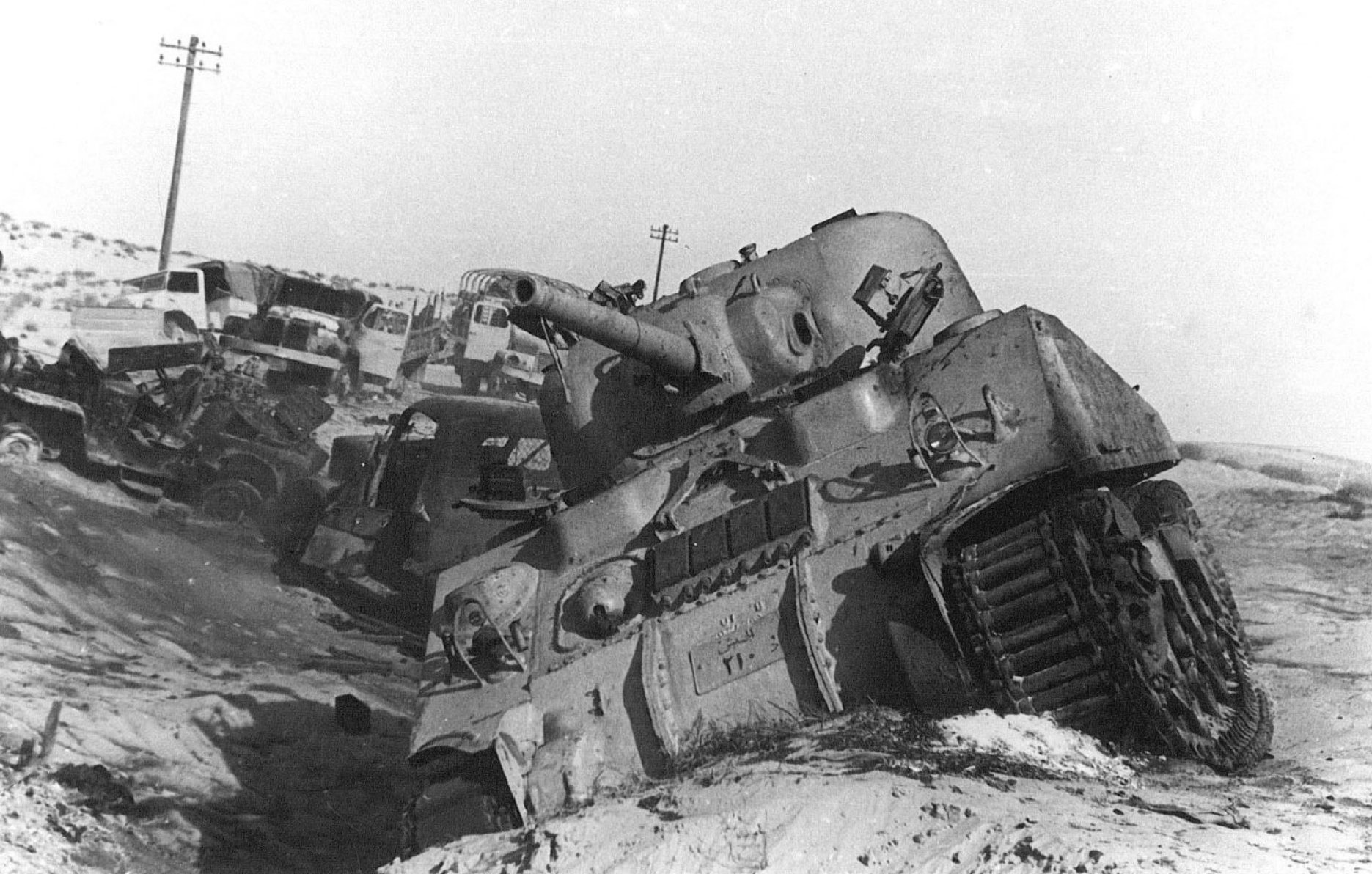
The plan was then carried out almost exactly on schedule. Israel launched Operation Kadesh on October 29. The ultimatum followed on October 30. Nasser rejected it, just as its authors had expected. British and French aircraft began striking Egyptian targets on October 31, and an amphibious assault near Port Said followed in early November.
At the same time, London and Paris claimed that they were acting because the United Nations could not stop the war quickly enough. The awkward detail was that Britain and France themselves had used their vetoes to block a Security Council resolution calling for a ceasefire and an Israeli withdrawal. In the British Parliament, one MP asked how members could possibly debate a war when the government would not even tell them whether it had begun. The opposition had already recognized the obvious: the ultimatum had been designed so that no Egyptian government could accept it.
Eden later denied that Britain had known about the Israeli attack in advance. The British copy of the protocol was ordered destroyed, and the French were asked to do the same. The secret military operation thus became an operation to erase its own tracks. The document nevertheless survived thanks to the Israeli copy and the later testimony of those involved.
A Military Victory That Lost the Political War
Militarily, the attackers advanced rapidly. Politically, the plan began to collapse as soon as actors who had not been present at Sèvres entered the picture. US President Dwight Eisenhower was furious that his allies had presented him with a fait accompli. At the same time, the Soviet Union was crushing the uprising in Hungary, making it difficult for Washington to condemn Soviet intervention in Budapest while tolerating a colonial assault on Egypt.
The United States did not need to send troops against its own allies. It merely had to withhold financial support until London accepted a ceasefire. Britain still possessed aircraft carriers, bombers and paratroopers, but it could no longer defend the value of the pound with confidence without American assistance. Soviet threats heightened the danger, while the UN General Assembly called for an end to the fighting and created the organization’s first armed peacekeeping force.
The Birth of the Blue Helmets
Canadian Foreign Minister Lester B. Pearson proposed a solution that broke with the prevailing logic: an international force that would not fight the aggressors but position itself between the belligerents and oversee their withdrawal. UN Secretary-General Dag Hammarskjöld turned that political idea into the operational model of the first United Nations Emergency Force, known as UNEF.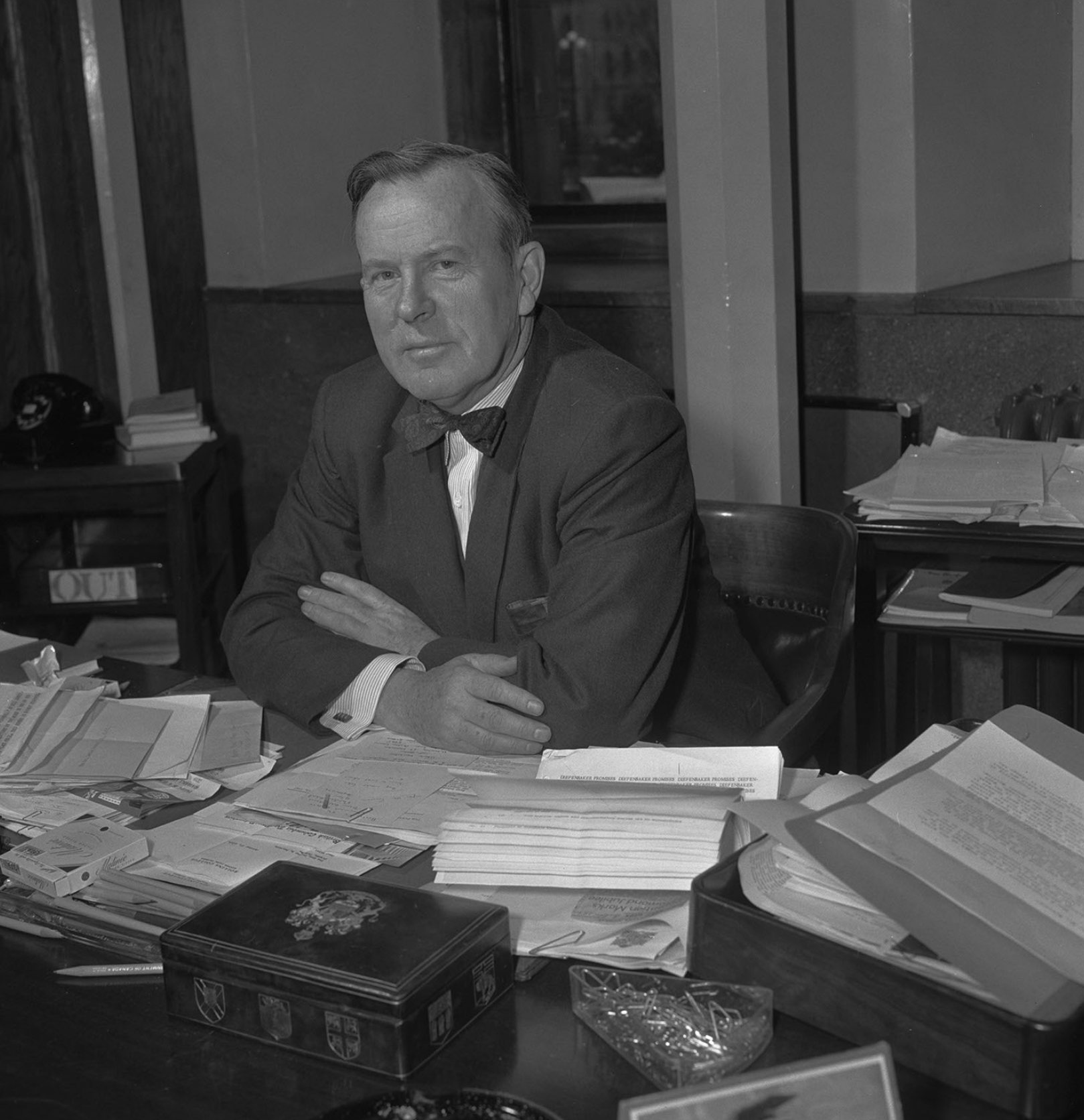
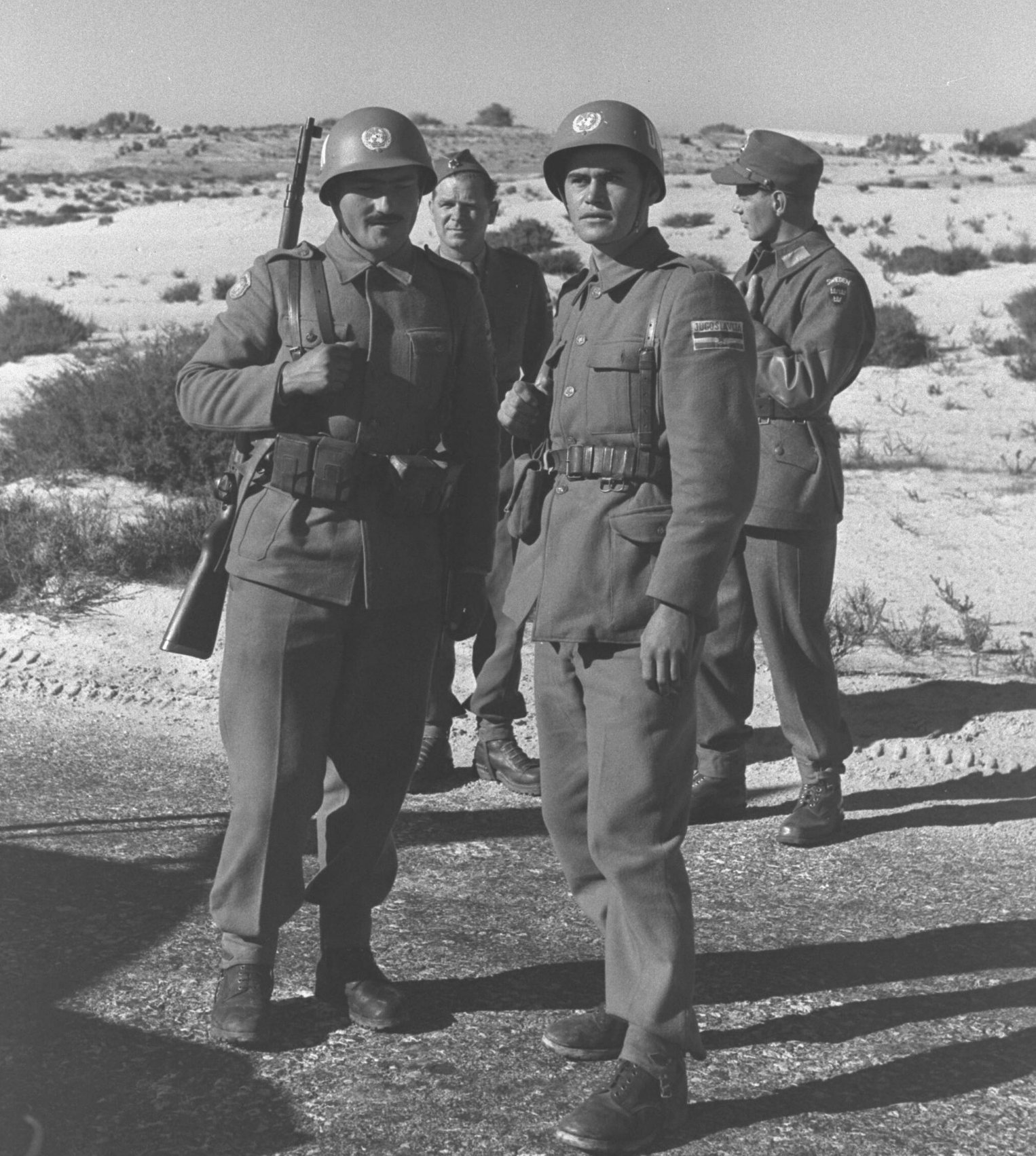
Britain and France were forced to halt their operation on November 6. Their forces withdrew from the canal zone by the end of December, and Israel pulled out of Sinai in March 1957. Nasser had suffered a military defeat but emerged politically stronger. He retained control of the canal and became a symbol of Arab resistance to the old European powers. Eden resigned in January.
How the Canal Was Physically Closed
The operation launched under the pretext of protecting freedom of navigation produced precisely the opposite result. After the attack began, the Egyptians sank ships, tugboats and floating cranes in the canal, while other obstacles and damaged equipment further blocked the passage. The Suez Canal did not merely become a battlefield, it physically ceased to function as a shipping route between the Mediterranean and the Red Sea.Clearing it became a separate international operation under United Nations auspices. Salvage teams had to locate and remove the wrecks, inspect the waterway and restore its navigation aids and port equipment. The work took months, while shipping companies rerouted cargo around the Cape of Good Hope, adding both time and expense to their journeys.
The canal did not reopen to traffic until the spring of 1957. The crisis thus ended with an almost perfect paradox: the powers that claimed they had intervened militarily to keep the canal open caused its complete closure, and navigation was restored not by their occupation but by clearing away the consequences of their war.
A Plan for a World That No Longer Existed
Suez did not extinguish the British Empire in a single week, but it destroyed the last credible illusion that London could independently conduct a major military operation against Washington’s wishes. Nor did it represent a straightforward defeat for the West. Rather, it revealed that leadership within the Western alliance had changed hands.
The three countries succeeded in scripting the attack, the ultimatum and the justification for intervention. What they could not script was the reaction of the rest of the world.
Sèvres was therefore both a masterpiece of tactical ingenuity and a monument to strategic blindness. Great geopolitics is not simply the ability to devise a clever plan. It also requires recognizing, before it is too late, that the world in which that plan was supposed to succeed no longer exists.
Sources
- U.S. Department of State, Office of the Historian The Suez Crisis, 1956 https://history.state.gov/milestones/1953-1960/suez
- Foreign Relations of the United States Foreign Relations of the United States, 1955–1957, Suez Crisis, Volume XVI, Document 373 https://history.state.gov/historicaldocuments/frus1955-57v16/d373
- United Nations Peacekeeping First United Nations Emergency Force (UNEF I) https://peacekeeping.un.org/sites/default/files/past/unef1backgr2.html
- United Nations Dag Hammarskjöld: The UN Years — 1957 https://www.un.org/depts/dhl/dag/time1957.htm
- Nobel Prize Lester Bowles Pearson – Facts https://www.nobelprize.org/prizes/peace/1957/pearson/facts/
- Israel Studies / JSTOR The Protocol of Sèvres: British/French/Israeli Collusion against Egypt, 1956 https://www.jstor.org/stable/30245494
- Suez Canal Authority Canal History https://www.suezcanal.gov.eg/English/About/SuezCanal/Pages/CanalHistory.aspx
- National Army Museum Suez Crisis https://www.nam.ac.uk/explore/suez-crisis
Comments