
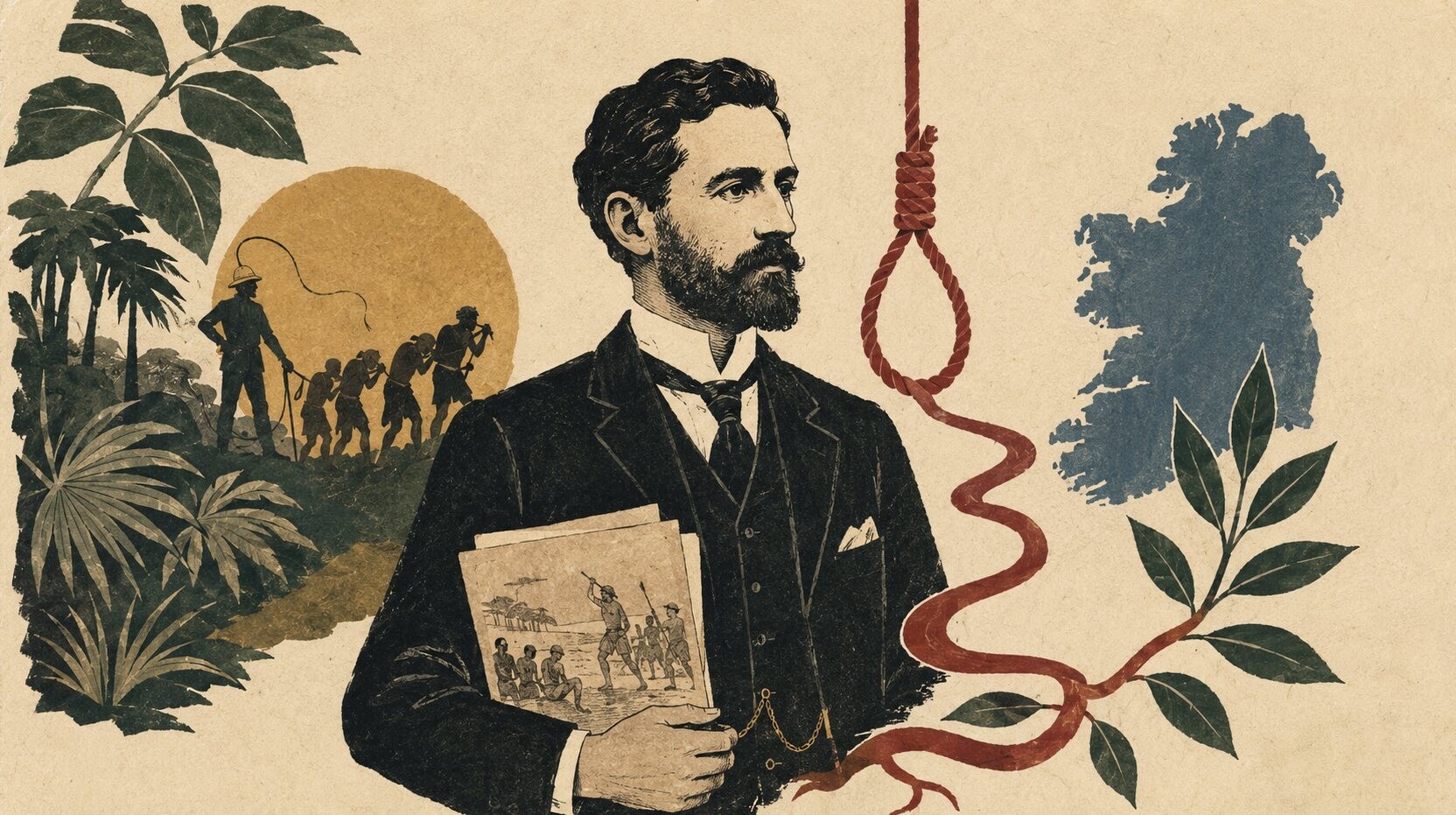
On the morning of August 3, 1916, the British state hanged a man it had knighted just five years earlier. Roger Casement, a former British consul, was no anonymous bomber from the revolutionary underground. He was an internationally renowned humanitarian whose reports had forced Europe to confront the blood-soaked economy of rubber. His words exposed regimes of terror in the Congo and the Peruvian Amazon. In Pentonville Prison, words could no longer save him. The state already knew what it would do with his body. It had not yet decided what it would do with his life story.
On paper, the reason for his execution was simple. During the First World War, Casement sought German support for an Irish rebellion and tried to persuade Irish prisoners of war to turn their weapons against the British Crown. Yet the most unsettling possibility in his story is that the humanitarian may never have become a traitor at all. Perhaps he had merely continued to widen the circle of people whose freedom mattered to him. The question he asked in the Congo was the question he ultimately asked in Ireland: what right does a government have to demand obedience from people whose consent it denies?
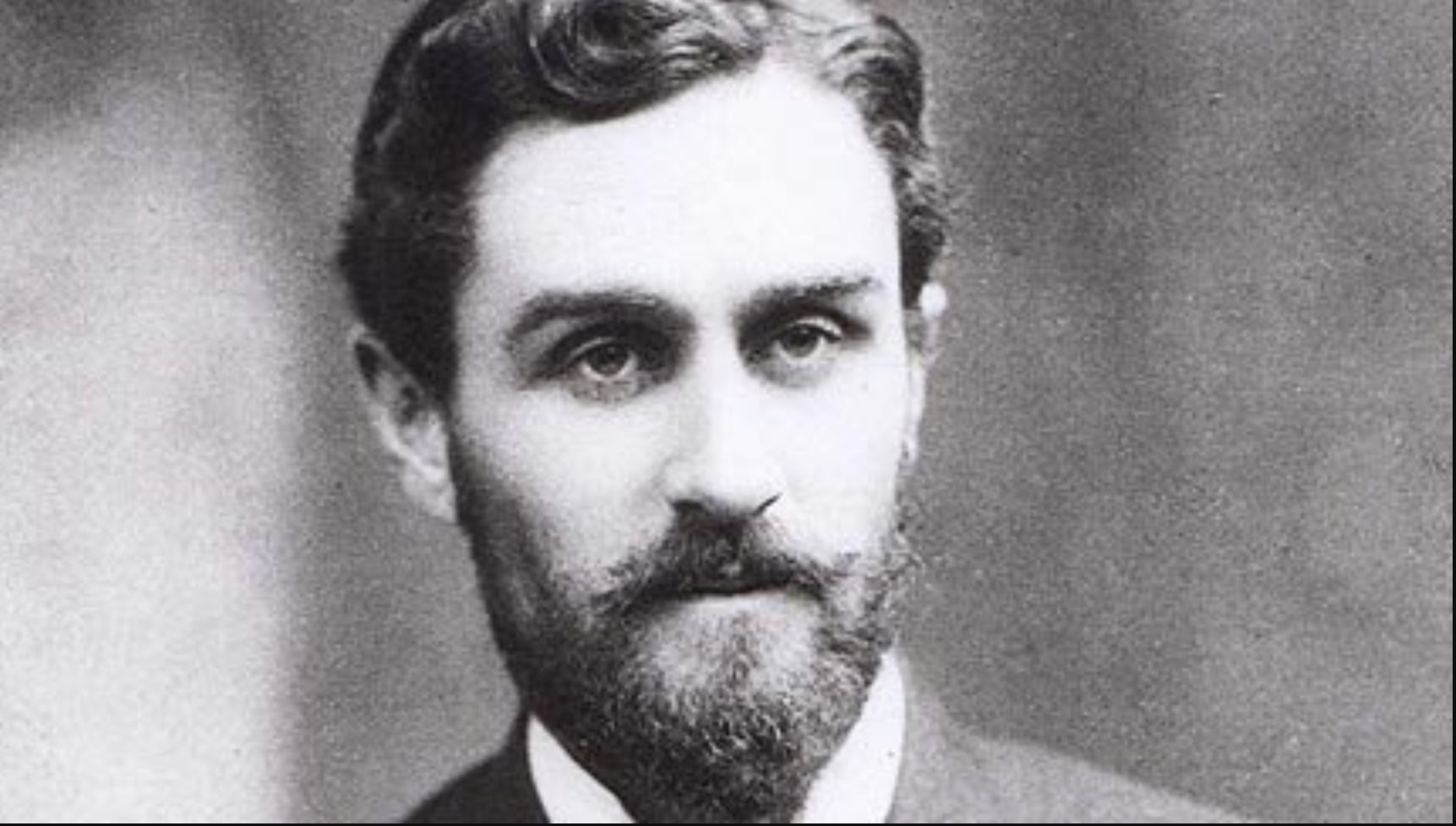
Casement was born near Dublin in 1864, the son of a British Army captain. His mother secretly had him baptized as a Catholic, but he was raised as a Protestant in his father’s tradition. After both parents died while he was still young, he went to live with relatives in County Antrim, in the north of Ireland. It was a fittingly divided beginning for a man who would spend his life suspended between identities: British official and Irish nationalist, imperial diplomat and opponent of empire.
He did not arrive in Africa as an anti-colonialist. He initially worked for commercial interests, then joined the British consular service and for years accepted the idea that European rule brought "order, progress and civilization." He would later admit that he had been well on his way to becoming a perfectly respectable imperialist. Casement, in other words, did not condemn the system from the outside. He first came to know it from within, served it and learned its language.
In 1903, the British Foreign Office sent him into the interior of the Congo Free State. Despite its name, this vast territory was neither free nor a state in any conventional sense. It was the personal possession of Belgium’s King Leopold II, who ran it from Brussels as a private enterprise. Global demand for rubber turned villages into reservoirs of forced labor. Communities were assigned quotas they often had no hope of meeting. Floggings, hostage-taking and killings followed. Severed hands became the most horrifying symbol of a system in which violence was administered almost like a form of bookkeeping.
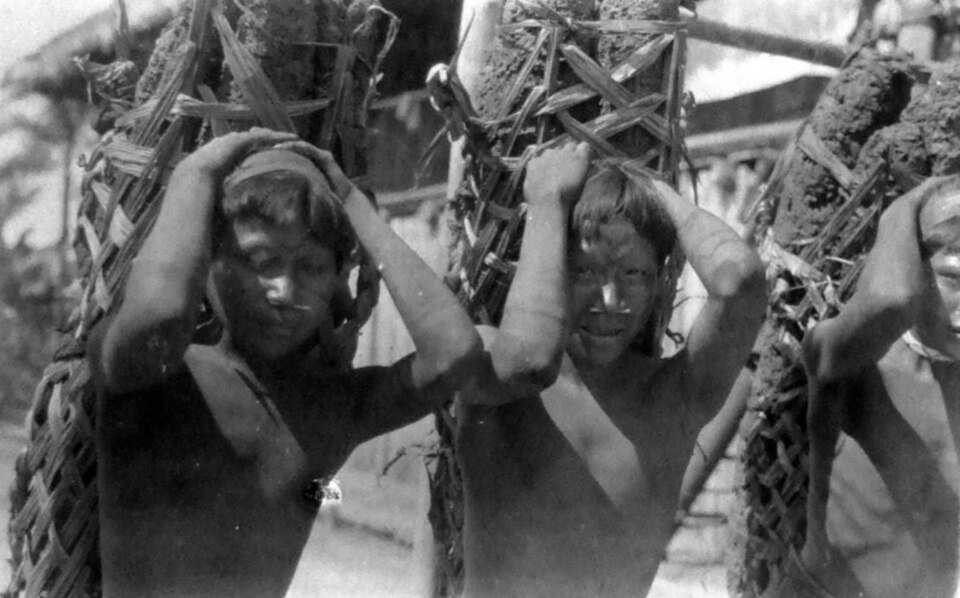
Casement’s contribution was not simply that he was appalled. He traveled along the river and spoke to survivors. He recorded names, places and patterns of abuse. His 1904 report was an official parliamentary document, and its cold bureaucratic tone was precisely what gave it such force. If the Polish-British novelist Joseph Conrad gave the Congo literary weight in Heart of Darkness, Casement gave that darkness eyewitness testimony and the seal of the British consulate.
The Bloody Raw Material of the Modern World
Before it became a symbol of the automotive age, rubber was a strange substance with serious shortcomings. In heat it softened and became sticky; in cold it hardened and cracked. Only the development of vulcanization during the 1840s, associated with the American inventor Charles Goodyear and the British industrialist Thomas Hancock, transformed natural latex into a durable material capable of withstanding changes in temperature. Elasticity suddenly became an industrial property rather than an exotic curiosity brought back from tropical forests.Its applications multiplied. Rubber was used to make belts that drove factory machinery, seals, hoses, waterproof clothing and medical equipment. The bicycle boom of the late 19th century drove demand still higher, while the invention of the pneumatic tire opened an entirely new market. As the automobile began to leave the workshop and become a mass-produced commodity, rubber emerged as one of the strategic raw materials of the new century. Without it, wheels were hard, machinery was unreliable and the promise of modern mobility was considerably less comfortable.
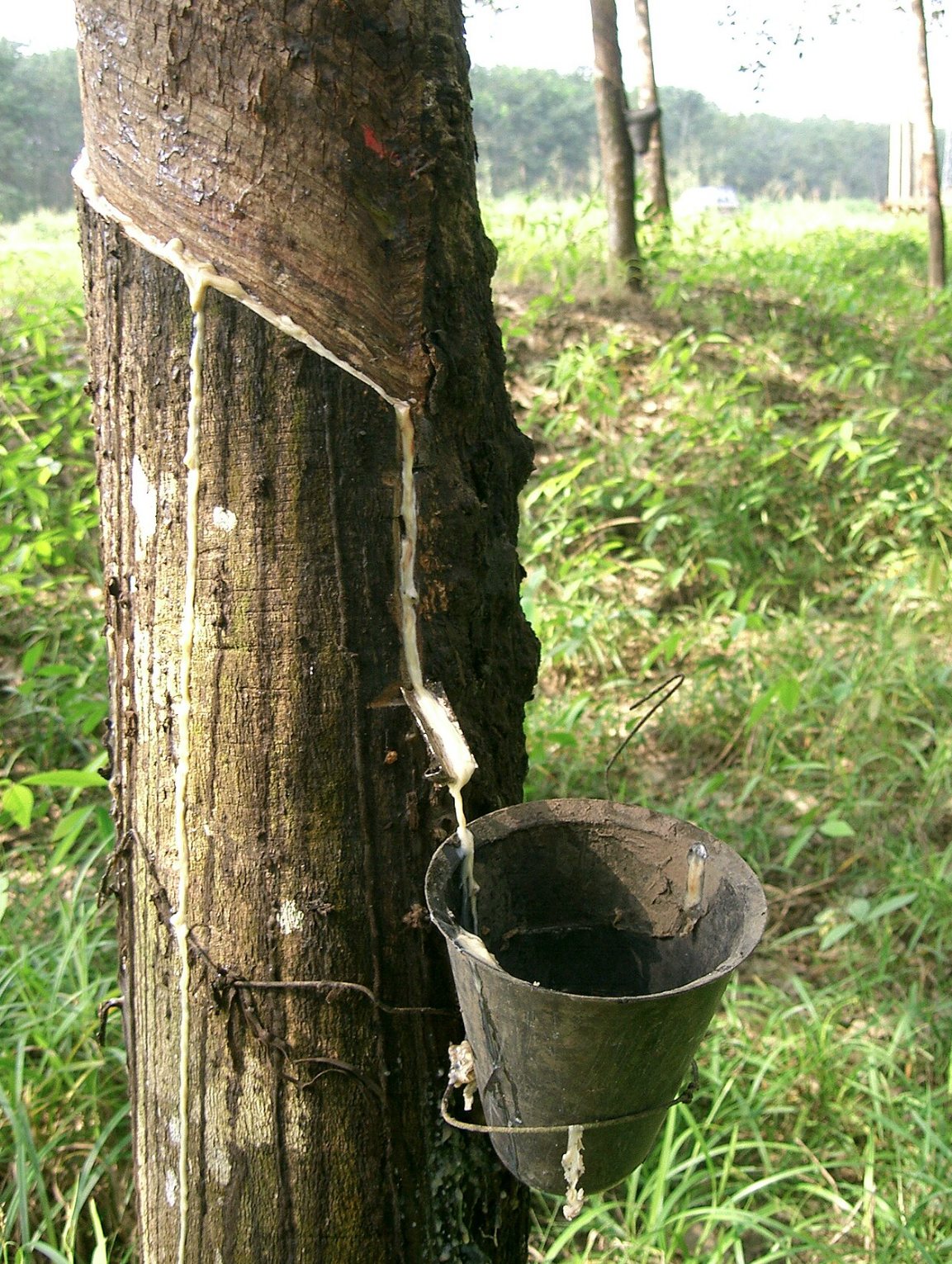
This became the economic foundation of terror. A free worker could refuse dangerous work, demand higher pay or leave the region. A forced laborer had no such option. In the Congo Free State, production was increased through quotas, hostage-taking and collective punishment. In Putumayo, Indigenous communities were trapped in a system of fabricated debts, while station managers received commissions based on the amount of rubber collected. The less they spent on food and goods for the workers, and the more rubber they extracted from them, the greater their own profits became. Cruelty was not a flaw in the business model. It was a method of cutting costs.
European and American consumers rarely saw this part of the supply chain. They saw a bicycle that moved more smoothly, a car that opened up new distances and a city that appeared to have stepped into the future. Between the elegant tire on the wheel and the man being flogged for failing to meet his quota stood traders, ships, stock exchanges and corporate reports. There were enough intermediaries to turn violence into an anonymous line item.
That was why Roger Casement’s reports were about more than distant colonial atrocities. They exposed what the modern world most wished to hide from itself: technological progress did not always defeat barbarism. Sometimes it merely moved barbarism far enough away that the consumer no longer had to look at it. The rubber that allowed cities to move was produced by depriving entire peoples of the possibility of escape.
Britain’s interest in the Congo was not entirely innocent. In the same documents, London condemned both the abuse of the population and Leopold’s commercial monopolies, which violated the principle of free trade. Human rights and open markets already occupied the same official file. Even so, Casement’s report provoked international outrage. Together with the British journalist and activist E. D. Morel, he helped build a movement that intensified the pressure on Leopold. In 1908, Belgium took control of the Congo from the king’s private hands, although the change of ownership did not bring colonial exploitation to an end.
Several years later, Casement was sent to the Putumayo region on the border between Peru and Colombia. There, the British-registered Peruvian Amazon Company exported rubber collected through the forced labor of Indigenous people. Workers were bound by debts they could never repay. Communities were starved, dispersed and physically destroyed. The company also employed overseers from the British Caribbean, giving London a legal reason to send in one of its consuls.
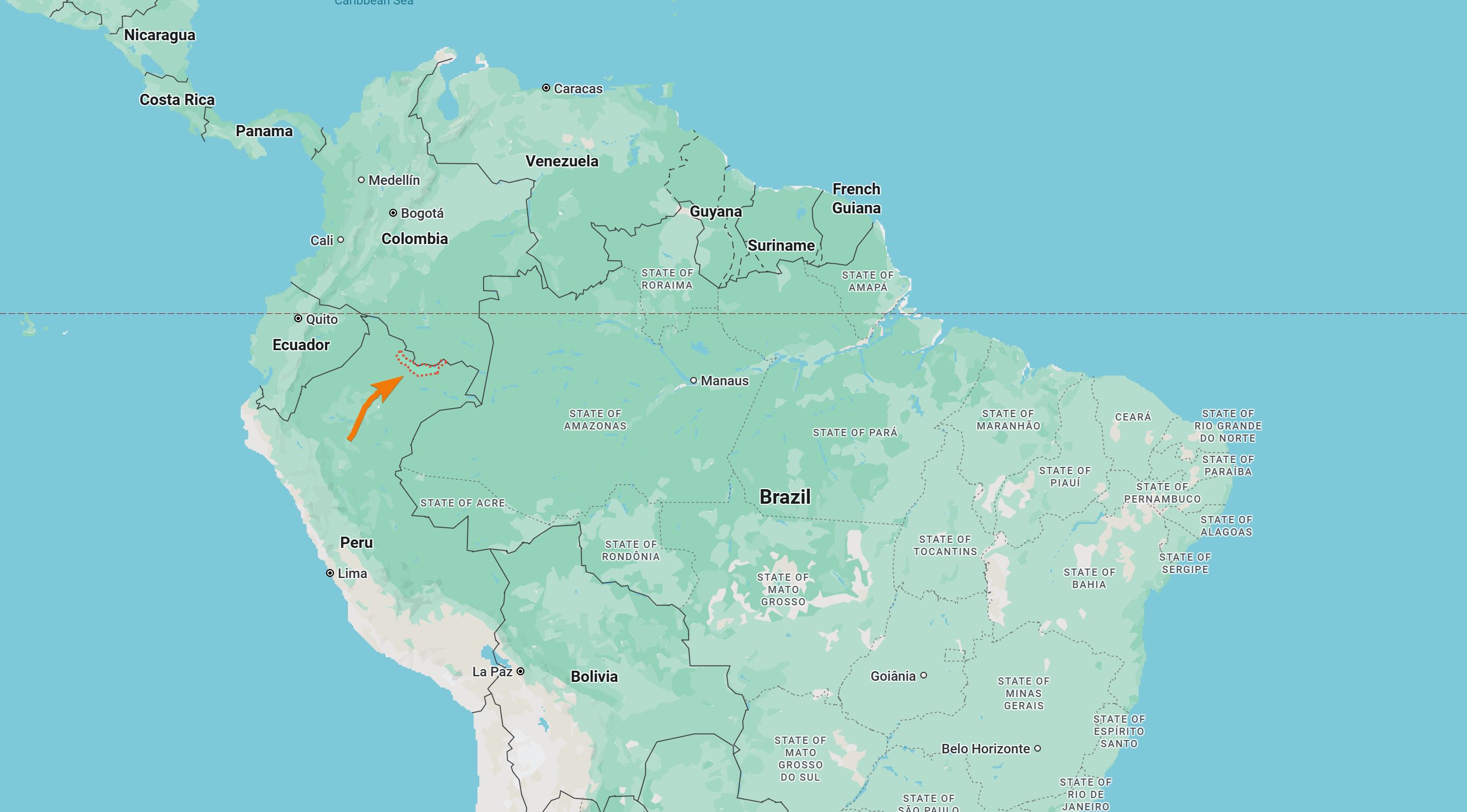
Casement traveled through the region in 1910 and 1911, collecting testimony from victims and perpetrators alike. His completed report was published in 1912 as a British parliamentary Blue Book. In the Congo, he could still believe that he had uncovered a pathological abuse of colonialism. Putumayo drove him toward a more dangerous conclusion: terror might not be a malfunction of the system, but the business model of extractive capitalism itself.
The Barbadians Who Opened the Gates of Hell in Putumayo
British diplomacy did not set out for Putumayo simply because Indigenous people were being flogged, starved and killed there. For years, their suffering had remained beyond London’s political field of vision. The decisive fact was far more administrative: among the company’s employees were men from Barbados, then a British colony. They were subjects of the Crown, which finally gave a British consul grounds to inspect a system that had previously been dismissed as an unpleasant South American affair.Around two hundred Barbadians were brought into the Amazonian interior in the early years of the century. Many believed they were leaving for ordinary, relatively well-paid work. Instead, they found themselves trapped in a network of debts, threats and the arbitrary power of company managers. Yet they were not merely victims. As armed overseers, they were expected to force members of Indigenous communities to collect rubber. Some took part in beatings and punishments, others witnessed killings, and nearly all of them knew enough to become dangerous to their employers.
Roger Casement interviewed thirty Barbadians. Their statements were not comforting confessions by innocent observers, but documents from the gray zone between coercion and complicity. The men who carried out the orders also described those who issued them. They spoke of impossible rubber quotas, the punishment of entire villages and managers who treated human life as expendable. These testimonies became one of the foundations of Casement’s official report.
Their status as British subjects also offered a measure of protection, although an extremely fragile one. Casement recorded that managers had tried to intimidate witnesses, and some of the Barbadians feared they would be killed if they spoke. He tried to get them out of Putumayo before the company could close the space his investigation had briefly opened. They had seen enough to be useful as witnesses. They had also seen too much to be safely sent home.
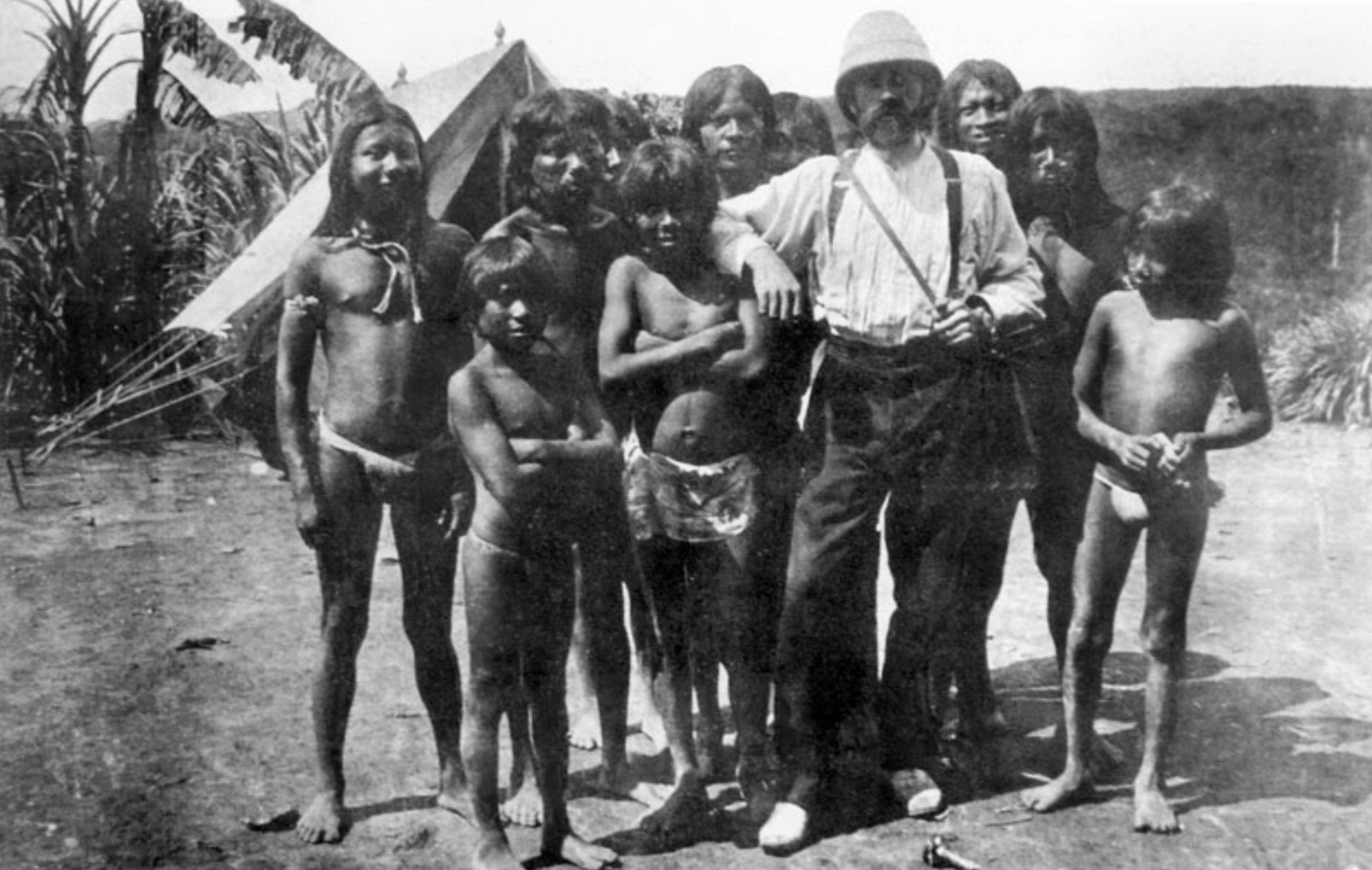
Casement made better use of that detail than London probably expected. He had been sent to investigate the treatment of British subjects and returned with an indictment of an entire economic order. The Barbadians opened the official doorway into Putumayo. Beyond it, Casement found not an isolated scandal but a well-organized hell with contracts, managers and shareholders in London.
Casement was knighted for his work in the Amazon. The Crown honored him while his moral criticism remained administratively disciplined and useful to the state. The problem began when he applied the same logic closer to home…
Casement had meanwhile been moving toward Irish nationalism. He joined the Gaelic League, studied the Irish language and increasingly saw British rule in Ireland as a colonial relationship that merely stood closer to London and dressed more respectably. In a letter to the Irish historian Alice Stopford Green, he wrote that in the lonely forests of the Congo, where he had found Leopold, he had also found himself as an "incorrigible Irishman." He was not claiming that Dublin and Putumayo were the same place. He had recognized something deeper: the assumption that one nation had the right to rule another because it supposedly understood that nation’s interests better.
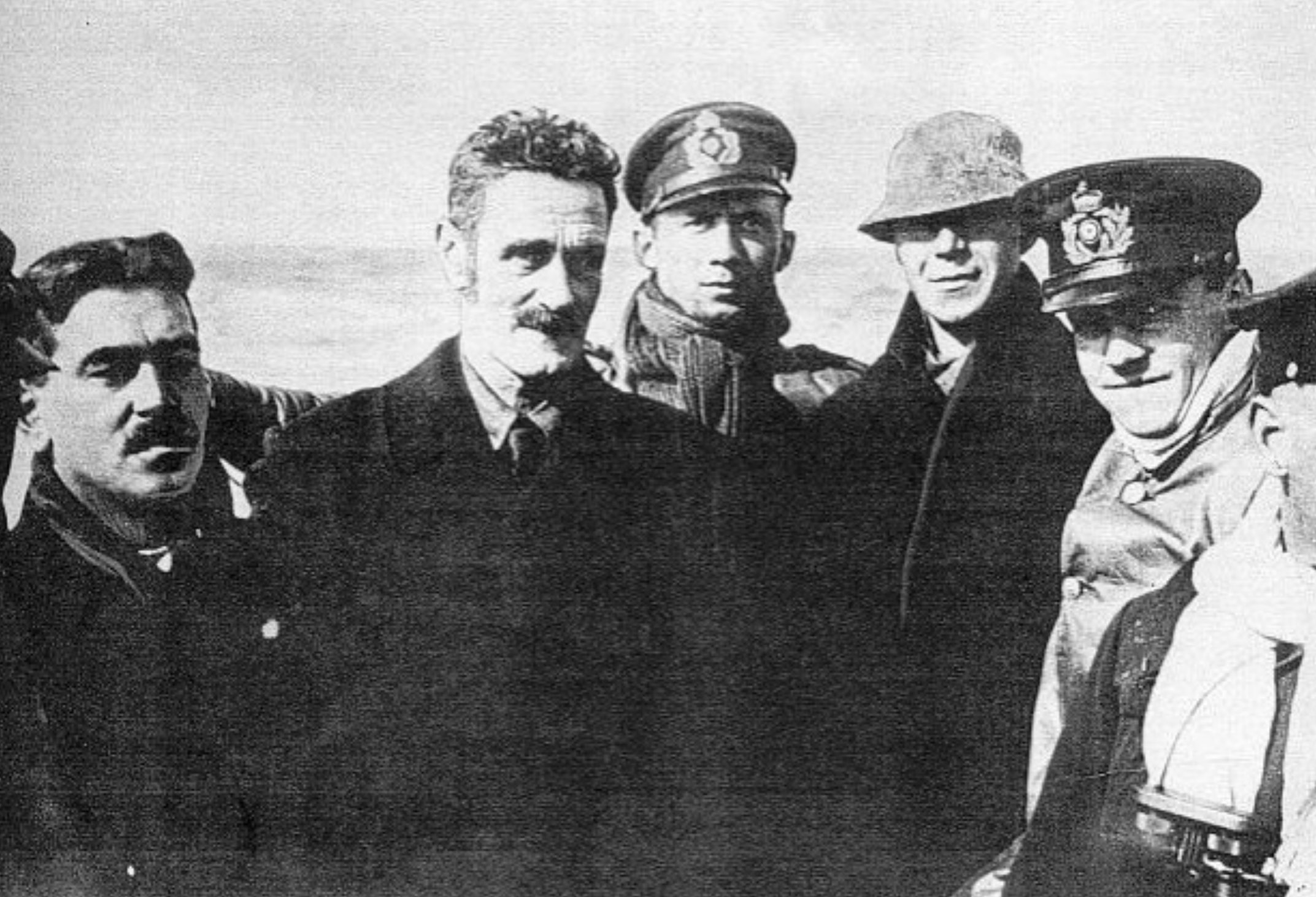
The First World War offered him an opportunity, but also a morally compromising ally. Casement traveled to Germany in 1914 in search of weapons, officers and political support for an Irish rebellion. He tried to establish an Irish Brigade among soldiers of the British Army who had been captured on the Western Front. Of more than 2,200 prisoners, only 56 men joined him. The brigade, as is often the case with revolutionary projects, barely grew beyond its name.
The Germans nevertheless agreed to send around 20,000 rifles. Casement believed this was nowhere near enough for a serious uprising and concluded that a rebellion without greater military support would end in a massacre. When he learned that the Easter Rising was being prepared, he decided to return to Ireland and try to stop it. This is one of the great ironies of his case: the man London portrayed as the instigator of the rebellion came home convinced that it had to be called off.
A German submarine landed him at Banna Strand in County Kerry on April 21, 1916. The Aud, the ship carrying the rifles, was intercepted by the British Navy and scuttled by its captain. Casement was found several hours later, exhausted and hiding among the remains of an old earthwork. He was taken to London. The Easter Rising began three days later, without the German weapons and without the warning Casement had tried to deliver to its leaders.
His trial was public and lasted four days. The prosecution relied on the Treason Act of 1351 (!), passed during the reign of King Edward III. The defense did not seriously dispute that Casement had aided Britain’s wartime enemy. It argued that nearly everything that could be described as treason had taken place in Germany, beyond the territory to which the medieval law applied.
This gave rise to the claim that Casement had been "hanged on a comma." The original Norman French text of the law contained no modern punctuation, and the way the judges divided its sentence allowed acts committed "elsewhere" to be classified as treason. That was not the whole legal story, nor was Casement’s defense particularly likely to succeed. But the image proved irresistible: when a state wants to hang a man, even grammar can become an instrument of sovereignty.
The jury returned a guilty verdict in less than an hour.
In court, Casement insisted that the English had no right to judge him for what he had done as an Irishman acting on behalf of Ireland. "I did not land in England. I landed in Ireland," he said. A petition for clemency was supported by the Irish playwright George Bernard Shaw, the British writer Arthur Conan Doyle and numerous other public figures. It was then that the so-called Black Diaries appeared, containing accounts of Casement’s homosexual relationships.
Their authenticity remained disputed for decades. Far less disputed is the fact that the British Home Office showed extracts from the diaries to influential people at the very moment when Casement’s clemency appeal was being considered. In a society where homosexuality was a criminal offense, there was no need to prove that Casement deserved to die. It was enough to turn him into a man whom respectable people would no longer defend in public. The state displayed a strikingly modern understanding of politics: sometimes it is more effective to destroy a reputation than to answer an argument.
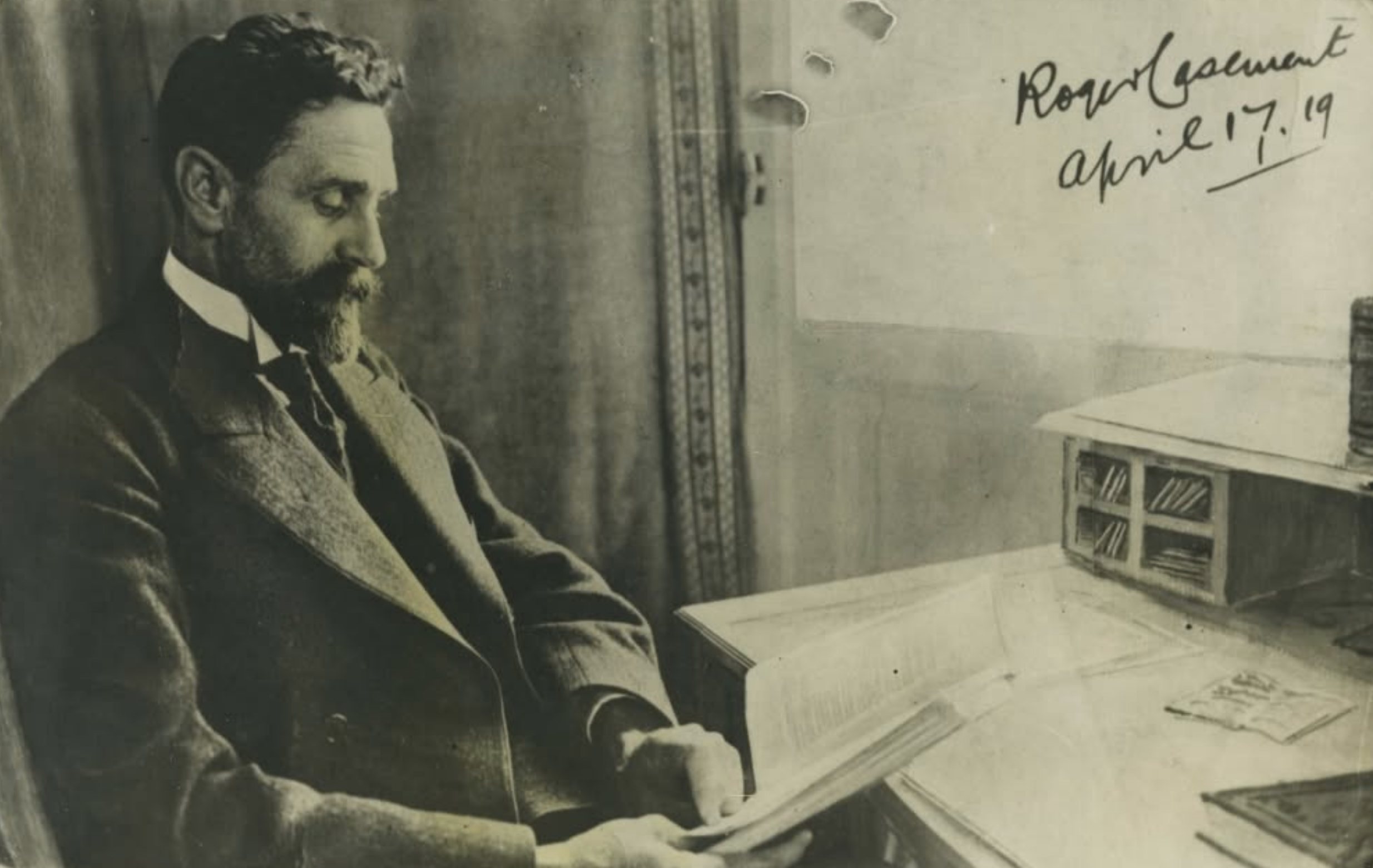
Roger Casement was hanged at Pentonville on August 3, 1916. Before his death, he was formally received into the Catholic Church, returning to the faith in which his mother had secretly had him baptized. His remains were not handed over to the Republic of Ireland until 1965, when he was buried with state honors at Glasnevin Cemetery in Dublin. His wish to rest beside Murlough Bay in County Antrim was never fulfilled.
Casement was neither a flawless saint nor an innocent bystander. He knowingly collaborated with Britain’s wartime enemy and attempted to organize an armed rebellion. Under British law, he was a traitor. Yet this is precisely where the question that makes his story larger than his trial emerges: is loyalty a virtue in itself, or does its moral value depend on the authority to which it is given?
The British Empire condemned him as a man who had changed sides. His life suggests something else. Roger Casement may simply have stopped changing his moral standard according to the flag flown by the perpetrator.
Sources
- Nli.ie Roger Casement https://www.nli.ie/1916/exhibition/en/content/rogercasement/
- Ucc.ie Roger Casement and Kerry in 1916 | University College Cork https://www.ucc.ie/en/theirishrevolution/collections/the-story-of-1916/chapter-4-the-uprising-itself/roger-casement-and-kerry-in-1916/
- Gutenberg.org The Project Gutenberg eBook of The Casement Report. https://www.gutenberg.org/files/50573/50573-h/50573-h.htm
- Academic.oup.com The Putumayo Atrocities https://academic.oup.com/edited-volume/61800/chapter/546433233
- The New Yorker The Devil and Mr. Casement https://www.newyorker.com/magazine/2010/04/26/the-devil-and-mr-casement
- Discovery.nationalarchives.gov.uk Diaries of Roger Casement https://discovery.nationalarchives.gov.uk/details/r/C9025
- Socialistworker.co.uk The queer and unusual life of Roger Casement https://socialistworker.co.uk/socialist-review-archive/queer-and-unusual-life-roger-casement/
- Anphoblacht.com Robert Monteith – landed at Banna Strand with Casement https://www.anphoblacht.com/contents/24921
Comments