
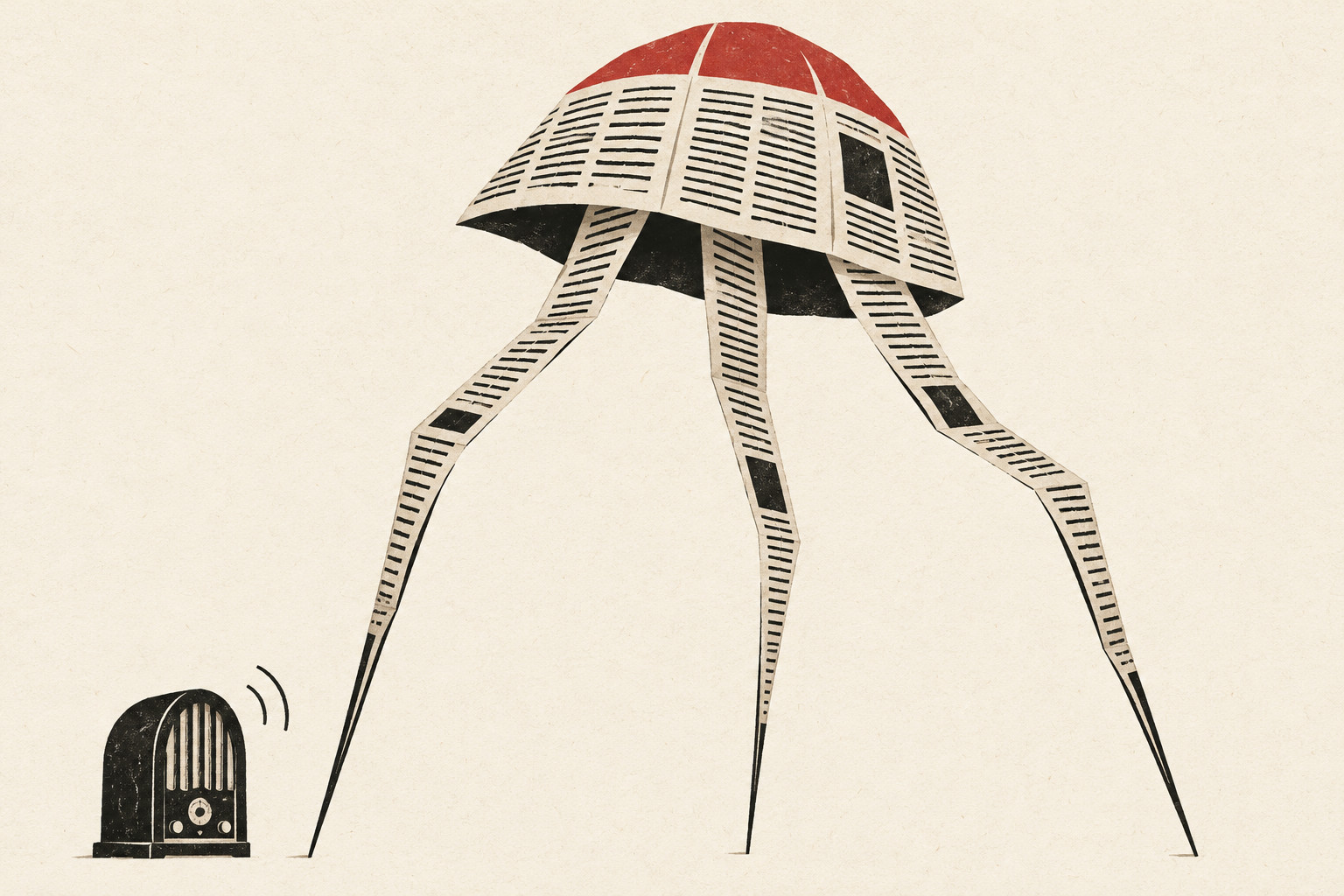
America, according to legend, came apart in less than an hour that night. Families fled their homes, cars clogged the roads, and churches filled with people convinced that Martians were burning New Jersey to the ground. A 23-year-old actor and director had supposedly proved that defeating a modern nation required no weapons. All it took was a microphone, a convincing voice, and an audience that regarded radio as a window onto reality.
It is an almost perfect story about the power of mass media. And that is precisely why we should be suspicious of it. Some listeners really were frightened, telephone switchboards were overwhelmed with calls, and there were several documented cases of people fleeing. But there is no convincing evidence that the entire country succumbed to mass panic. The greatest deception did not take place that night before the microphones at CBS. It happened the following morning beneath the printing presses of America’s newspapers.
How to manufacture a catastrophe on air
The broadcast began at eight o’clock on the evening of Sunday, October 30, 1938. CBS duly announced The Mercury Theatre on the Air and its adaptation of The War of the Worlds, the novel by English writer H. G. Wells. Orson Welles then delivered the book’s opening before handing listeners over to the dreary dance music of Ramón Raquello and his orchestra. The music was soon interrupted by a bulletin reporting strange explosions on Mars. The next interruption announced that an object had fallen on a farm in Grovers Mill. Then a creature emerged from the cylinder, a heat ray flashed, and the reporter’s voice disappeared amid screams.
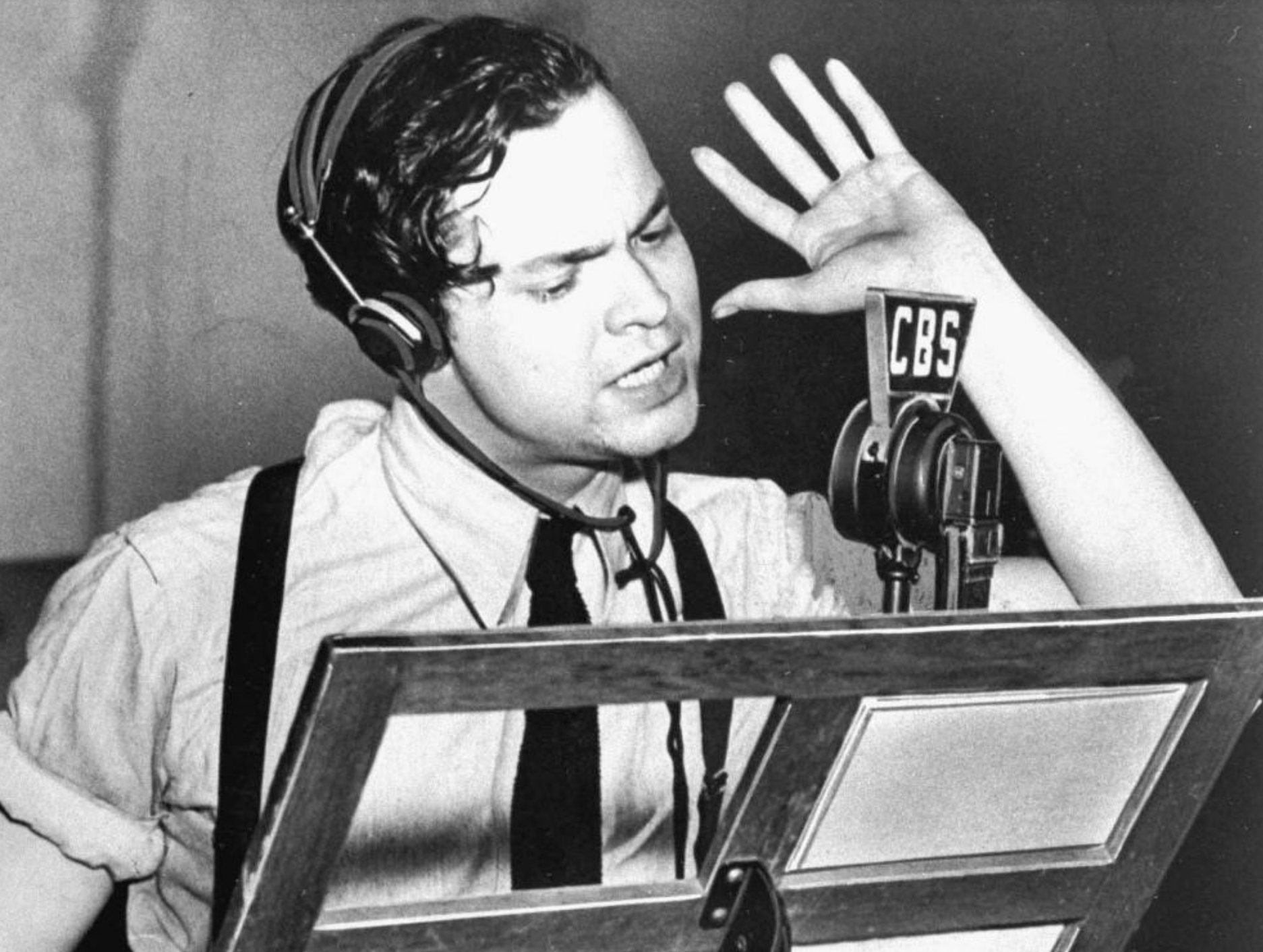
It was an extraordinarily skillful recreation of the way a catastrophe unfolds in the news, first as a minor curiosity, then as an unconfirmed report, and finally as an event no one can control. Actor Frank Readick studied the famous broadcast of the Hindenburg disaster so that his reporter would sound like a man describing horror as it unfolded before his eyes. Between the dramatic reports, Welles returned to innocuous music, creating the illusion that far more time had passed than actually had. Listeners who missed the beginning had to wait roughly forty minutes for the next clear announcement that they were hearing a dramatization.
The timing mattered as well. The Munich Crisis had ended only a month earlier, after days in which radio programs were repeatedly interrupted by urgent reports about Adolf Hitler and the possibility of war in Europe. Some frightened Americans did not even realize that the supposed invaders were from Mars. Working from incomplete information, they concluded that the Germans were attacking, that bombs were falling, or that poison gas had been released.

The problem with nationwide hysteria: almost nobody was listening
Yet the story of nationwide hysteria has one inconvenient flaw. Most of the nation was not listening to Welles. His program was competing with the enormously popular Chase and Sanborn Hour, in which ventriloquist Edgar Bergen conversed with his dummy, Charlie McCarthy. It was the curious radio triumph of a man whose principal talent no one could see. In a telephone survey of 5,000 households conducted that evening, only about two percent of respondents said they were listening to Welles’s dramatization. Most of them also knew it was fiction.
That does not mean nothing happened. John and Estelle Paultz turned on the radio after 8:30 and heard reports of poison gas spreading through Newark, where Estelle’s sister lived with her children. They spent their last six dollars on train tickets and fled Manhattan. Only after alarming their fellow passengers did they find the evening’s radio schedule in a newspaper. John then asked his wife who Orson Welles was. They ended up in New Haven with 56 cents, far from home and even farther from the Martians who had never invaded.
Such incidents were real, but rare. A far more typical response was to call the police, a relative, or a newspaper office. That distinction matters. Someone who calls the police to check whether a report is true is not necessarily hysterical. He may be doing exactly what a reasonable person ought to do. Rumors then spread by telephone and from door to door, creating small, localized pockets of fear. Some people, in other words, were not convinced by Welles but by the anxious voice of a neighbor or family member they trusted.
Newspapers discover the panic the streets never saw
By the following morning, all such nuance had vanished. The New York Daily News reported that the fake radio war had caused "terror throughout the United States." The San Francisco Chronicle declared that "panic swept the nation." The case of Ben Gross, radio editor of the Daily News, is particularly revealing. As he drove to the CBS studio during the broadcast, he saw no fleeing crowds or traffic chaos, only nearly deserted Manhattan streets. Yet a few hours later, his newspaper was describing a national catastrophe on its front page.
Newspapers had several reasons to embrace the story. Radio was taking away their advertisers and threatening their position as the principal intermediary between events and the public. Welles’s broadcast offered convenient proof that the new medium was "not yet responsible enough" to be entrusted with informing the nation. There is, however, no solid evidence of a coordinated newspaper conspiracy. The likely explanation is more mundane. Frightened listeners called newspaper offices, and journalists mistook the feverish atmosphere on their own switchboards for conditions across the entire country. A story about Martians who had "fooled America" also sold more copies than one about a handful of confused New Jersey residents.
When an estimate becomes fact and fact becomes legend
Two years later, the myth received an academic seal of approval. Princeton psychologist Hadley Cantril published The Invasion from Mars, a study that produced an estimate of roughly 1.2 million people frightened or disturbed by the broadcast. The precise figure sounded scientific, but it rested on a deeply flawed method. Cantril’s team conducted in-depth interviews with only 135 people, around a hundred of whom had been selected precisely because they were already known to have been upset by the program. In later retellings, fear, excitement, and belief in a real invasion gradually merged into a single word: panic.
More recent research into nearly 2,000 surviving letters sent to Welles and the Federal Communications Commission paints a much calmer picture. Roughly a quarter of the letters mention fear or panic, but barely a dozen describe fleeing home or taking similarly concrete action. Most of Welles’s correspondents actually defended him. The letters are hardly a perfect survey of the American population, but neither do they resemble testimony from a country that had just suffered a collective collapse of reason.
The myth, however, benefited almost everyone. Newspapers got spectacular headlines, CBS got publicity, and Welles acquired a reputation as a dangerous genius capable of moving a nation with nothing but his voice. A Campbell Soup sponsorship followed, then a contract with the Hollywood studio RKO, and eventually Citizen Kane. Welles initially played down the extent of the panic, but in later decades he happily retold the story in ever more elaborate versions. A man who understood the power of myth so well had little reason to dismantle his own.
Welles’s apology as a second performance
The morning after the broadcast, unshaven and almost sleepless, Welles faced the press. He read a prepared statement, expressed regret for the confusion, and insisted that he had expected nothing unusual. Asked whether he had anticipated the fear the program might cause, he replied, "Definitely not." When a reporter asked whether the script should have been toned down, Welles answered with almost theatrical precision: "You don’t play murder in soft words."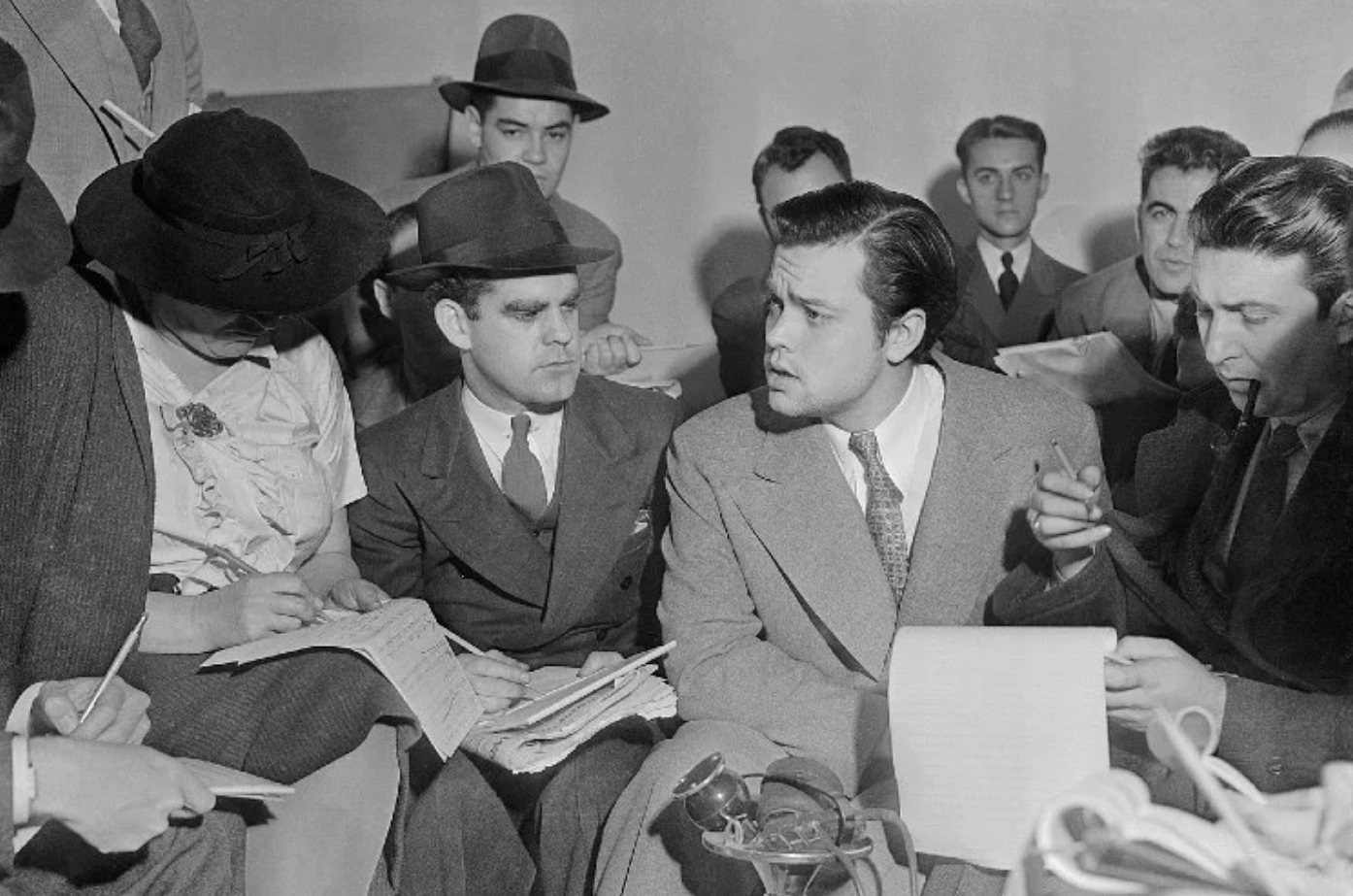
The press conference did not end the story. It gave the story its protagonist. Before researchers could establish how many people had even heard the broadcast, the face of the 23-year-old Welles had already become visual proof of the "panic." From the very beginning, the myth of the night radio fooled America had a second performance of its own, staged before the cameras the following morning.
The fake news that became accepted history
The War of the Worlds therefore remains a great story about fake news, just not the one we are accustomed to hearing. It is not about a passive nation hypnotized by a single radio broadcast. It is about a handful of genuine cases of fear that, stripped of scale and context, were transformed into the supposed behavior of millions.
In Welles’s story, the Martians were eventually killed by earthly bacteria. The myth of mass panic proved more resilient. Every new medium has found it a new host.
When the same idea really did end in death
Eleven years after Welles’s broadcast, Radio Quito in Ecuador transplanted the same idea into its own local geography. The 1949 program interrupted its music with fake reports of an unidentified object and monsters advancing on the capital. Familiar place names and the voices of well-known radio announcers lent the story credibility, while some police officers and firefighters headed toward the supposed site of the attack.When the station announced that the broadcast had been a dramatization, fear turned to fury. A crowd gathered outside the building that housed Radio Quito and the newspaper El Comercio, pelted it with stones, and then set it on fire. People were trapped inside. At least seven died in the blaze and the ensuing disorder, although some contemporary reports gave a higher toll.
It was a dark reversal of the American legend. In Quito, the deaths were caused not by an imaginary attack from Mars but by the human reaction once the deception was exposed. There, the fake breaking-news format really did produce a catastrophe, just not the one the scriptwriter had written.
Sources
- Library of Congress Page from the Past: War of the Worlds https://blogs.loc.gov/loc/2016/10/lcm-page-from-the-past-war-of-the-worlds/
- U.S. National Archives “Jitterbugs” and “Crack-pots”: Letters to the FCC about the “War of the Worlds” Broadcast https://www.archives.gov/publications/prologue/2003/fall/war-of-worlds.html
- Vanity Fair Orson Welles and History’s First Viral-Media Event https://www.vanityfair.com/culture/2015/04/broadcast-hysteria-orson-welles-war-of-the-worlds
- PBS More Words About 'War of the Worlds' https://www.pbs.org/ombudsman/2013/11/more_words_about_war_of_the_worlds_1.html
- National Endowment for the Humanities The Fake News of Orson Welles: The War of the Worlds at 80 https://www.neh.gov/article/fake-news-orson-welles-war-worlds-80
- Wellesnet ‘The War of the Worlds’ radio script from October 30, 1938 https://wellesnet.com/the-war-of-the-worlds-radio-script/
- Wellesnet The aftermath: Orson Welles “The War of the Worlds” Halloween press conference, 1938 https://wellesnet.com/the-aftermath-orson-welles-the-war-of-the-worlds-halloween-press-conference-1938/
- El Comercio ‘Y con ustedes... la radio en Quito’ https://www.elcomercio.com/actualidad/y-ustedes-radio-quito/
Comments