
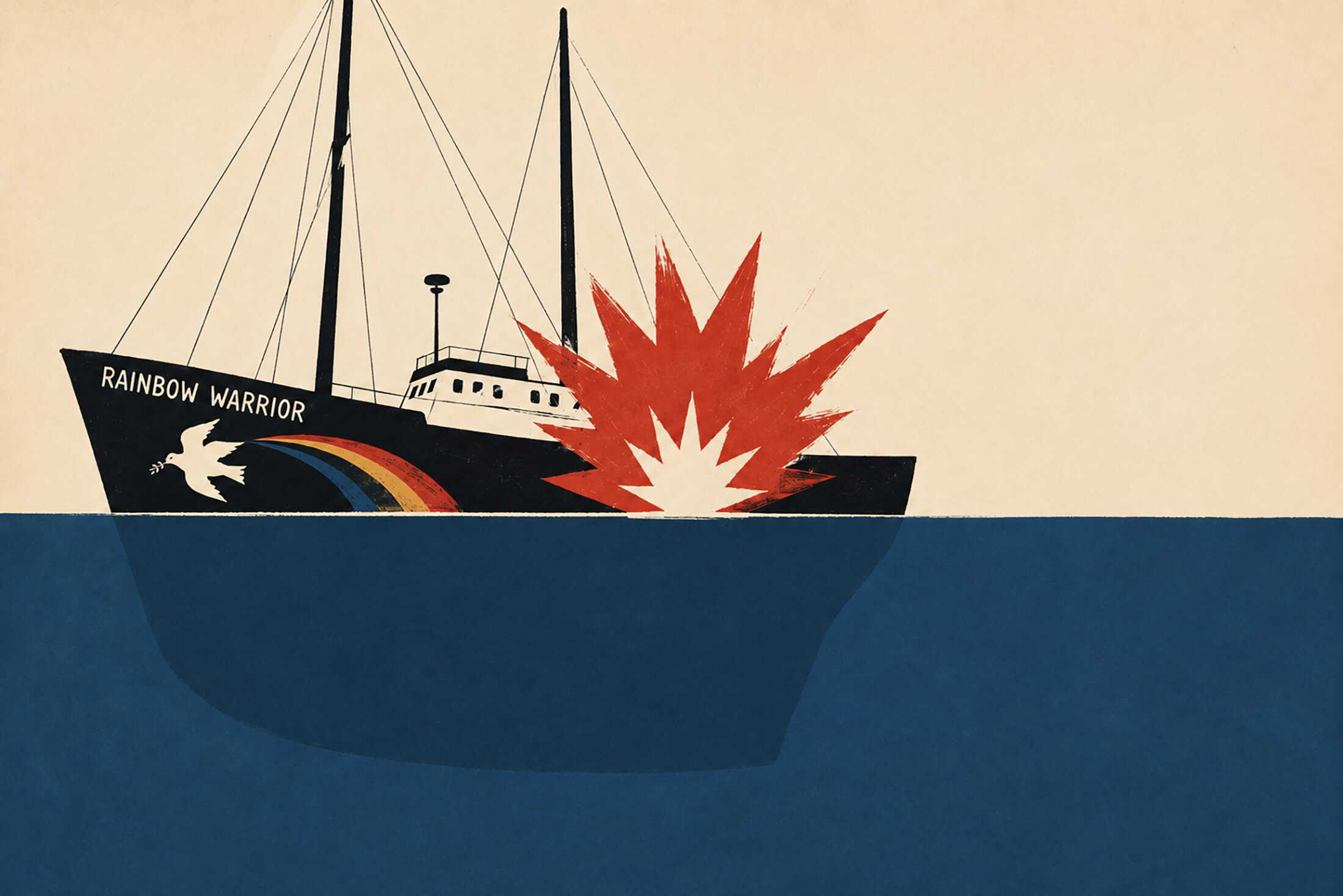
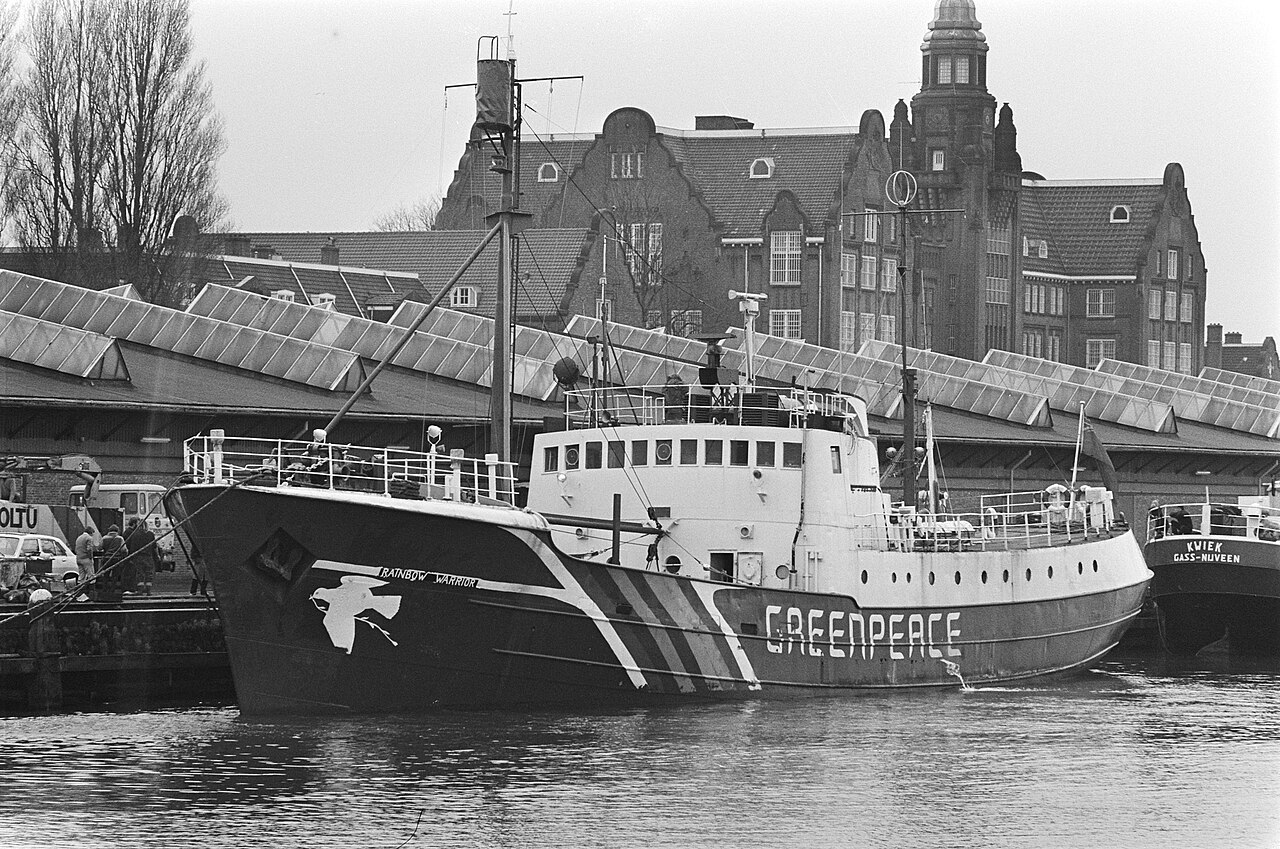
There are state crimes that some would say happen primarily, or even exclusively, under dictatorships. People find it harder to place them inside a liberal democracy with an Enlightenment tradition, polished diplomacy, and a president in the Élysée Palace who called himself a socialist. And yet, on the night of July 10, 1985, French intelligence agents sank Greenpeace’s ship Rainbow Warrior in Auckland, in the harbor of a friendly country. The target was a vessel carrying activists who were preparing to sail toward France’s nuclear testing site in the Pacific.
The operation had a name so bizarre it sounds as if it had been invented by a hostile screenwriter: Opération Satanique. Two explosive devices were attached to the ship’s hull, below the waterline. The first tore open a hole. The second killed Fernando Pereira, a Portuguese-Dutch photographer who had gone back to his cabin to retrieve his equipment. A state that likes to present itself as a symbol of civilization showed another face that night — the instinct for force when propaganda is no longer enough.
To understand why Paris was willing to risk an international scandal over a single ship, one has to look far beyond Europe, to Moruroa Atoll in French Polynesia. It was there, beginning in the 1960s, that France built its nuclear status, part of a national myth of strategic independence after the Second World War.
The nuclear bomb was not just a weapon. It was proof that France was not merely America’s junior partner. It was, as great powers like to think of themselves, “sovereignty” — and no one was supposed to ask about the cost or the consequences.
Between 1966 and 1996, France carried out as many as 179 nuclear tests at Moruroa and another 14 at Fangataufa. The consequences of those tests in the Pacific remained a political and environmental disaster long after the lifespan of any single government.
The Man Who Went Back for His Photographs
Fernando Pereira was never meant to become a casualty of great-power geopolitics. He was a photographer, born in Chaves, Portugal, a man who had left his country at a time when Portugal was still trying to hold on to its colonial wars in Africa. In the Netherlands, he built a life, a family and a profession. On the Rainbow Warrior, he did not carry a weapon. He carried a camera. That, after all, was his weapon.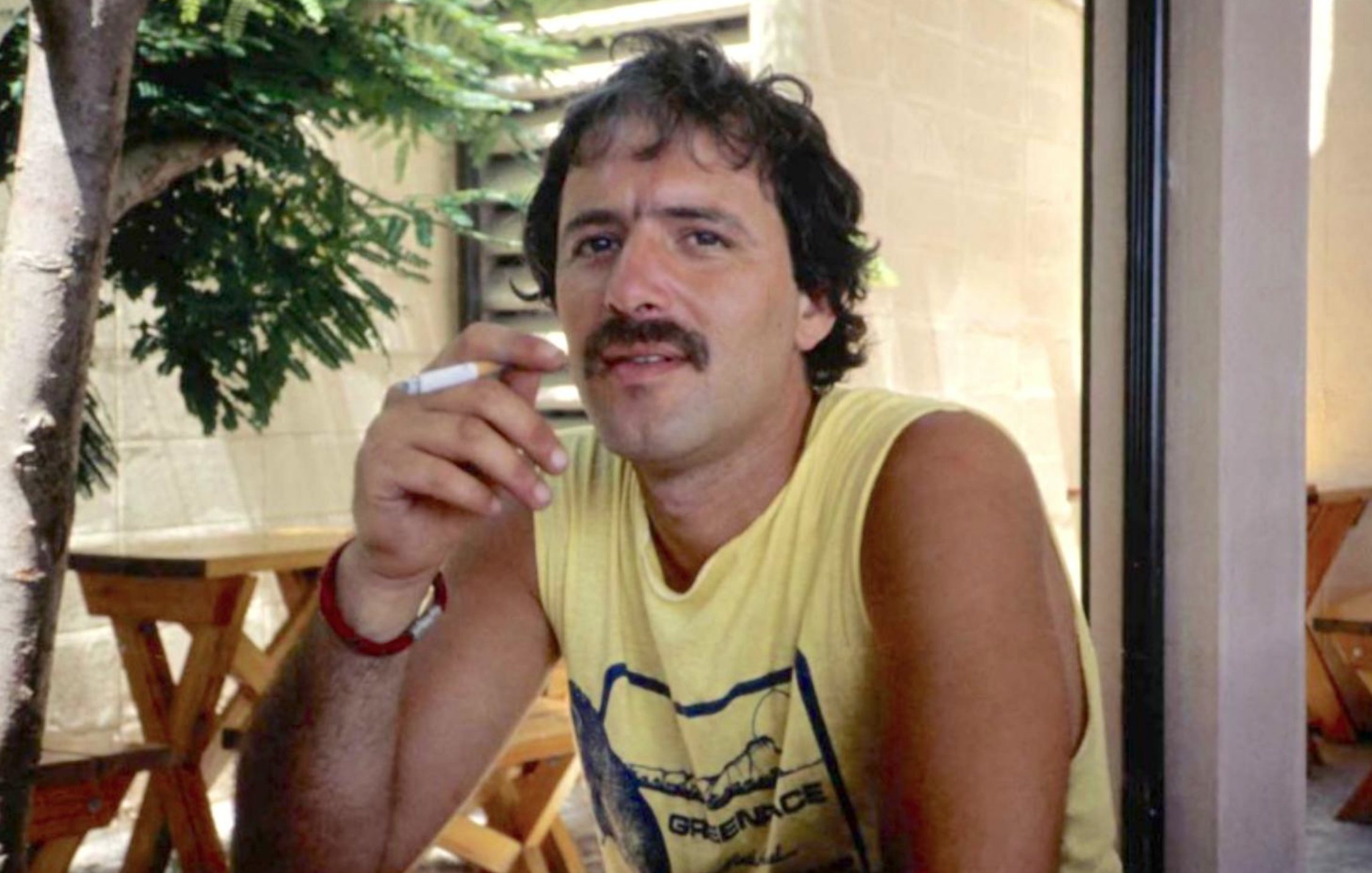
Then the second explosion went off. It was meant to finish sinking the ship. Pereira was trapped below deck and drowned. He was 35 years old. He left behind two children, Marelle and Paul.
The Rainbow Warrior had not come to the Pacific as a romantic backdrop for activists with banners. In 1985, the ship was taking part in the so-called Pacific Peace Voyage. Before arriving in New Zealand, it had helped relocate residents of Rongelap Atoll in the Marshall Islands, who had lived for decades with the effects of radioactive contamination following the American nuclear test at Bikini Atoll in 1954. After that, it was supposed to lead a flotilla from Auckland toward Moruroa. In other words, the ship “threatened” France with the very things states with dirty projects fear most — cameras, witnesses and symbolism.
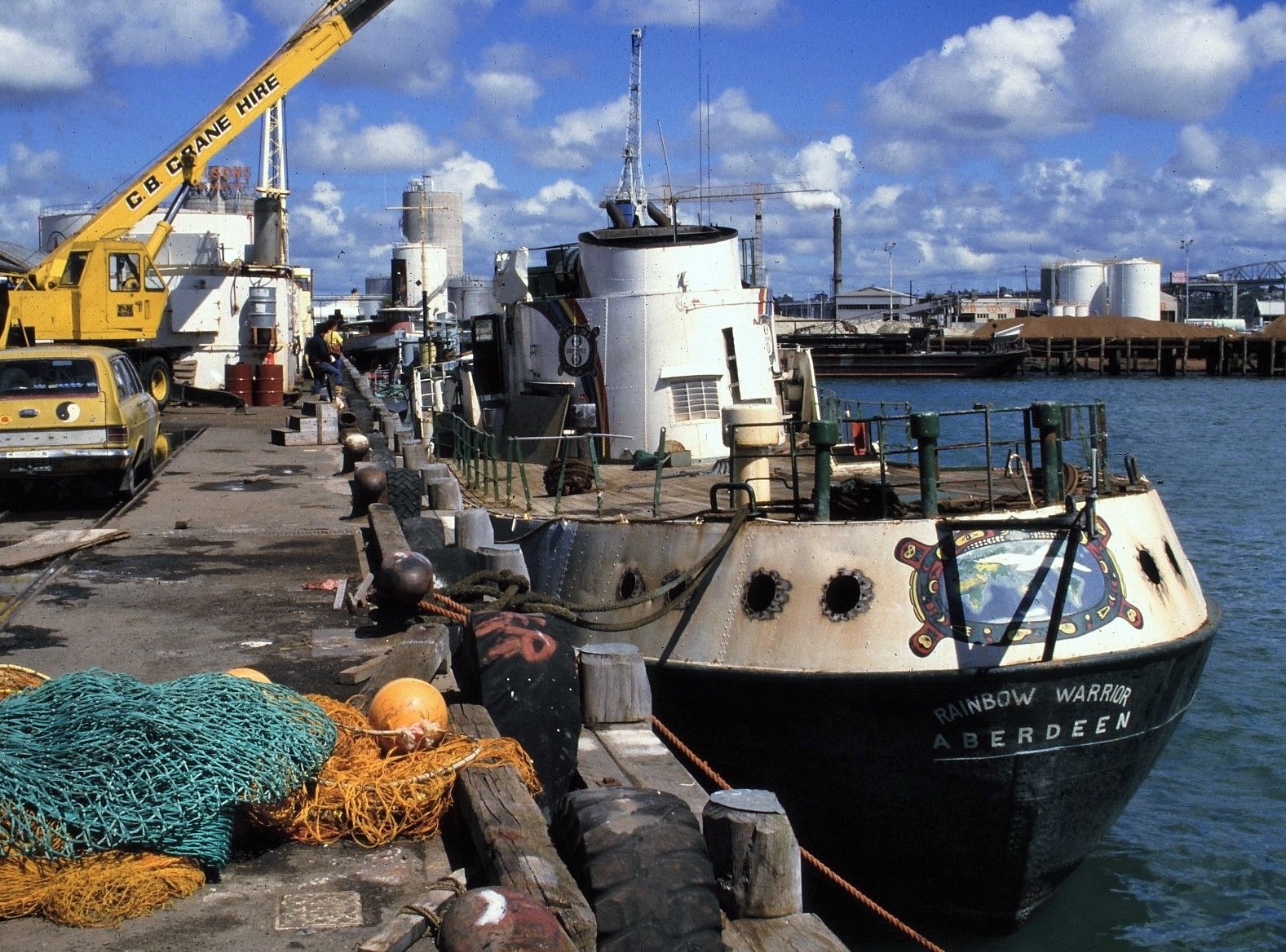
The evening before the sinking, in a final twist of irony, there had been a celebration on board. The crew and guests were marking the birthday of Steve Sawyer, the American activist and one of Greenpeace’s leading figures. The cake was decorated with a rainbow made of jelly sweets.
The Spy Among the Activists
Before divers approached the ship with explosives, the French state sent someone much quieter. Christine Huguette Cabon, an agent of the French intelligence service DGSE, arrived in Auckland under the name Frédérique Bonlieu and infiltrated the Greenpeace office. She presented herself as someone “interested in the environment” — precisely the kind of person who would not seem suspicious in such a place.Her job was not dramatic in the cinematic sense. She did not have to carry a gun, leap through windows or lead chases through nighttime Auckland. She had to do what intelligence services usually do when they are truly dangerous — collect schedules, monitor communications, map people, habits and vulnerabilities. There is something colder in all of that than in the explosion itself. The bomb lasted only a few seconds. The preparation lasted weeks.
Cabon arrived in April 1985 and left New Zealand in late May, more than a month before the attack.
While meetings were later being held inside the Rainbow Warrior about the voyage to Moruroa, French combat divers approached the ship from the direction of Stanley Point in an inflatable boat and placed the mines.
New Zealand was not a random stage for this operation. By the early 1980s, the country was already becoming a symbol of anti-nuclear resistance in the Western world. It opposed French testing at Moruroa, but also the American practice of “neither confirming nor denying” whether a warship was carrying nuclear weapons. After Wellington refused entry to the American destroyer USS Buchanan because Washington would not answer that question, New Zealand understood that moral consistency in international relations often comes with very practical isolation.
An Apology After Thirty Years
Jean-Luc Kister remained silent for three decades. He was one of the French operatives who, on the night of July 10, 1985, helped plant the mines on the Rainbow Warrior. Then, in 2015, as a retired colonel, he appeared before cameras and did what states often do only — and even then, only perhaps — after history has already delivered its verdict. He apologized.His apology could not change what had happened in Auckland Harbour. Fernando Pereira could not be brought back, and the French Republic could not erase the fact that it had sent a secret service and explosives against environmental activists. But Kister’s statement that he carried the death of an innocent man on his conscience had weight precisely because it came from the inside, from a man who had been part of the mechanism rather than one of its outside critics.
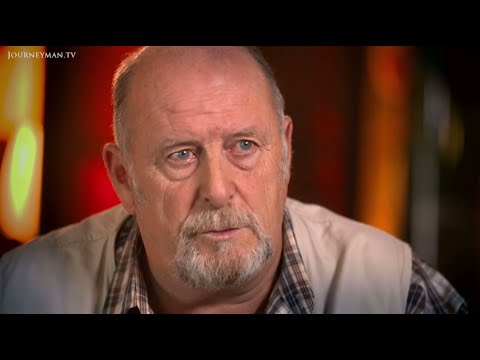
Perhaps the most revealing part of the apology was also the oldest excuse: he said they “had to obey orders because they were soldiers.” The whole discomfort of modern states fits inside that sentence. A system can produce an operation, cover its tracks, negotiate punishment diplomatically and, decades later, leave an individual to voice remorse alone. Conscience, it seems, is rarely a collective institution...
France at first denied responsibility for the attack on the ship. It was the usual opening act of every covert operation once it is exposed — official outrage at something that had been unofficially ordered. But the New Zealand police had both luck and persistence on their side. One clue was the van used by the French agents. Two members of a local boating club saw a man in a wetsuit pulling out an inflatable dinghy, wrote down the vehicle’s registration number and, without knowing it, opened the door to one of the most embarrassing investigations in the history of French diplomacy. Alain Mafart, a French major, and Dominique Prieur, a French captain, were arrested after posing as a married couple.
In November 1985, Mafart and Prieur pleaded guilty to manslaughter and the intentional damage of a ship with explosives. They were each sentenced to ten years in prison.
But that is where the second part of the story begins — perhaps even more instructive, and more shameful. France used diplomatic and trade pressure, including the issue of New Zealand’s access to the European market. After mediation by United Nations Secretary-General Javier Pérez de Cuéllar, France agreed to issue an apology and pay compensation, while the agents were transferred to a French military facility on Hao Atoll. They did not stay there long. By 1988, both had returned to France.
French Prime Minister Laurent Fabius eventually admitted in September 1985 that the ship had been sunk by agents of the DGSE, France’s foreign intelligence service, and that they had acted under orders. Defence Minister Charles Hernu resigned, and the head of the DGSE, Admiral Pierre Lacoste, was dismissed. The cost of the operation was not only a dead man and a sunken ship, but the exposure of a state that, in the name of “higher interests,” had been willing to use violence in the harbor of a friendly country.
The lesson of the Rainbow Warrior matters. New Zealand police investigated the case, the courts convicted the agents, and international pressure forced France to admit responsibility. But the lesson is also that “model democracies,” or those that wish to present themselves as such, can become, let us put it this way, surprisingly creative in evading their own principles once they declare their strategic interests sacred. Nuclear power, the colonial Pacific and environmentalism are not separate themes here. They are the same story, simply told from different decks.
In the end, the Rainbow Warrior became exactly what France had wanted to prevent — a global symbol. The ship sank, but the story surfaced. The secret operation succeeded technically and failed historically. France stopped one ship and, in doing so, revealed far more about itself than it ever would have if it had left it alone.
Sources
- Greenpeace.org.au The investigation of the Rainbow Warrior bombing https://www.greenpeace.org.au/learn/rainbow-warrior-bombing-investigation/
- Le Monde Affaire du Rainbow Warrior : Les auteurs du sabotage du navire de Greenpeace auraient bien bénéficié d'un feu vert politique https://www.lemonde.fr/archives/article/1985/09/25/les-auteurs-du-sabotage-du-rainbow-warrior-auraient-bien-beneficie-d-un-feu-vert-politique_2740696_1819218.html
- Greenpeace.org Rainbow Warrior bombing educational resources https://www.greenpeace.org/aotearoa/about/our-history/bombing-of-the-rainbow-warrior/the-bombing-of-the-rainbow-warrior-fact-file/
- Nzhistory.govt.nz Rainbow Warrior sunk by French secret agents https://nzhistory.govt.nz/rainbow-warrior-sunk-in-auckland
- Legal.un.org RECUEIL DES SENTENCES ARBITRALES https://legal.un.org/riaa/cases/vol_xix/199-221.pdf
- Ny.fes.de Fallout on Countries Downwind from French Pacific Nuclear Weapons Testing https://ny.fes.de/fileadmin/user_upload/Pacific-Downwind-PosObs-Country-Report-12-2h0qcbp.pdf
Comments