
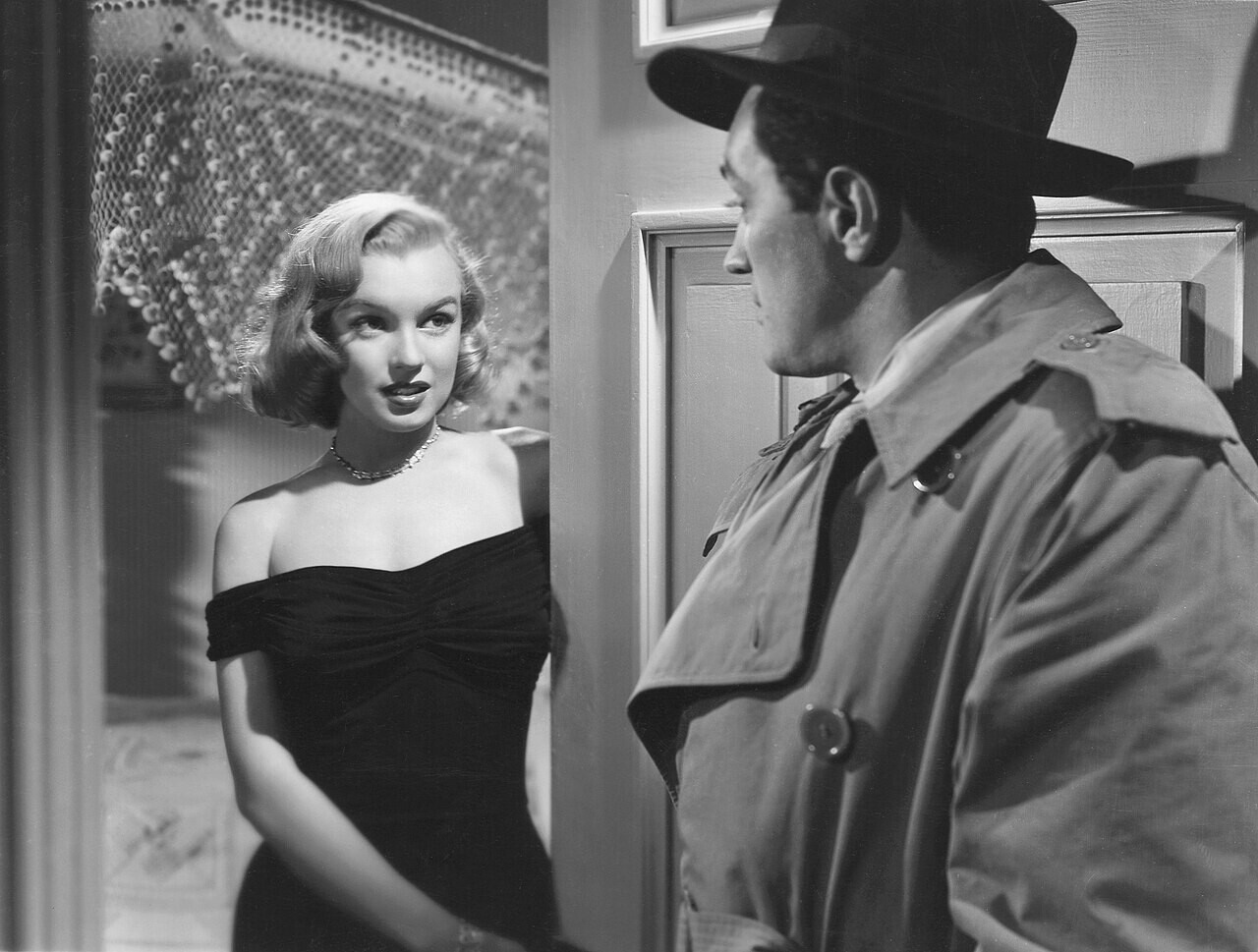
In the early hours of August 5, 1962, Marilyn Monroe was found dead in the bedroom of the Brentwood home she had recently purchased. Bottles of medication stood on her nightstand, and the telephone receiver was still in her hand. By dawn, reporters and photographers had already gathered outside. The industry that had taught her how to become an image wasted no time turning her death into a spectacle as well.
It is easiest, therefore, to remember her as the tragic blonde destroyed by fame. It is almost as easy to turn her death into an endless conspiracy involving presidents, intelligence agencies and the Mafia. Both stories offer the same comforting escape: they spare us the more troubling question. What if Marilyn Monroe was not merely a woman trapped inside someone else’s fantasy, but also an extraordinarily gifted creator of her own persona who discovered too late that she would never fully own it?
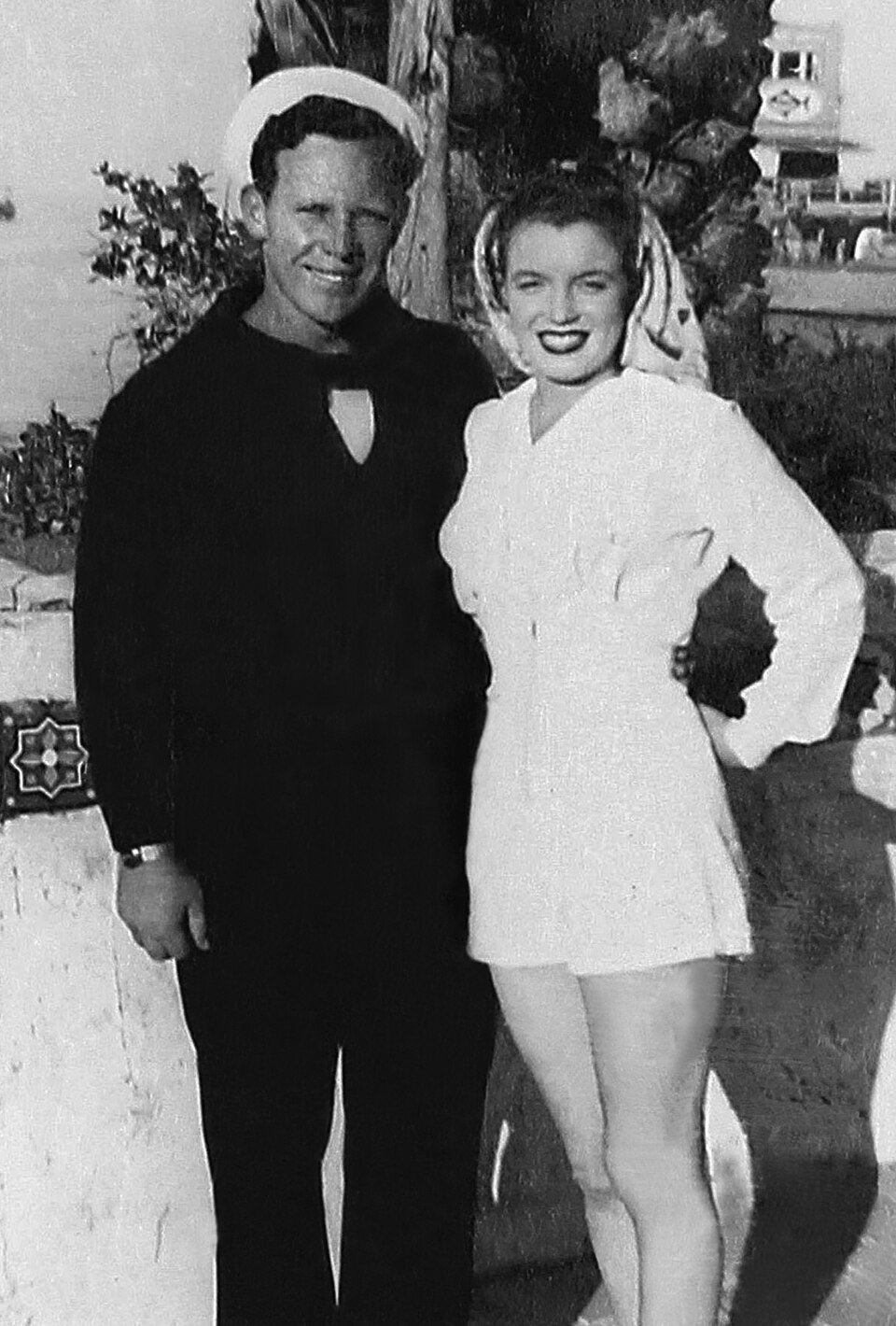
She was born Norma Jeane Mortenson in 1926. Her mother spent years in psychiatric institutions, and Norma Jeane’s childhood was divided between foster homes and an orphanage. At just sixteen, she married partly to avoid being returned to the care system. During the Second World War, she worked in an aircraft-parts factory, where she was photographed by David Conover, a military photographer assigned to document women working in wartime industry. Those photographs led to a modelling career and, eventually, a contract with 20th Century Fox.
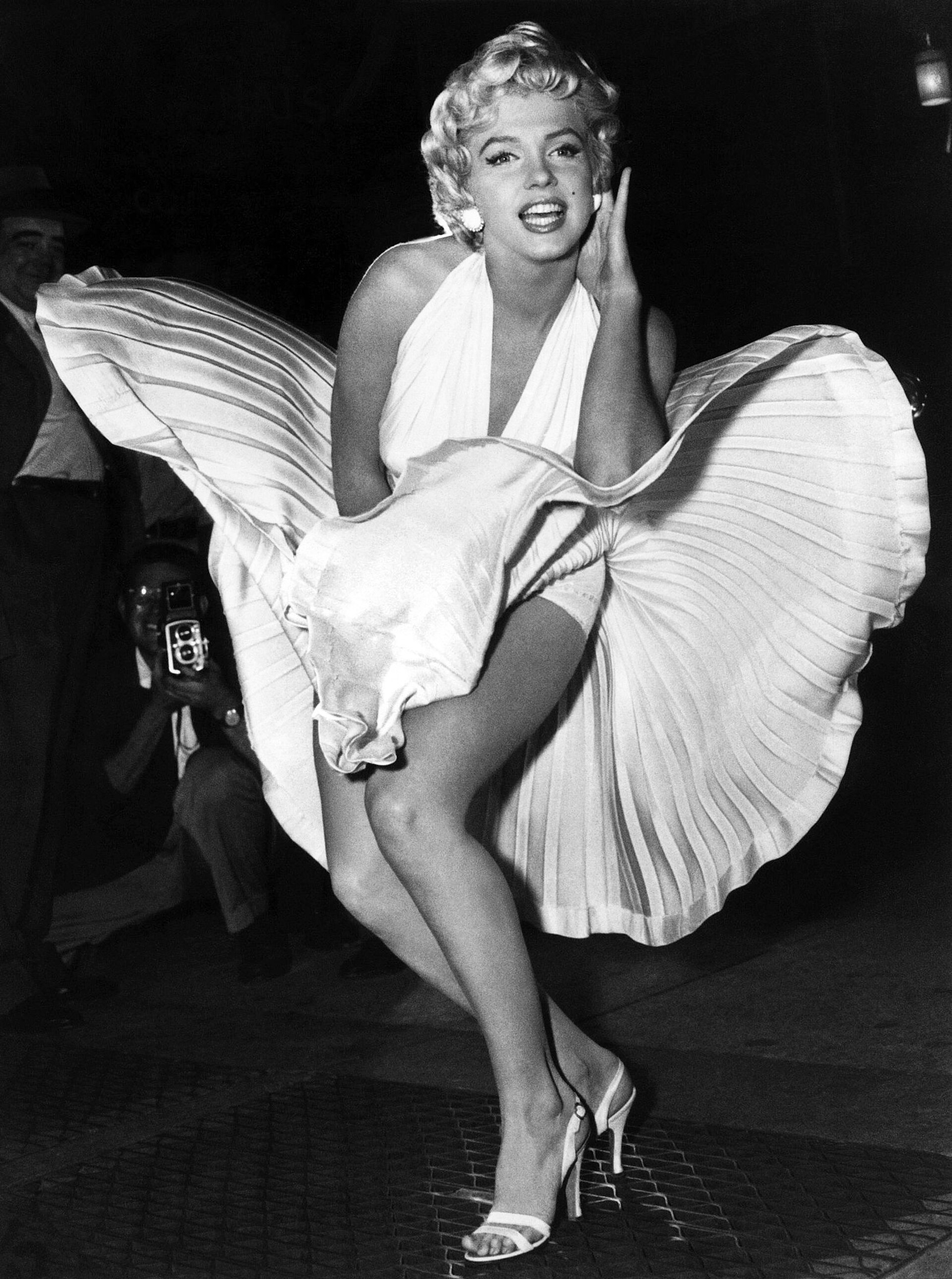
Hollywood did not discover Marilyn Monroe. Hollywood assembled her. The name Marilyn was suggested by studio executive Ben Lyon, the surname came from her mother’s family, her hair became platinum blonde, and her voice grew softer and breathier. The studio assigned her particular dresses, poses and types of women to play. But it would be a mistake to assume that Norma Jeane was merely passive material in this process. In the year of her centenary, the Academy Museum in Los Angeles describes her as a visionary actress, while London’s National Portrait Gallery emphasizes her active collaboration with photographers. In other words, she understood the camera better than many of the people holding it.
Her friend Amy Greene later recalled walking through New York with Monroe while nobody paid her any attention. The actress asked whether Greene wanted to “see her”. Monroe then made an almost imperceptible change to her posture, her walk and her expression. Cars slowed down, heads turned, and an ordinary passer-by became Marilyn. The anecdote contains the key to her gift. Marilyn was not a natural state but a performance, and Norma Jeane knew exactly where the switch was.
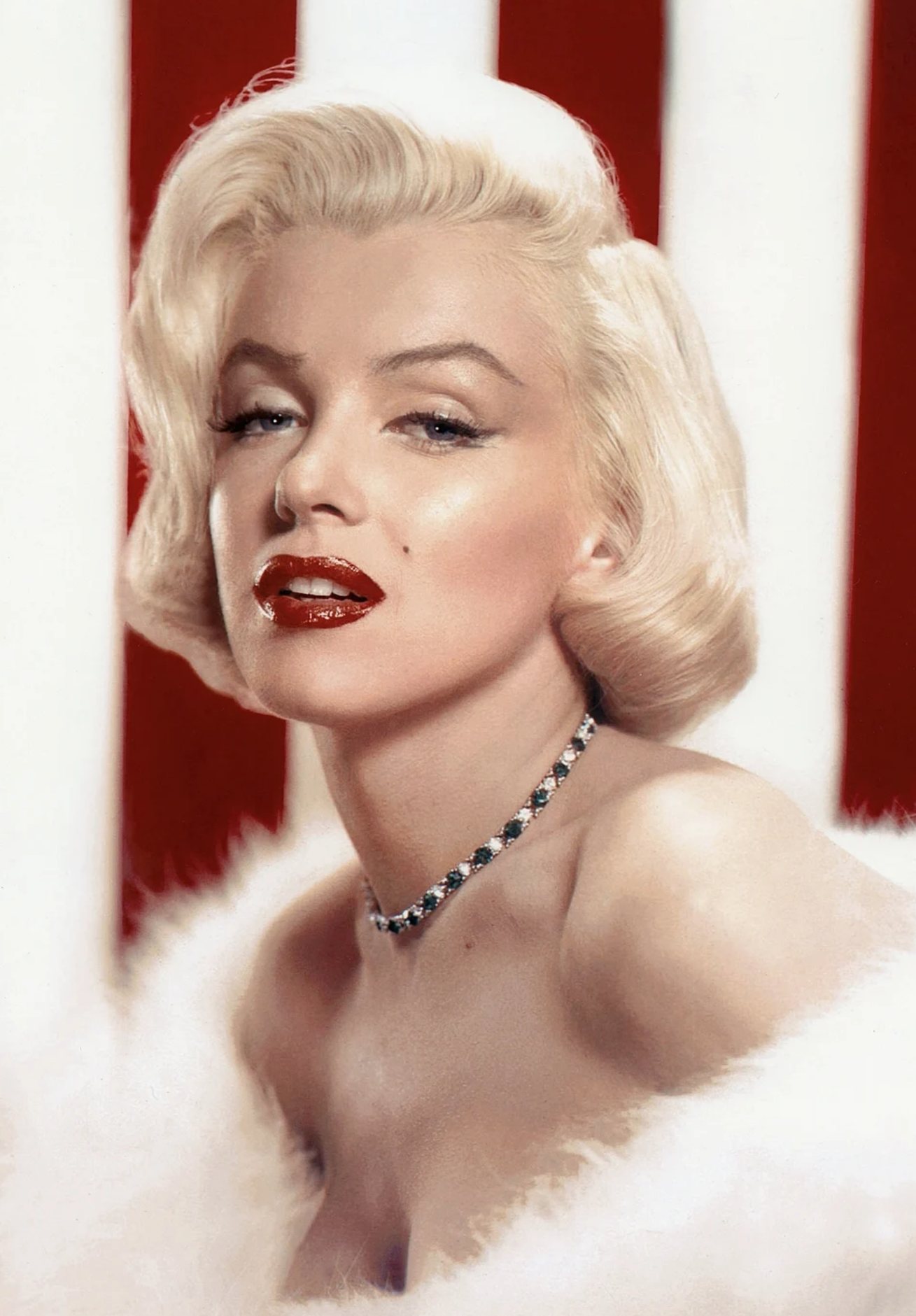
The famous “dumb blonde” was an almost perfect product for male audiences: a body that commanded attention and a voice suggesting that no one need fear the intelligence behind it. The problem was that Monroe played the type too intelligently. In Gentlemen Prefer Blondes, her Lorelei Lee may speak in a childlike voice, but she understands the social economics of marriage better than the men who mock her. In Billy Wilder’s Some Like It Hot, her comedy depends on precise timing, not decorative innocence. Monroe made 29 films over a fifteen-year career but was never nominated for an Academy Award. Hollywood loved the joke; it was simply reluctant to admit that the woman delivering it knew exactly what she was doing.
The $50 Body
In May 1949, Marilyn Monroe was not yet Marilyn Monroe in the fullest sense. She was twenty-two, her film career was barely moving, and she had no money. When photographer Tom Kelley offered her $50 to pose nude on red velvet, she agreed on the condition that she would not be easily recognizable. She signed the release as Mona Monroe. The shoot lasted several hours, the money was spent, and the job appeared to be over.It was not. The photographs appeared on calendars hanging in workshops, garages and barbershops across the United States. When it was discovered in 1952 that the woman in them was the rising film star Marilyn Monroe, the studio prepared for disaster. In the America of that era, female nudity could be sold in enormous quantities, while the woman who earned anything from it could still be condemned as immoral. It was a convenient division of labour: the public was allowed to look, men were allowed to profit, and the woman was expected to feel ashamed.
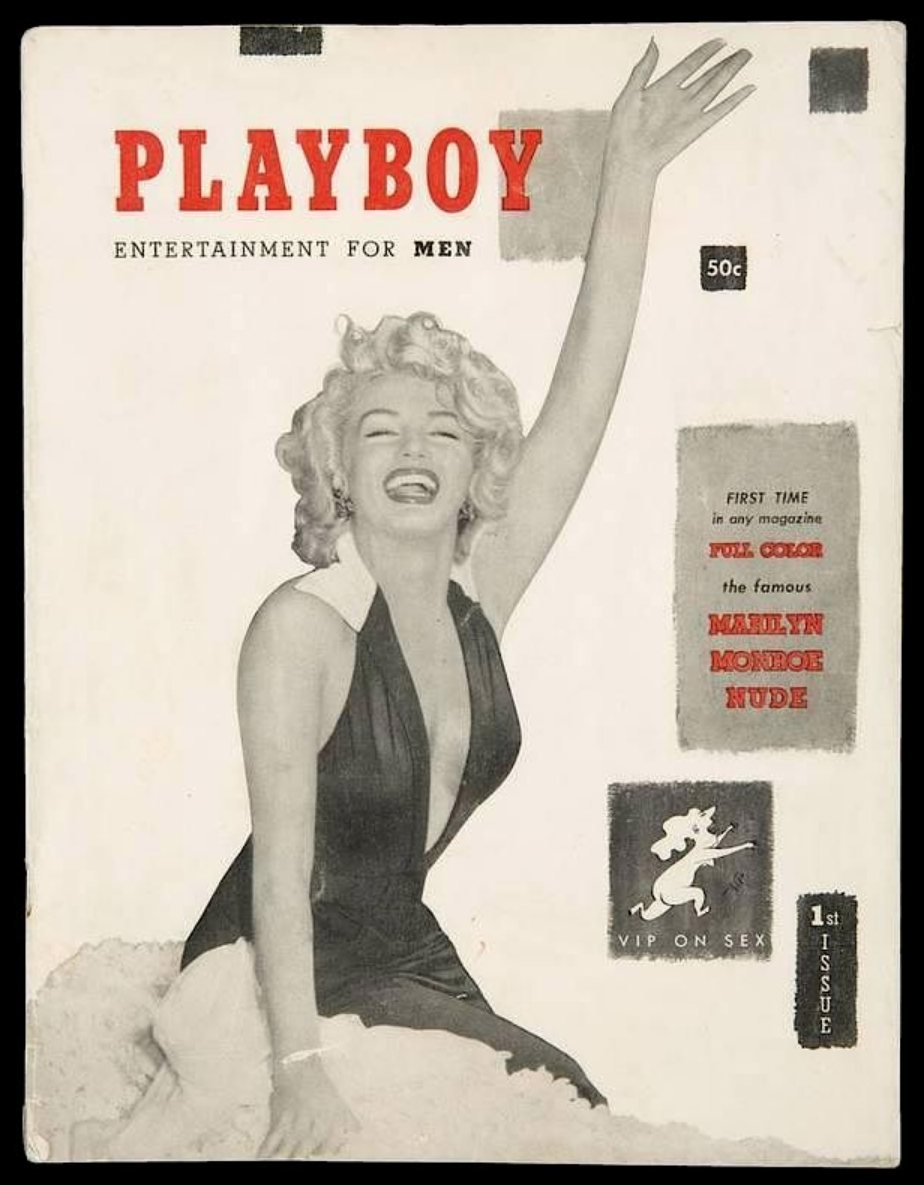
The following year, Hugh Hefner bought the right to reproduce the photograph from a Chicago calendar company and placed it in the first issue of his new magazine, Playboy. Monroe had not posed for Playboy, had no say in how the image was used and received no additional payment. She never even met Hefner. Her body helped launch a magazine that would become a business empire, while all she retained from the transaction was the original $50.
The story acquired a bizarre epilogue. In 1992, Hefner paid $75,000 for the crypt beside hers, explaining that the symbolism of spending eternity next to Marilyn was too powerful to resist. He first used a woman he had never met to sell his own fantasy, then bought a place beside her remains. Even proximity to Marilyn in death had a market price.
The accounting was even more honest than the critics. Jane Russell was paid $200,000 for Gentlemen Prefer Blondes, while Monroe was still working under her old contract for $500 a week, earning roughly $18,000 for the entire film. The studio knew which blonde the title referred to, but that knowledge never reached her paycheque. When she refused yet another role that forced her back into the same mould, Fox suspended her. She responded by moving to New York, studying acting with Lee Strasberg and establishing Marilyn Monroe Productions with photographer Milton Greene.
Newspapers mocked her as a spoiled star pretending to be a serious artist. A year later, Fox gave in. She received $100,000 per film, permission to work for other producers and an unusual degree of control over scripts, directors and cinematographers. It was an important blow against the old studio system. Bus Stop demonstrated that she could build a character without relying on her usual glamour, while John Huston’s The Misfits offers a powerful glimpse of an actress who might have belonged to the new, more psychologically complex American cinema of the 1960s.
Professional victory, however, did not heal her life. Monroe suffered from insomnia and serious psychological distress. She had chronic health problems, including endometriosis, and endured several pregnancy losses. She was often late, sometimes struggled to remember her lines and could be extremely difficult to work with. All of that was real. But the label “difficult woman” conveniently transformed illness into a character flaw while casting the system that exhausted her as a neutral observer.
Marilyn Reads Joyce
In one of the most unusual photographs of Marilyn Monroe, there is no evening gown, no spotlight and none of the carefully rehearsed expression with which she could bring traffic to a halt. She is sitting on Long Island in a striped swimsuit, reading James Joyce’s Ulysses, a novel almost as famous for its literary greatness as for the number of readers who have quietly abandoned it after a few dozen pages.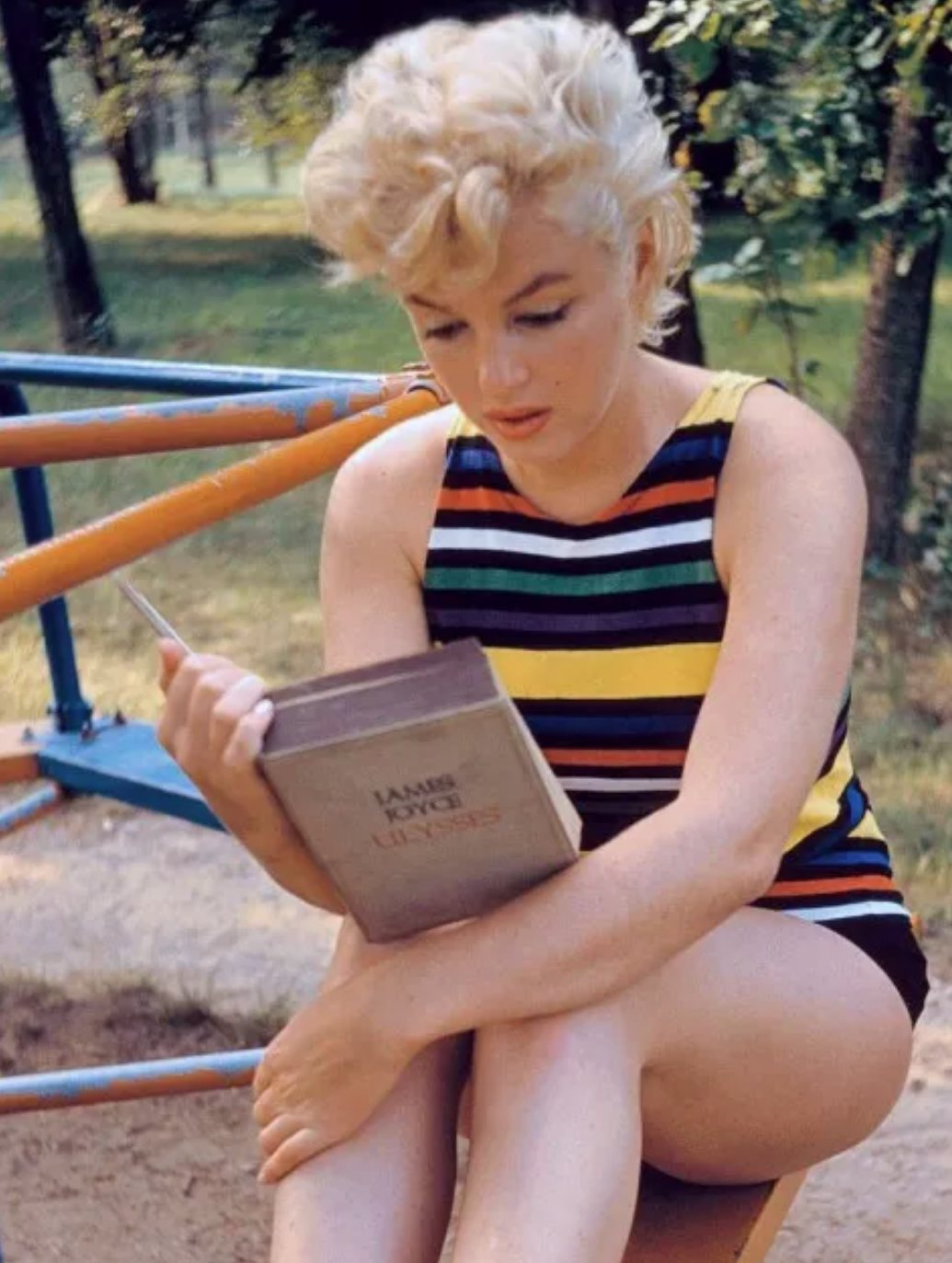
And yet, for decades, the photograph has prompted the same question: did she really understand what she was reading? The suspicion itself says more about the audience than it does about Marilyn. A photograph of a famous man holding a difficult book usually confirms his seriousness. A photograph of a famous blonde with the same book immediately becomes a possible fraud. The industry had sold her so successfully as a body untroubled by dangerous thoughts that any evidence of an intellectual life appeared to be a marketing trick.
Arnold later said that Monroe owned at least two hundred books, ranging from Joyce’s Ulysses to Rights of Man by the British-American political thinker Thomas Paine. Her library included Chekhov, Freud, Dostoevsky, poetry and books on acting. There is no need to reinvent her after the fact as some secret academic. It is enough to acknowledge something far simpler: she was a curious woman making a serious effort to educate herself.
The drugs that eventually killed her did not come from the criminal underworld. They were legally prescribed and dispensed in bottles bearing doctors’ names. In old Hollywood, chemistry often served as an invisible production department: pills helped stars work, sleep, wake up and step back in front of the camera. That does not mean Monroe was merely a product of circumstance. It means there was no shortage of professionals around her who attempted to treat her dependence with yet more prescriptions.
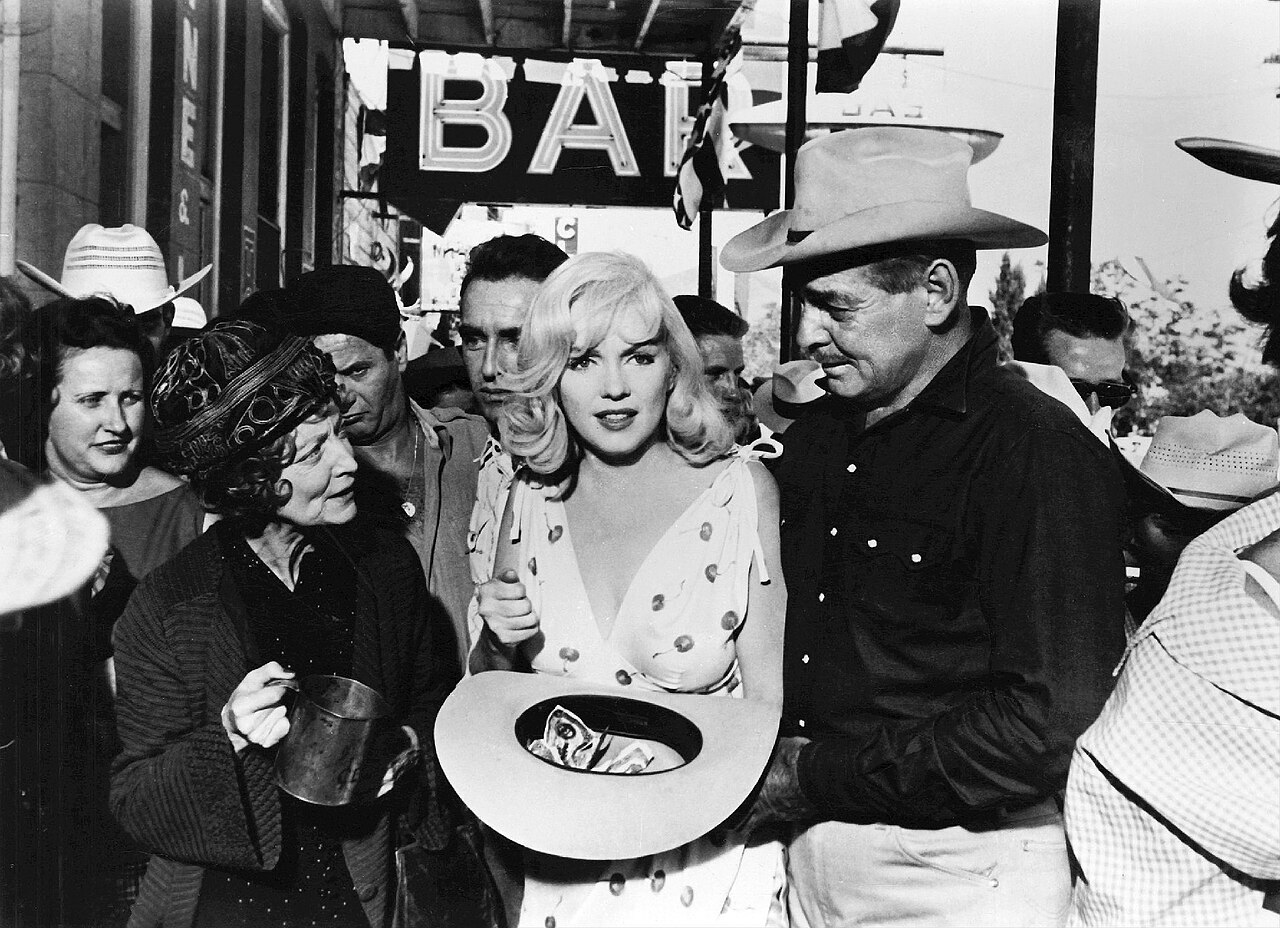
In the spring of 1962, she began filming Something’s Got to Give. Because of illness and repeated absences, Fox fired her in June, sued her and tried to replace her. Her co-star, actor and singer Dean Martin, refused to continue without her, and negotiations for her return were already under way. In one of her final interviews, with Life magazine, she asked the reporter not to turn her into a joke. She wanted, she said, to be an actress with integrity. It was an almost perfect plea to an industry that had spent a decade profiting from the spectacle of serious ambition expressed in the voice of a seductive little girl.
The coroner’s official verdict was acute barbiturate poisoning and “probable suicide.” No suicide note was found. The phrase describes a legal assessment of her death, but it does not explain the life that preceded it. Conspiracy theories offer recognizable villains, which is why they are so appealing. Systemic neglect is far less cinematic: there is no single murderer, only a great many people who benefited from keeping the performance going.
A few weeks after her death, the American pop artist Andy Warhol took a publicity photograph from the film Niagara and repeated the same face fifty times in his work Marilyn Diptych. On one side, the face glows in unnatural colours; on the other, it fades towards black, like a product worn away through repetition. A perfect epitaph for a famous and sorrowful story.
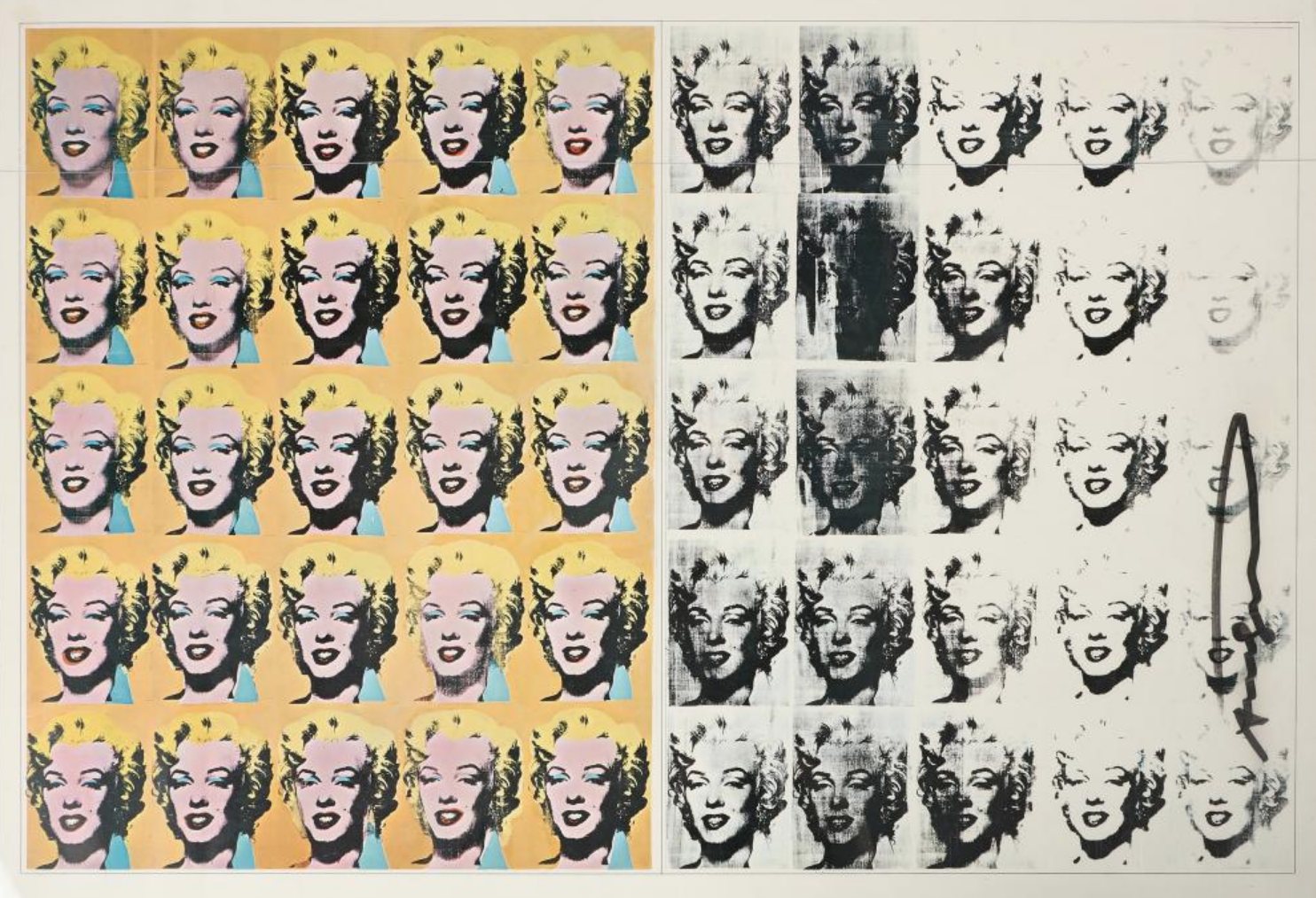
The darkest part of her story, then, is not that Marilyn was fake. Marilyn was her genuine artistic creation. The tragedy is that the world adored her ability to become Marilyn, but never fully allowed her to become someone else again.
Sources
- Evearnold.com Marilyn Monroe reading Ulysses. 1955. / Eve Arnold https://www.evearnold.com/archival-print-editions/mariyln-monroe-reading-ulysses
- Smithsonianmag.com Who Was the Real Marilyn Monroe? https://www.smithsonianmag.com/history/who-was-the-real-marilyn-monroe-blonde-180980813/
- Biography.com Marilyn Monroe Didn't Actually Pose for the First Issue of 'Playboy' https://www.biography.com/actors/marilyn-monroe-playboy-first-issue-didnt-pose
- Los Angeles Times From the Archives: Marilyn Monroe Dies; Pills Blamed https://www.latimes.com/local/obituaries/archives/la-me-marilyn-monroe-19620806-story.html
- Pbs.org Column: Marilyn Monroe and the prescription drugs that killed her https://www.pbs.org/newshour/health/marilyn-monroe-and-the-prescription-drugs-that-killed-her
- Bfi.org.uk Marilyn Monroe centenary celebrated with BFI Southbank season and UK-wide re-release of The Misfits https://www.bfi.org.uk/news/marilyn-monroe-centenary-bfi-southbank-season
Comments