
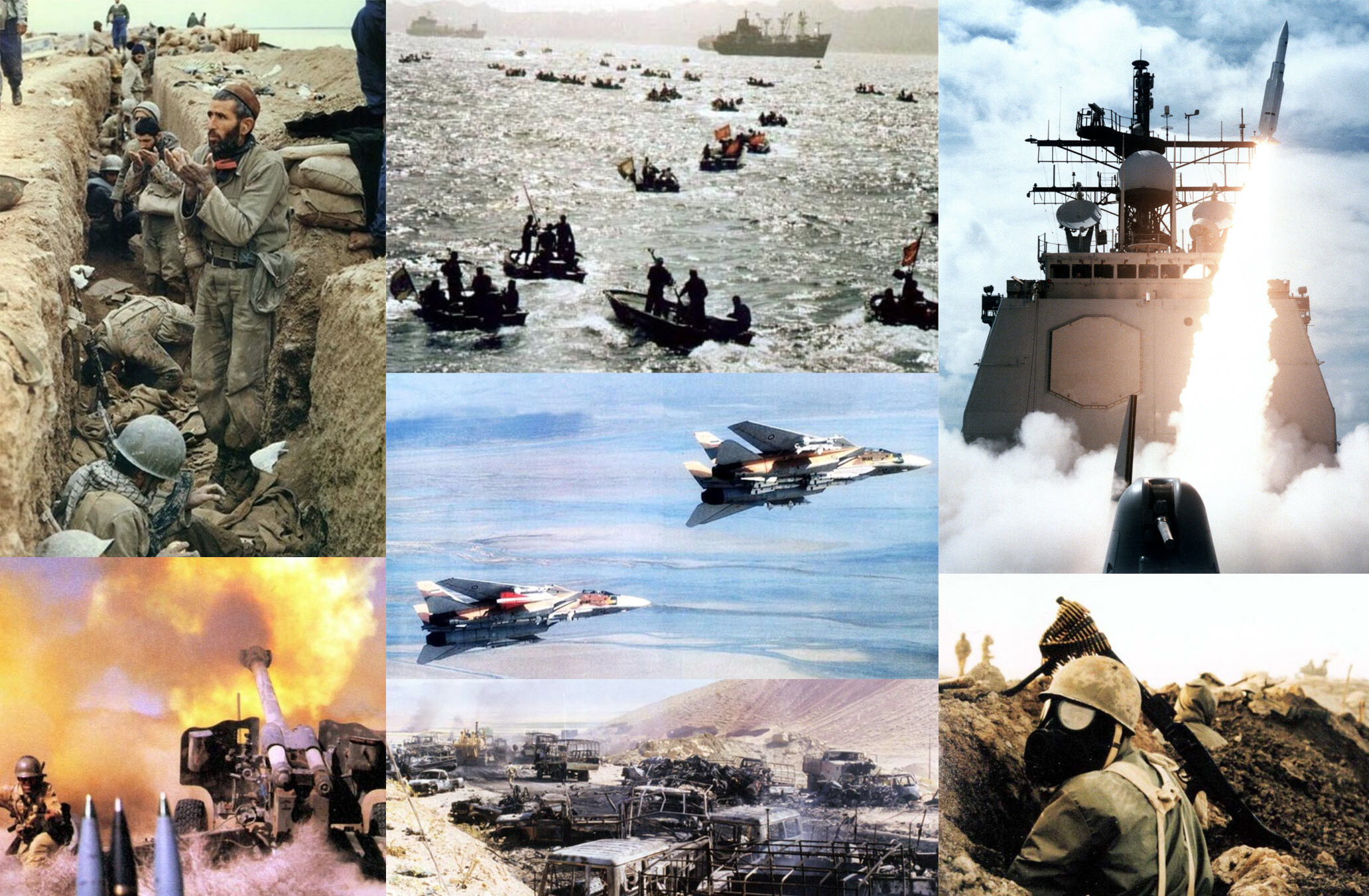
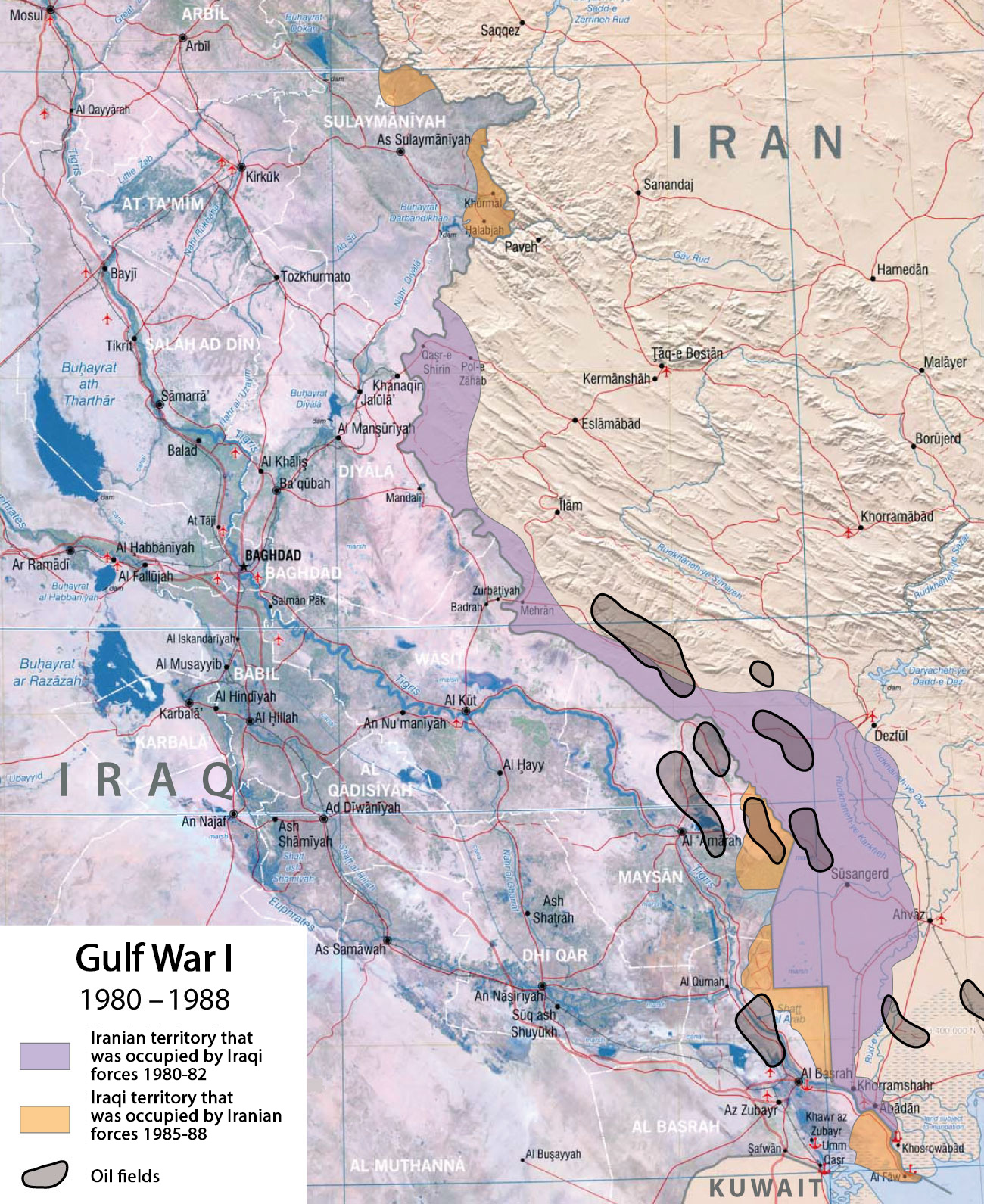
At 3 a.m. Greenwich Mean Time on August 20, 1988, a ceasefire took effect along the Iran-Iraq front. UN observers were tasked with monitoring the silence between two exhausted states. For a war that had begun with promises of a quick victory, there was no victory parade and no enemy capital over which to raise a flag. After almost eight years, the map looked much the same. The cemeteries did not.
That is precisely why the war is so often reduced today to a formula about "two sides" exhausting each other. But no, it did not simply erupt out of nowhere. On September 22, 1980, Iraq bombed Iranian airfields and launched a ground invasion. Border disputes and revolutionary rhetoric from Tehran had certainly created an atmosphere of tension, but it was Iraqi troops that crossed the international border. Only in 1991 did UN Secretary-General Javier Pérez de Cuéllar conclude that the attack on Iran could not be justified under the UN Charter and entailed Iraq's responsibility for the conflict.
Saddam Hussein, then president of Iraq, believed he was attacking Iran at the moment of its greatest weakness. The Shah had been overthrown the previous year. Iran's military was going through purges, while relations with the United States had been shattered by the hostage crisis. Five days before the invasion, Saddam declared the 1975 Algiers Agreement null and void. Under that agreement, the border along the Shatt al-Arab waterway had been drawn down the middle of the main shipping channel. Saddam wanted control of the entire waterway, regional dominance, and protection from the export of Iran's revolution.
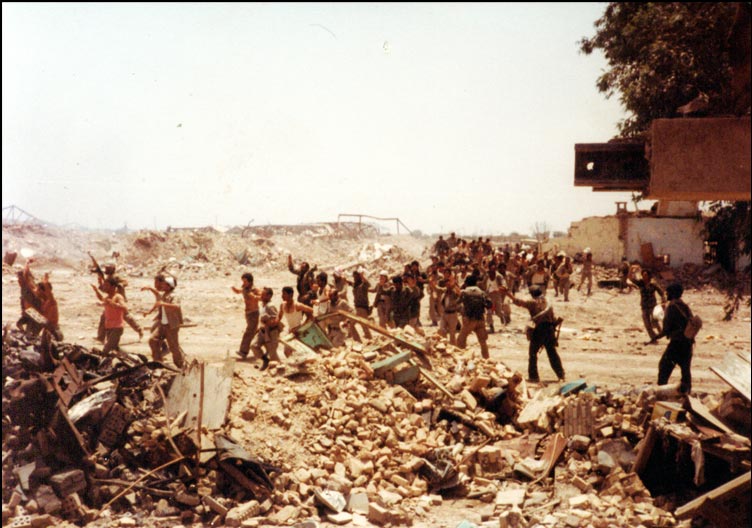
The first major calculation collapsed at Khorramshahr. Iraqi forces took the city only after more than a month of heavy fighting. Saddam had also counted on an uprising by Iranian Arabs in Khuzestan. It never came. Iran was politically divided, but the invasion transformed it into a country defending its own territory. The greatest political service Saddam ever rendered the Islamic Republic was trying to destroy it — in doing so, he gave it a national cause and created the conditions for the rapid rise of the Revolutionary Guard.
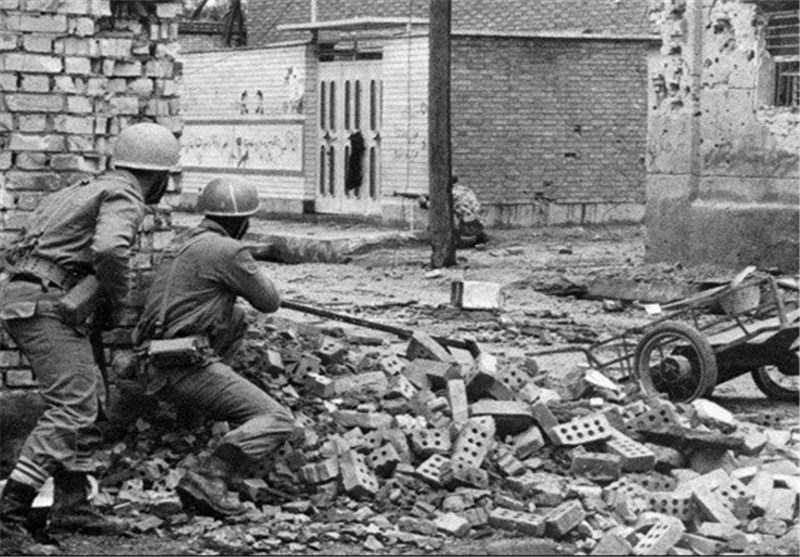
In May 1982, Iranian forces retook Khorramshahr. Iraq withdrew from most of the territory it had occupied, and Saddam announced that he was ready for a ceasefire. This is where the story becomes more complicated. Iran remained the victim of the original aggression, but it was no longer fighting a purely defensive war. Tehran demanded reparations and the removal of Saddam's regime, and in July it launched an offensive toward Basra. The decision to carry the war onto Iraqi territory did not erase the question of who had started it. But it did help explain why it continued for another six long years.
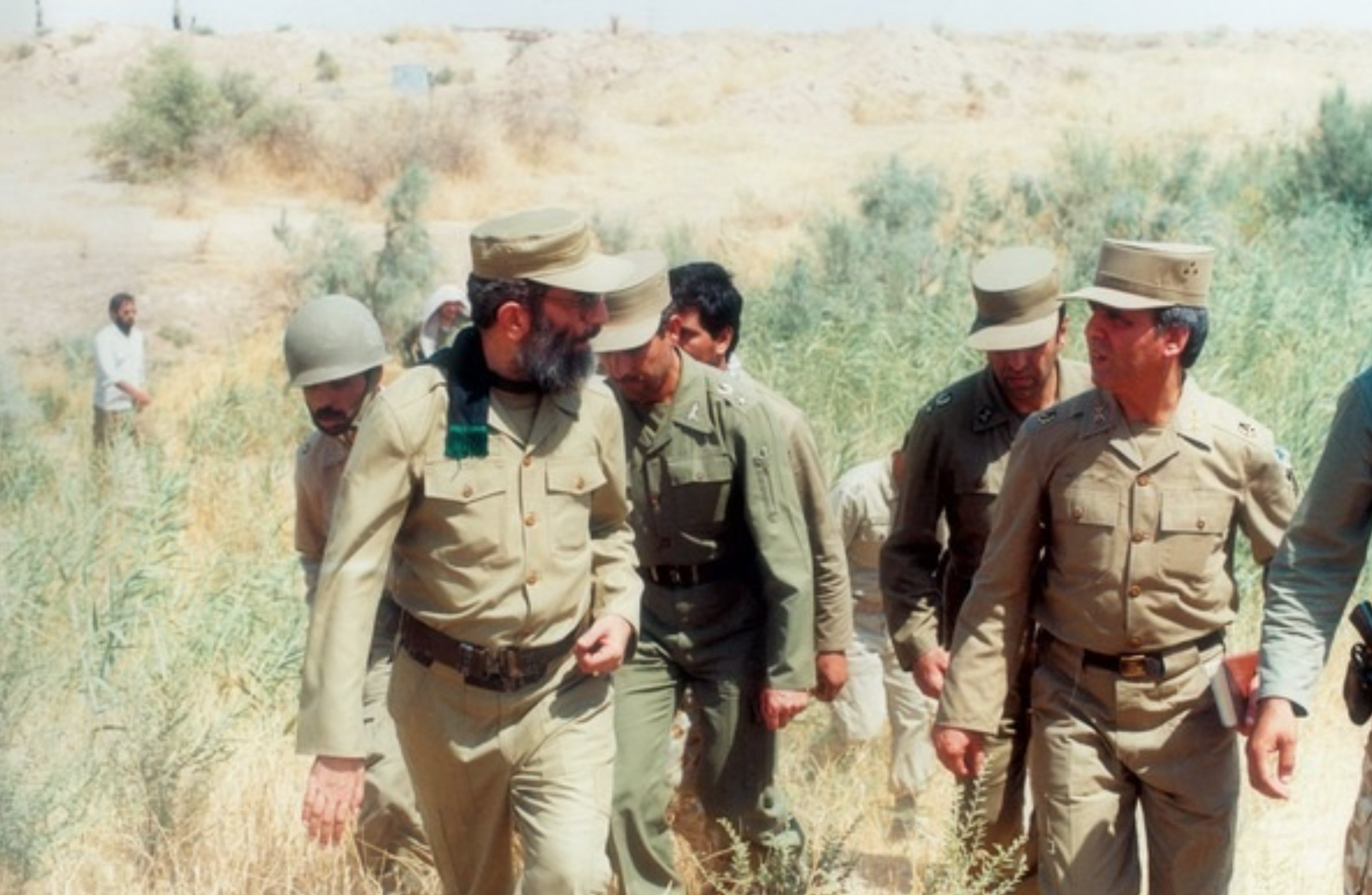
What followed was a war of attrition reminiscent of the First World War, only now with ballistic missiles. Trenches stretched across marshland and desert, behind minefields and embankments. Poorly trained volunteers from Iran's Basij were sent into frontal assaults in which faith was expected to make up for deficiencies in artillery and air support. Iraq relied on superior firepower, while both sides attacked cities with missiles. The dead numbered in the hundreds of thousands. Including the wounded, the human cost exceeded a million.
Baghdad's darkest advantage was chemical warfare. In 1984, UN experts in Iran identified mustard gas and the nerve agent tabun in the remains of aerial bombs. The Iraqi military continued using chemical agents against Iranian soldiers, civilians, and its own Kurdish population. Sardasht and Halabja became symbols of a world in which industrialized killing had returned to the battlefield without decisive international punishment. The UN Security Council condemned the "use of chemical weapons," but for years avoided explicitly naming Iraq.
An American F-14 Defended the Revolution That Drove the Americans Out
One of the stranger sights of the Iran-Iraq War was an American-built F-14 Tomcat bearing the markings of the Islamic Republic as it intercepted Iraqi aircraft. Only a few years earlier, such a scene would have sounded like political satire. The F-14 was one of the most sophisticated products of the American military industry, and Iran had acquired it precisely because Shah Mohammad Reza Pahlavi was one of Washington's most important allies in the Middle East. Iran ordered 80 Tomcats, together with long-range AIM-54 Phoenix missiles. By the time of the 1979 revolution, 79 had been delivered.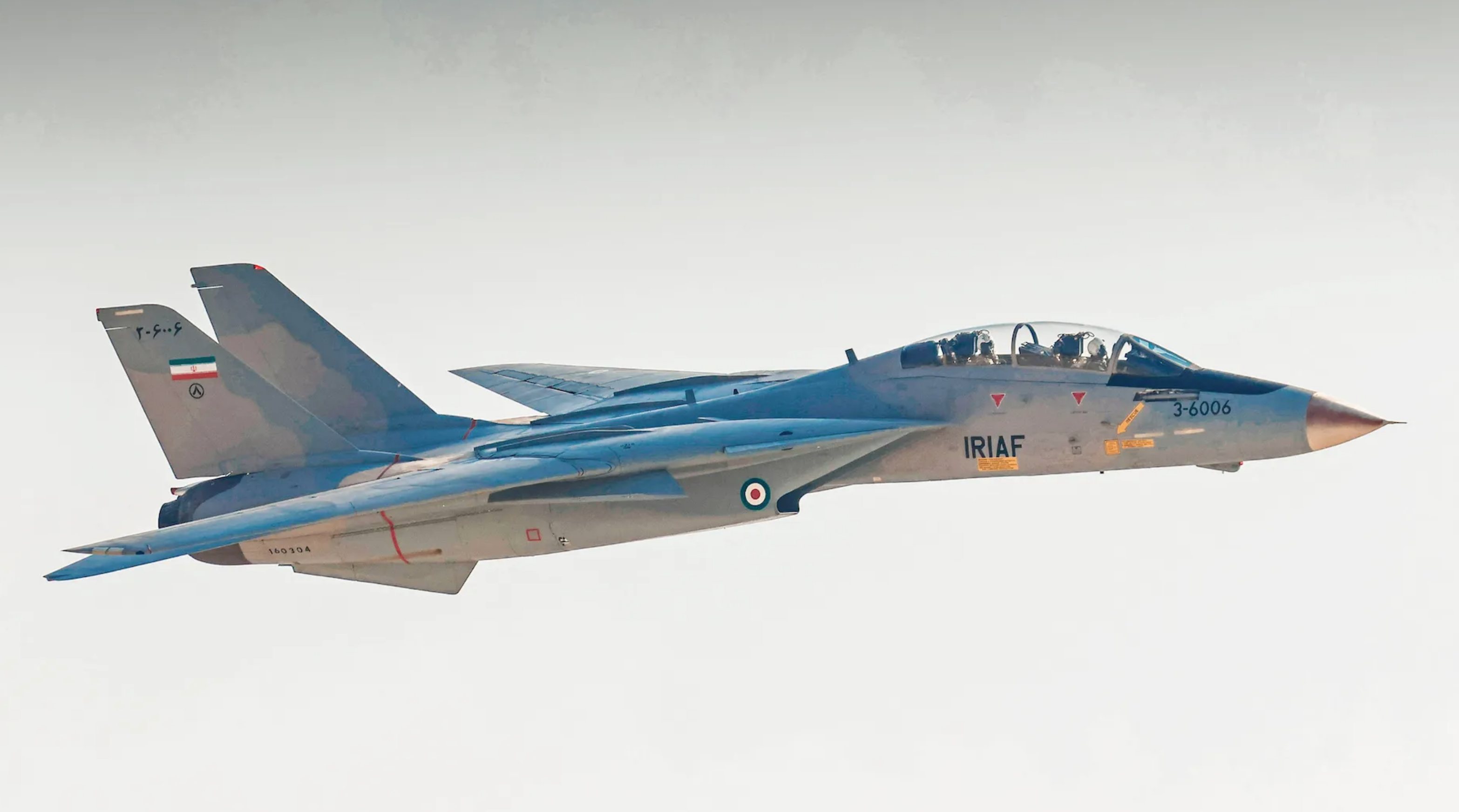
Then came the Islamic Revolution. The Shah was overthrown, relations with the United States rapidly turned into open hostility, American specialists left the country, and Washington cut off the supply of spare parts. At the same time, the new government purged the air force of personnel it associated with the old regime. Pilots and technicians who had spent years training to operate American systems suddenly became politically suspect. Only a few years earlier, Washington had trained them to defend an American ally. Now they were expected to use the same aircraft to defend a country whose walls were covered in anti-American slogans.
Yet when Iraq invaded in 1980, the F-14 did not become a useless relic of the Shah's regime. The Iranians managed to keep part of the fleet operational and used the Tomcats for air defense throughout the war. Exactly how many Iraqi aircraft they shot down has been debated for decades, because Iranian, Iraqi, and Western figures differ substantially. Far less disputed is the value of their powerful radars in detecting Iraqi air raids and protecting critical areas. American intelligence documents from the war itself confirm that the F-14 and Phoenix remained part of Iran's air-defense capabilities despite the embargo.
The Islamic Republic survived the early years of the war in part because of weapons purchased to protect the monarchy it had overthrown. The F-14 was a product of an alliance that no longer existed. It was flown by people from a system the new rulers did not fully trust, against an enemy that had counted on that military collapsing. Revolutions like to believe they can begin history anew. War sometimes reminds them very quickly just how useful the inheritance of the old order can be.
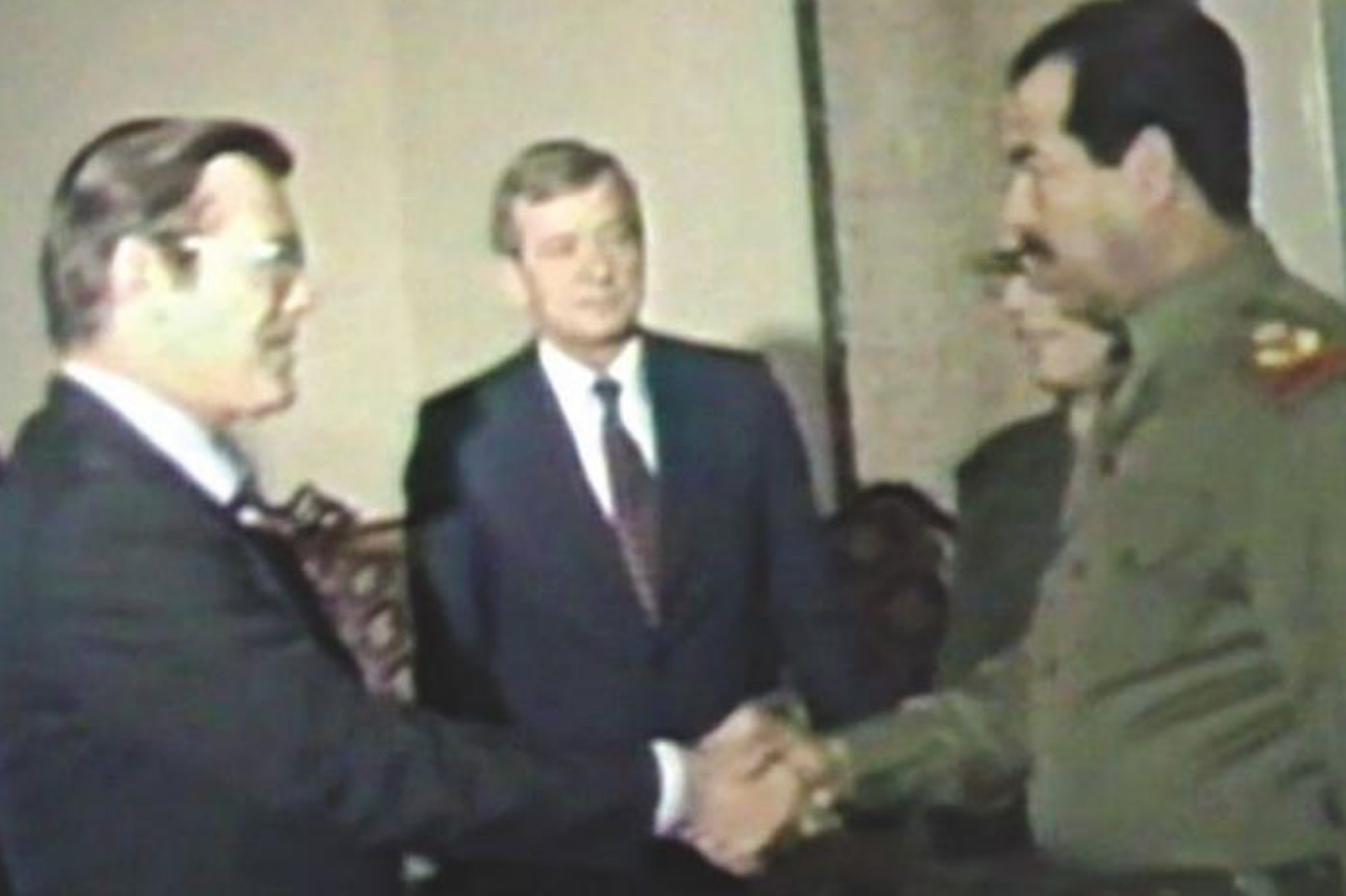
The causes of the war were both ideological and geopolitical. The Iranian Revolution frightened the Gulf monarchies and Western governments more than Saddam's regime did. The Soviet Union resumed major arms deliveries to Iraq. France supplied Baghdad with Super Étendard aircraft and Exocet missiles, while the Gulf states financed the war with loans. Washington made its now-famous tilt toward Iraq. The photograph of U.S. envoy Donald Rumsfeld shaking Saddam Hussein's hand in December 1983 became a perfect symbol of that policy. Iran was not completely isolated, as the Iran-Contra affair would demonstrate. But Baghdad had a far broader network of support.
Iraq's attempt to destroy Iranian oil exports then carried the war into the Persian Gulf. Iran retaliated with attacks on tankers, Kuwait asked for protection, and the U.S. Navy began escorting ships sailing under the American flag. By 1988, Washington was no longer an observer. In April, Operation Praying Mantis dealt a severe blow to Iranian naval forces. Then, on July 3, the USS Vincennes shot down the passenger Airbus operating Iran Air Flight 655, killing all 290 people on board. Washington described it as a tragic case of mistaken identity. For Iran's leadership, the incident demonstrated that the war with Iraq could turn into an open conflict with the United States.
Saddam Thought He Had Destroyed Iran's Air Force — The Next Morning, 140 Aircraft Appeared
One reason Saddam Hussein expected a short war was the seemingly obvious weakness of the Iranian air force. Before the revolution, it had been the pride of the Shah's military, built with American money and training. After 1979, American specialists left, the supply of spare parts was effectively cut off, and the revolutionary government purged officers it regarded as politically unreliable. Some pilots ended up in prison; others were dismissed. On paper, it looked like the perfect moment to attack.So on September 22, 1980, the Iraqi Air Force tried to do to Iran what Israel had done to the Arab states in 1967 — destroy the enemy's aircraft on the ground in a surprise strike and effectively decide the war before it had truly begun. Iranian air bases and other military installations were attacked. But the Iraqi strike was nowhere near as precise or effective as Israel's had been. Many Iranian aircraft survived in hardened shelters, runways could be repaired, and the institution Saddam believed had been paralyzed still knew how to fight.
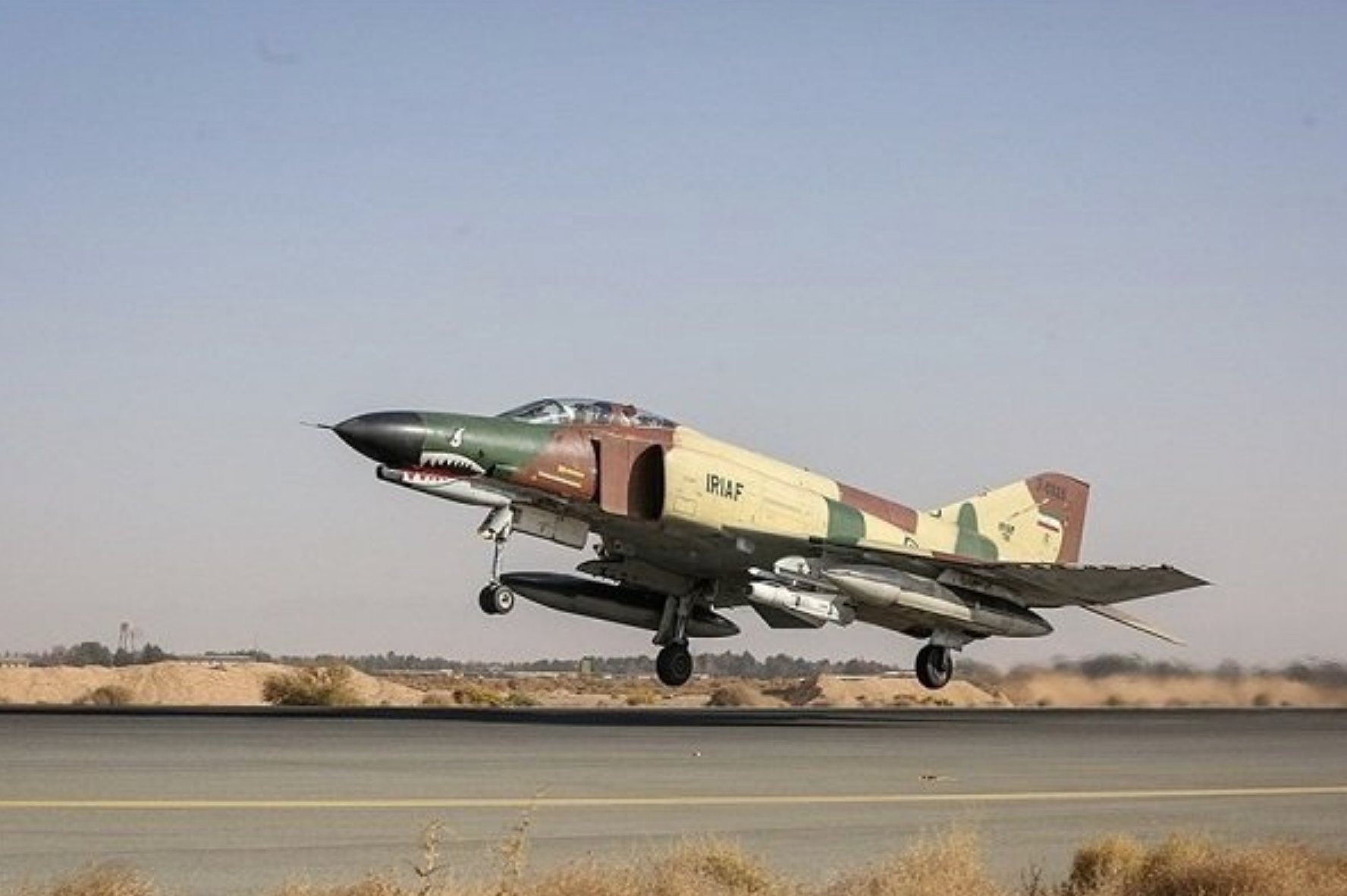
The response came almost immediately. Within hours of the Iraqi attack, Iranian F-4 Phantom bombers were striking targets inside Iraq. Then, the following morning, September 23, Operation Kaman 99 began. Around 140 Iranian fighter-bombers headed for Iraqi air bases and other strategic targets, while additional aircraft provided cover and aerial refueling. Most were American-built F-4 Phantoms and F-5 Tigers — machines produced by the same country the Islamic Republic had declared its great enemy only a year earlier.
By the summer of 1988, Iran had suffered a new series of battlefield defeats and its economy was exhausted. Ayatollah Ruhollah Khomeini, founder of the Islamic Republic, accepted UN Security Council Resolution 598 and compared the decision to drinking from a poisoned chalice. On August 20, the ceasefire finally took effect, and the UN mission UNIIMOG began monitoring its implementation and the withdrawal of forces to the internationally recognized border. It was not a peace that resolved the causes of the war. It was exhaustion translated into the language of diplomacy.
The final irony came two years later. When Saddam invaded Kuwait in August 1990 and suddenly needed a quiet eastern border, he accepted a return to the Algiers Agreement he had rejected in 1980. He agreed once again to a border running down the middle of the Shatt al-Arab and to withdraw from the remaining pockets of Iranian territory. An eight-year attempt to redraw the map ended with the acceptance of almost exactly the same map. It was a geopolitical journey in a circle, paid for with an immense number of human lives.
The war did, however, directly produce another war. Iraq emerged from the conflict with an enormous army and enormous debts. It owed Gulf creditors around $37 billion, while Kuwait and the United Arab Emirates refused Saddam's demand that the loans be written off as compensation for "defending" the Arabian Peninsula from Iran. Two years after the ceasefire, Iraqi forces entered Kuwait. The Gulf monarchies became even more dependent on American protection, while Iran drew the opposite conclusion — when it was attacked, no one could be relied upon to come to its aid. That does not justify every policy Tehran has pursued since, but it helps explain its obsession with missiles, domestic arms production, and strategic depth.
An Iraqi Jet Killed 37 Americans — Washington Still Feared Iran More
On the evening of May 17, 1987, the American frigate USS Stark was sailing through the Persian Gulf when an Iraqi combat aircraft approached. Soon, two French-made Exocet missiles were streaking toward the ship. Both struck the frigate. The explosions and resulting fire killed 37 American sailors and wounded another 21. It was one of the deadliest attacks on a U.S. warship since the Second World War — and it had been carried out by Iraq, the country the United States was supporting in its war against Iran.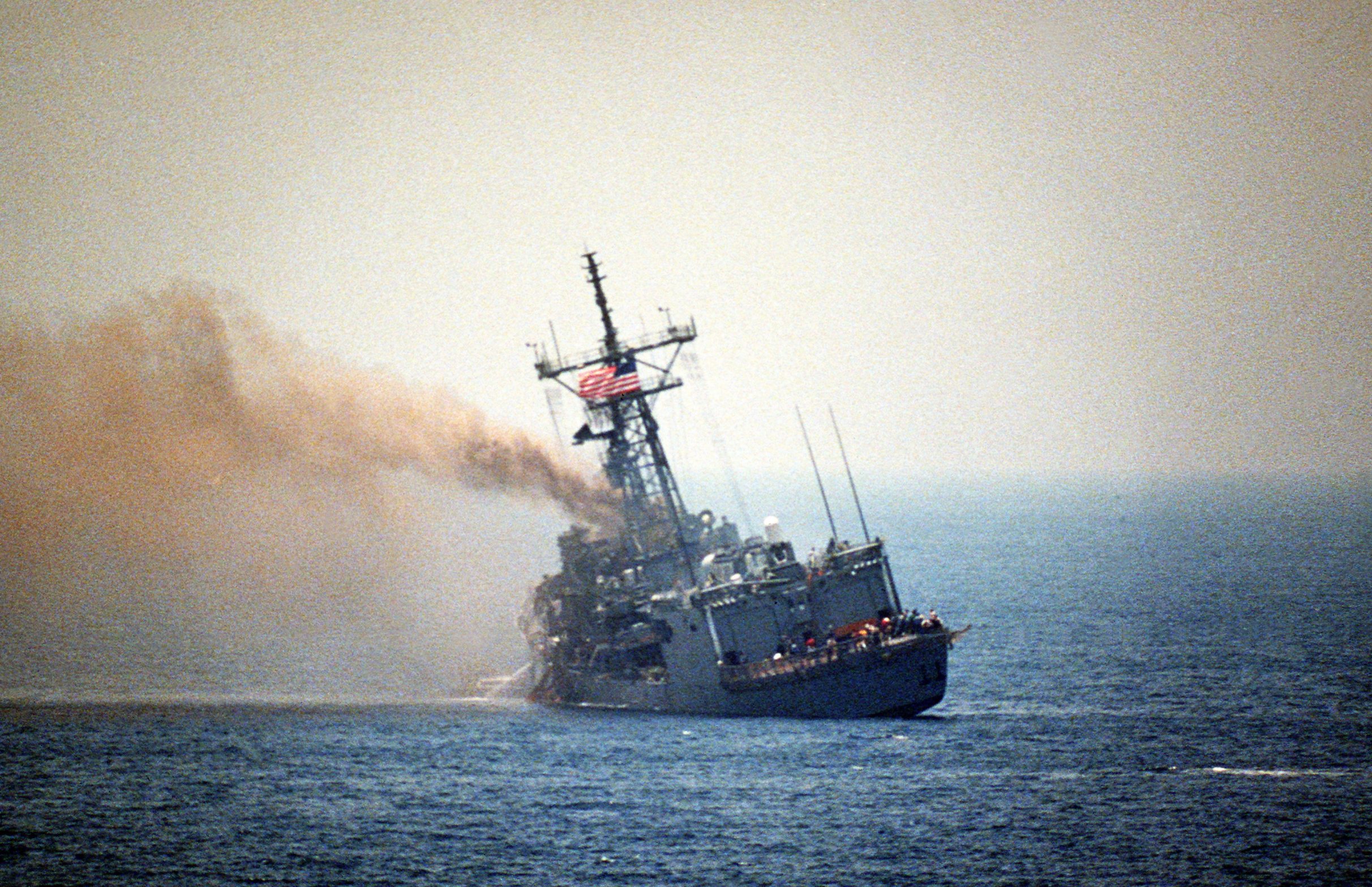
Few episodes illustrate more clearly how thoroughly the Iran-Iraq War disrupted the usual logic of alliances. The United States and Iraq were not formal allies. Washington knew perfectly well who Saddam Hussein was, and American intelligence agencies were monitoring Iraq's use of chemical weapons. Yet once Iran began achieving successes on the battlefield, U.S. policy became increasingly guided by one overriding principle: Tehran must not be allowed to win. The Stark attack did not change that fundamental conclusion.
In the days after the attack, Reagan publicly emphasized that the United States did not regard Iraqi forces as hostile. At the same time, the American military presence in the Gulf continued to expand, primarily to protect tanker traffic and contain Iran. A year later, American and Iranian naval forces would clash directly in Operation Praying Mantis — but that is a story for another day.
That is why August 20, 1988 is more than simply the date on which an unusually long war came to an end. Iran survived the aggression, but after 1982 its own maximalist objectives prolonged the tragedy. Saddam won no territorial victory, yet remained in power with a debt-ridden military machine that he would soon turn against another neighbor. The great powers preserved the balance of power while helping prepare the next explosion. The Iran-Iraq War did not significantly move the border. It moved almost everything else — fears, alliances, and the way the Gulf has imagined its own security ever since.
Sources
- Iranprimer.usip.org Iran and the Gulf States https://iranprimer.usip.org/resource/iran-and-gulf-states
- Nsarchive.gwu.edu Iran-Iraq War, 1980-1988 | National Security Archive https://nsarchive.gwu.edu/events/iran-iraq-war-1980-1988
- Main.un.org Middle East | Security Council https://main.un.org/securitycouncil/en/content/repertoire/middle-east
- Iranicaonline.org IRAQ vii. IRAN-IRAQ WAR https://www.iranicaonline.org/articles/iraq-vii-iran-iraq-war/
- Opcw.org The OPCW’s Short Documentary Video Project https://www.opcw.org/fires
- History.navy.mil Operation Praying Mantis https://www.history.navy.mil/browse-by-topic/wars-conflicts-and-operations/middle-east/praying-mantis.html
- History.state.gov Milestones in the History of U.S. Foreign Relations - Office of the Historian https://history.state.gov/milestones/1989-1992/gulf-war
Comments