
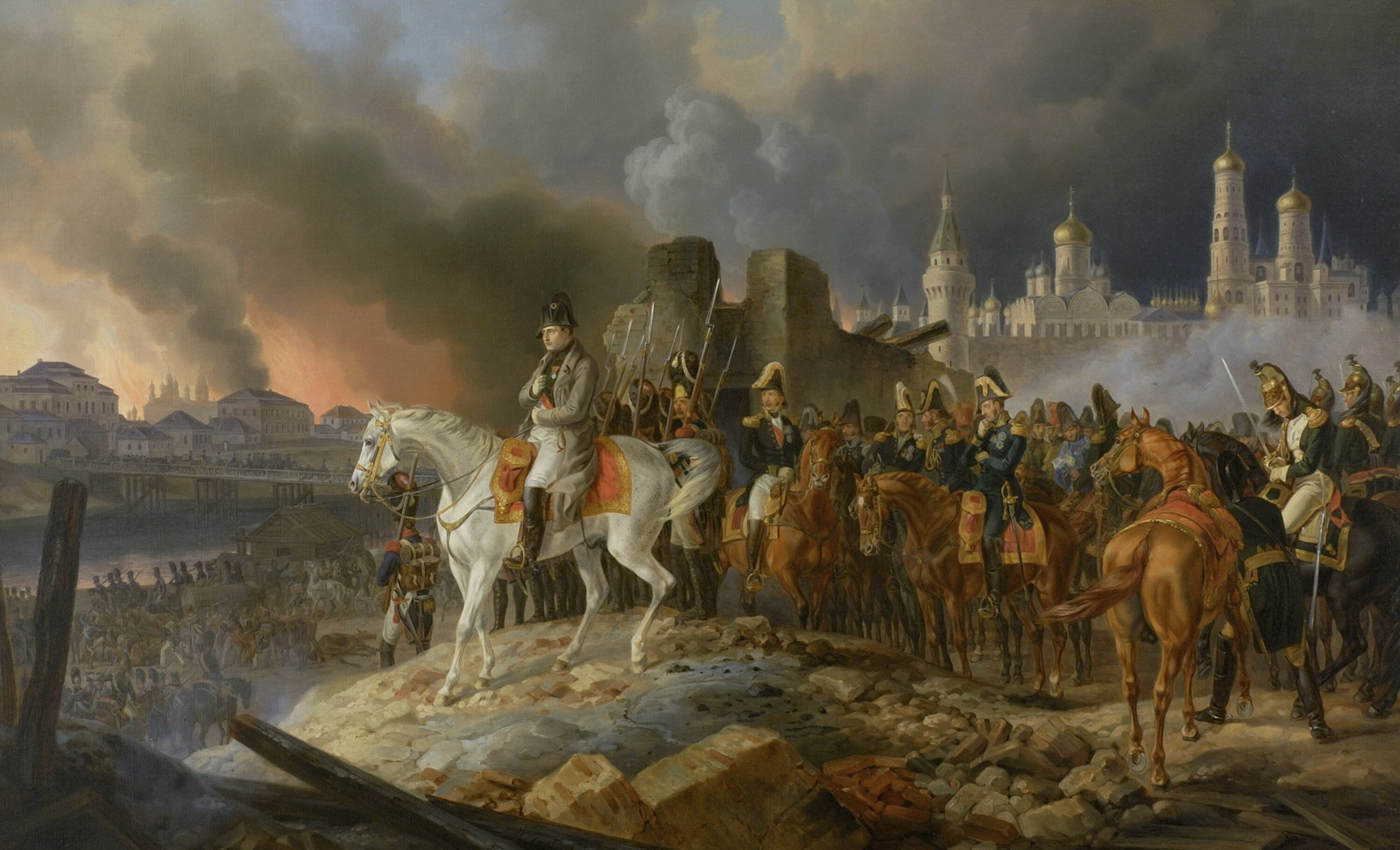
That afternoon, Napoleon waited for history to arrive in a carriage. From high ground west of Moscow, he gazed across countless rooftops and gilded church domes, expecting the city fathers to appear bearing the keys. It was an old European ritual, the ritual of defeat. The conqueror would enter the capital, the dignitaries would beg for mercy, and before long the ruler would send negotiators. The army, assuming it had any interest in mercy, would hand its work over to diplomacy.
But almost no one came out of Moscow. There was no ceremonial delegation, no humble speeches, no message from the Russian emperor, Alexander I. The most powerful man in Europe had reached his objective, but the objective refused to acknowledge him. Moscow was there. Russia, in some strange and ominous sense, was not.
This was the fundamental, historic error behind the entire campaign. Napoleon had not led an enormous army across the Niemen River in June 1812 because he intended to conquer every inch of Russian territory. His real aim was to punish a former ally and force Alexander back into the Continental Blockade against Britain. He needed to find the Russian armies, defeat them in one great battle and dictate peace. It was, one might say, diplomatic pressure conducted with several hundred thousand men.
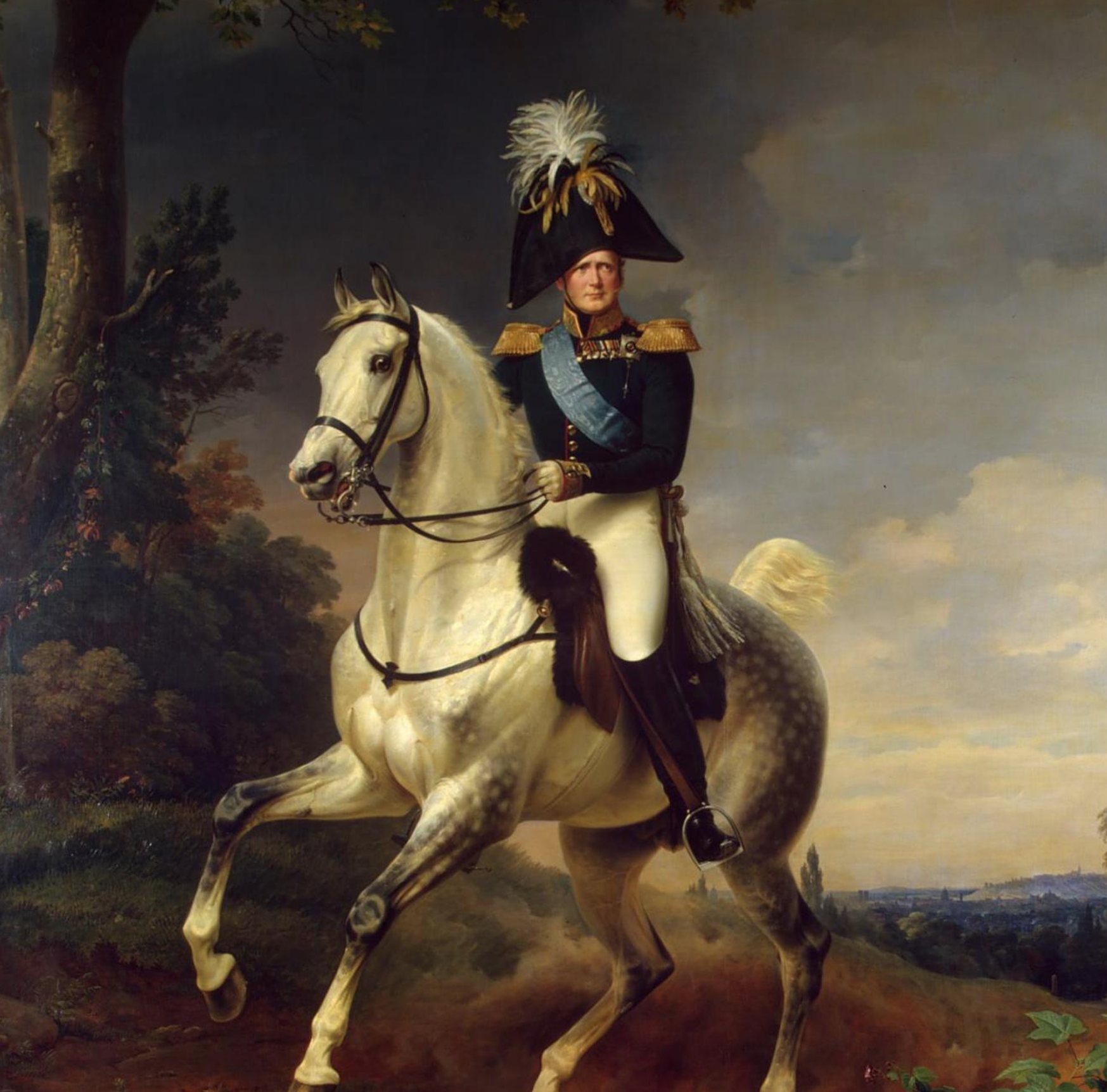
Until then, the formula had worked flawlessly. Vienna fell after Austerlitz, Berlin after Jena. Rulers lost battles, then capitals, and finally their nerve. Napoleon did not need to conquer the whole of Austria or Prussia. It was enough to destroy the army, occupy the political centre and demonstrate that continuing the war would cost far more than ending it.
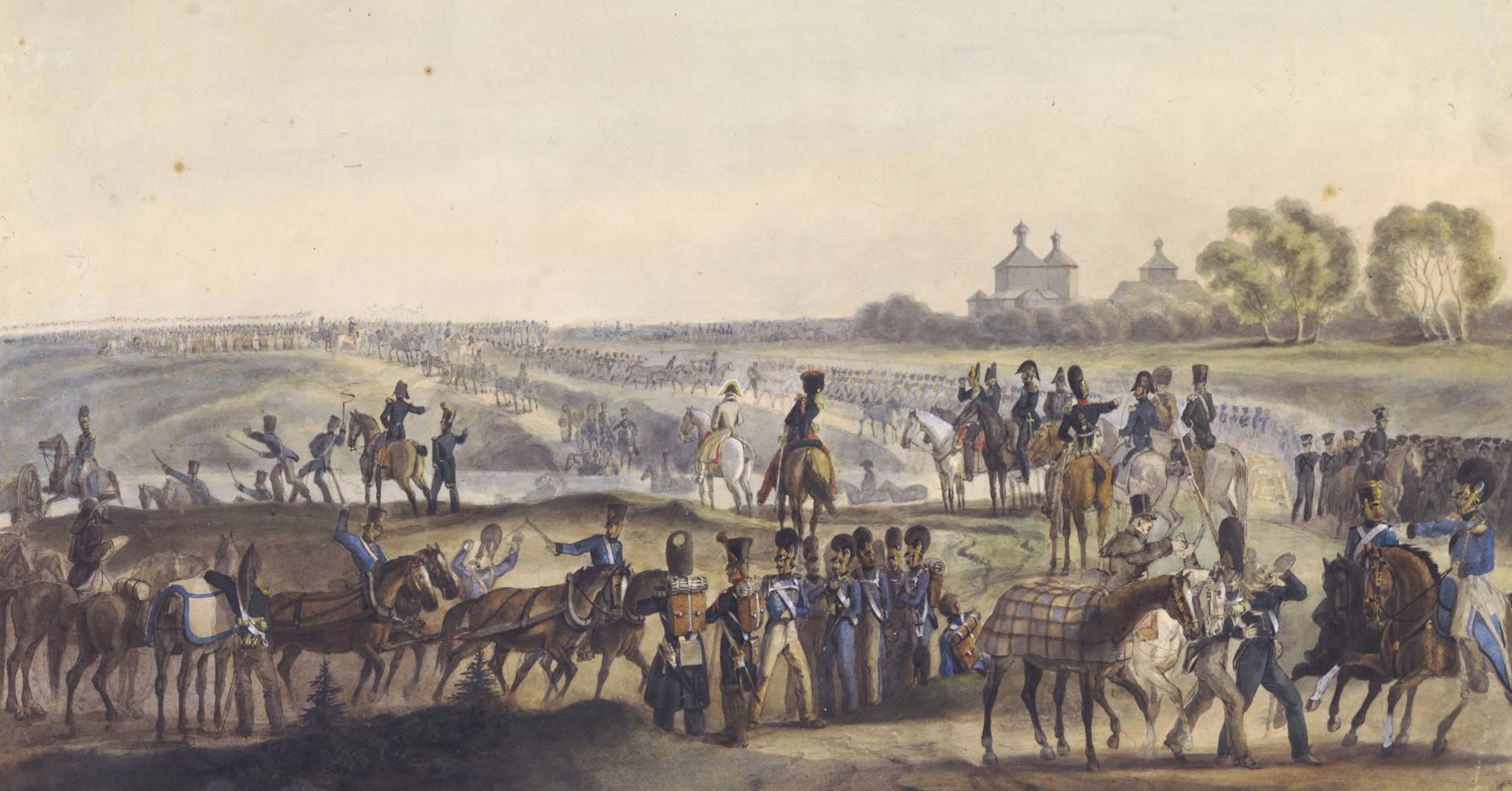
Russia refused to play the game or accept the role assigned to it. Its armies retreated deeper into the country, leaving ever less food behind and forcing the French supply lines to stretch ever farther. The vast Grande Armée began to dissolve without ever fighting the great decisive battle Napoleon wanted. Disease, exhaustion and hunger carried off the men. Horses died, and with them went transport, reconnaissance and the mobility of the artillery. Of the invasion force that had crossed the frontier that summer, only around one hundred thousand men in the main body reached Moscow.
An army drawn from all of Europe
The Grande Armée that invaded Russia was not merely a French army. Tens of thousands of Poles marched in its columns, alongside soldiers from the German states, Italians, Dutchmen, Swiss, Spaniards and Portuguese, as well as Austrian and Prussian contingents supplied by countries that had been Napoleon’s enemies only recently. Units from the Illyrian Provinces also took part, composed largely of men from what is now Croatia and Slovenia. It was almost the entire map of Napoleonic Europe transformed into a military column.At first, this diversity testified to the scale of Napoleon’s power. In the catastrophe, it became a weakness. The Poles saw the campaign as an opportunity to restore their state. Some of the Germans were fulfilling their obligations to the French Empire, while the Prussians and Austrians were fighting beside the man who had previously defeated them. Differences in language, command traditions and loyalty did not cause the collapse by themselves, but they made it harder to maintain order once food, horses and faith in victory had disappeared. What disintegrated in Russia was therefore not only an army, but the political system through which Napoleon had subjugated the continent.
Napoleon finally got the battle he wanted at Borodino on 7 September. It was one of the bloodiest days of the Napoleonic Wars, leaving tens of thousands dead or wounded on both sides. The French held the battlefield, but the Russian army had not been destroyed. Field Marshal Mikhail Kutuzov withdrew in a way that still allowed the war to continue. Borodino opened the road to Moscow for Napoleon, but not the road to peace. The French emperor reportedly declared, "Peace is in Moscow."
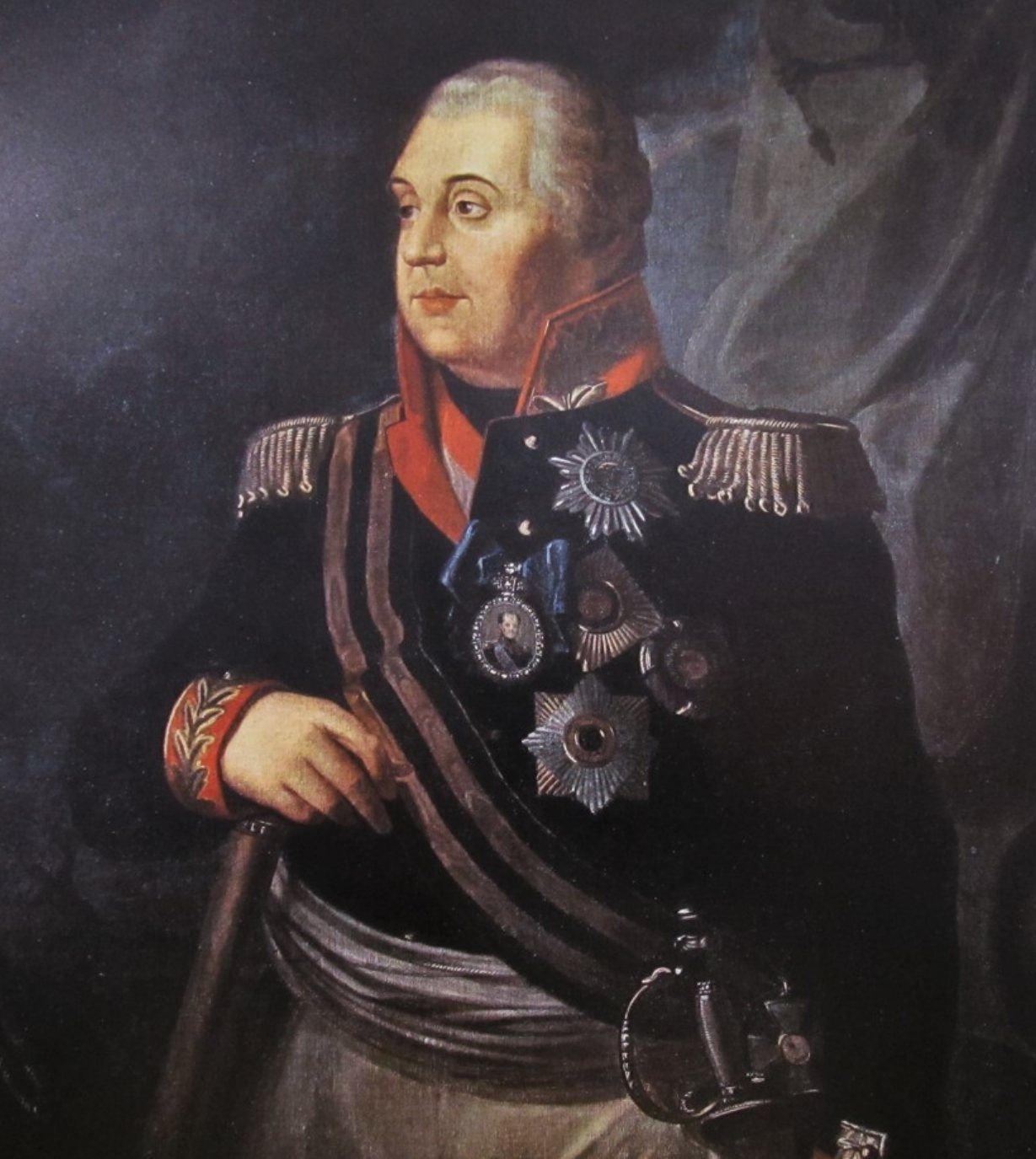
The day before the French entered the city, a dramatic council was held in the village of Fili, on Moscow’s western outskirts. There, Kutuzov had to choose between defending the city and preserving the army. Another battle at the gates of Moscow might have ended with the destruction of Russia’s last major military force. Abandoning the city made military sense, but politically it was almost unimaginable. Kutuzov was not sacrificing some insignificant point on a map. He was surrendering the coronation city of the ancient tsars, a place of Orthodox sanctity.
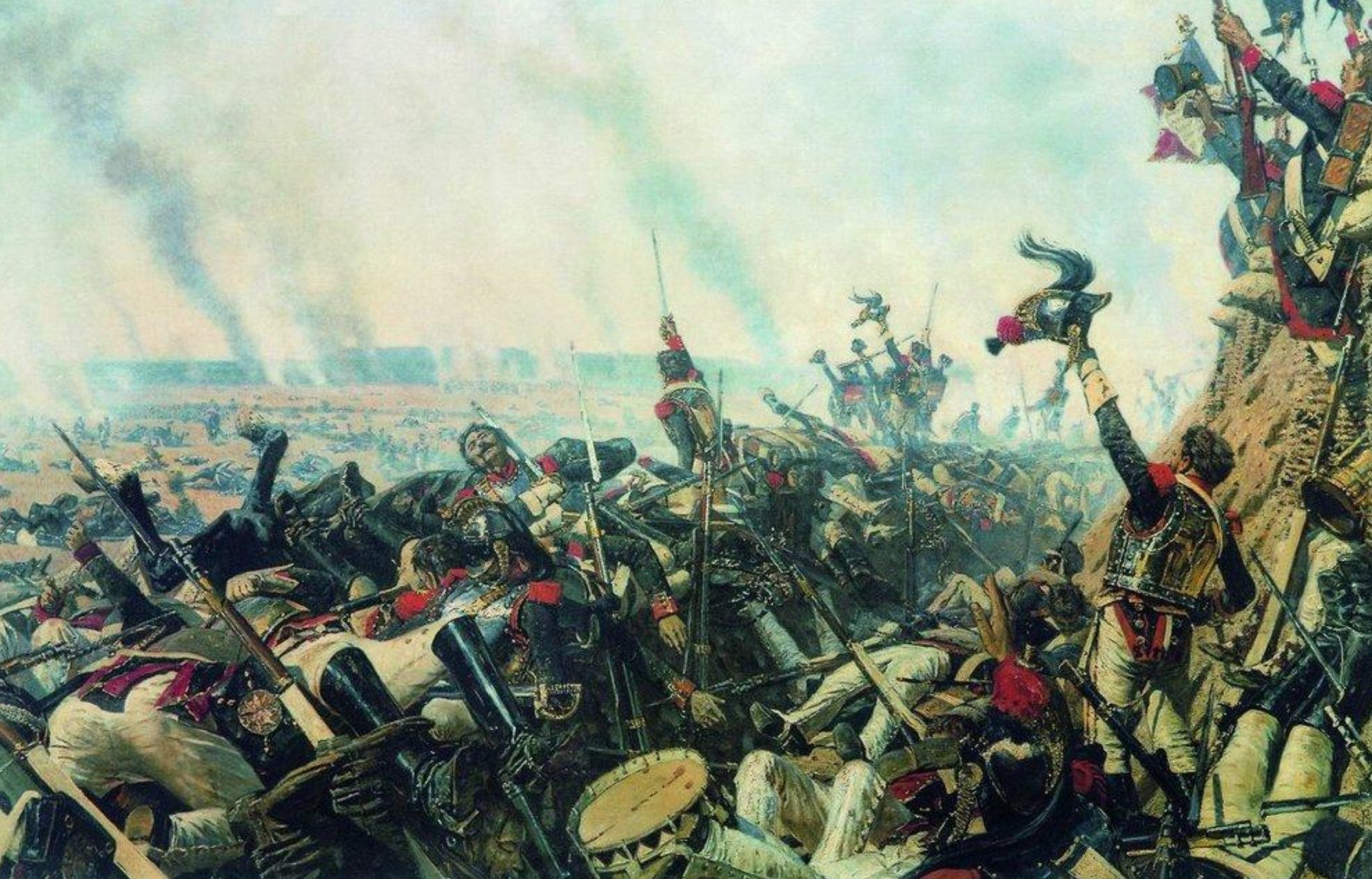
Moscow was not the official capital of the Russian Empire at the time. The imperial court and state administration had been based in St Petersburg since the reign of Peter the Great. Yet Moscow represented an older, deeper Russia, its historic and spiritual heart. Napoleon had therefore occupied the altar of the empire, but not its control room. He had captured neither the emperor, the government nor the Russian army. He had seized a symbol in the belief that it was connected to a lever capable of moving the state. Alexander denied him that lever.
The evacuation was chaotic but immense. Of Moscow’s roughly 262,000 inhabitants, perhaps only ten thousand remained, among them the poor, the sick and wounded Russian soldiers. Moscow’s governor-general, Count Fyodor Rostopchin, had already been removing officials and residents whom he regarded as sympathetic to the French. As the city was about to fall, the fire brigade was withdrawn as well, taking nearly one hundred pumps with it. French forces began entering an almost deserted Moscow on 14 September, and Napoleon installed himself in the Kremlin the following day.
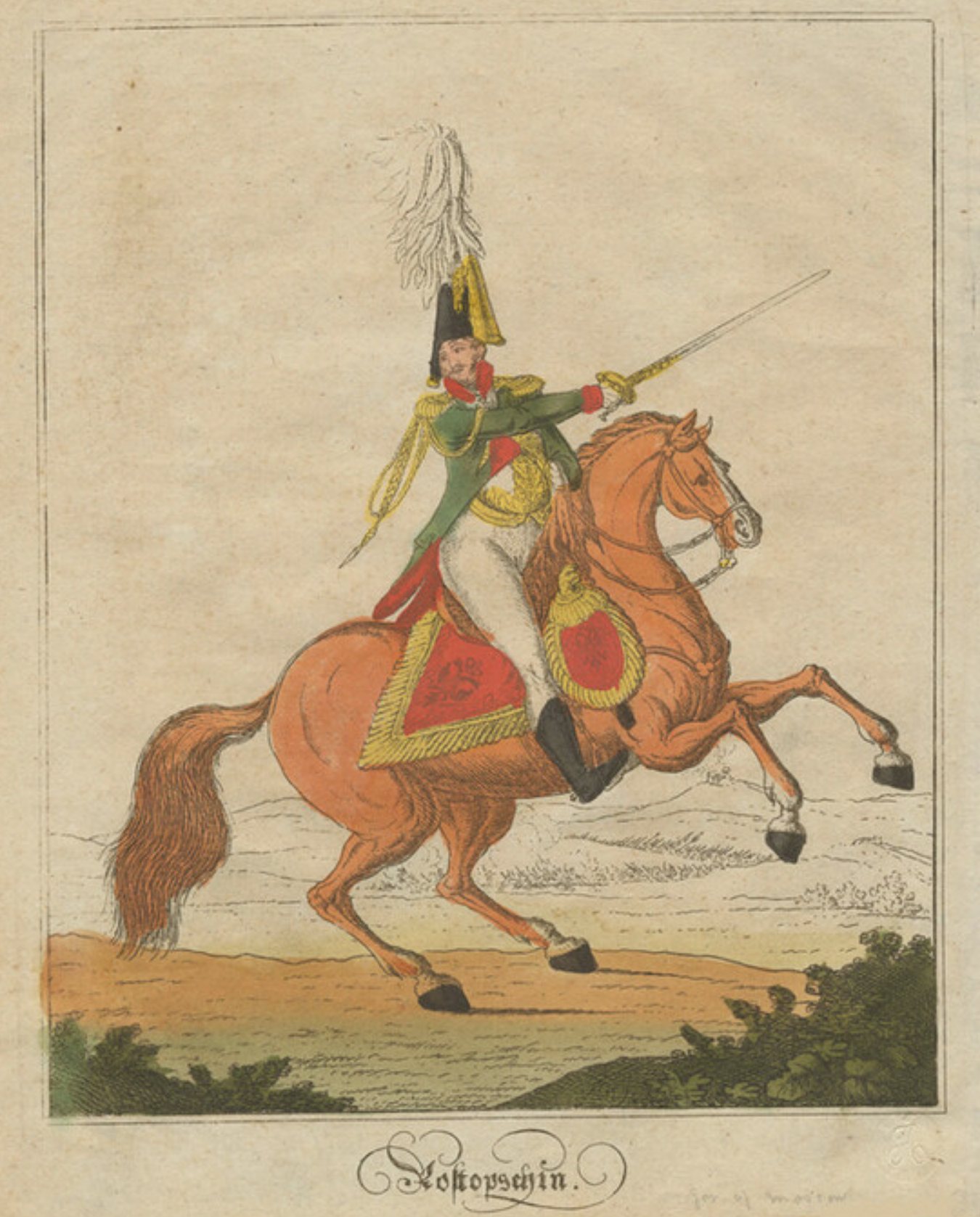
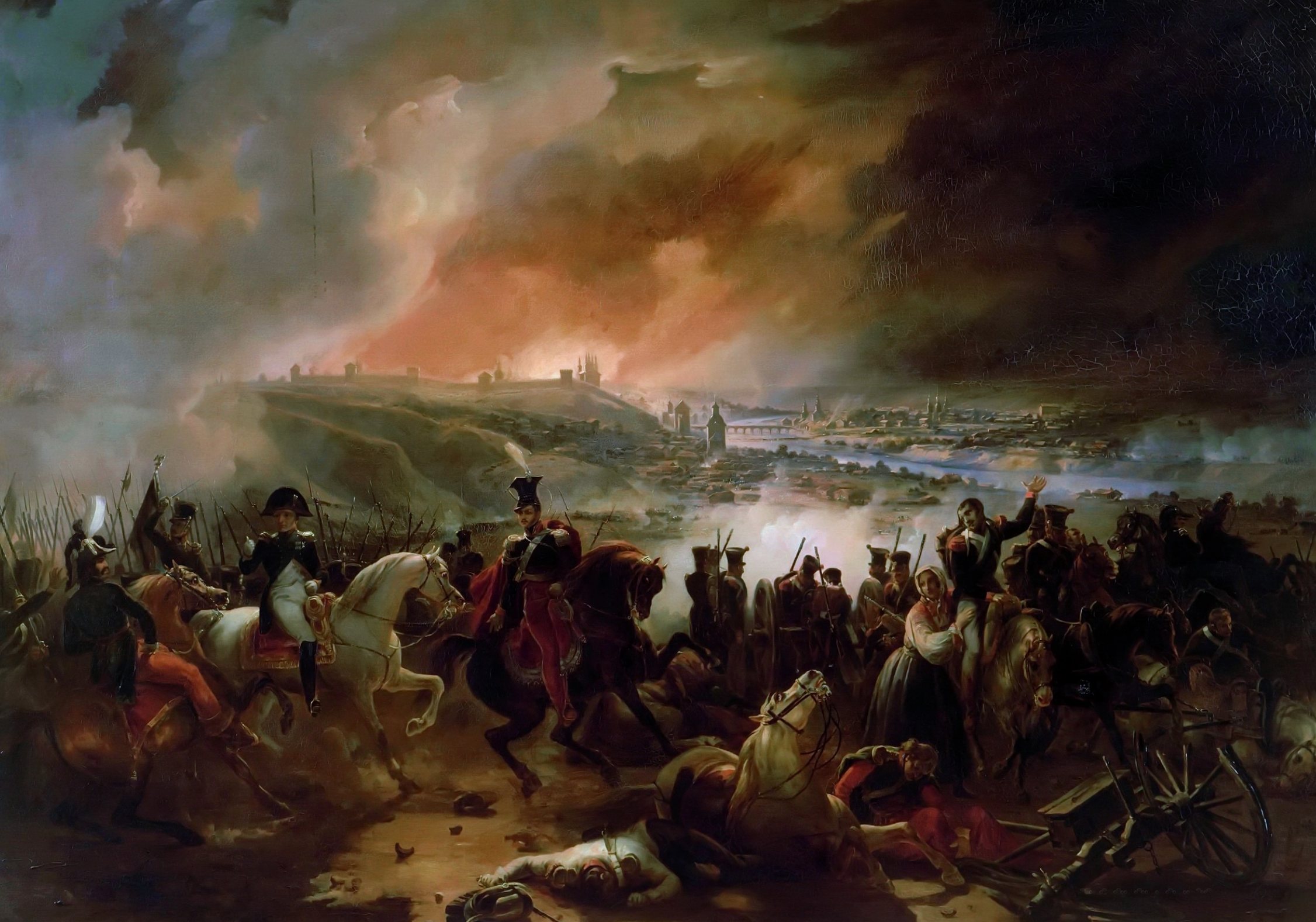
French soldiers entered a city of shuttered houses and abandoned palaces. Instead of a population acknowledging their victory, they found silence, a handful of frightened civilians and a multitude of ownerless possessions. Moscow looked like a prize, but did not behave like a conquered city. Fires began breaking out on the very first evening.
The question of who set Moscow ablaze has never produced a wholly straightforward answer. There is strong evidence that Russian agents deliberately torched at least some public buildings and warehouses. It is difficult to regard Rostopchin’s removal of the firefighting equipment as a coincidence. The French captured suspected arsonists and executed them by firing squad, although testimony obtained in the presence of an occupying army hardly constitutes solid historical evidence.
But Moscow did not burn merely because someone touched a single torch to it. The city was built largely of wood, a strong wind was blowing and the municipal authorities no longer existed. French soldiers broke into houses, lit cooking fires and looted cellars. Deliberate Russian arson probably started part of the disaster, but the chaos of war gave it proportions that no one could control. The fire had a political purpose, but probably no single author.
By 16 September, the flames were threatening the Kremlin itself. The French general Philippe de Ségur later described Napoleon surrounded by a "sea of fire", forced to find a side exit with his entourage and take refuge in the Petrovsky Palace outside the city centre. His memoir captures the conqueror’s elation turning into disbelief within a matter of hours. Roughly two-thirds of Moscow had been destroyed or badly damaged.
The fire did not consume every store of provisions, as simplified accounts often suggest. There was still food in the cellars, along with enormous quantities of alcohol. The palaces offered furs, silk and valuables. A French soldier might find dinner, a new set of clothes or an object worth several years’ pay. What he could not find was a sustainable supply system for one hundred thousand men and thousands of horses.
That was the difference between abundance and logistics. An army cannot survive the winter on provisions discovered at random in private cellars. Looting further destroyed discipline, while the possessions piled onto wagons would soon slow the retreat. Moscow offered everything that could be stolen, but very little that could be distributed reliably. The victors became tenants of a ruin.
Napoleon nevertheless waited for the military reality to produce its political consequence. On 20 September, he wrote to Alexander that "the beautiful and magnificent city of Moscow no longer exists", blaming Rostopchin for the fire. Beneath the moral outrage lay a barely concealed offer to negotiate. Further messages were sent through intermediaries, while the French diplomat and general Jacques Lauriston met with Kutuzov. There were conversations, courtesies and delays. There was no peace.
Alexander’s silence proved more effective than another battle. The Russian emperor understood that he did not need to drive Napoleon out of Moscow immediately. It was enough to refuse to acknowledge that entering Moscow had ended anything. Every day without an answer depleted French supplies, killed more horses and brought the bad weather closer. Napoleon could issue orders from the Kremlin, post sentries and imitate the routines of government. All he lacked was anyone willing to obey him beyond the reach of French bayonets.
Meanwhile, Kutuzov had not simply fled eastward. After leaving Moscow, his army turned southwest and encamped near Tarutino. There it recovered, received reinforcements and protected the richer regions around Kaluga. It also guarded the roads to the vital workshops at Tula, while Cossacks and partisans threatened the French line of communication with Smolensk. Moscow may not have been a trap prepared in advance, but it was rapidly becoming one.
Napoleon now had several options, all of them bad. Staying meant spending the winter in a burnt-out city. Marching on St Petersburg would extend his already unsustainable lines of communication even farther. Moving south meant confronting Kutuzov again. Yet retreating without a peace treaty would amount to a public admission that the conquest of Moscow had no political value at all.
And so he waited. For five weeks. With every passing day, leaving became more difficult precisely because remaining became more dangerous. It was a trap of prestige, perhaps the strangest of his career. It was enclosed by no wall, moat or enemy army. It was sealed by Napoleon’s need for his greatest trophy to mean something after all.
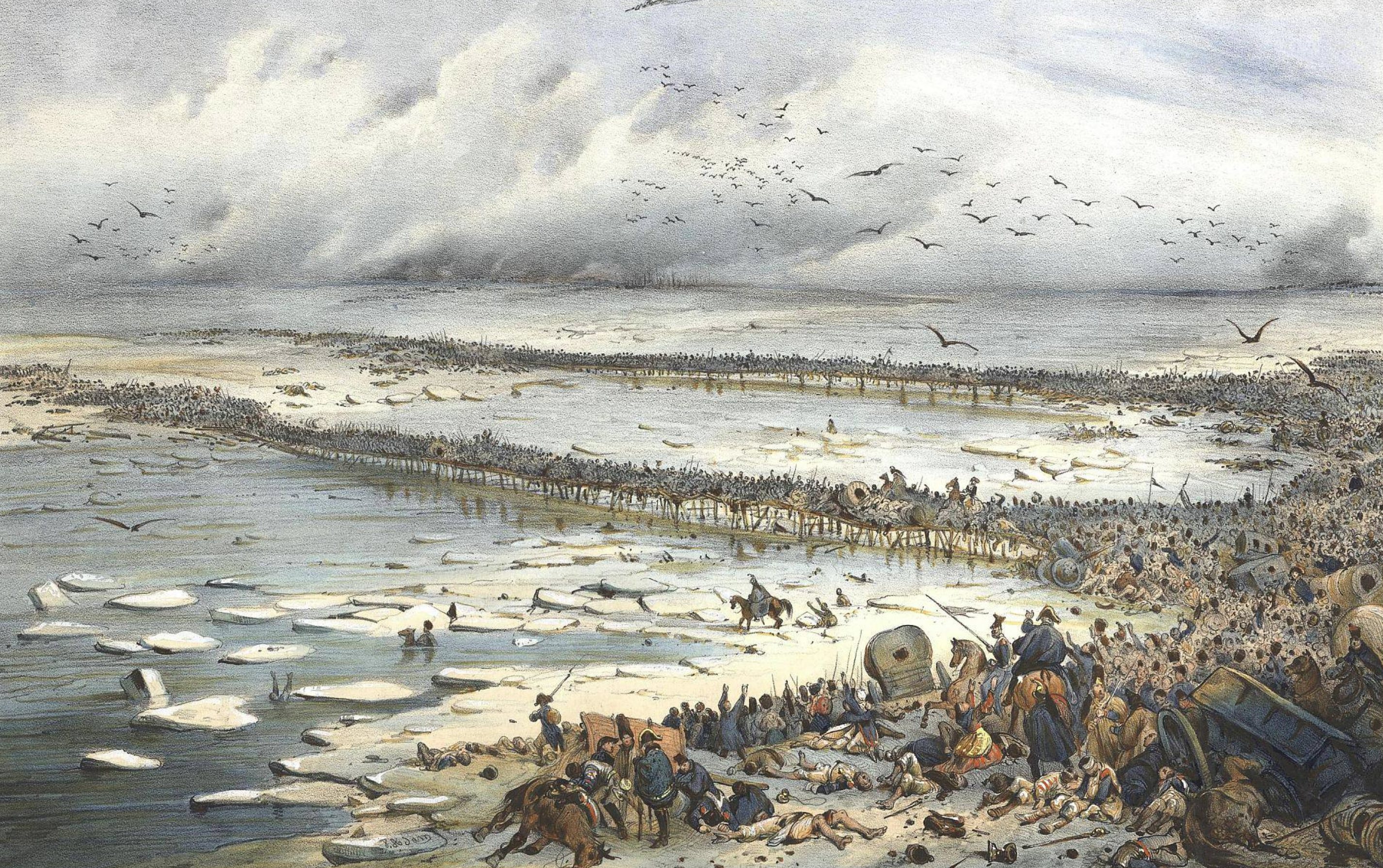
Following a Russian attack on Murat’s forces near Tarutino, Napoleon finally left Moscow on 19 October. He attempted to break through towards the less devastated south, but after the Battle of Maloyaroslavets he was unable to secure a safe route. The army returned to the already stripped road to Smolensk. There it encountered hunger, disease and Russian attacks. Only then came the worst of the frost.
The popular image of Napoleon being defeated by "General Winter" therefore misses the heart of the story. Winter merely completed the catastrophe and transformed the retreat into a scene of almost biblical suffering. The underlying defeat, however, had occurred earlier. The Russian army survived Borodino, Alexander refused to negotiate, and Napoleon remained hundreds of kilometres inside enemy territory for far too long, waiting for a political outcome that never came.
When General Winter arrived
The chronology does not absolve winter of blame, but it does strip it of command. Napoleon left Moscow on 19 October, while the weather was still relatively mild. Before the heavy snow and bitter frosts arrived in early November, he had already been stopped at Maloyaroslavets.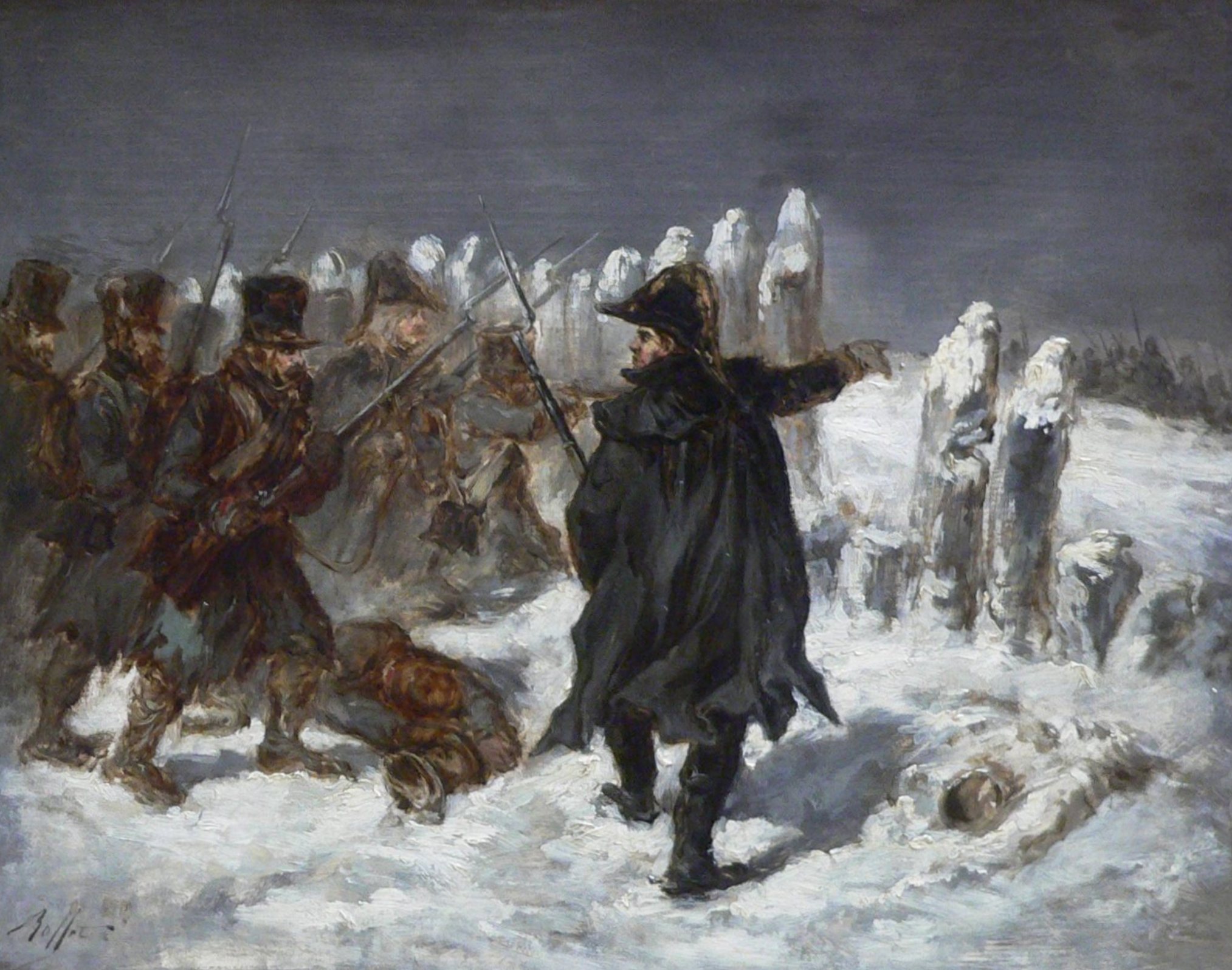
A victory, after all, has value only if the enemy accepts its consequences. A city can be occupied, a palace looted and a flag raised over the Kremlin. None of those things alone can force a state to admit defeat. Napoleon conquered Moscow on 14 September, but the Russians retained the power to decide what the conquest of Moscow meant.
The keys he waited for in vain may therefore be the finest symbol of the entire campaign. Napoleon had been given the city gates, the streets and the Kremlin. All he needed was a single message from Alexander to transform them into peace. The message never came. Moscow’s most devastating weapon was not fire, but silence.
Sources
- Fondation Napoléon Napoleon's Russian campaign: From the Niemen to Moscow https://www.napoleon.org/en/history-of-the-two-empires/timelines/napoleons-russian-campaign-from-the-niemen-to-moscow/
- Fondation Napoléon The Battle of Borodino: Napoleon Against Kutuzov https://www.napoleon.org/en/magazine/publications/the-battle-of-borodino-napoleon-against-kutuzov/
- Virtual Russian Museum Kivshenko A. D. Military Council in Fili in 1812 https://rusmuseumvrm.ru/data/collections/painting/19_20/zh-4176/index.php?lang=en
- HISTORY Napoleon enters Moscow https://www.history.com/this-day-in-history/september-14/napoleon-enters-moscow
- Free University Berlin German Soldiers in Russia, 1812: Introductory Text https://www.geschkult.fu-berlin.de/en/e/mwme/essays/german-russia/James_Intro/index.html
- National Army Museum The Emperor’s samovars https://www.nam.ac.uk/explore/emperors-samovars
- Project Gutenberg History of the Expedition to Russia https://www.gutenberg.org/ebooks/18113 General Count Philippe-Paul Ségur; suvremeno memoarsko svjedočanstvo sudionika pohoda, drugo englesko izdanje iz 1825.
Comments