
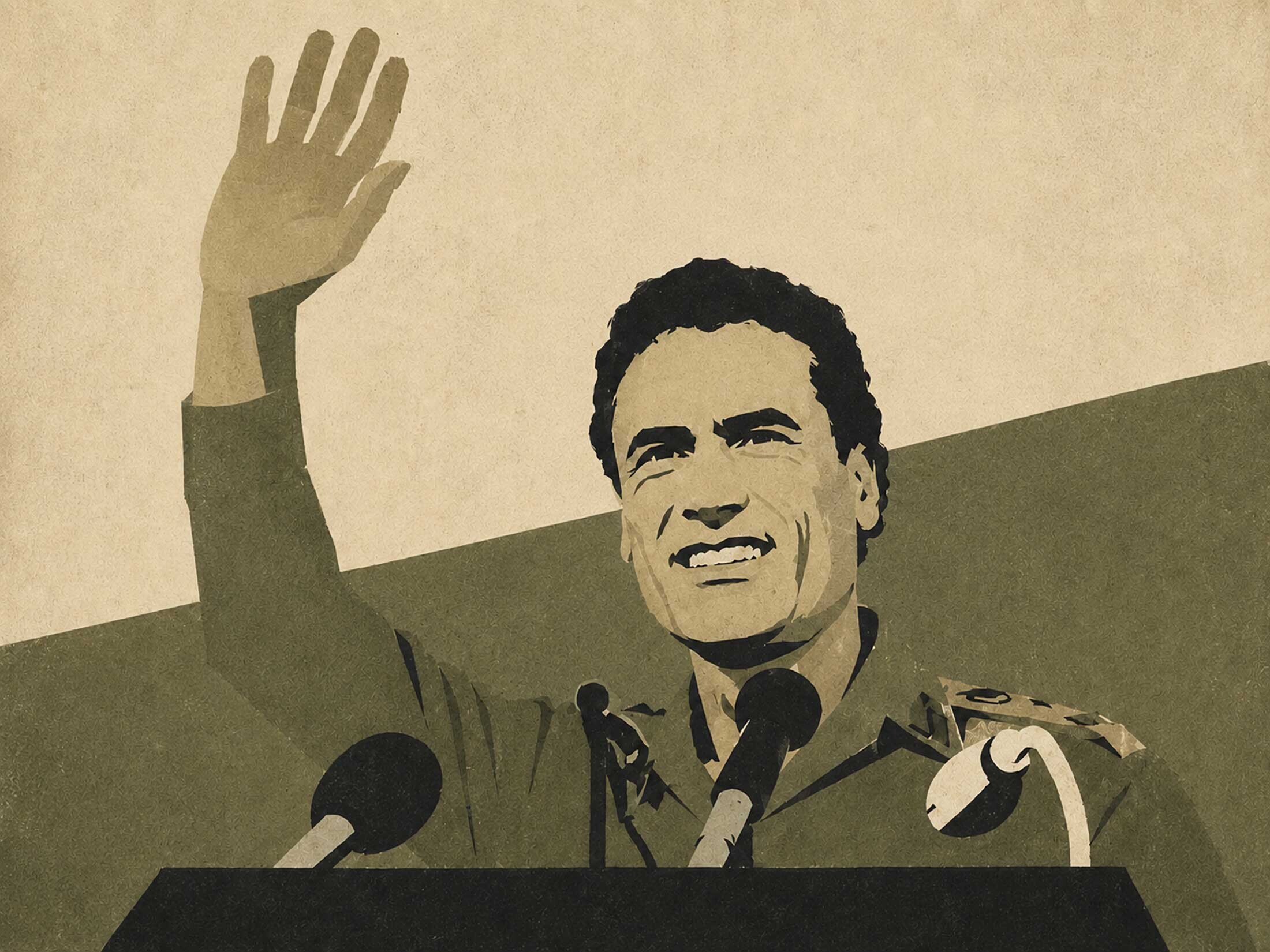
At dawn on September 1, 1969, Washington had enough military power in Libya to overthrow a government, but not enough intelligence to know who had just overthrown it. Roughly five thousand Americans were stationed at Wheelus Air Base and its surrounding facilities, while the Sixth Fleet cruised the Mediterranean. One of the first U.S. assessments even identified former officer Saad al-Din Abu-Shuwayrib as a possible leader of the coup. The name of 27-year-old Colonel Muammar Gaddafi was not yet familiar enough to make it into serious briefings.
The real paradox, however, was not that the United States failed to recognize Gaddafi. It was that, once it did recognize him, it made no attempt to stop him. The young officers denounced corruption, promised social reform, and guaranteed the safety of foreigners and oil companies. Conveniently, they also presented themselves as opponents of communism. Washington therefore recognized the new government as early as September 6. Less than two months later, that same government would demand that the Americans leave Wheelus. Revolutions, it turns out, can sometimes slip most easily past great powers when, for the first few days, they speak exactly the language those powers want to hear.
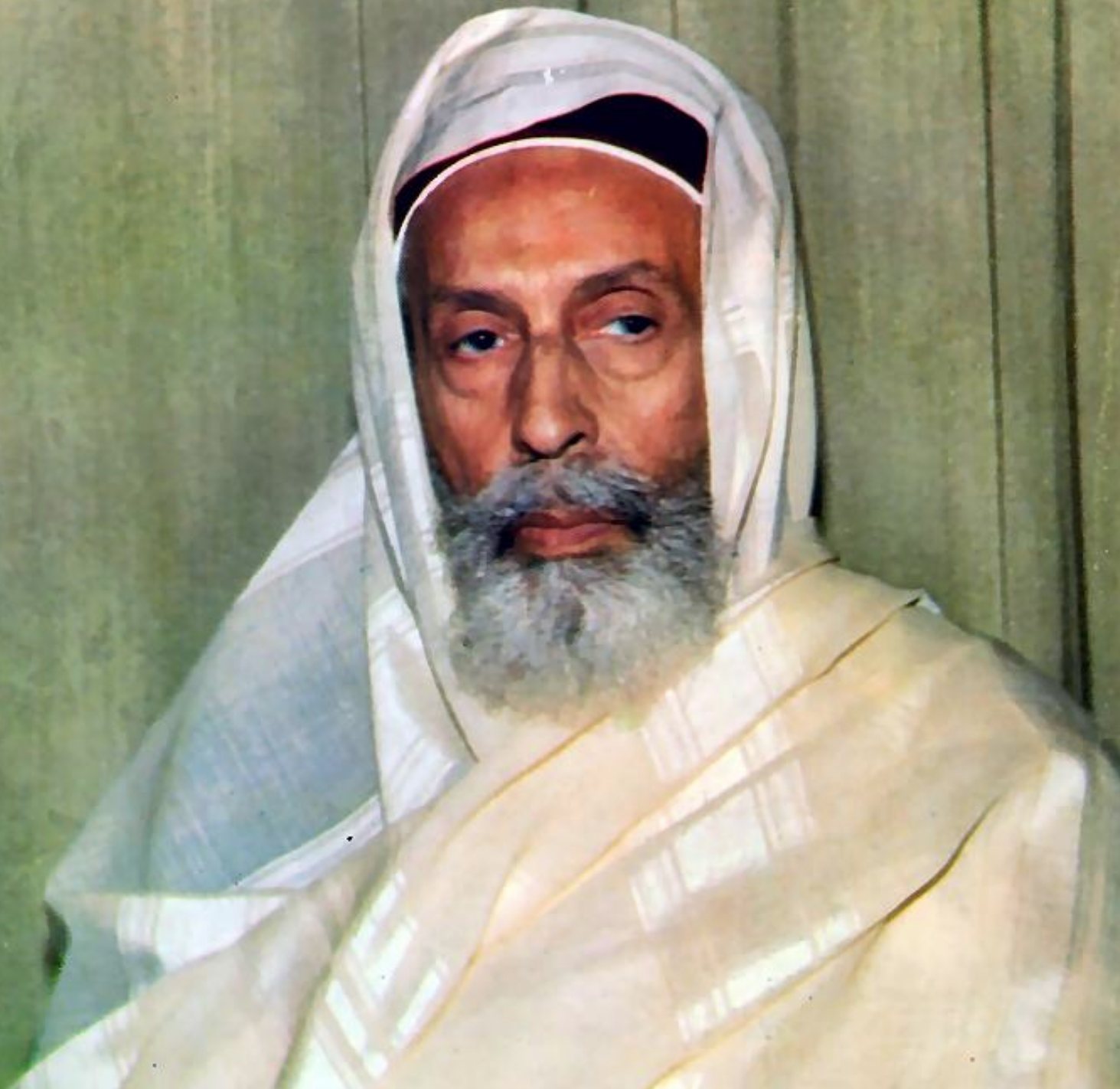
King Idris's Libya was not simply another sleepy Arab monarchy. Idris I, the religious leader of the Senussi order and Libya's first king, had united three historically distinct regions into an independent state in 1951. At the time, the country was so poor that it depended heavily on foreign aid and payments for the use of military bases. The discovery of oil in 1959 changed everything—but not evenly. Money began pouring in faster than institutions could be built. The royal court and its patronage networks created the impression that the country's future was being distributed behind a handful of carefully guarded doors. The American and British military presence was a further reminder that Libyan independence still came with weights attached.
Gaddafi, by contrast, came from a world that rarely passed through those doors. Born into a Bedouin family near Sirte, he grew up fascinated by Gamal Abdel Nasser, the Egyptian president and towering icon of Arab nationalism. Nasser had shown that a military officer from modest origins could overthrow a monarchy, nationalize the Suez Canal, and face the great powers without lowering his eyes. While still a cadet in Benghazi, Gaddafi organized a circle of Free Officers. To him, Western military bases were not neutral security installations. They were physical proof that political decolonization remained unfinished.
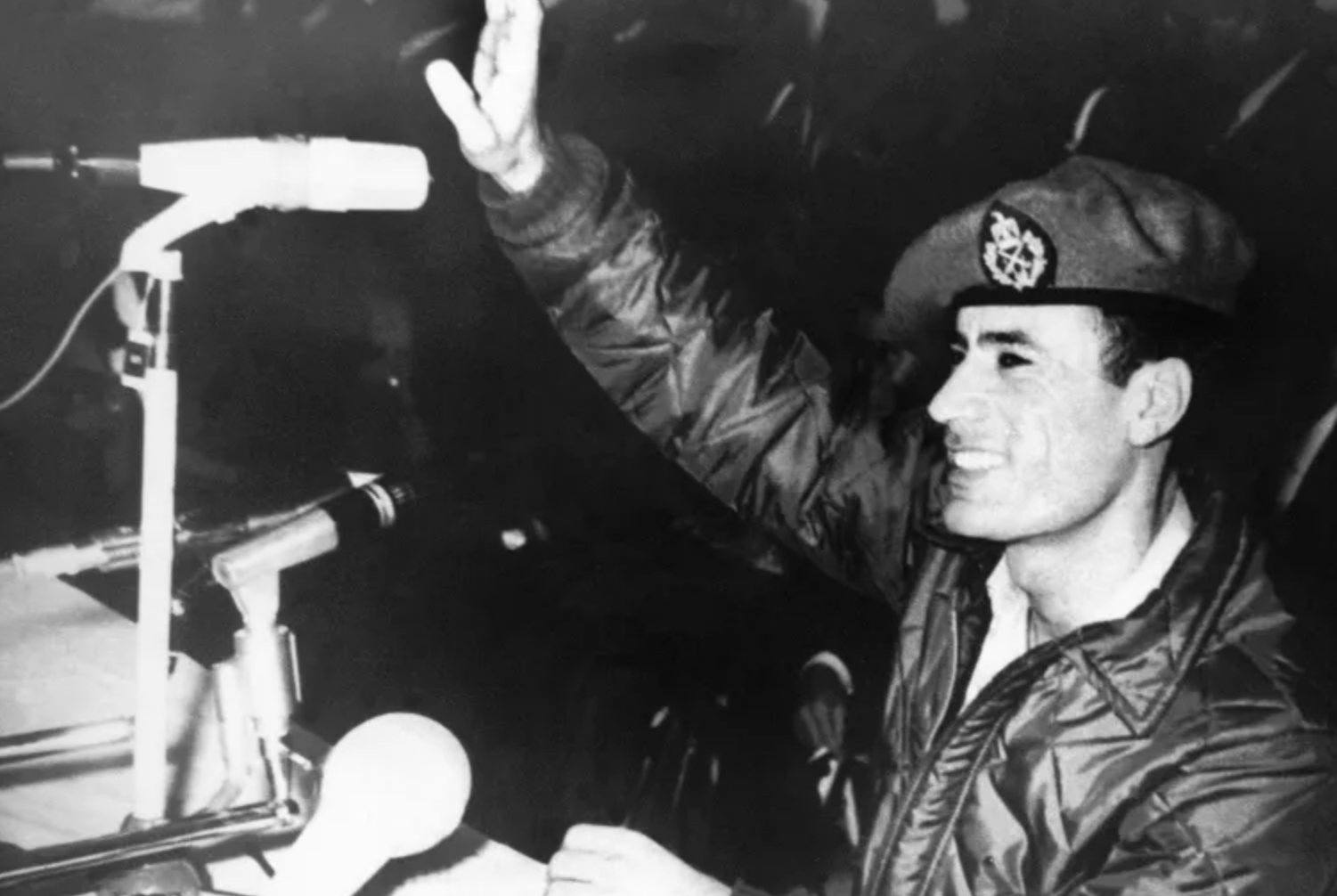
The coup was carried out with almost astonishing ease. Around seventy young officers and soldiers, many of them serving in communications units, launched the operation in Benghazi. Key institutions were seized within hours. The king was receiving medical treatment in Turkey, while Crown Prince Hasan al-Rida quickly renounced his authority and called on the population to accept the new government. There was no major battle, no spectacle of civil war. The coup was almost bloodless, but the word "coup" describes only the method. What followed was something much larger—and it genuinely aspired to be a revolution.
The coup with which Gaddafi beat another coup to the finish line
Libya at the end of August 1969 was not a country in which no one dared imagine overthrowing the monarchy. Quite the opposite: King Idris's problem was that several groups had simultaneously concluded that his rule was nearing its end. The most dangerous among them was Abdul Aziz Shelhi, a senior Libyan officer from a circle that had enjoyed the king's confidence for years. His brother Omar was a royal adviser. British documents later revealed that Abdul Aziz was preparing a coup of his own for September 5, 1969.This was not some barroom conspiracy by disgruntled officers. Shelhi stood high enough in the military hierarchy to count on support within the command structure, while his family had strong ties to both the royal court and the elites of Cyrenaica. The British took him seriously enough that, during the crisis, they expected one of the Shelhi brothers might emerge as Libya's new strongman. King Idris, meanwhile, was abroad, ill and weary of ruling, while the possibility of his abdication was already hanging over the country. The old order still stood, but it increasingly resembled a building in which several men were simultaneously searching for the key to the front door.
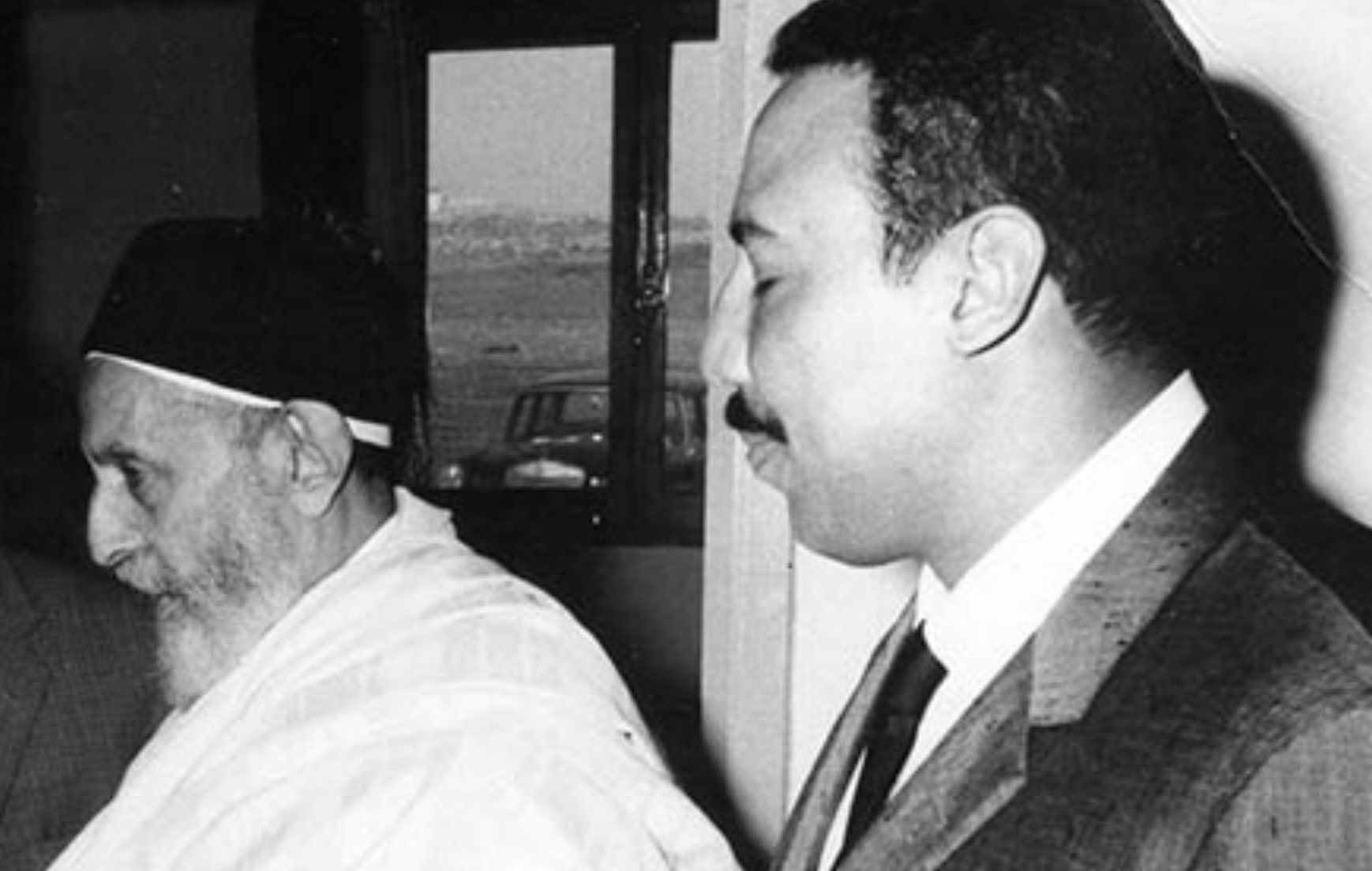
That detail casts the entire revolution in a different light. On September 1, Gaddafi did not merely overthrow a king. He also won the race among those who had already decided that the king had to go. Had the Free Officers waited only a few more days, Libya might still have lost its monarchy—but the man standing at the top of the new order could have been someone entirely different. History does not always divide neatly between revolution and the status quo. Sometimes two revolutions race toward the same palace, and four days decide which one will own the next four decades.
Why did Washington not intervene? A later report by the U.S. Congressional Research Service summarized the answer quite clearly: the Revolutionary Command Council initially presented itself as reformist and anti-Soviet. In the Cold War, that was no small recommendation. American assessments emphasized the moderation of the new authorities, the protection of foreigners, and their promise to honor international obligations.
There was also a colder calculation. American diplomats had concluded that there was little point in rescuing regimes that had alienated their own populations and weakened themselves through corruption. Washington was not prepared—at least not at that moment—to offer such Arab monarchies a guarantee of survival. Great powers like to talk about loyalty, but they rarely send armies to rescue a failed political product simply because they once kept it on the shelf.
Nor was the West powerless. Britain had around 1,100 troops near Tobruk, while Wheelus, as noted earlier, housed roughly 5,000 Americans. But any intervention risked setting fire to a country whose oil production amounted to roughly a quarter of European demand at the time.
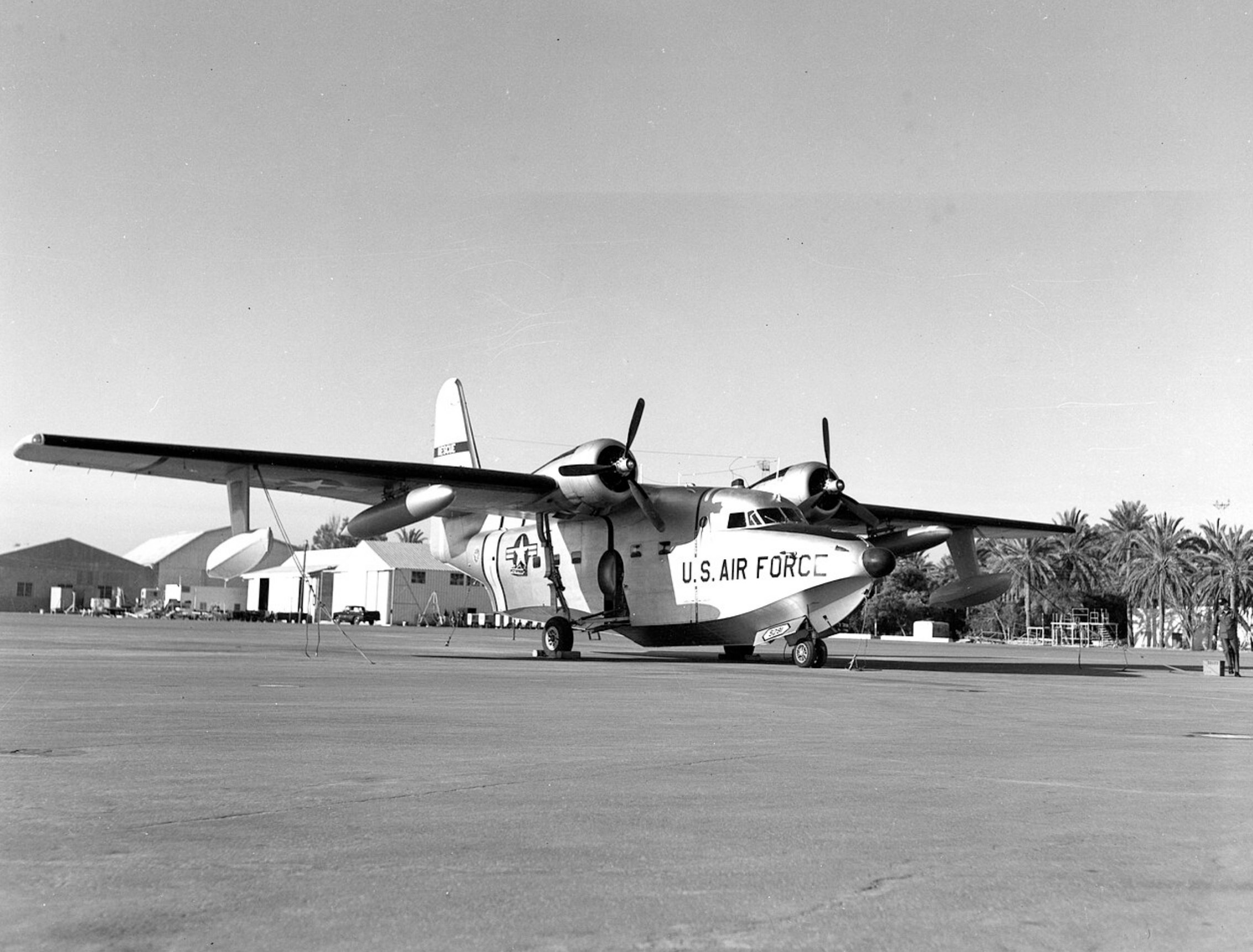
At meetings in Washington toward the end of 1969, it became clear that the base mattered—but oil mattered more. Henry Kissinger, then President Richard Nixon's national security adviser, warned that the new regime was not yet irreconcilably hostile and that American pressure might make it so. A show of military force was even considered, but ultimately rejected. When the choice came down to runway or barrel, the barrel proved to have the more persuasive diplomacy.
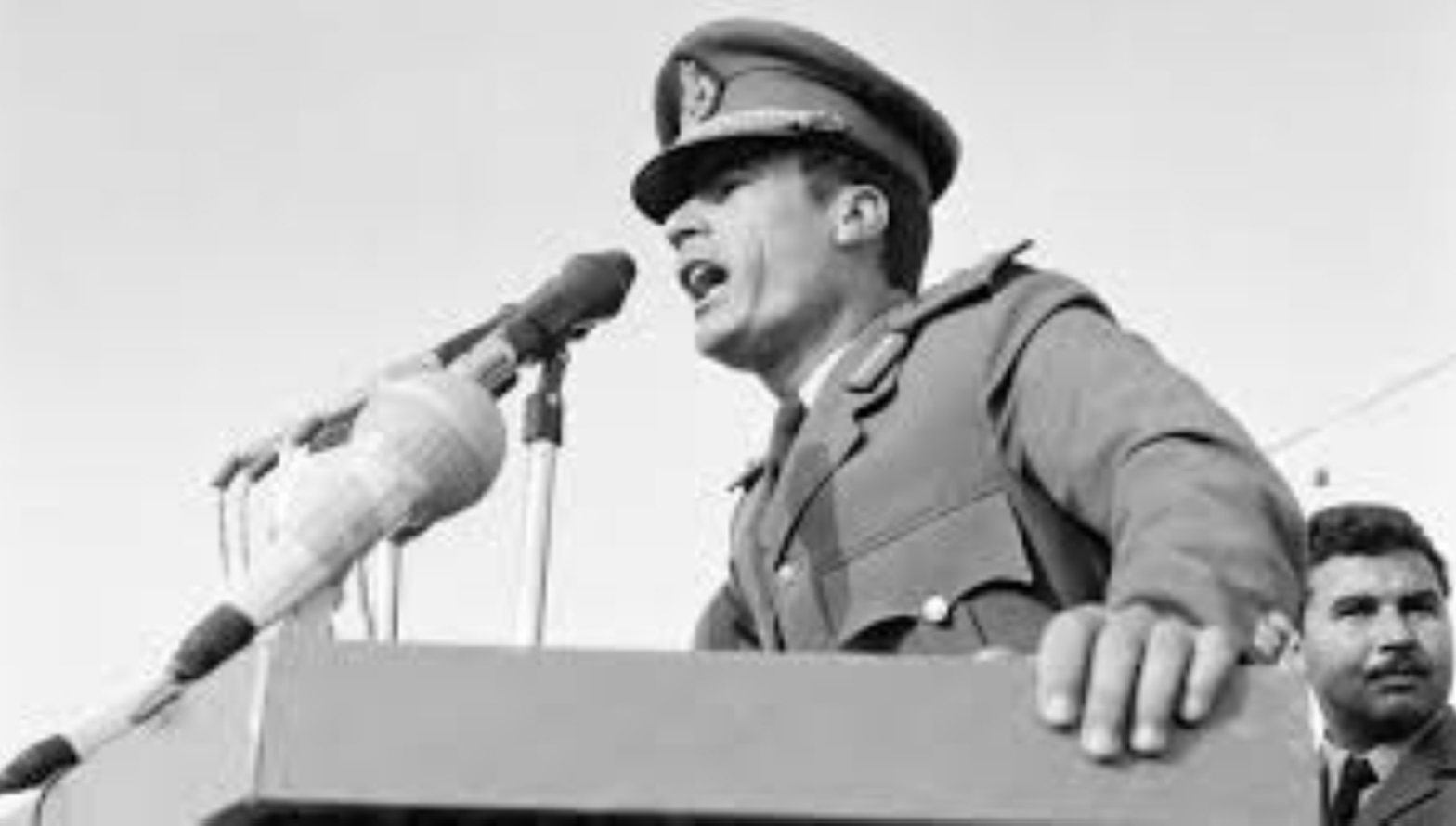
Even before the coup, the royal government had cautiously begun raising the question of the future of foreign bases. Gaddafi's difference was that he turned a diplomatic possibility into a deadline. On October 30, 1969, the Libyan government formally requested negotiations to end the American military presence. Britain received a similar demand.
British forces left at the end of March 1970, and Wheelus was handed over to Libya on June 11 of the same year. The final 48 members of the U.S. Air Force departed that day. In less than a year, Gaddafi had achieved what many postcolonial governments had postponed for years: he did not merely explain to foreign powers that they ought to leave—he gave them a date by which to do it.
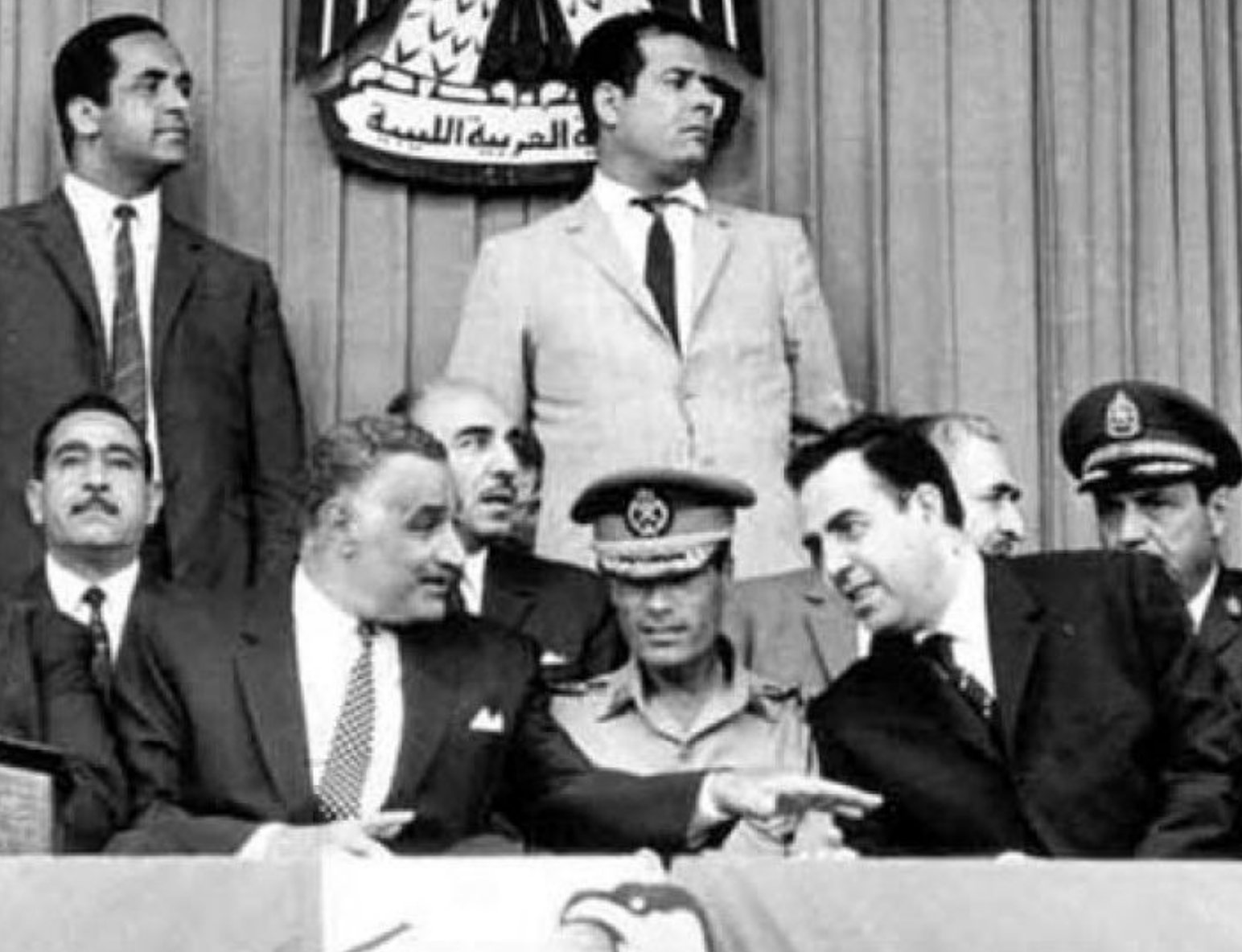
Then came the oil. Gaddafi refused to accept the existing arrangement in which foreign companies set almost all the important terms while the producing state was largely left to decide how politely it should say thank you. Libya began demanding higher prices and a larger share of tax revenues. It used production cuts as leverage.
The American company Occidental was particularly vulnerable. Unlike the major international oil giants, it did not have enough alternative fields elsewhere to compensate for lost Libyan production. Gaddafi understood that weakness very well. Occidental's negotiators soon discovered that sovereignty could come with a valve.
The agreements reached in 1970 brought Libya around $1.4 billion in oil revenues in 1971, compared with roughly $1.1 billion in 1969 for a similar volume of production. The success became one of the precedents that encouraged other producing countries to push harder for better terms. For decades, the oil companies had behaved like owners of resources they formally merely extracted. Now the balance was beginning to shift, and Libya played an important role in strengthening OPEC's bargaining power.
For many Libyans, these moves were not abstract geopolitics. They meant that a state which until recently had rented out its territory simply to survive was beginning to behave like the owner of its own resources. The government expanded education and healthcare. Money flowed into housing and infrastructure, while opportunities for advancement opened to social groups the monarchy had largely kept at the margins.
A later American study of Libya would conclude that Gaddafi's government made the first serious attempt to create a unified Libyan identity that could rise above the country's old regional divisions. In a state composed of Tripolitania, Cyrenaica, and Fezzan, that was no small task. The monarchy had largely held the country together by balancing its regions against one another. The revolution tried to turn it into a shared political project.
Washington misread one important thing in 1969. Being anti-Soviet did not necessarily mean being pro-American. Gaddafi's Arab socialism drew on Islam, nationalism, and the idea of social justice rather than Soviet Marxism. He did not want to replace one foreign patron with another. He wanted room for Libya to be neither a Western military platform nor a Soviet satellite.
American diplomacy heard "against Moscow" and mentally added "therefore for Washington." It was a recurring imperial mistranslation. The young Libyan officers were not driven by a desire to move from one Cold War camp into the other. They were driven by the belief that a country with immense resources should no longer need anyone's permission to behave like a sovereign state.
The Gaddafi who emerged later, of course, did not remain merely the young reformer from Benghazi. The revolution gradually became personalized, political space narrowed, and the system increasingly depended on the will of one man. His unusual political experiment often produced institutions that looked revolutionary on paper but in practice remained subordinate to the leadership at the top.
It is possible to acknowledge that later authoritarianism and still understand why September 1, 1969 continues to stir powerful emotions. For many Libyans and across much of the Arab world, it was remembered as a moment when dignity was reclaimed. Foreign troops left the country, a larger share of its oil wealth remained in Libya, and for the first time the state spoke in the language of people who had long felt like guests in their own history.
King Idris did not fall because Washington suddenly developed a fondness for revolutions. He fell because his state was politically fragile, while the young officers moved quickly and correctly read the mood of the country. America did not stop them because it regarded them as an acceptable risk, perhaps even as useful reformers.
On that point, Washington was not entirely wrong—they really did want to reform the country. Its mistake lay elsewhere. It assumed that a reformer in a formerly subordinate country would naturally want to befriend the power that had spent so long treating that subordination as the normal state of affairs.
Sources
- Airandspaceforces.com The Years of Wheelus https://www.airandspaceforces.com/article/0108wheelus/
- Everycrsreport.com Libya: Background and U.S. Relations https://www.everycrsreport.com/files/20100316_RL33142_6743a0770263059c9c685e7a652bea2378cc75ed.html
- Foreign Policy Qaddafi Under Siege https://foreignpolicy.com/2011/03/15/qaddafi-under-siege-2/
- History.state.gov Historical Documents - Office of the Historian https://history.state.gov/historicaldocuments/frus1969-76ve05p2/d39
- Countrystudies.us Libya - The Economy https://countrystudies.us/libya/57.htm
- Opec.org Organization of the Petroleum Exporting Countries https://www.opec.org/opec_web/static_files_project/media/downloads/publications/60thAnniversaryBook_LOWResolution72dpi.pdf
Comments