
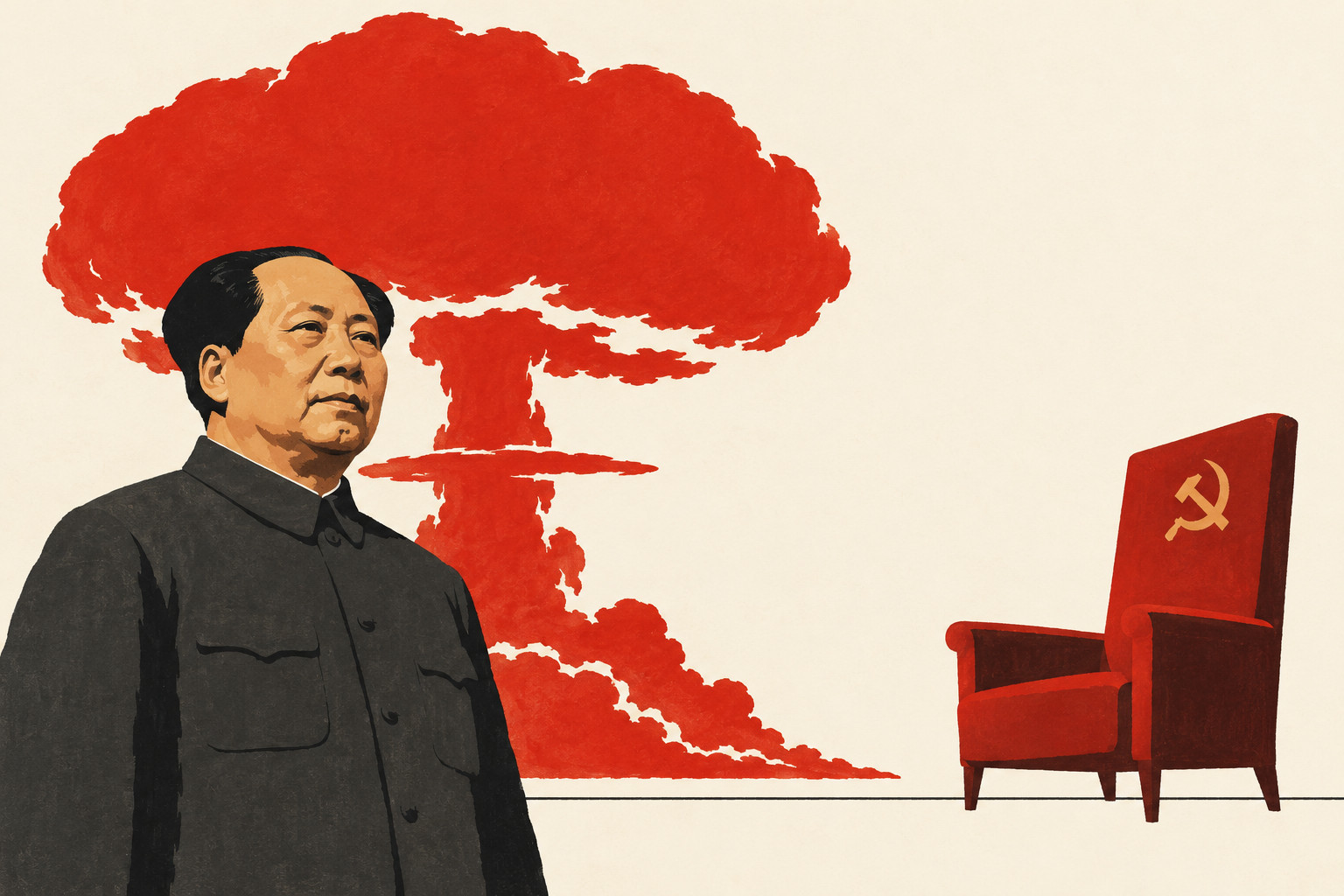
The mushroom cloud over Lop Nur not only marked the opening of China's nuclear era but also shifted the balance of power within the communist world.
Late on October 15, 1964, the Soviet news agency TASS announced that Nikita Khrushchev was stepping down because of "advanced age and deteriorating health." It was the official language of a system that disliked admitting when its leaders had just been overthrown. Khrushchev had, in fact, been removed two days earlier in closed party meetings, but the world learned of his fall only that evening. Less than a day later, a mushroom cloud rose above the desert of northwestern China...
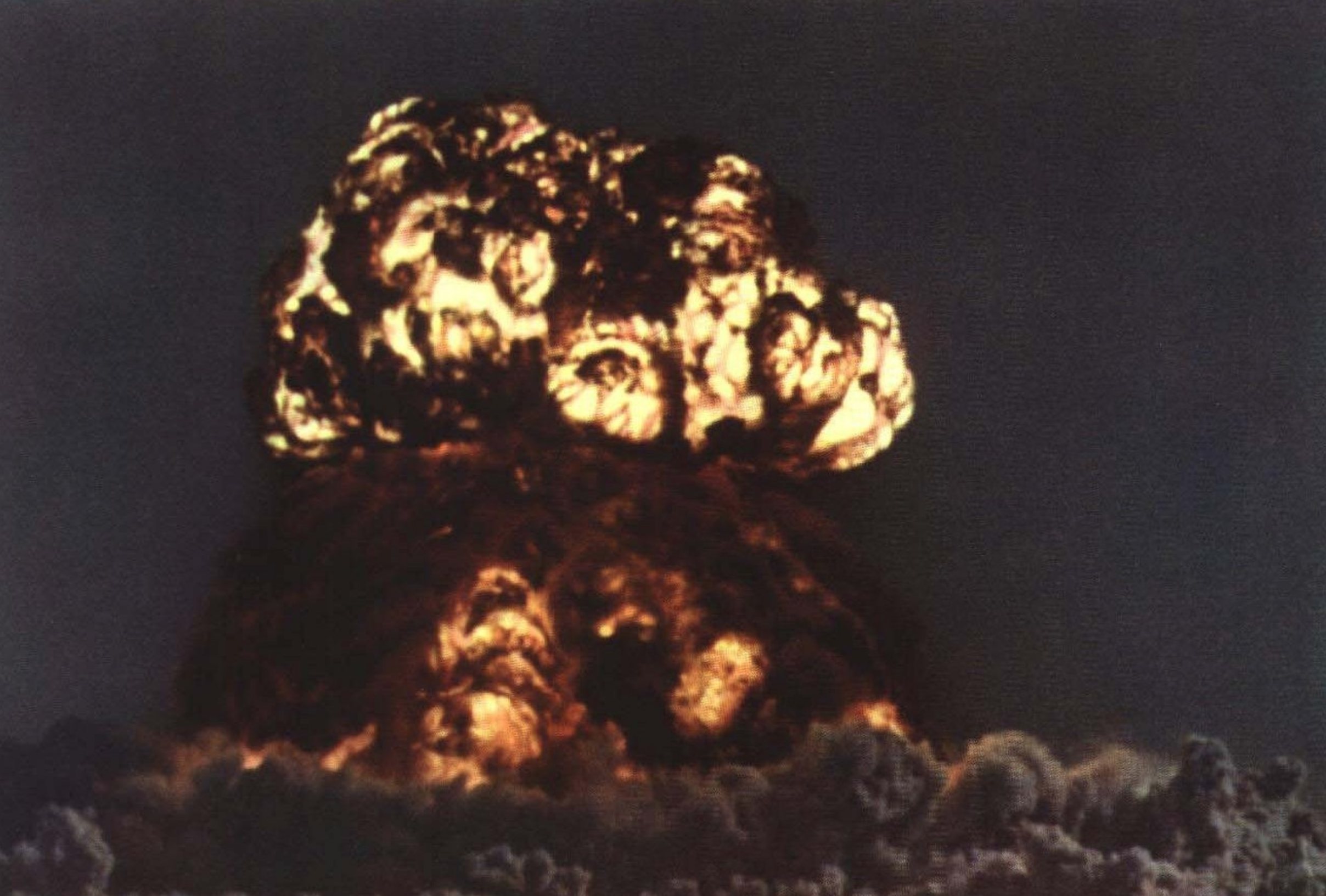
At 3 p.m. on October 16, China detonated a fission device with a yield of approximately 20 kilotons at the Lop Nur test site. It became the fifth country to carry out a nuclear explosion, after the United States, the Soviet Union, Britain and France. The test had not been timed to coincide with the coup in Moscow. Preparations had already been completed before Khrushchev fell. Yet history rarely stages such a perfect scene on its own: the man who had denied China the blueprint for an atomic bomb had just disappeared from power, and China had demonstrated that it could build one without him.
News of the explosion reached the White House just as President Lyndon Johnson and his closest advisers were discussing the change of leadership in Moscow. Almost literally at the same moment, two questions landed on their desk: who would now govern the Soviet Union, and what did it mean that Mao Zedong was no longer dependent on the Soviet nuclear umbrella?
The bomb as the ultimate guarantee of Chinese independence
China’s desire for the bomb was not driven by prestige alone. The People’s Republic had fought the United States in Korea and then endured the Taiwan Strait crises, during which Washington seriously considered using nuclear weapons. China had no seat at the United Nations. It was not recognized by Washington, and its security depended on a Soviet umbrella whose reliability Mao had no way of testing for himself. For a country that regarded the previous century as an age of foreign humiliation, the atomic bomb was becoming more than a weapon. It was proof that other powers could no longer decide how much Chinese independence was worth.
At first, it was Moscow that made the project possible. The Soviets helped build a research reactor and a cyclotron. They assisted in the search for uranium and trained Chinese scientists. A 1957 agreement also promised help with uranium enrichment, warhead production and missile development. Soviet assistance did not hand China a finished bomb, but it built much of the ladder the country would use to reach one.
The alliance then began to unravel. Mao regarded Khrushchev’s policy of "peaceful coexistence" with the West as an ideological retreat. Khrushchev, in turn, saw Mao’s revolutionary belligerence as dangerous adventurism that could drag the Soviet Union into nuclear war. In June 1959, Moscow abandoned its promise to provide a prototype bomb and crucial technical data. The last Soviet nuclear experts left China the following year.
A project named after the Soviet refusal
China’s response was given the name Project 596. The number was not a serial designation but a reference to the month and year of the Soviet refusal: June 1959. In other words, China named its atomic program after the moment Moscow told it that the project could not be completed. It is difficult to imagine a more elegant way of turning a diplomatic insult into a national industrial plan.
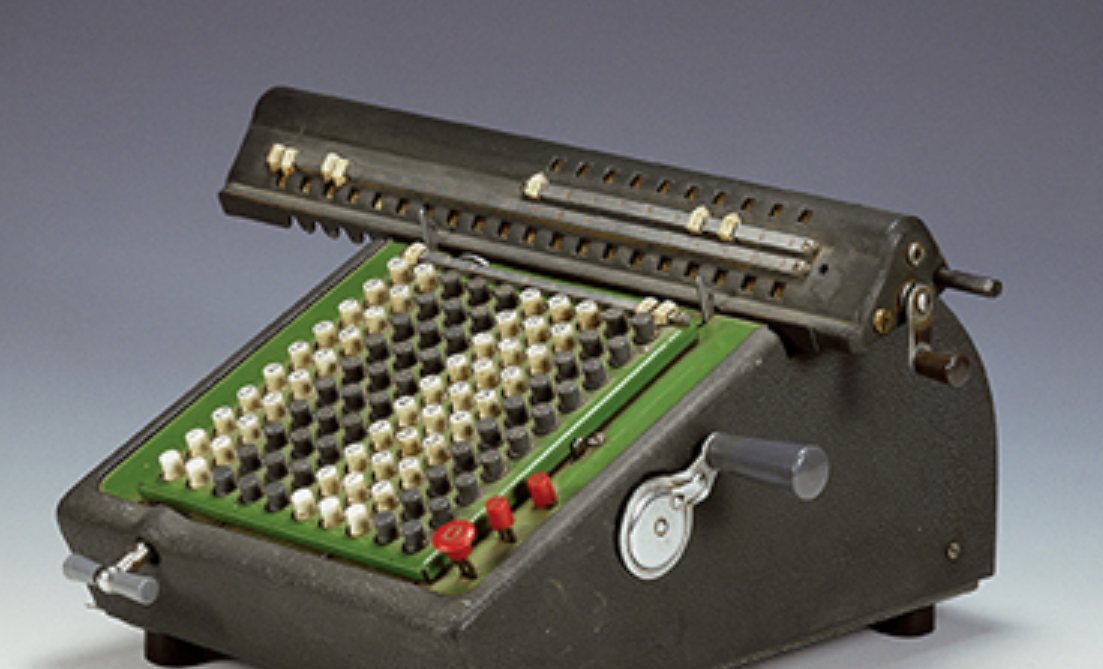
The program continued in a country still emerging from the famine and economic catastrophe of the Great Leap Forward. The cost was enormous, and strategic weapons were given priority at a time when millions of Chinese people lacked basic necessities. Yet behind the grand slogans lay painstaking technical work. Nuclear physicist Deng Jiaxian and his team completed nine rounds of crucial calculations on a Shanghai Tongyong Type-201 mechanical calculator. It was a hand-cranked device barely larger than a sheet of paper. Today it is preserved in the National Museum of China — a modest object on which the calculations were performed for one of the most destructive devices humanity has ever invented.
American intelligence agencies could see the preparations underway at Lop Nur, but they misjudged China’s capabilities. They expected a plutonium device and believed that the uranium enrichment facility in Lanzhou was not yet capable of producing enough material. The bomb, however, was an implosion device fueled with highly enriched uranium-235. Analysis of the radioactive cloud revealed that China had mastered a process American analysts had underestimated. They had photographed the test site from space, but they had not fully understood what was happening inside the factories on the ground.
Washington considered stopping the Chinese bomb
Before the cloud rose above Lop Nur, Washington debated whether China’s program could be stopped by force. John F. Kennedy’s administration examined the possibility of bombing key facilities, launching covert paramilitary operations and carrying out acts of sabotage. American officials also spoke with representatives of Taiwan about possible preventive action. In the background, there was even speculation that the Soviet Union, alarmed by the prospect of Mao acquiring the bomb, might assist with or at least tacitly accept a strike against its former ally.The prospect of Soviet cooperation proved illusory, however, while American assessments warned that a single attack might not permanently destroy such a widely dispersed program. China could rebuild the facilities, while Washington would risk igniting a major war in Asia and confirming Beijing’s claim that American aggression was the principal source of danger. A strike might also strengthen Mao’s political support at precisely the moment the United States was trying to isolate him.
The discussions continued under Lyndon Johnson, but none of the options was ever turned into an order.
The "paper tiger" gets its atomic cloud
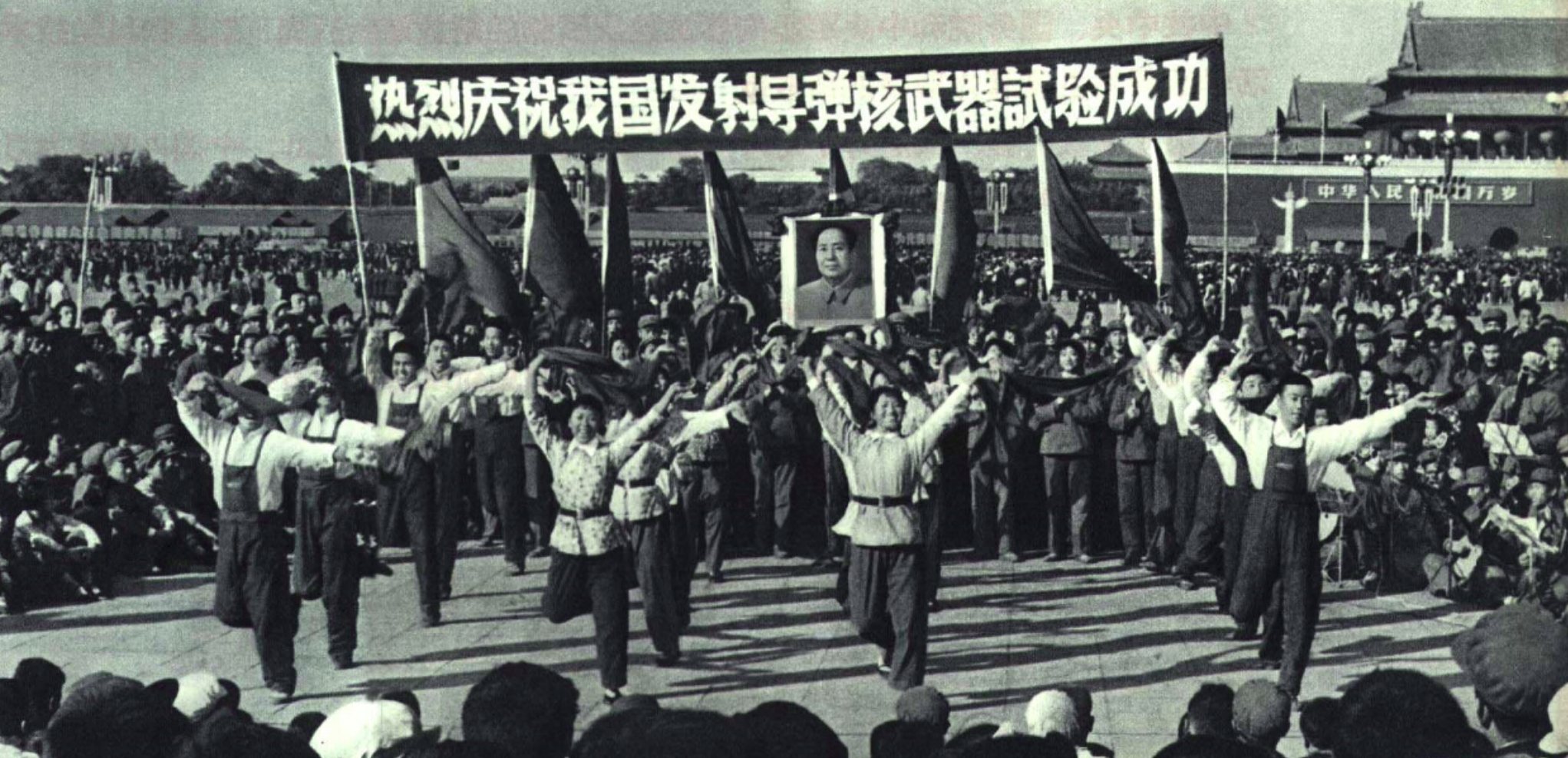
That same day, Beijing announced that it had developed the bomb to break the nuclear monopoly of the great powers. It also repeated Mao’s claim that the atomic bomb was a "paper tiger" — a curious phrase for a country that had just invested immense resources in producing a tiger of its own. At the same time, China pledged never to be the first to use nuclear weapons and called for their complete abolition. In nuclear diplomacy, it seems, demands for disarmament sound more convincing once you can manufacture such weapons yourself.
The test’s immediate military value was nevertheless limited. A single successful detonation did not mean that China possessed a stockpile of reliable bombs or dependable ways of delivering them. Johnson publicly stressed that years of work stood between an initial test and an operational arsenal. A subsequent American assessment expected China to possess only a handful of bombs over the next several years and did not anticipate an intercontinental capability before 1970.
From atomic to hydrogen bomb in just 32 months
Johnson was correct that China did not yet possess a mature arsenal, but the timetable soon proved shorter than Washington had expected. On December 28, 1966, China successfully tested key principles of thermonuclear weaponry. Then, on June 17, 1967, a bomber dropped China’s first full-scale hydrogen bomb over western China. The explosion had a yield of approximately 3.3 megatons — more than a hundred times that of the 1964 test.Only 32 months separated China’s first atomic explosion from its first full-scale thermonuclear one. The United States had taken more than seven years to make the same transition, the Soviet Union approximately four years and Britain around four and a half. China thus became the fourth country to test a hydrogen bomb, beating France to it, and achieved the fastest known transition from an initial fission test to a thermonuclear weapon.
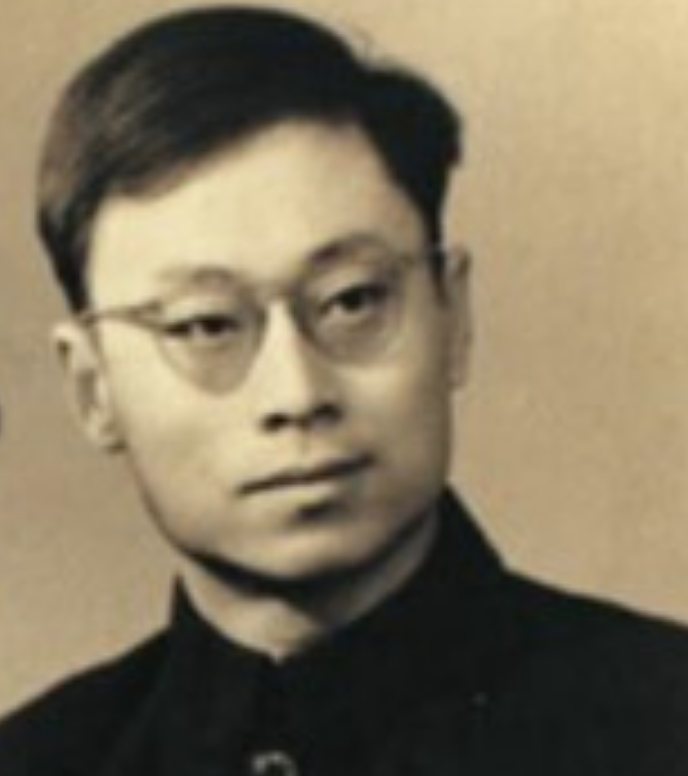
Behind that speed was a program that had not waited for the atomic bomb to be completed before turning to the next step. Chinese teams had been studying thermonuclear principles since the early 1960s, while the theoretical breakthrough is associated with physicist Yu Min and a period of intensive work in 1965. In less than three years, Lop Nur ceased to be the site of a single symbolic achievement. It became proof that China could systematically clear technological hurdles that had taken other powers far longer to overcome.
One bomb, and out of the Soviet shadow
For Mao, the symbolism mattered more. Khrushchev had spent years attempting to isolate the Chinese leadership within the international communist movement. Now he had been removed, while his ideological opponent had demonstrated the very technological feat Moscow had tried to prevent. An American analysis produced several days later concluded that Khrushchev’s fall and China’s atomic success virtually guaranteed that any serious Soviet rapprochement with Beijing would have to take place on Mao’s terms.
China did not become the Soviet Union’s equal overnight. Moscow possessed a vast arsenal, sophisticated missiles and the support of most communist parties. But Beijing no longer looked like a disobedient pupil dependent on its teacher’s patience. The communist world had acquired a second political and ideological pole, one especially attractive to more radical and anticolonial movements.
The explosion at Lop Nur therefore marked more than China’s admission to the nuclear club. It was China’s emergence from the Soviet shadow. Moscow still possessed incomparably more bombs, but on October 16, 1964, Mao acquired something that often proves almost as important in relations among great powers — the power to ensure that no one could speak down to him again.
Sources
- Office of the Historian, U.S. Department of State Khrushchev Era Ends https://history.state.gov/historicaldocuments/frus1964-68v14/d51
- USC U.S.-China Institute The Atomic Bomb, Statement of the Government of the People's Republic of China, October 16, 1964 https://china.usc.edu/node/20426
- National Security Archive China's First Nuclear Test 1964 -- 50th Anniversary https://nsarchive.gwu.edu/briefing-book/nuclear-vault/2014-10-16/chinas-first-nuclear-test-1964-50th-anniversary
- National Museum of Nuclear Science & History Chinese Nuclear Program https://ahf.nuclearmuseum.org/ahf/history/chinese-nuclear-program/
- National Museum of China Hand-cranked calculator used by Deng Jiaxian and his team for the development of China’s first atomic bomb https://en.chnmuseum.cn/collections_577/collection_highlights_608/objects_of_chinese_modern_history_611/202008/t20200806_246811.html
- Physics Today The Chinese nuclear tests, 1964–1996 https://physicstoday.aip.org/features/the-chinese-nuclear-tests-1964-1996
- Wilson Center Between Aid and Restriction: Changing Soviet Policies toward China’s Nuclear Weapons Program: 1954-1960 https://www.wilsoncenter.org/publication/between-aid-and-restriction-changing-soviet-policies-toward-chinas-nuclear-weapons
- The American Presidency Project Statement by the President on the First Chinese Nuclear Device https://www.presidency.ucsb.edu/documents/statement-the-president-the-first-chinese-nuclear-device
Comments