
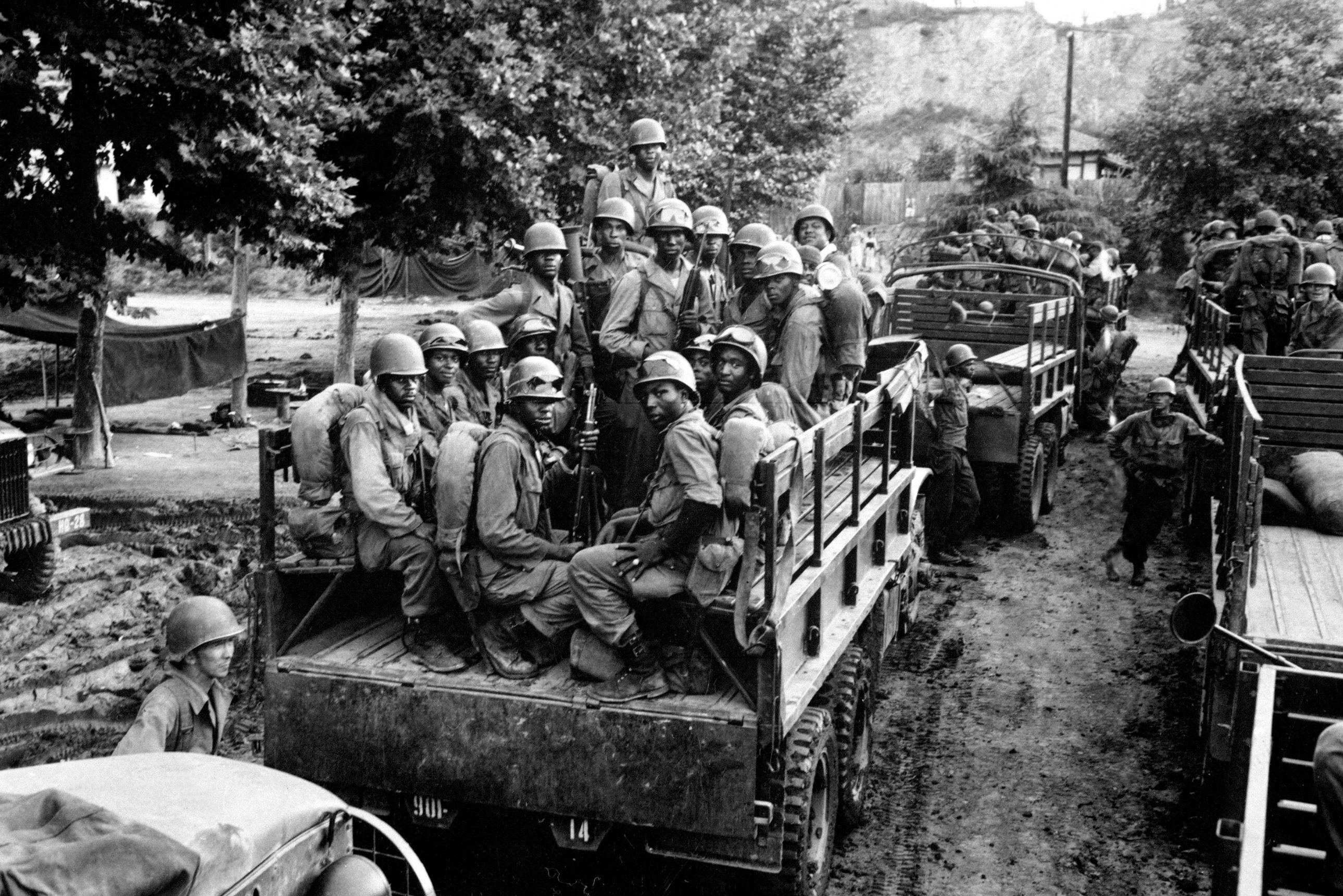
On October 19, 1950, a race was under way in Pyongyang that looked like the final scene of the war. The U.S. 1st Cavalry Division and the South Korean 1st Infantry Division were closing in on the city from different directions, each determined to be the first into the North Korean capital. The defenders were blowing up bridges across the Taedong River, but their resistance was collapsing. When the Americans began searching for a ford east of the city, they discovered that the South Koreans had already crossed. Their commander, General Paik Sun-yup, offered a simple explanation: he had been born in Pyongyang and knew where the Taedong could be crossed.
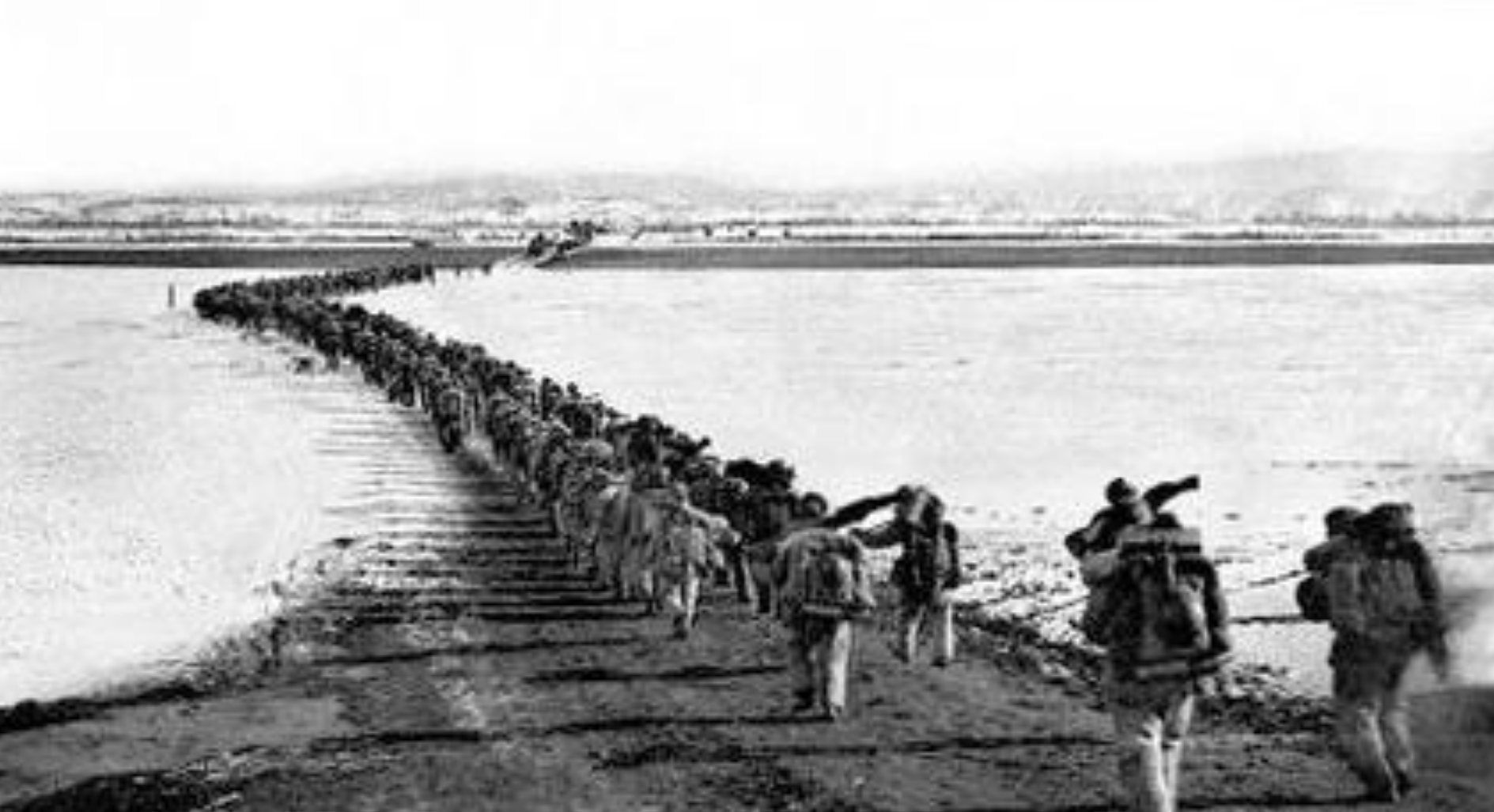
A rumor spread among the American troops that Pyongyang was their final objective and that they would be spending Thanksgiving in Japan. Yet as the allied columns entered the city, an entirely new war was beginning under cover of darkness to the north. On Mao’s orders, the first two or three divisions were to cross the Yalu that evening. Behind them stood four Chinese armies comprising 12 infantry divisions. Some advance units had probably crossed the border several days earlier, but October 19 marked the beginning of the main force’s systematic deployment. In Pyongyang, then, the allies were celebrating a victory that could be seen, photographed and marked on a map. Along the Yalu, an army that almost no one had seen was taking shape. The first event looked like history. The second would actually determine it.
From the Defense of Pusan to the Advance on the Yalu
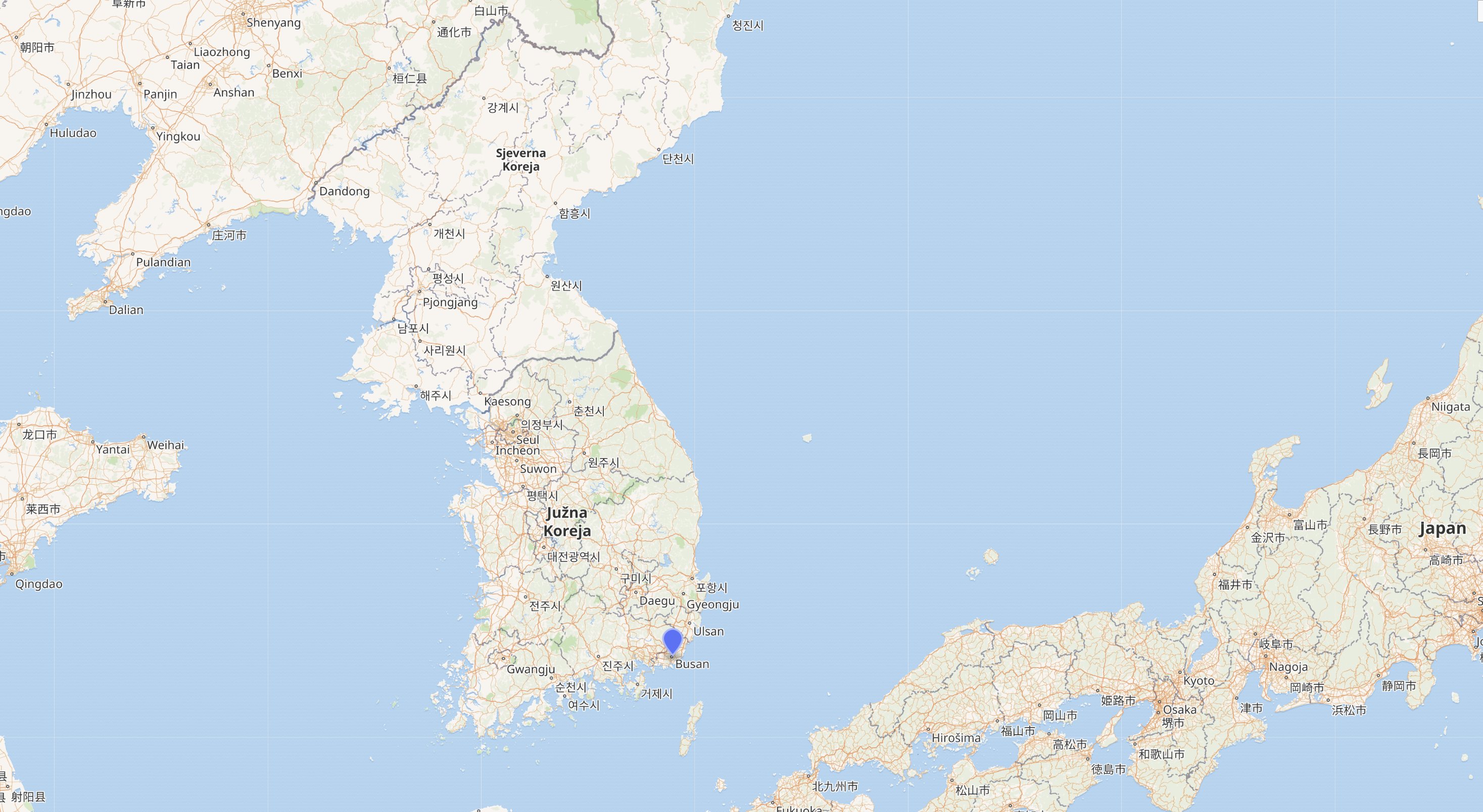
Only four months earlier, however, it had seemed that South Korea might cease to exist. The North Korean army, which launched its invasion on June 25, had driven South Korean and American forces into a narrow defensive perimeter around Pusan. Then came MacArthur’s landing at Incheon in September. The North Korean rear collapsed with astonishing speed, Seoul was recaptured, and UN forces advanced across the 38th parallel.
The UN at War?
Yes, but not in the way we think of UN peacekeeping missions today. There was no international army commanded from New York by the secretary-general, nor were neutral "Blue Helmets" stationed between the opposing sides. The forces fighting under the UN flag were active belligerents on South Korea’s side, tasked with repelling the North Korean attack.It all began with an almost unbelievable procedural accident. On June 25, 1950, the Security Council declared the North Korean attack a breach of the peace and called for the invaders to withdraw. Two days later, it recommended that member states provide military assistance to South Korea. Resolution 84, adopted on July 7, placed that assistance under a unified command led by the United States and authorized it to use the United Nations flag.
Why did Moscow allow this to happen? The Soviet Union did not block the resolutions because its representative was not even in the chamber. Moscow had been boycotting the Security Council for months because China’s seat, including its veto power, was still held by Chiang Kai-shek’s government, which had retreated to Taiwan. The Soviets demanded that the seat be transferred to the new People’s Republic of China. The boycott was intended to paralyze the UN, but it produced precisely the opposite result: when the Korean War broke out, the Soviet Union was not present to cast its veto. It returned to the Council in August, by which time the crucial decisions had already been made.
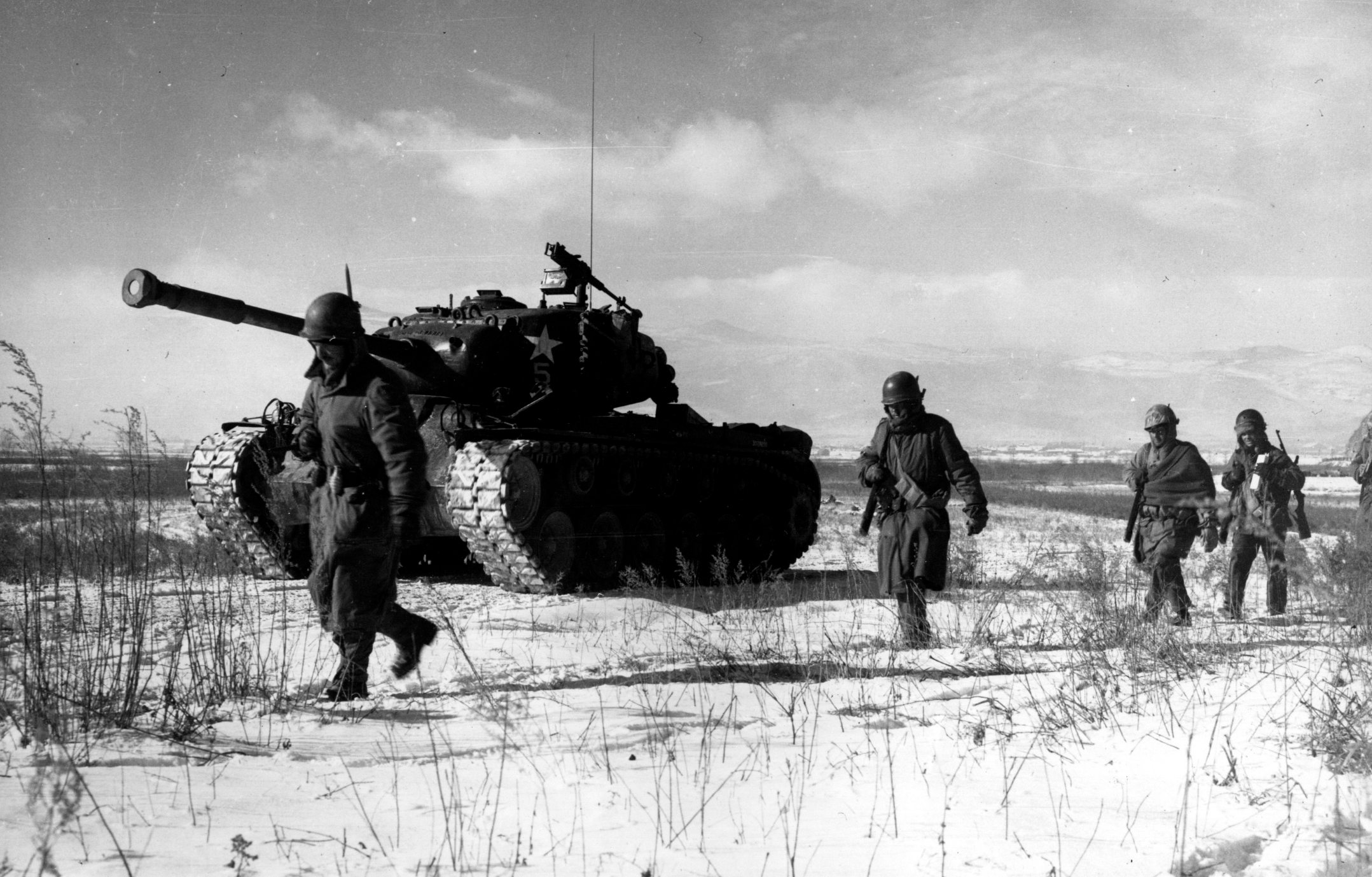
The coalition was not merely decorative, however. Sixteen countries sent combat units, including Britain, Canada, Turkey, Australia, France, Greece, Ethiopia and Colombia. Several others contributed hospitals, medical personnel and ships. Today’s United Nations Command counts 22 countries as having provided some form of military or medical assistance.
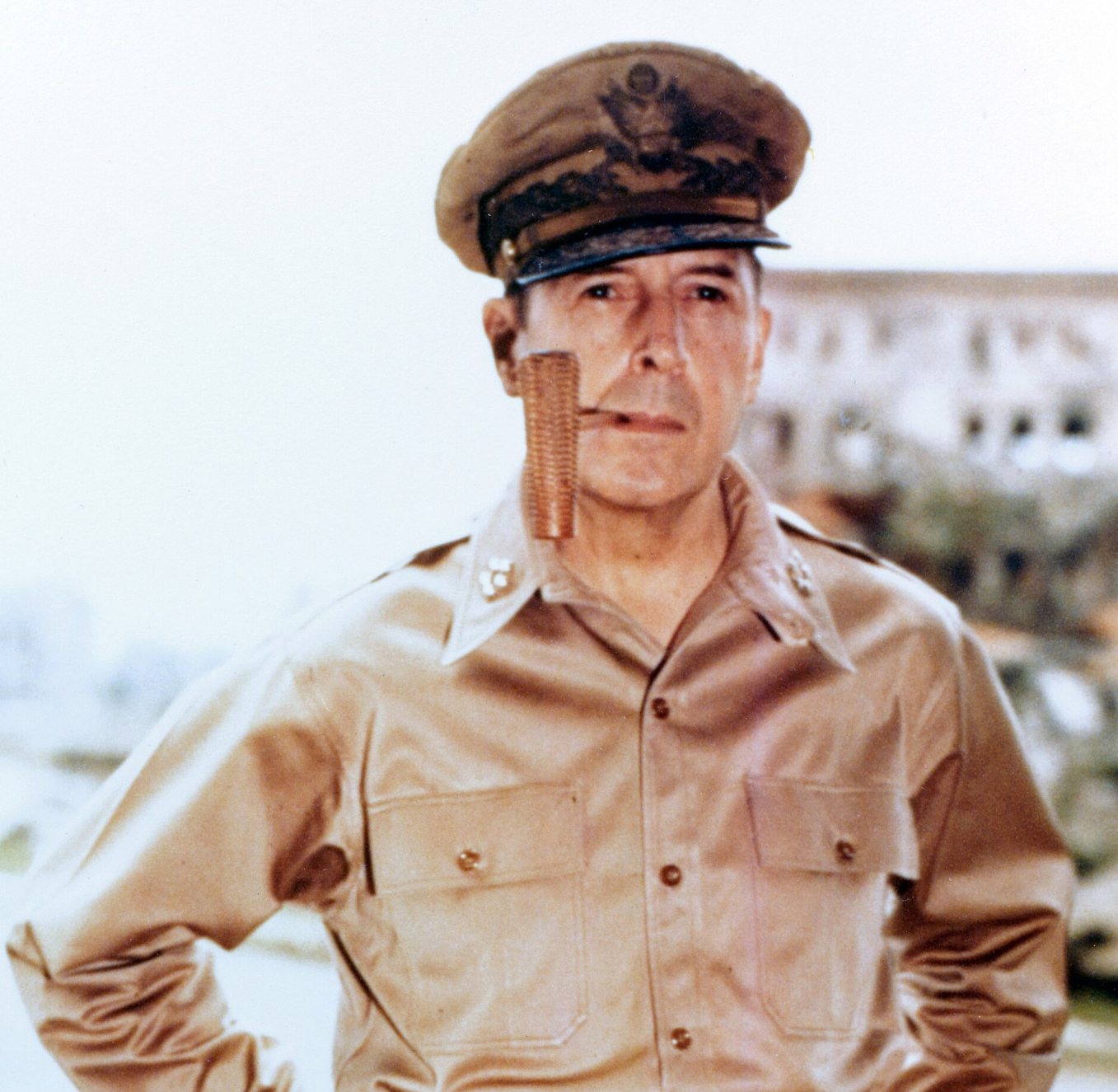
The UN flag also offered Washington a political advantage. President Harry Truman did not ask Congress for a formal declaration of war. Instead, he described the American intervention as participation in a "police action" under United Nations authority. For the soldiers fighting at Pusan, Unsan or the Chosin Reservoir, the distinction between a police action and a war was, of course, largely linguistic. For the American constitutional order, it was enormous.
Korea thus became the first major attempt by the UN to enforce the principle of collective security through military force. At the same time, it exposed the limits of that principle. This was a genuine international coalition operating under a real UN mandate, but it was also a war in which one superpower supplied almost the entire military engine. Both statements can be true: the troops in Korea really were UN forces, but they fought a war powered overwhelmingly by the United States.
It was at this point that the nature of the war changed. The defense of South Korea became an attempt to destroy the North Korean system and reunify the entire peninsula under Seoul’s rule. Military victory had created a political appetite. From the American perspective, the Yalu looked like the outer edge of the operation. From Beijing, it looked like an entrance into China’s own backyard.
The People’s Republic of China had existed for barely a year. The civil war was not yet entirely over, the U.S. Seventh Fleet was stationed in the Taiwan Strait, and Manchuria—the industrial heartland of the new state—began just beyond the Yalu. Its steelworks, mines, railways and hydroelectric plants were vital to China’s reconstruction. Mao Zedong did not have to believe that the Americans were about to invade China. It was enough for him to conclude that an American army on the Chinese border would deprive Beijing of its buffer zone and leave the country permanently exposed.
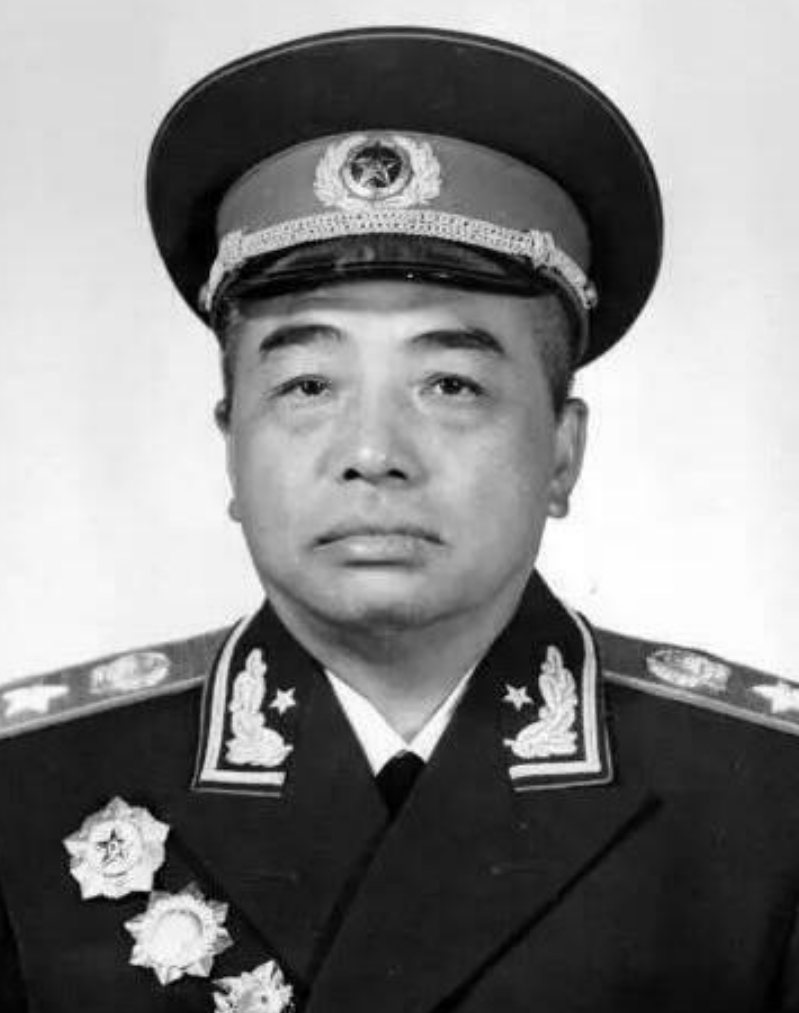
The decision to intervene was nevertheless a difficult one. China’s leadership debated American air superiority, China’s weak logistical capabilities and an economy exhausted by decades of war. Stalin wanted to save North Korea but was unwilling to immediately provide Soviet air cover over the battlefield. Mao ultimately decided to proceed without it and placed Marshal Peng Dehuai in command. Regular formations of the People’s Liberation Army were redesignated the Chinese People’s Volunteers. They were volunteers largely in name: the diplomatic fiction was meant to allow Beijing to fight the United States without formally declaring a Sino-American war.
The Warning and the Assessment
Washington had not gone unwarned. In early October, Chinese Premier Zhou Enlai sent an unmistakable message through the Indian ambassador, K. M. Panikkar: China would not intervene if only South Korean troops crossed the 38th parallel, but it would intervene if American or other foreign forces entered the North. The message reached Washington that same day. Some American diplomats urged that the warning be taken extremely seriously, but most regarded it as an attempt at intimidation.
On October 12, the CIA acknowledged that Chinese ground forces were capable of intervening effectively. It noted Chinese statements and troop movements toward Manchuria, yet still concluded that a full-scale intervention during 1950 was unlikely unless the Soviet Union was prepared to risk a world war. Three days later, President Harry Truman met MacArthur on Wake Island. They discussed Korea’s reconstruction, elections and the withdrawal of American troops. MacArthur predicted that organized resistance would end by Thanksgiving and that the Eighth Army would return to Japan by Christmas. When Truman asked about Chinese intervention, MacArthur said the chances were "very slight." He believed that any major Chinese advance, unsupported by its own air force, would end in a massacre beneath American bombs.
Mao Lost His Son in Korea
Among the men at Peng Dehuai’s headquarters was Mao Anying, Mao Zedong’s eldest son. He was 28 years old, had studied in the Soviet Union and spoke Russian, so he served in Korea as an interpreter and secretary. His presence was not publicly advertised: the war was being fought in the name of "volunteers," and the Chinese leader’s son was merely one of the men stationed alongside the central command.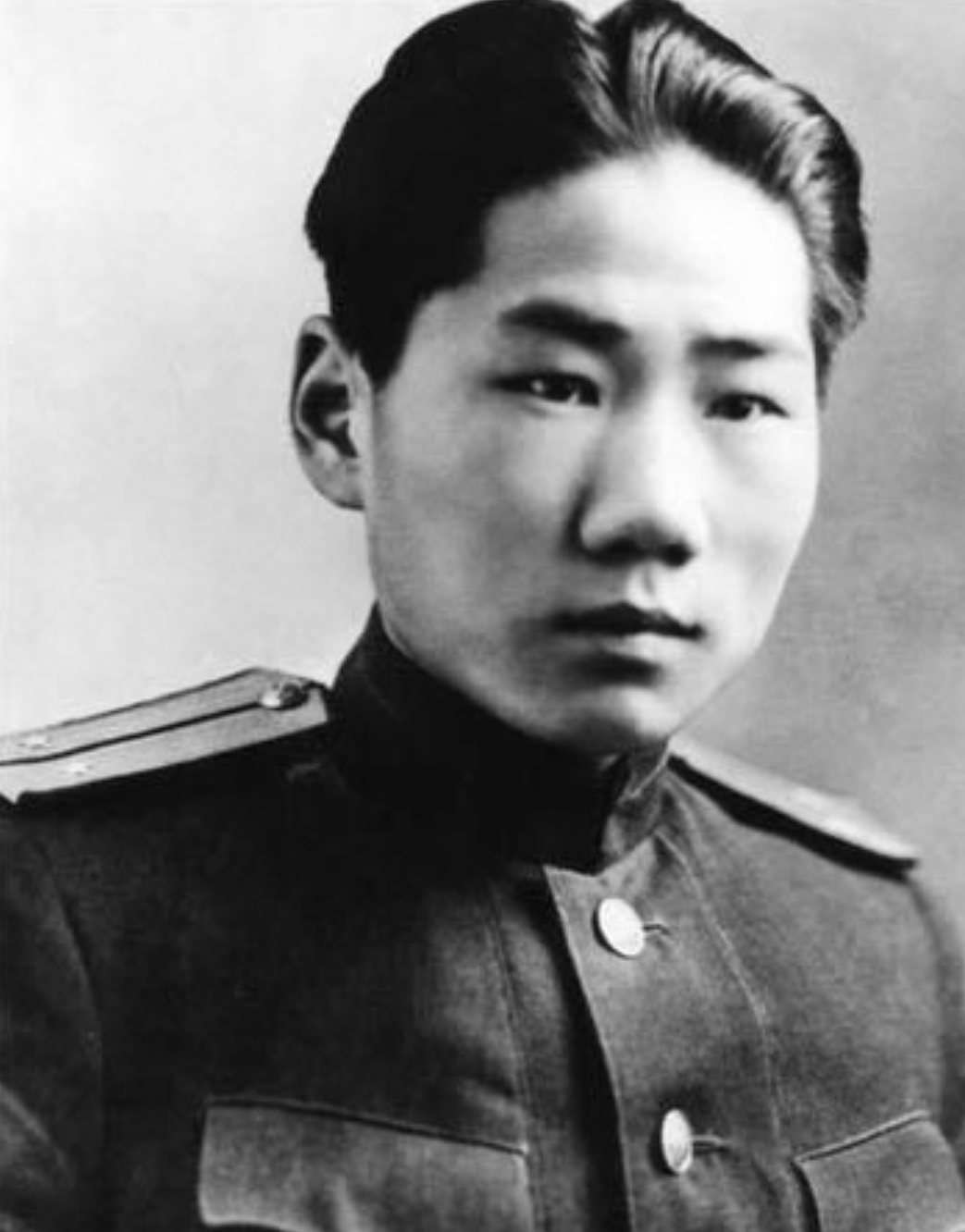
By October 19, the irony had become almost administratively perfect. As Chinese divisions crossed the Yalu, the State Department was sending the Pentagon a memorandum warning that China "might not be bluffing after all" and possessed the capacity to intervene. Yet it still concluded that the best moment for Chinese intervention had already passed and that any assistance would probably remain limited and nominally concealed. The assessment identified almost every component of the threat while completely misreading what those components meant.
An Army Hidden Beyond American Expectations
American air superiority was supposed to make a large army impossible to conceal. But that assumption applied to an army moving in the American manner—along roads, in vehicle columns and with an enormous logistical train. The Chinese crossed the river after nightfall, marched along mountain paths and disappeared under cover before dawn. During the day, men, horses and equipment remained motionless beneath carefully maintained camouflage.
The first major Chinese attacks began on October 25 against exposed South Korean forces. In early November, Chinese troops also inflicted heavy losses on the U.S. 8th Cavalry Regiment at Unsan before withdrawing into the mountains. That disappearance was partly the result of logistical limitations, but it worked as a perfect deception. UN Command concluded that Beijing had staged a limited intervention to save face—not that it was preparing several hundred thousand troops in Korea for a new offensive.
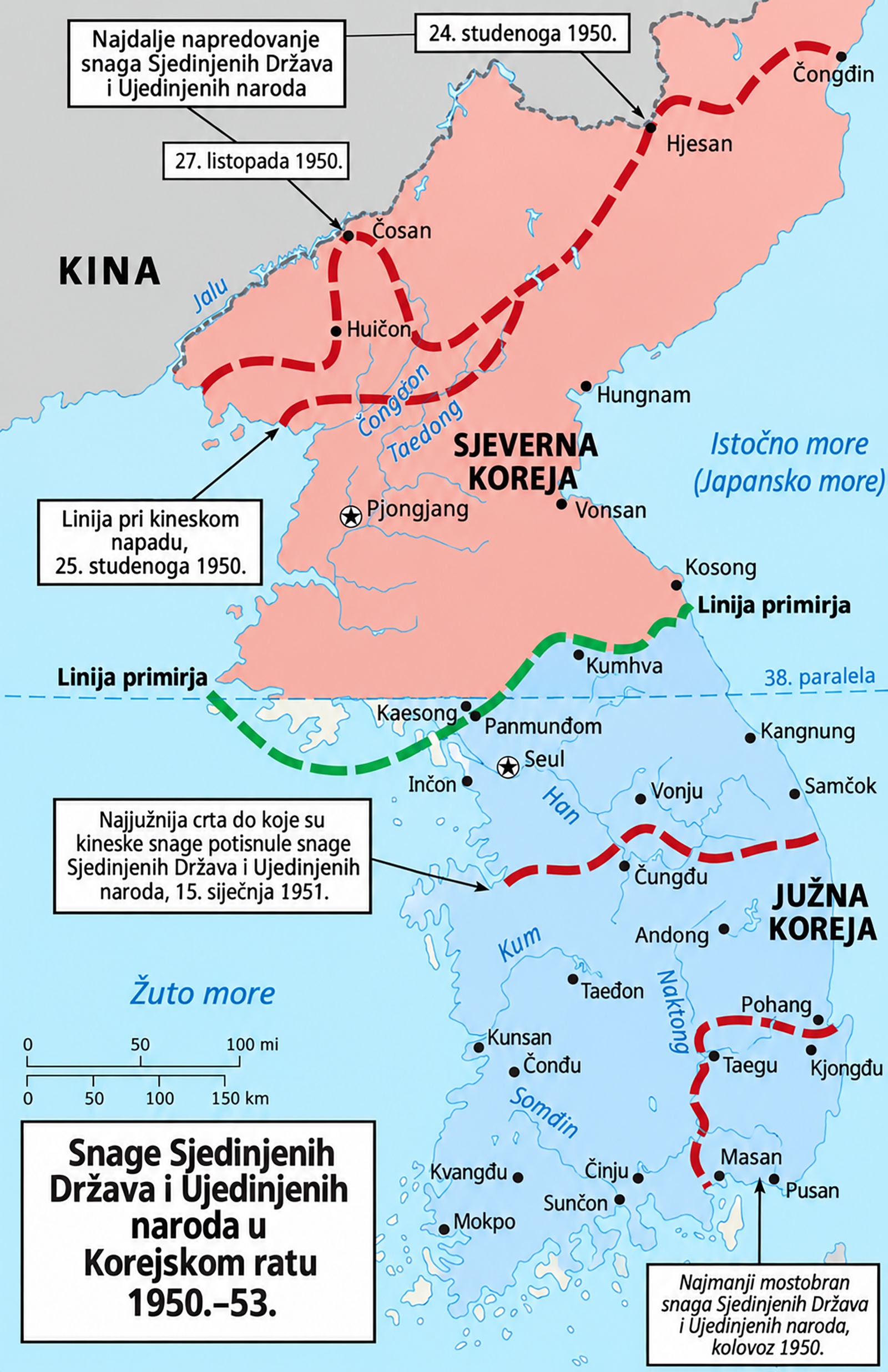
On November 24, MacArthur launched his final advance toward the Yalu, soon dubbed the "Home by Christmas" offensive. The very next night, the Chinese launched a general attack. The South Korean right flank gave way, the U.S. Eighth Army faced encirclement, and the bloody Battle of the Chosin Reservoir began in the east. Pyongyang was abandoned on December 5, just seven weeks after its triumphant capture. Instead of soldiers returning home, Christmas Eve brought the final stage of a vast evacuation of troops and civilians from the port of Hungnam.
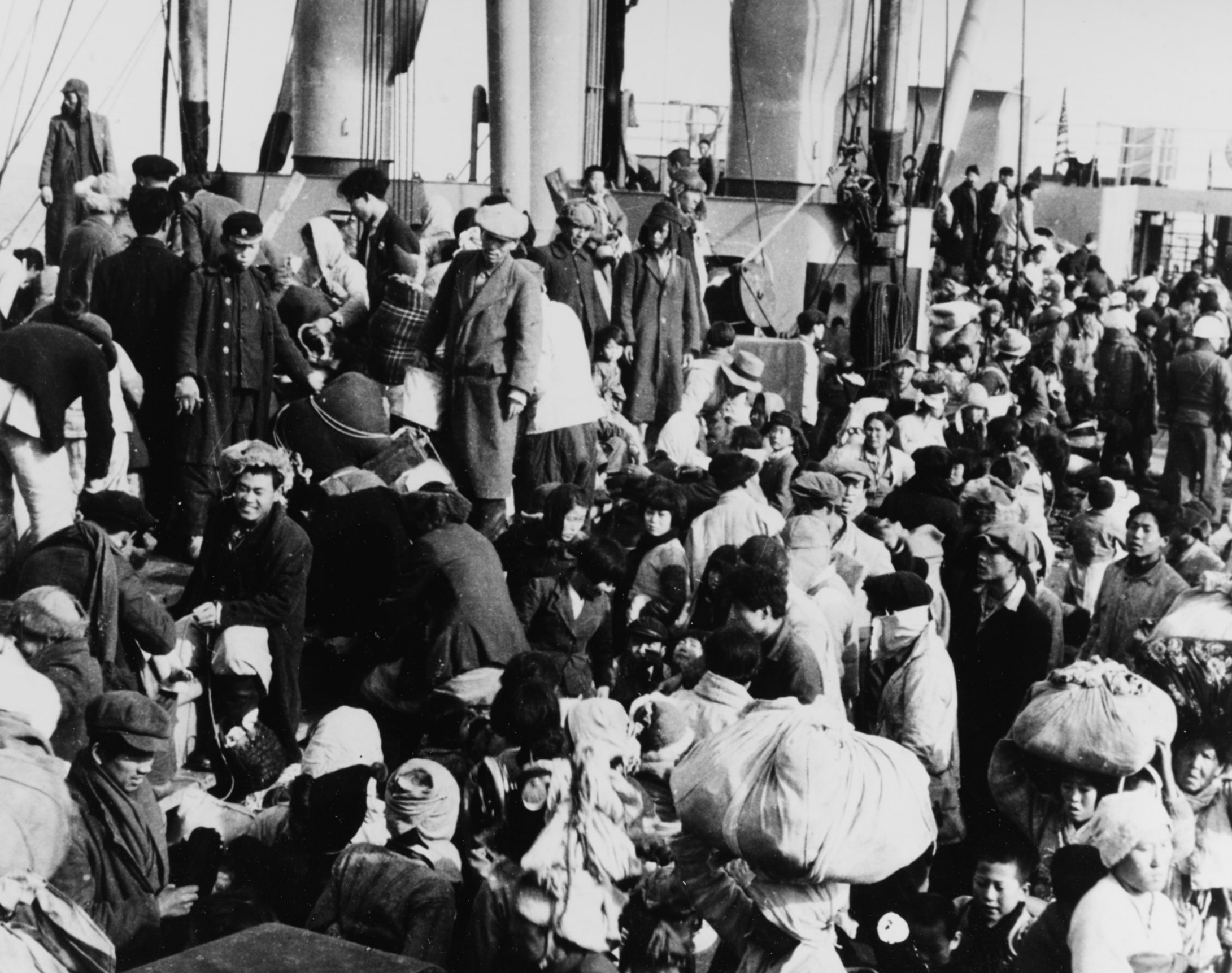
A Ship for 14,000 People
Among the vessels evacuating people from Hungnam in December was the SS Meredith Victory, a merchant freighter designed for a small crew, not a mass of passengers. Its captain, Leonard LaRue, agreed to take aboard civilians crowding the waterfront ahead of the Chinese advance. As much cargo and weaponry as possible was removed, and approximately 14,000 people packed into the holds and onto the deck.The ship had no cabins, beds, adequate toilets or anything like enough space for such a voyage. For several days, the refugees stood packed together in the cold, barely able to move. Despite the conditions, not a single death was recorded during the journey, while five babies were born aboard.
The Victory That Narrowed the Imagination
China did not drive UN forces from the peninsula. After Seoul fell in January 1951, U.S. General Matthew Ridgway stabilized the front, retook the city and pushed the line back toward the 38th parallel. The war continued there for another two and a half years, ending in an armistice but never a peace treaty.
The lesson of October 19, 1950, is therefore not merely the banal warning that an enemy should never be underestimated. More troubling is the realization that a string of victories can narrow the imagination just as effectively as a string of defeats. Once a military command decides in advance that the war is over, every piece of contrary evidence becomes an exception, a bluff or statistical noise. That day, the Americans entered Pyongyang and China entered the war. Only one of those events looked like the beginning of something momentous.
Sources
- U.S. Army Center of Military History Korean War https://history.army.mil/Research/Reference-Topics/Army-Campaigns/Brief-Summaries/Korean-War/
- Naval History and Heritage Command H-056-1: Korea, November–December 1950 https://www.history.navy.mil/about-us/leadership/director/directors-corner/h-grams/h-gram-056/h-056-1.html
- Office of the Historian, U.S. Department of State The Ambassador in the Soviet Union (Kirk) to the Secretary of State https://history.state.gov/historicaldocuments/frus1950v07/d614
- Office of the Historian, U.S. Department of State Substance of Statements Made at Wake Island Conference on 15 October 1950 https://history.state.gov/historicaldocuments/frus1950v07/d680
- Central Intelligence Agency Threat of Full Chinese Communist Intervention in Korea https://www.cia.gov/readingroom/docs/DOC_0000121494.pdf
- Oxford Academic Tempting Fate: The Secret History of the Korean War https://academic.oup.com/cornell-scholarship-online/book/34055/book-pdf/54765128/upso-9781501740381.pdf
- U.S. Government Publishing Office Weaving the Tangled Web: Military Deception in Large-Scale Combat Operations https://www.govinfo.gov/content/pkg/GOVPUB-D110-PURL-gpo115577/pdf/GOVPUB-D110-PURL-gpo115577.pdf
- U.S. Maritime Administration SS Meredith Victory https://www.maritime.dot.gov/history/gallant-ship-award/ss-meredith-victory
Comments