
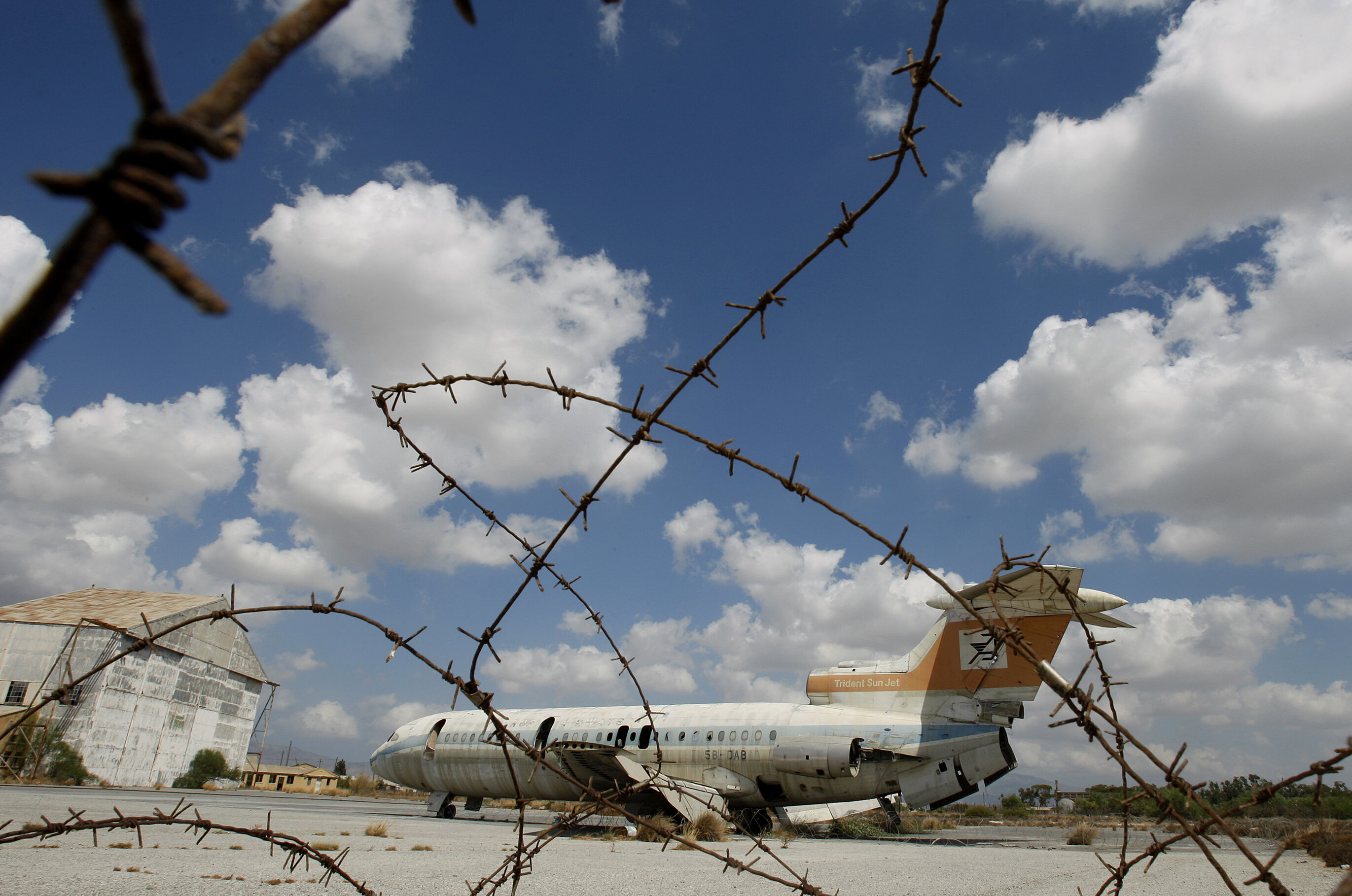
History has seen coups that last only a few days yet continue to exist as geographical facts. The Cyprus coup of 15 July 1974 was precisely such an event – brief enough to be reduced to a passing episode on the calendar, yet devastating enough to remain visible half a century later on maps, in the streets of Nicosia and in the language of European bureaucracy.
What began that morning as an internal confrontation among Greek Cypriots was, in reality, a dictatorship being exported from Athens. The Cyprus National Guard, heavily influenced by Greek officers and backed by the Greek military junta, attacked the presidential palace in Nicosia and overthrew Archbishop Makarios III, the Orthodox primate and president of the Republic of Cyprus. The coup leaders announced that Makarios was dead. He was not. He escaped from the palace, reached Paphos, travelled through the British base at Akrotiri to London and soon appeared before the United Nations. In one of history’s sharper ironies, the man the conspirators had tried to turn into a corpse returned as diplomatic proof of their incompetence.
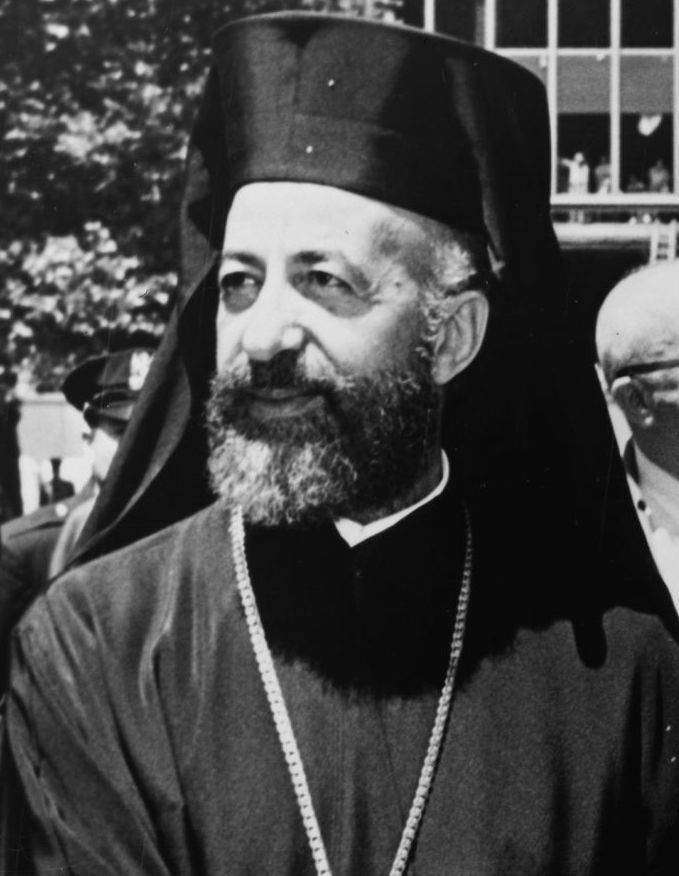
Cyprus was already a country with too many guardians and too little peace. It had gained independence in 1960 after decades of British colonial rule, and its constitutional order had been designed as a delicate balance between Greek and Turkish Cypriots.
The escape of the "dead" president
When tanks opened fire on the presidential palace in Nicosia on 15 July 1974, Makarios III was not alone in some dark inner chamber of state power. He was receiving a group of Greek children from Egypt. The detail gives the scene an additional layer of horror: when the artillery bombardment began, children were inside the building with the president.According to the later testimony of Andreas Potamaris, commander of the presidential guard, Makarios initially refused to leave the palace. The roof was burning, the gunfire was drawing closer, and still he hesitated. It was only when Patroklos Stavrou, one of his closest associates, persuaded him that he had to leave immediately that the escape began. They fled through a familiar rear passage, far from the main entrance on which the coup forces had concentrated their attack. The group included Potamaris, Nikos Thrasyvoulou and Makarios’s nephew, Andreas Neofytou.
This was no orderly evacuation of a statesman under the protection of an official convoy. It was closer to the desperate improvisation of a man whose own state had just attempted to swallow him.
As they fled along the road towards Strovolos, the group stopped civilian vehicles. The first car, driven by a couple taking their child to a doctor, ran out of fuel after barely a hundred metres. They then found another vehicle adapted for a disabled passenger. And so the president, whom the coup leaders had already declared dead, continued his flight through villages where men willing to finish the job might appear at any moment.
Their route took them into the Troodos Mountains and to Kykkos Monastery. There Makarios prayed, and the monks gave him civilian clothes. It was an almost medieval scene inserted into a Cold War crisis – an Orthodox archbishop and president, driven from power by the tanks of the Greek junta, changing clothes in a monastery in order to survive his own death. One monk told him that there was a man in Paphos with radio equipment through which he might address the island.
That man was Nicos Nicolaides, a Cyprus Broadcasting Corporation technician and amateur radio operator. In his Paphos workshop, the Free Radio of Cyprus was born. Makarios recorded a message intended to puncture the coup’s first great lie. State media claimed he was dead. His voice from Paphos said otherwise: he was alive, the coup was not over, and the new regime lacked the one thing it needed most – the appearance of inevitability.
Paphos did not remain safe for long. Once it became clear that coup forces were approaching, Makarios was moved to the local United Nations camp. From there, the British evacuated him to Akrotiri, one of their sovereign bases on Cyprus, and then via Malta to London. Within hours, he had travelled from a burning palace to the international diplomatic stage.
Therein lay the irony of his escape. The coup leaders wanted to show that Makarios belonged to the past, but through their own ineptitude they turned him into the most dangerous proof that they had failed. They could seize the palace, set its roof ablaze and install Nikos Sampson. But they could not prevent the man they had declared dead from speaking over the radio from Paphos. Sometimes only one thing is needed to destroy propaganda: the dead man must speak.
Greece, Turkey and Britain were designated as guarantor powers. On paper, this sounded like a security mechanism. In practice, it was proof that the island had been born under an international mortgage. The Treaty of Guarantee prohibited both the union of Cyprus with another state and the partition of the island, but it also left the guarantor powers the option of taking "action" to restore the established order. Such formulations in international law often lie dormant for decades, until someone with tanks begins to interpret them creatively.
Archbishop Makarios was hardly blameless. He was a skilful, hard and often opportunistic politician, but over time he came to understand what radical nationalists refused to hear: the union of Cyprus with Greece, or enosis, was no longer a romantic dream but a recipe for an explosion. For the Greek junta, especially the circle around Dimitrios Ioannidis, the regime’s true strongman in Athens, that was enough to brand him a traitor. In early July 1974, Makarios sent an open letter demanding the withdrawal of Greek officers from the National Guard. Two weeks later, the palace was burning.
The Cold War on a small island
Cyprus in 1974 was not merely a conflict between Greek and Turkish Cypriots, nor simply an adventure by the Greek junta seeking enosis, the union of the island with Greece. It was an island on which every major power behaved as though it were defending principles while, in reality, protecting its position. The Greek junta backed the coup and Nikos Sampson because it regarded Makarios as an obstacle. Turkey invoked the protection of Turkish Cypriots and the Treaty of Guarantee, but its intervention ultimately produced the de facto partition of the island. In crises of this kind, the original motive is often merely the admission ticket. The real objective becomes apparent only once the army stops advancing.Britain was the most awkward case. Formally, it was one of the three guarantors of Cypriot independence. In practice, it was the former colonial power that had retained the sovereign bases of Akrotiri and Dhekelia on the island. London did not want Sampson, but neither did it want a war with Turkey, a serious confrontation with Greece or, least of all, a situation in which the British bases became the centre of a new Mediterranean catastrophe. In other words, Britain still possessed territory on Cyprus but no longer had the imperial energy required to impose a settlement.
The United States viewed Cyprus through the map of the Cold War. For Washington, the central problem was not simply Makarios, Sampson or the island’s constitutional architecture, but the possibility that two NATO members, Greece and Turkey, might go to war with each other. American documents from the period show that the danger was perfectly understood: Cyprus mattered because it could fracture NATO’s south-eastern flank, create an opening for the Soviet Union and complicate American policy in the Middle East. The United States was therefore not "pro-Sampson" in any serious sense. But nor was it prepared to risk everything to save Cyprus from the consequences of its allies’ policies.
The Soviet Union had a different but equally cold calculation. Moscow favoured an independent and non-aligned Cyprus, particularly under Makarios, because such an island obstructed the transformation of the eastern Mediterranean into a neatly ordered NATO space. For the Soviets, enosis would have meant Cyprus falling under Greek, and therefore Western, military and political influence. The USSR consequently supported Cypriot independence, condemned the coup and readily denounced "imperialist" schemes. But it was not prepared to turn Cyprus into a major confrontation with the West. Soviet support mattered diplomatically, but its value was limited once troops had begun landing on the coast.
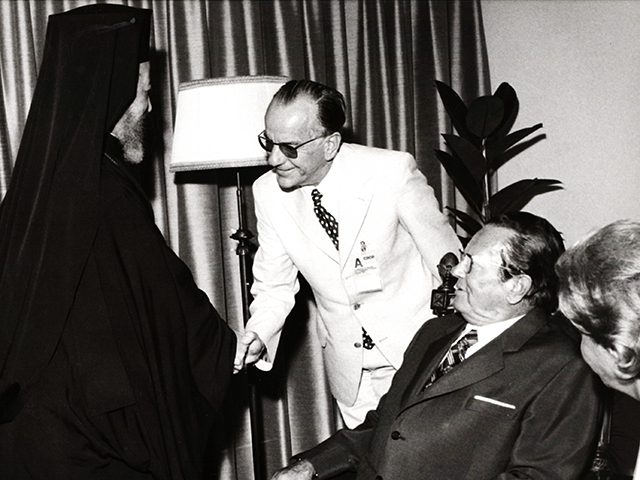
Yugoslavia also entered the picture, not as a leading power but as an illuminating example of the non-aligned perspective. Makarios’s Cyprus belonged to the non-aligned world, and Tito and Belgrade saw the coup as an attack on the sovereignty of a small country that refused to become a mere appendage of one bloc or another. Yugoslavia condemned the Greek coup and supported Makarios as the legitimate president. During the initial phase, it could even regard Turkish intervention as acceptable, but only if its purpose was to restore the constitutional order and protect the Turkish minority. Once it became clear that the second Turkish offensive was leading towards the island’s partition, that calculation changed.
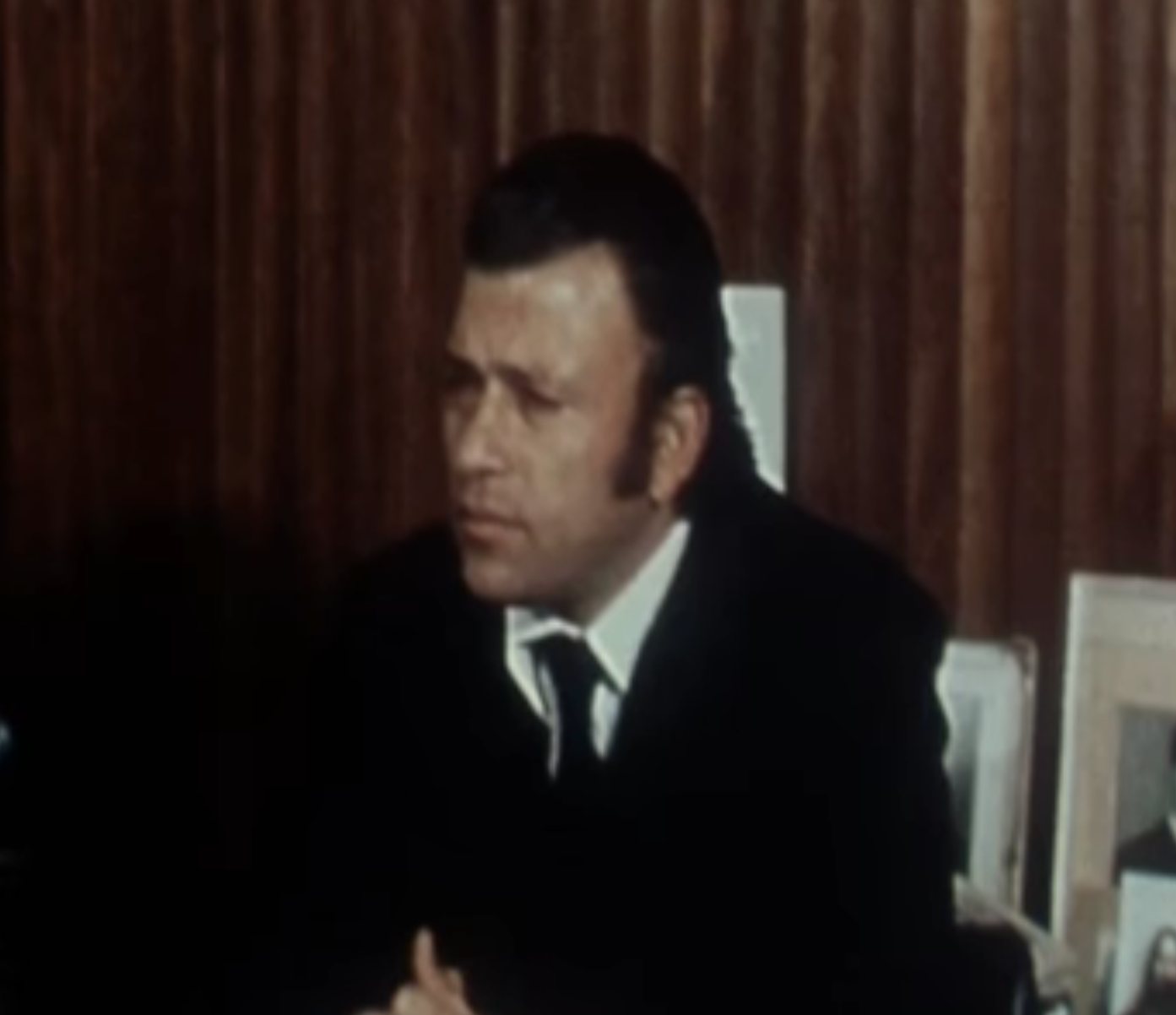
The coup leaders installed Nikos Sampson in Makarios’s place. A journalist, former member of EOKA – the Greek Cypriot nationalist guerrilla organisation – and a man with a reputation as a violent ultranationalist, he was almost the perfect choice for anyone seeking to prove to Ankara that its worst fears were justified. An American diplomatic cable from Athens described Sampson as early as 16 July as a dangerous and unsavoury, "gangster-type" figure – perhaps a rare moment in which diplomatic language called something by its proper name.
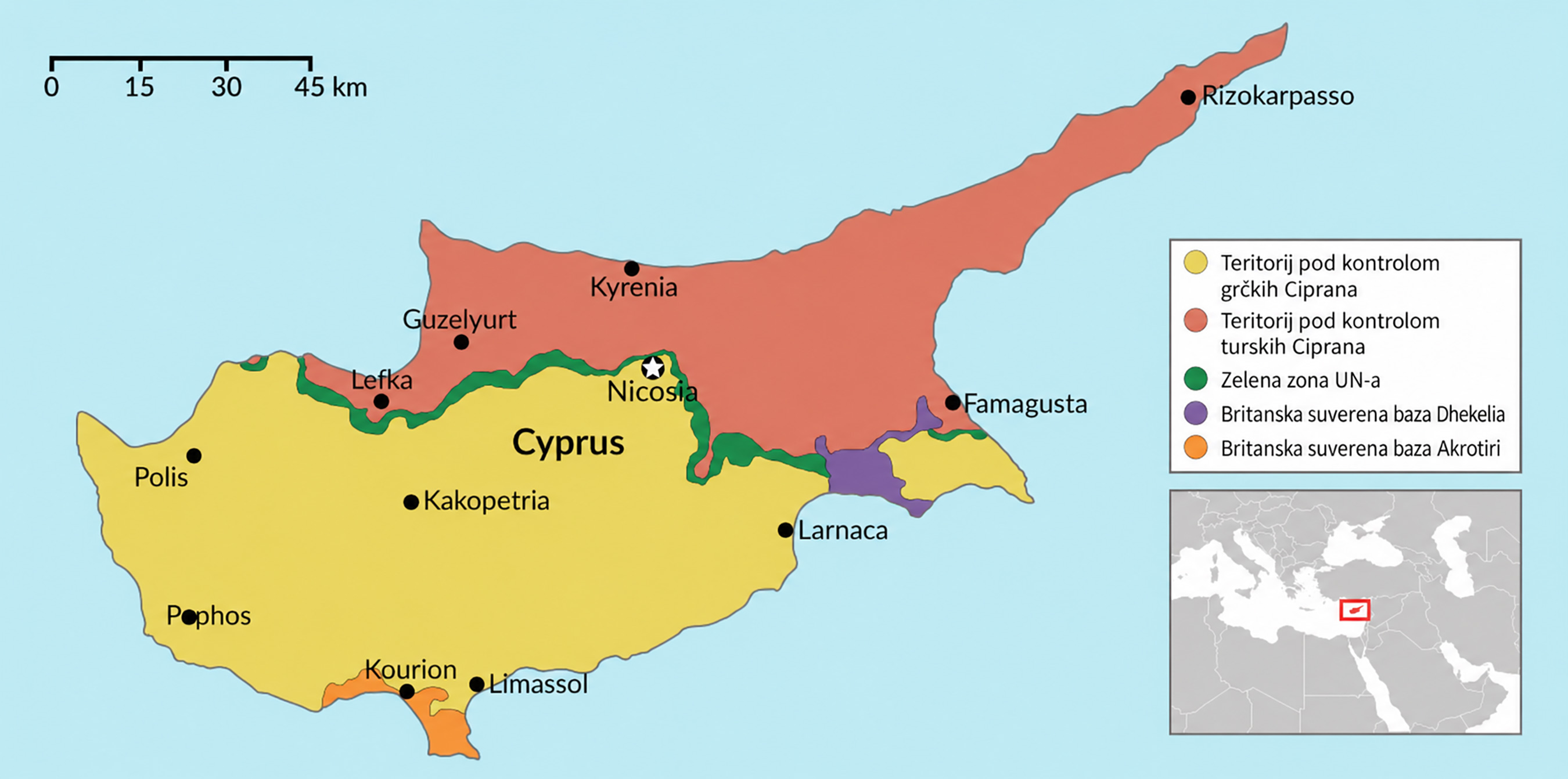
Five days later, on 20 July, Turkey launched a military operation on Cyprus. Ankara claimed that it was acting under the Treaty of Guarantee and intended to protect Turkish Cypriots. During the first phase, Turkish forces landed on the northern coast near Kyrenia. After a ceasefire and the failure of negotiations, a second Turkish offensive followed in August. The result was not the restoration of the old order, but the creation of a new reality on the ground. And realities on the ground, as history endlessly reminds us, are often more stubborn than resolutions, declarations and moral outrage.
The terminal that became a museum of failed compromise
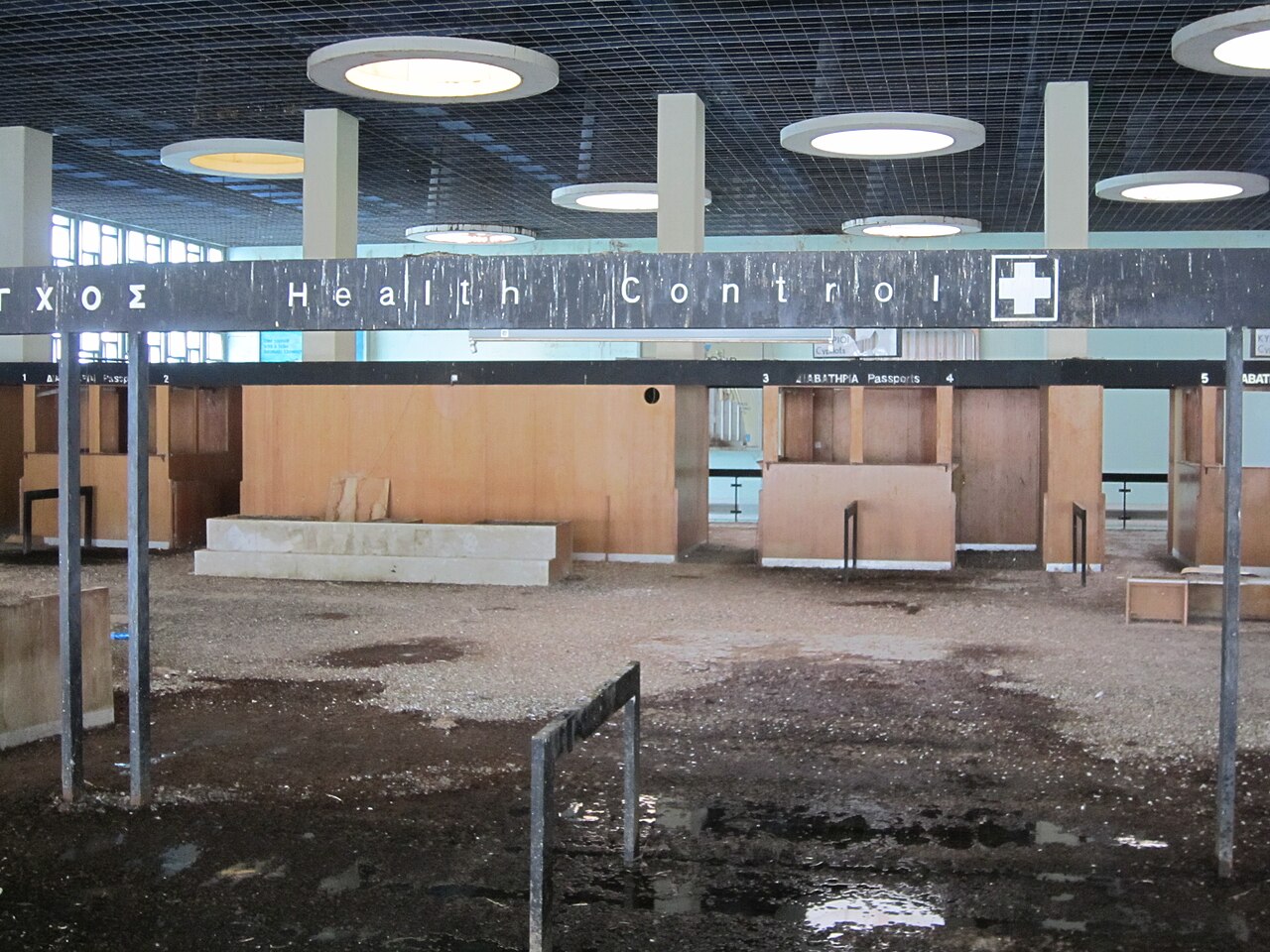
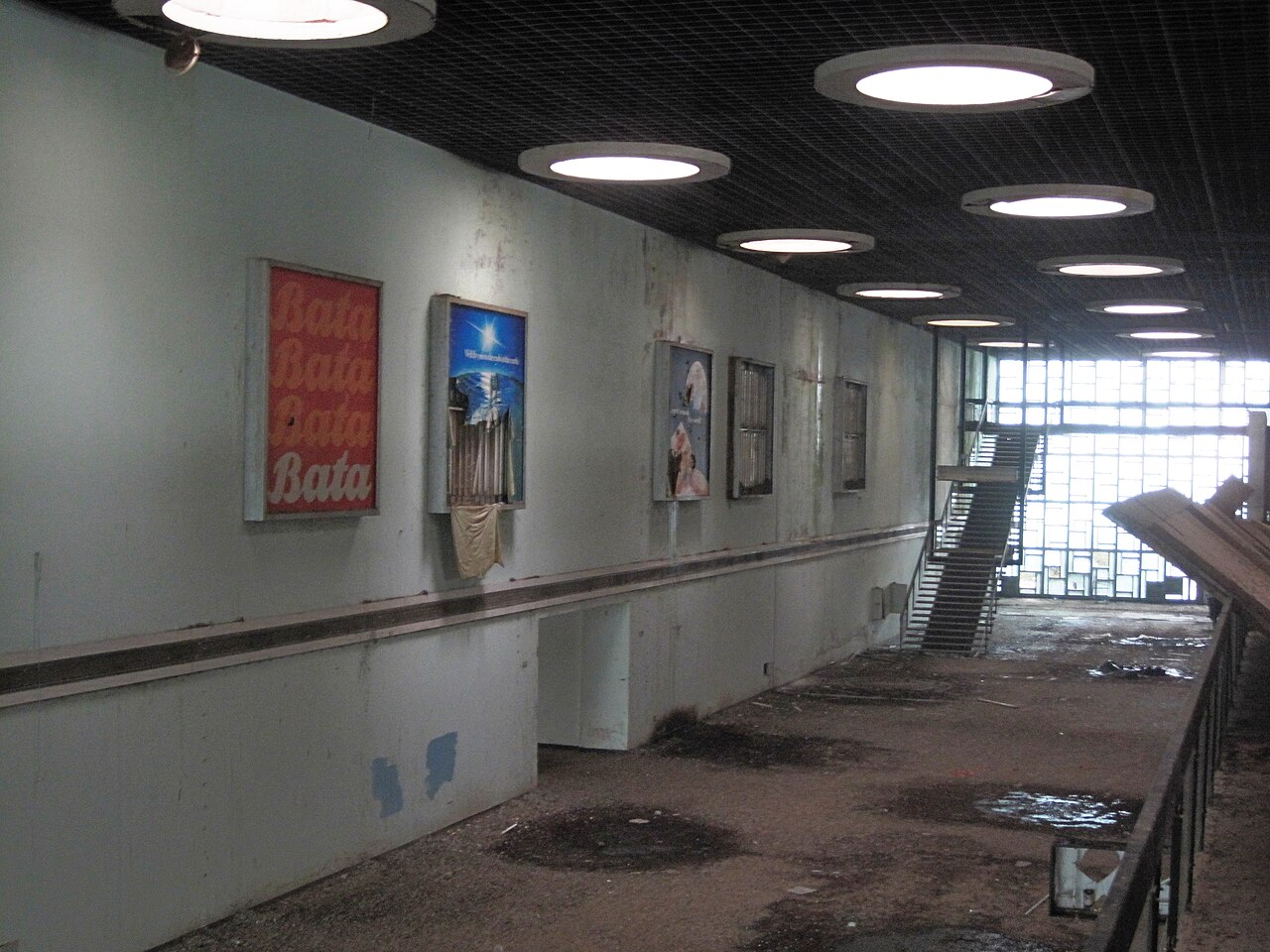
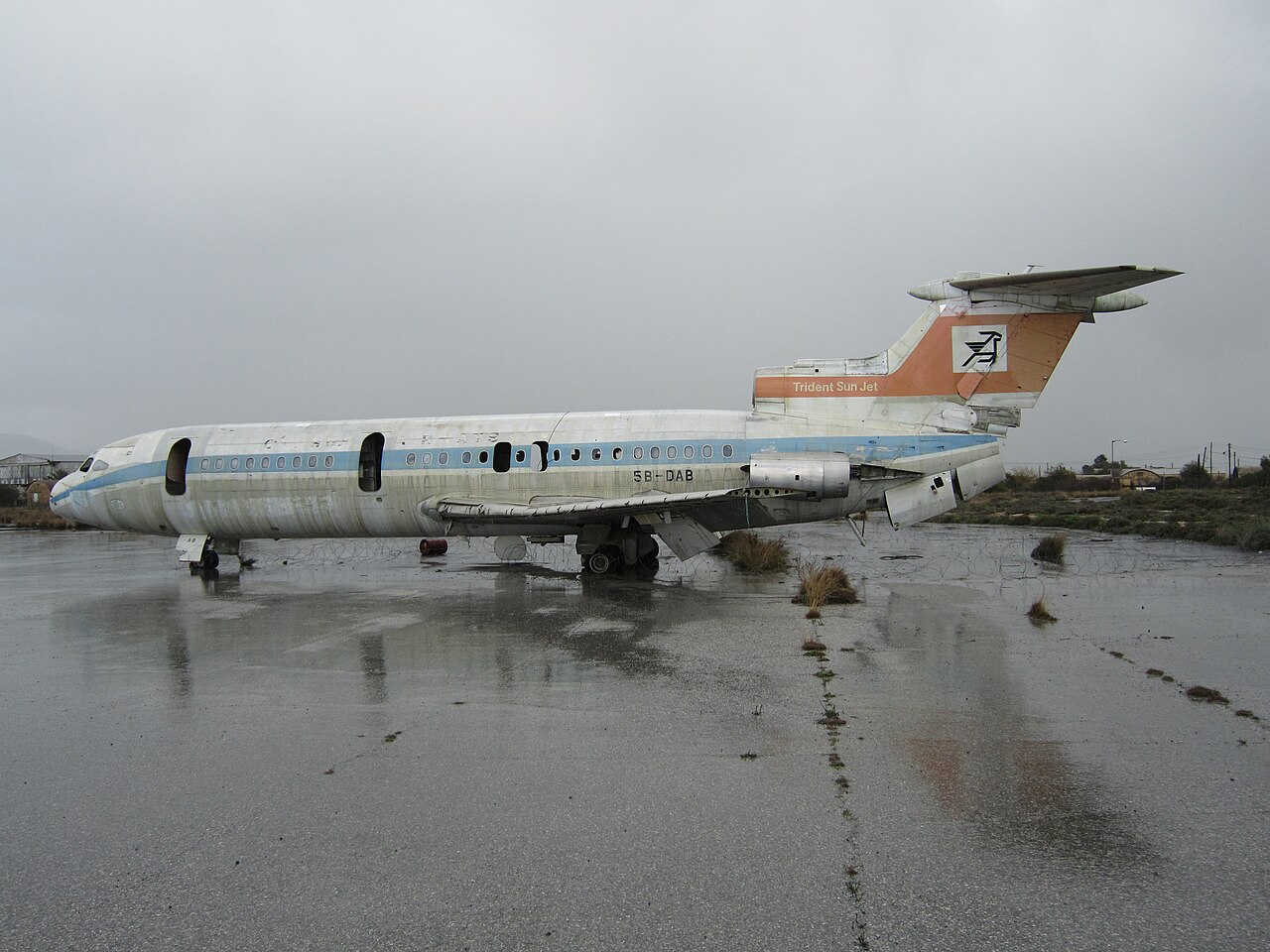
A few kilometres west of central Nicosia stands an airport from which no one travels any longer. Nicosia International Airport was once Cyprus’s main gateway, a place where tourists arrived for Mediterranean holidays and the island’s modernity attempted to present itself as something entirely normal. A new terminal opened in March 1968, modern enough to handle hundreds of passengers and ambitious enough to announce Cyprus as a small but functioning state between Europe and the Middle East.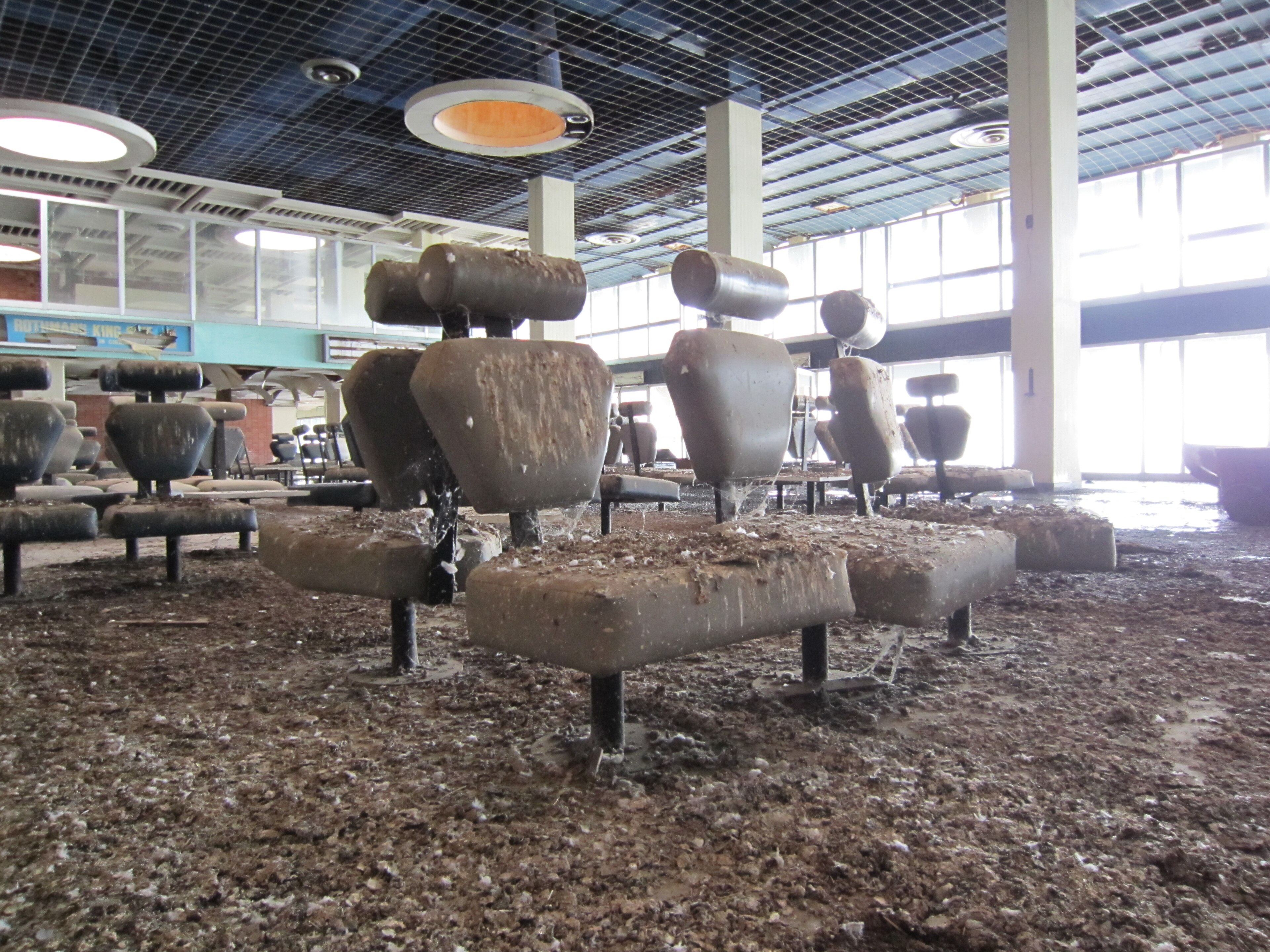
Paradoxically, the coup also brought down those who had launched it. Sampson’s rule lasted only a few days. The Greek military junta, disgraced by the Cypriot catastrophe and confronted with the possibility of war with Turkey, collapsed on 23 July. Konstantinos Karamanlis, the conservative Greek statesman, returned to Athens from exile, while in Nicosia presidential authority passed to Glafkos Clerides, then speaker of parliament. Makarios would also eventually return to Cyprus, but he could not return to the Cyprus that had existed before 15 July.
Estimates vary, but around 170,000 Greek Cypriots were displaced from their homes in the north after the events of 1974, while approximately 50,000 Turkish Cypriots from the southern parts of the island moved north. Between the two communities remained the Green Line, a United Nations buffer zone stretching for about 180 kilometres. The UN peacekeeping mission in Cyprus has existed since 1964, a fact that sounds less like an administrative detail than a verdict on modern diplomacy.
Cyprus entered the European Union in 2004 as a de facto divided island. The entire island is formally part of the EU, but the application of European law is suspended in the north, where the government of the Republic of Cyprus exercises no effective control. The Green Line is not an external border of the Union, yet it frequently behaves like one. This is the Cypriot absurdity – an island simultaneously inside and outside, united on paper and divided in everyday life.
The date 15 July 1974 is therefore more than the anniversary of a coup. It is a reminder that small political adventures rarely remain small when they unfold at a place where other people’s fears converge. Cyprus was too small to impose peace on its own, yet important enough that no one was willing to leave it alone. The coup leaders believed they could transform the country with a radio announcement and a handful of tanks outside the palace. Five days later, history answered them with a landing force, refugees, abandoned neighbourhoods and a border that has still not become history.
Sources
- Fmreview.org Displacement shock and recovery in Cyprus - Forced Migration Review https://www.fmreview.org/loizos/
- Adst.org The 1974 Turkish Intervention in Cyprus – Association for Diplomatic Studies & Training https://adst.org/2014/07/the-1974-turkish-intervention-in-cyprus/
- History.state.gov Historical Documents - Office of the Historian https://history.state.gov/historicaldocuments/frus1969-76v30/d89
- Commission.europa.eu Green Line Regulation https://commission.europa.eu/about/departments-and-executive-agencies/regional-and-urban-policy/green-line-regulation_en
- Peacemaker.un.org UNITED KINGDOM OF GREAT BRITAIN AND NORTHERN IRELAND, GREECE and TURKEY and CYPRUS https://peacemaker.un.org/sites/default/files/document/files/2024/05/cy20gr20tr600816treaty20of20guarantee.pdf
- Istorija20veka.rs YUGOSLAVIA AND CYPRUS CRISIS 1974: FROM THE COUP OF GREEK OFFICERS ON JULY 15 TO THE MIDDLE OF AUGUST https://istorija20veka.rs/jugoslavija-i-kiparska-kriza-1974-godine-od-puca-grckih-oficira-15-jula-do-sredine-avgusta-eng/
- The Guardian ‘Turkish troops fired on our hotel, the invasion had begun’: 50 years after Cyprus was torn apart https://www.theguardian.com/world/article/2024/jul/14/turkish-troops-fired-on-our-hotel-the-invasion-had-begun-50-years-after-cyprus-was-torn-apart
Comments