
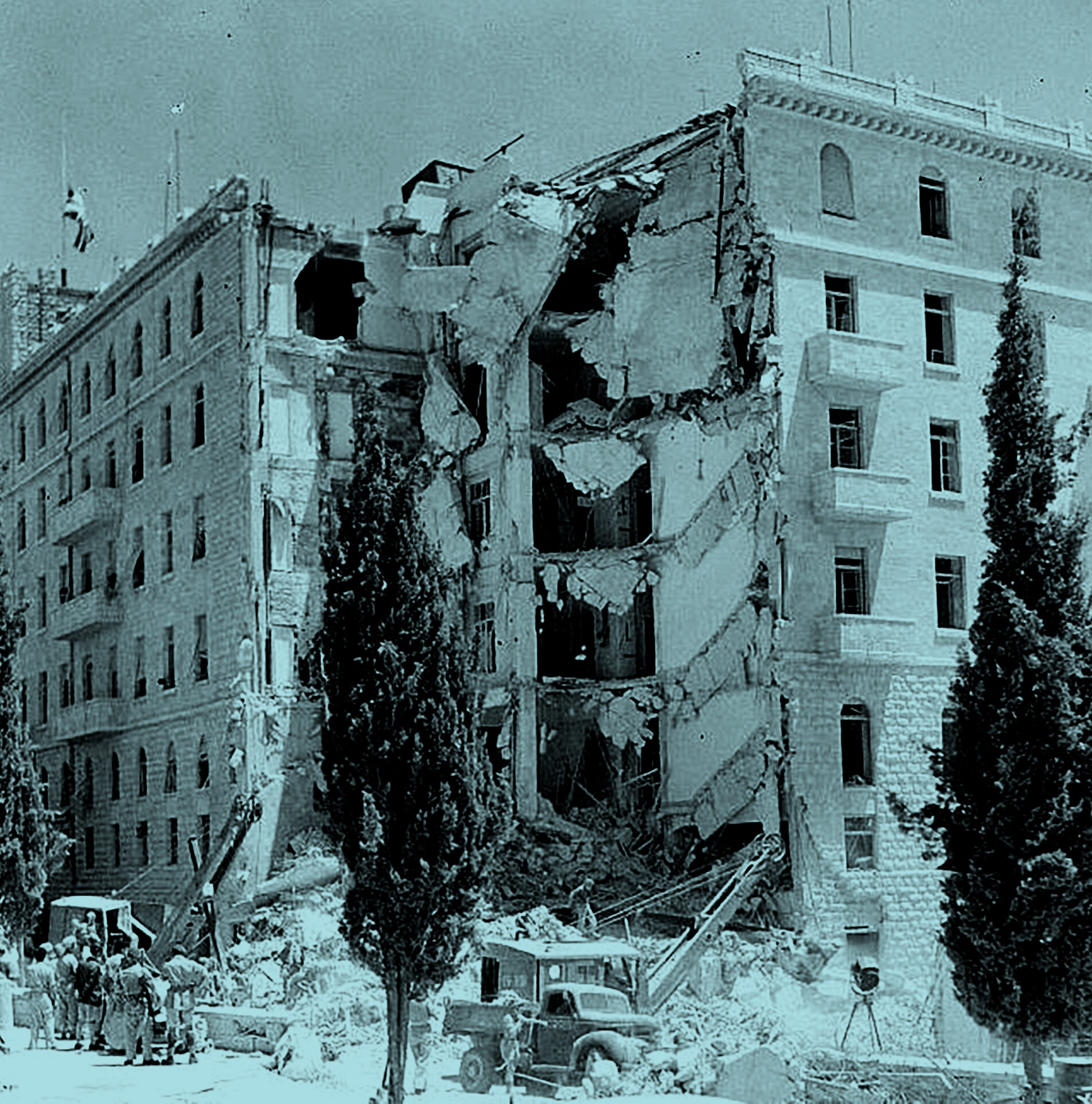
Before Israel had a government, a currency or an army, the man who would one day lead it from the prime minister’s office commanded an underground organisation that carried seven metal milk churns packed with explosives into the basement of Jerusalem’s most famous hotel. At 12:37 p.m. on 22 July 1946, the western section of the six-storey southern wing of the King David Hotel collapsed in a cloud of dust. Ninety-one people were killed. Thirty-one years later, Menachem Begin, who had led the Irgun at the time, became prime minister of Israel. The following year, he received the Nobel Peace Prize.
Eighty years later, that trajectory offers ample material for two opposing forms of propaganda. One says terrorism can be cleansed by elections, state ceremony and a sufficiently long calendar. The other insists that yesterday’s terrorist becomes a freedom fighter as soon as his side acquires a flag. But the history of the King David Hotel permits neither comfort. The hotel was both a civilian institution and the nerve centre of the British Mandate. The attack targeted a colonial administration, but most of those killed were civilians. That is not an inconvenient detail. It is the heart of the case.
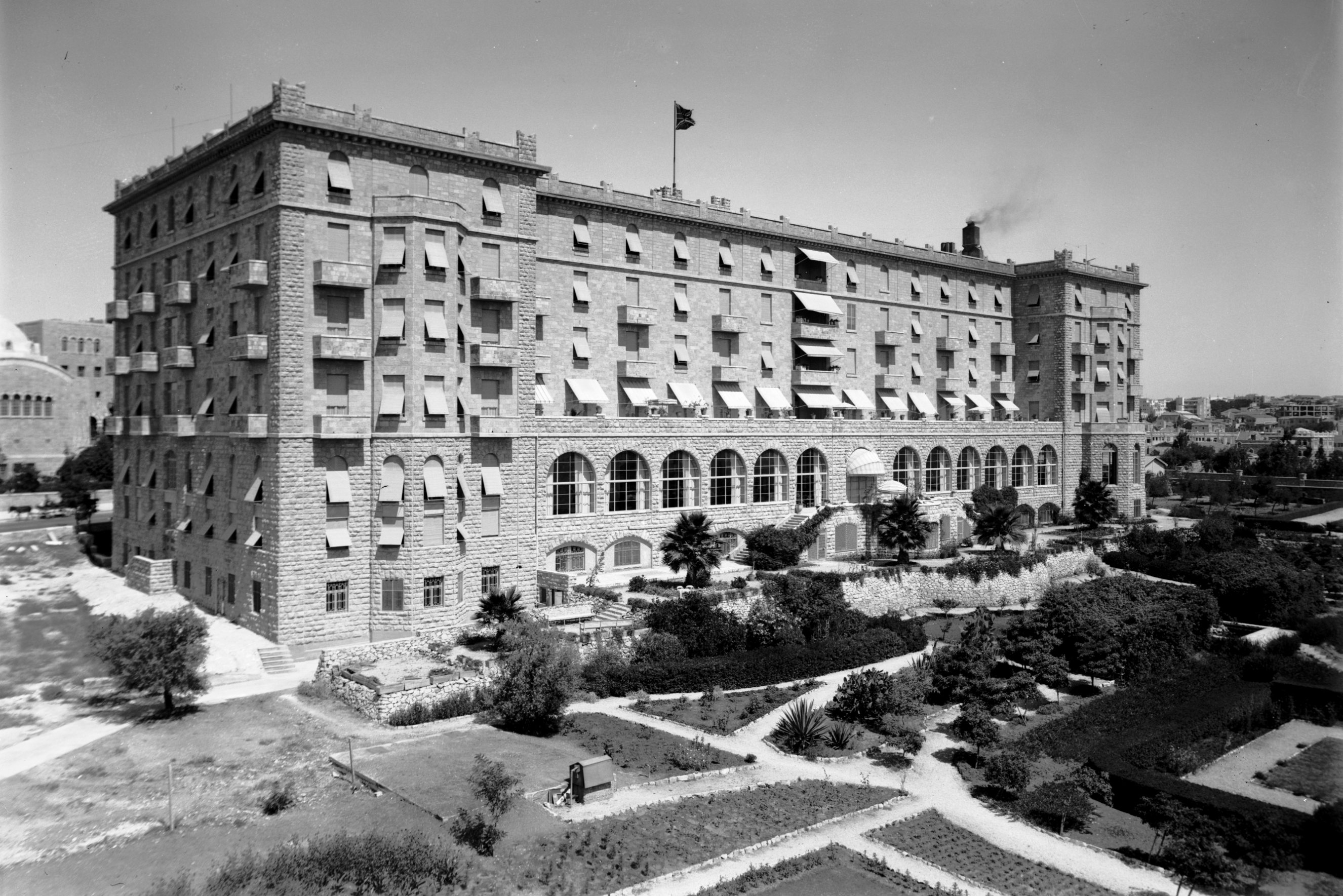
The King David was an opulent Jerusalem salon where guests drank tea beneath chandeliers while, several floors away, a country was being administered. The British military maintained its headquarters there, while the government secretariat and security-service offices occupied the southern wing. Fewer than a third of the hotel’s rooms remained available to civilian guests. Yet it continued to operate, surrounded by barbed wire and machine-gun positions. Bartenders and intelligence officers worked beneath the same roof. It was a magnificent symbol of power and a fatally ambiguous space between the civilian and the military.
The British Mandate for Palestine emerged after the First World War and was burdened from the outset by contradictory commitments. London supported the establishment of a Jewish national home while governing an Arab majority that feared the project would ultimately lead to its political displacement. After the Holocaust, the demand for a Jewish refuge and state acquired an incomparable moral urgency. Britain nevertheless continued to restrict immigration while attempting to contain a conflict it no longer knew how to resolve. By 1946, the Mandate increasingly resembled not an administration but an empire that had run out of credible policies.
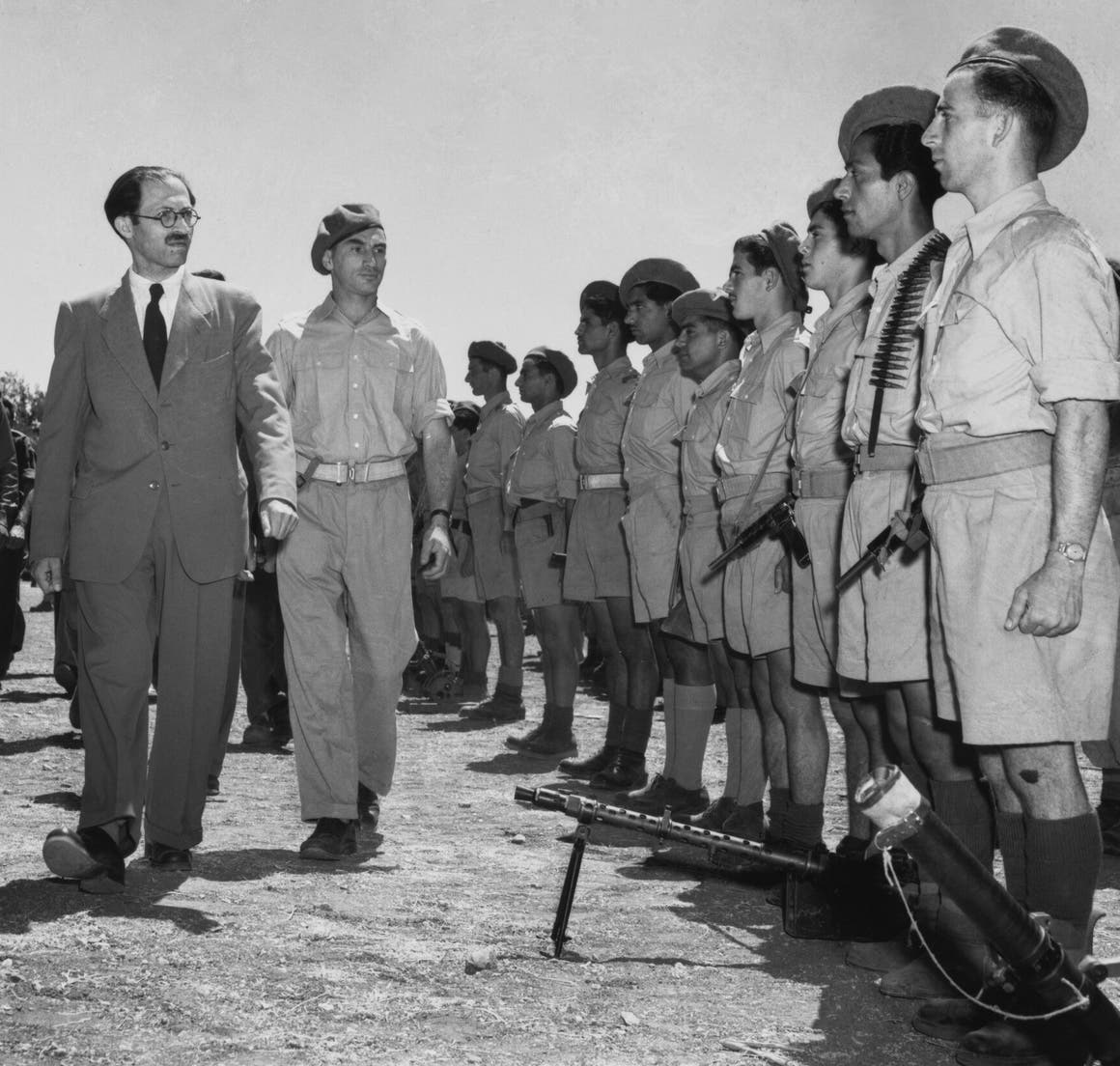
Several armed organisations operated within the Jewish community. The largest was the Haganah, the principal paramilitary force associated with the dominant Zionist leadership. The Irgun, led by Begin, was the more radical organisation of Revisionist Zionism. Following the British Operation Agatha in June 1946, during which thousands of people were arrested and Jewish Agency documents seized, the King David became a target partly because compromising records were believed to be stored there. The plan had previously been approved within the short-lived Hebrew Resistance Movement, although delays and the question of whether that approval was ultimately withdrawn remain disputed.
How Britain’s Ally Became Britain’s Enemy
Britain did indeed play a decisive role in the emergence of the Jewish national project in Palestine. In the Balfour Declaration of 1917, it endorsed the establishment of a “national home for the Jewish people”, a commitment later incorporated into the League of Nations Mandate. London had not, however, explicitly promised a Jewish state. The wording was broad enough to accommodate Zionist expectations, Arab fears and British imperial calculations — at least until the three collided.As Jewish immigration and Arab resistance grew, British policy began to change. The 1939 White Paper limited Jewish immigration to 75,000 people over five years, after which further arrivals would require Arab consent. Jewish land purchases were also restricted, and an independent Palestine was proposed in which Jews would remain a minority. To the Zionist movement, this appeared to be Britain’s abandonment of its own promise at precisely the moment when European Jews were desperately seeking an escape from Nazism.
The distinction is important. Jewish groups did not spend the Second World War fighting the British. The Haganah and the mainstream Zionist leadership cooperated with London against Nazi Germany, while thousands of Palestinian Jews served in the British armed forces. But the alliance against Hitler did not resolve the conflict over Palestine. After the war, Britain continued to limit the arrival of Holocaust survivors, intercepting refugee ships and detaining their passengers in camps. In the eyes of many Zionists, the former protector of the Jewish national home had become the greatest obstacle to its transformation into a state.
The close relationship between Britain and Israel today can therefore be misleading. Israel did not yet exist in 1946, and Britain was not its ally but the colonial power attempting to retain control, placate the Arab world and protect its interests in the Middle East. The Irgun and Lehi waged an armed rebellion against British rule, while the more moderate Haganah moved between cooperation and resistance in pursuit of the same ultimate objective. Britain had helped open the door to a Jewish national home, then positioned itself on the threshold and attempted to decide how far that door could be opened.
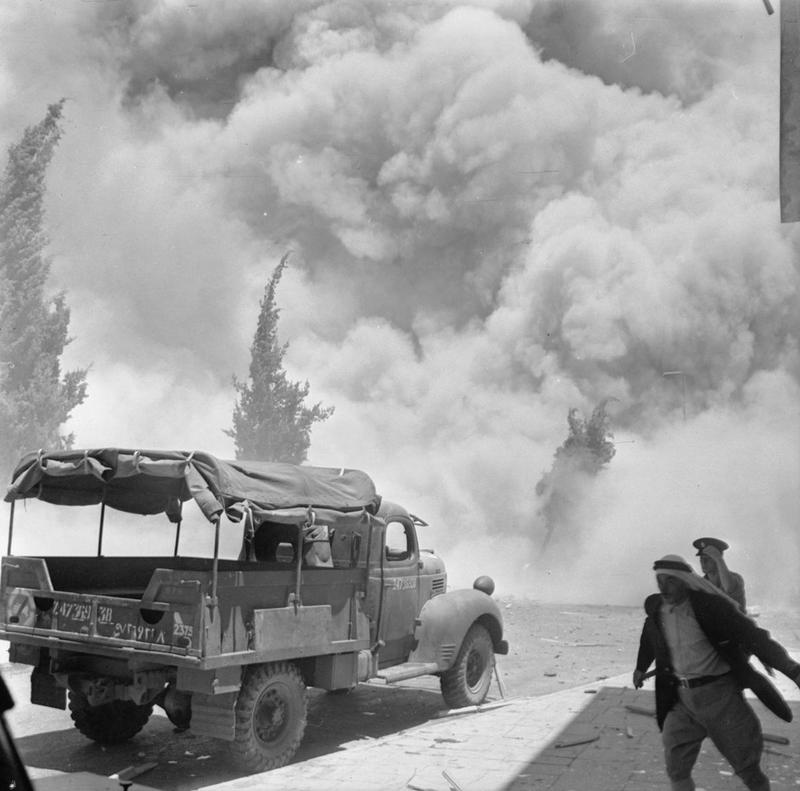
Disguised as Arab workers, members of the Irgun entered through the service entrance shortly before noon. They held staff members at gunpoint and placed the explosives beside the supporting columns of the basement restaurant, La Régence. Their withdrawal turned into a gunfight. A smaller bomb detonated across the street, raising the alarm and creating further confusion. Telephone warnings were then issued to the hotel, the offices of the Palestine Post and the French consulate.
At 12:37 p.m., the southern wing collapsed. The dead included 41 Arabs, 28 Britons, 17 Jews and five people of other nationalities. Only 13 were soldiers. Most of the rest were civil servants, hotel employees and people who had simply found themselves in the wrong place.
The warnings became the centre of the subsequent moral dispute. Begin claimed that the British had been given approximately 25 minutes but had refused to evacuate the building out of arrogance. Calls were indeed made, but the reconstruction by Bruce Hoffman, an American historian and terrorism expert, places them roughly ten and five minutes before the explosion. The message did not reach anyone capable of ordering an evacuation in time. The hotel’s assistant manager, meanwhile, assumed it was yet another hoax warning.
A telephone warning, in any case, is not a moral invoice that the perpetrator can leave on the table and declare the debt settled. Anyone who places explosives inside a building full of people remains responsible for what those explosives will do.
The Man Who Planned the Bomb and Later Advised the State on Terrorism
When Amichai “Gidi” Paglin became the Irgun’s chief operations officer in 1946, he was only 23 years old. Menachem Begin regarded him as an almost brilliant military organiser — a man who understood explosives, architecture and the psychology of the enemy. Paglin did not make the political decision to target the King David Hotel, but he devised the method by which the attack would be carried out. The explosives were to be concealed inside metal milk churns, brought through the service entrance and placed beside the supporting columns of the southern wing.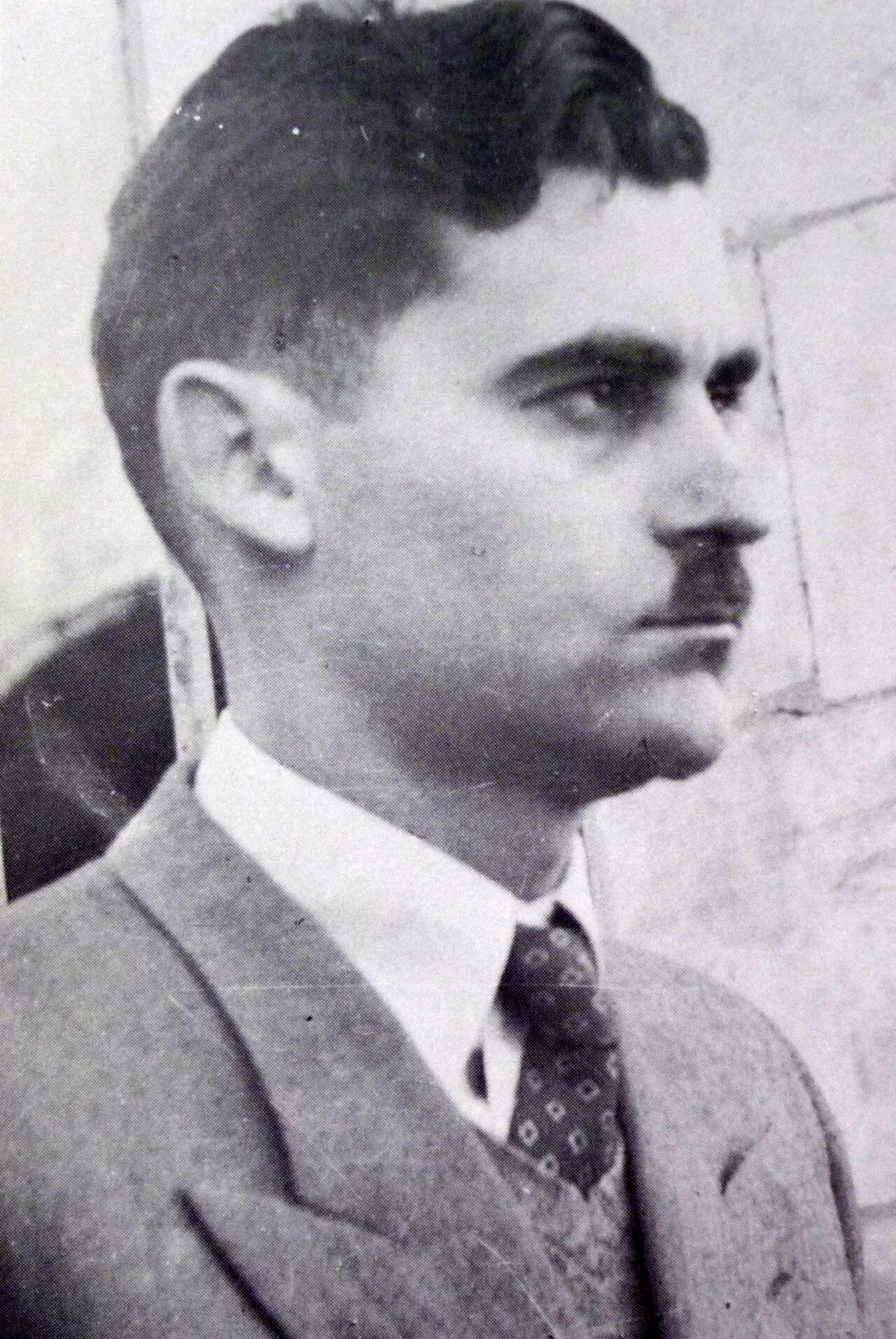
After the creation of Israel, Paglin did what members of victorious underground movements often do: he disappeared from the revolutionary narrative and returned to ordinary life. He ran a factory producing industrial ovens with his father. For decades, a state in which the Irgun initially remained on the political margins had no official need for his experience. That changed in 1977, when Begin’s Likud party won the election and ended nearly thirty years of Labour Zionist dominance.
The new prime minister appointed his former operative as an adviser on counterterrorism. The man who had worked out how to bring down the headquarters of one government with explosives was now expected to help another government defend itself against people who thought in much the same way. Paglin did not remain in the position for long. In February 1978, only a few months after his appointment, he and his wife were killed in a road accident.
His career forms an almost perfect circle between the underground and the state. The methods themselves need not change substantially. What changes is the institution applying them, the flag beneath which they are used and the vocabulary employed to describe them. When an enemy plants the bomb, it is terrorism. When the same man, after victory, advises a government on how to combat bombs, his former knowledge becomes “expertise”.
The attack was condemned not only by the British but by the Jewish Agency. The Haganah publicly distanced itself from the Irgun, and the brief unity of the Jewish underground disintegrated. Yet the fact that the operation had previously been approved within a joint framework complicates the later portrayal of it as an isolated excess committed by a handful of fanatics. Not every actor bore equal responsibility. But neither are all official narratives equally innocent.
Clement Attlee, Britain’s Labour prime minister, described the attack in Parliament as a senseless act of terrorism. Yet the bomb did not, by itself, drive Britain out of Palestine. The Mandate was already becoming politically unsustainable and increasingly violent. In February 1947, London referred the question to the United Nations, and the State of Israel was proclaimed in May 1948. The King David bombing nevertheless struck precisely what Begin had intended — not merely a building, but the prestige of an empire. When a government cannot protect its own headquarters, its reputation begins to look like stage scenery.
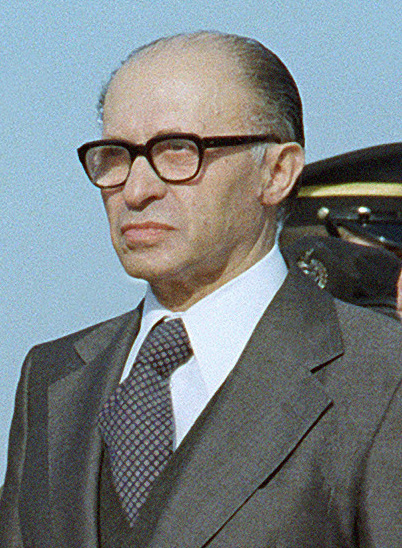
Begin’s later career gives the story its most unsettling symmetry. After Israel’s founding, he established the Herut party and entered parliamentary politics. He spent almost three decades in opposition before becoming prime minister in 1977. In 1978, he signed the Camp David Accords with Egyptian president Anwar el-Sadat and shared the Nobel Peace Prize with him. Statesmanship does not erase earlier violence, just as earlier violence does not prove that a person will forever remain incapable of statesmanship. History is troublesome precisely because it allows people to be both.
Operation Shark: When an Entire City Became a Suspect
Eight days after the King David Hotel bombing, before dawn on 30 July 1946, British troops sealed every route into Tel Aviv and parts of neighbouring Jaffa. The operation was given the appropriately menacing name “Shark”. British military intelligence concluded that the hotel attackers had come from Tel Aviv and that the organisers were hiding there. The conclusion was wrong: the immediate perpetrators belonged to the Irgun’s Jerusalem cell. One of the largest manhunts in the history of Mandatory Palestine therefore began at the wrong address.Approximately 20,000 British soldiers and members of the Palestine Police entered the city. For four days, residents were permitted to leave their homes for only two hours a day, chiefly to obtain food and medicine. Soldiers searched flats, basements and attics. Residents were brought into the streets, their documents checked, and anyone considered suspicious was taken away for questioning. Around 102,000 people passed through the screening system — virtually the entire adult population of Tel Aviv at the time.
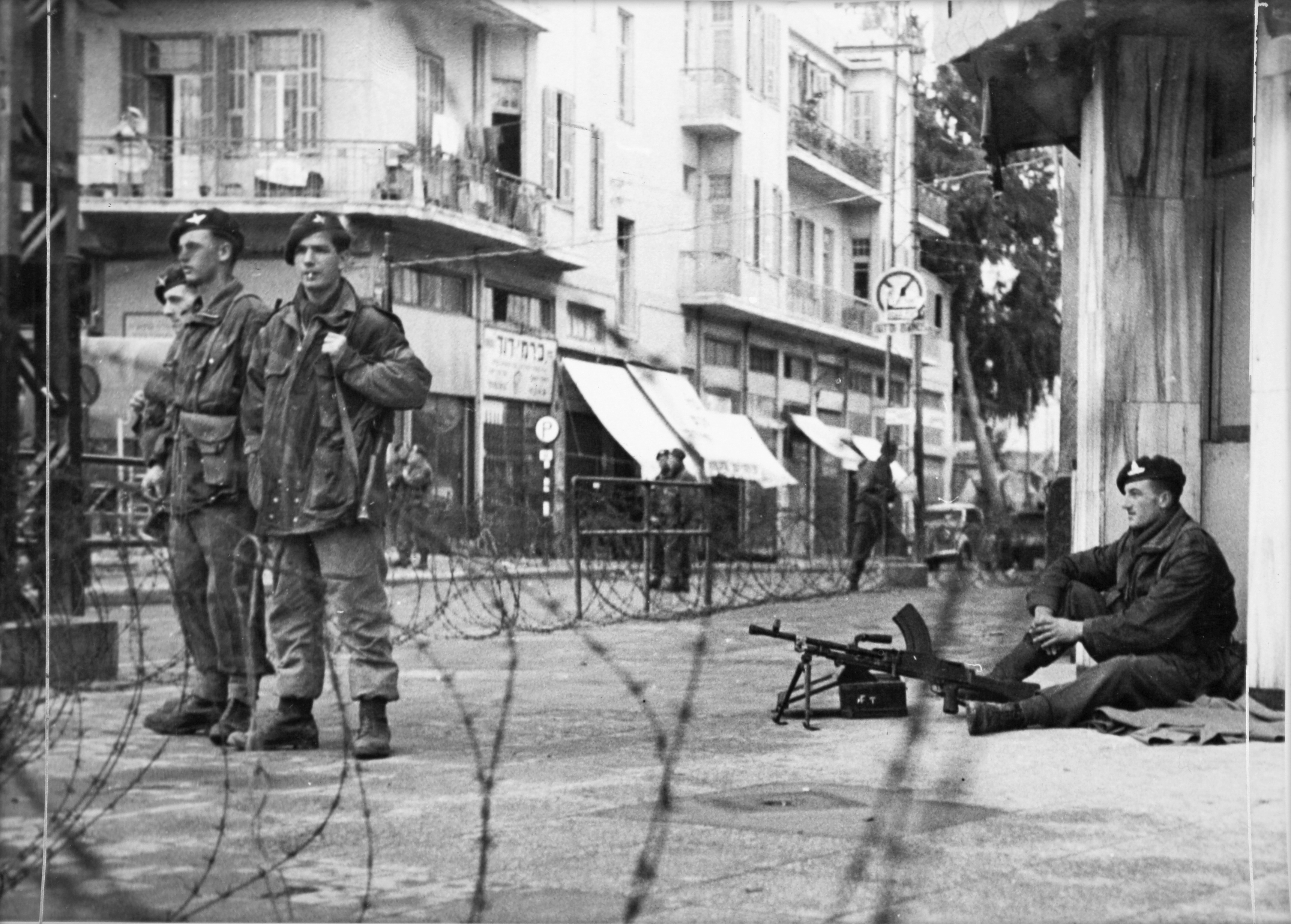
Operation Shark was not a complete tactical failure. The underground organisations lost personnel, equipment and part of their infrastructure. Politically, however, its effects were far more ambiguous. When an entire city is locked down because of the crime of a small group, the distinction between the population and the insurgents begins to disappear. People who may have felt no sympathy whatsoever for the Irgun suddenly found themselves spending hours before British soldiers who were searching their homes. The operation was not officially declared a collective punishment, but that was exactly what it looked like.
This was the classic paradox of colonial counterinsurgency. The authorities attempted to isolate the underground from the population, but mass searches pushed the two closer together. The Irgun did not need to persuade every resident of Tel Aviv to support its bombs. It was enough for Britain to convince a sufficiently large number of people that it regarded all of them as potential terrorists. Any resemblance between this history and Israel’s present-day treatment of the Palestinian population is either coincidental — or perhaps it is not.
Sixty years after the attack, a memorial plaque was installed at the hotel emphasising the Irgun’s warnings and implying that the British were to blame for failing to evacuate the building. Following protests from British diplomats, the wording was softened. The dispute over a few sentences was almost as instructive as the anniversary itself. When former outlaws become part of a state tradition, the language changes. A bomb becomes an operation, a terrorist becomes a fighter, and civilian deaths become an unfortunate consequence.
Israel’s present-day modus operandi, as witnessed in the Gaza Strip, has demonstrated how crime can be elevated to a vast, industrial scale. The King David Hotel, meanwhile, is fading from memory because remembering it would mean acknowledging that terrorism was once used as a weapon against occupation — and that narrative might lead many to ask where the similarly shaped Palestinian resistance came from.
Sources
- Research-repository.st-andrews.ac.uk The Bombing of The King David Hotel, July 1946 https://research-repository.st-andrews.ac.uk/bitstream/handle/10023/24114/Hoffman_2020_SWI_BombingKingDavid_AAM.pdf
- Palquest.org Zionist Operations Against the British Mandate Authorities https://www.palquest.org/en/overallchronology?chronos=139&nid=139
- Israeled.org Jerusalem’s King David Hotel Is Bombed https://israeled.org/king-david-hotel-bombing/
- Hansard.parliament.uk Terrorist Outrage, Jerusalem https://hansard.parliament.uk/commons/1946-07-23/debates/9d5f8edf-bd1a-4a61-8b4c-8287630ed1db/TerroristOutrageJerusalem
- Avalon.law.yale.edu The Avalon Project : British White Paper of 1939 https://avalon.law.yale.edu/20th_century/brwh1939.asp
- Nobelprize.org Menachem Begin Facts https://www.nobelprize.org/prizes/peace/1978/begin/facts/
Comments