
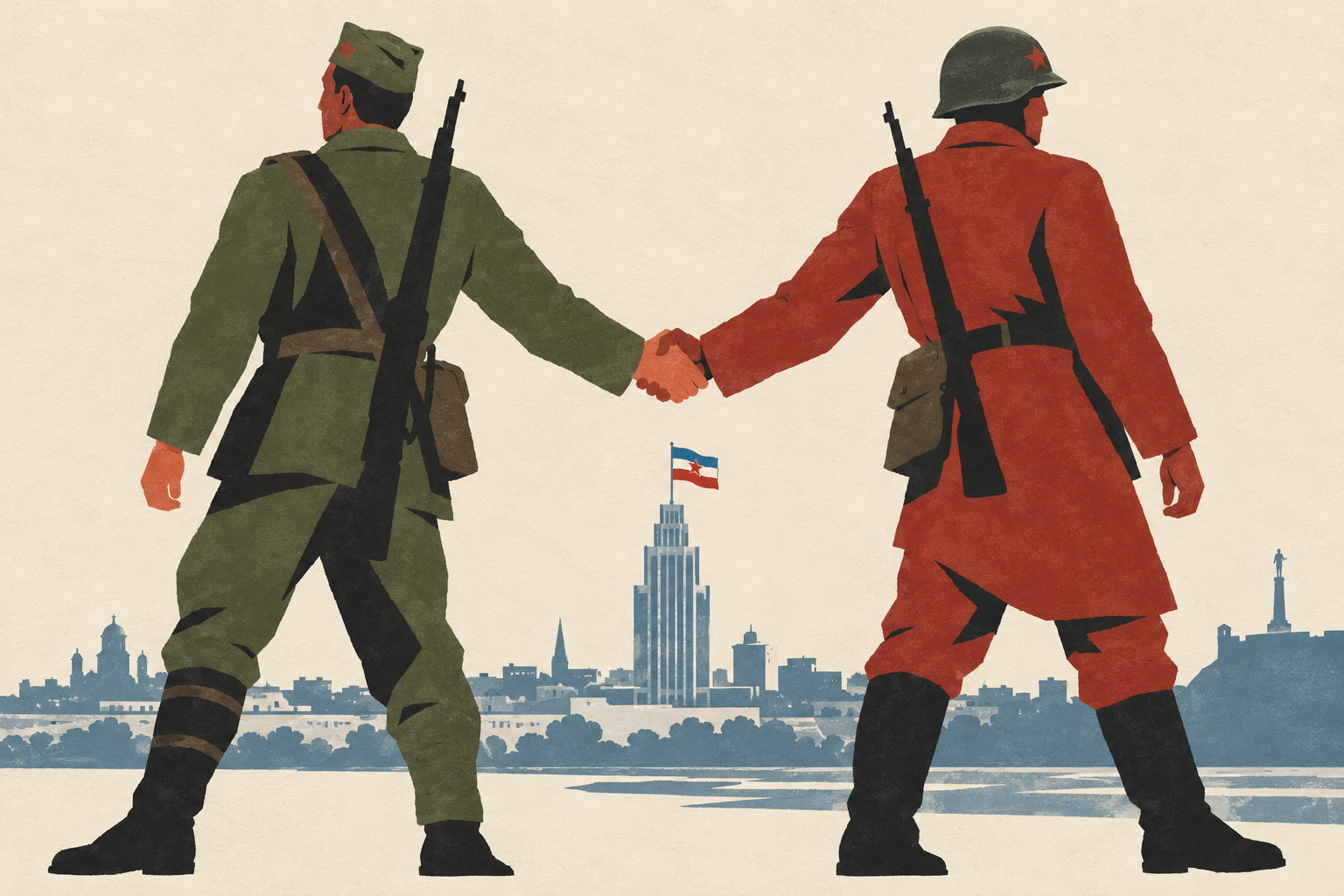
Partisans and the Red Army shared the streets, blood, and victory, but not the same vision of freedom - the crack of 1944 will become the breakup of 1948.
On the evening of October 19, 1944, the Albanija Palace—then the tallest building in Belgrade—became a vertical battlefield. According to those who took part in the fighting, Partisans occupied some floors while the Germans held others between them. Walls were smashed through with pickaxes, and hand grenades were thrown through the openings.
Down in the street, Soviet T-34 tanks fired on German machine-gun nests. When the Yugoslav flag bearing the red star finally appeared on the roof, the city had not yet been completely liberated, but the outcome of its final night under occupation was already becoming clear.
One red star flew from the roof, while another adorned the Soviet tanks below. They looked much the same, but they represented very different experiences. The Red Army was the military force of a vast state advancing from Stalingrad toward the heart of Europe. The People’s Liberation Army of Yugoslavia was the army of a revolution that, over four years of war, had built its own command structure, civil administration and political vision. The alliance was genuine. That was precisely why the misunderstanding hidden within it mattered so much.
A City That Had to Be Liberated—and Preserved
Belgrade had endured more than three and a half years of occupation. The city had suffered German bombing, concentration camps and mass executions, followed by devastating Allied air raids in 1944. For the German defenders, Belgrade was more than a symbol. It was a vital railway and road junction needed for the withdrawal of the German Army Group E from Greece. Public buildings were turned into fortresses, intersections into anti-tank positions, and bridges and critical infrastructure were rigged for demolition.
Even before the first Soviet units entered Serbia, Tito made sure their arrival would not look like the beginning of another occupation. In September, he secretly left the island of Vis for Moscow, where he reached an agreement on military cooperation with Stalin. The public communiqué was almost pointedly insistent on Yugoslav sovereignty. The Soviet command, it stated, had asked the National Committee for the Liberation of Yugoslavia for permission to allow its forces to enter the country temporarily. Civil authority was to remain in Yugoslav hands, and the Red Army would withdraw once its military mission had been completed. This was partly a diplomatic fiction, but an extremely important one. Tito’s movement was no longer being treated as a guerrilla force receiving assistance from a great power, but as an established government granting a foreign army permission to enter its territory.
Tanks Through the Intersections, Infantry Through the Cellars
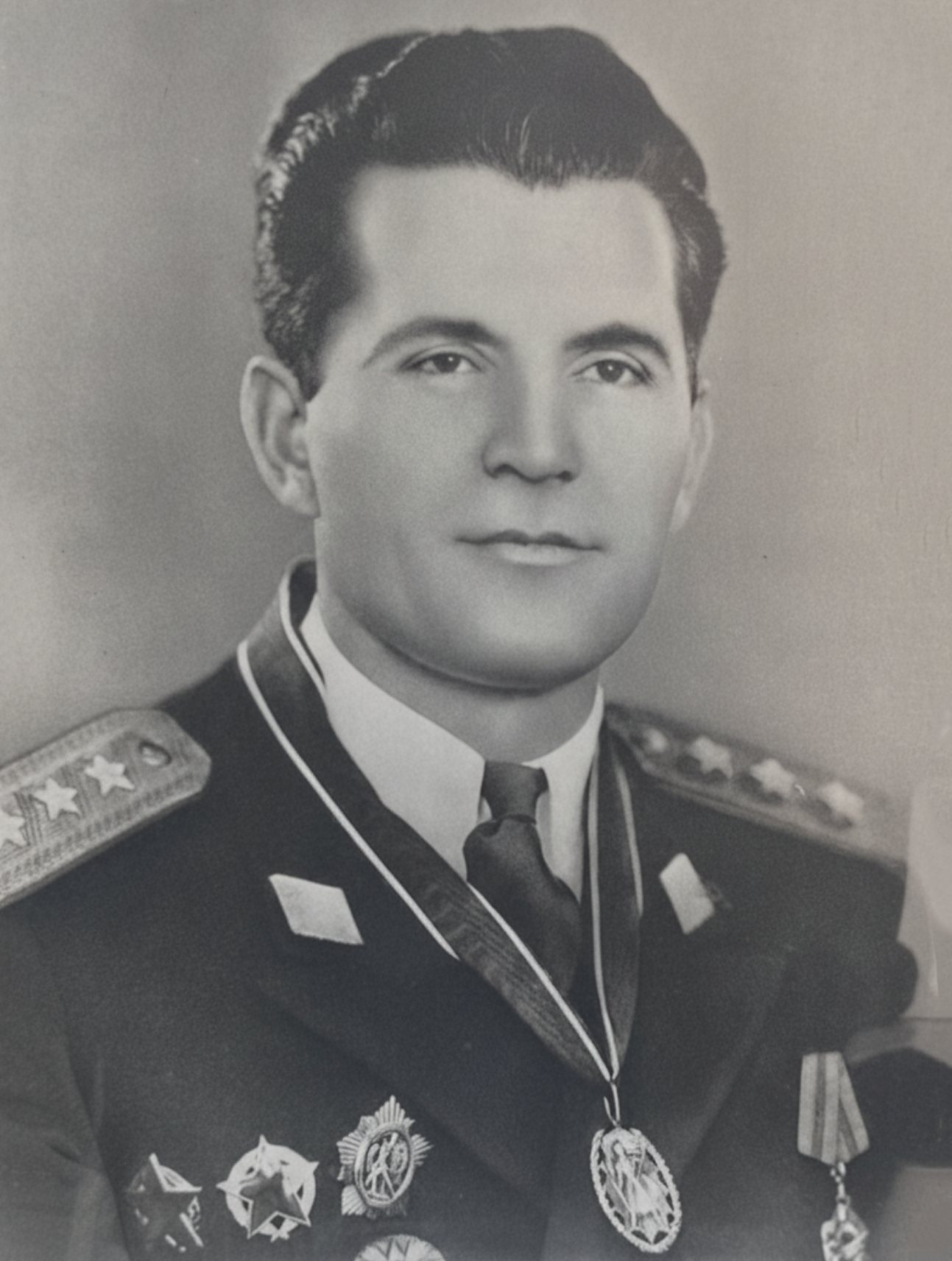
The Belgrade Offensive began on October 12, while the final assault on the city lasted from October 14 to 20. The Yugoslav First Army Group was commanded by the Montenegrin Partisan officer Peko Dapčević.
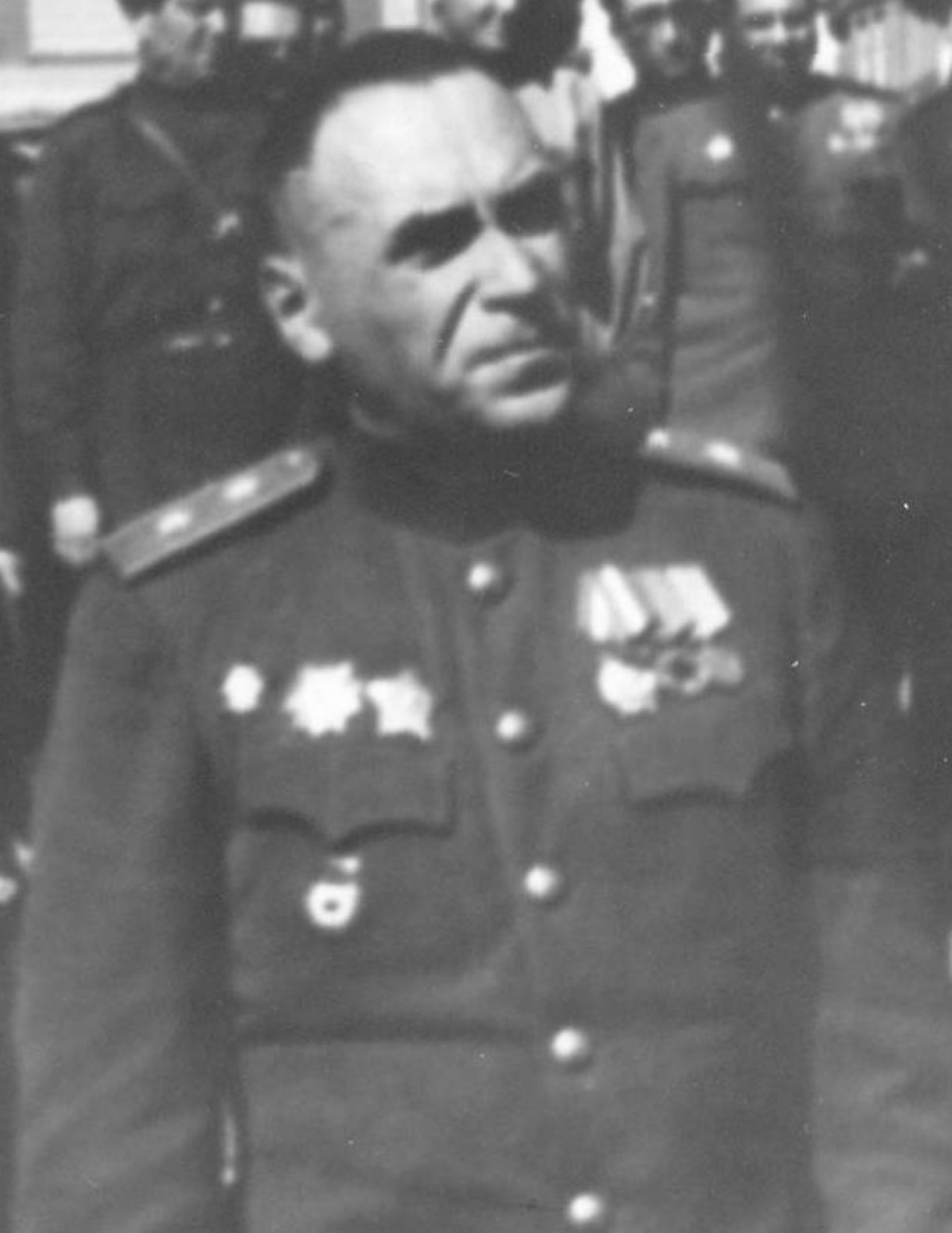
The main Soviet armored force, the 4th Guards Mechanized Corps, was commanded by General Vladimir Zhdanov. The Soviets brought what the Partisans lacked most: tanks, heavy artillery and air support. The Partisans contributed large numbers of infantry, intimate knowledge of the terrain and experience in a kind of warfare in which positions were captured not on a map, but yard by yard, through cellars and breached walls.
The city’s residents did not simply wait for the armies to pass through. They pointed out concealed German strongholds, guided fighters through interconnected courtyards and helped care for the wounded. In the city center, battles were fought over the National Theatre, the Main Post Office, the Moskva and Balkan hotels, and the government ministry complex around Nemanjina Street. The Albanija Palace fell during the night of October 19–20.
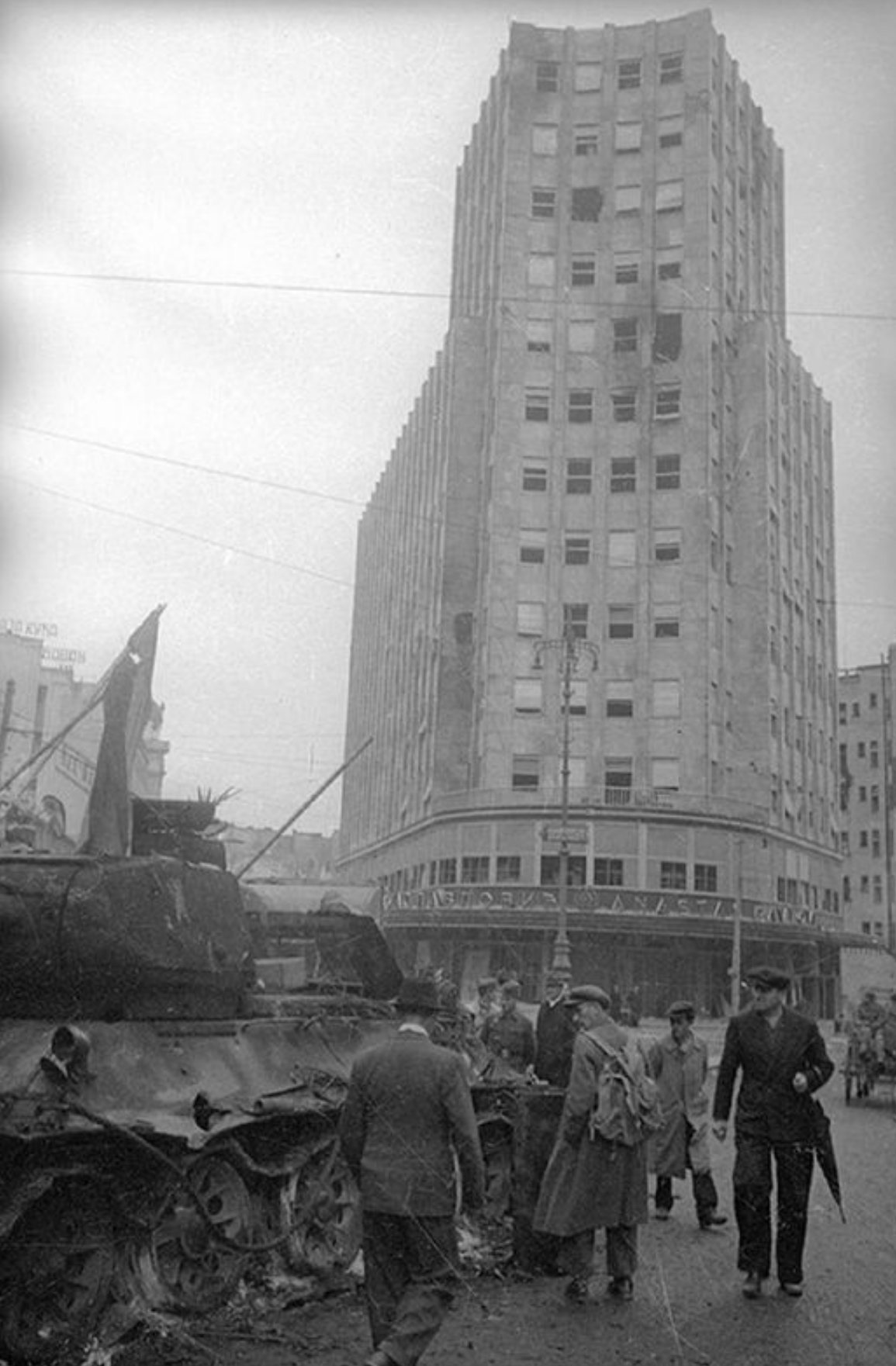
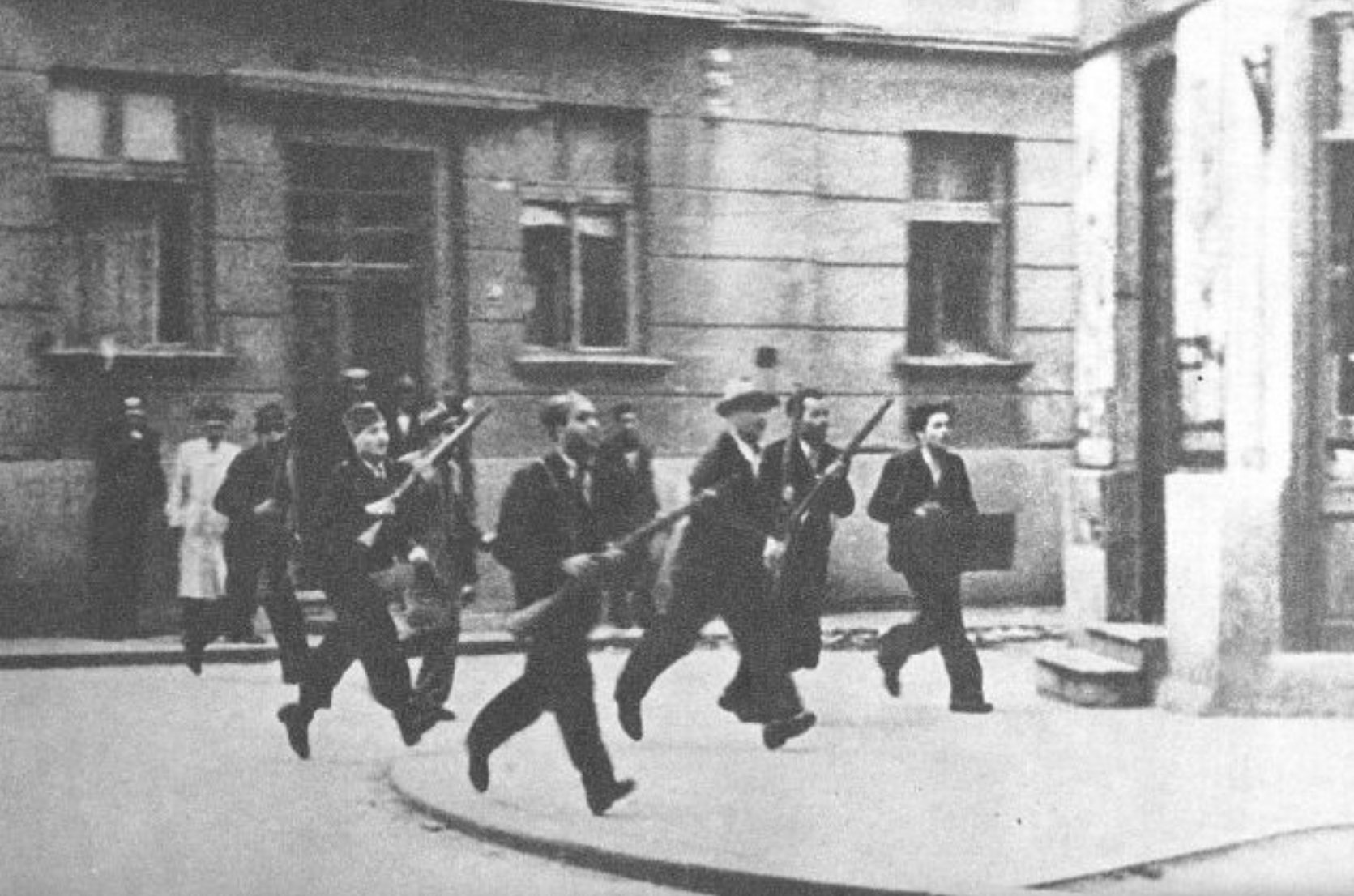
The raising of the flag is most often credited to a young Partisan named Miladin Petrović. A postwar legend claimed that he was killed on the roof immediately afterward, but his military record shows that he died almost two months later on the Syrmian Front.
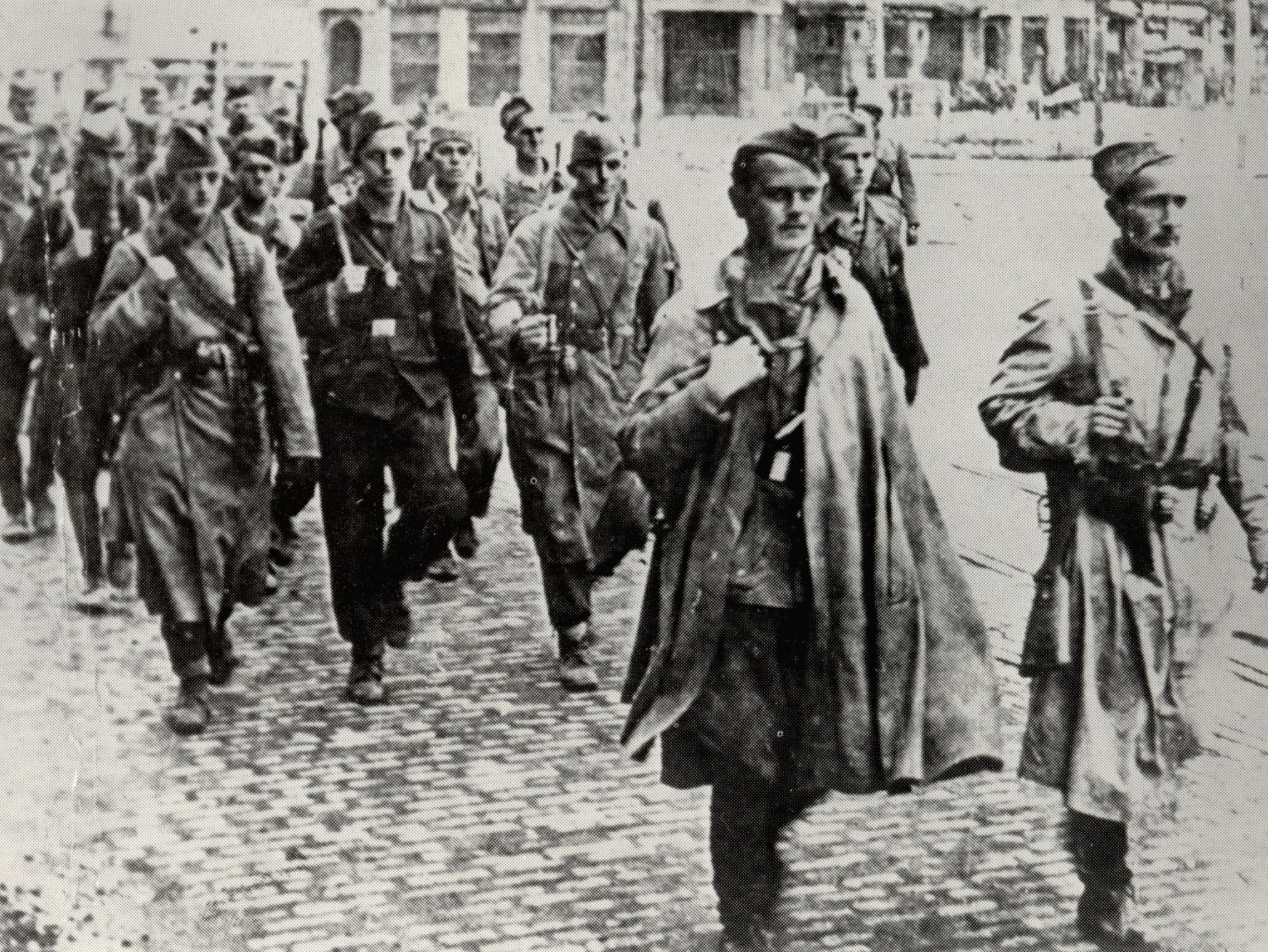
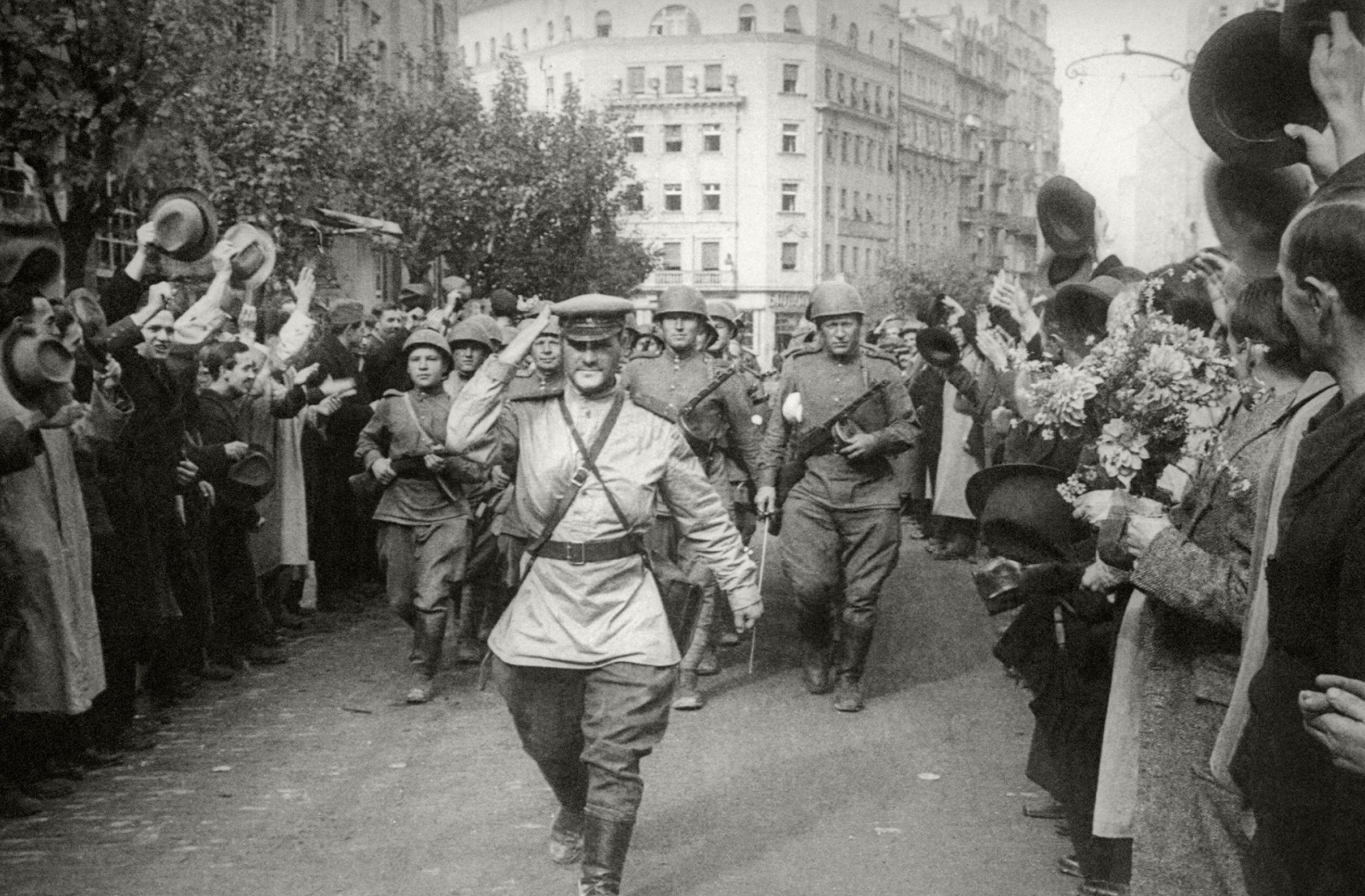
Liberation did not arrive in a single, clearly defined moment. While celebrations had already begun in the city center, fighting continued in Čukarica. Gojko Nikoliš, a doctor and Partisan medical officer, later recalled Kozara folk dances stretching from the National Theatre to Slavija Square, Soviet accordions inviting people to dance the kazachok, and tracer rounds streaking across the sky. This time, propaganda did not need to invent the sense of brotherhood. That evening, it could genuinely be seen in the streets.
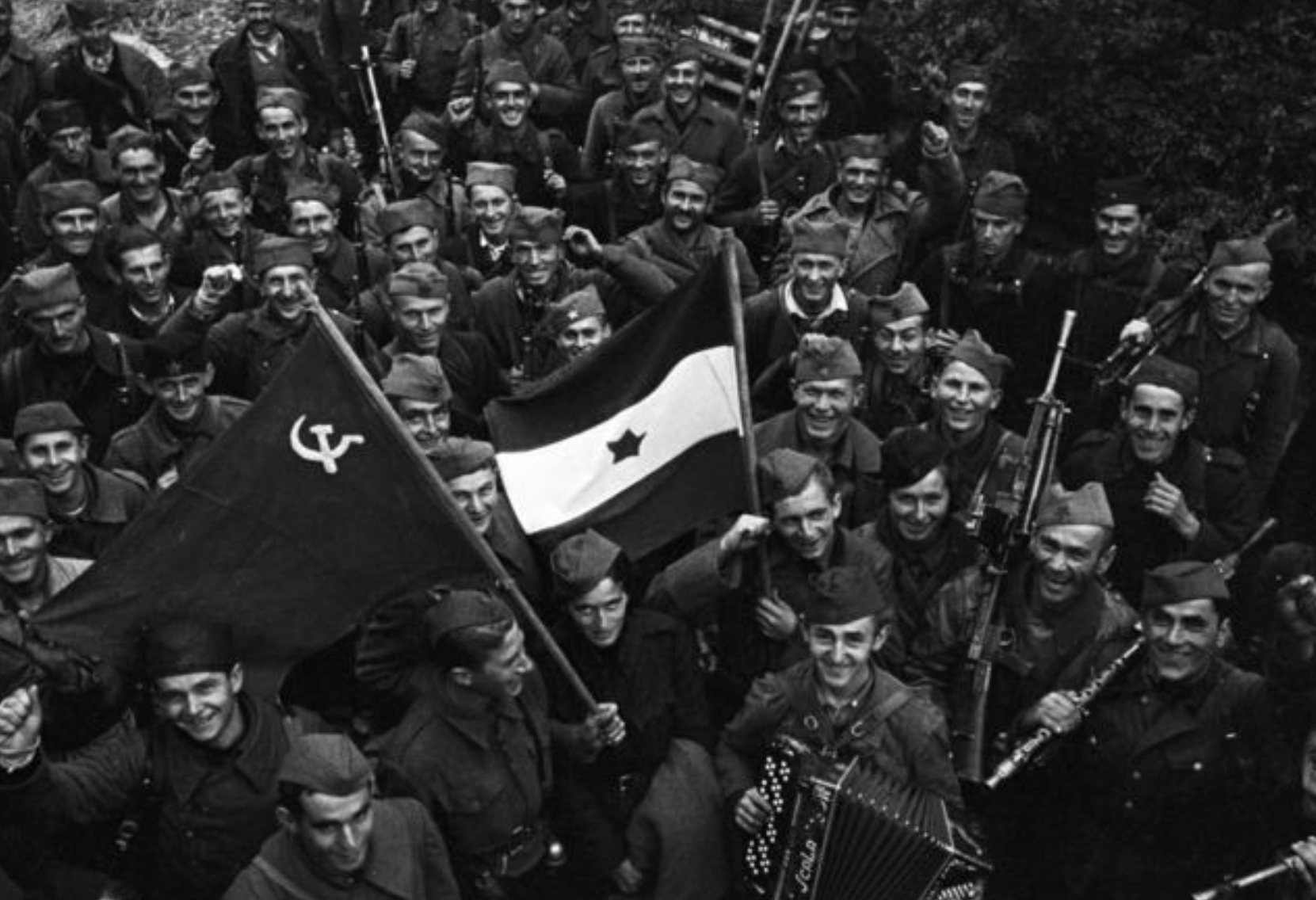
The victory came at a heavy price. Around three thousand soldiers of the People’s Liberation Army of Yugoslavia and nearly a thousand members of the Red Army were killed in the operation. Nor did the danger disappear on October 20. Soviet combat engineers removed thousands of mines and explosive charges, but unexploded ordnance killed another 150 Belgraders during the first month of freedom, many of them children.
Gratitude Without Surrendering Independence
Seven days after the liberation, Tito made his first public appearance in Belgrade. At Banjica, he reviewed the assembled troops and spoke words whose full significance would become apparent only later: "We will no longer be anyone’s plaything or bargaining chip! Through this struggle, we have earned the right to stand as equals with our Allies, both in this war and in building a new and happier Europe—not merely a new Yugoslavia." In the same speech, he saluted "our great ally, the Red Army." To Tito, there was no contradiction between the two statements. Gratitude toward the Soviet Union did not have to mean surrendering Yugoslav independence.
The First Crack in the Brotherhood
The image of a shared victory was soon overshadowed by a problem that the official iconography of liberation left unmentioned. Yugoslav authorities recorded cases of looting, physical violence and sexual assault committed by individual Red Army soldiers as they passed through the country. For Tito’s leadership, this was not merely a question of military discipline. If civil authority truly rested in Yugoslav hands, then even an allied soldier could not be placed beyond its reach.Milovan Đilas raised these complaints with the Soviet leadership, only to be met with fury in Moscow. According to his later account, Stalin regarded the criticism as an insult to an army that had crossed thousands of miles through a devastated continent and suffered immense losses. Instead of discussing individual crimes, he reframed the issue as an accusation that the Yugoslavs were dishonoring the Red Army.
It was a minor dispute compared with the crisis that would erupt in 1948, but it already contained the central issue at the heart of that later conflict. Belgrade distinguished between gratitude for liberation and its right to govern affairs on its own territory. Moscow expected the privileged position of the Soviet army and state to remain beyond public challenge. The brotherhood was not a fabrication, but the two sides did not share the same understanding of equality.
The Communist Who Refused to Ask Permission
This does not mean that a clash with Stalin was already inevitable. After the war, Yugoslavia was among the Soviet Union’s most devoted allies. A treaty of friendship and mutual assistance was signed in April 1945, the postwar order was built largely on the Soviet model, and Belgrade became the headquarters of the Cominform in 1947. Tito was not a closet liberal waiting for an opportunity to defect to the West. He was a communist revolutionary who believed that Yugoslavia had the right to pursue its own communist policies.
That was precisely where the problem began. Stalin viewed the alliance of communist states as a hierarchical system with Moscow at its head. Tito behaved like a regional leader who had no intention of seeking permission for every move he made. Yugoslavia supported the Greek communists, expanded its influence in Albania and negotiated a possible federation with Bulgaria. When Moscow attempted to impose discipline in early 1948, Tito refused to purge his own leadership or appear before the Cominform as a defendant. On June 28, Yugoslavia was expelled from the communist bloc. Stalin expected the "healthy forces" within the Yugoslav Party to remove Tito. They failed because the army, the Party and the security apparatus had all been forged in Yugoslavia’s own war and were loyal to their own leadership rather than to Moscow.
October 20, 1944, is therefore more than a story about an alliance that later fell apart. It also explains why Yugoslavia was able to defy Stalin when no other Eastern European communist state could. Soviet military power helped open the gates of the capital, but it had not created the Yugoslav revolution or its army. The Partisans entered Belgrade with their own commanders, their own government and their own vision of the future.
Why the Red Army Did Not Stay
After Belgrade was captured, the bulk of the Soviet strike forces did not remain in Yugoslavia as a permanent army of occupation. Their advance continued northward, through Vojvodina and into Hungary, toward the battle for Budapest. Yugoslavia was not divided into Allied occupation zones, nor was a Soviet military administration established there.This did not mean that the war in Yugoslavia was over. Yugoslav units continued fighting on the Syrmian Front and across Bosnia, Croatia and Slovenia, cooperating with Soviet and Bulgarian forces wherever their operational routes converged. The crucial difference was political: the Partisan army was neither disbanded nor placed under foreign command. It emerged from the war as the armed force of the new state.
In Poland, Hungary, Romania and elsewhere, the presence of the Red Army was a crucial pillar of the Moscow-led postwar order. Tito, by contrast, had his own army, security apparatus and administration, with no Soviet garrisons that could tip the balance against him in a moment of crisis. When he rejected Stalin’s demands in 1948, there was an extraordinary military fact behind that political "no": there was no Soviet force inside Yugoslavia capable of immediately turning it into an empty word.
Two armies liberated the city together, but they never became a single army. Four years later, it became clear that shedding blood together for victory was not the same as agreeing to take someone else’s orders once that victory had been won.
Sources
- Biblioteka Znaci Beogradska operacija https://znaci.org/odrednica.php?slug=beogradska-operacija
- Politika Kako je oslobođena Palata „Albanija” https://www.politika.rs/sr/clanak/341315/kako-je-oslobodena-palata-albanija
- Office of the Historian, U.S. Department of State The Ambassador in Italy (Kirk) to the Secretary of State https://history.state.gov/historicaldocuments/frus1944v04/d1305
- Muzej Jugoslavije Smotra trupa na Banjici i prvi govor maršala Tita u oslobođenom Beogradu https://vaju.muzej-jugoslavije.org/fotografija/68dc404b6c0fd4c1ce038a46
- Slavic Review / Cambridge University Press The Red Army in Yugoslavia, 1944–1945 https://www.cambridge.org/core/journals/slavic-review/article/red-army-in-yugoslavia-19441945/8D212624135E340F6DAF0E8298776464
- Radio Slobodna Evropa Dan oslobođenja Beograda: Između proslave i revizije https://www.slobodnaevropa.org/a/dan-oslobodjenja-beograda-izmedju-proslave-revizije/26646761.html
- Office of the Historian, U.S. Department of State Editorial Note: The Yugoslav–Cominform Dispute https://history.state.gov/historicaldocuments/frus1948v04/d697
- Foreign, Commonwealth & Development Office Oslobođenje Beograda https://blogs.fcdo.gov.uk/edwardferguson/2024/10/17/oslobodenje-beograda/
Comments