
The most chilling thing about the number 33,771 is not simply its size, but its precision. This was no rounded estimate assembled by historians decades later. It was the death toll reported by the perpetrators themselves in a document sent to their superiors in Berlin. Human beings had been reduced to the result of a two-day operation, neatly tallied and entered into the record. The comma in that number looks almost like a bureaucratic signature.
When we picture the Holocaust, we almost inevitably see railway tracks, camp fences and gas chambers. Babyn Yar forces us to confront an earlier and perhaps even more disturbing image. There was no death camp there. All it took were notices posted around the city, police cordons and a natural ravine on the outskirts. The machinery of death could operate without walls.
A city where 60,000 people had no way out
German forces entered Kyiv on September 19, 1941, less than three months after the invasion of the Soviet Union began. Around 60,000 members of the city’s large Jewish community remained. Many had fled east or were serving in the Red Army, so those who were still there when the occupation began were predominantly women, children, the elderly and the sick.
Several days after the Germans entered the city, mines left behind by retreating Soviet forces exploded in buildings in central Kyiv. Part of Khreshchatyk was destroyed, German soldiers and officials were killed, and the occupation authorities blamed the Jews for the sabotage. The explosions did not cause the massacre, they merely provided a convenient pretext. The policy of annihilating Jewish communities was already moving eastward with the German army.
On Sunday, September 28, notices appeared across Kyiv in Ukrainian, Russian and German. Every Jew in the city was ordered to report to a designated intersection near the cemetery by eight o’clock the following morning. They were instructed to bring identification papers, money, valuables, underwear and warm clothing. Anyone who failed to appear was threatened with execution.
The warm clothing was part of the deception. The order suggested resettlement, perhaps deportation to some distant place. Not everyone believed it, but there was no real choice. Staying home meant defying an order under threat of death. Going to the assembly point meant clinging to the faint hope that this was merely another forced relocation.
Each checkpoint revealed only one part of the trap
The following morning, families carrying suitcases and accompanying children and elderly relatives made their way through the streets. Beyond one of the checkpoints, there was no turning back. First their documents and luggage were taken, then their money and clothing. In small groups, they were led through narrow passages toward the ravine. The route was arranged so that many could not see the executioners or the bodies until they rounded the final bend.
The operation was led by Sonderkommando 4a, a mobile SS and security police unit commanded by German SS officer Paul Blobel. Members of the German police took part, assisted by locally recruited auxiliary policemen. Nor was the Wehrmacht a distant observer. Its propaganda company printed around two thousand copies of the notice, while the army also supplied large quantities of ammunition.
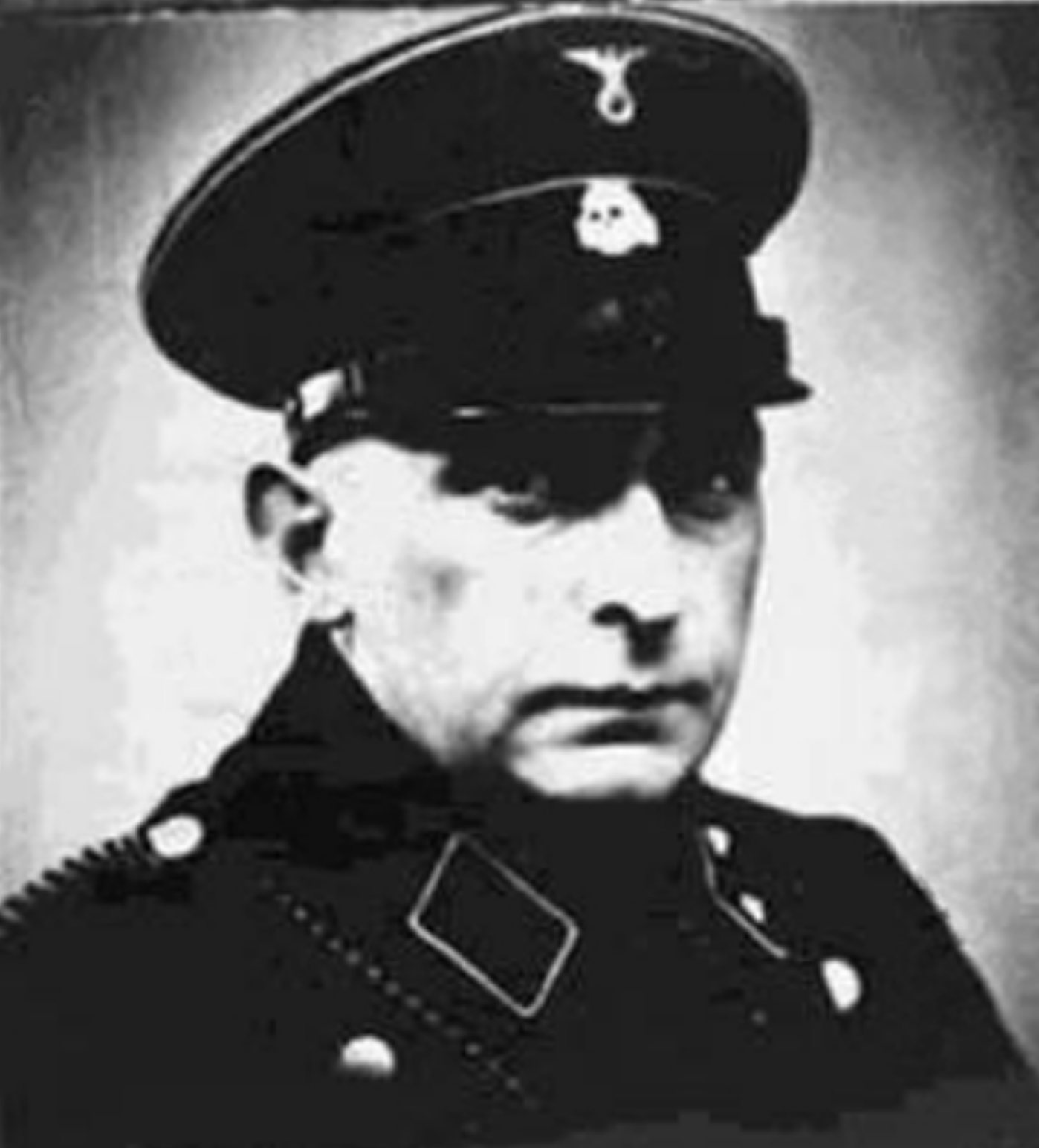
The massacre was therefore no uncontrolled outburst by a band of fanatics. It was a division of labor. Someone drafted the order and had it translated into three languages. Someone closed the streets and directed the columns. Others confiscated possessions, guarded the approaches and pulled the triggers. In the end, someone counted the dead. Ideological madness was carried out with the orderly precision of official procedure.
The Holocaust by Bullets began before the death camps
Babyn Yar did not mark the beginning of mass murder in the East, but its immense urban culmination. After Operation Barbarossa began, the German Einsatzgruppen initially focused largely on murdering Jewish men and alleged political enemies. By the summer of 1941, even that boundary had disappeared. Entire communities became targets, including women and children.
This phase of the genocide is now known as the Holocaust by Bullets. Nearly a third of the six million Jewish victims of the Holocaust were murdered in mass shootings. Auschwitz became its most recognizable symbol, but it was not where the Holocaust began. Before death camps and gas chambers became the defining face of extermination, entire communities were already vanishing outside the towns and villages of the occupied Soviet Union.
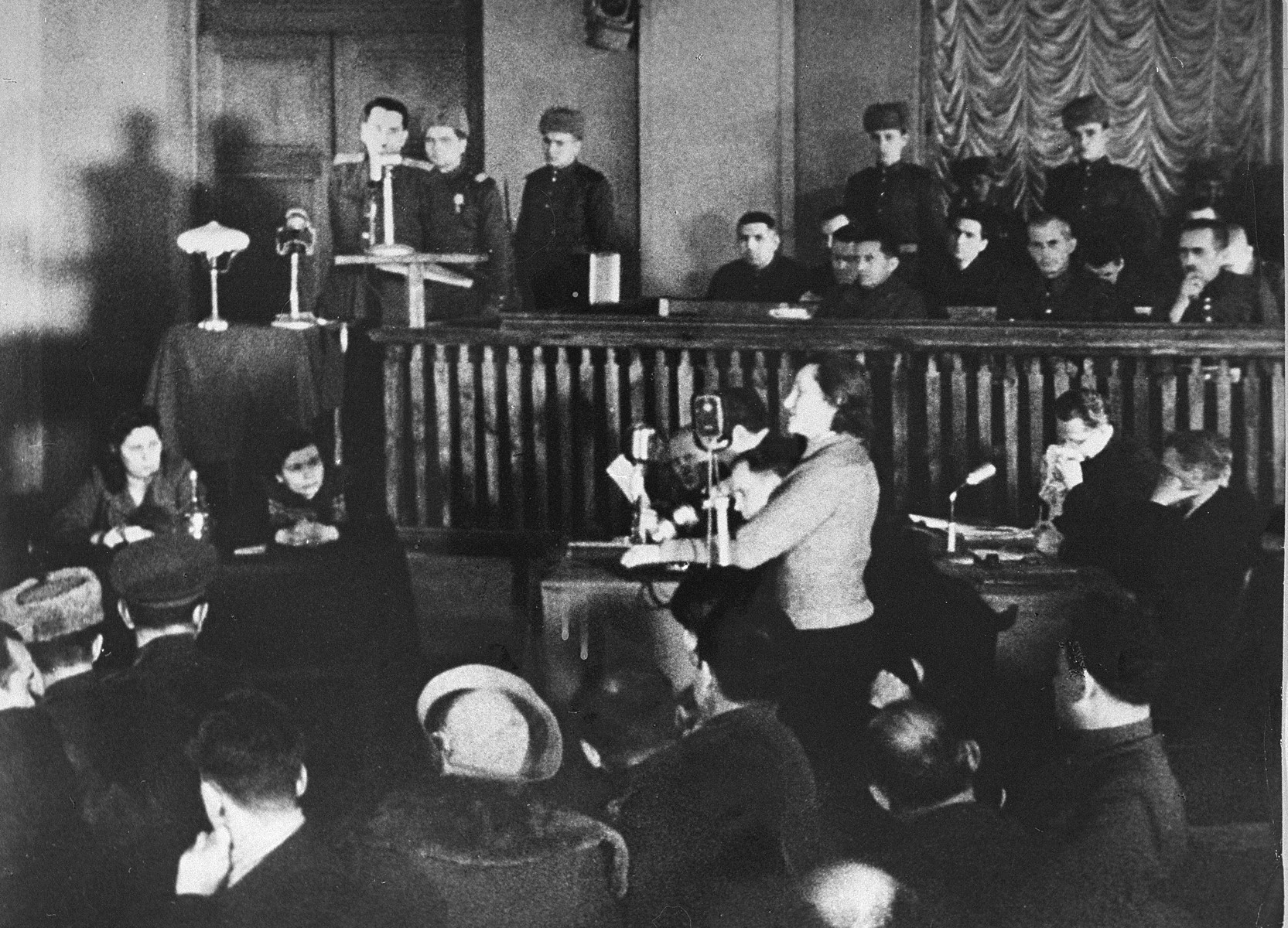
One of the few survivors was Dina Pronicheva, an actress from Kyiv. In the ravine, she pretended to be dead, remained hidden among the bodies and managed to climb out during the night. She later testified about the groups of men, women and children who kept arriving without pause.
Photographs of what remained
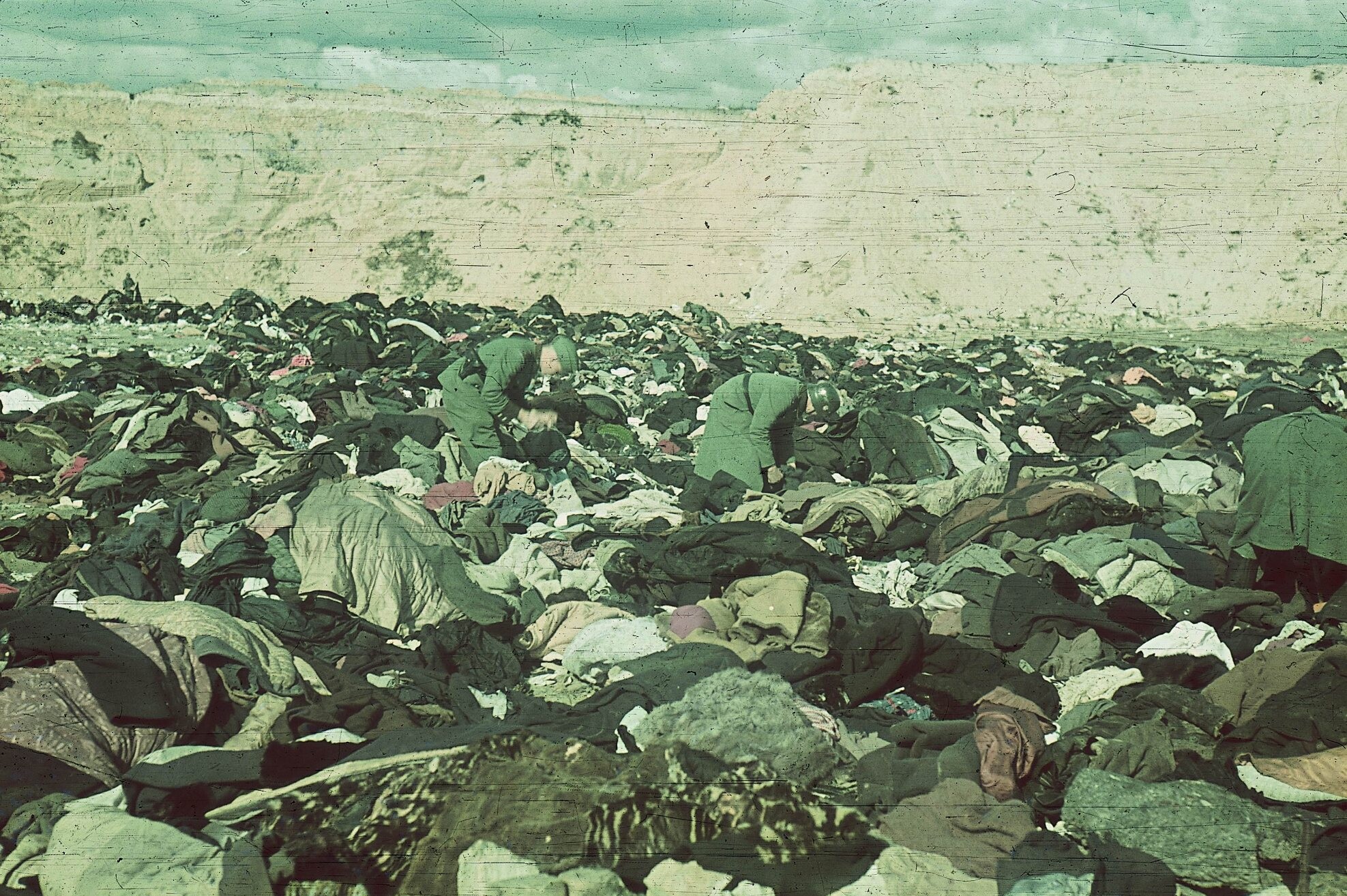
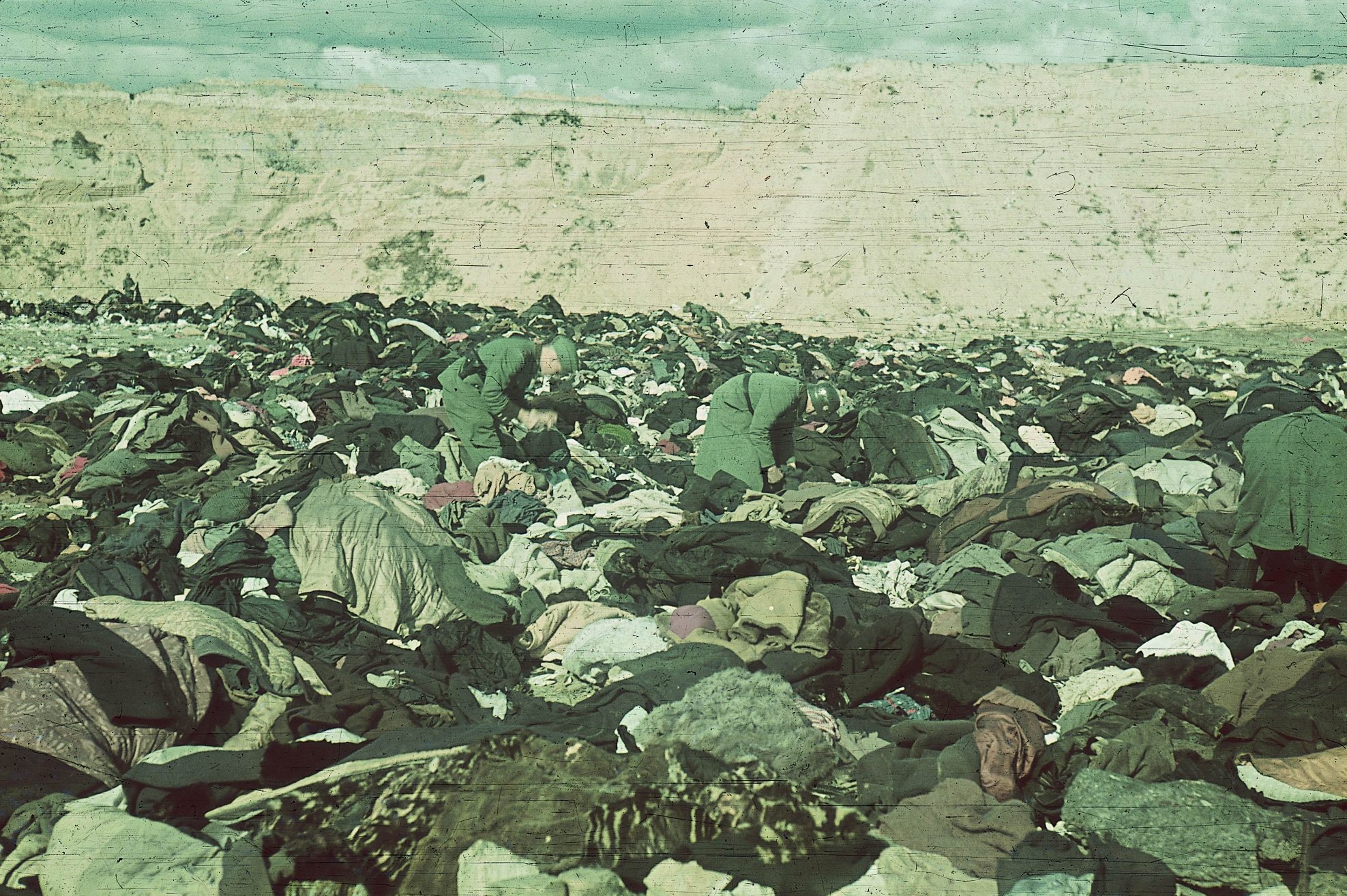
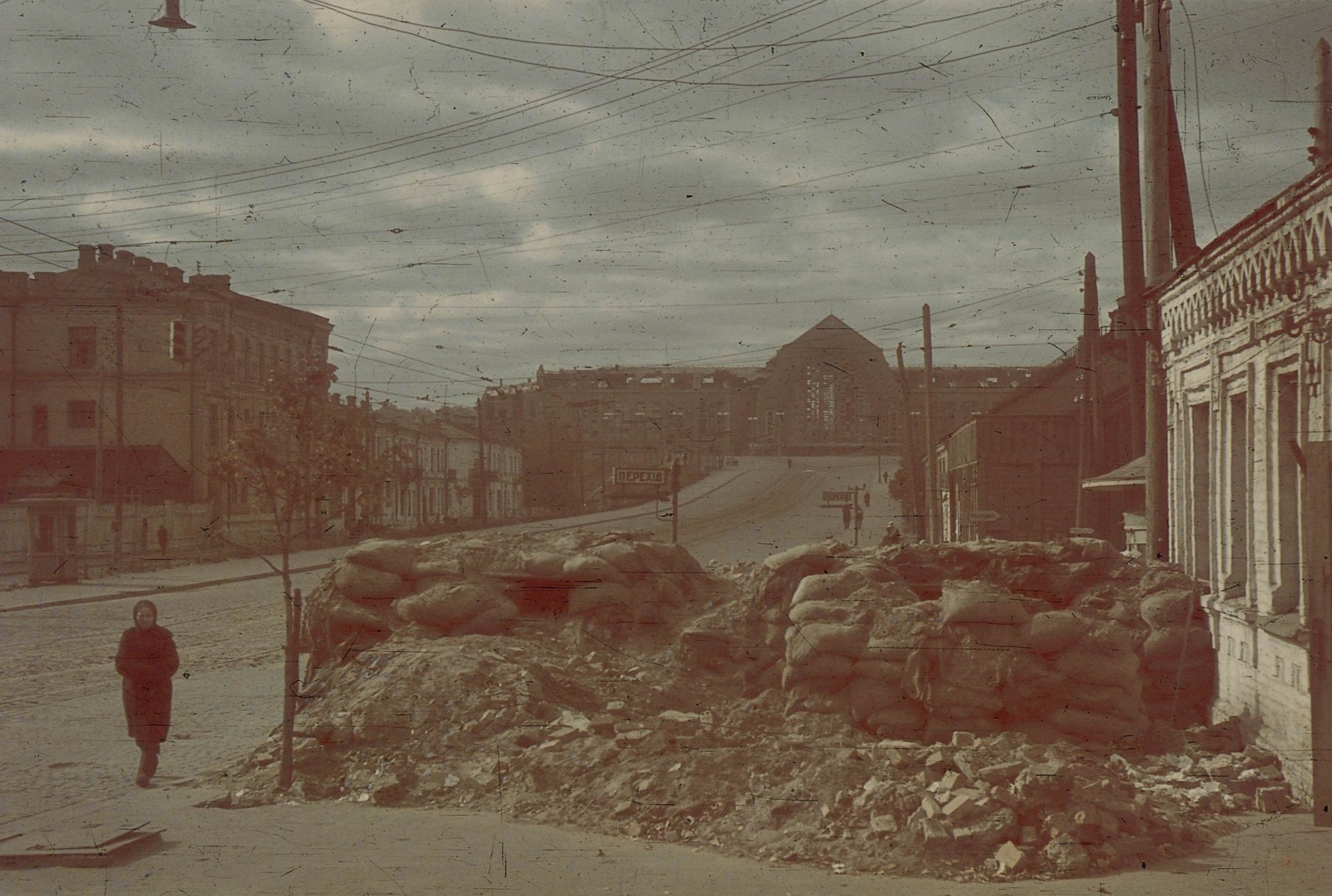
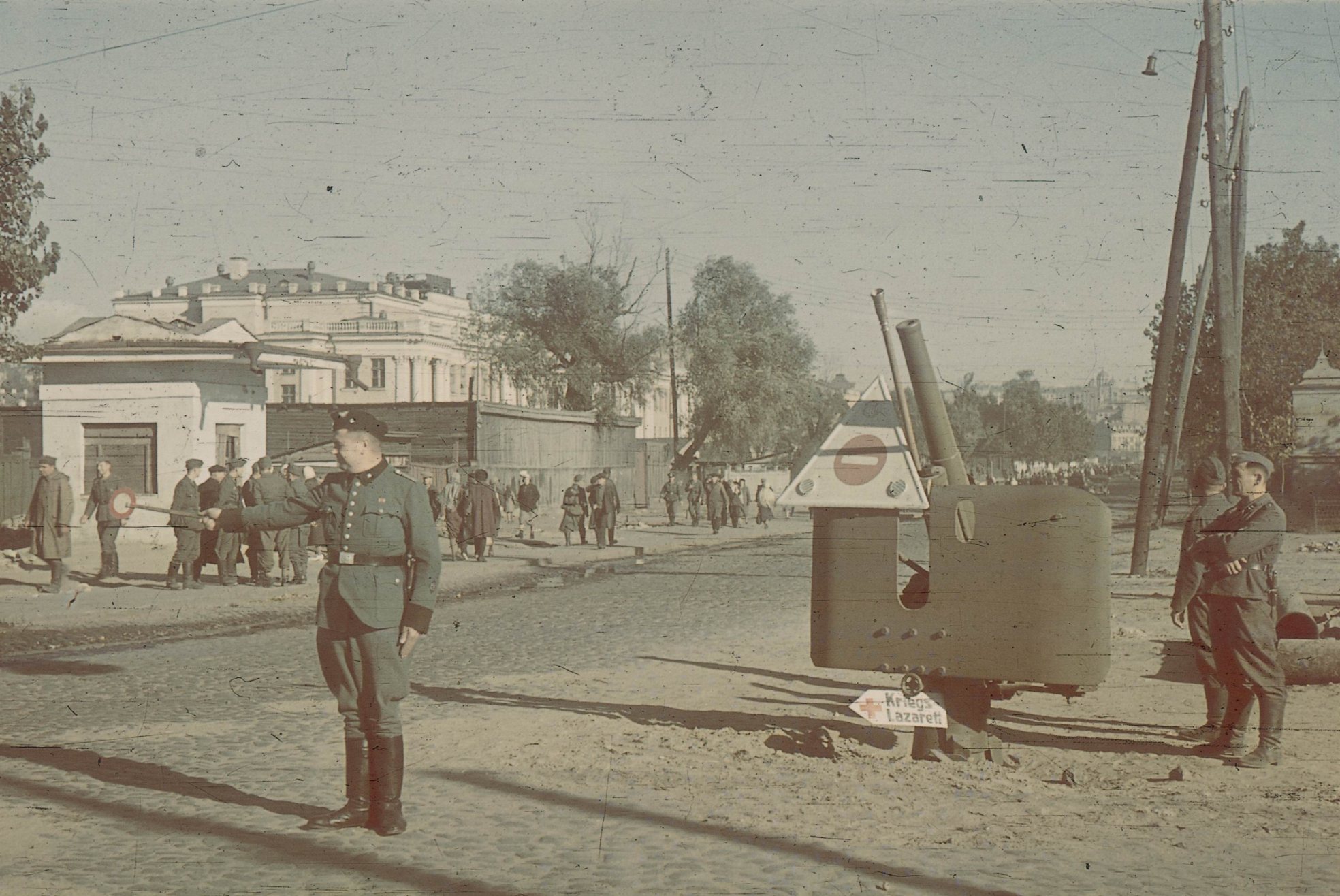
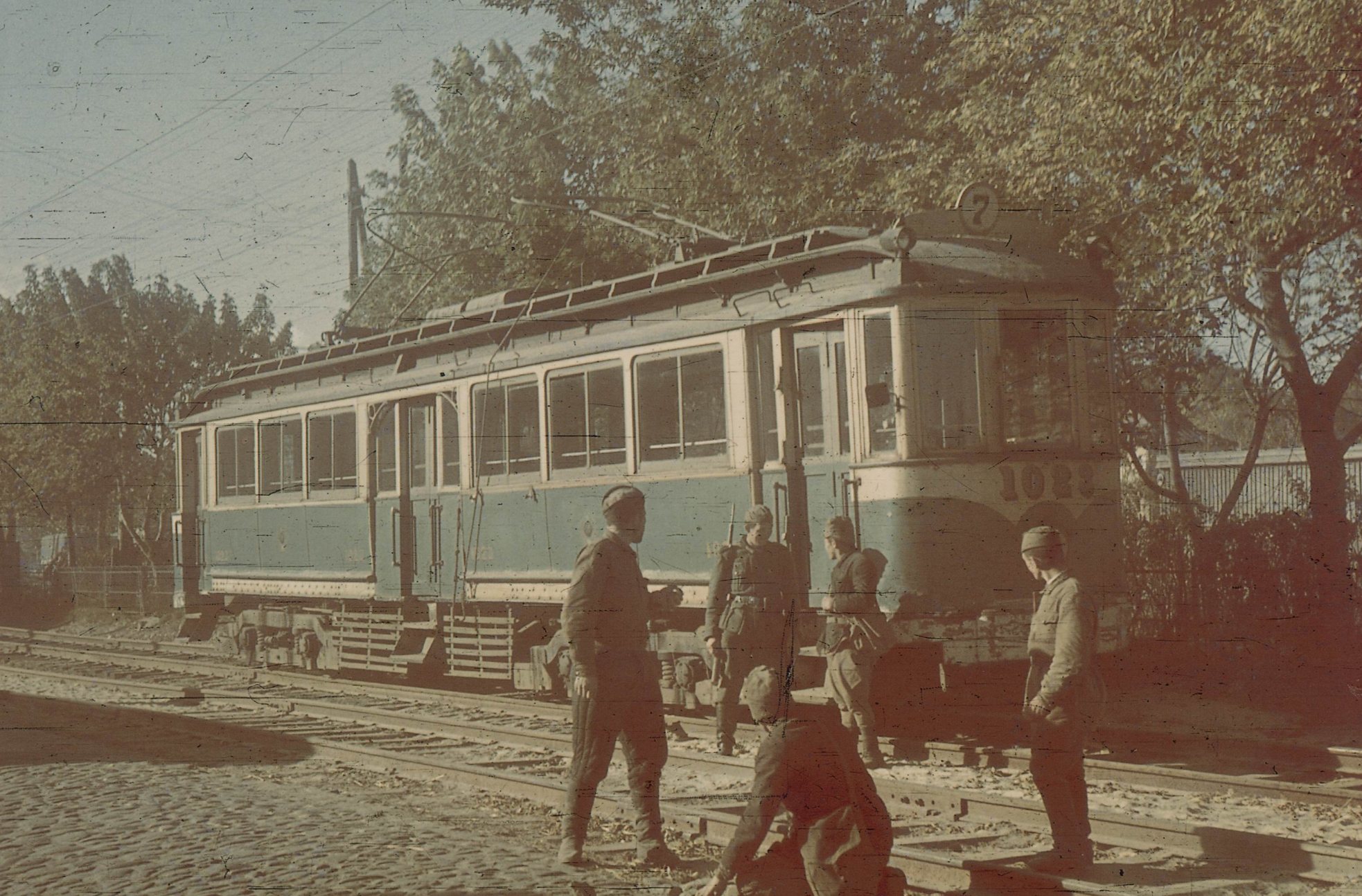
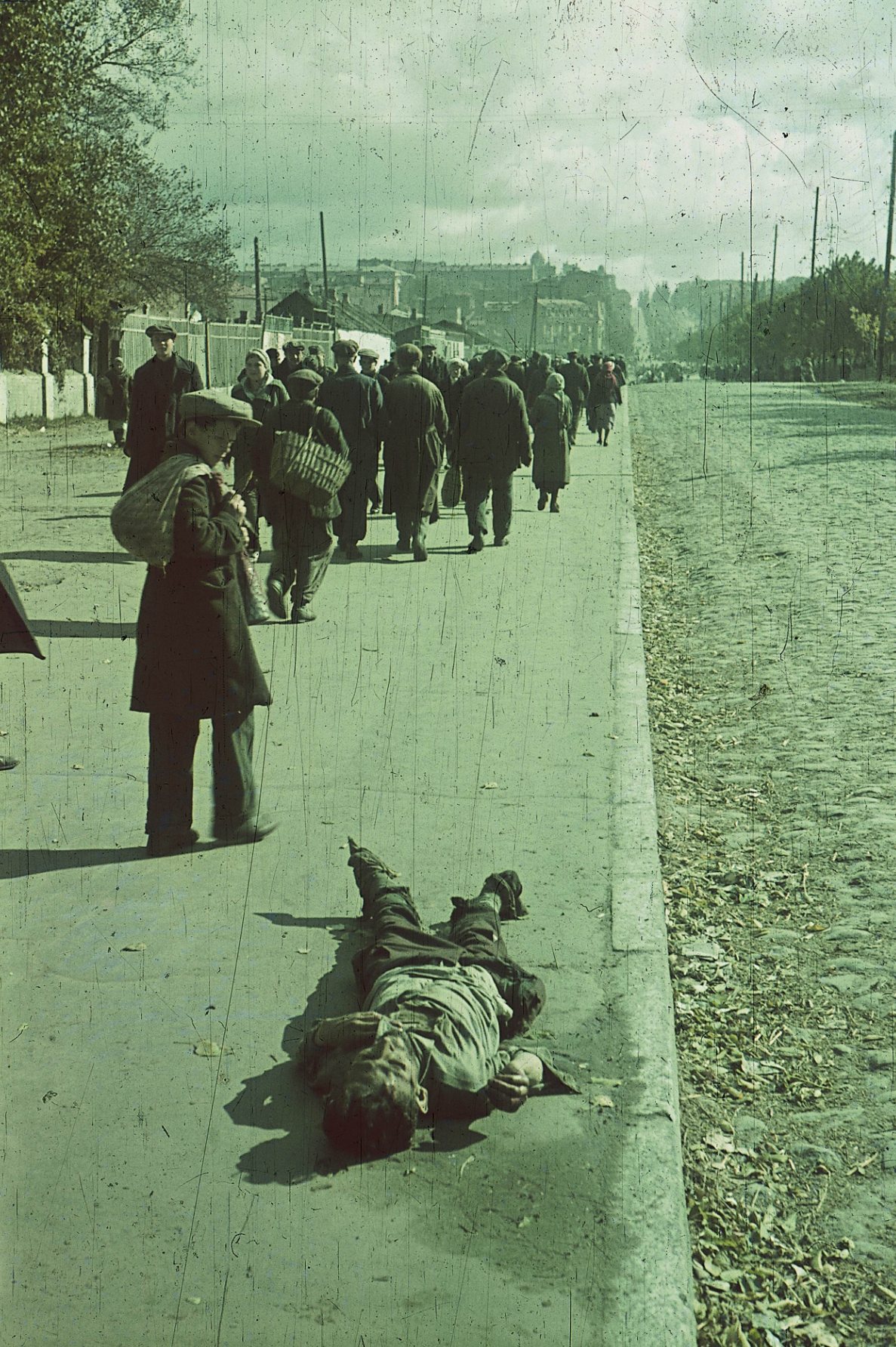
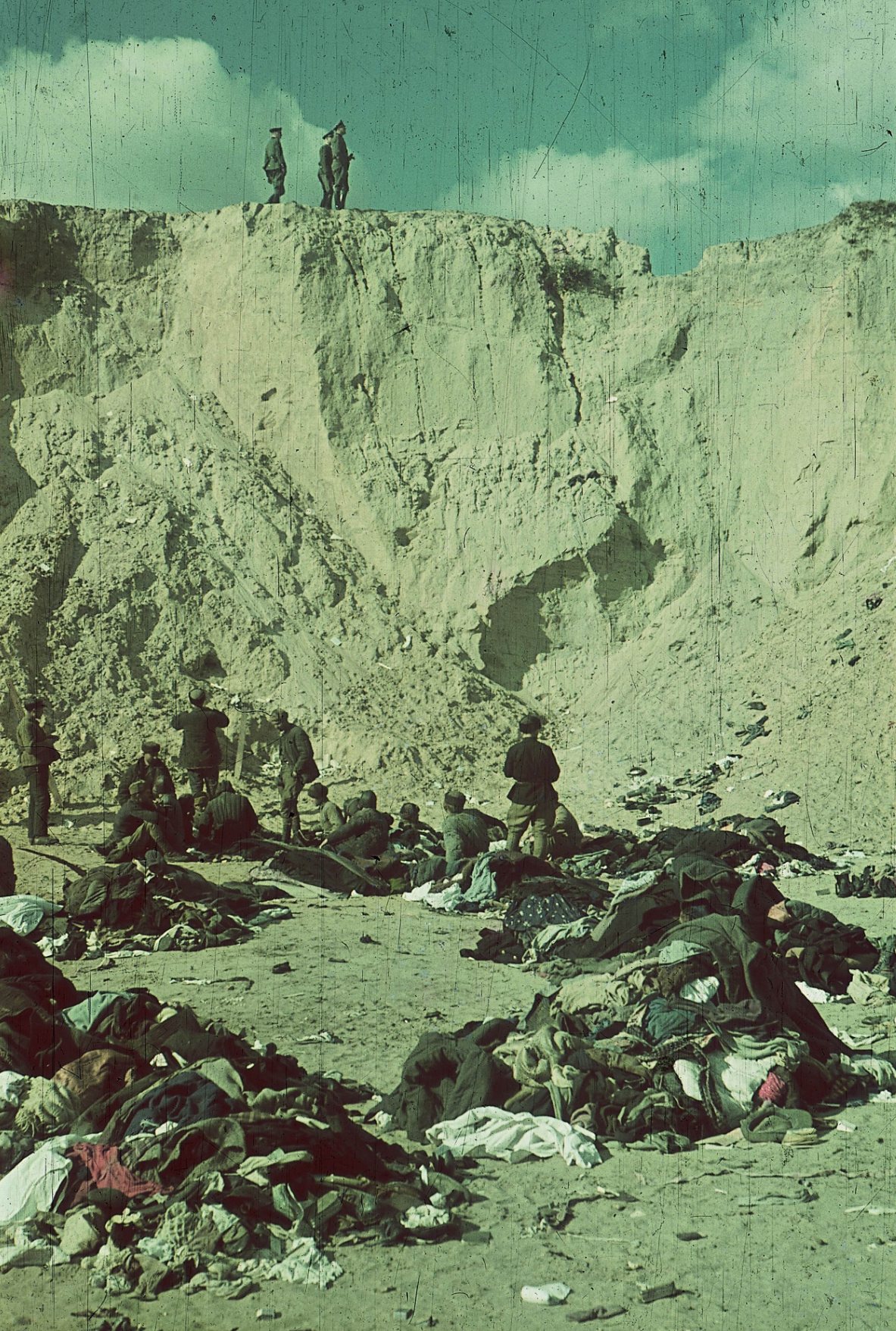
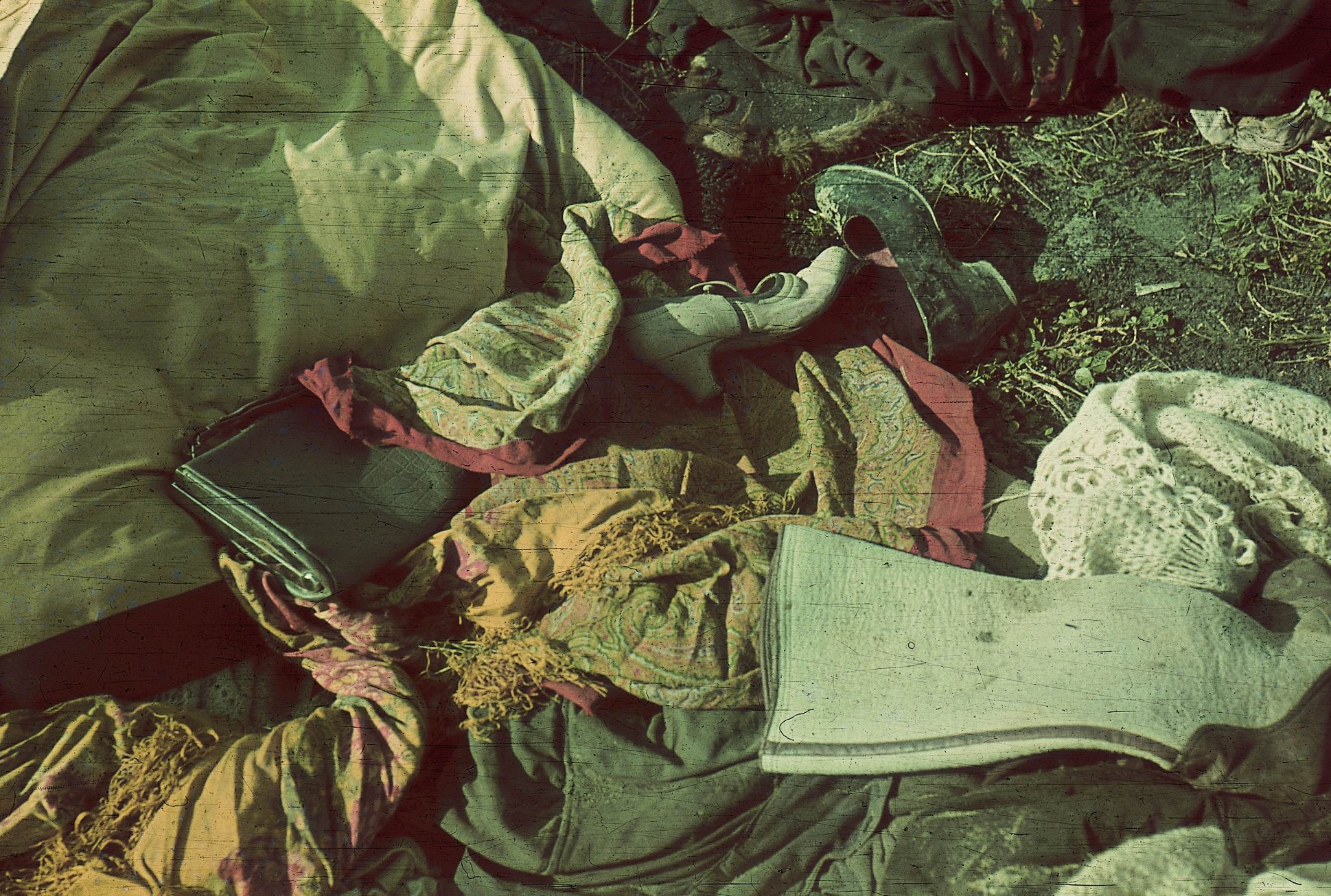
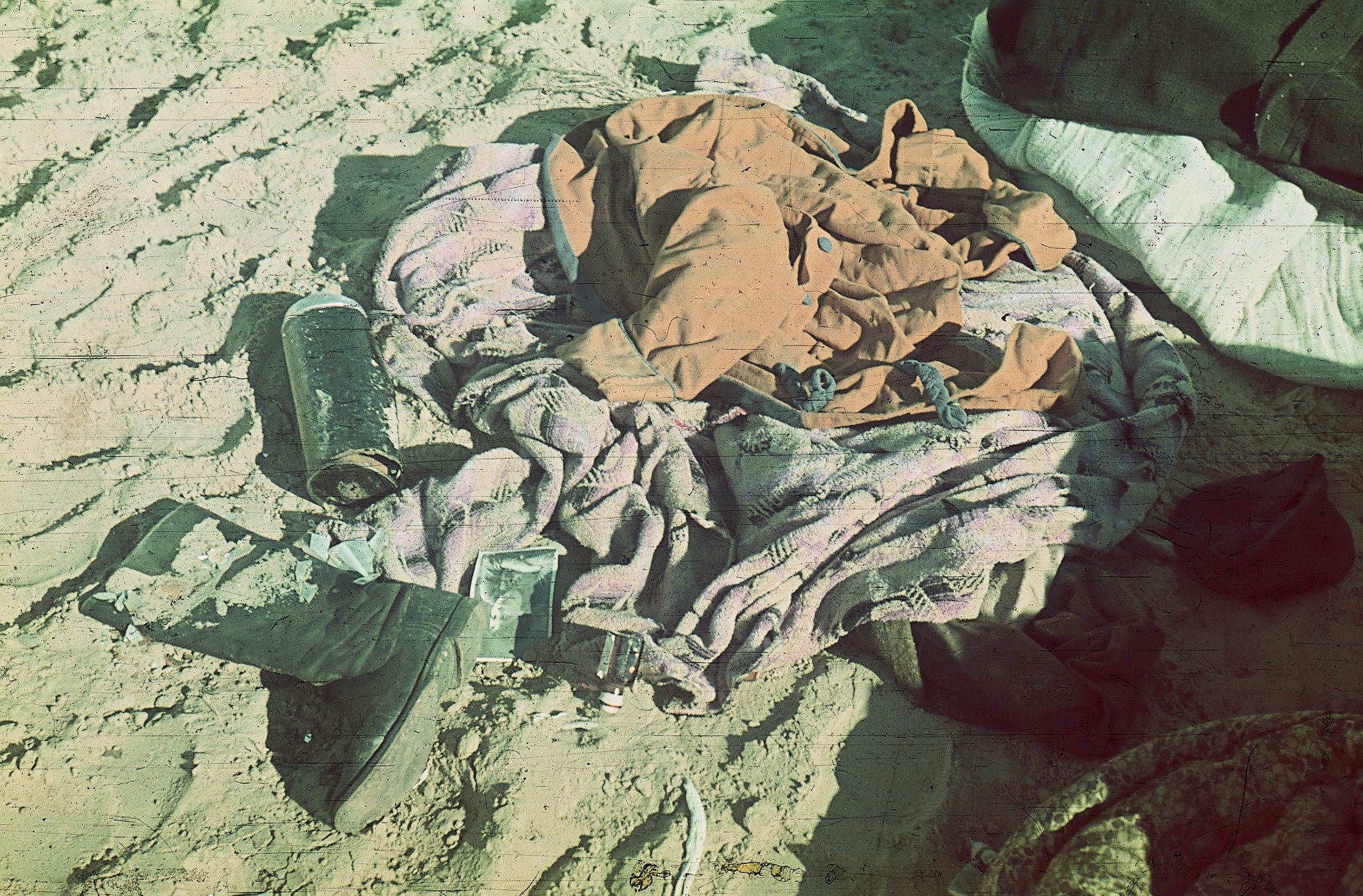
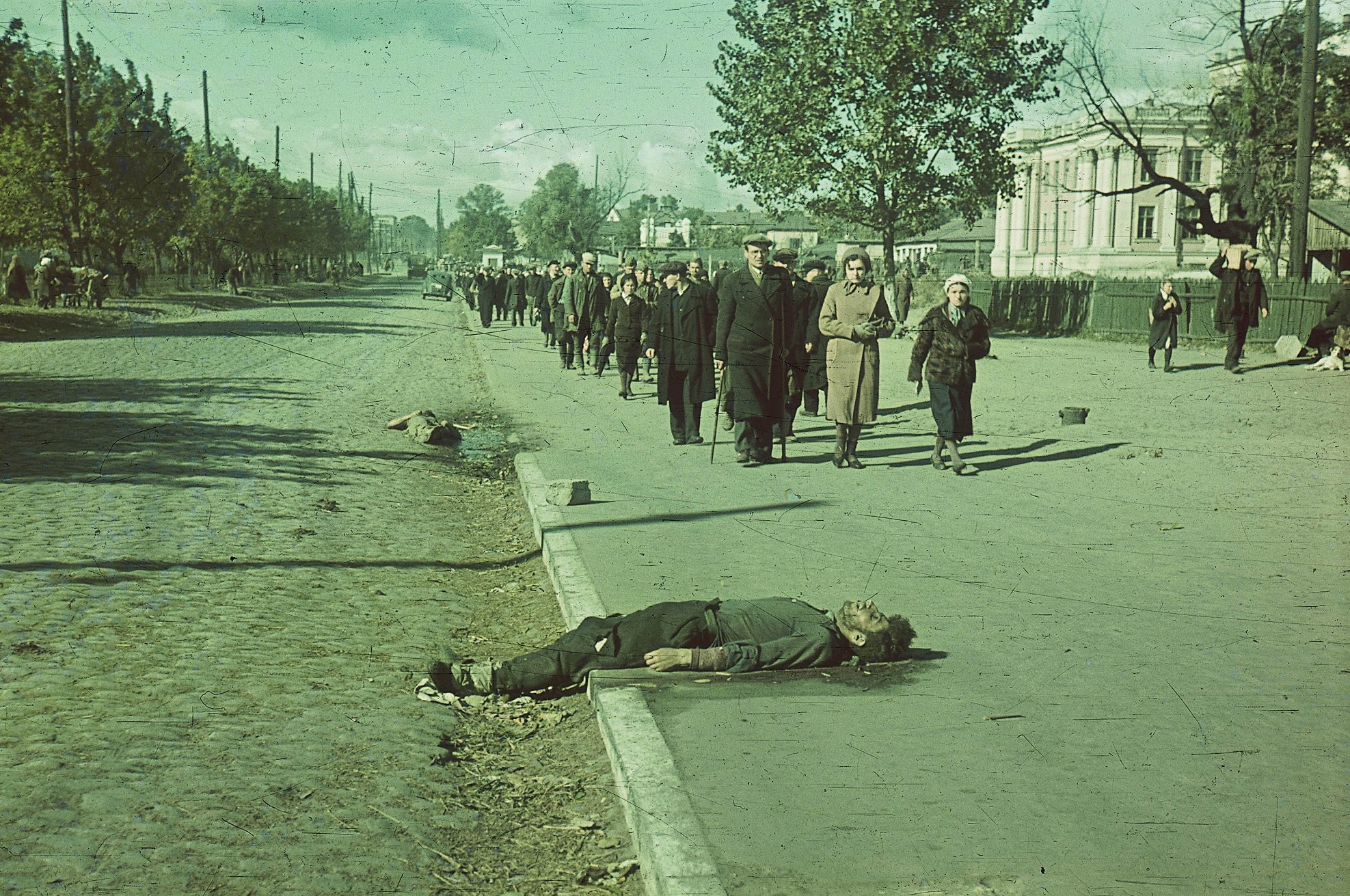
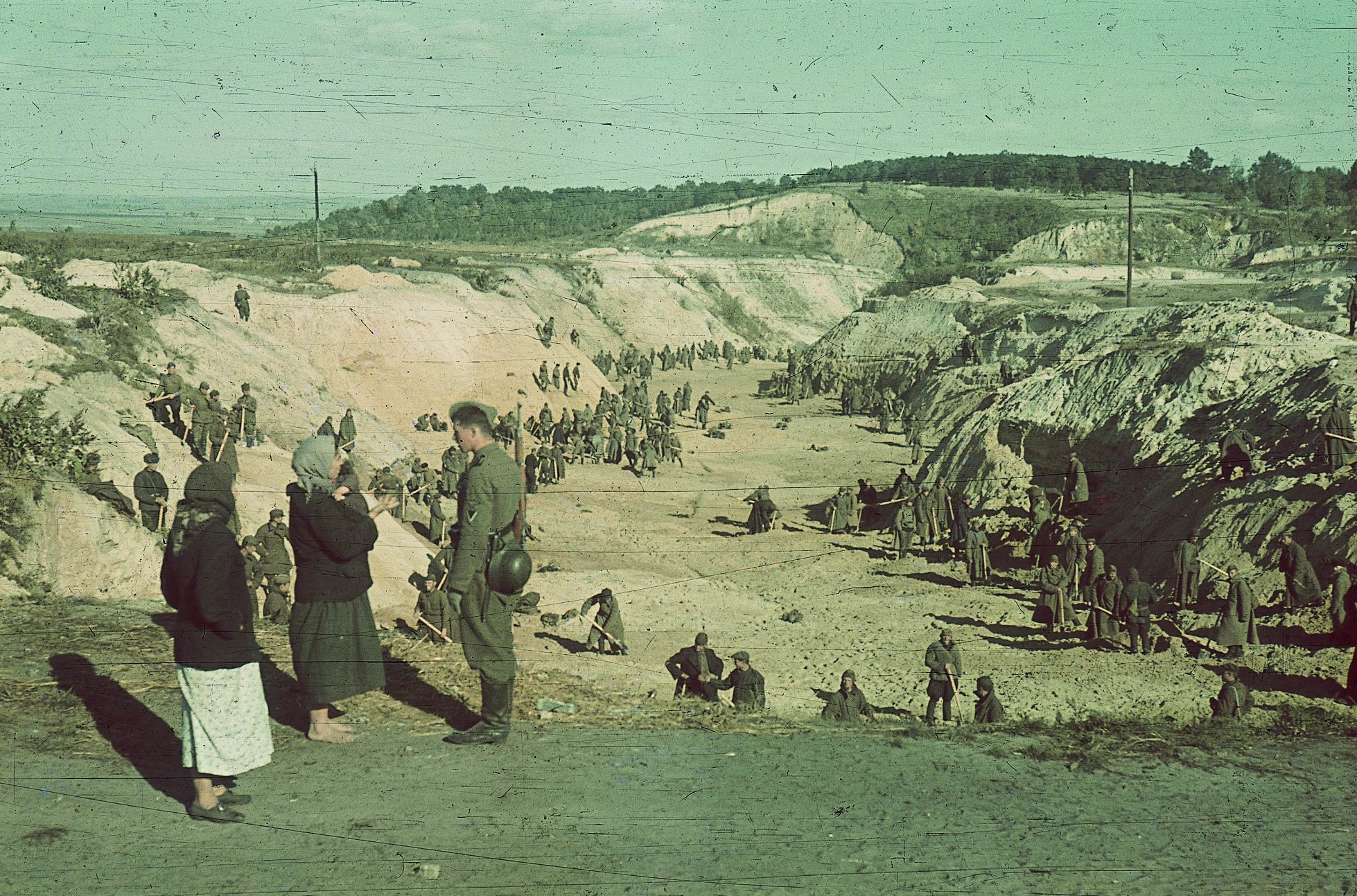
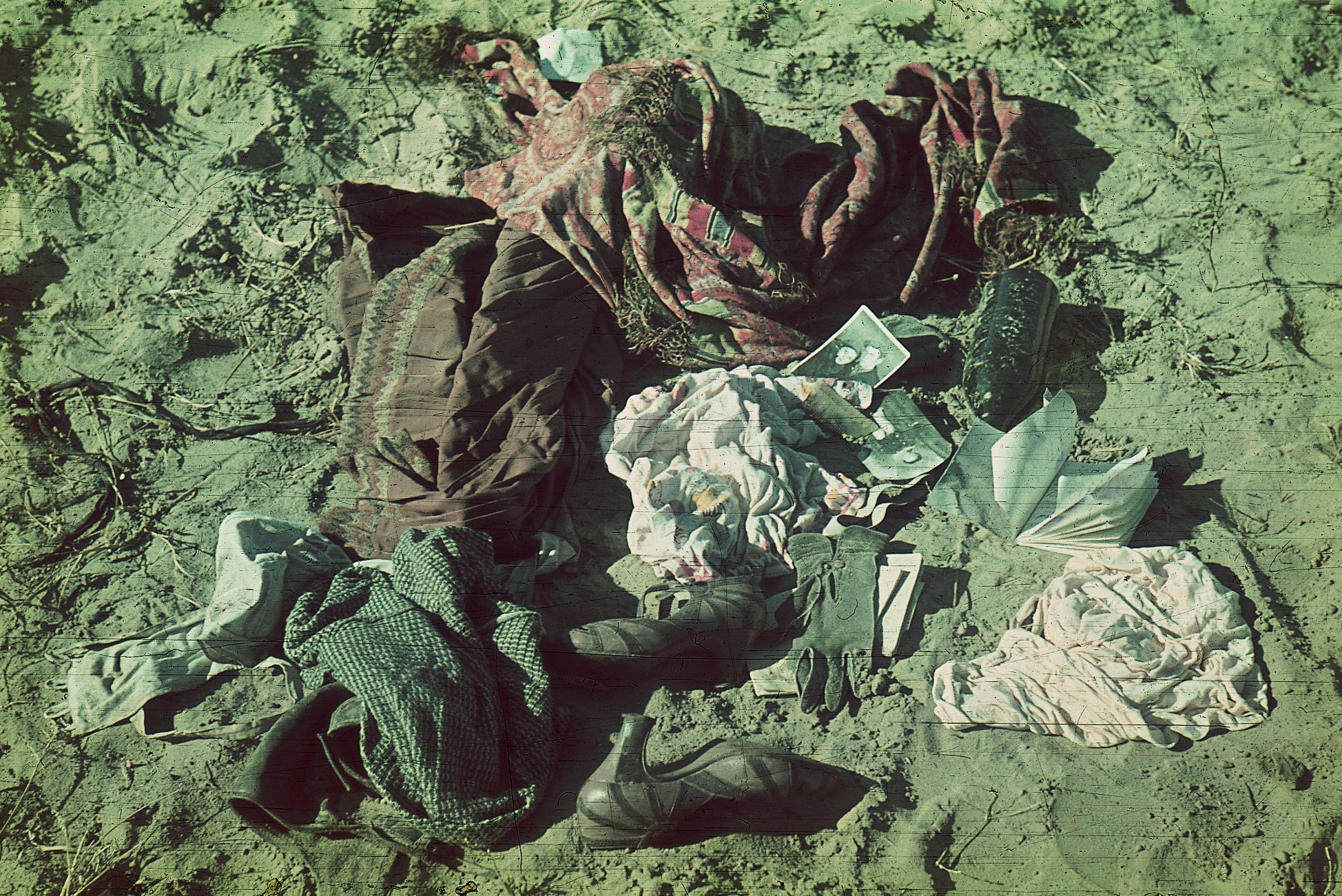
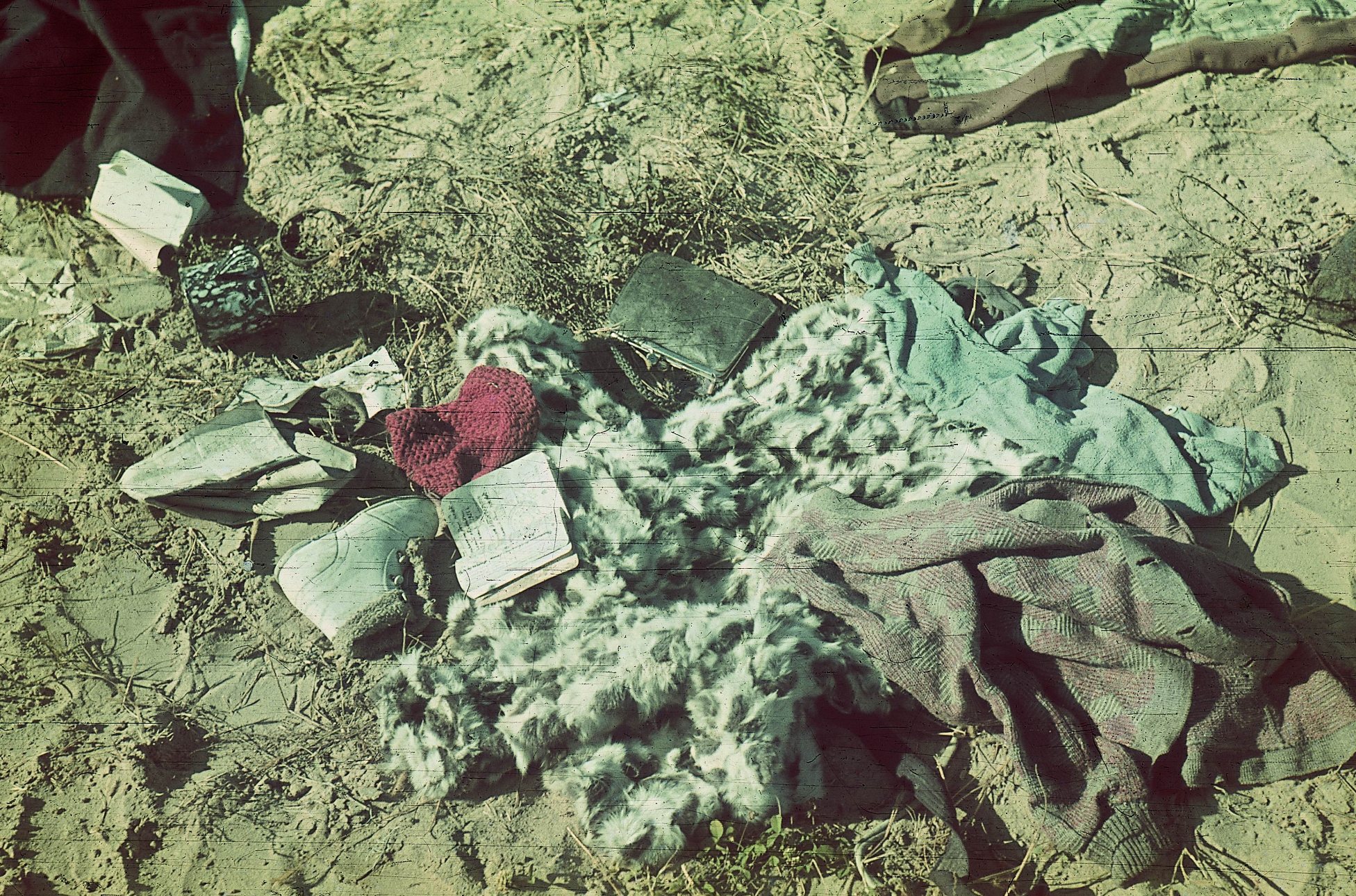
In early October 1941, while the earth over the mass grave was still fresh, Johannes Hähle, a photographer with German Propaganda Company 637, arrived at Babyn Yar. He took a series of 29 color slides. They do not show the shootings themselves in full, but they do show the ravine, German soldiers and enormous piles of clothing, shoes and other belongings taken from the victims.
It is precisely what these photographs do not show that gives them their power. The owners of the coats, shoes and suitcases have vanished from the frame, while their possessions remain as a precise negative image of human presence. The photographs also capture the final stage of a process in which the people of an entire city, after being taken from their homes, were reduced to property to be collected and sorted.
Hähle did not hand the photographs over to his unit, but kept them for himself. After his death in 1944, they passed through private hands. Black-and-white copies were later used by German investigators, while the original color slides did not re-emerge publicly until 2000. A hidden, unofficial photographic record thus became, decades later, one of the few direct visual traces of what remained at Babyn Yar after the last column had passed.
After murdering the people, they tried to murder the evidence
Babyn Yar did not cease to be an execution site after September 30. Tens of thousands more people were murdered there over the next two years. They included Kyiv’s remaining Jews, Roma and Soviet prisoners of war. Patients from a psychiatric hospital and other civilians whom the occupation authorities had declared enemies were also killed there.
As the Red Army began closing in on Kyiv in 1943, the Nazis tried to erase the evidence. Around 300 prisoners from the nearby Syrets camp were forced to exhume and burn the bodies. Most of those prisoners were then murdered as well, although a handful managed to escape. The perpetrators had first reduced human beings to a number, then tried to destroy the evidence that the number had ever existed.
After the war came a different kind of erasure. The Soviet authorities spoke of murdered "Soviet citizens," suppressing the fact that the massacre of September 29 and 30 had specifically targeted Jews. An official monument was not erected until 1976, and even then it did not clearly identify the principal victims as Jewish. As early as 1961, the Russian poet Yevgeny Yevtushenko opened his poem "Babi Yar" by declaring that no monument stood above the ravine. Soviet composer Dmitri Shostakovich later incorporated Yevtushenko’s words into his Thirteenth Symphony. Art named what the state had tried to leave nameless.
When the buried ravine killed again
The Soviet erasure of Babyn Yar did not stop with avoiding the word "Jews." The authorities also tried to alter the landscape itself: part of the ravine was turned into a dumping ground for liquid pulp from nearby brickworks. For years, slurry was pumped behind an earthen dam as part of a plan to level and redevelop the ravine, as though an uncomfortable site of memory could simply be removed through civil engineering.On the morning of March 13, 1961, the dam gave way. A vast mass of water, clay and industrial waste surged into the low-lying district of Kurenivka, engulfing streets, vehicles, homes and a tram depot before hardening in places almost like concrete. A Soviet commission reported 145 deaths, while later estimates put the toll considerably higher. The final number remains difficult to establish because the authorities restricted reporting and suppressed public discussion of the disaster.
The Kurenivka disaster gave the politics of forgetting a literal, physical consequence. The ravine that was supposed to be erased from the cityscape returned to the city as a deadly wave. This was no mystical revenge of the dead, but the result of a political decision, poor engineering and a system in which concealment mattered more than warnings: the attempt to reshape the past changed the very ground beneath the feet of the living.
The machines came later, the mechanism was already in place
If the history of the Holocaust begins with Auschwitz, it is easy to believe that genocide requires a vast industrial apparatus. Babyn Yar tells us something more dangerous. All it requires is a government that declares one group expendable, an administration that sets the time and place for people to assemble, and enough individuals willing to carry out their own small part of the task. The machines would come later. The mechanism was already in place.
Sources
- United States Holocaust Memorial Museum Mass Shootings at Babyn Yar (Babi Yar) https://encyclopedia.ushmm.org/content/en/article/kiev-and-babi-yar
- United States Holocaust Memorial Museum Mass Shootings of Jews during the Holocaust https://encyclopedia.ushmm.org/content/en/article/mass-shootings-of-jews-during-the-holocaust
- Jewish Virtual Library Operational Situation Report USSR No. 101 https://www.jewishvirtuallibrary.org/operational-situation-report-ussr-no-101
- Yad Vashem Murder Story of Kiev Jews in Babi Yar https://collections.yadvashem.org/en/untold-stories/killing-site/14627093-Babi-Yar
- Hamburg Institute for Social Research Photos by Johannes Hähle: Babyn Yar and Lubny, 1941 https://www.his-online.de/en/archives/holdings/photos-johannes-haehle/
- CNRS News Babi Yar, 1941: An exceptional account of the massacre of Jews in Kyiv https://news.cnrs.fr/articles/babi-yar-1941-an-exceptional-account-of-the-massacre-of-jews-in-kyiv
- Pulitzer Center The Many Oblivions of Babi Yar https://pulitzercenter.org/stories/many-oblivions-babi-yar
- Radio Free Europe/Radio Liberty Babyn Yar's 'Revenge'? The Deadly Mudslide The KGB Tried To Cover Up https://www.rferl.org/a/ukraine-kurenivka-1961-babyn-yar-mudslide-deaths/31151981.html
Comments