
Disaster by Design: Spain’s Housing Crisis Is So Brutally Unjust Along Class Lines, It’s a Wonder the Peace Lasted This Long
When the average rent devours almost the entire salary, it is not surprising that the disenfranchised part of Spain is no longer seeking reform but rebellion.
Published
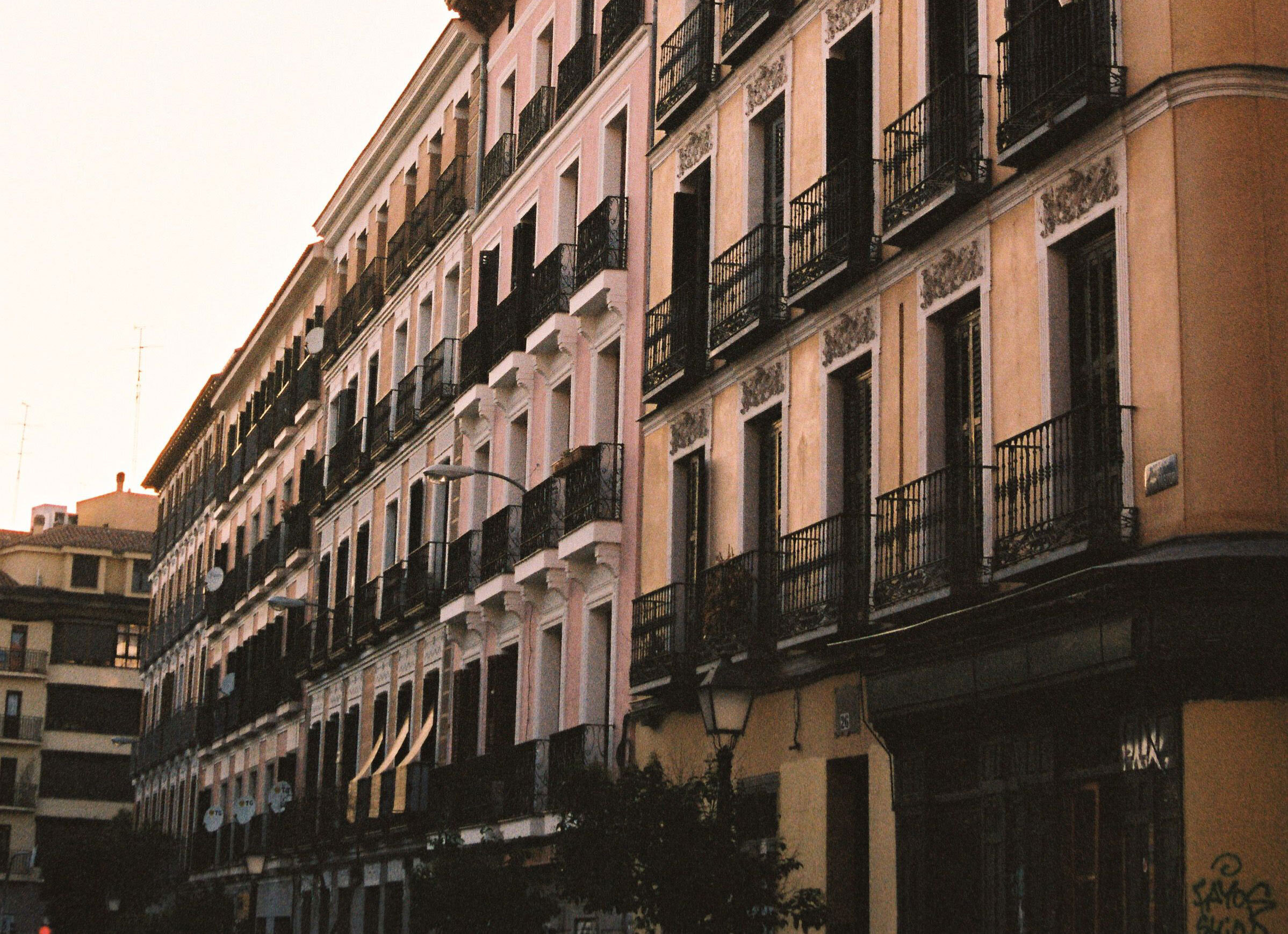
First, 87-year-old Maricarmen Abascal was carried out on a stretcher from the Madrid apartment where she had spent almost her entire life. Then tents appeared in Puerta del Sol. On Saturday, around 70,000 people marched through the streets of the capital as protests spread to roughly fifty cities across Spain. What began as outrage over a single brutal eviction grew into a rebellion against an entire system that increasingly treats a home as a vehicle for extracting profit (in the meantime, it was announced last night that Abascal had died, which is certain to escalate the existing tensions further).
In Valencia, police used tear gas and rubber bullets, while around thirty protesters briefly entered the City of Arts and Sciences complex. Elsewhere, the demonstrations remained largely peaceful, but the message was no longer restrained: banners called for a general strike, and the Tenants’ Union announced talks with trade unions. Housing is thus returning to where it has always belonged — to the heart of the conflict between labour and property. This issue, of course, is bigger than Spain. People across Europe will recognise much of their own reality in this story. There are a few exceptions, as we shall see, but unfortunately we are not among them.

Maricarmen’s case became a symbol because it was so easy to understand. An investment fund bought her apartment and demanded a 230 percent rent increase, which she could not afford. Following the protests, an agreement was reached that would have allowed her to return home — something that will now evidently never happen. But thousands of others, without cameras or crowds at their doors, receive the same message every day: if someone else can pay more, decades spent living in a home count for nothing. Everything is brutally transactional.
When the right to a home depends on expected returns
The immediate trigger for the latest wave of protests was parliament’s rejection of two government decrees. Among other things, they would have protected vulnerable tenants from eviction until 2030, extended rent freezes for existing contracts, imposed tighter rules on temporary rentals and allowed leases to renew automatically. The conservative PP, the right-wing Vox and the Catalan party Junts voted against them. Their argument is familiar: regulation will further reduce supply. There is a genuine economic problem buried within that claim, but also a very convenient political excuse — as though the only conceivable housing system were one in which private landlords must be sufficiently pleased with their expected returns before allowing anyone else to have a home.
The figures explain why the streets erupted. The average rent in Spain has reached €1,176, equivalent to 98.7 percent of the average monthly salary earned by someone under 30. Rents have roughly doubled in ten years. In the second quarter of 2026 alone, house prices were 12.2 percent higher than a year earlier, while labour costs per employee rose by four percent. In other words, property is pulling away from wages at roughly three times the pace.
A country of empty properties and soaring market prices
The housing shortage itself is real. The Bank of Spain estimates that the country is short of around 750,000 homes, a figure that could exceed one million by 2028. Roughly 120,000 homes are built each year, just one-sixth of the pace seen before the property bubble burst in 2008. The OECD calculated that permits were issued for 345,000 homes between 2022 and 2024, while 604,000 new households were formed over the same period. Slow planning procedures, expensive land, rising construction costs and the loss of part of the construction sector’s capacity after the crisis have constrained supply even further.
But inadequate supply does not explain why almost the entire burden has been placed on tenants and young people. For decades, Spain built subsidised housing and then simply allowed it to pass onto the open market. In its own national plan for 2026–2030, the government acknowledges that this amounted to the privatisation of public investment. Today, the public housing stock contains only 318,000 homes, enough for 1.7 percent of households, while social rentals in total account for around 3.5 percent of the housing stock, compared with a European average of nine percent. When the public safety net is almost nonexistent, every shortage naturally becomes an opportunity to raise rents.
What makes the situation stranger still is that Spain has around 3.8 million empty homes. Most, admittedly, are in depopulated areas — another painful feature of modern Spain — far from jobs and services. Only 18 percent of vacant properties are located in medium-sized and large cities, where more than half the population lives. This is the Spanish paradox for which the state has no answer: the country can simultaneously have millions of empty walls and a desperate shortage of homes in places where people can find work. The market, of course, does not distribute housing according to need, but according to where the highest return can be made.
Tourism intensifies this logic. An apartment in Málaga, Madrid, Barcelona or the Balearic Islands is no longer offered only to a local worker: it enters a global auction between residents, tourists, wealthy non-residents and investors. Short-term and seasonal rentals often produce more income than a stable long-term lease, so what appears to be a rational market decision for each individual owner gradually drives residents out of their own neighbourhoods. Neither migration nor the formation of new households caused the crisis by themselves. They merely expose a system that has spent years failing to create a permanent, affordable and publicly protected supply of housing.
The economy grows while life itself contracts
Every actor behaves "rationally" in isolation, but together those individual rationalities produce social madness.The economic paradox is especially stark because Spain is not experiencing a conventional recession. GDP grew by 2.6 percent year-on-year in the second quarter, employment increased and tourism has repeatedly broken records in recent years. Yet these positive macroeconomic results have not given many people a more secure life. GDP records hotel stays, brokerage commissions, construction activity and tourist spending. It does not reveal how much workers have left after paying the rent or whether they can afford to live near their workplace.
A rise in the price of an existing home does not create a single additional room either. It gives the owner greater wealth on paper, more valuable collateral for another loan and the ability to buy additional property. For a prospective buyer, it means a larger deposit, higher mortgage payments and several more years of waiting. Society as a whole does not become richer simply because a higher price has been attached to the same number of walls. What is presented as growing wealth is, to a large extent, a redistribution of power from those who have yet to secure a home to those who have already done so — often several times over.
Greed here is not merely a character flaw in an individual landlord. The system transforms it into a business virtue. Owners are told that they are being foolish if they fail to charge the highest rent the market will bear. A fund must increase returns for its investors. A platform takes a percentage of every tourist booking. A bank can approve a larger loan when the value of the collateral rises. Every actor behaves "rationally" in isolation, but together those individual rationalities produce social madness.
That is also why subsidies do not solve the problem. If the state gives tenants more money without increasing the supply of affordable homes, landlords can often simply raise the rent and absorb part of that assistance. If it subsidises buyers in a market with rigid supply, the subsidy can easily be converted into a higher sale price. The OECD has specifically warned that poorly designed support in such a market disproportionately benefits property owners. Public money enters at the bottom, passes through the tenant’s pocket and emerges at the top as private rent.
Pressure from the streets and a snap election: why this is unlikely to change much
Pressure from the streets has already triggered a political earthquake: after the PP, Vox and Junts defeated the two emergency housing decrees, Pedro Sánchez dissolved parliament and called a snap election for 29 November. The protests were not the sole formal reason, but they turned the housing crisis into the central political issue and exposed the minority government’s inability to secure a majority for its own measures. Sánchez is now presenting the election as a choice between protecting tenants and defending the interests of landlords, funds and speculators.Yet it is difficult to believe that an election alone will solve what politicians have postponed for years. The right is offering faster construction and deregulation, while Sánchez is trying to convert anger in the streets into electoral momentum, even though housing has remained subordinate to the market throughout his years in power. Even the reintroduction of the decrees after parliament was dissolved looks more like emergency manoeuvring than evidence of a long-term strategy. While the parties blame one another and calculate parliamentary seats, rents continue to rise, people continue to be evicted and property capital continues to collect its returns. The election may therefore alter the balance of power, but without confronting speculation, concentrated ownership and chronically weak public housing, it could easily become just another way of postponing political responsibility.
The housing market as a machine for reproducing class
Spain is not alone. In the second quarter of 2026, house prices across the European Union rose by 4.7 percent and rents by three percent, with rents increasing in every member state for which data were available. Almost 27 percent of Europeans aged between 15 and 29 live in overcrowded households. Young people in the EU leave their parents’ home at an average age of 26.3, compared with 30.2 in Spain and as late as 31.5 in Croatia (we recently wrote in greater detail about the situation in Croatia, see: Demystifying the paradox: Homes keep getting more expensive even as fewer are sold, while Croatia "swims in money" that most people will never see). The injustice has now spilled out of balance sheets and statistics and into relationships, decisions about having children, mental health and the possibility of living independently.
For younger generations, the housing market increasingly resembles not a reward for work but a machine for reproducing class. Some enter it with an apartment inherited from their parents, a plot of land or money for a deposit. Others spend decades financing someone else’s property, and the very cost of their rent prevents them from saving for a home of their own. Education, employment and thrift still matter, but increasingly they are outweighed by a far simpler question: did your parents own anything?
Building more is not enough if everything becomes a commodity again
The solution, therefore, cannot be either a simple rent freeze or the slogan that we merely need to "build more". What is needed is a large and permanently public or non-profit housing supply, faster construction in well-connected locations, protection for long-term leases, restrictions on tourist rentals where they displace residents, taxes on homes left vacant for long periods in high-demand areas, and the recovery of part of the value that public transport, schools, hospitals and the city as a whole create for property owners. Public land and subsidised housing must not be allowed to return to the speculative market after only a few years.
How Vienna removed housing from the market race
Vienna’s answer to the housing crisis did not emerge from a one-off construction programme, but from a policy sustained for more than a century. "Red Vienna" began building municipal housing as permanent public infrastructure after the First World War. Today, the city owns around 220,000 homes, while another 200,000 or so are subsidised cooperative and non-profit units. Around half of Vienna’s residents live in one of these forms of housing, meaning that the private rental market is not the only door through which citizens must pass to find a home.The second pillar of the model consists of legally limited profits and so-called cost-based rents. Non-profit housing organisations do not set rents according to the highest price the market can bear, but according to the cost of construction, financing and maintenance, along with permitted reserves. Surplus revenue must be reinvested in housing. Through its land fund, the city also acquires plots and allocates them to projects through competitions that consider not only price, but architectural, environmental and social quality as well.
The crucial difference, then, is not merely that Vienna builds a great deal, but that much of what it builds remains outside the speculative race for decades. The same subsidy does not have to be paid again for every new generation of tenants, while the vast public and non-profit housing stock places downward pressure on prices across the rest of the market. The model is not free, nor can it be replicated overnight, but it demonstrates why a publicly funded home sold after only a few years is not a permanent solution: the state has financed an asset that will ultimately behave like any other commodity.
The Spanish protesters are therefore fighting not only against the economy, but against its present hierarchy. Housing as a commodity "works" best when prices and rents rise. Housing as social infrastructure works increasingly poorly under those same conditions. From a tenant’s perspective, this is a profound crisis. From the balance sheet of those who own capital and multiple properties, the system is functioning exactly as designed.
Sources
- Reuters Tens of thousands protest across Spain over housing crisis https://www.reuters.com/world/tens-thousands-protest-across-spain-over-housing-crisis-2026-10-03/
- Reuters Protesters demand Spanish government limit evictions, pensioner to return home https://www.reuters.com/world/europe/madrid-housing-protests-enter-third-day-after-pensioners-eviction-2026-09-28/
- OECD Sustaining growth and achieving fiscal sustainability: OECD Economic Surveys: Spain 2025 https://www.oecd.org/en/publications/oecd-economic-surveys-spain-2025_abc5c435-en/full-report/sustaining-growth-and-achieving-fiscal-sustainability_ab211a46.html
- Eurostat House prices and rents continued to rise in Q2 2026 https://ec.europa.eu/eurostat/en/web/products-eurostat-news/w/ddn-20261001-3
- Eurostat When do young people leave the parental home? https://ec.europa.eu/eurostat/web/products-eurostat-news/w/ddn-20260915-1
- Instituto Nacional de Estadística Índice de Precios de Vivienda (IPV). Base 2025. Segundo trimestre 2026 https://www.ine.es/dyngs/Prensa/IPV2T26.htm
- Boletín Oficial del Estado Real Decreto 326/2026, de 22 de abril, por el que se regula el Plan Estatal de Vivienda 2026-2030 https://boe.es/buscar/act.php?id=BOE-A-2026-8872
- City of Vienna Flat types - privately owned flats, subsidised and city-owned flats https://www.wien.gv.at/en/housing/flat-types
Comments