
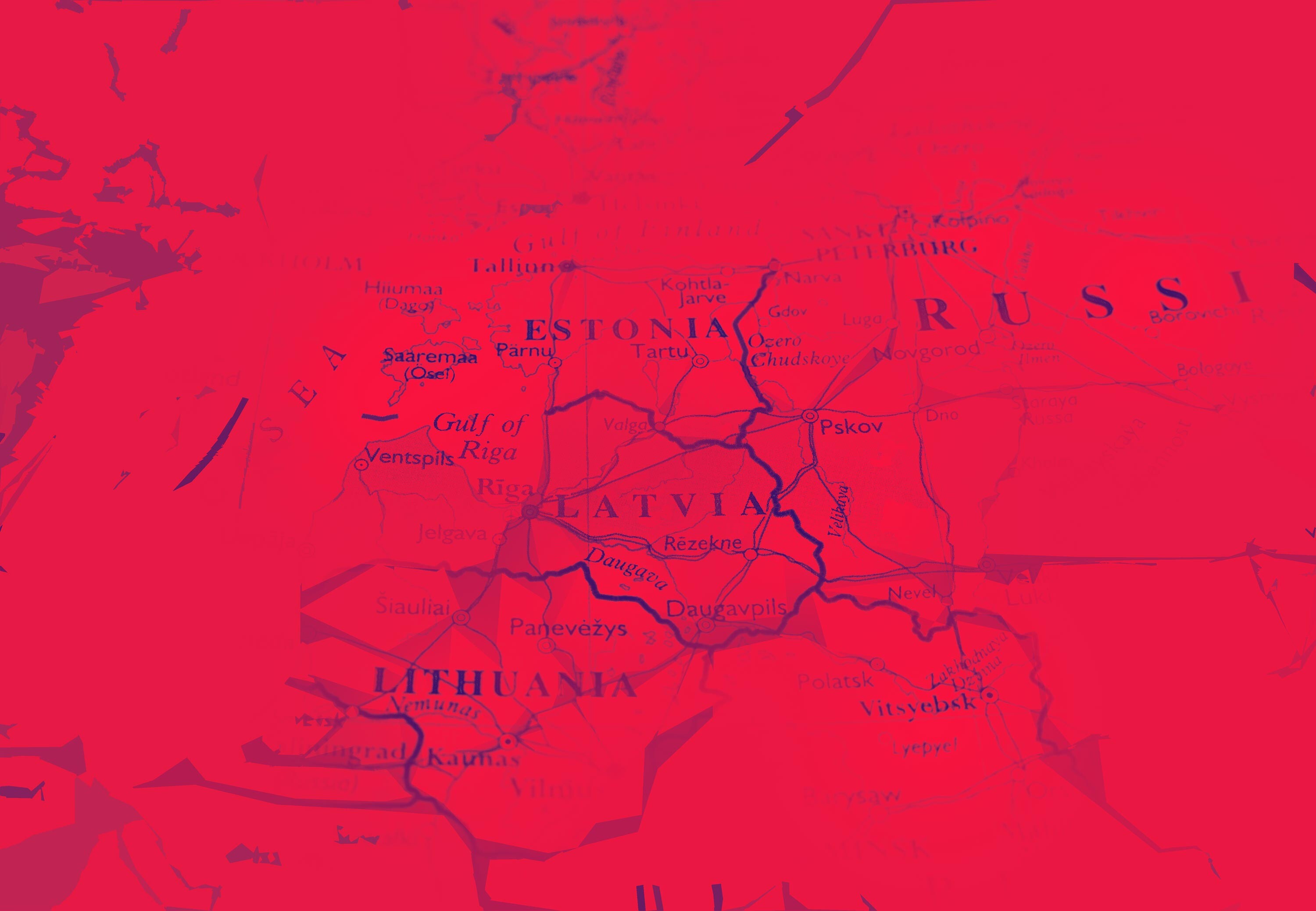
To say that something "unpleasant is brewing" in the Baltic only now, more than four years after the start of the war in Ukraine, is actually a kind of success of someone’s restraint. Perhaps everyone involved deserves some congratulations for the fact that so much time has passed, and four years in any modern war already counts as "serious years", while this exposed former Soviet, now NATO, wing has remained so calm.
On the other hand, it must also be admitted that Moscow itself was rather calm and composed for quite a long time, at least in terms of everyday life, as were the vast majority of Russian cities. Alongside them, as observers with too little concern, stood Tallinn, Riga and Vilnius. But now that strange calm seems to be coming due, suddenly and violently. Since we know who belongs to whom in the current edition of history, we have to ask: is the great escalation already here?
Two Dangerous Claims
A brief reminder. At this moment, we have two dangerously conflicting claims, and if only one of them is true, then the great escalation really is here. Let us go in order. The first claim: Russia claims that bases in the Baltic are already full of Ukrainian drone operators and that the ground is being prepared for major strikes against Russia from that direction. The target? Certainly St. Petersburg, which lies only around 120 kilometers from Estonia. Finland is at roughly the same distance, long neutral and now a NATO member, but the Russians do not mention it in this story.
The second claim: Russia has managed to "turn" a number of Ukrainian drones through electronic warfare and "throw" them toward Baltic territory, but with a deeper purpose: to strengthen the impression created by claim number one and use it to create political-military space for maximum escalation, potentially even nuclear escalation.
Who is right? Let us be fair and first ask both sides, rhetorically, for some kind of evidence, with the necessary assumption that "claims" and "convictions" cannot count as evidence. So, evidence — do we have any? We do not, at least nothing concrete. That means we once again have a classic clash of claims, and in a war-driven situation it is rather naive to take anyone at their word.
That leaves us with only one option: to examine the logic of what is being presented. It should be said immediately that reality may always lie somewhere halfway, that both claims may rest on certain intelligence fragments from which further narratives are then constructed. Is it possible that Ukrainian drone operators are already in the Baltic? Certainly. In fact, it would be very strange if they were not. They are already in the Gulf monarchies, even in Africa, so why would they not be in the Baltic? Between them stands only Poland, and Poland is highly passable for every Ukrainian military idea and resource.
Pulling Unacceptable Options Into View
What is strange in this story, as in all the previous ones, is Russia’s escalation logic. Every so often, we hear from Moscow that a new argument has appeared which "confirms that NATO is at war with Russia". But has that argument not already been very much present for years? Starting precisely with Poland. Does Russia not know from which directions Ukraine is being militarily sustained? Of course it knows. In Moscow, more than anywhere. But the issue is clearly not knowledge. It is decision.
If everyone grabs hold and pulls hard enough, they will pull that turnip, or rather that mushroom, into the realm of reality.What kind of decision? The one now being pushed as the main narrative by Sergey Karaganov, Dmitry Polyansky and others: that Russia has had "too much" and no longer wants to fight this way. It is as if Russia suddenly remembered, after who knows how many hundreds of thousands dead on both sides, that it is the world’s largest nuclear power and that, if it really wants to, it can bring all of this to an abrupt end. It can, but no one should pretend that this is a shallow Rubicon. Anyone keeping such an arsenal within reach of a button can do all sorts of things, at least in theory. Pyongyang can erase Seoul, Israel can turn Beirut to dust, and with a few American bombs Tehran as well, and we need not even begin with Pakistan and India.
From that perspective, it looks as if certain Russian actors are trying with all their strength to "pull" that option out of the realm of total madness and into the realm of military rationality. Such a move is tempting to everyone when the situation becomes uncomfortable, of course. Trump himself recently thought he might simply "erase Iranian civilization". Clearly, if everyone grabs hold and pulls hard enough, they will pull that turnip, or rather that mushroom, into the realm of reality. The only question may be who is in the greater hurry.
Russia, let us neither lie to ourselves nor forget, has already shown its own logic of preventive action on February 24, 2022. The ultimatum in late autumn 2021 was the last one; the Russians know what they were preventing: Ukrainian NATO membership. But it can hardly be said that they waited until the very last moment, depending on how one looks at it (from Russia, they would maybe say that they had waited for too long!).
In this Baltic crisis, the correct claim will reveal itself, depending on who makes the first move. If Russia launches a strike against the former Soviet republics without drones first flying from there toward the Hermitage, one claim will be stronger than the other. If, on the other hand, at least photographs appear of Ukrainian drones in Baltic countries, "just about to launch", then Russia was certainly right.
Traumas as an Argument for Grotesque Risk
Let us assume for a moment that it is right. Suppose Ukrainian drones are being amassed in the Baltic and are preparing to open a new front against Russia. Would that make military sense? To some extent, in a limited way, yes, especially now that Ukrainian drones on the anti-Russian side have become the object of idolization and a rather mistaken assumption that Russia has been "breached". So they would have limited military logic and an almost grotesquely disproportionate political risk.
There are countries that live off national traumas. All of them are dangerous countries, both to themselves and to others.The only theoretically feasible plan would be the total decapitation of Russia. Some enormous air attack similar to the one Israel carried out against Egypt when it flattened its air capabilities: Operation Focus in the 1967 Six-Day War. Anything short of that is tantamount to suicide.
Or is it? Here we arrive at the uncomfortable depth of this subject, and it concerns all of Europe. The vice-president of the EU, who is also the High Representative for Foreign Affairs and Security Policy, is the former Estonian prime minister Kaja Kallas. However sharply someone might criticize such a statement, because it is at the very least on the edge of what is considered acceptable, let us say what should be obvious: placing someone from Estonia in such a high position at a time of mass antagonism toward Russia is, in itself, almost suicidal.
If we did not come from a somewhat similar "milieu", perhaps we would not even have the right to comment, but since we are where we are, we can. There are countries that live off national traumas and embed them into every pore of national identity. All of them are dangerous countries, both to themselves and to others. The difference with the Baltic states may be that corruption is not quite so dear to them, so in the post-Soviet period they have indeed achieved enviable economic progress. But that does not save them from their own phobias, and Russophobia has reached radical levels, levels that cloud rational decision-making.
Of the three, Estonia is the most difficult case in that respect. Paradoxically, or perhaps not, it also has the largest number of Russian-speaking residents. Giving Estonia any element of decision-making when it comes to Russia is truly a continental mistake, but here we are.
Postmortem of Conflicting Claims
Is it therefore possible to imagine that somewhere in the Baltic, logic is being comfortably skipped over while people walk into the dark? Unfortunately, yes. But, and now we reach the cascading discomforts, could all of this lead Russia to confirm that Baltic phobias were thoroughly justified? It could. But in that case the question becomes: from which point are we looking at history? The Soviet one? The divergence of the 1990s? Or the point at which the Baltic states are pushing themselves into the front line of everything that can "inflict a strategic defeat on Russia"? Everyone will choose only one starting point, and that is why everyone will be wrong.
And while we wait to see who is right about today’s conflicting claims, we can comfortably say that there are more of them, only they have not been stated quite so loudly. Take this one, for example: Ukraine has had, for years now, a rather clear goal — if it cannot enter NATO, then at least NATO should enter the war. Certain actors in the Baltic are drawing closer to this dangerous idea, but why now more than before? Because of the wider configuration. The goal may be to catch Trump before he truly runs away from the whole NATO story and shuts himself inside his fortress. Perhaps the United States will soon become a despotism, with Trump as a ruler without term limits, but such a country — or even something minimally like it — is no longer of much use to Europe, and especially not to the anti-Russian axis of Ukraine-Poland-Baltic.
So, escalate before it is too late? It makes sense. But the greatest problem is that, as you will notice, both sides have been thinking in the same direction in recent days. If they continue, they will get escalation, and so will we along with them. At that point, it will matter very little who was right in the clash of claims.
Comments