
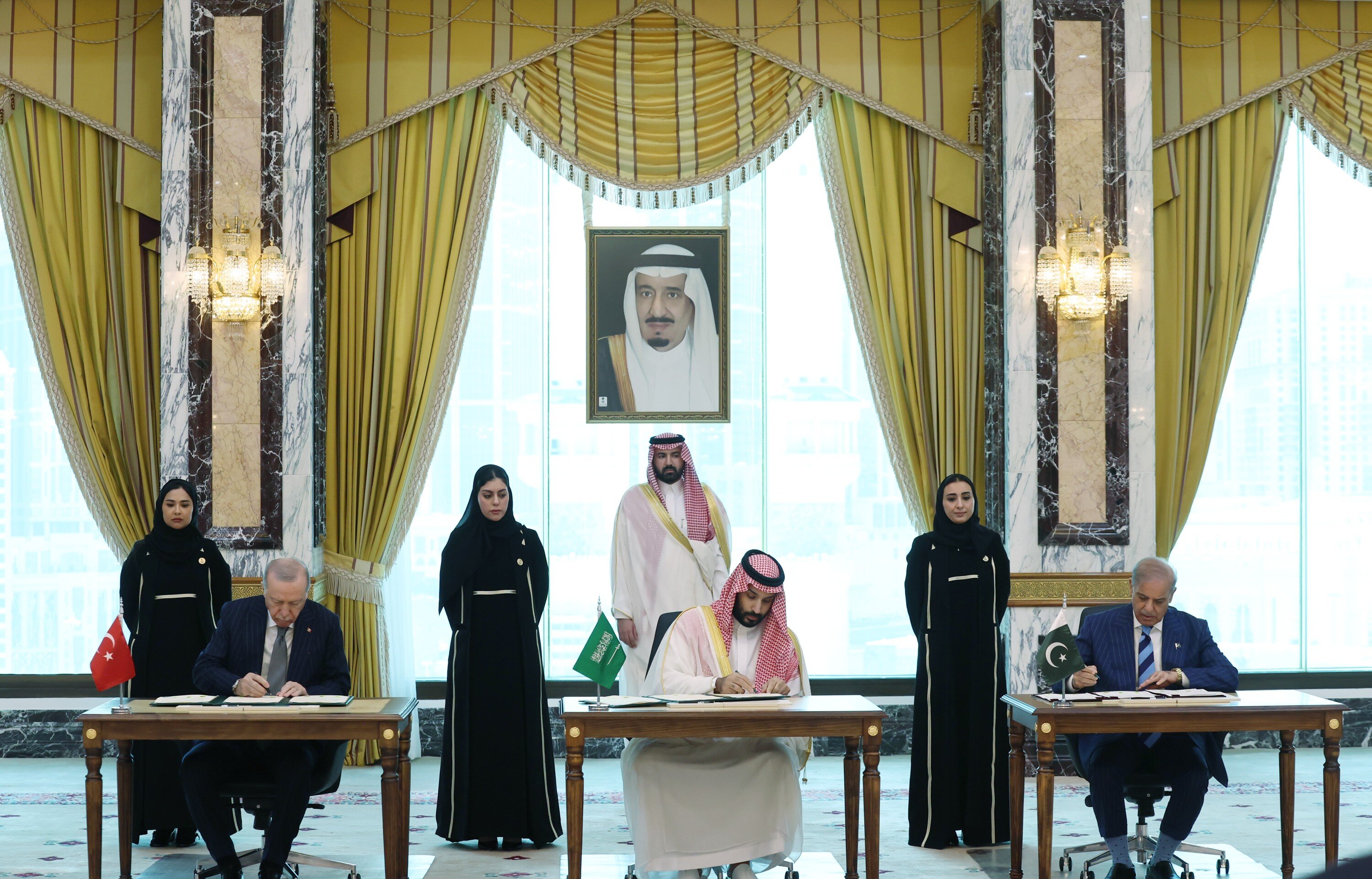
As U.S. officials announced that Iran and Oman could soon reach an agreement to reopen the Strait of Hormuz, something was happening in Mecca that may outlast both the current war and any future Trump deal. Hormuz can reopen on Monday, close again on Friday, and continue serving as leverage for years to come. But military alliances, once they acquire institutions, command structures and shared weapons systems, can reshape entire eras.
Saudi Arabia, Turkey and Pakistan have signed an agreement declaring that an armed attack on one member will be considered an attack on all three. The language sounds like a direct echo of NATO’s Article 5, but for now there is a large void behind it: nothing has been disclosed about what each country would actually be required to do, who would decide whether the alliance had been activated, or whether solidarity would necessarily mean military intervention. And that ambiguity contains the most important question of all. Are we witnessing the birth of an American regional subcontractor for a war against Iran, or the nucleus of an order that may one day tell Washington it is no longer needed?
The term "Sunni NATO", as some media outlets have already called it, is politically catchy but analytically misleading, not least because it suggests some kind of intra-Islamic confrontation. All three countries are predominantly Sunni, Iran is a Shia power, and the agreement comes after Iranian missile strikes against Gulf oil exporters. Yet Ankara and Islamabad have spent months trying to mediate between Tehran and Washington. Pakistan, together with China, has called for negotiations to resume, while Turkey has offered its own diplomatic channels. Countries preparing for an inevitable war do not normally invest so much political capital in trying to prevent that very war.
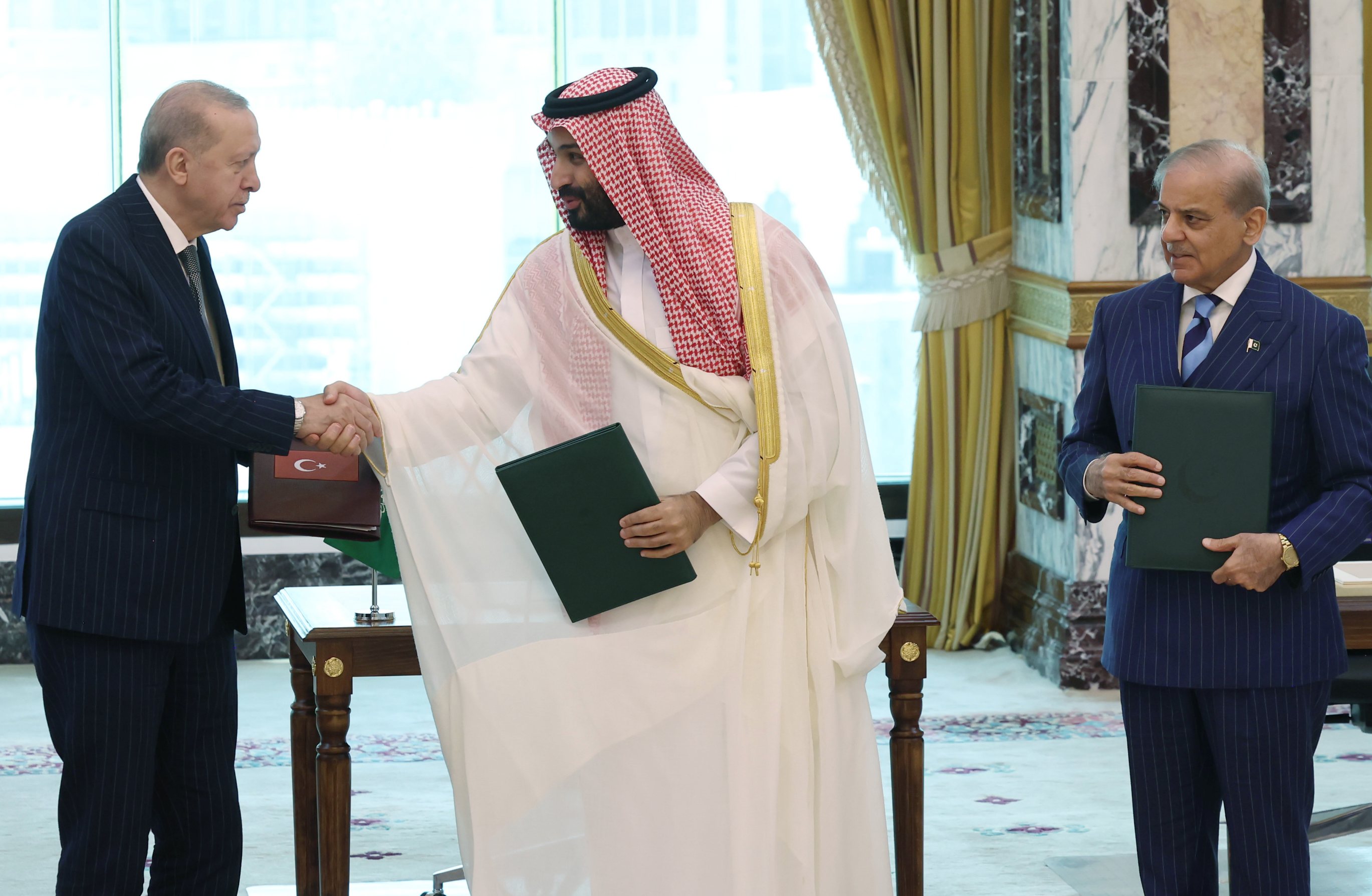
Pakistan, moreover, has had an almost identical bilateral agreement with Saudi Arabia since last year. An attack on one side is supposed to be treated as an attack on both, yet Islamabad did not declare war on Tehran after Iranian strikes on Saudi Arabia. Instead, it sent the Saudis troops, fighter aircraft, drones and air-defense systems while continuing to mediate at the same time. Clearly, such a clause does not amount to an automatic call to mobilization.
Much the same applies to the "Pakistani bomb." Pakistan is the Muslim world’s only nuclear-armed state, but it has never publicly promised Riyadh a nuclear umbrella. Officials have played down such interpretations, although the mere presence of a nuclear power creates strategic ambiguity. The Saudis may never gain formal access to Pakistan’s arsenal, but no adversary can entirely rule out the possibility that extreme escalation might eventually bring that dimension into play.
Iran is the immediate reason for the alliance, but not necessarily its only or ultimate target. Research by Britain’s RUSI suggests that the objective is simultaneously to constrain Iranian regional dominance and build deterrence against Israel. That matters particularly to Turkey, whose rivalry with Israel is increasingly spilling into Syria (for more on this topic, see: Grand Plans for a Greater Israel: Iran Is Not the End — Is Trump Preparing to Leave NATO for a Joint Strike on Turkey?). Saudi Arabia certainly does not want a war with Israel and, under some circumstances, may still prefer normalization. But until then, it can hardly accept a regional order in which one state, backed by American protection, retains what amounts to an unlimited right to attack Gaza, Lebanon, Syria and Iran. This is hardly because the Saudi royal court has suddenly developed overwhelming moral outrage. It is more a recognition that the consequences may eventually reach them as well. Riyadh prefers regional instability it can control — but events have shown that there is really no such thing. Yemen taught the Saudis that lesson.
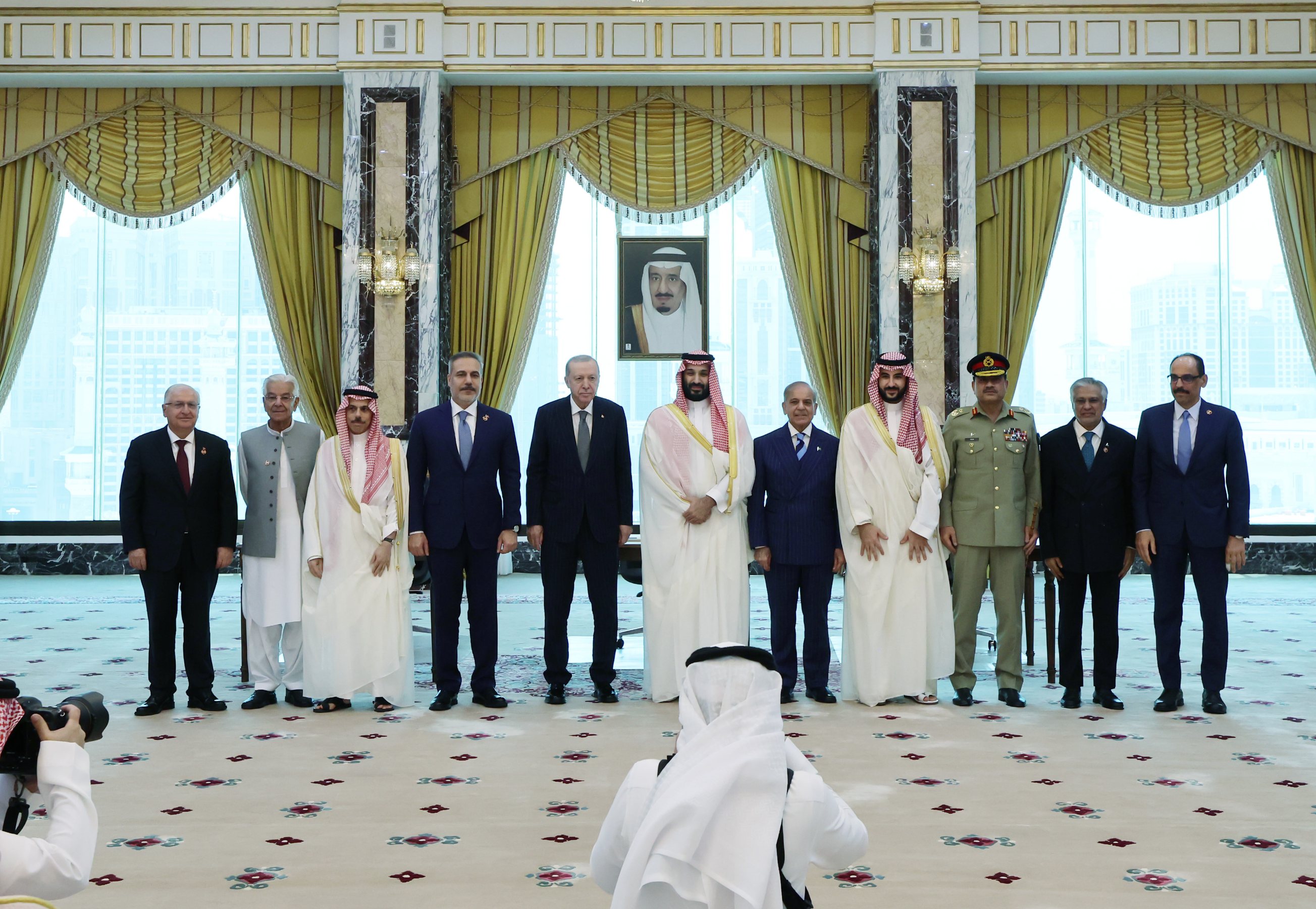
The new pact may have several shields facing in different directions. One against Iranian missiles and Iran’s regional allies. Another against Israeli military unilateralism. A third perhaps against the chaos that erupts when war spills into Hormuz and Bab el-Mandeb. And a fourth, politically the most sensitive of all, against the unpredictability of the United States — a power that can promise its allies protection, start a war on their doorstep, and then try to exit it through a deal negotiated over their heads.
It would still be far too early to describe this alliance as a rebellion against America, because it is not — certainly not today. Turkey is a NATO member and has the alliance’s second-largest military. Saudi defense has for decades been built around American aircraft, missiles, training and intelligence links. Pakistan is closely tied to China, but at the same time has been cultivating close relations with the Trump administration. In other words, Washington is embedded in the military systems of all three countries even when its signature does not appear on the document signed in Mecca.
At first, such an arrangement may suit America perfectly well. Saudi capital can finance procurement, Turkish industry can manufacture drones, missiles and warships, while Pakistan can provide manpower, training and the experience of a large professional military. Washington could retain its influence and arms sales while regional partners assumed more of the cost and risk. It would amount to a security subcontract — local uniforms and local money operating inside an American strategic architecture.
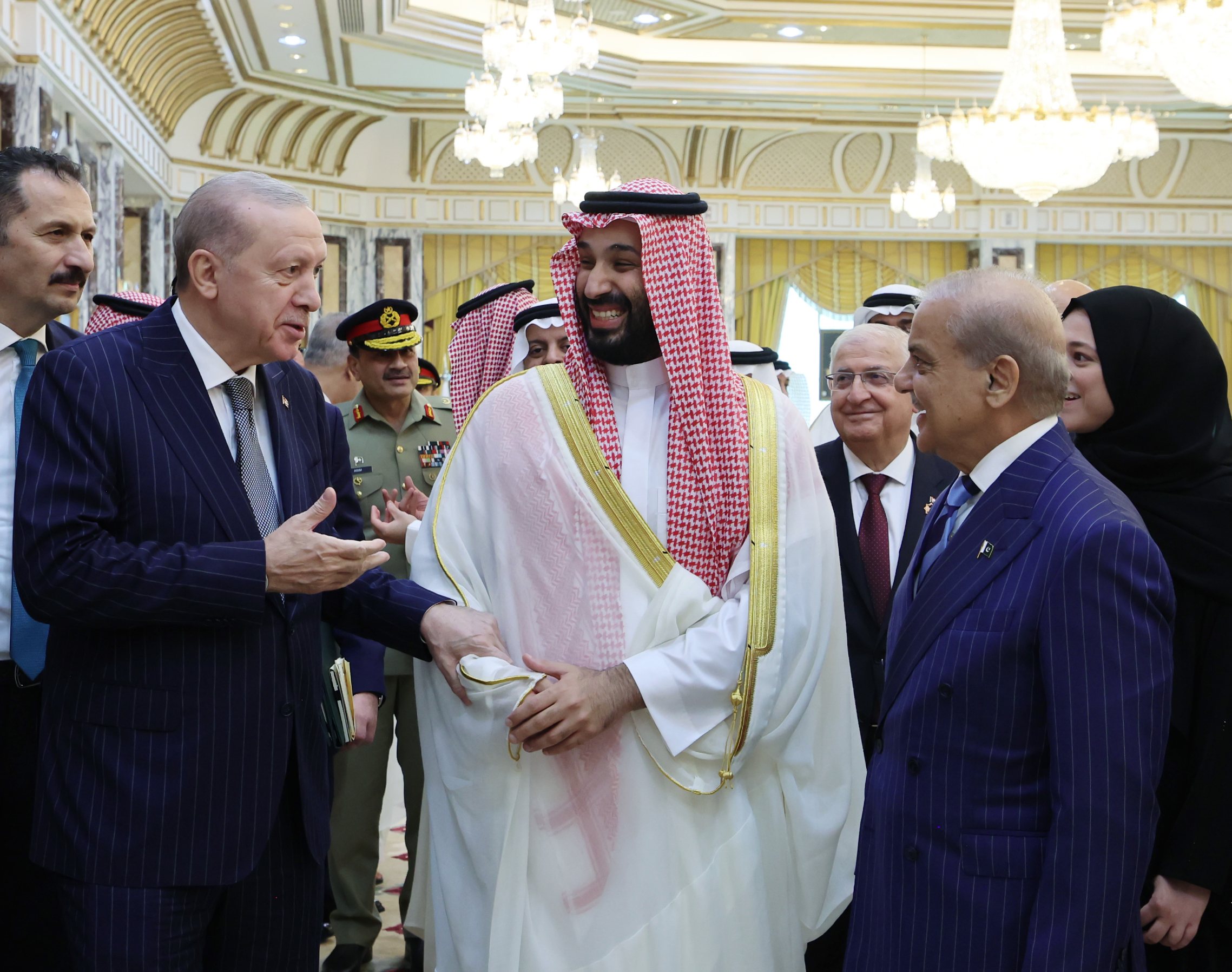
But every great power eventually faces the same problem when its subcontractors develop plans of their own. An alliance that begins by purchasing American systems can go on to develop joint production and political decision-making without an American veto. Turkey already has a powerful defense industry, Pakistan has extensive military experience and the aforementioned close ties with China, while Saudi Arabia has the capital required to turn technology into mass production.
This cooperation is not starting from scratch. Pakistan has trained Saudi forces for decades. Turkey and Pakistan have exchanged warships and trainer aircraft, while Saudi Arabia has become a major buyer of Turkish drones. Add — if this is indeed what comes next — joint exercises, integrated radar networks, missile early-warning systems and naval coordination from the Red Sea to the Arabian Sea, and Mecca could become the center of a genuine regional military power. Without such mechanisms, the agreement will remain little more than a symbol.
It is worth looking back at history. In 1955, the Baghdad Pact was created, later renamed CENTO, linking Turkey, Pakistan, Iran, Iraq and Britain. The United States was never formally a member, but it politically supported the alliance, financed its structures, participated in some of its committees and used it in an attempt to complete the southern containment arc around the Soviet Union. In other words, America has already once managed a regional alliance to which it did not formally belong!
Seven decades later, Turkey and Pakistan are back in the picture, but Iran is now on the other side, Iraq has disappeared from the structure, Saudi Arabia has replaced Britain, and the Soviet threat is gone. What may emerge is a CENTO 2.0: a regional framework for an American strategy of containing Iran, protecting energy routes and reducing the burden on U.S. forces. But an anti-CENTO is possible as well — one in which the participating states use their initial compatibility with the West to gradually build a security system that answers to no higher authority.
What matters, then, will not be what the leaders said in Mecca, but what they build after the ceremony.
For Iran, the agreement carries both danger and potential benefit. If Tehran sees it as a sectarian cordon directed by Washington, it could bind the Houthis and its other regional allies even more closely to itself. On the other hand, credible protection for Saudi Arabia could give Riyadh enough confidence that it no longer feels the need to seek another American attack on Iran. The pact could therefore become both a shield against Tehran and a brake on war with Tehran — a contradiction that is hardly unusual in the Middle East.
The real question, then, is not merely whom this alliance is directed against, but who gets to decide who its enemies are. Washington may believe it has transferred part of its security burden to reliable partners. Riyadh, Ankara and Islamabad may believe they have bought themselves time to build strategic autonomy of their own. Both assumptions could coexist for years. The real test will come when America asks them to join a war they do not want — or to stand aside while Israel launches an attack they regard as a threat to their own security.
Only then will we discover who the "new NATO" really belongs to. If it follows Washington, it will be a modernized version of the old American security architecture. If it refuses — and still proves capable of protecting its members — the Mecca pact may come to mark the moment when America’s allies began building a world in which America was no longer indispensable.
:::
Sources
- Reuters Saudi Arabia, Turkey, Pakistan pledge mutual defence as Middle East turmoil escalates https://www.reuters.com/world/asia-pacific/saudi-arabia-turkey-pakistan-sign-joint-defence-deal-amid-regional-turmoil-2026-08-07/
- Atlanticcouncil.org The Saudi-Pakistan defense pact highlights the Gulf's evolving strategic calculus https://www.atlanticcouncil.org/blogs/menasource/the-saudi-pakistan-defense-pact-highlights-the-gulfs-evolving-strategic-calculus/
- Financial Times Saudi Arabia, Turkey and Pakistan sign defence pact in Mecca https://www.ft.com/content/a988ae61-a218-4872-a4d7-a3061c6ca7ab
- History.state.gov Historical Documents - Office of the Historian https://history.state.gov/historicaldocuments/frus1958-60v12/d73
- Nato.int Secretary General in Türkiye: Strong Turkish defence capabilities contribute to a strong NATO https://www.nato.int/en/news-and-events/articles/news/2024/11/25/secretary-general-in-turkiye-strong-turkish-defence-capabilities-contribute-to-a-strong-nato
- Associated Press Saudi Arabia, Turkey and Pakistan have signed a key defense agreement https://apnews.com/article/58048d4a100befd4d2c18e0cbae58b7c
Comments