
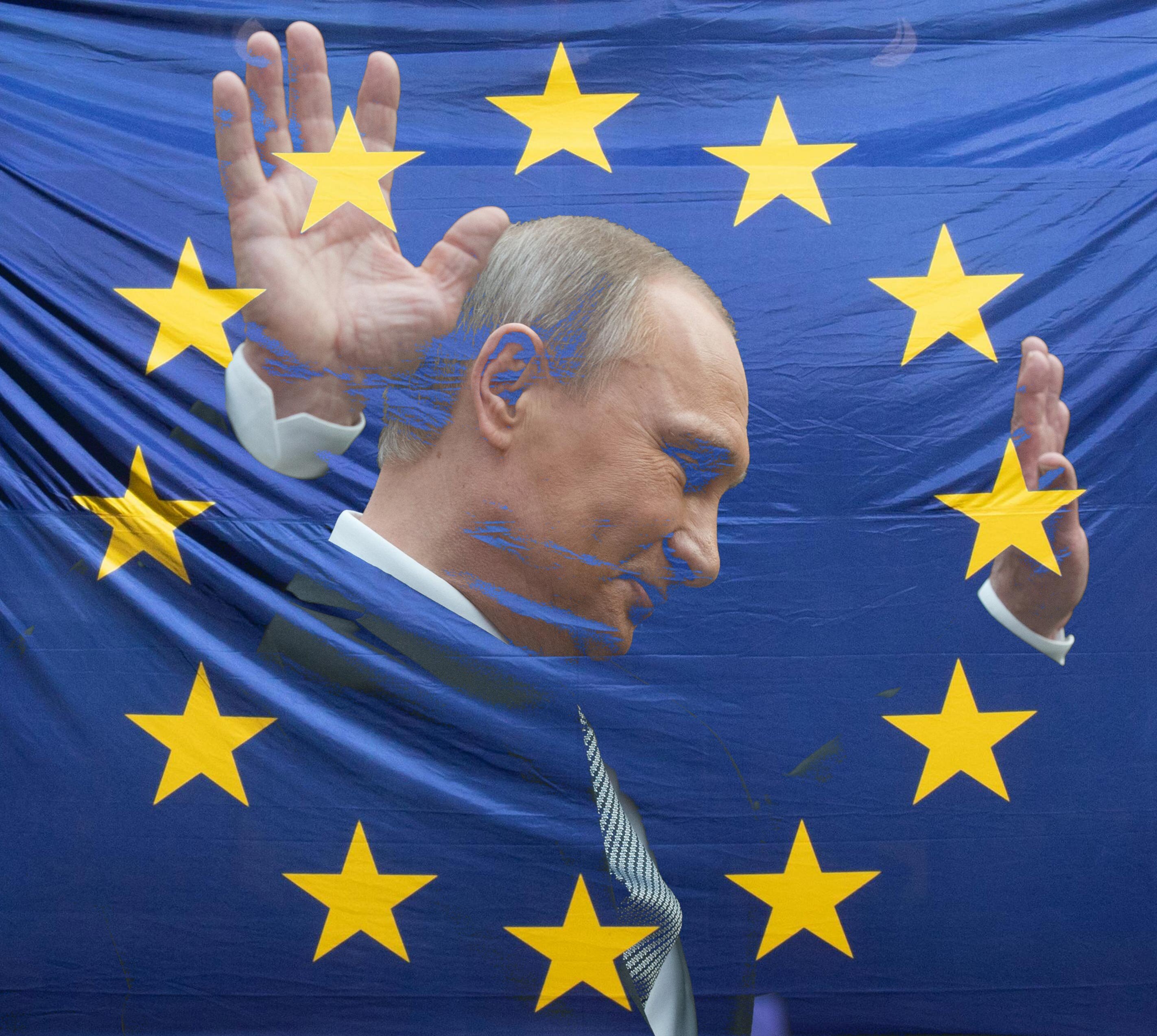
If there are good-cop, bad-cop games being played in the corridors of the Kremlin, Europe is watching the wrong images. Taking Schröder by the arm would be wise, if it is not already too late.
Several years of demonization is not much when measured against the radius of history’s wheel. Everyone recovers from it relatively easily, in politics even faster than in reality. War as a handicap? Certainly, but it depends on how interests are aligned toward overcoming it, or toward freezing it in place. In certain places, dates and minds around us, it is easy to get the impression that the war ended yesterday, or perhaps that it is still going on. In other places, the decision of "it happened, now it is over" has been implemented far better and brings faster economic recovery, as well as mental recovery. Russia, Ukraine and Europe? Why not? The choice is simple, always the same: overcome or obstruct. The difference is that the space is somewhat larger, and a bad choice much more serious.
The Germans, meanwhile, are veterans of that choice, partly imposed after the fact, but still, one cannot say they lack experience. After the Second World War, they accepted multiple catharses, from "we were only following orders" to "Dresden, presumably it had to happen". And later, too. Being one being split for decades into two sharply opposed ideologies did not unsettle them too much once the wall fell. Some capacity for overcoming is obvious there, so why not use it? The thought surely did not escape Putin either, so he remembered his favorite German, and perhaps Dresden as well, only in another context, perhaps with a little nostalgia, since as a KGB officer he was stationed there from 1985 to 1990. But that romance, or at least that realpolitik chance, is on its last breath. Europe has lost itself in too many rapid reversals and has already forgotten what a friend it has in Vladimir. But he is still there, in this executive and surely still willing capacity, for only a very short time. Perhaps we are speaking of weeks, perhaps of days. But missing an opportunity that must not be missed would be tragic.
The wisdom is surely much older, but Mario Puzo popularized it through his favorite mafioso: "Never hate your enemies. It affects your judgment" (Michael Corleone).
The Russian president’s judgment has become quite trapped between hatred, and at times even love, to the point that his concrete positions have remained completely out of sight. Above all, Putin’s pragmatism, which sometimes goes so far that it spoils both hatred and love. Because when things are heated, pragmatism provokes dissatisfaction from all sides; it does not fit well. A pragmatist will never be either the ideal demon or the ideal hero. Putin is slowly fading at all margins, but perhaps that is a good thing. It is the space through which one should now look more wisely.
Some mid- to lower-ranking SPD members have sensed that resonance, the media suggest. "Every chance to end the war, however small, should not be rejected", one of them says. That is the spirit of Germany we like. Let there be some of it, even in traces. Still, it is far from guaranteed that the aging Gerhard Schröder will become an ambassador of goodwill. On the other hand, if Mario Puzo were alive, he would probably enjoy all of this and draw great inspiration from it. Putin would fit perfectly into a new story in suits, and certainly also the 82-year-old Schröder, who, although his comradeship with Putin cost him his reputation in the current order, has not given up his ambitions. Not relevant to this story, perhaps a little, but the former chancellor is already in his fifth marriage, most recently to the translator So-yeon Schröder-Kim, who is around 30 years younger.
What would it cost Berlin for Vladimir and Gerhard to meet and talk a little about everything? Fine, let us not have illusions, such a thing will not be blessed, but something similar should happen, and precisely now. Should the current chancellor Merz step in instead of the former one? We said no illusions. This former BlackRock board member does not seem like someone who understands the German concept of proper overcoming. Still, thanks to him, probably unintentionally, Germany is more aware of the importance of this moment.
When Merz dared to suggest that the United States was disgracing itself in Iran, the whole of Germany received a portion of the new transatlantic reality. The fact that Trump will move a few thousand of his soldiers to neighboring Poland is not the main news, but it is part of the story. Trump’s gambits are turning into easily predictable strategic failures. At this pace, he is rushing toward the greatest one: the idea of a third term, after which the United States will find itself in a situation where it too will have to think about overcoming or obstructing. In translation: America could comfortably slide into self-initiated collapse, who knows how far, perhaps quite far, perhaps to the point where it will no longer know which militarized faction of its very near future is even controlling LNG tankers. And then what, Europe?
The argument for preventing chaos is still there. None of the remaining sensible Europeans is asking for too much, only a little initiative to end the war. That argument would be valid even under completely "healthy" transatlanticism, though, let us be realistic, it would have been much harder to sell. Now, when it is embarrassing even to mention what the other side of the ocean is doing, things nevertheless become easier.
It is worth remembering Putin again beyond the bedsheet of demonization, beyond the painted-on Hitler mustache. And this should be stressed from a very pro-European position, because from the Russian perspective it may not be the wisest thing. But Putin, along with the oligarchic line, though they always manage, was the main factor preventing Russia from moving out of Europe and into Eurasia. That Putin is still somewhere there. The Putin who does not believe that all of Europe has turned its back on him, because he does not want to believe it, but only the accidental current edition of Europe, which he perceives as an inevitably temporary condition, even if he would admit, at least to himself, that it has now lasted much longer than he expected.
If Europe is truly composed of editions, then somewhere beneath the current one there is also one that still has an ally in the Kremlin. But while waiting for that realization, he is no longer alone. He is still at the top, but that tower is no longer nearly as high as we remember. Because Europe was busy with Putin and its interpretations of Putin, and failed to notice what had changed around him, what had risen.
For Europe, the threatening Russia takes shape in the figure of Dmitry Medvedev, which is a quick failure in understanding Russian politics. Medvedev is not a threat, he is something of a caricature, and in his soul an even greater European than Putin himself. The wrong people are being watched and observed. The important ones are being skipped over.
But there is someone who does not skip. The greatest confectioner for passionate lovers of foreign policy, especially after the war in Iran gave him even broader exposure, is without question today the Norwegian political scientist Glenn Diesen. With a perfect ratio of astonishment, curiosity and deep expertise - two doctorates, in political science and international relations, as well as two years of Russian language and literature in St. Petersburg - this adherent of neoclassical realism, besides having published a large number of books, mostly on Russia, Eurasia, NATO, the Cold War and related themes, is known to many for his YouTube channel, followed by more than half a million people. He brings very interesting guests onto his podcast, and then other interesting actors listen to those guests, eventually appearing as guests themselves. And all of this will be skipped because Diesen was, for several years, a relatively regular commentator on Russia’s RT, which in the post-2022 world is more than enough to be avoided. But skipping him is exactly like skipping the important element of Putin mentioned earlier. It should also be said that Diesen does not approve of the Russian aggression against Ukraine, but as a realist he tries to understand it, which is apparently in the same category of sin.
But the reason we mention him is his guest yesterday, Sergey Karaganov. Those who know him will immediately feel that slight discomfort when his name is mentioned, the kind of discomfort they do not feel when Medvedev is mentioned. Without going too deeply into detail, anyone with the will and 44 minutes can watch the whole interview here.
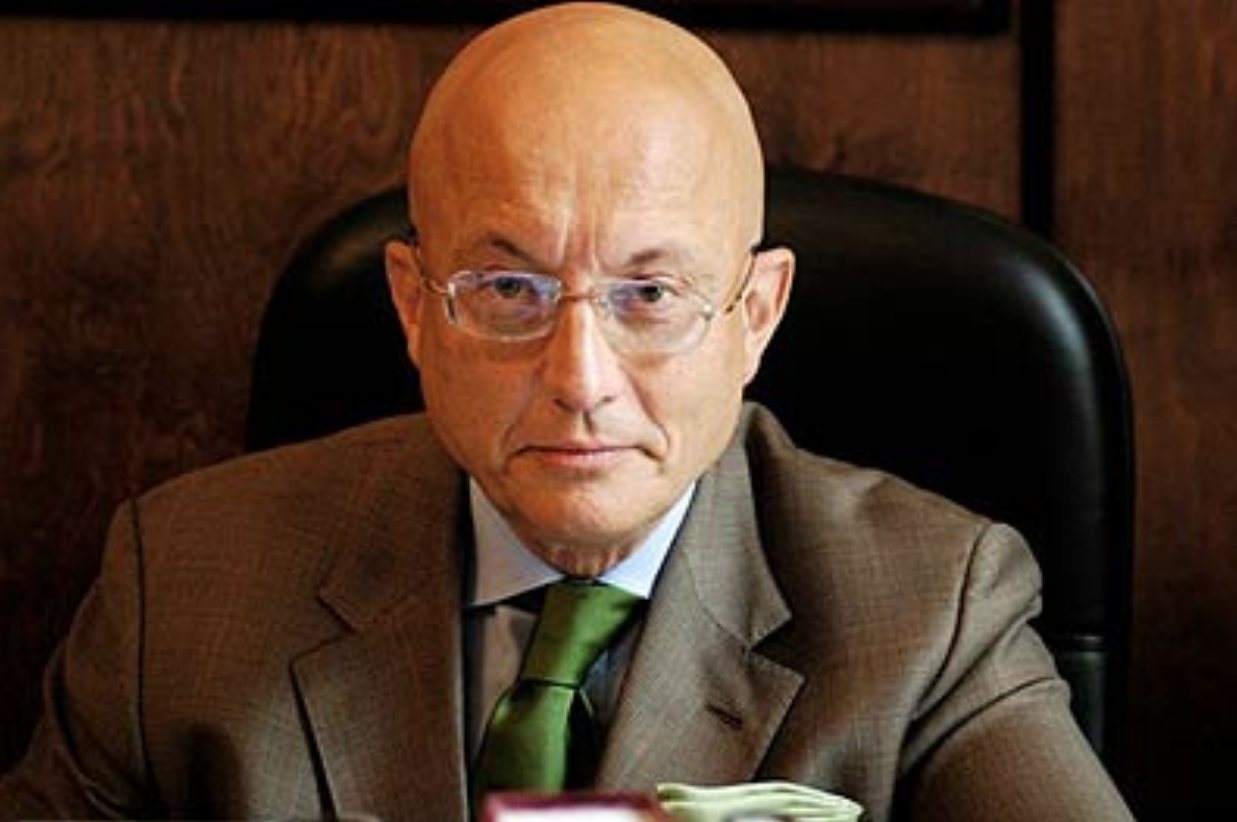
So who is Sergey Karaganov, really? A Russian political scientist, foreign-policy strategist and one of the more important ideologues of post-Soviet Russian geopolitics, a man who does not formally make decisions, but who for decades has produced the "language" through which those decisions are later explained. He is associated with ideas about the "near abroad", the protection of Russians outside Russia, the end of Western dominance, the turn toward Asia and the concept of Greater Eurasia. In the West he is often described as a hardliner close to the Kremlin, especially because of his sharp nuclear rhetoric, and if you set aside those 44 minutes, everything becomes clear, while in Russian strategic circles he is seen as a respected thinker. In short, Karaganov is not an operative of the executive branch, but perhaps he is more than that: he is one of those people who give Russian policy its framework, its justification and its historical mission.
Perhaps it is now a little too much to evoke Mario Puzo for the third time, but it is hard to resist. Because if other characters need actors, Karaganov can comfortably remain Karaganov. With such conviction, and even passion, he cursed Europe, almost completely dismissing the idea that everything could now suddenly end anticlimactically through diplomacy. It cannot, he says. Europe must be taught a lesson, an attack on Europe must be carried out, and if they do not immediately understand the whole lesson, the next one, very soon, must be nuclear.
"Europe is the source of all evil, all wars, all genocides and everything worst in human history", Karaganov claims. We are talking about perhaps the typical profile of a hardliner in post-Soviet Russian politics, one who perceives communism as a disease with which Russia was deliberately infected, but a hardliner with far greater influence than average. Although he too will at one point joyfully say "Beethoven and Shakespeare are ours!", everyone should understand who is speaking and in what capacity. Karaganov himself is very aware of this. He openly boasts about it. Before the war in Ukraine, he was prominent, but one among many; today his voice is only growing and spreading. Karaganov’s new doctrine will soon be the new Russian doctrine.
Putin will not drop a nuclear bomb on Europe, but Karaganov would. And this is not some new episode of good-cop, bad-cop games in the corridors of the Kremlin. That is the Putin and Medvedev duo. This is a different story, very well condensed into those 44 minutes. With that in mind, and considering the alternative that is maturing and will soon dominate, Europe would do well to think everything over once more. Perhaps Merz should take Schröder by the arm and, somewhere publicly or secretly, meet with the still-executive head of the Kremlin, who might yet be Europe’s last ally, and who, fittingly, also speaks fluent German.
Comments