
In the great game, the most dangerous moment is not when the opponent threatens, but when one’s own advantage begins to look more secure than it really is.
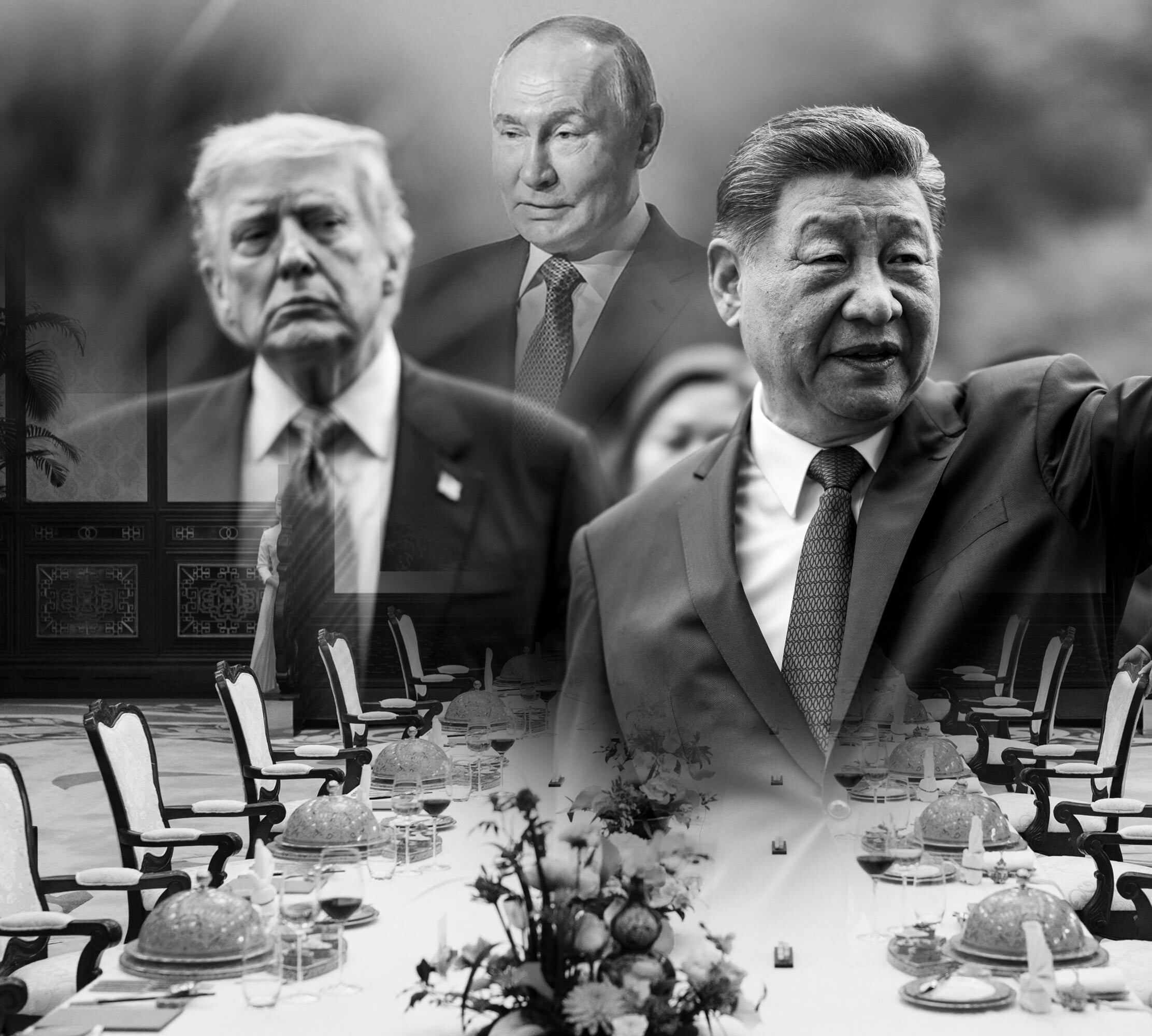
Putin’s imminent trip to Beijing on May 19 and 20 should perhaps not necessarily be seen as a return visit, but rather as the final act in China’s staging of a very rare diplomatic scene. Within the space of just a few days, Xi Jinping receives first the American president, then the Russian president. Let us recall that Trump was in Beijing a few days ago, on May 14 and 15, while Putin arrives immediately afterward - and at Beijing’s invitation - in a visit officially tied to the 25th anniversary of the 2001 Russian-Chinese Treaty of Good-Neighborliness and Friendly Cooperation. Officially, the topics are the strengthening of bilateral relations, international and regional issues, and economic cooperation. The Kremlin has already raised expectations: Dmitry Peskov is speaking of "very serious expectations" and a "particularly privileged strategic partnership".
Clearly, Moscow wants to show that Trump’s attempt to stabilize relations with China is not turning into an American "separation" of Beijing from Moscow. In the Russian interpretation, this is proof that the West has failed to isolate Russia and that the global center of negotiation has shifted from Washington and Brussels toward Beijing. And indeed, by now this is clear to the whole world. But behind the grand symbolism lies a very concrete question: energy. The most important possible agreement when it comes to Putin’s arrival in Beijing is "Power of Siberia 2", the gas pipeline that could deliver up to 50 billion cubic meters of gas per year from Russia’s Arctic fields through Mongolia to China.
At the same time, something should be said immediately about the Russian-Chinese relationship, which is not without tensions. The alliance looks politically solid, but economically it is asymmetrical. Russia needs China more than China needs Russia. Earlier analyses of the pipeline arrangement emphasized precisely that. The project is a geopolitical signal, but also proof of China’s negotiating superiority, because key details such as price and financing often remain unclear, while Beijing can wait and pressure Moscow into more favorable terms.
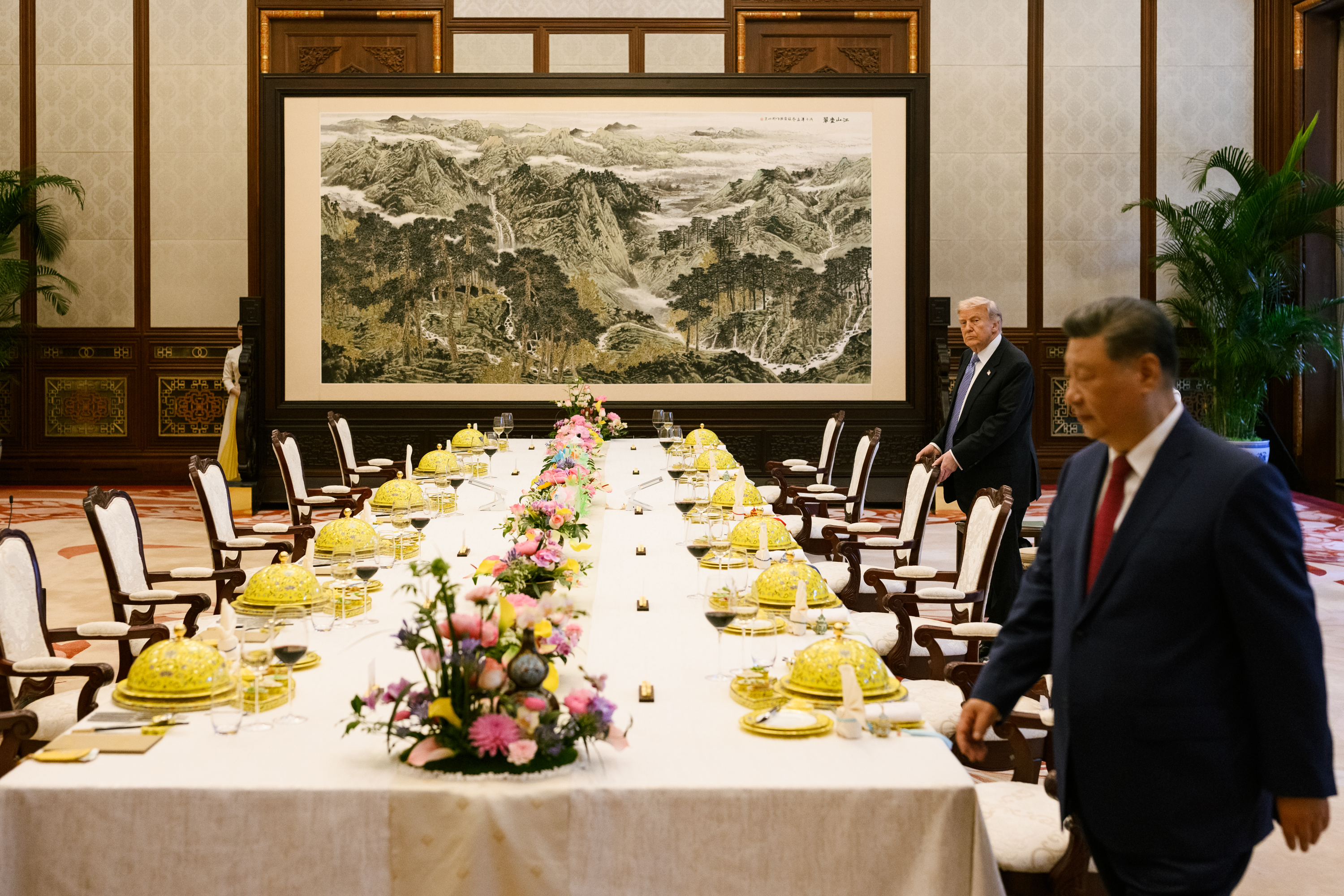
Let us first look at what the Chinese themselves are saying. Their analysts, at least through media close to the state, emphasize that the point is not that China is choosing between Trump and Putin, but that both of them are coming to Xi Jinping. The Chinese newspaper Global Times stresses that Beijing is "rapidly emerging as a hub of global diplomacy". That is the key Chinese message. China is not - nor does it want to be, regardless of anyone’s wishes - a mere member of an anti-American bloc, but an arbiter, mediator and central station of the multipolar order. In that sense, Putin’s visit comes as confirmation of Chinese autonomy after Trump’s summit, not as an automatic alignment with Moscow.
Moreover, seeing that Trump came this time in a rather, let us say, humble manner, China now feels even more strongly that it must place Chinese interests absolutely first, not American ones, not Russian ones, while at the same time keeping "those who come" sufficiently satisfied.
Of course, such a strategy makes sense if the greatest geopolitical "window" of the 21st century - the one in which America forcibly stops China’s rise - has truly closed. Has it? It is hard to say, or rather, too early to say. Yes, Trump has begun mentioning some kind of agreement with Beijing over Taiwan, and perhaps he may even reduce arms shipments to them, but we are talking about Trump. On his way back to Washington, he may already have changed his mind three times, and it would be naive for China to build its strategy, especially its strategy toward Russia, on the basis of any Trump statements.
Yes. There is no doubt that Russia at this moment needs China significantly more than the other way around. But at the same time, China must not forget what Russia means to it: at least in a continental sense, it is the largest buffer zone on the planet. China must also not forget that Russia is a country substantially worn down by a war that, although it started it itself, is now inflicting very uncomfortable losses on it, including economic ones. A war economy can function, but not for wars that last too long, and this can already be felt in Russian figures. So what should China fear? A scenario in which Russia, in its current form, does not survive. It should fear any scenario of Russia’s internal collapse. To say this is impossible would be naive, because it is something many are working on very actively, every single day.
China could miscalculate if it begins to view the world solely through the lens of its market exports. In fact, Russia miscalculated in the same way not so long ago, thinking Europe was so dependent on it that this could never change. We see how that ended.
That Russians are gradually becoming nervous about China’s "neutrality" is clearly visible. These views are already leaking into Russian state media, with Russia’s RT publishing an article emphasizing that Russia cannot be China’s "junior partner". We can put it this way as well: Trump is far more often on the phone with Putin than with Xi. Moreover, the whole point of the Trumpist turn on Ukraine, which was never fully carried out, though that is already a matter of dispute between American factions, was always how to "pull" Russia away from China, because Trump, who has drawn many wrong conclusions, is entirely right about one thing: Russia will not knock America off the throne of global dominance, but China will.
Let us look at what the Americans are saying. Joseph Webster of the Atlantic Council, cited by the Guardian, believes that the main topic of the Xi-Putin meeting could be Taiwan. According to him, China could strengthen its resilience for a future crisis or blockade scenario in the Taiwan Strait through deeper fossil-energy arrangements with Russia. That makes sense, but only in a scenario in which China is truly preparing to take Taiwan militarily. This is the American narrative from which there is essentially no deviation, but the question is how analytically correct it really is.
Because Taiwan can be viewed in another way as well. Taipei is tied to the United States as long as the United States is the globally recognized hegemon. As long as the settings remain that way, Taiwan’s relations with America will remain as they are. But at the moment when, for example, the United States is no longer logistically capable of guaranteeing Taiwan’s security - imagine Trump truly sending ground forces into Iran - the Taiwanese authorities are not ideologically suicidal. In other words, they would quickly recognize the advantages of "reconciliation" with China, perhaps even agreeing to some form of autonomy under a shared flag. Various arrangements are possible, and political options already exist in Taiwan that would be interested in them.
What could happen at such a moment is an "explosion" ignited by one of the American factions, not necessarily even the dominant one, that is still capable of carrying out such a move. What kind of explosion? The same one that happened to the Russians on the Maidan. The Russians already had everything settled. In 2013, Yanukovych decided that Ukraine would not seek entry into the European Union and would instead turn toward the East, more precisely toward Russia, China... At that moment, the United States all but ordered the Maidan, even though it was almost certain that this meant war.
Something similar could happen to Taiwan in the foreseeable future. A political option may come to power that sees the future with China, perhaps not ideologically, but certainly through its economic potential. And then we may get a "Maidan" on the streets of Taipei, the arrival of a radically anti-Chinese faction, actually anti-PRC, because the people living in Taiwan are in fact the same Chinese people, that will, through certain moves, simply guarantee that "mainland China" enters a war. It is worth recalling that Beijing’s red line is very clear: a declaration of independence. In other words, if the United States has people in Taiwan ready to go down the Ukrainian path, they will do so.
We can also conclude it this way: China would be unwise to interpret the current development of events as some new "end of history", because it is not that, and it is nowhere close. We are still far from any resolution in the Persian Gulf or in Eastern Europe, and while that remains the case, China would be wiser not to tamper with relations with countries that, through sheer inertia, will be on its side if it finds itself in America’s crosshairs: countries such as Russia, Iran, North Korea, Cuba... Moving too early into any sense of security has backfired on everyone, literally everyone. On Gaddafi, Saddam, Assad, Maduro, and even Iran, which believed that an agreement with Obama was actually an agreement with America, and on the Russians more than once. A China that learns from other people’s mistakes has an almost comfortable path toward victory. But the moment it is led by the idea that it is "too big to suffer", it will merely join the very same list.
Comments