
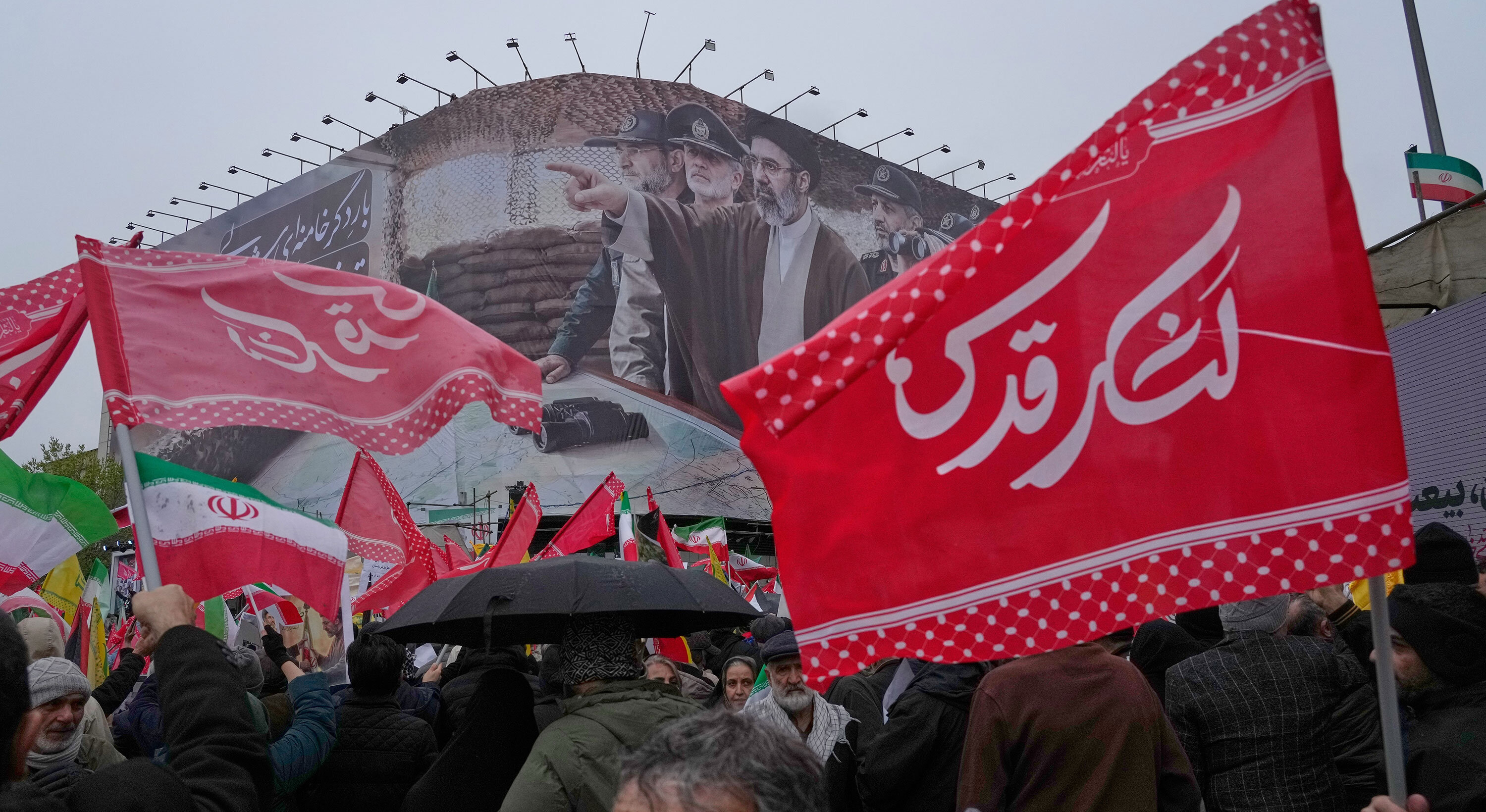
Washington’s strikes in southern Iran come just as the diplomatic framework for ending the war appears to be taking its first concrete shape. Officially, Washington describes the attacks as a "defensive action" against missile positions and vessels that, according to the American account, were attempting to lay mines near the Strait of Hormuz. Tehran, by contrast, sees them unequivocally as a violation of the ceasefire and as confirmation of its long-standing argument that the United States cannot be trusted. Almost the entire crisis lies in that gap. Negotiations exist, mediators are supposedly at work, and messages are being exchanged, yet the American side seems to be trying to rewrite the terms of the agreement by force.
The United States is clearly unhappy with what has emerged on the table. The draft agreement, insofar as it can be reconstructed from diplomatic signals, would consolidate the ceasefire, reopen the Strait of Hormuz, and launch a 60-day period for a broader negotiating package. Within that framework, Iran is demanding real, verifiable, and concrete sanctions relief, including the release of frozen assets. Washington, for its part, wants Hormuz to remain open under conditions that do not look like an Iranian victory. That may sound banal, but it is precisely the element Trump will find hardest to secure.
Any agreement that acknowledges Iran’s ability to close or control the world’s most important energy passage automatically weakens the old American image of the Persian Gulf as a space monitored from the Pentagon.
The American strikes therefore look like yet another attempt to adjust the negotiating balance. Washington is sending the message that Iran may negotiate, but must not be allowed to turn the strait into a permanent instrument of pressure. The problem for the Trump administration is that this message no longer lands as it once did. After the active phase of the war, Iran showed that it can strike American interests, force the Gulf states into direct diplomatic anxiety, and keep negotiations alive even under the threat of renewed escalation. American power can still destroy, but it is finding it increasingly difficult to dictate the political outcome.
In effect, the situation is asking an America that spent decades doing as it pleased to understand, and immediately accept, a new awareness of its own limits. That, of course, is not something it can easily swallow, especially with Trump in the White House.
Mojtaba Khamenei stresses that the countries of the region will no longer serve as shields for American bases, and speaks of an approaching "post-American order in the Middle East."Iranian officials now speak of three pillars of their position: the battlefield, the street, and diplomacy. The message has been carefully constructed. The military says it is ready for a new war, the state emphasizes internal unity, and diplomatic channels remain open through Qatar, Pakistan, and other mediators. This approach allows Tehran to present itself as a side that accepts negotiations from a position of strength, while portraying American strikes as proof that Washington negotiates only when forced to do so. From Iran’s point of view, Hormuz is the greatest deterrent lever the state possesses. Giving it up without a clear concession in return would amount to a strategic defeat.
That is why Iranian threats of retaliation are highly specific. Military spokesmen warn that continued American and Israeli strikes would provoke a far heavier response, with consequences extending beyond the region. Commanders of the Revolutionary Guards speak of a decisive and rapid response: American bases, energy infrastructure, maritime routes, and all assets linked to the United States, directly or indirectly, are being mentioned. The announcement that the IRGC has shot down an American MQ-9 Reaper further reinforces that message. Between the lines, and between the drones and missiles, Tehran wants the Gulf monarchies to feel the price of another American attack and to be the ones that pressure Washington.
The appearance of Iran’s new supreme leader, Mojtaba Khamenei, is especially important. His message that the countries of the region will no longer serve as shields for American bases goes beyond wartime rhetoric. It gives form to what Tehran calls the coming, and imminent, "post-American order in the Middle East." This is a vision that has been expressed before but is now being reaffirmed: one in which the American military presence no longer guarantees security, but instead becomes a source of danger for the countries hosting those bases. For Saudi Arabia, the UAE, Qatar, and Bahrain, the message will be very clear.
Trump’s nervousness is understandable. In keeping with his instinct for grand political gestures, he would now like to turn a potentially painful agreement with Iran into a new regional story about expanding the Abraham Accords. The mention of Saudi Arabia, Qatar, Egypt, Turkey, and Pakistan as possible participants in normalization with Israel functions as an attempt to sell the American public, and the pro-Israel wing of the Republican Party, on the idea of a broader strategic gain. If Trump has to accept Iranian demands on sanctions, frozen assets, and Hormuz, he wants at least a symbolic prize that would reassure Israel and its American allies.
Iran is acting as a player that is turning its endurance into negotiating capital.But the space for such a prize is narrowing. The Gulf states and other Muslim countries can hardly enter into a new normalization with Israel at a moment when Israeli policy toward the Palestinians, and the wider regional escalation, remain without any credible political solution. Many of these states condition normalization on an irreversible path toward Palestinian statehood, and no such path currently exists in the American-Israeli offer, nor is there any indication that it will. Trump may soon discover that expanding the Abraham Accords has become impossible precisely because of the war that was supposed to strengthen Israel’s position, but in reality has made it far worse.
Across the crisis, the change of era is becoming increasingly visible. The United States can still strike, sporadically, but its ability to translate those moves into the desired political outcome is visibly weakening. Iran, meanwhile, is not acting like a country seeking a way out at any price, but as a player turning its endurance into negotiating capital. The Gulf states are searching ever more actively for mediated solutions because they know that an American-Iranian war is being fought across their territory and across their energy risks.
All in all, as we wrote last night, nothing is yet changing dramatically from one day to the next, but the overall picture is becoming clearer. Hormuz is closed, and the United States can do nothing about it. Marco Rubio says it must be opened, but how? With what? Iran is the one that decides. That is why the United States is striking again in the middle of negotiations. And that is another reason why these strikes, however powerful, are unlikely to deliver what the United States is seeking.
Comments