
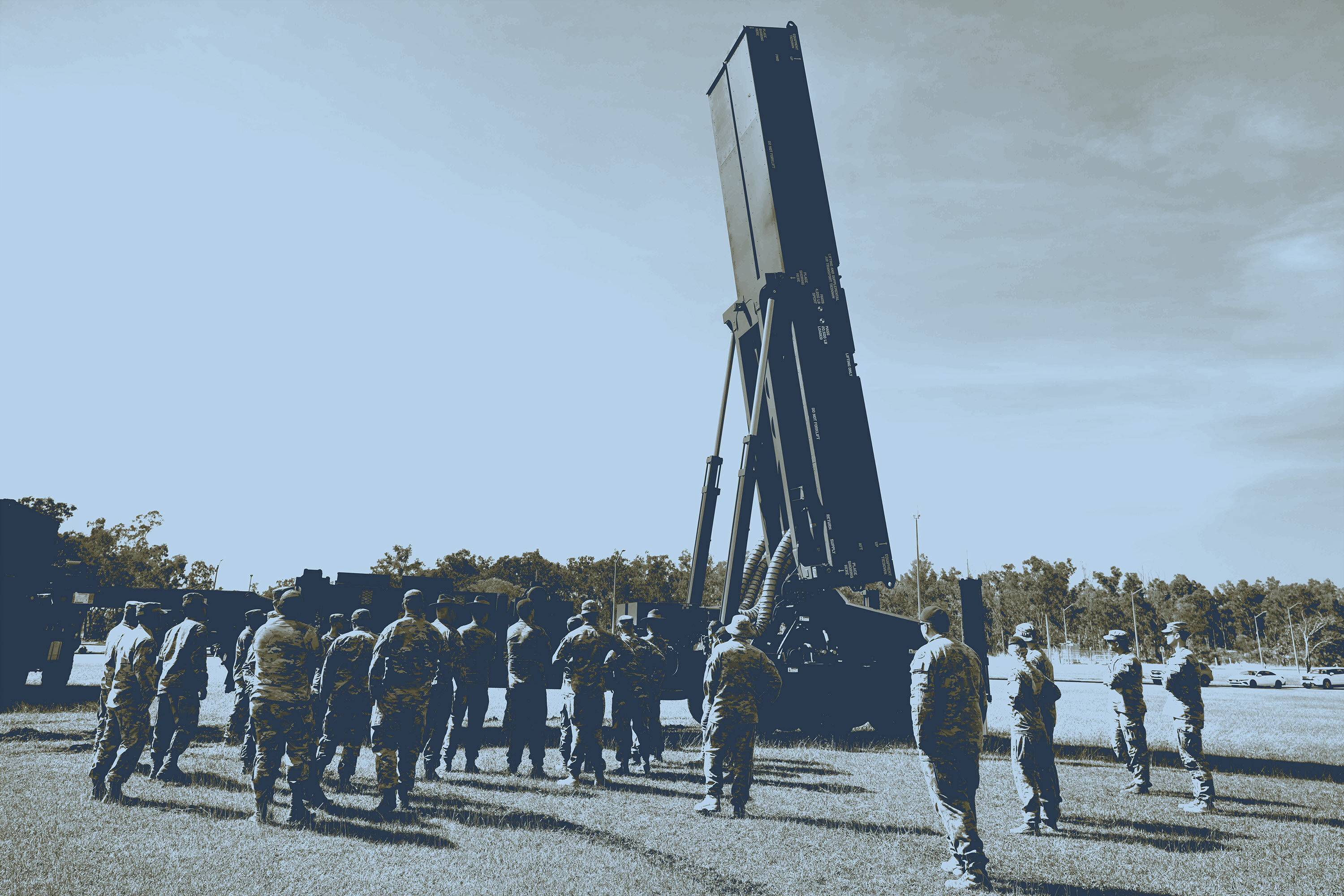
The request by US Central Command to make the hypersonic Dark Eagle system available for possible use against Iran opens up a little-examined military-technological and political chapter in the current Middle East crisis. This weapon has been announced, tested and delayed for years, yet it has never been fully introduced into real military practice.
If Dark Eagle were used against Iran, it would mark America’s first combat entry into the hypersonic age. Such a moment would mean far more than a strike on an Iranian launcher or command post. It would demonstrate that the United States can turn a technology it has spent years developing — and in which it has lagged behind its rivals — into an actual weapon of war. But it would also carry a risk: if Dark Eagle fails, it will deal another blow to America’s reputation, which is already being eroded day by day by the current war.
Technically speaking, Dark Eagle has emerged as a potential answer to a very concrete problem. Existing US systems, including PrSM, are useful for regional medium-range strikes, but their value declines when the enemy pulls deeper into its own territory. Iran has ample room to do precisely that, especially considering its mountainous terrain. A hypersonic weapon gives US commanders the ability to bypass part of that distance and shorten the time between detecting a target and striking it. In ideal operational terms, Dark Eagle is supposed to work according to the logic of "I see it, I destroy it." The question is how wide the gap currently is between that theory and practice.
How Dark Eagle came into being
Dark Eagle, as a project, has a fairly long history. Its roots lie in America’s post-Cold War ambitions for a rapid conventional strike capability, especially the idea that distant targets could be hit almost immediately without resorting to nuclear weapons. For years, that concept existed within the broader doctrine of prompt global strike. In theory, it was highly attractive. The United States wanted the ability to destroy command centers, missile launchers or deeply buried military installations before the enemy had time to react.
Developing such a weapon, however, proved far more difficult. A hypersonic system must withstand extreme temperatures, remain stable at very high speeds, and connect the missile, launcher, command vehicle and intelligence network into a single functioning whole. The US Army and Navy therefore developed a shared core system known as the Common Hypersonic Glide Body, or C-HGB. From that project, the Army built the ground-based LRHW system, later officially named Dark Eagle, while the Navy is developing its own variant for future use from ships and submarines.

This common approach was meant to reduce costs and speed up development. In practice, however, the problems that accompany almost every major next-generation American weapons program soon appeared. Tests were postponed, deadlines slipped, and the Army had to admit that it would not meet its original plans for early deployment. Tests of the complete system were especially sensitive, because proving the flight of a hypersonic body under controlled conditions is one thing; launching the full configuration from an operational battery is quite another.
After earlier difficulties, successful tests in 2024 and new steps toward production created the impression that the program was approaching its first real military use. The major contract awarded to Leidos to move hypersonic components from the prototype stage toward production shows that the Pentagon no longer sees Dark Eagle merely as a research project.
Why does hypersonic speed begin on a huge steel ramp?
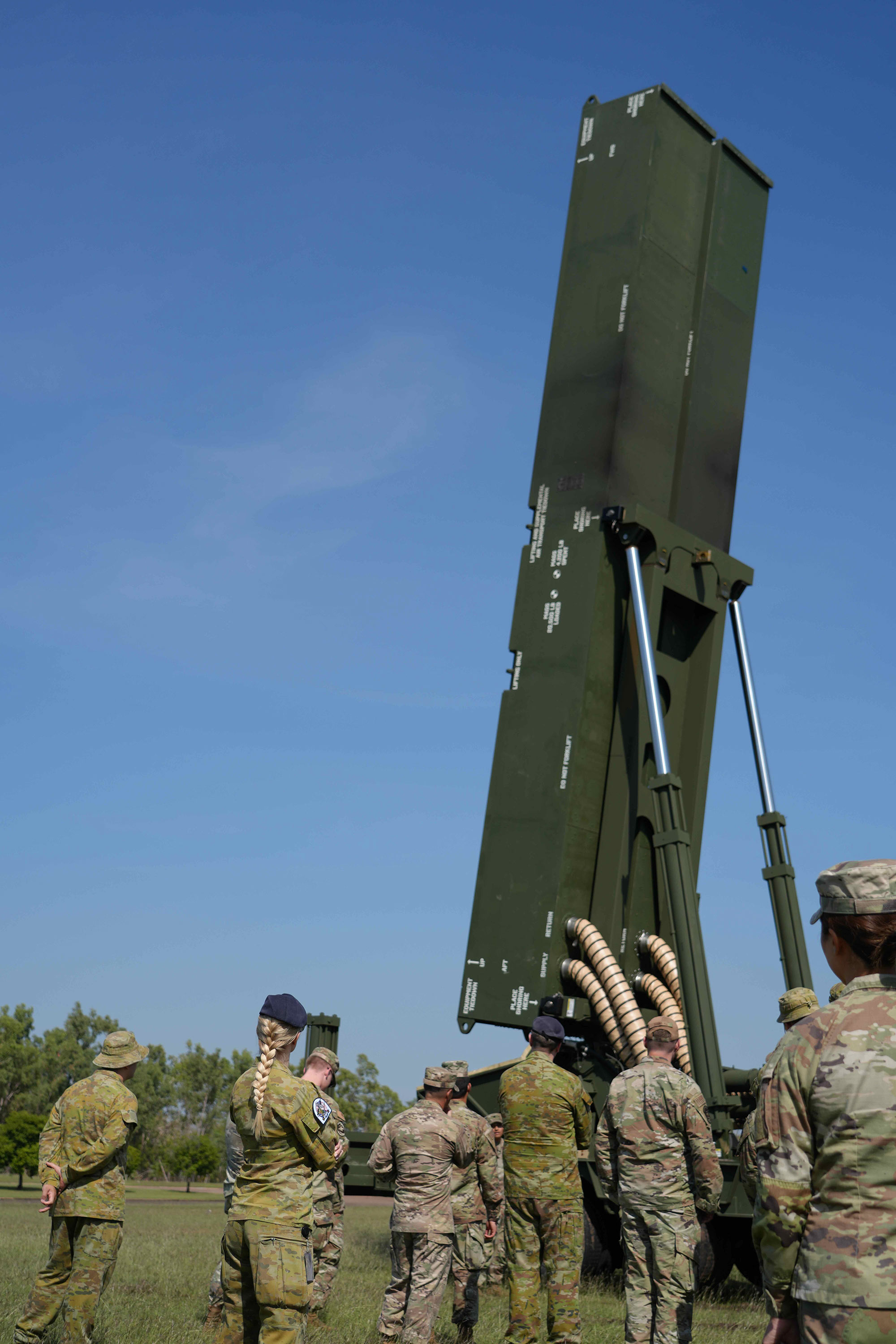
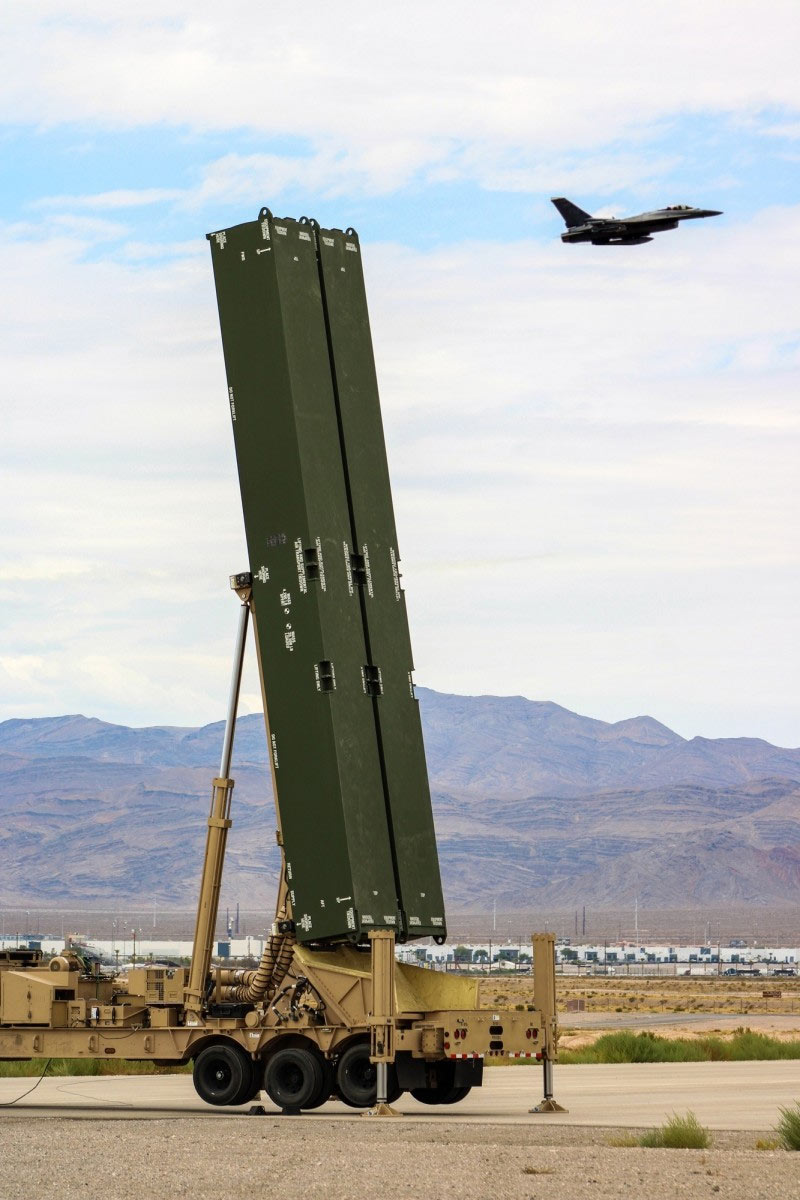
This is also where the broader American dilemma comes into view. The United States has immense resources, a top-tier scientific base and deep experience with complex weapons systems. Yet its most ambitious projects often get stuck in the transition from prototype to reliable arsenal. Dark Eagle is precisely such an example. For years it was a symbol of the future, then a symbol of delay.
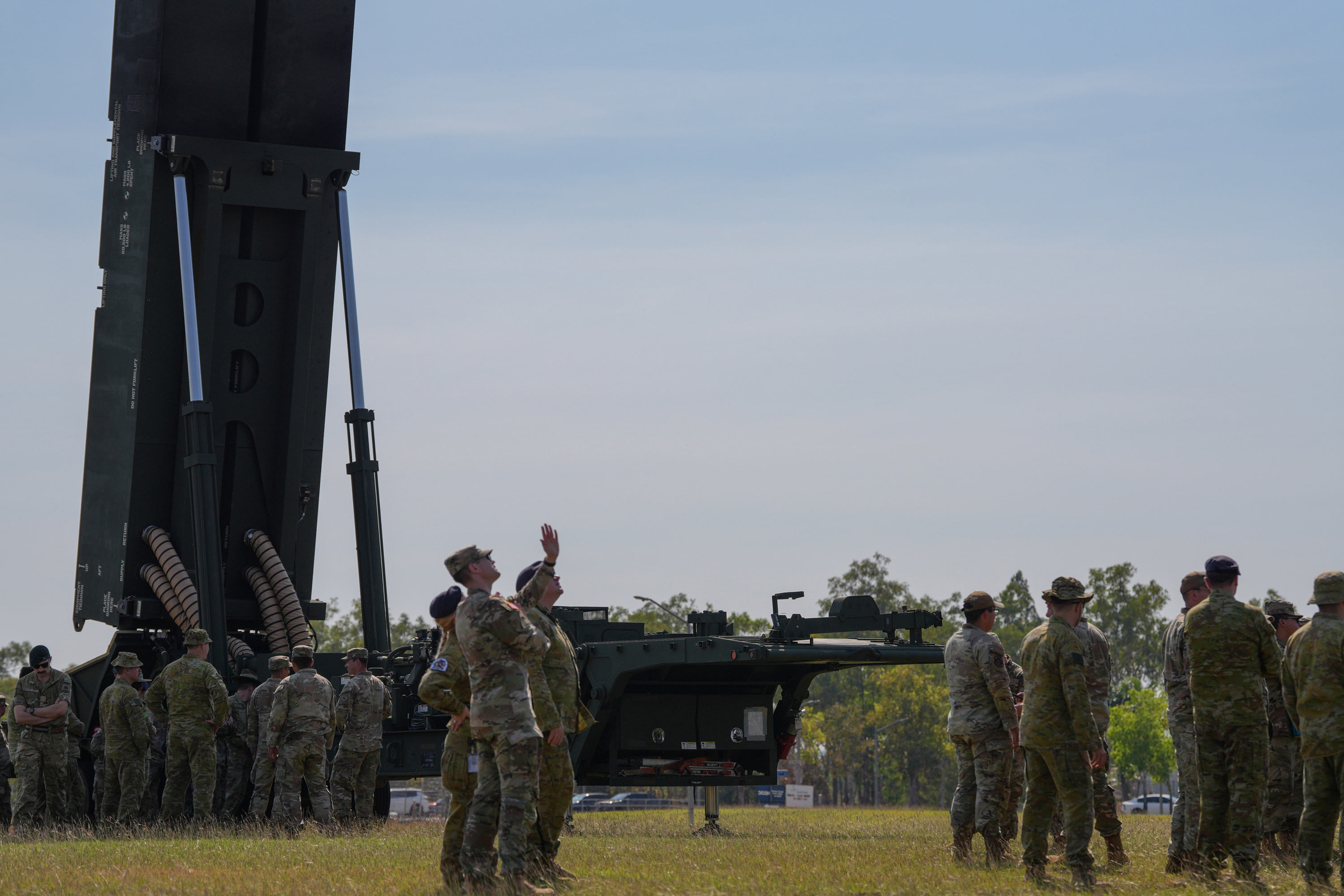
This happens to America because, to put it bluntly, its military system often becomes too large for its own ambitions. The Pentagon launches multiple programs at once, brings in a vast network of companies and subcontractors, and then the technical requirements keep expanding. Every part of the project becomes expensive, slow and bureaucratically burdensome. With hypersonic weapons, there is an additional problem: America wants to develop a conventional missile of exceptional accuracy. That is far more demanding than a system whose primary function is to serve as a nuclear threat, as in Russia’s case.
What Dark Eagle can hit, and how it works
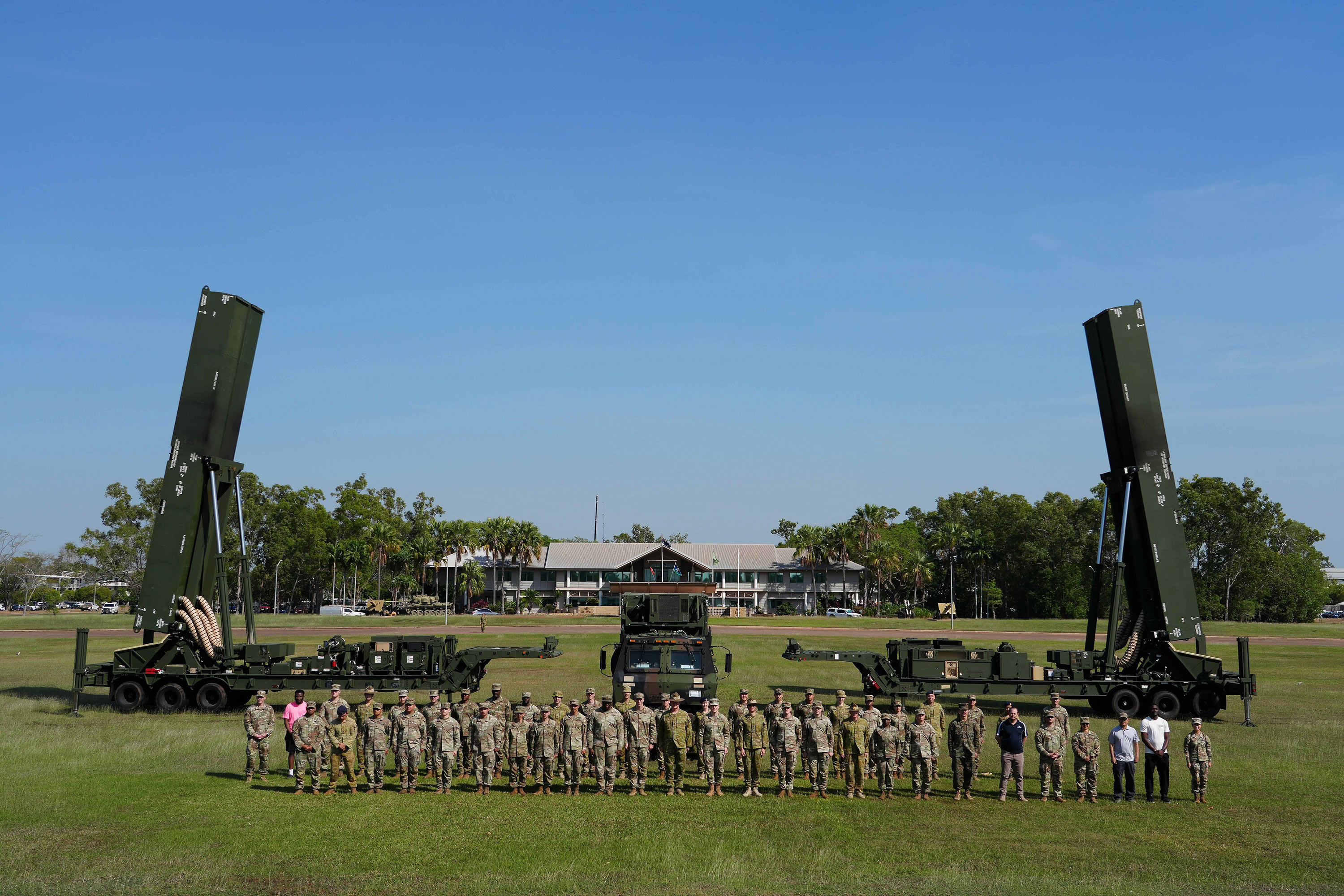
Dark Eagle is a land-based, long-range hypersonic system. Its range is most often given as roughly 2,800 kilometers, placing it in the category of weapons capable of striking deep targets well beyond the immediate battle zone. At its core, it is a missile launched by a rocket booster, after which the hypersonic glide body continues toward the target at very high speed and along a variable trajectory.
Dark Eagle’s destructive power comes from its conventional warhead, its immense kinetic energy and its ability to hit a target in a very short time.The key difference from a classic ballistic missile lies in the way it approaches the target. A ballistic missile follows a more predictable path through the upper atmosphere and space, though it too can be extremely difficult to intercept. A hypersonic glide body flies lower, maneuvers, and gives enemy defenses less time to assess the situation. That combination of speed and maneuverability makes detection and interception harder.
Dark Eagle’s destructive power comes from its conventional warhead, its immense kinetic energy and its ability to hit a target in a very short time. Public details about the warhead remain limited, but the military logic of the system is clear. It is designed for expensive and important targets that must be destroyed quickly, before they can be moved or hidden.
In Iran, the most important targets would be mobile ballistic missile launchers. Their value lies in their survivability. If they are hidden in tunnels, moved inland or concealed among decoy positions, the rhythm of an American air campaign begins to falter. Dark Eagle is supposed to allow a strike the moment the target is detected, before it can move again.
This is also where the system’s limits become apparent. Hypersonic speed by itself does not solve the problem of finding the target. The missile may arrive quickly, but it still has to know where it is going. A mobile launcher that has already left its position, a convincing decoy, or a faulty command assessment can turn even the most expensive weapon into a political and military failure.
America’s lag in the race for speed
For years, the hypersonic race has carried a strong symbolic charge. Through systems such as Kinzhal, Zircon and Avangard, Russia has built the image of a state that was the first to enter the new missile era operationally. China has developed its own family of systems, especially the DF-17, associated with a hypersonic glide vehicle and regional deterrence in the western Pacific. The United States, meanwhile, has invested enormous sums but has been slower to field a deployed system that commanders can actually use.
America long enjoyed the luxury of conventional superiority through its air force, navy and global bases. That luxury has diminished.America’s problem lies in the transition from technology to operational routine. Test flights are only the first stage. The Army wants a system that can be transported, guarded, launched, maintained and integrated into a command network. If any part of that chain fails, the project remains below the level of a real arsenal.
China built its advantage around a clear geopolitical need. Its hypersonic and ballistic arsenal has been shaped around the western Pacific, Taiwan, US bases and aircraft carriers. Russia built its advantage through a combination of strategic deterrence and, later, battlefield experience in Ukraine. America, by contrast, long enjoyed the luxury of conventional superiority through its air force, navy and global bases. That luxury has diminished as its adversaries have developed systems designed to deny access and threaten US bases. The strongest example is Iran itself, whose drones the United States has no strong answer for.
That is why Dark Eagle now appears as a belated but serious American answer. Russia and China entered the phase of deployed hypersonic systems earlier, and the United States is now trying to accelerate the transition from expensive developmental ambition to a politically usable weapon. Iran matters in this story because it offers a different terrain from the Pacific and Eastern Europe.
Oreshnik, DF-17 and different logics of deterrence
Dark Eagle, Russia’s Oreshnik and China’s DF-17 are often placed under the same hypersonic label, but they represent very different military ideas. The DF-17 is a Chinese medium-range system with a clear regional function. Its task is to raise the cost of any American intervention in a crisis over Taiwan or the South China Sea.
Oreshnik belongs to a different logic. Russia presents it as a medium-range hypersonic ballistic system with multiple warhead elements. After its use in Ukraine, Oreshnik also acquired a powerful political function. Moscow portrays it as a weapon that can hit Europe and bypass Western defense systems. Range estimates vary from several thousand kilometers upward (more on Oreshnik: In-Depth Analysis: Oreshnik — Between Myth and Metal).
Dark Eagle has a different purpose. It is intended to serve US commands across different theaters, from the Pacific to the Middle East, although the Indo-Pacific was its initial strategic focus. That universality comes at a price. A system that must suit different conditions inevitably becomes much more complex. And of course, the moment we say "more complex," the first association should be "more expensive" — and that would be correct. The exact cost of a single Dark Eagle missile is not known, but speculation runs as high as tens of millions of dollars. One specific estimate puts it at as much as $41 million per missile.
The comparison with Oreshnik is especially interesting because of the psychological dimension. By using such a weapon in Ukraine, Russia sent a message to the West. By using its own hypersonic weapon now, America would send a message to its competitors, even if the actual damage caused by Dark Eagle were not especially great. The question, of course, is whether this will happen at all, or whether the announcement of Dark Eagle’s arrival is part of America’s rhetoric for a crisis it created and now cannot escape.
Launching Dark Eagle at Iran would certainly be a risky move, because America’s rivals would be watching every detail. A failure — which could occur at various stages — would be detected and recorded immediately. Politically and strategically, America can hardly afford that, especially at a moment when its dominance is already being seen as the fading residue of a once-mighty empire. The risk also lies in the fact that Dark Eagle is probably not fully ready for this kind of action. But the conflict with Iran is happening now, and it is increasingly under Iran’s control, as today’s fierce strike on Kuwait once again confirms.
On the other hand, even the announcement that Dark Eagle is being "prepared" for the Iranian front is risky. If it does not appear in the end, speculation will quickly turn to the reasons why — and the conclusion will soon be that America is still not ready to join the prestigious hypersonic club.
Sources
- Calibredefence.co.uk Dark Eagle: US hypersonic missile enters production https://www.calibredefence.co.uk/dark-eagle-us-hypersonic-missile-enters-production/
- Fpri.org Dark Eagle in the Desert: Considerations for Deploying LRHW to CENTCOM https://www.fpri.org/article/2026/05/dark-eagle-in-the-desert-considerations-for-deploying-lrhw-to-centcom/
- Aol.com US seeks to deploy $15M ‘Dark Eagle’ hypersonic missile for the first time against Iran: report https://www.aol.com/articles/us-seeks-deploy-15m-dark-031429000.html
- Army.mil Behind Dark Eagle: Contracting at the Speed of Hypersonic https://www.army.mil/article/291834/behind_dark_eagle_contracting_at_the_speed_of_hypersonic
- Everycrsreport.com What Is the Army's Long-Range Hypersonic Weapon? https://www.everycrsreport.com/files/2025-04-24_IF11991_431be8bdc3114b6aff93e0c5a13c1cad4d572050.html
Comments