
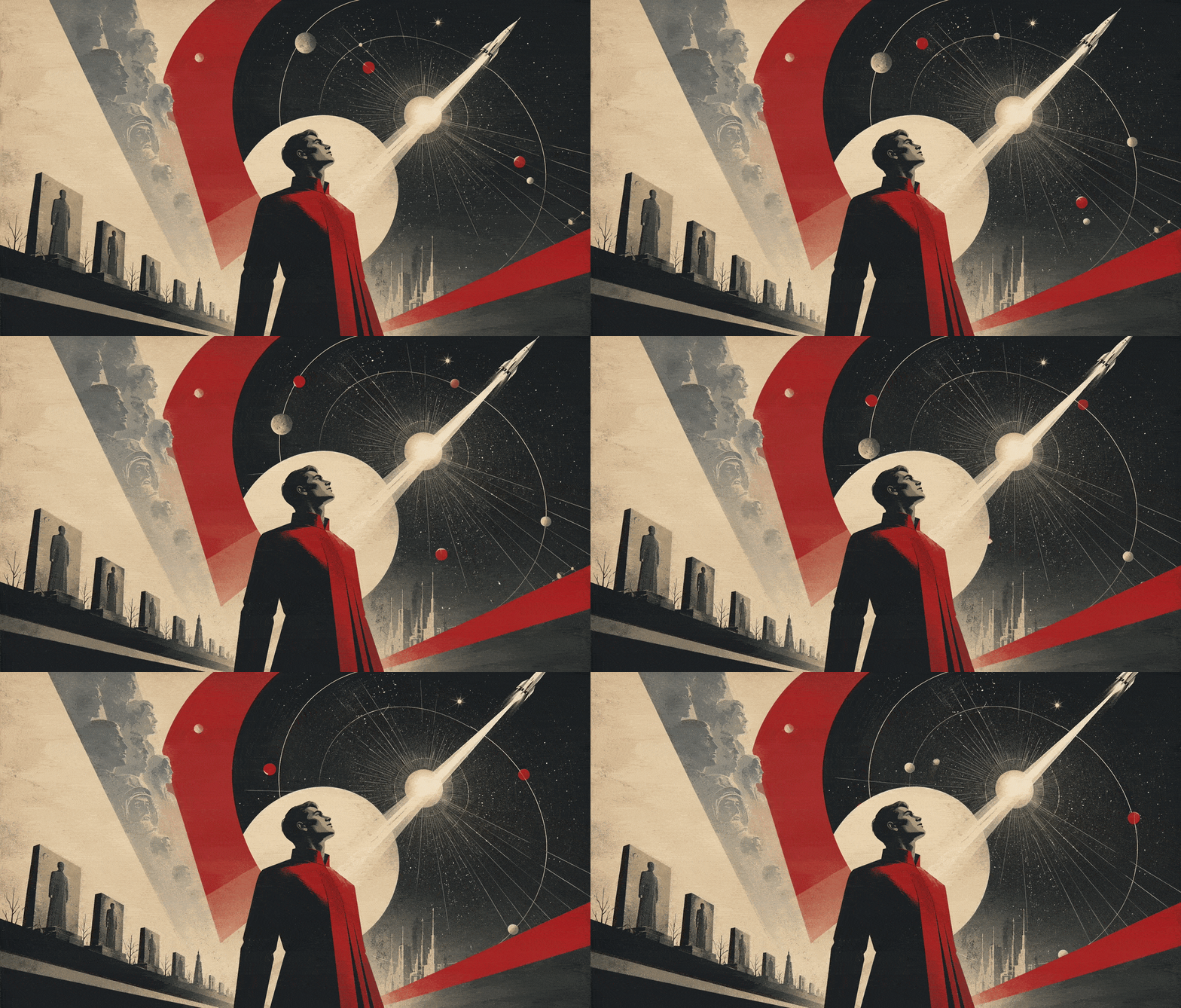
There are ideas that at first glance seem to belong in a history of madness, only to reveal themselves, on closer inspection, as codes for an entire age. Russian cosmism is definitely one of them. So many things meet there: Orthodox eschatology, modern science, revolutionary politics, space technology, and the oldest human suffering of all — the fact that everyone dies, and that every civilization, however powerful, eventually comes to a halt before the graveyard.
At the center of this strange intellectual galaxy through which we will be sailing today stands Nikolai Fyodorov, a modest Moscow librarian and one of the strangest thinkers of the modern age. His thought begins with a simple, yet terrifyingly radical claim: death must be defeated. The dead must be brought back. Humanity has a moral duty to unite around the greatest possible task — the resurrection of everyone who has ever lived.
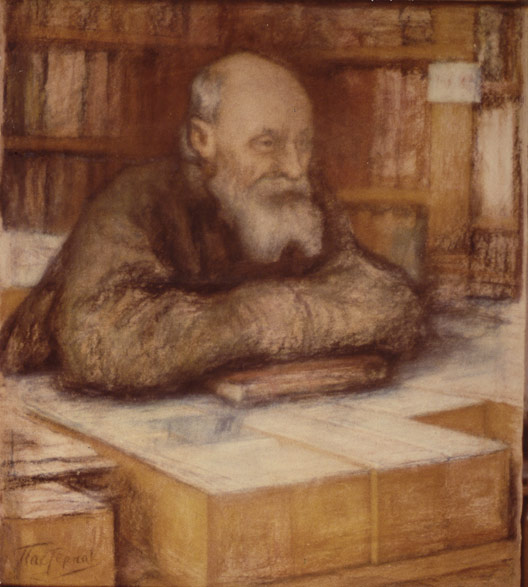
There is something magnificent, comic, and dangerous in this idea. It is religious, but it does not want to wait for a miracle. It is scientific, but it refuses the cold indifference of the laboratory. Finally, it is also revolutionary, but its goal reaches beyond the state, class, and social order. Fyodorov does not merely want to change society. He wants to change the conditions of existence.
Death as humanity’s first enemy
Every politics has an enemy. For some, it is the tyrant; for others, capital; for others still, empire, chaos, decadence, or poverty. For Fyodorov, the first and greatest enemy is death. It is not merely a natural fact to be accepted with dignity. It is humiliation, dissolution, the rupture of love, and the clearest proof that humanity has not yet become a mature being.
This is where his strangeness begins. Modern people often imagine progress as longer life, less pain, greater comfort, and a safer world. Fyodorov goes much further. Extending the lives of the living is not enough. The true moral task must include the dead as well. All our ancestors, all the forgotten, all the poor, all those who vanished without a grave or a name — all of them must be restored to existence.
And even before we get into the details, you will agree that his idea surpasses almost everything else in this "domain." Today’s fantasy of immortality is mostly individual. A rich man wants to live longer. A tech billionaire wants to escape the decay of the body. A digital dreamer wants to upload consciousness into some future medium. Fyodorov’s vision has an entirely different moral geometry. It embraces the whole human race.
In that sense, cosmism may be the strangest form of radical solidarity.
Fyodorov’s thought sounds like mysticism, but its inner logic, as we will see, is technical. If death is a problem, then humanity must develop the means to solve it. If the dead are lost in the past, then history must become an instrument of return. And if nature has so far ruled over man through hunger, disease, and the decay of the body, then man must learn to govern nature.
How to carry out resurrection
The wildest question in Fyodorov is also the most concrete one. How would this be done, at least in theory? How could a person be assembled again out of graves, ashes, history, and oblivion? This is where cosmism becomes unusually interesting, because it does not stop at religious hope. It tries to imagine a procedure.
The first step is knowledge. Humanity must gather every possible trace of those who once lived: names, genealogies, remains, objects, images, records, memories, and anything else that confirms that a particular person once occupied a place in the world. In this sense, history stops being a story about the past and becomes an investigative discipline for a future resurrection. The archive is no longer a cabinet full of documents. The archive is the beginning of return.
The second step is material reconstruction. Fyodorov does not imagine resurrection as the soul’s escape into another world, but as the return of the body. For him, the human being is a concrete being, made of matter, relationships, memory, and origin. If the body has decomposed, then the science of the future must find a way to gather again what has been scattered. There is an almost alchemical courage in this. Dust is not merely dust. Perhaps, he believed, it is only a temporarily unreadable record.
The third step is the restoration of the person. The body alone is not enough. Biography, consciousness, character, voice, gaze, and personal continuity must also be restored. Here Fyodorov’s thought comes close to our present-day fantasies about data, DNA, and digital traces, even though it comes from a completely different world. He did not have our knowledge of algorithms, but he had the same intuition that a person leaves traces somewhere, and that future science might learn to read what we still do not know how to read.
The fourth step is the transformation of nature. Resurrection cannot be an isolated trick, as if the dead could simply return into the same order of disease, hunger, chance, and decay. Nature, which produces death, must be brought under rational control. Epidemics, disasters, climate, food, energy, and the very processes of bodily deterioration must all be mastered. For Fyodorov, victory over death therefore requires a new organization of the entire planet.
The fifth step is social mobilization. This cannot be the task of a small elite, a secret laboratory, or a single chosen people. The "common task" requires humanity to become a cooperative species. Everyone must take part, because everyone is born of the dead. Every human being exists thanks to a chain of ancestors who disappeared so that he or she could be here. Resurrection is therefore also the repayment of a debt.
Here we see just how much more radical Fyodorov was than later dreams of immortality. He does not imagine a privileged individual escape from one’s own death. He imagines the immense return of everyone. It is a technical utopia, but also a moral reckoning. The world of the living owes a debt to the world of the dead.
Of course, an enormous abyss remains between the idea and its execution. Fyodorov has no laboratory protocol, no actual biology of resurrection, and no practical model for restoring consciousness. His procedure is more a metaphysical blueprint than a scientific plan. But that is precisely what makes it interesting. It shows us what happens when religious longing tries to put on the work clothes of science.
Was Fyodorov mad, or did he simply see too far?
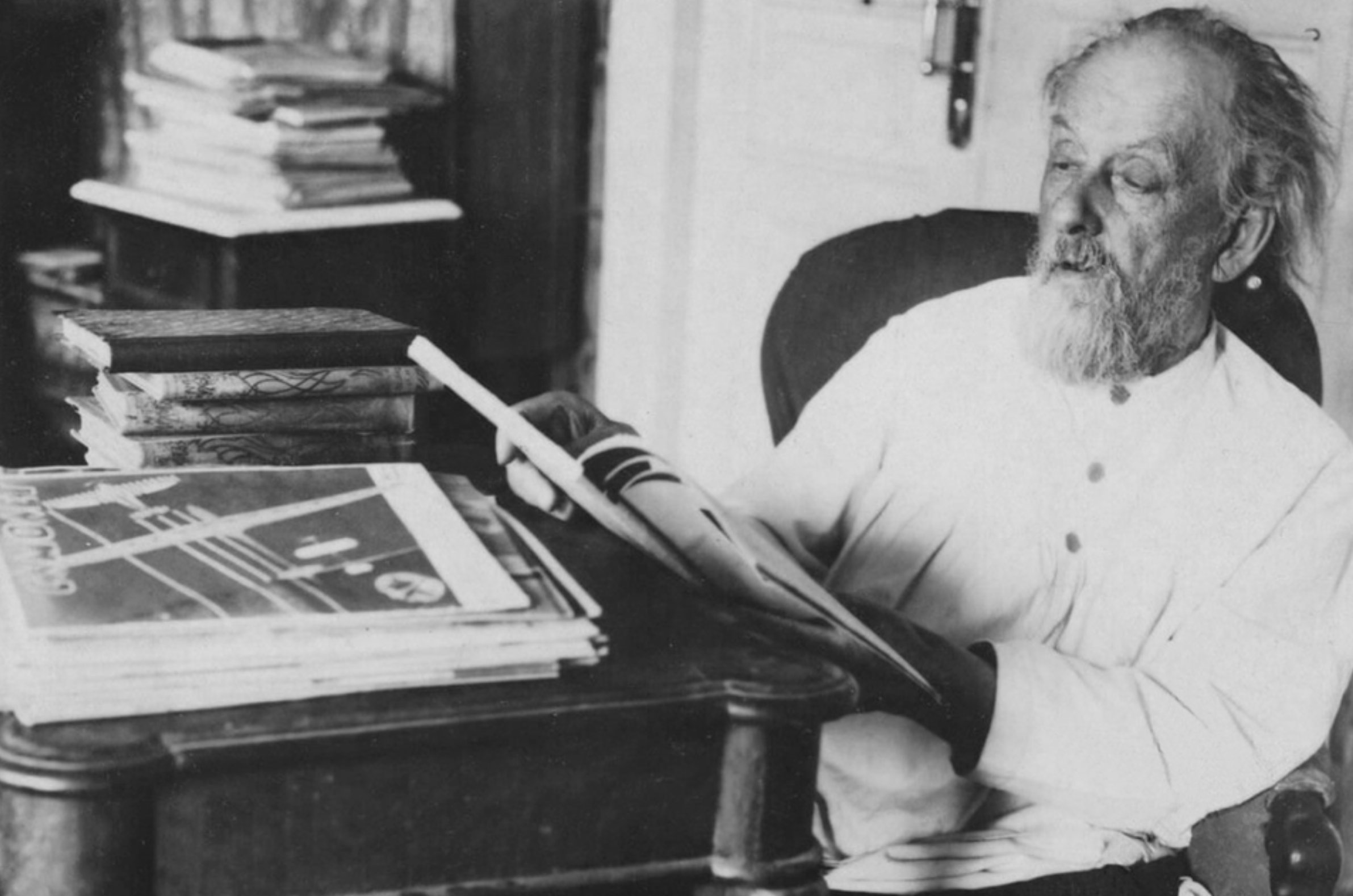
Before declaring Fyodorov a madman, it is worth imagining him in the real scale of his life. Nikolai Fyodorov was not the charismatic leader of a sect, a court prophet, or a salon eccentric inventing cosmic fantasies from the comfort of an aristocratic world. He was a quiet, modest, almost ascetic man, a teacher and librarian, someone who spent most of his life among books, catalogues, readers, and archives. His everyday life was incomparably humbler than his ideas.He was born in 1829 as the illegitimate son of Prince Pavel Gagarin and a woman of lower noble status, which placed him on the margins of the social order from the very beginning. He did not fully belong either to the aristocratic world or to the common people. Later he worked as a teacher in the provinces, and then as a librarian at Moscow’s Rumyantsev Museum, one of Russia’s great institutions of knowledge. There he met people who would later shape Russian culture and science. Among them was Konstantin Tsiolkovsky, the future pioneer of astronautics, for whom Fyodorov in a sense opened the door to the cosmos.
This is an important detail because it shows that Fyodorov was not merely an isolated oddball speaking into the void. His ideas certainly seemed unbelievable, but they circulated through real intellectual circles. Tolstoy knew him. Dostoevsky had heard of his thought. Tsiolkovsky remembered him as an extraordinary figure. Around him there formed that particular Russian atmosphere in which religion, science, poverty, apocalypse, and the technological future could sit at the same table without feeling that they cancelled one another out.
So, was he "mad"? The fairest answer is that the question may be wrongly framed. Fyodorov’s ideas sound mad from the perspective of everyday reason, but everyday reason is often only a device for accepting the existing state of things. Reason tells us that death is natural, that the graveyard is final, that the dead are dead, and that civilization must concern itself with what is feasible. Fyodorov attacked precisely that calm obedience before the greatest "defeat" of the human being.
We can read his resurrection of the dead literally, as an impossible scientific-religious project. But we can also read it as a vast question addressed to modern man. What is progress worth if it forgets the dead? What is knowledge worth if it does not serve the deepest human pain? And perhaps this too: what is the point of progress if we restrict ourselves and give up on imagining the impossible?
Fyodorov may have been an eccentric thinker, but he was not a shallow one. His "madness" had structure. It contained a moral logic that went further than neat philosophical systems. He wanted to force humanity to stop treating death as a private tragedy and to begin seeing it as a common task. In a sense, he was calling for militant resistance. One could say that, through this approach, he was dismantling — or directly attacking — the ever-present fear of death.
Why the resurrected need space
One of the most fascinating motifs of Russian cosmism is the museum. For us, a museum is often a cultural institution, a place of school visits, national memory, and quiet dust. In Fyodorov, the museum acquires an almost cosmic function. It becomes the space in which humanity preserves the traces of its dead, not out of sentimentality, but because of a future task. The next frontier, however, is the one that has no frontier: space.
In cosmism, space is not a romantic backdrop for human curiosity, nor merely an adventure for geniuses gazing at the stars. Space appears as the practical consequence of an incredible moral decision. If humanity is truly to resurrect all the dead, Earth would quickly become too small.
Here cosmism turns from a religious drama into a problem of space. Billions and billions of restored people would need bodies, room, communities, and a future... A planet that already struggles to sustain the living could not also accommodate all the dead. The cosmos then becomes a continuation of the graveyard, but a graveyard transformed into a new settlement.
There is a strange beauty in this idea. In the classical religious vision, heaven is the place of salvation because it belongs to God. For the cosmists, heaven becomes the place of salvation because man must first conquer it technically. The rocket replaces the angel. Orbit replaces ascension. Mars, the Moon, and distant worlds are no longer merely objects of astronomy, but future homes for a resurrected humanity.
Of course, this vision also contains the frightening vastness of human ambition.
This is the moment when cosmism touches the very core of modernity. Modernity does not accept limits as sacred. It sees a mountain and builds a tunnel. It sees night and switches on an electrical grid. It sees disease and searches for a cure. Fyodorov takes that logic to its end. If all limits are to be questioned, then the greatest limit must be the first to be confronted.
From mystical heresy to the Soviet cosmonaut
Russian cosmism arose before the Soviet space program, but later Soviet space mythology carries its distant echo. We should not imagine a straight line running from Fyodorov’s philosophy to Gagarin’s orbit. History rarely works so neatly. Still, there is a deep affinity between these worlds. Both believe that man must outgrow his earthly confinement.
Konstantin Tsiolkovsky, the pioneer of astronautics, often appears as the bridge between the cosmist imagination and the technical reality of the space age. In him, the dream of space begins to be translated into the language of calculation, propulsion, construction, and flight. This is the crucial transition. The cosmos leaves the realm of pure vision and enters the realm of engineering feasibility.
The Soviet project took from that legacy whatever it could fit into its own mythology. Open talk of the resurrection of the dead did not belong to the state’s official materialism. But the idea that man could master nature, reshape himself, and break out of the boundaries of the old world fit powerfully into the revolutionary idea. The new man was not supposed to be merely a political subject. He was to be a being of the future.
That is why the Soviet cosmonaut acquired an almost sacred aura. He was worker, soldier, technician, and icon all at once. His body entered a metal capsule, passed through the fire of launch, and appeared above the planet as proof that history had entered a new phase. In traditional religion, the saint approaches heaven through asceticism. In Soviet mythology, the cosmonaut approaches heaven through science, discipline, and collective industrial will.
For that reason, Gagarin’s smile was not just the smile of one man. It became the face of an age that believed the future could be manufactured. Behind him stood factories, design bureaus, mathematicians, workers, the military system, and a vast state that turned space into proof of its own historical legitimacy.
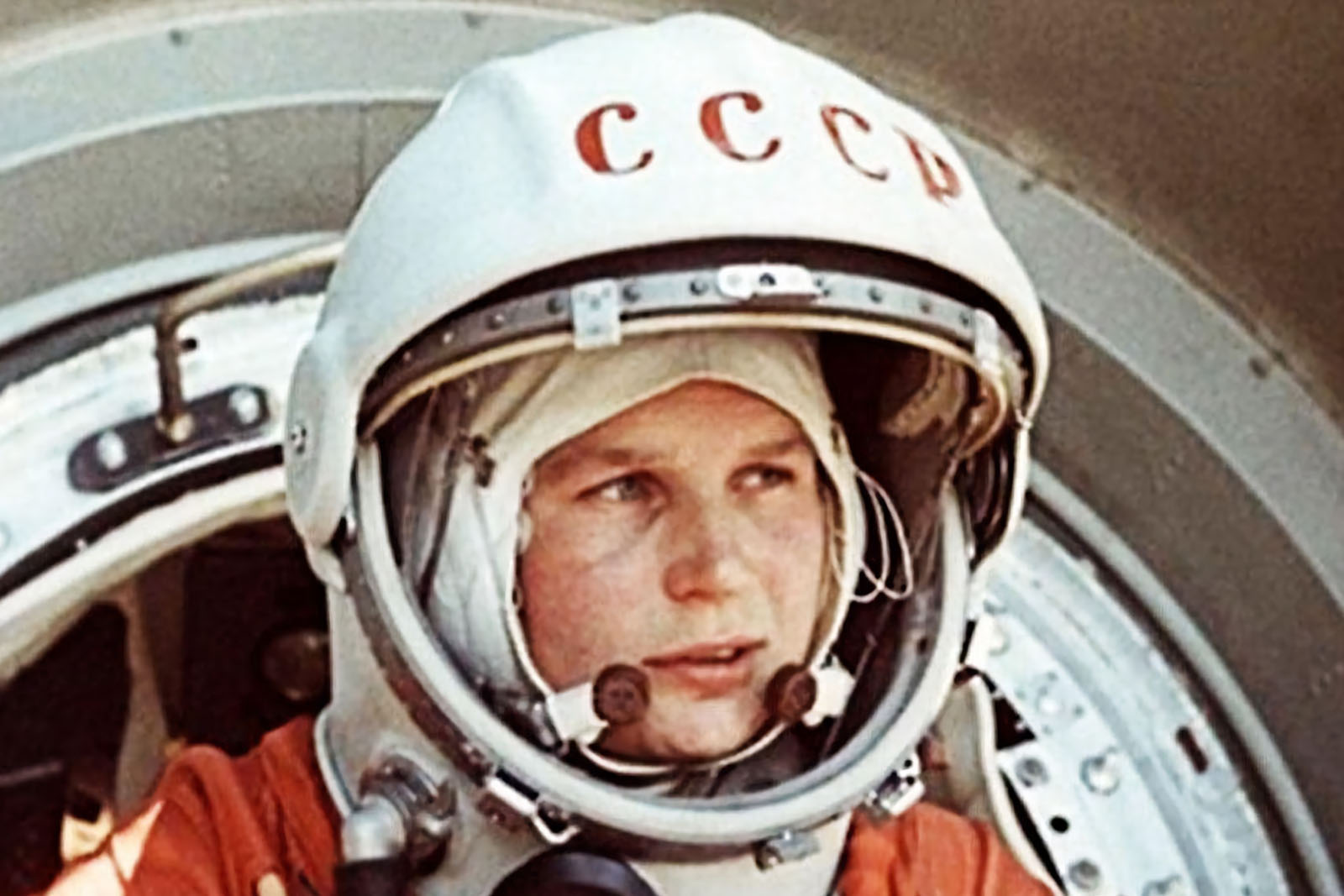
At that moment, the cosmist dream loses some of its religious strangeness and takes the form of a state myth. Instead of the resurrection of the dead comes the conquest of orbit. Instead of a universal family of the living and the dead comes the socialist humanity of the future. And instead of Fyodorov’s moral tenderness toward the ancestors comes the monumental iconography of progress.
But the deeper impulse remains recognizable. Man does not want to remain where nature has placed him. Earth becomes a point of departure, not a final home.
Silicon Valley as privatized cosmism
Today, Fyodorov sounds contemporary again because his wildest questions are returning in a colder, more expensive, and technologically more convincing form. The anti-aging industry, cryonics, artificial intelligence, and dreams of digital consciousness are once again circling the same old unease. Death is increasingly described as a technical problem. The body is treated as a system to be repaired. The brain is imagined as information that one day might be moved, copied, or reconstructed.
In this sense, Silicon Valley looks like a secular, privatized, market-adapted cosmism. It does not speak the language of resurrection, the common task, and universal kinship. It speaks the language of startups, biotechnology, investment, optimization, and extended performance. Yet beneath that language lies the same unease. A person with enormous capital stands before the same end as a poor person. The difference is that the former begins to believe that, with enough money, something can be done about it.
Here we see just how much stranger and morally more demanding Fyodorov was than many of today’s transhumanists. His dream was universal. No one was to remain dead. Today’s technological dream often looks selective. Long life becomes a service. Biological enhancement becomes a privilege. The idea of immortality appears as a luxury property in the future.
That is why Fyodorov still unsettles us today and forces us to think again.
Perhaps it will turn out that victory over death is forever beyond our reach. Perhaps all of today’s ambitions will end up as a new version of alchemy, only with better laboratories and more expensive investment funds. But cosmism does not lose its importance because of that.
Modern civilization often claims to be cold, rational, and liberated from old myths. Yet its most ambitious projects still dream of salvation. They have merely changed the language. Instead of paradise, they speak of space. Instead of the soul, they speak of information. Instead of resurrection, they speak of bodily renewal, mind uploading, or radical life extension.
Fyodorov, in all his bizarreness, was more honest. Russian cosmism remains a mirror in which we can see the hidden desire of modern man: the desire for the universe not to be a cold void, but the final place of encounter; for history not to end as an archive of losses. And, in the end, the desire for the revolution one day to come even for death!
Sources
- Iep.utm.edu Fedorov, Nikolai Fedorovich | Internet Encyclopedia of Philosophy https://iep.utm.edu/fedorov/
- Archiv.hkw.de Art Without Death: Russian Cosmism https://archiv.hkw.de/en/programm/projekte/2017/art_without_death_russian_cosmism/start.php
- Global.oup.com The Esoteric Futurism of Nikolai Fedorov and His Followers https://global.oup.com/academic/product/the-russian-cosmists-9780199892945
- English.elpais.com Russian cosmism: inspiring Putin and Musk with ideas of immortality and space colonization https://english.elpais.com/science-tech/2023-08-03/russian-cosmism-inspiring-putin-and-musk-with-ideas-of-immortality-and-space-colonization.html
- E-flux.com Art as the Overcoming of Death: From Nikolai Fedorov to the Cosmists of the 1920s - Journal #89 March 2018 - e-flux https://www.e-flux.com/journal/89/180332/art-as-the-overcoming-of-death-from-nikolai-fedorov-to-the-cosmists-of-the-1920s/
- E-flux.com Russian Cosmism https://www.e-flux.com/books/167634/russian-cosmism
Comments