
On a map, straits look like thin lines, small cuts between lands that carry grand names and large armies. In real history, it is precisely on these narrow pieces of sea that empires, trade routes and strategic illusions break. The Dardanelles showed this already in the age of Gallipoli, when a few dozen kilometers of water swallowed a vast amount of military energy and turned a naval venture into a lesson on the limits of power. Hormuz carries that old logic today into the age of tankers, drones and oil futures.
Every era loads a strait with its own burden. Once it was grain, cannons and the right of access to the open sea; today it is oil, liquefied gas, insurance premiums and the price of energy in Asian metropolises. Geography remains the same, only the goods change, while the language of diplomacy receives a new costume. That is why today’s comparison between the Dardanelles and Hormuz is more than a historical game. It raises the question of how great powers approach narrow passages when they sense that the order is changing and when a local state wants to restore political weight to the space lying before its own shore.
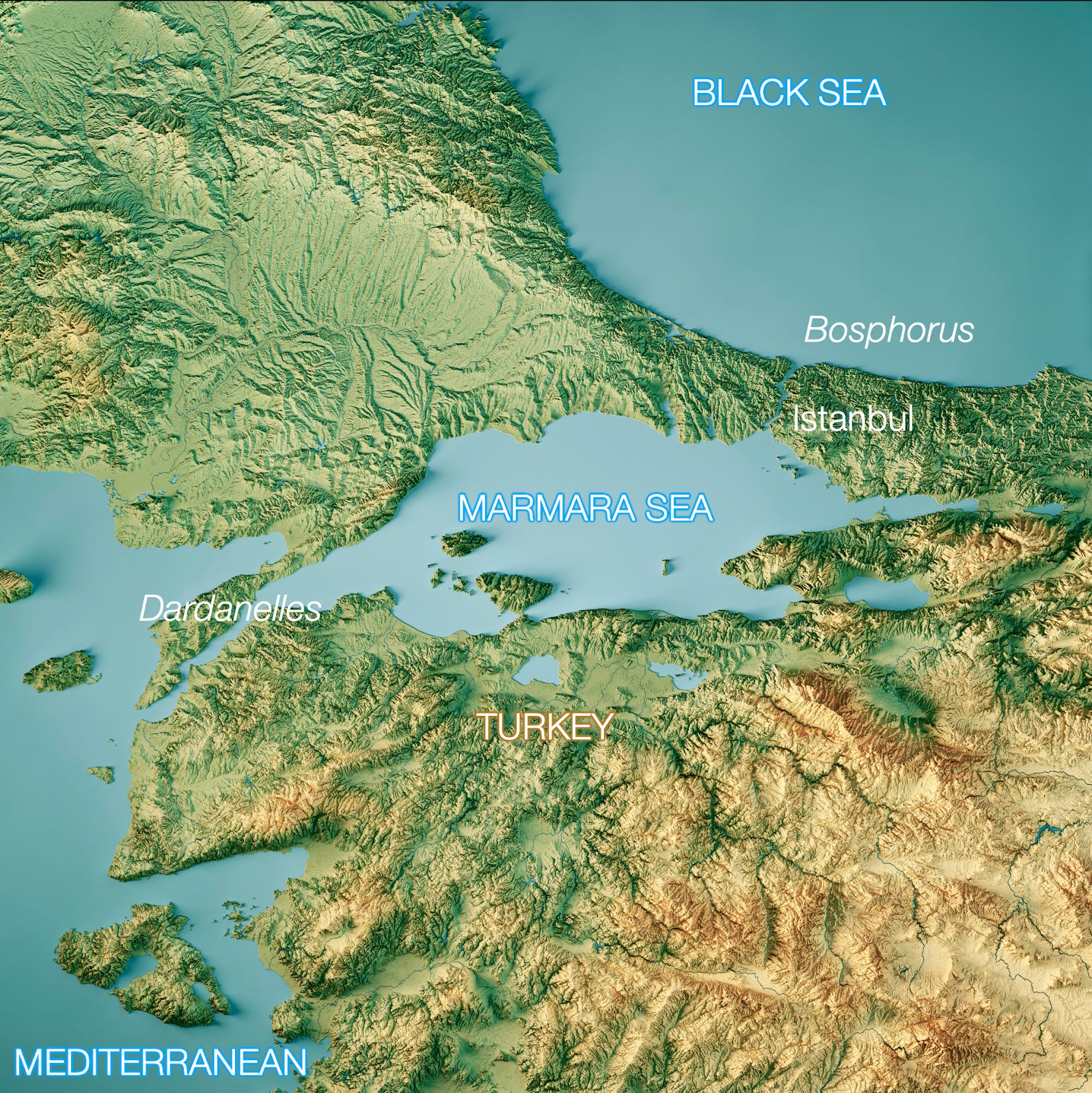
In that framework, the Dardanelles offer a fascinating historical pattern. After the First World War, the victorious powers tried to turn the Turkish Straits into an international space governed by their own rules. Two decades later, Turkey emerged from that regime stronger, better armed and with a much firmer hand over the passage. Anyone who wants to understand how far Iranian ambition in Hormuz could go must first look at how Ankara turned its own weakness into a diplomatic reversal.
When the World Tried to Take Turkey’s Control of the Sea Away
After the collapse of the Ottoman Empire, the victors of the war regarded the Dardanelles and the Bosporus as far too important a piece of the world to remain in the hands of a defeated state. In practice, this meant that a crucial maritime artery would be removed from full local sovereignty and placed under international supervision. The straits became a textbook example of a new kind of control in which the "general interest" very quickly turns into an instrument of the balance of power.
The Treaty of Sèvres of 1920 was the peak of that approach. Navigation was opened to merchant and warships, while control over the entire regime was to be handled by a special international apparatus. That detail deserves full attention because it sounds almost unbelievable from today’s perspective. The Straits Commission was not merely a diplomatic committee that occasionally issued reports. It had its own organization, its own budget, its own rules, even its own flag, and on top of that, its own special police personnel. The sea before Istanbul was given an administration resembling a small statelet inserted into the body of a defeated country.
That model reveals a great deal about the spirit of the age. The great powers claimed the right to declare a strategic passage a common good at the very moment when the central state was too weak to resist. Behind this stood the entire imperial logic of the early 20th century. Global traffic, security and the balance of power were given universal names, while the real content of that order was a very concrete relationship of power in favor of the victors.
For Turkish political consciousness, understandably, this remained written as a humiliation. For centuries the straits had been the gates of the capital, the gates of the empire and the gates to the Black Sea. That sense of loss later became one of the most important driving forces of Turkish diplomacy.
Sovereignty Under a Glass Bell
The Turkish War of Independence changed the balance of power and opened the way to the Treaty of Lausanne in 1923. The new republic under Mustafa Kemal Atatürk managed to overturn the harshest parts of the postwar imposition and secure international recognition of its sovereignty. Yet the straits regime remained arranged in such a way that Turkey still lived with a major restriction on its own doorstep. Navigation remained broadly open, the straits were demilitarized, and the international commission continued to exist under the new treaty framework.
That construction looked orderly and reasonable only when viewed on paper. In practice, merchant ships passed through almost without formalities, and fees were tied to specific services such as sanitary stations, lighthouses, pilotage and towing. In a somewhat naive imagination, one often encounters the image that after the First World War Turkey received a large cash register at the entrance to the Dardanelles. Historical reality was arranged differently. The system gave Turkey the form of a state and a limited administrative presence, while the real security lever remained beyond its full reach.
This is where the true weakness of Lausanne lay. Sovereignty was recognized, but it was enclosed under a glass bell of collective guarantees. The great powers promised security for a demilitarized space at a moment when all of Europe was already entering a new era of revisionism, rearmament and the disintegration of the old order. When crises began to unfold in the 1930s in Manchuria, Ethiopia, the Rhineland and elsewhere, Ankara saw ever more clearly that guarantees in international treaties were worth only as much as the great powers were willing to risk to enforce them.
Lausanne therefore carried its future revision within its very core. Turkey had recognition, it had a state, it had diplomatic legitimacy, but the straits still remained an exposed point through which any serious crisis could penetrate directly into the heart of the country. It was sovereignty living under a glass bell, elegantly shaped and strategically fragile.
1936 and the Return of the Straits
When Europe entered a new phase of tension, Turkey seized the moment. In the spring of 1936, Ankara told the great powers that the existing regime no longer provided a real guarantee of security and that changed circumstances required a new agreement. This move was not diplomatic improvisation. It was an example of an extremely precise reading of the international moment. The order of 1923 lived on the assumption that collective security still had meaning. In 1936, Turkey judged that this mechanism had lost its actual significance. Does all of this sound familiar? Of course it does, because we ourselves live in such times: the weakening of NATO, the degradation of the UN’s importance...
The negotiations in Montreux took place in an elegant Swiss setting, far from the gun barrels that were already setting the tone of Europe’s political reality. It is precisely that contrast that gives the whole episode an almost literary force. In the salon space of a lakeside town, decisions were being made about who would keep a hand on one of the key valves of Eurasian security. An interesting detail from that episode reveals how closely even smaller states were watching the change. Romania initially showed hesitation because it saw in every precedent a possible encouragement to its own revisionist neighbors. Turkish diplomats then worked quickly through the Balkan capitals, building support and calming fears.
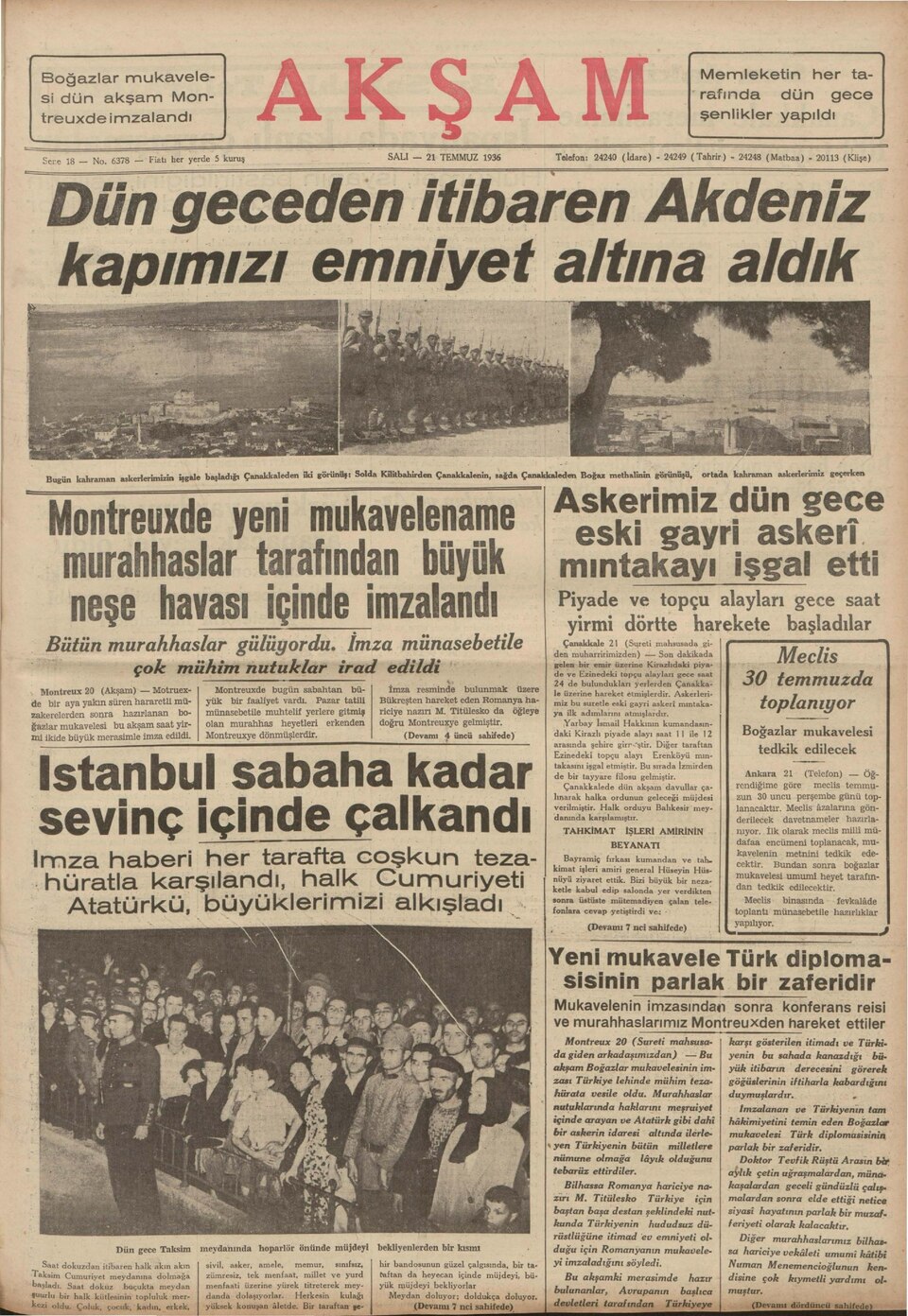
The outcome for Ankara was enormous. The Montreux Convention restored Turkey’s right to remilitarize the straits and transferred the functions of the international commission to the Turkish government. It also established a dense and serious regime for the passage of warships. It introduced advance notification obligations, tonnage limits, restrictions on the number of ships in transit and the rule that navies from outside the Black Sea may remain in the Black Sea only for a limited period of time. Particularly important is the 21-day limit on the presence of non-Black Sea powers in that space, because it was precisely through such technical details that Turkey gained an instrument of lasting oversight over the strategic balance.
The most important powers concerned times of crisis and war. In certain circumstances, Turkey received full discretion over the passage of warships, especially when it is itself at war or when it judges that it faces an imminent threat of war. With this, the straits were returned for the first time after the war to the logic of full state security. Commercial shipping remained broadly open and tied to narrow, specific fees for services maintaining navigation, while the political weight of the regime shifted to the military dimension. Turkey thereby obtained what every serious coastal power seeks when speaking about a strait lying before its own shores: the ability, in a moment of crisis, to decide on the passage of other states’ armed power.
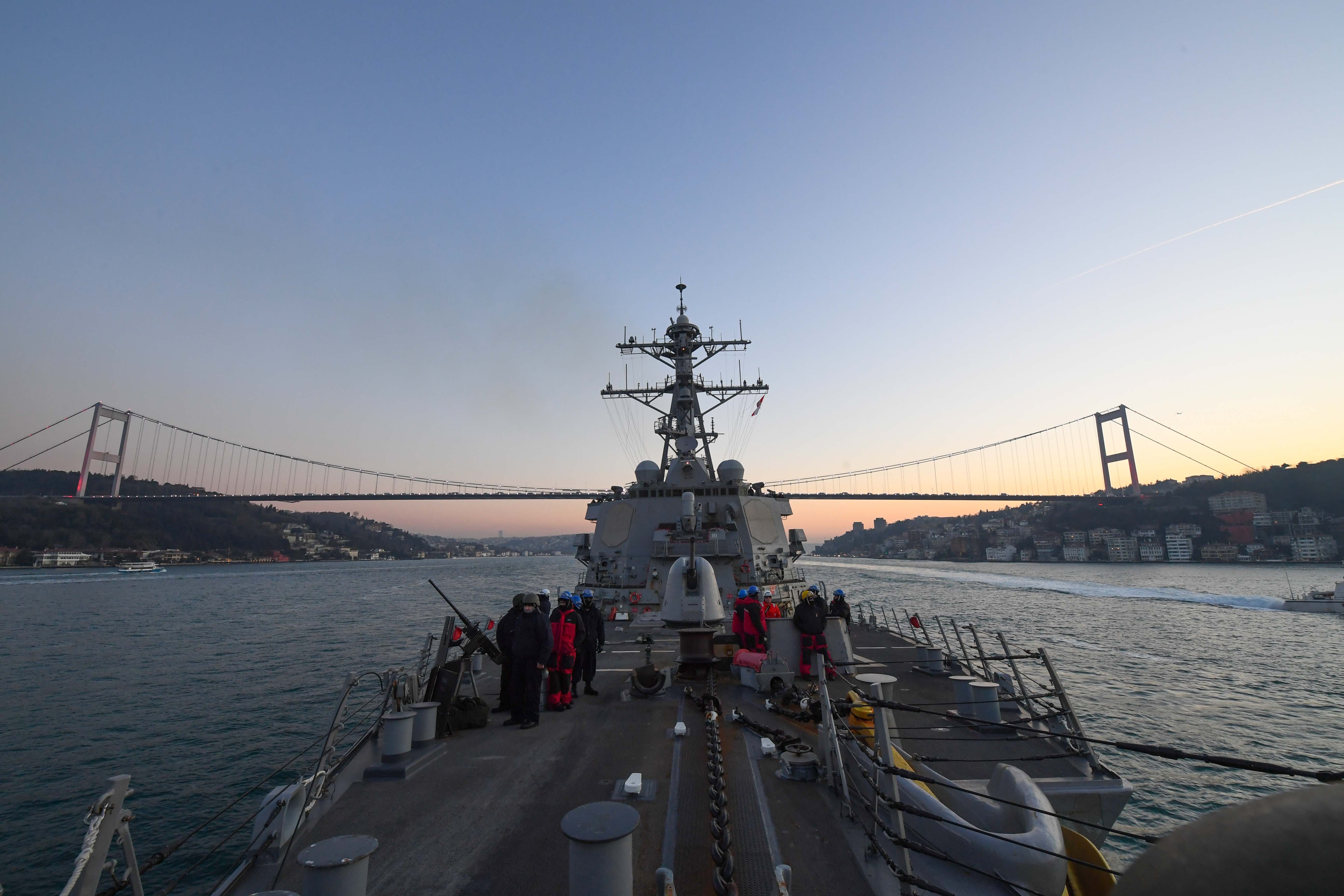
That is the real lesson of Montreux. At the center of the story stands a geopolitical lever, because it is precisely such a lever that gives a state real weight in negotiations. Whoever controls the rhythm of warship passage also controls part of the wider regional balance. From that moment on, the Dardanelles and the Bosporus were no longer merely a maritime route. They became a Turkish instrument of high strategic significance.
Hormuz as the Chokepoint Through Which the Whole World Passes
In the 21st century, the Strait of Hormuz carries a similar weight, only in a far more global sense. Through it, as we have all practically memorized in recent days, passes around one fifth of the world’s oil, and a large share of that energy goes to Asian markets that feed industry, power plants and urban life from India to China. Every slowdown of navigation in Hormuz immediately turns into market anxiety, rising insurance costs and nervousness in countries that depend on imported energy. If the Dardanelles were the key to European and Russian strategic depth, Hormuz today is one of the main switches of global economic daily life.
Geography, meanwhile, works in favor of the coastal states. Hormuz is narrow, visible and vulnerable to every form of asymmetric coercion. The traffic lanes through the strait themselves confirm how narrow the margin is. Interestingly, the existing traffic separation scheme was created back in 1968 with the participation of Iran and Oman, which means that today’s operational order at the very foundation already carries a local signature. That detail is worth remembering because it opens an important political thought. External powers like to speak of freedom of the seas as a self-evident universal category, while everyday navigation in Hormuz has for decades flowed through a corridor that local coastal states helped define.
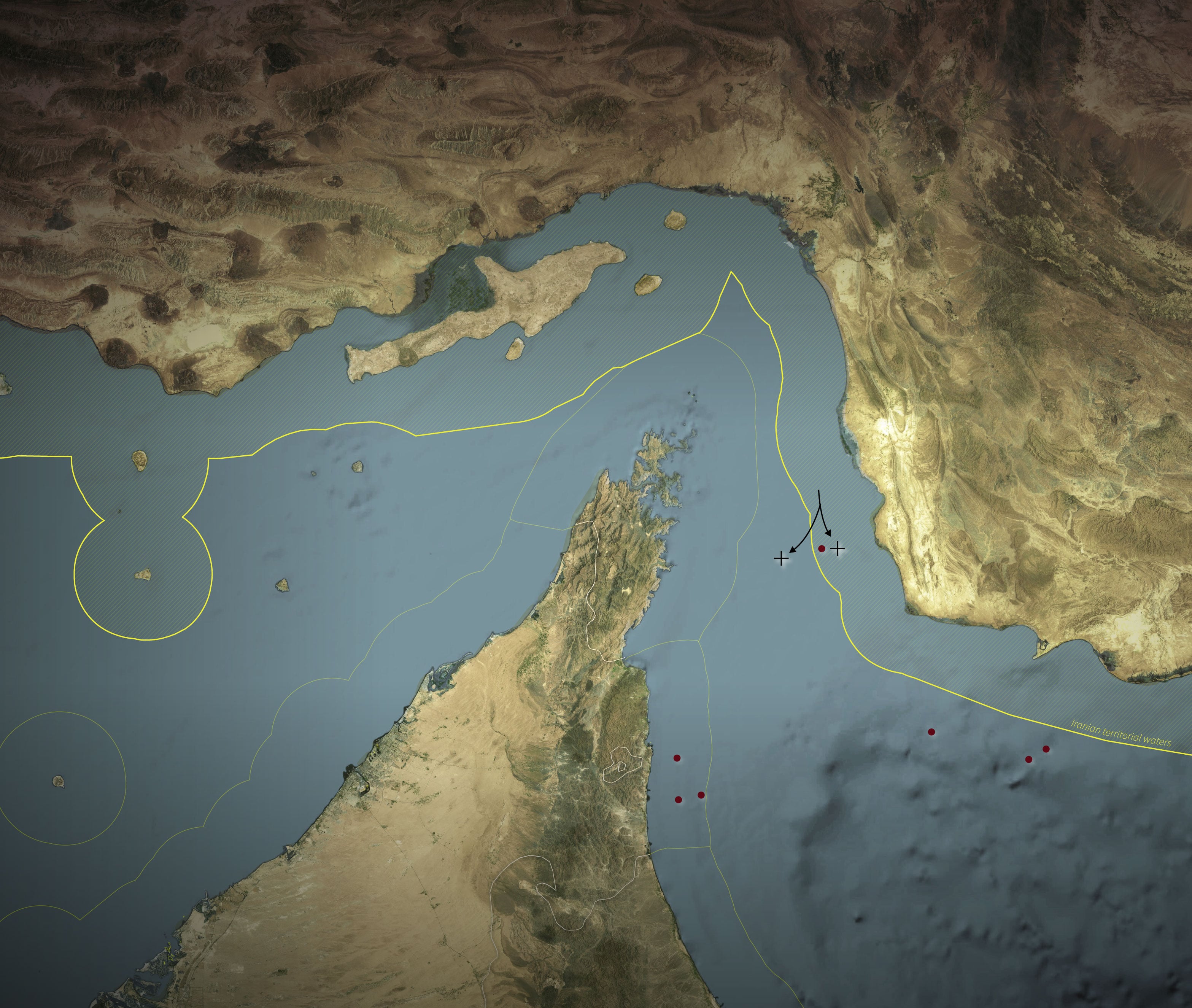
Iranian naval strategy in that space has for years been built around the idea of denying access. Fast boats, coastal missiles, mines, drones, island positions and underwater capabilities form, when needed, as now, a dense network of constant threat. Such an arsenal does not need to sink ships every day in order to produce a powerful effect. The lasting possibility of attack is enough, as are lasting uncertainty and the impression that every passage is simultaneously an economic decision and a security gamble.
One anecdote from 1987 explains this better than long theoretical discussions. During the American operation to escort Kuwaiti tankers, the huge tanker Bridgeton struck an Iranian mine. The image of that event remained politically powerful because it showed how a cheap weapon can crack the confidence of a superpower. A year later came the U.S. Operation Praying Mantis, the largest naval engagement of the U.S. Navy since the Second World War. Hormuz thus already demonstrated its true nature then: a space in which a few mines, a few fast boats and a few wrong calculations can suddenly raise the level of conflict far beyond the strait itself.
Later events point in the same direction. The seizure of the tanker Stena Impero in 2019 turned a single ship into global news and sent a signal to the entire merchant fleet. Selective coercion in Hormuz has a wider reach than an individual target. One ship becomes a warning to hundreds of others.
Between Law and Reality
The legal language of international navigation offers an orderly framework. Straits connecting major maritime spaces fall under the regime of transit passage, and coastal states must allow the movement of ships and aircraft through such corridors. In theory, the picture is clear and rational. In practice, Hormuz is a space where law and operational reality have long moved at different rhythms. Iran has for years advocated a more restrictive view of the passage of warships, Oman also carefully preserves its own interpretive reservation, while Western maritime powers respond with their own interpretation of freedom of navigation.
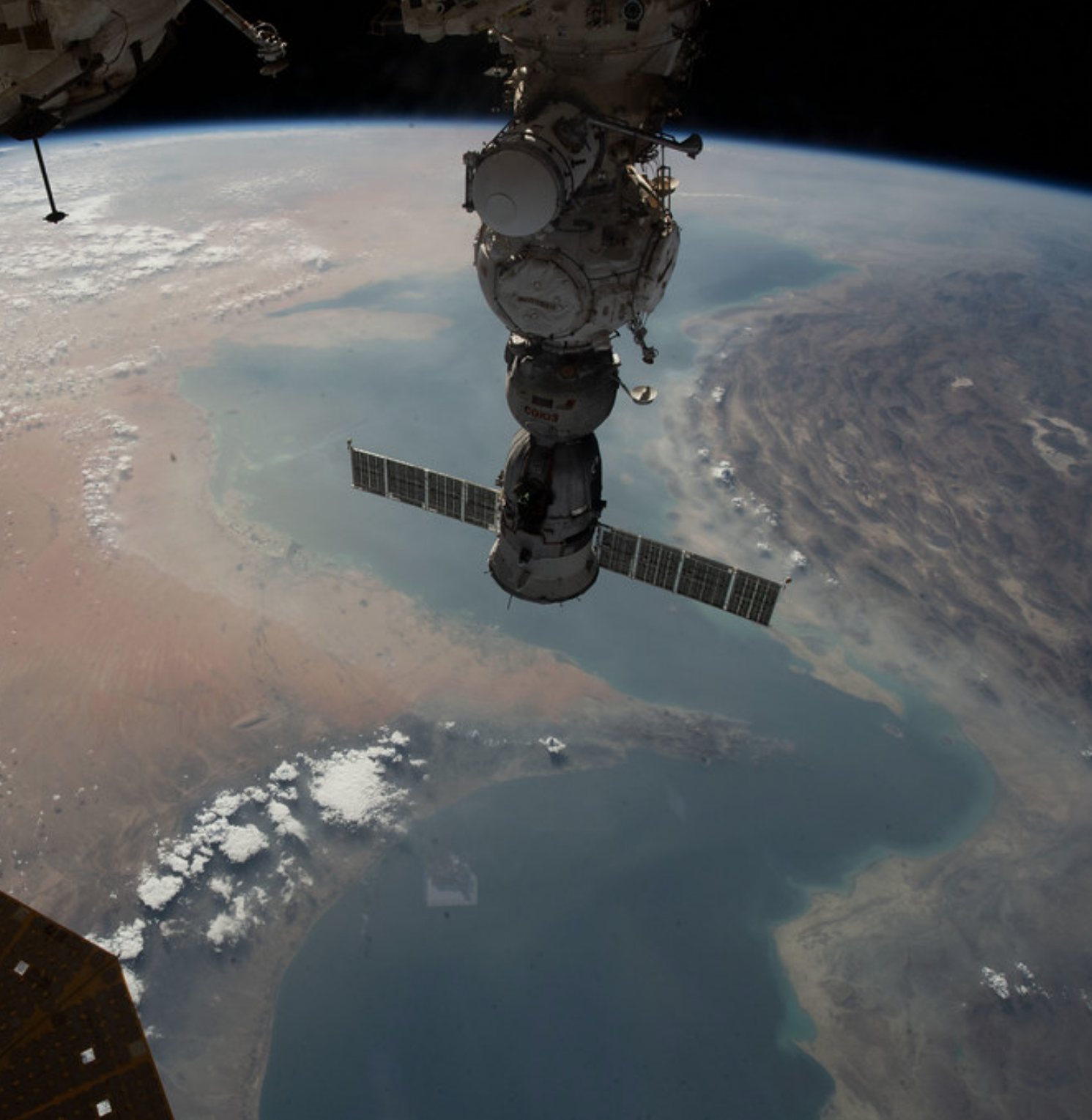
This legal complexity only gains its real meaning when joined to the physical vulnerability of the space. A captain entering Hormuz does not think only about articles of conventions. He calculates sea depth, direction of movement, notices from maritime centers, the status of the mine threat, the mood of insurers and the political temperature of the day. Each of these items becomes part of the real regime of passage. Here the difference emerges between formal law and effective control. Whoever succeeds in shaping the behavior of shipowners, insurers and navies already "holds" part of the strait in his hands.
This spring, the world is watching precisely such a lesson in real time at Hormuz. A whole political concept has appeared on the horizon: the idea that a local power can move from mere threat toward regulating passage, directing routes and defining the conditions under which traffic is considered safe.
Could Hormuz Become the New Montreux?
The history of straits shows that great turns occur when military power can no longer simply restore the old order. In such moments, negotiations begin to follow the new reality, and international law arrives afterward as a seal placed on an already formed relationship of power. That happened with Turkey in 1936, and this is where the most interesting question for today’s Hormuz begins. If the American war against Iran ends in exhaustion, limited reach or a politically costly stalemate, the world will face a debate over a new security regime in the strait.
Suez as a Parallel Lesson in Power
When speaking about straits and passages, the Suez Canal offers perhaps the cleanest example of how control over a narrow corridor grows into global political power. Unlike natural straits, Suez is an artificial artery, but its logic remains the same. It connects the Mediterranean with the Red Sea and shortens the route between Europe and Asia in a way that determines the rhythm of world trade.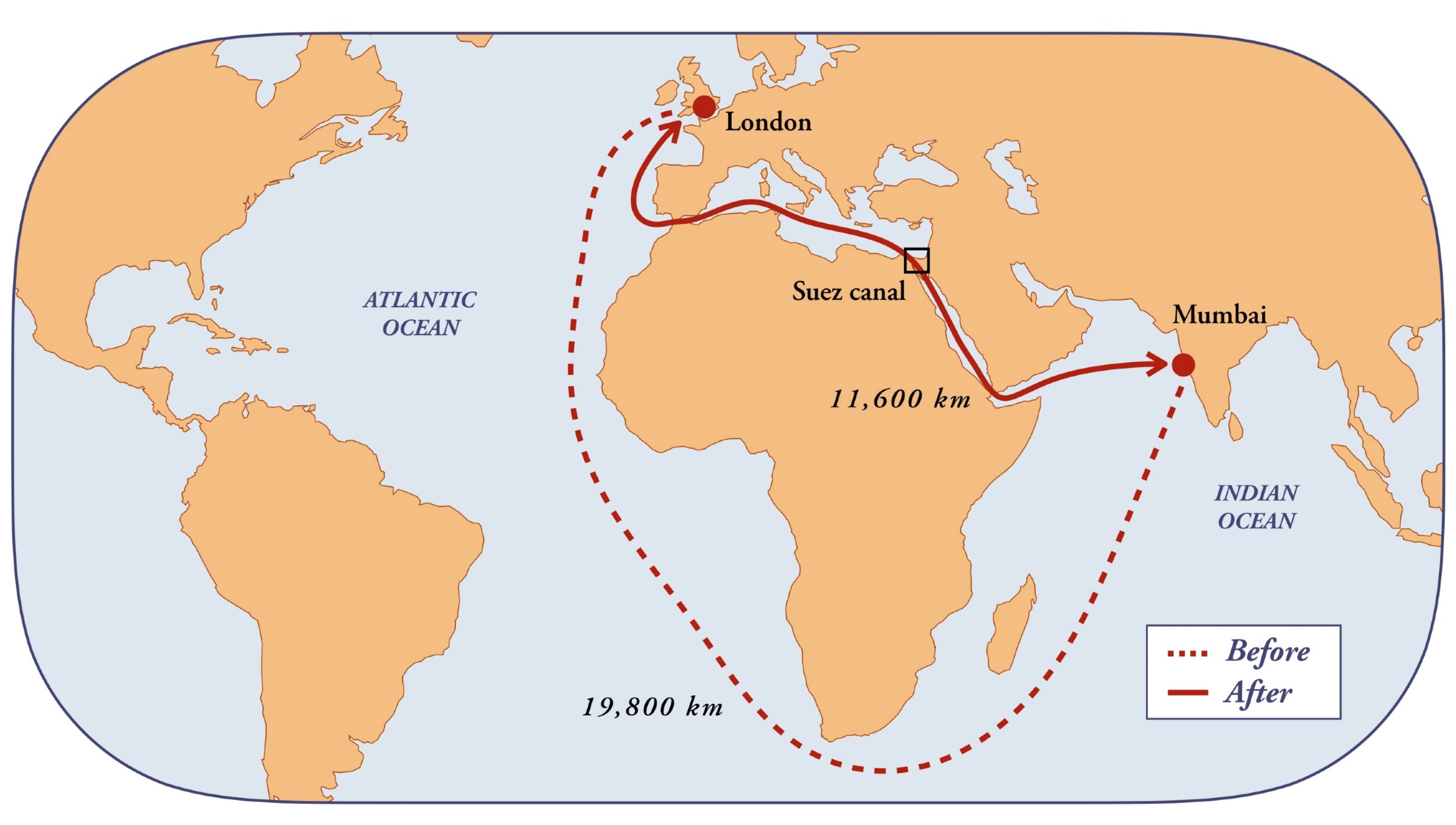
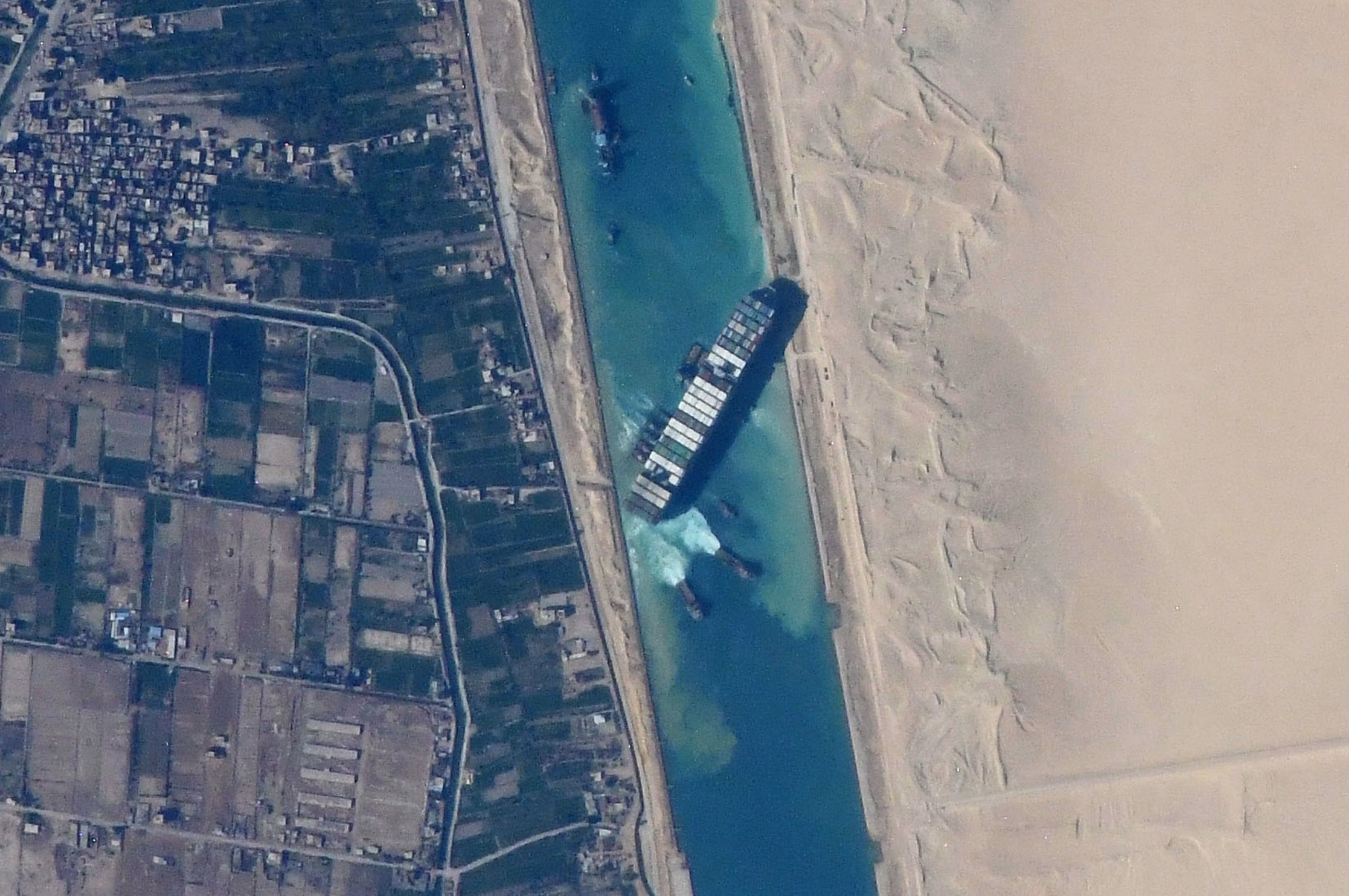
Since then, Suez has functioned as a combination of revenue and politics. Every ship that passes through pays a fee, but the canal’s real value lies in the state’s ability to influence global traffic. When the Ever Given blocked the canal in 2021 because of human error, the world felt within a few days how quickly a logistical stoppage becomes an economic problem. Thousands of containers, billions of dollars and a whole range of industries felt the effect of one single point of blockage.
Such a future arrangement would have very recognizable features. Iran and Oman would gain the central say in defining military routes, prior notification, rules for the entry of foreign warships and crisis protocols. Commercial shipping would continue to flow through a broadly open framework, while every technical element of security would acquire far greater political weight. The language of such an agreement would be administrative, full of phrases about stability, navigational safety and regional management. The essence, however, would be clear. The coastal states would receive a recognized role as guardians of the entrance to the Persian Gulf.
For Iran, that would represent a historical breakthrough. Tehran would gain part of what Ankara gained at Montreux: a space of sovereign decision at the gate of a strategic sea. It would also be a great symbolic victory over the entire Western assumption that major maritime arteries are naturally open to the extent that American aircraft carriers and allied logistics make them so. As soon as it becomes clear that a coastal power can shape traffic over the long term and survive military pressure, diplomatic language begins to make room for a new kind of compromise.
Of course, the path to such a regime would lead through a series of difficult steps. Oman would have to accept a broader framework and protect its own interests within it. The Gulf monarchies would have to weigh their fear of Iranian power against their own need for stable energy exports. China, as a major oil buyer, would have a strong interest in an agreement that restores predictability, while Russia would see geopolitical capital in any weakening of the American position. In such a combination, a regional security arrangement no longer sounds like fiction. It sounds like a possible product of exhaustion, trade, energy and the redistribution of power. In other words, if Iran "drives out" Trump by inflicting a cost he can no longer bear, this is a very possible outcome of the war and the wider crisis.
Turkey did this in a Europe sliding toward general conflagration. Iran would build a similar attempt in a world tired of long wars, costly blockades and the weakening discipline around Western rules.
In the end, what remains is the old geopolitical truth that straits confirm again and again. Great powers like to believe that the map belongs to whoever has the most ships on it. History far more often rewards the one who, in a narrow passage, can force the whole world to negotiate on his terms.
Comments