
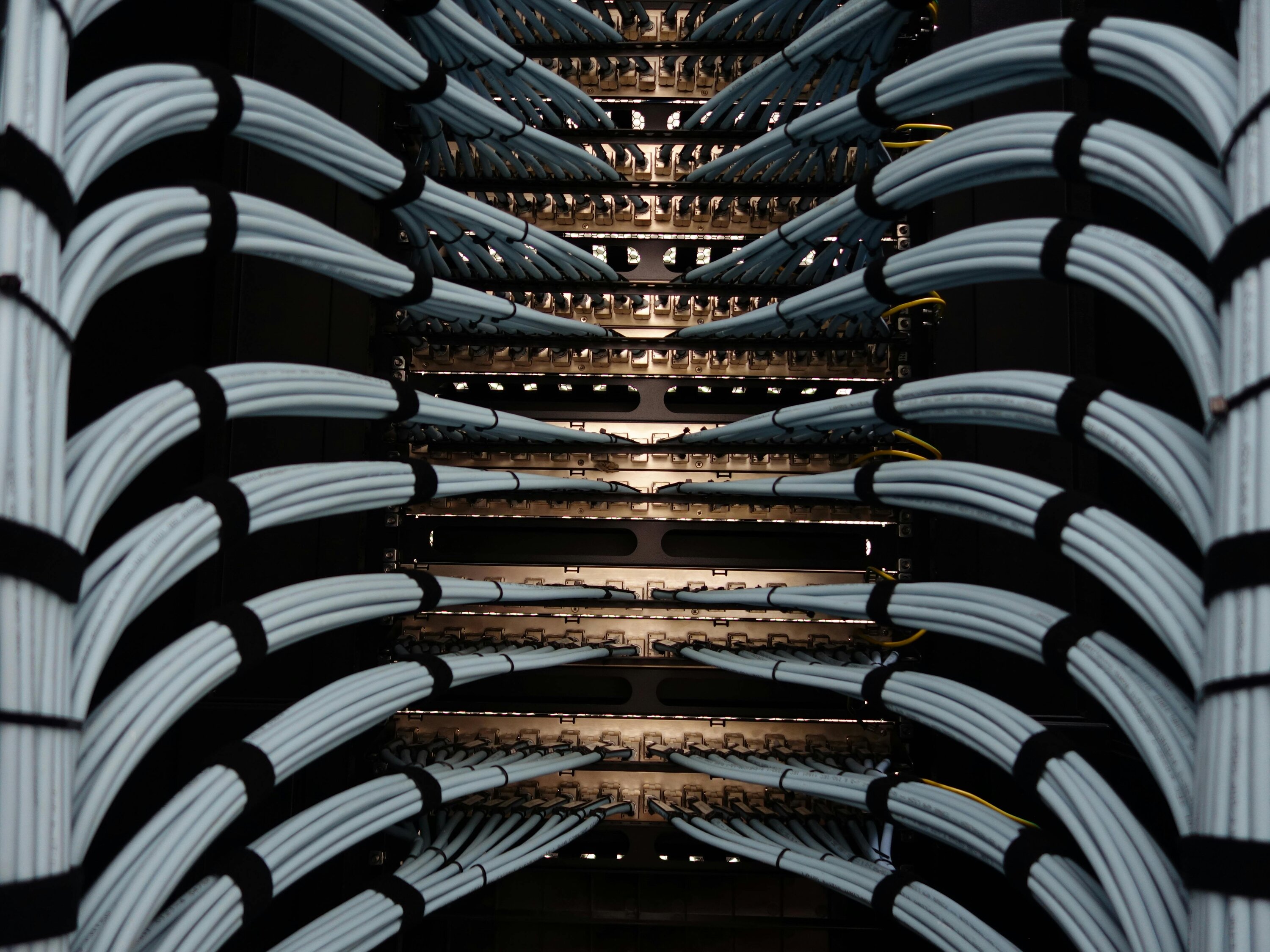
Computing power is the oil of the 21st century — an essential resource that is being hoarded, pushing late-moving states into an unprecedented new dependence.
Computing power is becoming the new global resource: an invisible force dividing nations into those that think for themselves and those that rent someone else’s mind.
Published
In every historical period, there is one decisive question: which resource really holds the world by the throat? Once it was coal, then oil; today we might say lithium or rare earth metals. But in the background, quietly and without much fanfare, a new resource is emerging — one that may not look like a resource at first, especially to those accustomed to thinking only in strictly tangible terms: computing power.
At first glance, it seems rather abstract. Artificial intelligence, the "cloud," apps… it all sounds invisible, almost magical. But behind every "smart" service stand very concrete halls full of machines, kilometres of cables, rivers of electricity, and microchip factories operating 24 hours a day. This is not a "virtual world" — that is merely how we, the end users, sometimes experience it. It is a relatively new multibillion-dollar industry, with its own mines, factories, and geopolitical tensions.
In this text, we will try to explain one crucial point — one that is in fact indispensable for understanding everything that is coming, and everything that already surrounds us: computing power is a real, limited resource, just like oil. And countries that do not have enough of it will increasingly depend on those that do. That means a new division of power, a new form of dependence, and a new question of sovereignty: who actually owns the "machines that think"?
The birth of a new strategic force: computing power
If the 20th century was the century of oil, the 21st century is becoming the century of computing power. Oil powered tanks, trucks, and factories. Computing power now drives something even more sensitive: systems that make decisions. It powers algorithms that manage traffic, assess creditworthiness, assist doctors with diagnoses, determine what we see on our phones and on social media. It may not sound as "powerful" as oil in a truck, but that is partly a matter of our own perception, especially if we come from a world in which we did not grow up with the internet or smartphones. In practice, however, this new resource is far more powerful.
Imagine a patient arriving for an examination, while the doctor uses an artificial intelligence system to analyse an X-ray image. For the user, it is just a click on a screen. But for that click to exist, somewhere in the background large models trained on millions of images are running inside data centres that consume as much electricity as a small city. That is computing power in action.
The same applies to navigation, weather forecasting, stock-market trading, military technology, and political campaigns. Whoever possesses large amounts of computing power can process more data, learn from it faster, and react more quickly. This is a new kind of speed — no longer the speed of vehicles and transport, but something we might literally call the speed of thought of an entire society.
That is why computing power is no longer just a technical term. It is becoming a strategic resource. Some states and corporations are accumulating it, building their own "digital refineries," while others can only rent someone else’s capacity — as if renting someone else’s intelligence. It hardly needs to be said that those with the resource will very much dominate those without it.
What computing power actually consists of
When we say "computing power," many people think of a stronger computer or a faster phone. But behind that term stands an entire complex ecosystem — something like a refinery, a power plant, a factory, and a university combined.
The first layer is chips and processors themselves: tiny pieces of silicon on which calculations take place. A special category is graphics processing units, or GPUs, which have, especially in recent years, become the foundation for training artificial intelligence. Their production requires ultra-precise machines, entire supply chains, and years of development.
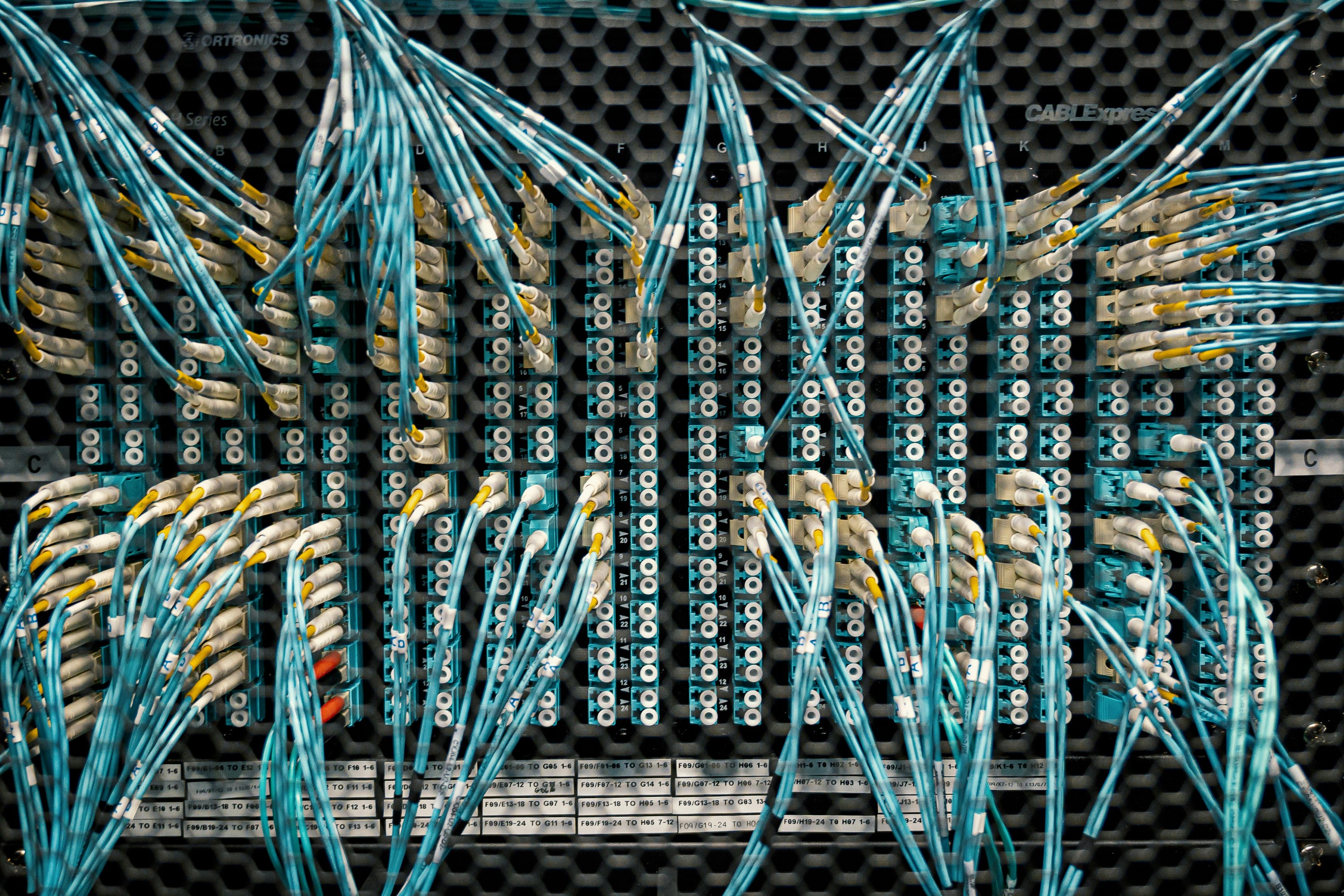
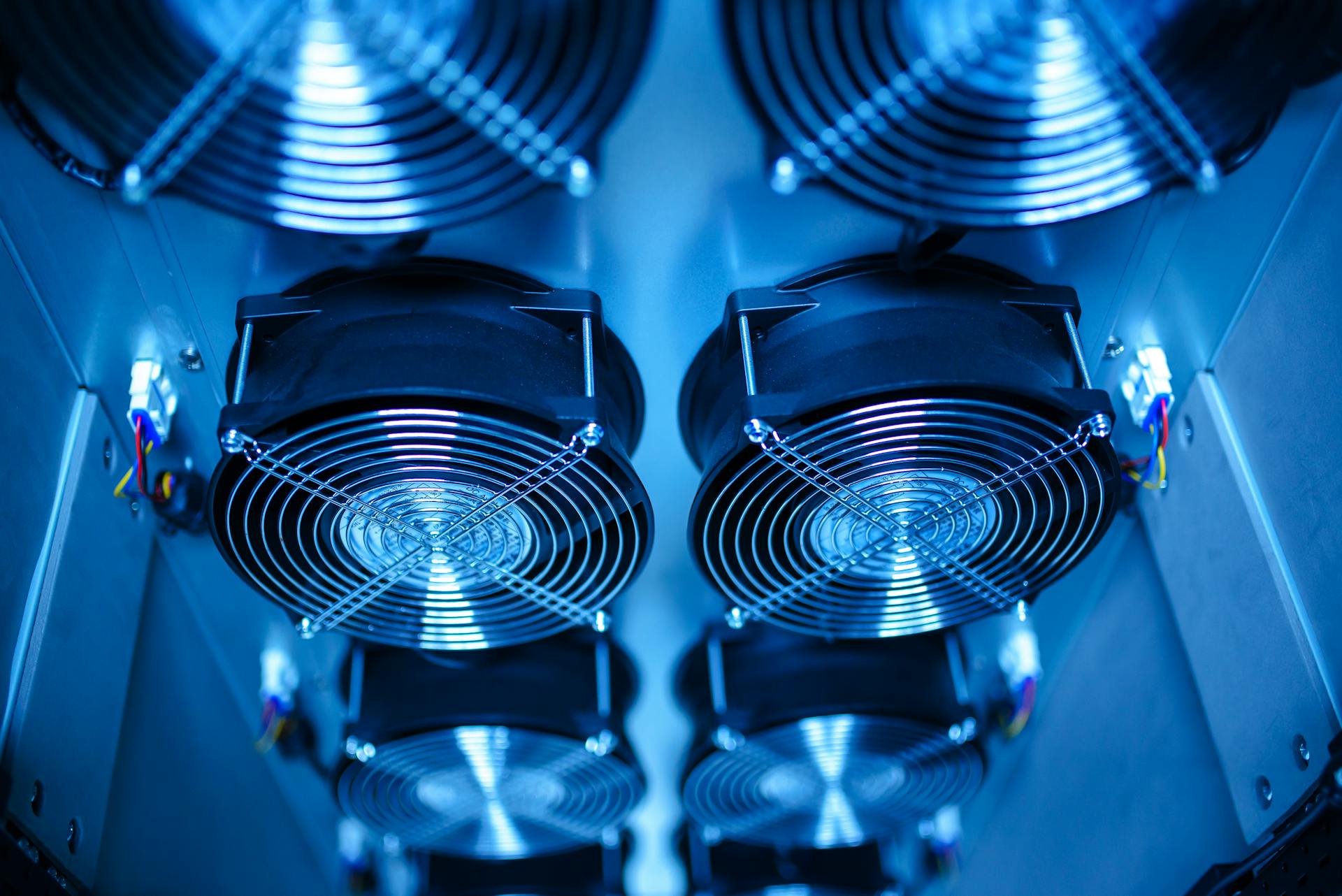
The second layer is data centres: large facilities filled with racks of servers. They must be connected to a powerful electrical grid, have cooling systems — often requiring enormous amounts of water — and maintain reliable links with the rest of the world. These are the "factories" of computing power: the places where most of the calculations that drive today’s digital life take place.
From chip factories to global networks of data centres, all of this requires hundreds of billions of dollars in investment.The third layer is energy. Computing power is not free. Every calculation consumes electricity. Training a single large AI model can consume as much electricity as thousands of households over a given period. The more "smart" systems we want, the more we must think about where that energy comes from. Of course, few consumers today even consider this. The system "works," as if by magic — and that is that. But what we see is really only the front of the stage.
The fourth layer is, of course, knowledge. Experts who know how to design chips, build data centres, write algorithms, and keep all of it running. Without people who understand these systems, the equipment itself is worth little — like a refinery without engineers. And while some claim that artificial intelligence will very quickly replace all "thinking people," that is not quite the case. Junior programmers, yes, unfortunately — good times are probably not ahead for them. But the architects of entire systems are people, not machines; people who remain, and will probably for quite some time remain, indispensable.
And finally, there is capital. Everything listed above — from chip factories to global networks of data centres — requires hundreds of billions of dollars in investment. Yes, the story of resources repeats itself, and that is why we are seeing computing power concentrated in the hands of a small number of states, and an even smaller number of corporations.
When we put all of this together, the picture becomes clear. Computing power is neither "magic" nor an abstract concept. It is a very concrete resource made up of metal, silicon, energy, land, buildings, and knowledge. That is precisely why, in the years ahead, struggles will increasingly be waged not only over oil, gas, or lithium, but also over access to this new digital form of power.
The global map of digital power
If we look at the world through the lens of computing power, the map looks different from the one we are used to. It is not divided only between the "rich North" and the "poor South," but between a handful of dense nodes of digital power and the vast rest of the world, which connects to them as a periphery.
The greatest concentrations of computing power today are found where three expected elements meet: an advanced chip industry, vast capital, and global technology companies. These are countries that have been investing in research for decades, have powerful university systems, and can afford to build data centres that cost as much as modern power plants. They do not buy ready-made services — they literally own the "machines that think."
The next group consists of large but technologically partly dependent states. They may have a strong industry or a large market, but they must import the most advanced chips or rent computing capacity from others. In some areas they may be very strong, but in key links of the chain — such as the most advanced processors or the most sophisticated artificial intelligence models — they still depend on other people’s decisions.
And finally, there is a large number of smaller or less developed countries that have neither their own chip industry nor large data centres. It is not hard to guess which of these three groups we belong to. They rely entirely on the "cloud" — on infrastructure controlled by someone else. At first, that looks convenient: you pay for the service and everything works. But, as always in history, the one providing the service has more power in the long run than the one merely using it.
Computing power as an instrument of domination
Why does it matter who has computing power and who does not? Because it is increasingly being converted directly into political, economic, and cultural power.
Imagine two countries. Both want to modernise their healthcare, education, and transport systems. The first has its own data centres and enough computing power to train and run national AI systems. The second does not, so it must use the "cloud solutions" of foreign companies. The difference is enormous. The first can decide for itself how its data will be used, which values will be built into its systems — a very important matter — and what kinds of recommendations and decisions AI will produce. The second is essentially importing someone else’s algorithms, and with them someone else’s priorities.
In the military sphere, computing power means faster processing of satellite imagery, more precisely guided systems, and more efficient logistics. Whoever can analyse thousands of images or sensor readings within seconds has an advantage over those who do it manually or with slower systems. Just as the race once involved radar and aircraft, today it is about who can "see" and "assess" the situation faster.
In the economy, computing power enables automation, predictive analytics, and supply-chain optimisation. Large companies that possess powerful AI models can plan production better, target advertising more precisely, and spot market trends faster. Small companies and states without their own computing infrastructure remain one step behind, and often have to pay for access to the very same tools that outperform them.
Even on the cultural level, computing power is becoming an instrument of domination. Language models that "understand" one language better than another, algorithms that push certain content, systems that filter information — all of this shapes how people perceive the world. If most of these systems are developed in only a few centres of power, then the global narrative slowly shifts toward their frameworks. These are familiar ways of spreading influence, but today they operate faster, more widely, and perhaps more quietly upon the target audience. Great and lesser powers alike always want to disguise their propaganda as something else.
Private giants and the new "technological hegemony"
So far, we have spoken about states, but an important part of the story is still to come. Computing power today is, to a large extent, in the hands of private companies. This is a fairly new situation in history. With oil, states ultimately still had the final say, through state-owned companies, regulation, and cartel agreements. In the digital world, we are increasingly seeing the opposite process: states depending on private "digital oil companies."
Major technology corporations today own their own global networks of data centres, their own communication cables beneath the oceans, their own AI laboratories, and teams where advanced models are being "cooked up" — models we may not yet even be able to imagine. They do not merely control tools; they control the very infrastructure of "thinking": who can run what, how much it will cost, and what the default settings will be. States that want modern digital services often choose them because it is cheaper and faster than building everything from scratch.
The debate about computing power is not, and should no longer be, merely a technological question. It is a question of power: who controls society’s key resources, who sets the rules of the game, and who, in the end, is a user — and who is a subject — in the digital order.The state gets functional systems; the company gets a new user. But in the long run, dependence is created. We have already mentioned this several times, but it may be the central point of this entire story. That dependence will be transformative, especially for those of us living in countries of the aforementioned "third category."
If key services — from public administration to health registries — are tied to the infrastructure of one or several companies, the room for political manoeuvre shrinks. Negotiations over price, terms of use, or data protection no longer resemble a conventional service contract, but negotiations with a monopolist.
Moreover, these companies increasingly decide on their own who will gain access to advanced AI models and computing power, and under what conditions. That means a private actor, not necessarily a democratically elected authority — or any authority at all — decides who will have the "digital advantage" in the economy, science, or the media. This is a new kind of hegemony. Not through military bases or currency, but through control over the machines that process data and shape conclusions.
In that sense, the debate about computing power is not, and should no longer be, merely a technological question. It is a question of power: who controls society’s key resources, who sets the rules of the game, and who, in the end, is a user — and who is a subject — in the digital order.
The global divide: who is left without digital sovereignty of their own
Digital sovereignty is simple to define. It is the ability of a society to decide for itself where its data is stored, who performs calculations on it, and whose algorithms produce recommendations and decisions.
States and societies with little computing power increasingly find themselves in the position of "digital tenants." Instead of owning their own machines and models, they rent them. That is practical while everything is calm. But what happens when the service provider changes its terms, prices, or political stance? What happens when sanctions are introduced, chip exports are banned, or access to more advanced AI models is restricted?
A similar divide is emerging within societies themselves. Large corporations can accumulate computing power and use the most advanced tools, while small businesses, the public sector, and educational institutions are left with "lighter" versions of the same systems. Inequality deepens as a result. Those at the top receive even more powerful tools; everyone else depends on their goodwill.
All of this leads toward a world in which societies are divided between those that have their own "digital power plants" and those that live plugged into someone else’s socket. The former have room to manoeuvre; the latter have only the hope that someone else will keep the power on.
The challenges facing smaller states
Smaller states, even relatively wealthy ones, realistically cannot build an entire infrastructure on their own, from chip factories to global networks of data centres. But that does not mean they are condemned in advance to digital dependence. There is room to avoid subordination, but it requires clearly defined priorities.
The first step is to recognise computing power as a strategic resource, not merely an IT expense. That means investing in at least a basic national infrastructure: public or shared data centres, a secure energy foundation, the education of experts, and clear rules for data governance. They do not need to have "everything," but they must have something that is genuinely their own. Unfortunately, what are many countries doing instead? Take Croatia as an example: we are stockpiling weapons for absurd wars, whether against Russia or for some new imposed geopolitical reshuffling in the region. These are catastrophic decisions because of which we will very soon be limping behind the rest of the world — and once it is too late, it is too late forever.
The second step is alliances. Just as small states in the past joined forces around common energy or transport projects, they can now join forces around computing infrastructure: shared AI clusters, regional centres, partnerships with open models and universities.
The third step is choosing battles wisely. It is not realistic to compete in everything, but it is possible to build one’s own niches: specialised models for local languages, public administration, healthcare, education. Wherever it is most important for society to retain control, that is where computing power should be invested.
Conclusion: the future of the world in the age of thinking machines
Computing power may have no smell, may not flow through pipelines, and may not be stored in tanks, but in its consequences it increasingly resembles the classic resources that defined entire eras. Whoever has it can accelerate their own development. Whoever does not slowly moves into the role of a user of other people’s decisions.
In the coming years, we will hear more and more about new artificial intelligence models, about who has the "stronger" algorithm, who has built the larger data centre. Behind all those stories, the same question will in fact be turning: who controls the machines that think, and who merely sends prompts?
Recognising computing power as a resource does not mean panicking, but calmly looking reality in the face. We are still in a relatively early phase of this new era. Societies that understand in time what this is really about — that what is being distributed is not only technology, but power — will have a chance to be more than merely "connected" users.
Ultimately, the story of computing power is the story of who will govern humanity’s collective reason in the future. If we hand everything over to a handful of centres of power, we will not lose only data or market share. We will lose part of the right to think about our own future for ourselves — or, to put it a little more dramatically, the right to be human.
Sources
- Iaps.ai Compute is a Strategic Resource — Institute for AI Policy and Strategy https://www.iaps.ai/research/compute-is-a-strategic-resource
- Hec.edu The Global Race for Computing Power: Why Next-Gen Tech Matters More Than Ever https://www.hec.edu/en/innovation-entrepreneurship-institute/news/global-race-computing-power-why-next-gen-tech-matters-more-ever
- Blog.ucs.org Power Hungry: Why Data Centers Are Developing Their Own Energy Sources to Fuel AI https://blog.ucs.org/mike-jacobs/power-hungry-why-data-centers-are-developing-their-own-energy-sources-to-fuel-ai/
- The New York Times A.I. Computing Power Is Splitting the World Into Haves and Have-Nots - The New York Times https://www.nytimes.com/interactive/2025/06/23/technology/ai-computing-global-divide.html
- Schroders.com Power-hungry AI applications are demanding a significant expansion in global energy capacity https://www.schroders.com/nl-be/be/individual/inzichten/power-hungry-ai-applications-are-demanding-a-significant-expansion-in-global-energy-capacity/
- Brookings.edu How countries are leveraging computing power to achieve their national artificial intelligence strategies https://www.brookings.edu/articles/how-countries-are-leveraging-computing-power-to-achieve-their-national-artificial-intelligence-strategies/
- Powermag.com Computers May Need More Power than the World Can Generate by 2040 https://www.powermag.com/computers-may-need-more-power-than-the-world-can-generate-by-2040/
- Dl.acm.org A Global Perspective on Supercomputer Power Provisioning: Case Studies from United States and Europe https://dl.acm.org/doi/10.1145/3721145.3734532
Comments