
How yesterday's unthinkable becomes state policy? The answer lies in a space that shifts while we are looking in a completely different direction.
Almost every political idea that seems self-evident today once sounded, at the very least, like a tasteless joke. Someone first uttered it in a room that promptly fell into a brief, uncomfortable silence. Years later, the same idea appeared in a newspaper column, then at a panel discussion titled "Is It Time We Talked About This?", and finally in the explanatory notes accompanying a new law. Sound familiar? Much of our legal and social order has been built this way. The state rarely announces that it has embraced the unthinkable. Instead, one morning, it simply informs us that there is no longer any serious alternative.
The most consequential political changes therefore almost always begin before politics itself. The first thing to change is not the law, but our reflexes. What yesterday prompted the question "Are you out of your mind?" prompts a different one today: "How much would it cost?" Almost the entire history of political normalization lies between those two questions. This invisible territory is what the so-called Overton window describes: the range of ideas a politician can advocate without appearing to be a crank or committing electoral suicide. But as we shall see, that window may overlook a soothing sky dotted with fluffy clouds—or a dark street where some very dubious characters are gathering.
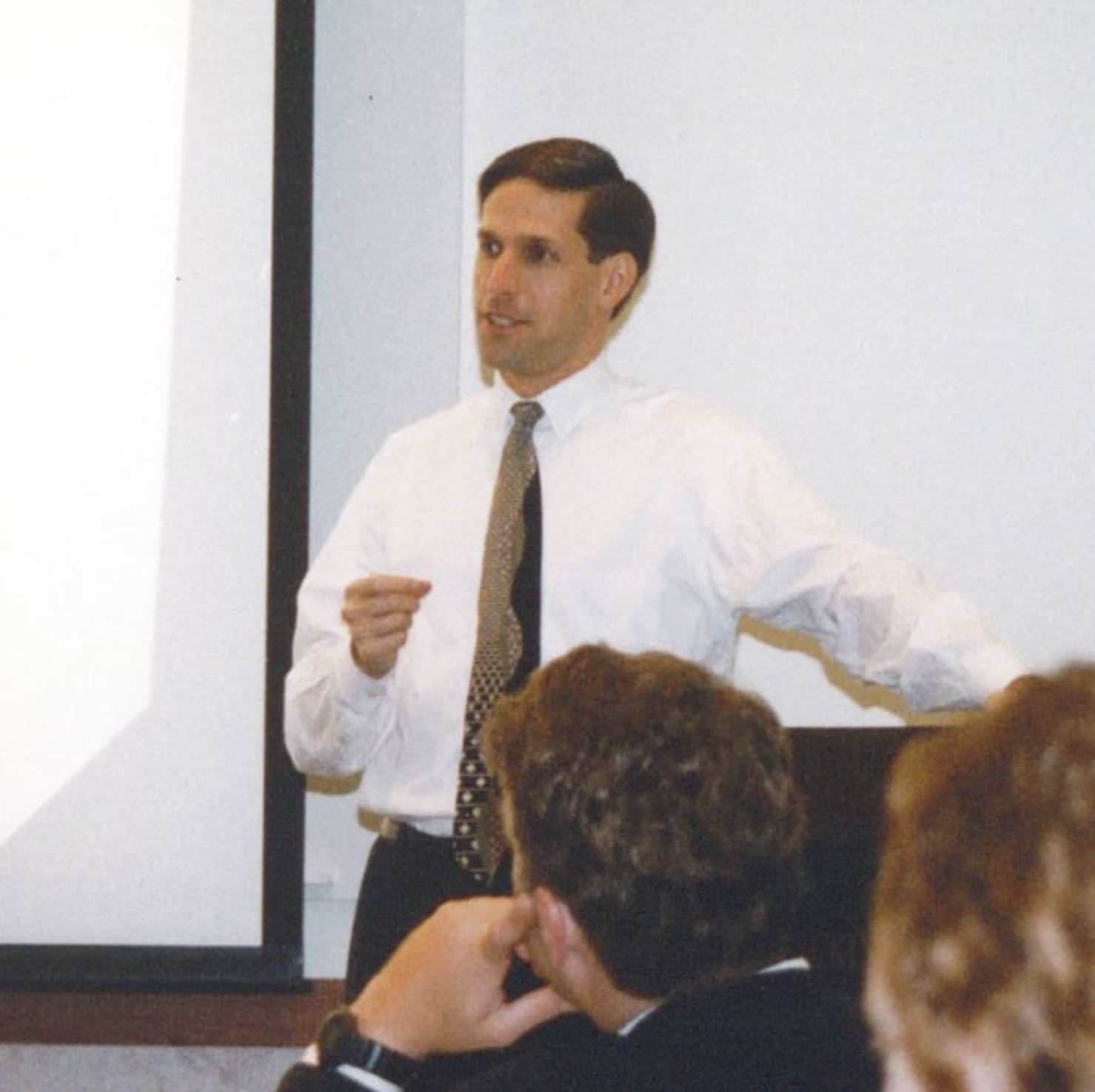
The concept was developed in the mid-1990s by Joseph P. Overton, an American lawyer and political analyst at the Mackinac Center, a Michigan-based think tank. He called it the "window of political possibility." After Overton’s death in 2003—he was 43 when a small aircraft he was piloting crashed—the concept took his name. It was not, despite how grand it may sound, an elaborate academic theory. It was a simple observation: lawmakers generally do not create the boundaries of what is acceptable. They identify those boundaries and follow them.
This casts politicians in a rather less romantic light than they tend to prefer. In the official iconography of power, the statesman is supposed to see farther than the people and courageously lead them into the future. Perhaps that was once true. In practice, today’s politician is often little more than a very expensive weather vane with an official car. He follows opinion polls and the mood of the media, calculating how far he can go without paying a serious electoral price. Occasionally, he really does shift the boundary. Far more often, however, he merely steps into territory that others have already made safe for him.
In the popular version of the model, an idea travels from unthinkable to radical, then acceptable, sensible and finally popular enough to become public policy. This is neither a law of nature nor an orderly climb up a staircase. Some ideas skip several stages in a matter of weeks. Others spend decades being deemed "interesting enough to discuss"—the political equivalent of a waiting room with no doctor. The decisive victory actually comes quite early. An idea does not yet need supporters. It merely needs to lose its status as something respectable people do not say aloud.
This is where extremists enter the picture—in the most textbook sense of the word. Their political function is not always to win. Sometimes it is enough to change the scale. When someone demands a hundred, a demand for forty begins to look like a reasonable compromise. A radical may lose an election and still achieve something important: after him, everyone else sounds less radical. The political eccentric thus becomes a useful participant in someone else’s project, even if he has never heard of that project himself.
Some imagine the Overton window as a theory in which a handful of hidden manipulators sit around a table, moving society like pieces across a map. In reality, the window shifts through conflict. Activists apply moral pressure, think tanks supply ready-made arguments, and the media decide which issues will be granted the status of serious subjects. Corporations fund the answers they find desirable, while courts reshape the legal terrain. Art and everyday experience then accomplish what official documents often cannot: they give an abstract question a human face.
In other words, almost everything around us serves something. It may not be immediately apparent, and the outcome may take years or decades to emerge, but very little is accidental or left as "unused space." Ordinary people, participating at every stage of the process, may never think about it in these terms. Yet they carry it forward and put it into practice, earning their salaries while generally paying little attention to the fact that they too are cogs in a mechanism carrying something somewhere. Some are perfectly aware of their role and act first as initiators and later as lobbyists, but they are generally a minority. Society often carries change forward through sheer inertia.
There is no shortage of examples.
The legalization of same-sex marriage in the United States illustrates the process well. According to the Pew Research Center, 31 percent of Americans supported it in 2004, while 60 percent opposed it. Eleven years later, the Supreme Court recognized same-sex marriage throughout the country, and by 2019 public support had reached 61 percent. No single speech or strategist shifted the window. It moved through activism, legal battles and generational change.
Many will cite this as a triumph in the struggle for human rights. But the Overton window can just as easily open onto the darker side of the street. Consider the current militaristic climate in Europe. A decade ago, the idea of a real and direct war with Russia sounded unthinkable—or, at the very least, extremist. Today, attempts are being made to normalize this deranged prospect to the point where the wider public will come to expect it. Once again, every step of the process is involved: political activists, think tanks, the media and the rest.
The Overton window merely explains the trajectory, it is not a moral equation. Something positive, emancipatory and socially beneficial can mature along the same path—universal public healthcare in the United States, for instance, once dismissed as "socialist heresy" and now the subject of increasingly serious debate. Of course, when something attempting to pass through the window conflicts with corporate profits, that window can suddenly shrink to the size of a mouse hole. Even so, once the unthinkable becomes thinkable, a path exists.
The same process can carry something far more sinister. Imagine someone proposing today that criticizing European militarism should be treated as treason and punished with lengthy prison sentences. At first, it would sound insane. But then, once the media and assorted "talking heads"—the experts on permanent standby and professional agenda-pushers—were mobilized behind it, the idea would begin to move, slowly but steadily, towards implementation.
It is especially revealing to look back at windows that have already been opened. The abolition of slavery once stood beyond the limits of respectable politics, as did women’s suffrage and workers’ rights. Every emancipatory movement initially appears to violate some supposedly natural order. The Overton window does not tell us whether a particular change is good. It tells us that "normal" is not a neutral category, but the temporary outcome of a struggle between power, belief and language.
American political scientists Martha Finnemore and Kathryn Sikkink described a similar process as the life cycle of a norm. A new value emerges at the margins, then undergoes a "cascade" as more and more institutions adopt it, before finally becoming internalized. The greatest political victory, therefore, is not the one after which everyone repeats your argument. It is the one after which no one remembers that an argument was ever necessary.
Crises always accelerate this process dramatically—which is precisely why politics loves them.Language is the cheapest and perhaps the most effective building material in this process. The erosion of rights can become "reform." Mass surveillance can be presented as "security architecture." Military escalation is renamed "deterrence," while a permanent measure is introduced as a "temporary response." A good political euphemism does not conceal a fact, it renames it.
Crises always accelerate this process dramatically—which is precisely why politics loves them. Following the September 11 attacks, the US Patriot Act was passed and signed into law on October 26, 2001, less than seven weeks later. The law expanded surveillance powers and access to various kinds of records. Fear rapidly changes the price the public is willing to pay for measures that would encounter far greater resistance in calmer times. The stringent measures introduced during the COVID-19 pandemic offer another example.
American political scientist John Kingdon calls such moments "policy windows." They open when a recognized problem, a ready-made solution and favorable political circumstances converge. This is why think tanks draft proposals even when there is no audience for them. They are waiting for the minister who, in the middle of a crisis, asks whether a plan already exists. A finished plan almost always has an advantage over a wise one that has yet to be written.
You may have noticed, if you occasionally browse the columns published by major think tanks—particularly those dealing with foreign policy—that their articles often begin with claims such as "America must do this to halt China’s rise" or "Victory in Ukraine requires the implementation of these strategies."
An additional problem today is that we may no longer share a single window. The same idea can sound mundane on one television channel, monstrous on another, and like an outdated compromise in certain corners of the internet. Parallel windows belonging to rival political tribes are emerging. An idea can spend years developing within a sealed media ecosystem and then burst into public institutions almost fully formed, leaving part of the public asking in astonishment: "Where did this come from?"
This also reveals the limits of the concept. Acceptability is not the same as majority support. Some policies remain outside the law even though most people want them. Others are enacted despite being deeply unpopular because they are backed by money, institutions or a state of emergency. The Overton window describes the boundaries of public debate well, but not the entire architecture of power. It shows us what may be proposed, but not always who possesses the power to turn a proposal into an order.
That is why the most important political question may be the one asked least often. Not merely "Do I agree with this idea?" but "Why are we talking about it now?" Who changed its name? Which crisis made it urgent? Which of yesterday’s extremes was used to make today’s measure appear moderate? Political literacy begins when we stop looking only at the content of a debate and start noticing how the debate itself became possible.
The future, after all, rarely smashes down the door. It first appears as a provocation. Then it becomes something we are told must be discussed without prejudice. Next comes the reasonable exception, followed by the temporary solution and, eventually, permanent state policy. By the time we look back, the window is already open, the room has changed, and serious people are assuring us that the fresh air has always come from precisely that direction.
Sources
- Cambridge.org International Norm Dynamics and Political Change | International Organization | Cambridge Core https://www.cambridge.org/core/journals/international-organization/article/abs/international-norm-dynamics-and-political-change/0A55ECBCC9E87EA49586E776EED8DB57
- Law.cornell.edu OBERGEFELL v. HODGES https://www.law.cornell.edu/supremecourt/text/14-556
- Defence-industry-space.ec.europa.eu White paper for European defence - Readiness 2030 https://defence-industry-space.ec.europa.eu/eu-defence-industry/white-paper-european-defence-readiness-2030_en
- Pmc.ncbi.nlm.nih.gov The Multiple Streams Framework: Understanding and Applying the Problems, Policies, and Politics Approach - PMC https://pmc.ncbi.nlm.nih.gov/articles/PMC8861624/
- Pewresearch.org Attitudes on Same-Sex Marriage https://www.pewresearch.org/religion/fact-sheet/changing-attitudes-on-gay-marriage/
- Newrepublic.com The Flaws of the Overton Window Theory https://newrepublic.com/article/138003/flaws-overton-window-theory
- Mackinac.org The legacy of the Overton Window https://www.mackinac.org/blog/2023/the-legacy-of-the-overton-window
- Govinfo.gov USA PATRIOT ACT https://www.govinfo.gov/content/pkg/PLAW-107publ56/pdf/PLAW-107publ56.pdf
Comments