
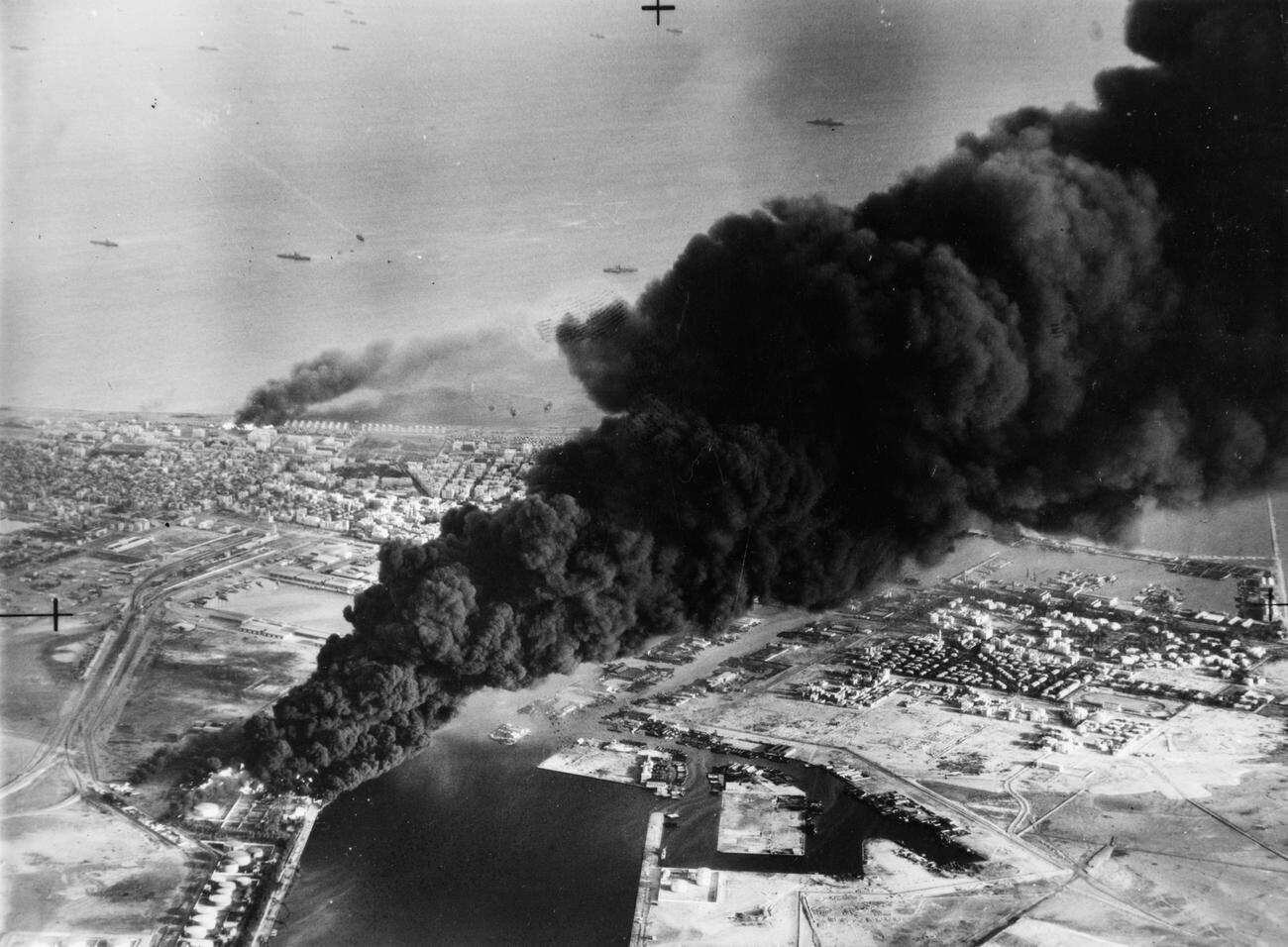
The world’s chokepoints are not merely decisive energy lines. Sometimes they are doors through which a great power enters as a master - and leaves as a memory.
History teaches us that great empires do not disappear suddenly, not in a single day. But when the conditions emerge in which the concept of an empire has exhausted itself, a certain catalyst is needed, an acceleration of what is already being felt. Very often, that weakened empire will deliver the final blow to itself, by embarking on something it still believes it can do, only for reality to show that these are immense ambitions left over from an earlier way of thinking.
That sounds familiar, but we are not actually talking today about the current situation in the Persian Gulf, though we will, of course, draw a clear parallel with it. This is a story about the previous empire, the British one, and how it disappeared under the weight of a nearby crisis, the Suez Crisis.
In such crises, the empire still formally exists, but suddenly realizes that the world no longer behaves as it once did. The unofficial end has taken effect, and the whole world begins to see it.
The Suez Crisis of 1956 was precisely such a moment. Not the complete end of Britain, but the end of Britain’s illusion about itself. After Suez, London remained important, wealthy, diplomatically influential and militarily serious. But it was never again what it still imagined itself to be: an empire capable of independently determining the fate of the world. That is roughly how empires end. They do not disappear entirely. They survive, but as "one of" the powers, while another takes the leading position.
After London, Moscow went through something similar. One could debate at length why the USSR collapsed, whether it happened at the moment the Berlin Wall fell or within the bureaucratic contradictions of the socialist system, but following this logic, the great Soviet crisis actually occurred through the invasion of Afghanistan. They believed they could do it. It turned out they could not. And that realization, at the very least, contributed to the collapse of the Soviet Union.
But let us return to Britain. It is more interesting to us now because it can be compared more clearly with the present-day United States, since the USSR, although powerful, was never truly a unipolar force in the way the British and American empires were.
It all began on July 26, 1956, when Egyptian President Gamal Abdel Nasser nationalized the Suez Canal. Formally, it was the decision of a sovereign state concerning infrastructure on its own territory. Politically, of course, it was an explosion. The Suez Canal was not merely a passage between the Mediterranean and the Red Sea, but a clear line of imperial geography, a symbol of British-French control over the Middle East and over one of the key routes of world trade.
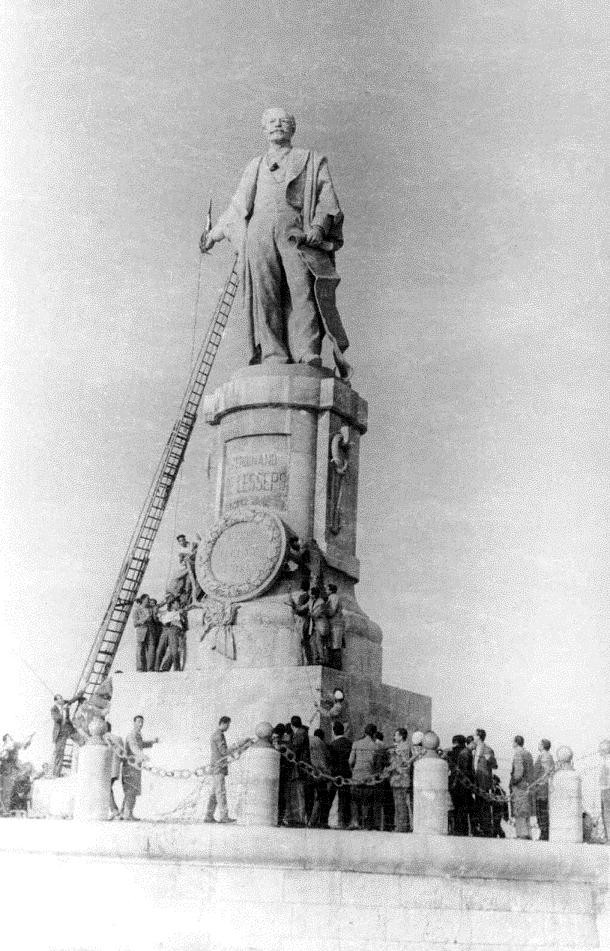
For Nasser, nationalization was a great act of Egyptian sovereignty and Arab pride. For Britain and France, it was a humiliation. They were hurt by the loss of revenue and administrative control over the canal, of course, but that was not the decisive moment. The real pain came from the realization that a postcolonial leader had shown he was no longer afraid of old Europe.
Because if Egypt could nationalize the canal and survive, what would stop other nations from doing the same with oil, ports, bases, mines, protectorates and the entire infrastructure of the old colonial world? Suez was more than a dispute over a canal. It was a question of authority. Can the periphery say "no" to the center?
Britain and France secretly reached an agreement with Israel. The plan was simple and cynical.British Prime Minister Anthony Eden was convinced that it could not. In his mind, Nasser was a massive danger, a man who had to be stopped before he encouraged others. This is an important detail: empires in decline often do not see their opponents as they are, but as caricatures of villains who justify a return to old methods. Every act of disobedience thus becomes a threat to civilization, and every intervention a defense of order. The story sounds increasingly familiar, does it not? Just look for a moment at the way media propaganda treats Iran and the Iranian order. That is how Nasser was treated then.
Britain and France then secretly reached an agreement with Israel. The plan was simple and cynical. Israel would attack Egypt across the Sinai, and Britain and France would then issue an ultimatum to both sides to withdraw from the canal area. When Egypt refused, Anglo-French forces would intervene as supposed guardians of peace and freedom of navigation. It was aggression disguised as an imperial police operation.
That scenario sounded like a product of the old imperial world. Someone far away creates "disorder", and European powers arrive to restore order. The problem was that 1956 was no longer 1882. After the Second World War, the United Nations, anticolonial movements and American-Soviet rivalry, the old colonial rhetoric began to sound like a badly staged performance from the previous century.
Militarily, Britain and France were not powerless. That is precisely the paradox of Suez. They could bomb, land troops, seize Port Said and physically reach the canal. British imperial power did not vanish overnight. But having an army was no longer enough. One also needed a political world in which the use of that army was still regarded as legitimate. And that world was disappearing.
Chronology of the Crisis: From Nasser’s Announcement to the Humiliation at Port Said
The crisis began on July 26, 1956, when Gamal Abdel Nasser announced the nationalization of the Suez Canal in Alexandria. Egypt thereby took control of the company that had until then been under British-French dominance. Nasser presented the decision as an act of sovereignty and a way to finance the Aswan Dam, after the United States and Britain had withdrawn support for the project. In London and Paris, of course, this was not presented as an economic decision, but as a revolt against the entire colonial order.During August, September and October, the diplomatic game continued, but behind the scenes war was being prepared. Britain and France did not want to appear as outright aggressors, so they struck a secret agreement with Israel at Sèvres. As already mentioned, the plan was almost theatrically cynical: Israel would attack Egypt first, Britain and France would then issue an ultimatum to the warring sides, and when Egypt refused to move away from the canal, London and Paris would intervene as alleged "protectors of navigation and international order".
According to the agreement, the Israeli attack began on October 29, 1956, with Operation Kadesh. Israeli forces entered Sinai, advanced rapidly toward Egyptian positions and tried to get close enough to the canal to activate the prearranged British-French scenario. The Egyptian army resisted, but was surprised by the speed and coordination of the attack. Within only a few days, Israel captured a large part of Sinai and reached Sharm el-Sheikh, opening access to the Gulf of Aqaba.
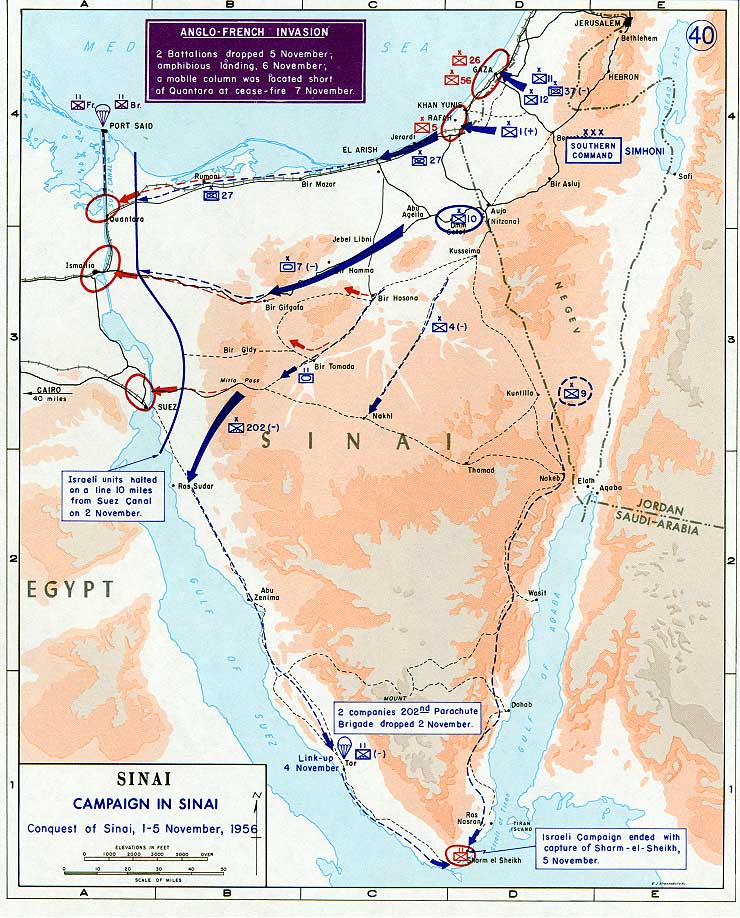
Nasser then made a crucial decision: the Egyptians sank ships in the Suez Canal in order to block it. This destroyed the attackers’ main justification. Britain and France had formally intervened to "protect" the canal, but the result of their intervention was precisely its closure. The imperial operation, conceived as the restoration of control, turned into chaos that paralyzed the passage for which the war had supposedly been launched.
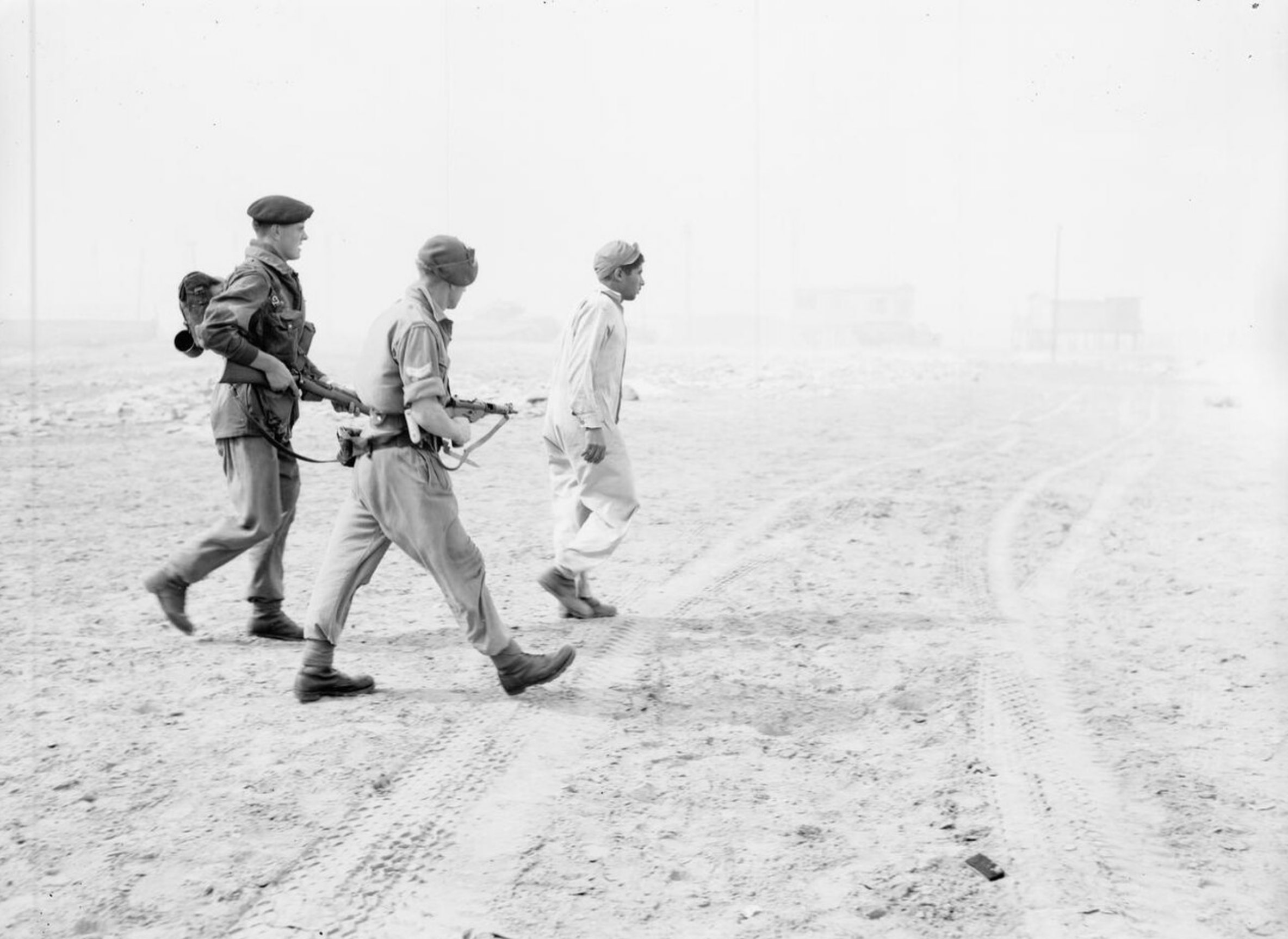
On November 5, British and French paratroopers landed near Port Said and Port Fuad. The following day, the amphibious landing began. Militarily, the operation was advancing. Anglo-French forces managed to seize Port Said and establish a bridgehead. But the fighting in the city was fierce, Egyptian resistance was stubborn, and the political cost rose by the hour. Port Said became a symbol not only of military action, but of the return of colonial violence before the eyes of the world.
The losses were disproportionate, but the political effect did not follow the military result. Egypt suffered the heaviest losses, with estimates ranging from more than a thousand to several thousand dead soldiers and civilians. Israel lost around 170 soldiers, Britain several dozen, and France even fewer. But Suez was not decided by the number of dead. It was decided by the fact that London and Paris lost the diplomatic and financial battle almost at the very moment when they began gaining ground militarily.
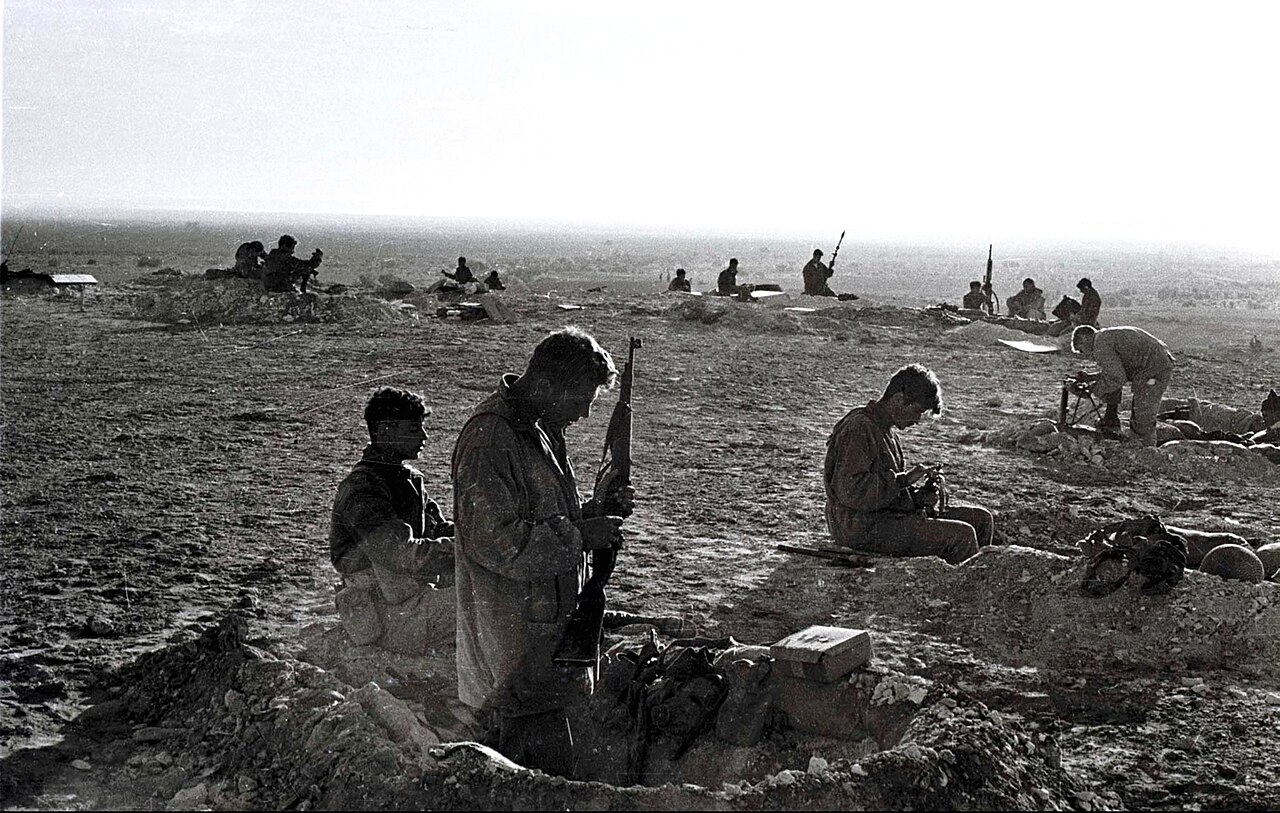
On the map, the crisis ended with the return of Egyptian control over Suez. In history, it ended with a much larger conclusion: Britain and France could attack, but they could no longer decide on their own what their attack meant. Suez showed that the old empire still knew how to fight, but no longer knew how to win in a way that confirmed its authority over the world.
And now we come to the key detail, which we will later map onto the present situation. The decisive blow did not come from Cairo, but from Washington.
The United States did not want to support the British-French intervention. Eisenhower was certainly not an anticolonialist, nor was American policy free of imperial ambition. But Washington understood what London did not: if America condemned Soviet tanks in Hungary, it could not at the same time bless the European bombing of Egypt. More importantly, the United States did not want to push the Arab and postcolonial world straight into Soviet hands.
Here the new hierarchy was revealed. Britain could go to war, but it could not withstand American opposition. Its deepest problem was not military, but financial. The pound was vulnerable, foreign exchange reserves were limited, and the British economy depended on American support. One could even say that Britain was economically dependent on the United States, as if they existed in some kind of symbiosis. Does this sound very familiar? Are we connecting the roles with new actors? On whom does today’s America economically depend? Without whose trade and rare metals can it not function? Where is Donald Trump at this very moment?
When Washington withheld support and applied pressure, London’s imperial ambition collided with the reality of monetary dependence.
The Soviet Union also exploited the moment. Moscow threatened Britain and France, presenting itself as the protector of Egypt and the anticolonial world. But however dramatic the Soviet threats were, the decisive message to London came from Washington.
That is the difference between military power and systemic power. Military power means sending ships, aircraft and soldiers. Systemic power is the power to determine how far that is allowed to go. In 1956, Britain still had military power. America had systemic power.
Eisenhower and Nasser: An Alliance Without Love, a Handshake Over the Back of Old Europe
The relationship between Eisenhower and Nasser was not friendship in the sentimental sense, but a Cold War pragmatic symbiosis. Eisenhower was not a Nasserist, nor an American patron of the Arab revolution, far from it. Nasser, on the other hand, was not an American client. Each saw in the other a useful obstacle to some third party: Eisenhower saw in Nasser the possibility that Arab nationalism would not be handed over to Moscow, while Nasser saw in Eisenhower a force capable of restraining the old European masters.That is the key to understanding Suez. Eisenhower did not "like" Nasser, but he understood that open support for Britain and France would effectively be a historic gift to the Soviet Union. The American State Department at the time clearly saw the danger of a conflict between NATO allies and an "influential rising Middle Eastern power", with possible Soviet intervention. In other words, Washington did not defend Nasser’s revolution out of pure principle. It defended the American position in a decolonizing world.
Did Eisenhower use Nasser to weaken the European powers? Not in the sense of a conspiracy planned in advance to bring down Britain. But yes, in strategic effect, Eisenhower used Suez to show London and Paris that they could no longer wage imperial wars independently. By doing so, the United States sent a message to the Arab world, to the Soviets and to its own allies: old colonial Europe no longer had the right to define Western policy on its own. This was not friendship toward Egypt, but a transfer of command within the West.
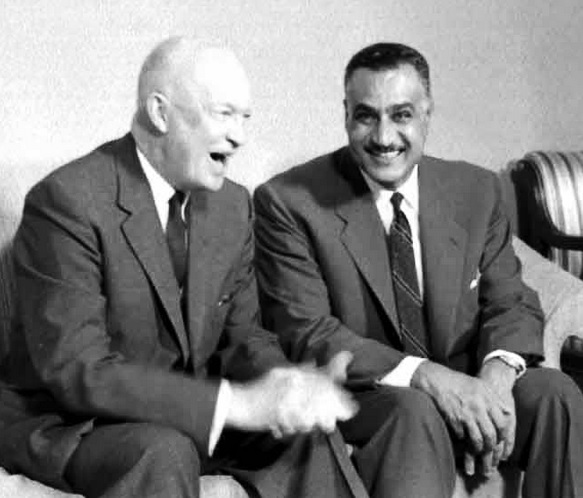
The later meeting between Eisenhower and Nasser in New York in 1960 carried powerful symbolism. Nasser came to attend the UN General Assembly, and American diplomacy ahead of the visit spoke of a "golden opportunity" to improve relations between the United States and the United Arab Republic, as Egypt, then united with Syria, was called at the time. Behind the scenes, discussions centered on security, protocol and the need to show Nasser a warm welcome, while also avoiding statements that would look like alignment with the communist bloc.
The photograph of their meeting on September 25, 1960, in New York looks almost warm: Eisenhower, the old general of the Western order, and Nasser, the face of new Arab nationalism, sit like men who understand each other better than their allies would like to admit. But behind that frame there was no deep trust, only historical irony. Four years earlier, Eisenhower had helped Nasser survive a European attack, not so that Egypt would be completely free, but so that America, rather than Britain and France, would become the chief arbiter of the Middle East.
That is why Suez was so humiliating. Until then, Britain could still imagine itself as a great power cooperating with America. After Suez, it became clear that American alliance was the condition of British global policy. The "special relationship" was not a relationship between equal empires, but an elegant name for a new dependency.
Nasser’s victory lay precisely in the fact that he did not have to win in the classic sense. The Egyptian army did not have to crush the British and the French. It was enough for Egypt to hold out long enough for the intervention to become a political scandal. The weaker side sometimes does not need to destroy the stronger one. It is enough to force it to reveal itself as obsolete.
Suez is therefore a model, not just an episode. It shows what the moment looks like when a great power first publicly realizes that its power is no longer self-evident.
That is why today, in the shadow of Hormuz, Suez returns as a mirror. The Strait of Hormuz is not the Suez Canal, and comparisons are never identical. But both passages possess the same symbolic force: they are narrow places through which the energy of the world flows. Whoever cannot control them or keep them open reveals the limits of their own hegemony.
Britain after Suez did not cease to be powerful. But it was no longer a world empire in the old sense. After Suez, it became a major power within a new, larger, American order.
Something similar could happen to the United States. The American military can still operate almost anywhere. It can send fleets, carry out strikes. But can it produce a result? Because Trump is in Beijing, begging Xi Jinping to help him restrain Iran, to help him open Hormuz, which he himself cannot open. And Iran did not even close it. Iran is not the modern Nasser. Trump is the historical loser and the catalyst of America’s stumble, because Hormuz was open on February 26, but on February 27 it no longer was. Why not? Trump closed it by attacking Iran. Trump turned Iran into Nasser. Trump created for himself the "Suez Crisis" that brings down an empire.
Comments