
Some eras believe so fiercely in their own machines that even catastrophe begins to look like a tool. Not a threat, but a matter of proper calculation. Because if the blast is precise enough, the hole useful enough, and the radioactive cloud behaves itself, perhaps even the apocalypse can be entered into the construction budget.
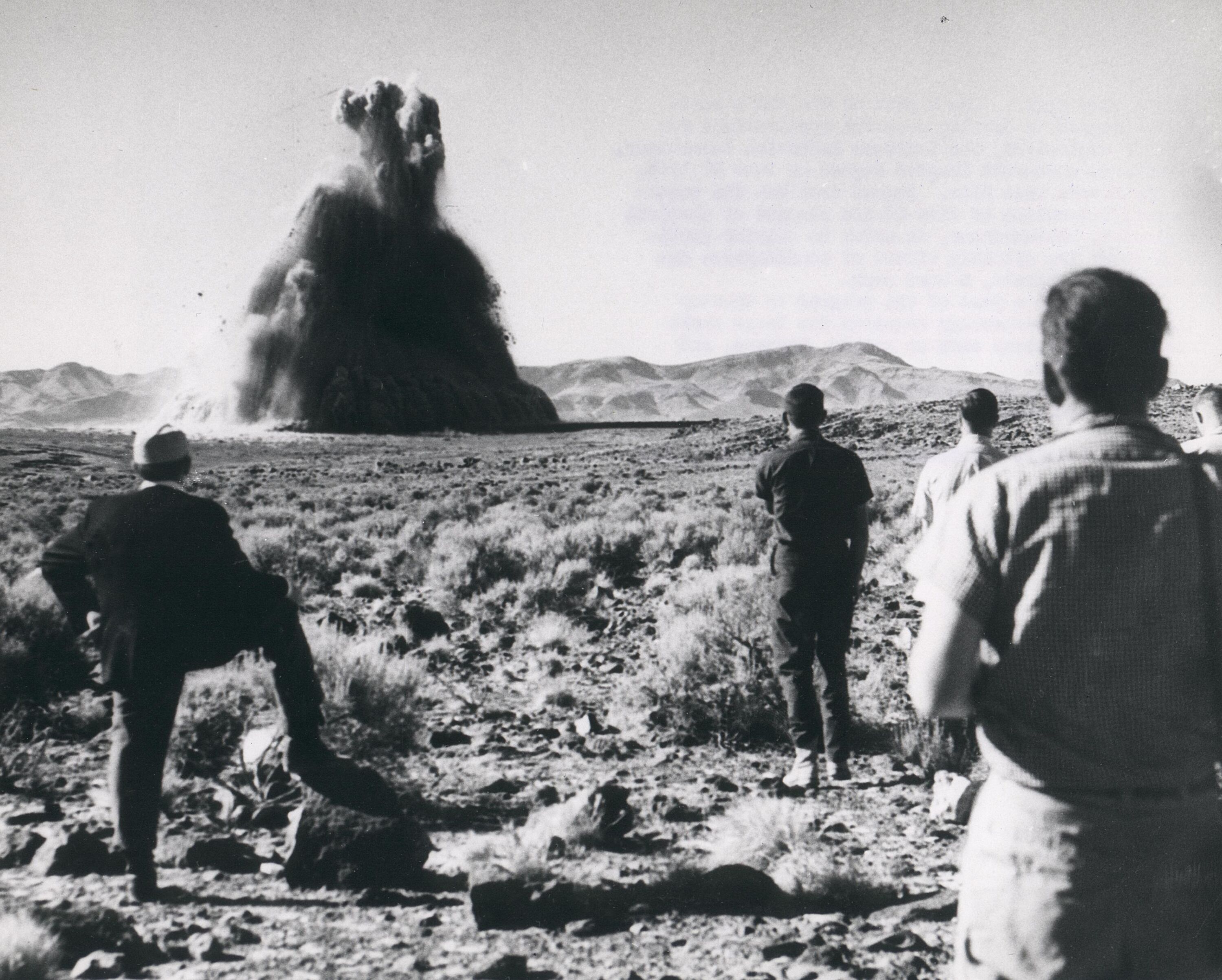
On this day, July 6, 1962, the United States tried to do exactly that. In the Nevada desert, at the Yucca Flat test site, a nuclear device named Sedan was detonated. It was not conceived as a weapon against a city, an army, or an enemy state. It was meant to demonstrate a Cold War idea that today seems both absurd and unsettlingly familiar: that enormous technology can elegantly bypass politics, ecology, and common sense.
Sedan was part of Operation Plowshare, named after the biblical image of beating swords into plowshares. In the American version of that metaphor, the plowshare happened to have a thermonuclear core. The program was meant to show that atomic explosions could be used for civilian purposes. Not for destruction, but for digging harbors, canals, mines, and great cuts through mountains. The nuclear bomb, enthusiasts argued, could be “the world’s biggest excavator,” only with a slightly more dramatic warranty.
In the context of the early 1960s, this did not sound entirely absurd. After Hiroshima, Nagasaki, and the first arms race, the Western world was searching for a way to give the atom a more respectable biography. In 1953, U.S. President Dwight D. Eisenhower had spoken before the United Nations about “atoms for peace,” a grand Cold War therapy session for the conscience of the nuclear age. If the bomb already existed, it somehow had to be civilized.
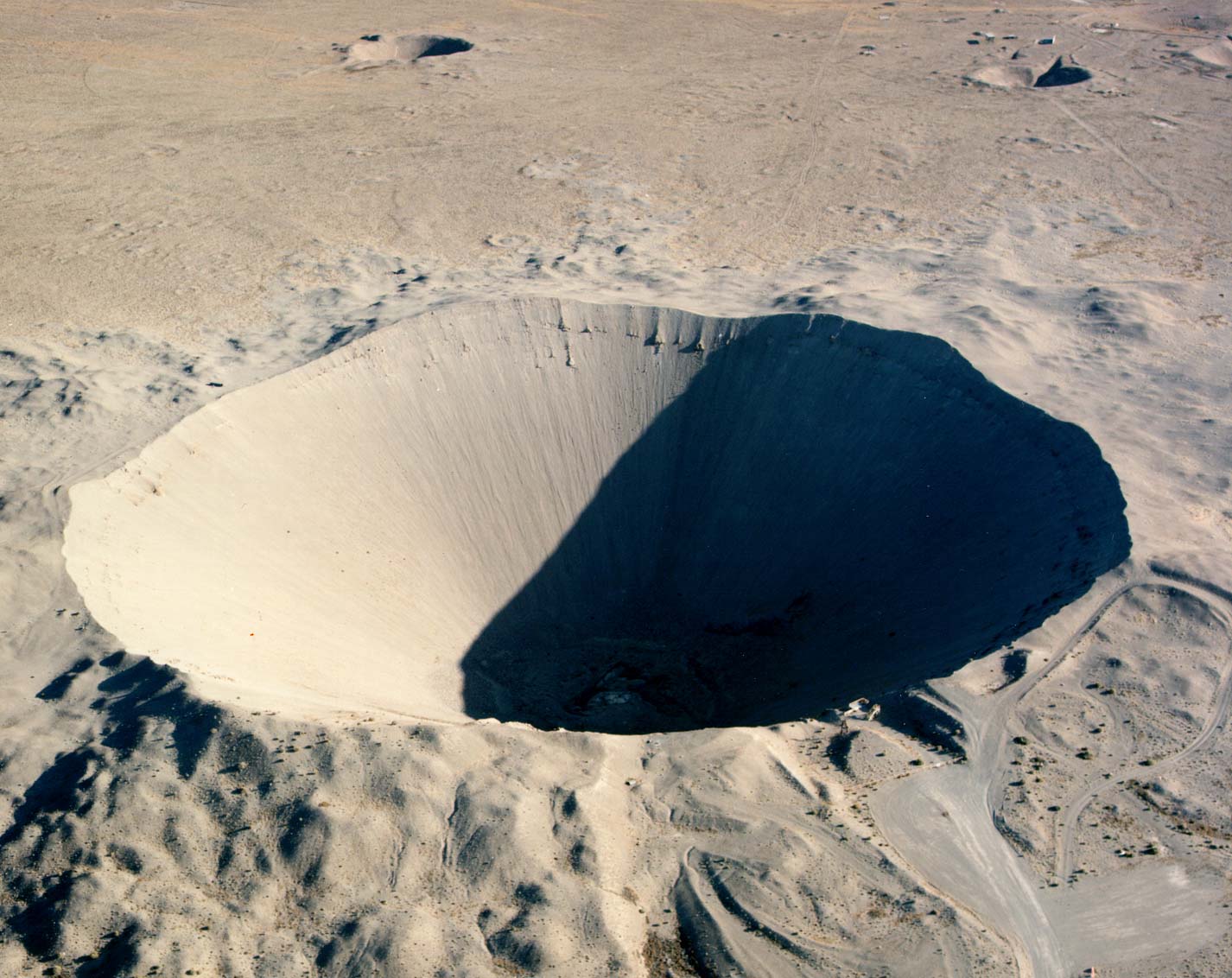
Sedan was the most spectacular image of that faith. A nuclear device with a yield of about 104 kilotons was buried roughly 194 meters beneath the desert surface. The explosion lifted the ground, shattered it, and hurled millions of cubic meters of earth into the air. It left behind a crater about 390 meters wide and nearly 100 meters deep. Translated from the language of science into everyday terms, humanity had made, in a matter of seconds, a hole large enough to hold a small neighborhood, though the real estate agent would have had to leave out a few details.
Project Chariot: the harbor they wanted to dig with hydrogen bombs
Had Project Chariot been carried out, the coast of Alaska would not have been left with just a crater. It would also have had one of the strangest harbors of the modern age: a harbor opened by a chain of nuclear explosions.The plan emerged in the late 1950s, at a time when the U.S. Atomic Energy Commission was trying to prove that nuclear explosions could have a civilized face. The location was Cape Thompson, near the Inupiat community of Point Hope. The idea sounded roughly like this: detonate a series of thermonuclear devices and create an artificial deep-water harbor in one move.
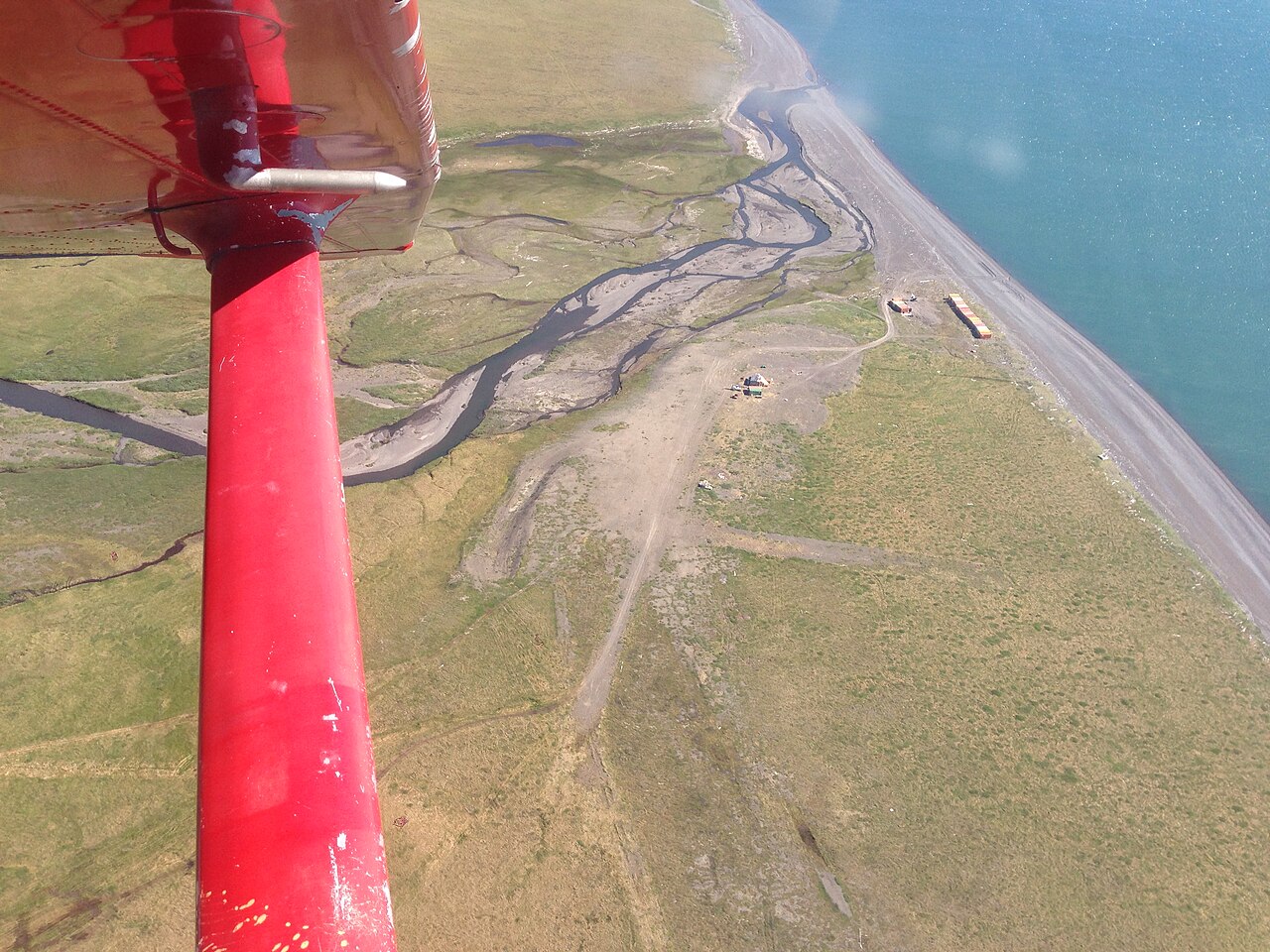
Resistance from the local population, some scientists, and environmental groups gradually dismantled the official image of the project as a harmless experiment. Project Chariot was never carried out. No nuclear devices were brought to the site. But the story still left an ugly trace. In 1962, experiments were conducted in the area using radioactive material from Nevada in order to study how radioactive particles moved through soil and water. In other words, even a nuclear harbor that was never built managed to produce its own contaminated epilogue.
Sedan really did show that a nuclear explosion could move enormous quantities of earth. But it also showed that earth does not move alone. Dust moves with it, and with the dust comes radioactive material.
Two clouds rose over Nevada, and the winds carried the test’s remnants far beyond the imagined “construction site.” Radioactive particles were detected as far away as South Dakota and Illinois, while in Utah health officials monitored the presence of iodine-131 in milk. That was the moment when the poetic metaphor of swords and plowshares collided with a very unpoetic chain: grass, cow, milk, a child’s thyroid.
Operation Plowshare was not the isolated fantasy of a few enthusiasts in lab coats. It was the expression of a broader culture that believed the scale of a problem was best measured by the size of the machine used to attack it. If Alaska needed a harbor, perhaps a series of nuclear explosions could be considered. If a new canal or road cut was needed, maybe slow geology and even slower democracy could be skipped. The Cold War did not produce only the fear of destruction. It also produced a strange kind of optimism, one in which the future was always waiting just beyond one more detonation.
That is why Sedan is more interesting than the hole it left in Nevada. In a sense, it is a monument to a mindset, not just to a technology. Its crater speaks of a moment when scientific prestige, state propaganda, and engineering imagination fused into the idea that radioactivity could be treated as a side issue.
Gasbuggy: atomic fracking before fracking
If Sedan was a bomb turned into a shovel, Gasbuggy was a bomb lowered underground as a geological breaker. Its target was not a harbor, a canal, or a crater, but gas trapped in the hard sandstone of New Mexico. The idea had an almost brutal simplicity: if the rock would not release the gas, the atom would break it open.In early December 1967, in the San Juan Basin near Farmington, the U.S. Atomic Energy Commission and the El Paso Natural Gas Company detonated a 29-kiloton nuclear device at a depth of about 1,300 meters. It was the first major joint experiment between the state and industry in Plowshare’s search for the “useful explosion.” Underground, the blast created a cavity and a “chimney” of crushed rock, a space through which gas was supposed to flow more easily toward the surface.
On paper, it partly worked. Gas production increased, and the tests extracted about 6 million cubic meters of gas from the underground ruin. But it was a triumph with the unpleasant smell of an atomic laboratory. The gas carried measurable traces of radioactivity, especially tritium, had a lower heating value, and never became a product that could simply be piped into homes. The technological goal had been touched. The social and commercial logic collapsed the moment one had to imagine that gas in someone’s kitchen.
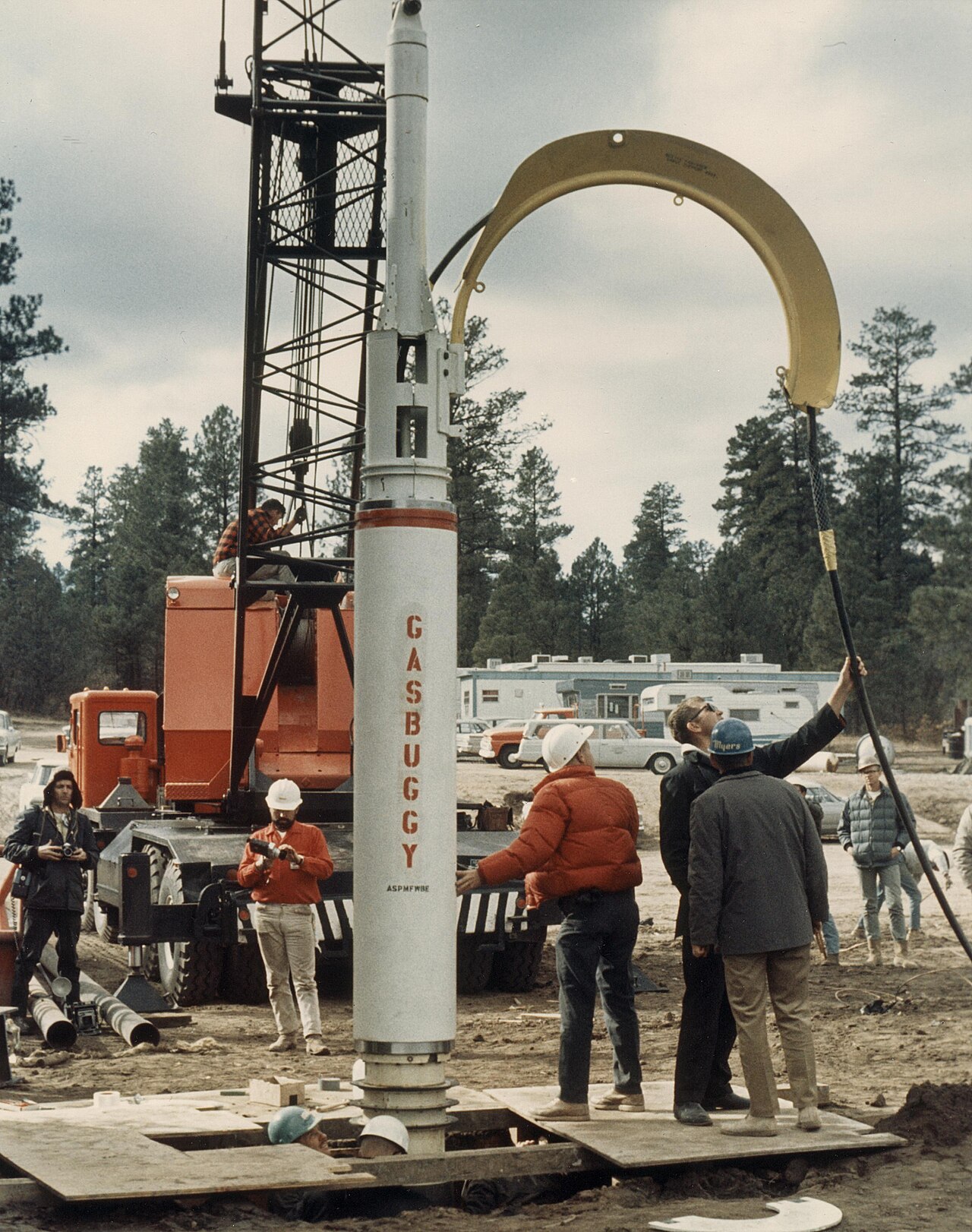
Today, in the age of ordinary fracking, Gasbuggy looks like the grotesque ancestor of an energy culture, but also like a reminder that the 1960s were stranger than we remember.
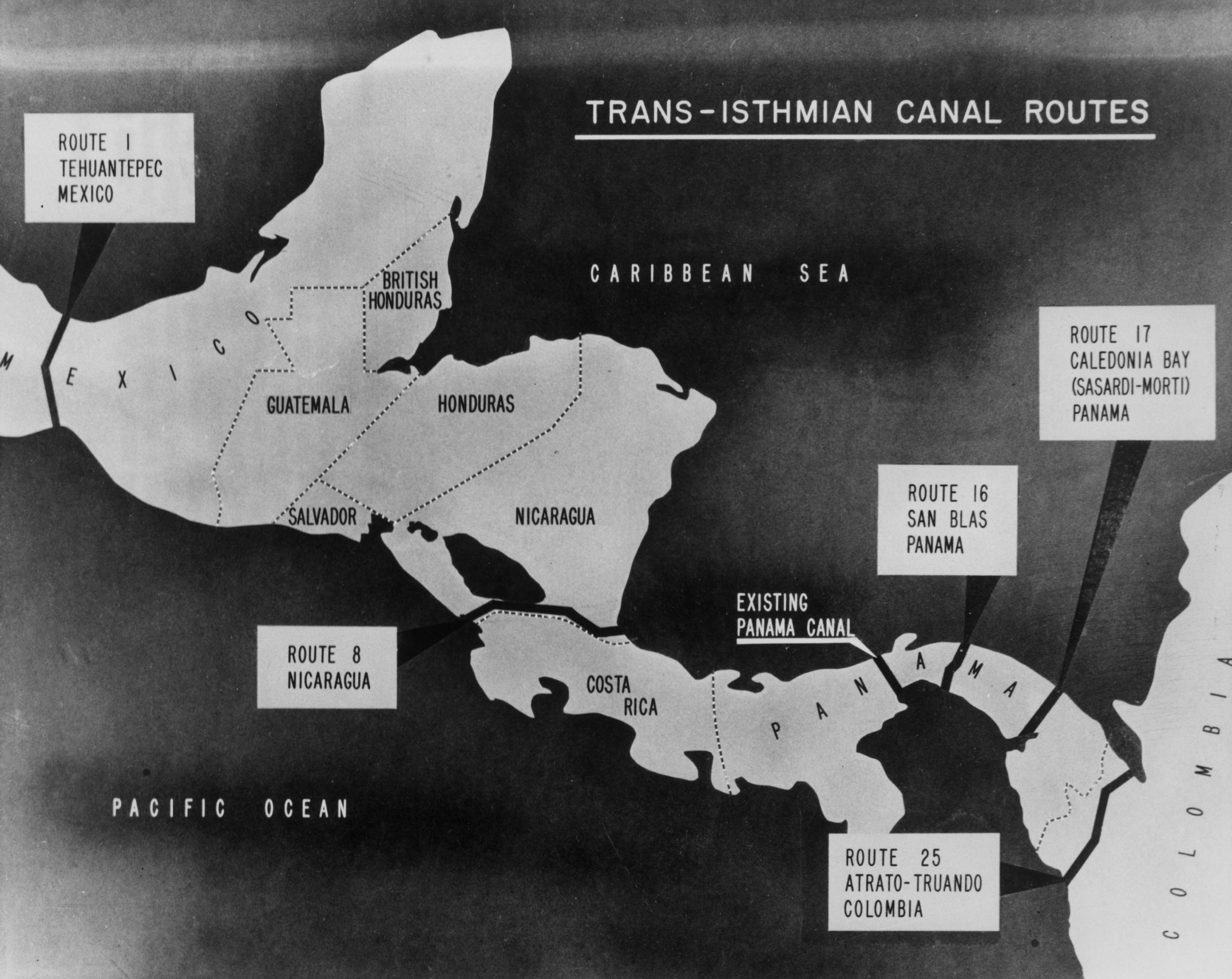
The Plowshare program gradually disappeared under the weight of economic doubts, environmental consequences, and public mistrust. The nuclear excavator never became an everyday tool. It did not dig a new Panama Canal, open magnificent harbors, or rescue infrastructure from the boring mechanics of conventional excavation. Instead, it left behind a crater that today looks like a souvenir from a world in which the word “peaceful” could be attached to almost anything, even to an explosion more powerful than several Hiroshimas.
But Sedan is not merely an anachronism from the atomic age. Every era has its own Plowshare. Each one finds a technology that promises to solve hard social problems without changing habits, without political conflict, and without serious sacrifice. Once, it was the nuclear explosion as a construction tool. Today, it is algorithms, geoengineering, miraculous platforms, machines that will clean the atmosphere or optimize society.
Sources
- Nuclearprinceton.princeton.edu Project Chariot https://nuclearprinceton.princeton.edu/project-chariot
- St.llnl.gov The Plowshare Program | Science and Technology https://st.llnl.gov/news/look-back/plowshare-program
- Sciencehistory.org We’re Going to Work Miracles https://www.sciencehistory.org/stories/magazine/were-going-to-work-miracles/
- St.llnl.gov The Sedan Event (Project Plowshare) | Science and Technology https://st.llnl.gov/news/look-back/sedan-event-project-plowshare
- Eros.usgs.gov Sedan Crater https://eros.usgs.gov/earthshots/sedan-crater
- Energy.gov Gasbuggy, New Mexico https://www.energy.gov/lm/articles/gasbuggy-new-mexico-site-fact-sheet
Comments