
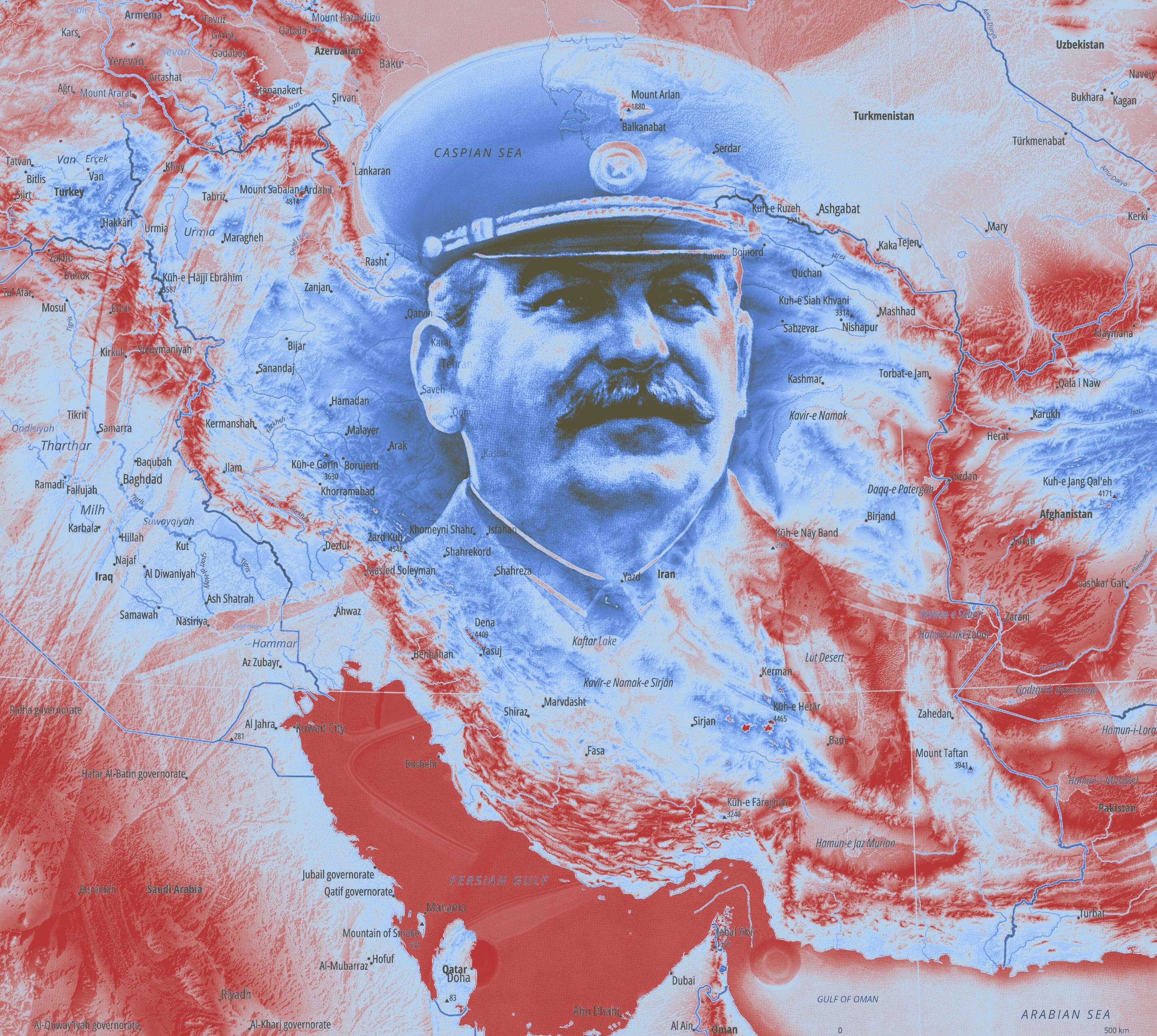
One morning in 1941, Iran woke up between two armies. It was not an enemy, not an ally — it was a necessity.
In August 1941, while German divisions were racing toward Moscow, a country far from the main European battlefields woke up between two armies. The British entered from the south. The Soviets from the north. Iran had not attacked London, had not attacked Moscow, had not declared war on the Allies. It was not a new front of Nazi Germany. But it had ports, oil, a railway and roads leading toward the Soviet Union. At that moment, that was enough.
The Allies called it necessity. And perhaps, from their wartime perspective, it really was necessary. But to Iranians, it looked different: their country was not treated as a state, but as a passage. As a map. As a transport artery between the Persian Gulf and Stalin’s front. If one wants to understand why Iran still looks at great powers with deep suspicion today, one should not begin only with the 1979 revolution or the 1953 coup against Mossadegh. One must also return to 1941, to the year when the anti-fascist Allies occupied a neutral country in order to save their own logistics.
Iran was then ruled by Reza Shah Pahlavi, a hard-handed man with great modernizing ambitions. He was building a state, an army, a bureaucracy, railways, schools. He was pushing Iran out of the old semi-feudal order toward something resembling a modern nation-state. It was not a democratic idyll, far from it. But it was a serious attempt at Iranian independence after decades of British and Russian interference.
Reza Shah tried to balance. He did not want Iran to be merely a British oil appendage, nor a Russian sphere of influence. That is why he opened space for the Germans, who in the interwar period became important trade and technical partners. German engineers, experts and businessmen were present in the country. The Allies claimed that Nazi agents were hiding among them. There probably were some. But the numbers and the danger were convenient for inflation. When a great power looks for a reason, it usually finds one.
The decisive moment came in June 1941, when Hitler attacked the Soviet Union. Suddenly everything changed. The Soviet Union, until yesterday in some sense a partner of Nazi Germany in the most cynical pact of the age, Molotov-Ribbentrop, now became Britain’s ally. Moscow had to be kept standing at any cost. It needed weapons, trucks, fuel, food, machinery... The northern routes through the Arctic were dangerous, exposed to German submarines and aircraft. The Black Sea did not offer a simple solution. And then Iran "appeared" on the map. Suddenly, it became strategically indispensable.
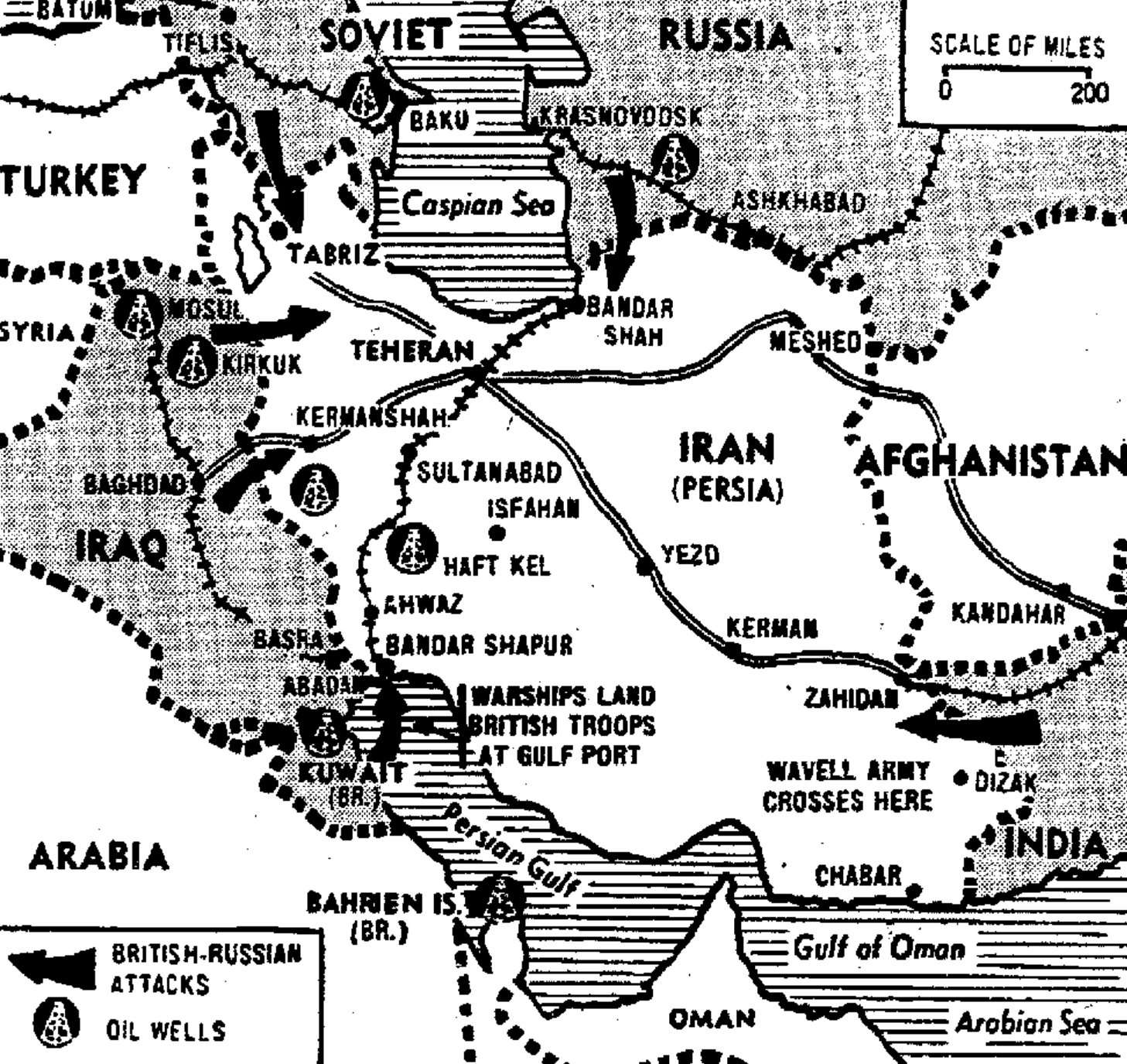
Through Iran, aid could be delivered from the Persian Gulf toward the Caspian Sea, and then onward into the Soviet Union. The Trans-Iranian Railway, completed only a few years earlier, suddenly acquired global importance. Roads that may have looked like an internal development project became part of a world war. The southern ports, especially the area around Bandar Shahpur, were turned into entry gates for the enormous flow of Allied aid. Iran, against its will, became the Persian Corridor.
And here things become interesting. Because war is often remembered through tanks, generals and great battles. Stalingrad, Kursk, Normandy. But wars are won just as much in warehouses, at railway stations, in the mud of roads along which drivers push trucks toward some distant front. Stalin did not need only heroism. He needed tires, canned food, locomotives, gasoline, spare parts.
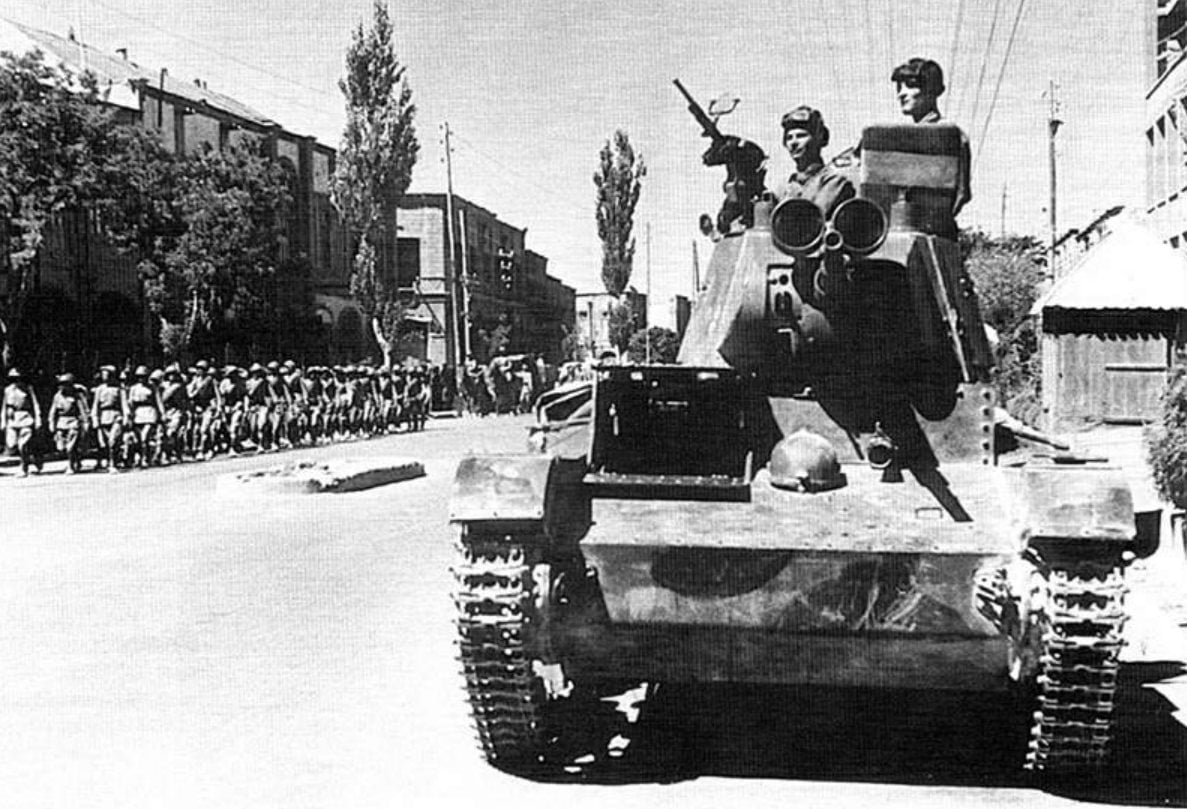
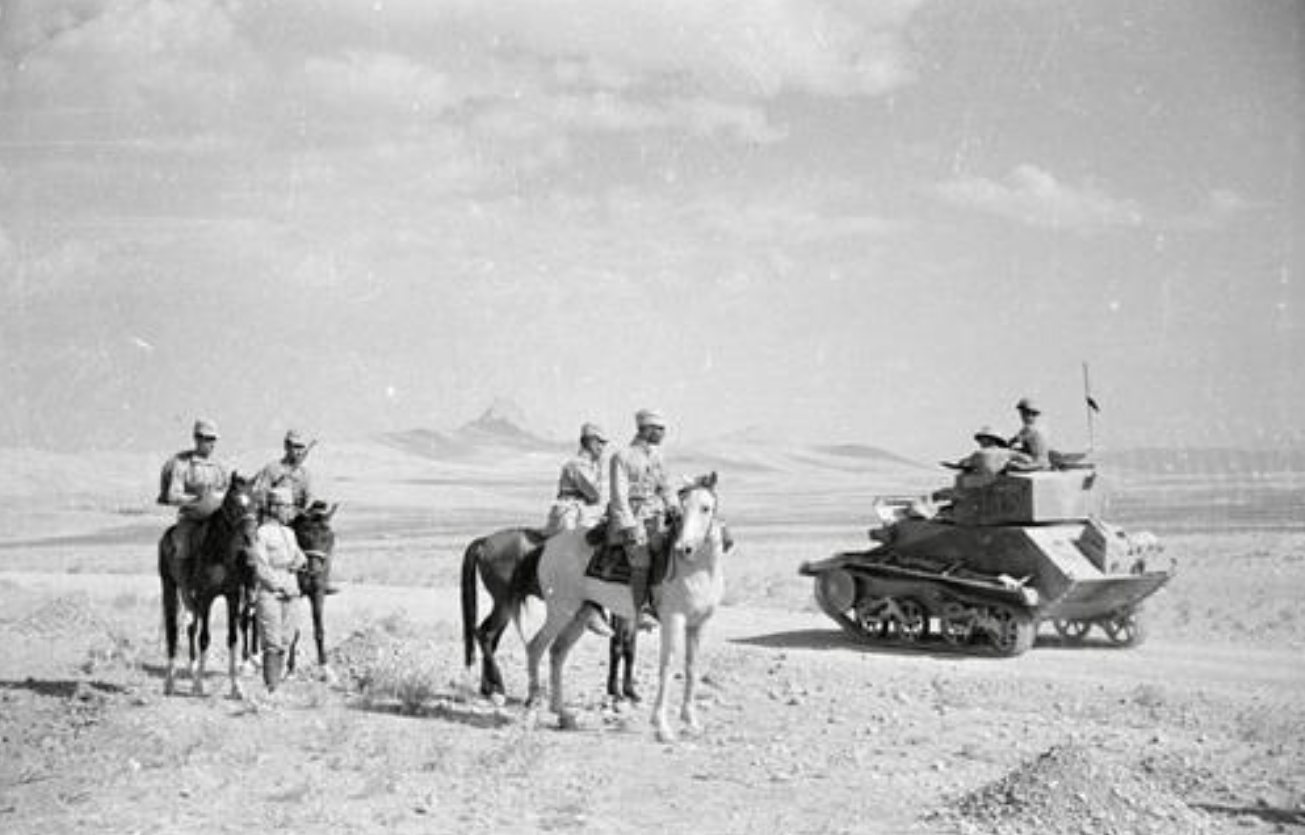
The British and the Soviets did not wait long. On August 25, 1941, they launched the invasion of Iran, known as Operation Countenance. British forces entered from Iraq and from the Persian Gulf area. Soviet forces crossed the border from the north, from the direction of the Caucasus and Soviet Central Asia. The Iranian army, despite Reza Shah’s ambitions, was not ready for such a blow. Modernization on paper is not the same as the ability to withstand an attack by two empires.
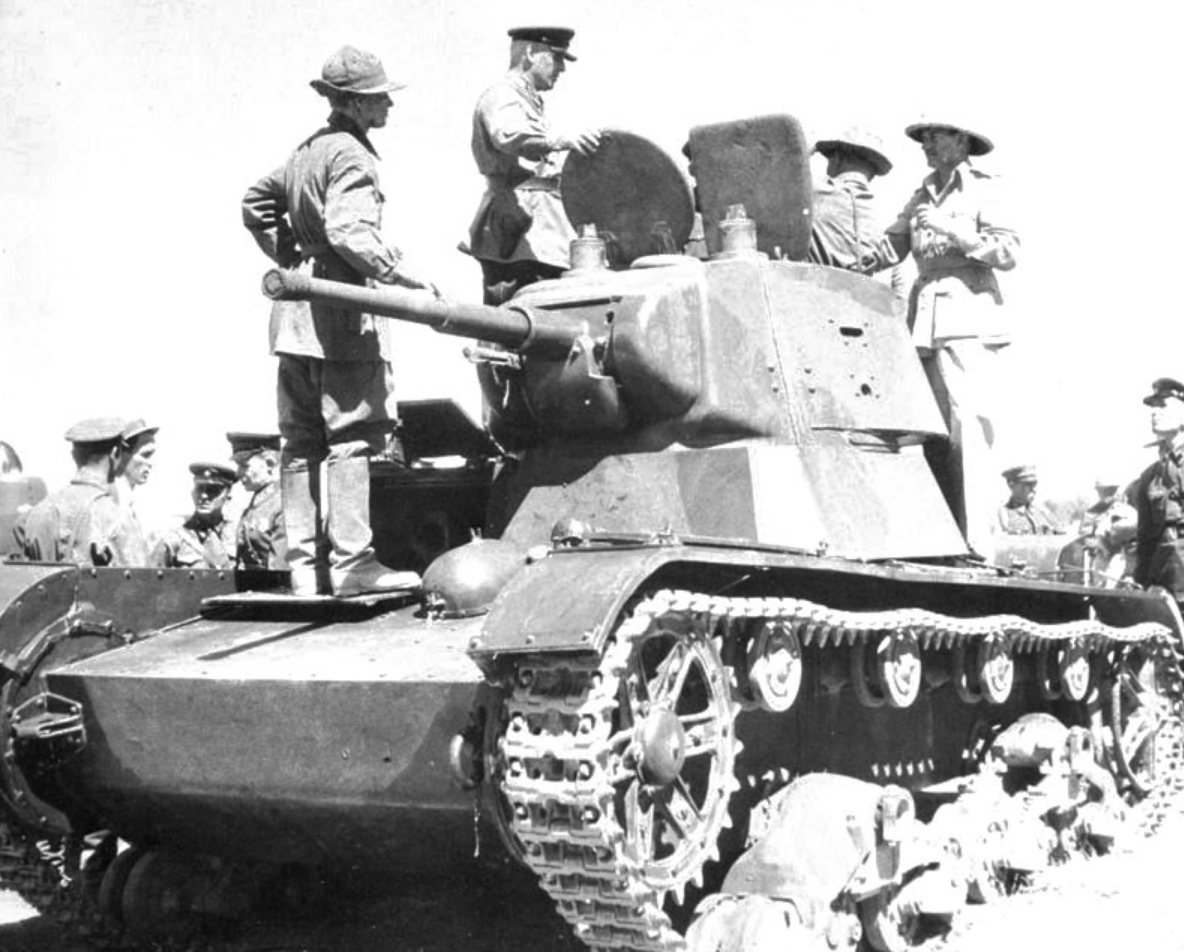
The resistance was brief. In some places real, in some chaotic, often futile. Iranian ships were hit, communications cut, the army disorganized. After several days, it was clear the game was over. The Allies demanded control over transport routes, the expulsion of German nationals and political obedience. Reza Shah, who had spent years trying to keep the British and Russians at a distance, was now broken precisely by them.
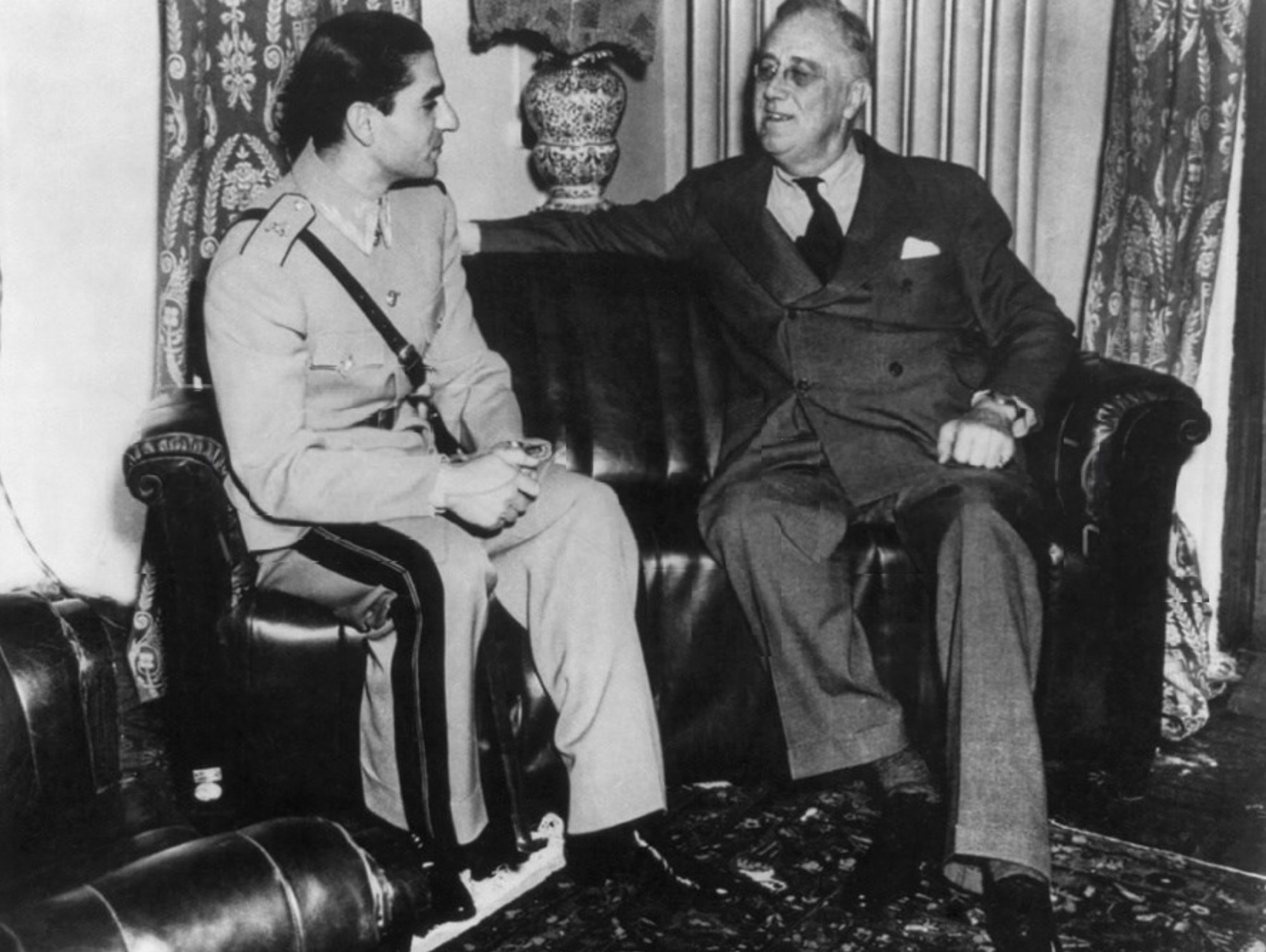
In September 1941, he was forced to abdicate. His young son, Mohammad Reza Pahlavi, came to the throne. That detail should not be skipped. Because that young shah, placed on the throne in an atmosphere of occupation and foreign pressure, would later become a key American ally in the Middle East. His rule would end with the revolution of 1979.
The Shah Who Did Not Know Where They Were Taking Him
One of the more interesting details in the whole story occurred after Reza Shah was forced to abdicate. The Allies did not merely defeat him militarily. They judged that they could no longer trust him. He was too stubborn, too independent, too inclined to "play between the great powers". The British viewed him with particular suspicion because of the German presence in Iran, but also because of his desire to reduce British influence over Iranian oil, the railway and the state in general. For London, that had been dangerous even before the war. After Hitler’s attack on the Soviet Union, it became, conveniently, unacceptable.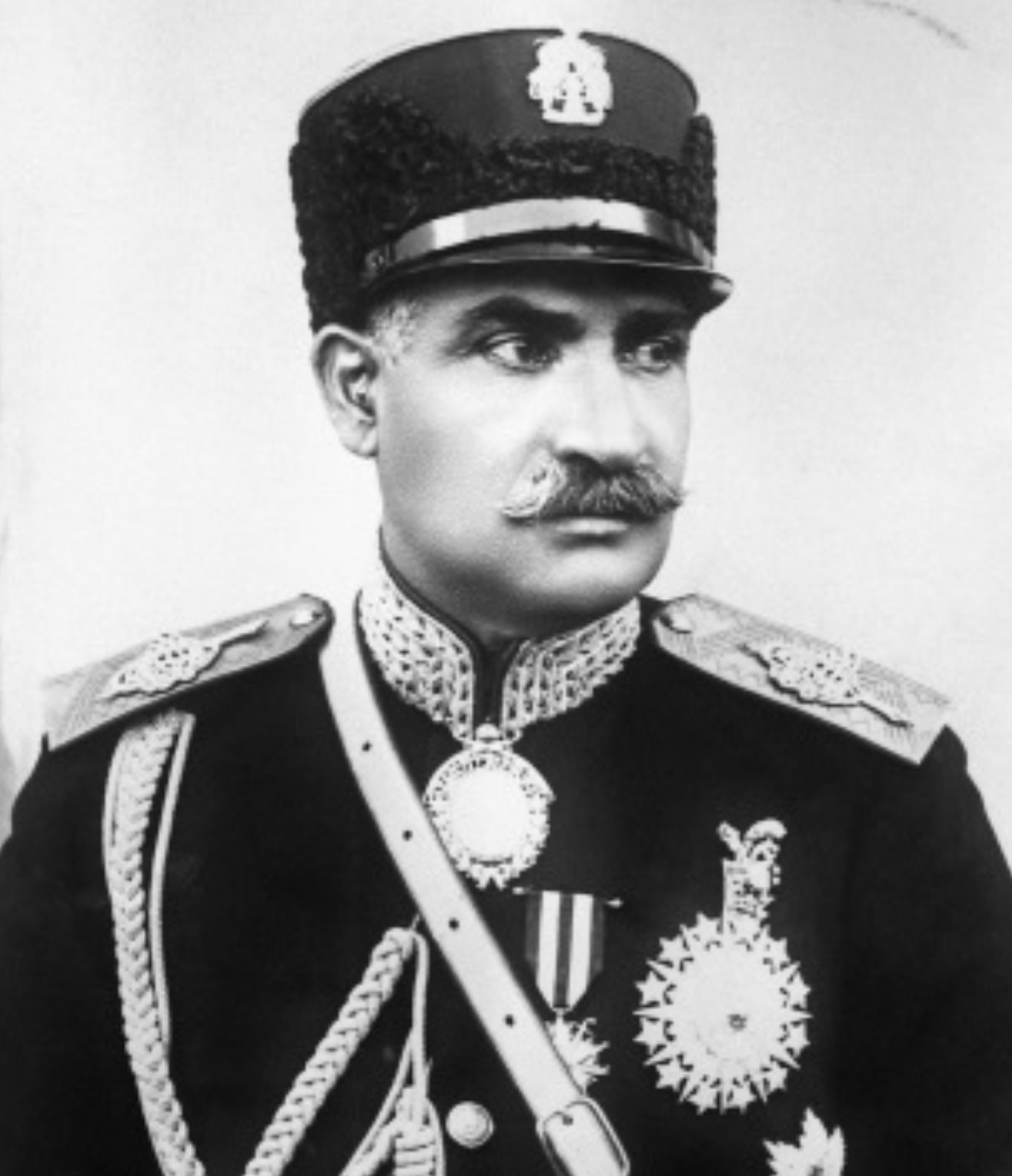
That is why they chose his son, Mohammad Reza Pahlavi. He was young, barely in his twenties, politically weaker and far more dependent on foreign support. Precisely because of that, he was more acceptable. He did not have his father’s weight, nor his authority, nor his habit of standing up to the British and Russians. For the Allies, and certainly for the Americans who would later dominate Iran firmly through him after the war, this was a practical solution: the monarchy remained, the state did not formally collapse, but at the top sat someone who understood that his throne depended on their goodwill.
The occupation of Iran was not only a military operation. It was also a logistical project of enormous scale. After the United States entered the war, the Americans took on an ever larger role in organizing the Persian Corridor. Warehouses were built, roads repaired, ports expanded, trucks and drivers brought in, and transport to the north organized. Iran became a service zone for the Allied war. On Iranian soil, British colonial officials, Soviet officers, American engineers, local workers, traders, hungry peasants, spies and bureaucrats encountered one another. Quite an unusual world, when one imagines it.
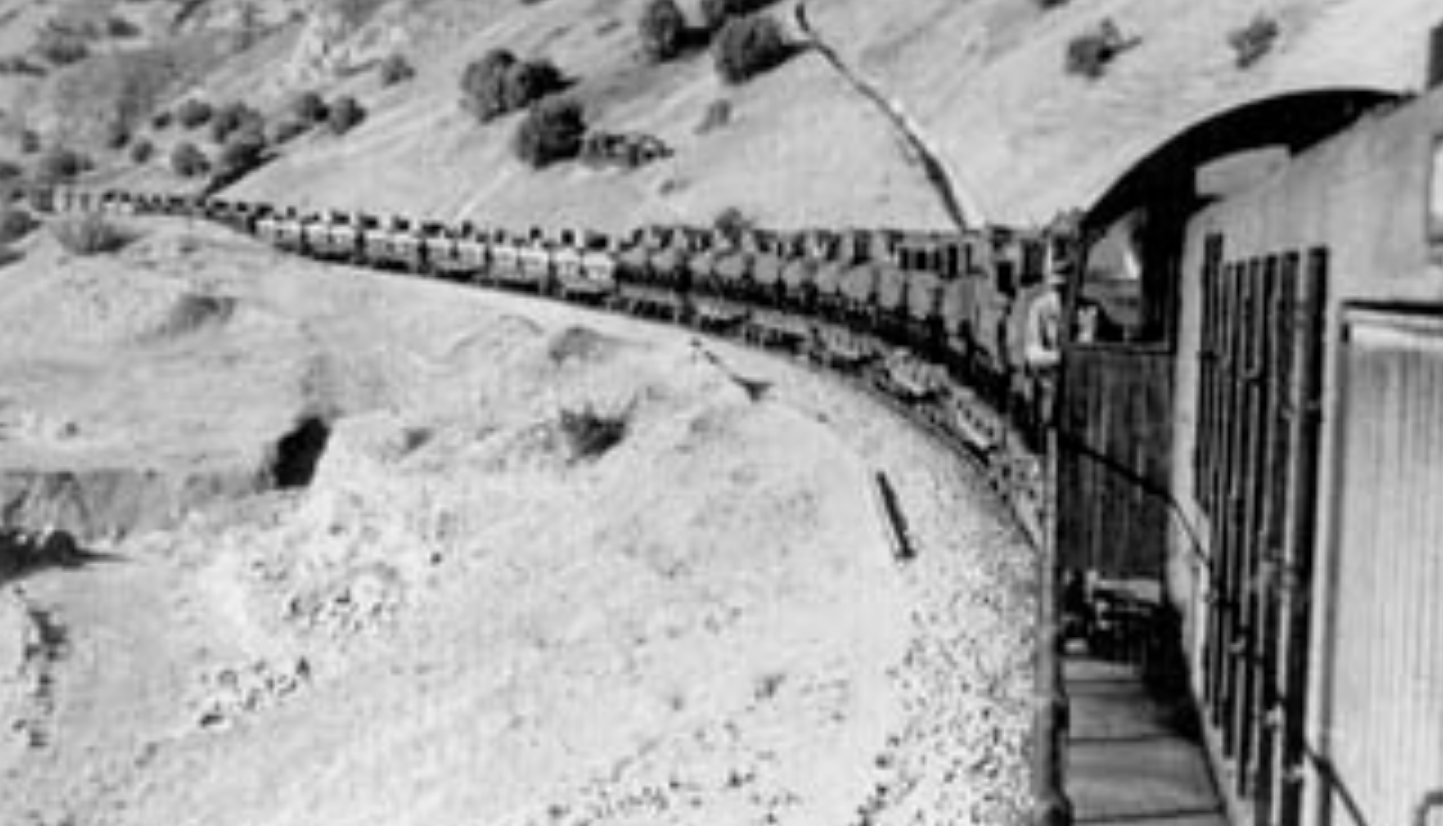
For Allied propaganda, all of this was a "corridor of life". And that is not entirely wrong. The aid that passed through Iran helped the Soviet Union continue the fight against Nazi Germany. Millions of tons of equipment, food and materials moved along that route. Without such logistics, the Soviet war effort would have been harder, perhaps not doomed to failure, but significantly harder. That is a fact.
But there is another side. For Iranians, that same corridor meant occupation, inflation, shortages, pressure on food supplies, foreign soldiers in cities and the feeling that the fate of the country was being decided somewhere else. Grain, transport and labor became part of the wartime calculation. Prices rose. The state was humiliated. Ordinary people did not necessarily see grand strategy. They saw more expensive bread, chaos in supply and soldiers nobody had invited.
One road can be salvation for Moscow and trauma for Tehran.
The British interest had another agenda as well: oil. The Anglo-Iranian Oil Company had for decades been a symbol of British domination over Iranian resources. The refinery in Abadan was one of the most important in the world. For London, Iran was not only a transport space toward the Soviet Union. It was also an energy space that could not be lost. Once that is understood, the occupation of 1941 no longer looks like an isolated wartime plan. It looks like part of a larger story.
That pattern would appear again in 1953, when Mohammad Mossadegh tried to nationalize Iranian oil, and British and American interests decided that Iran’s democratic will mattered less than control over resources and "Cold War stability". Of course, 1941 and 1953 are not the same story. But in Iranian memory, they stand very close together.
Perhaps the strongest image of the entire episode comes in 1943, when Roosevelt, Churchill and Stalin met in Tehran. Three leaders discussed the future of the world, the war was still ongoing, but it was increasingly clear that Hitler was losing, in the capital of a country already occupied by their armies. They discussed strategy, the opening of a second front, the postwar order. Iran was the host, but not quite a host in the full sense of the word. More like scenery. A geographically convenient backdrop for great history.
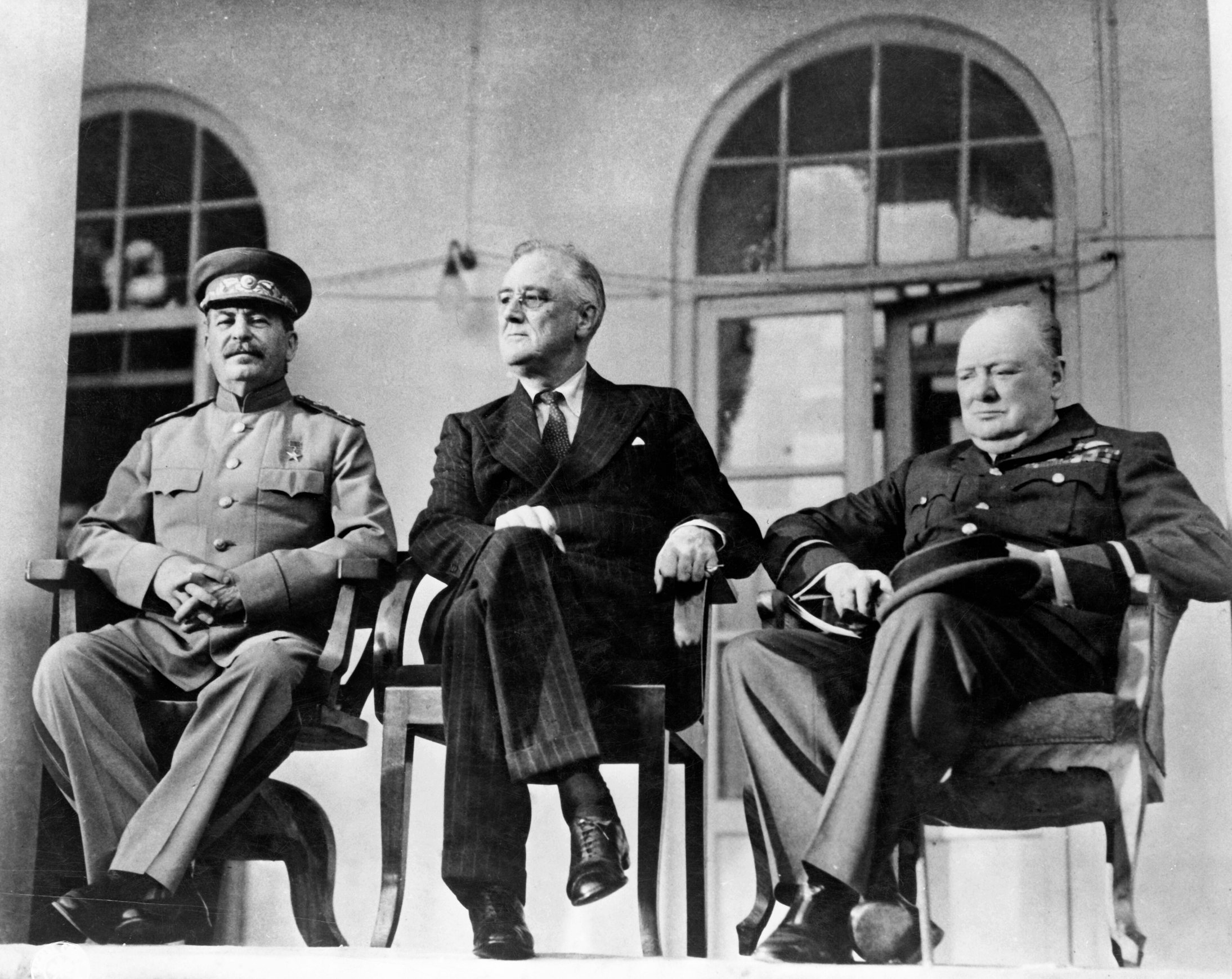
The Allies then promised to respect Iran’s independence and territorial integrity. It sounded nice. But a promise made in an occupied city always has a strange tone. The British and Americans withdrew after the war, but the Soviets dragged their feet, especially in the north of the country, where they supported separatist movements in Azerbaijan and Kurdistan. Only pressure from international diplomacy and a shift in the balance of power led to the Soviet withdrawal in 1946. Iran thus became one of the early stages of the Cold War, even before the term became common.
That is why the occupation of 1941 matters. The West often sees Iran as a problem: too hard, too distrustful, too obsessed with sovereignty, too prone to conspiracy theories. But from the Iranian perspective, history is not a series of abstract misunderstandings. It has concrete places. Abadan. Tehran. The northern provinces. Railway stations.
Of course, Iranian politics cannot be reduced only to old traumas. But without 1941, something important remains invisible. Iran did not suddenly become distrustful. It learned distrust through experience. Through situations in which great powers spoke of security, freedom, anti-fascism, stability or development, while in practice looking at roads, oil and position on a map.
The Persian Corridor was real aid to the Soviet Union. It was an important cog in the defeat of Nazism. That should not be minimized. But for Iran, it was also the moment when its geography became more important than its will. And that is hard to forget.
Perhaps the whole irony lies precisely there. One of the roads that helped defeat Hitler simultaneously deepened distrust toward the order that, after that war, would speak of freedom, sovereignty and international law. Iran passed through the Second World War not as a great victor, not as the main enemy, not even as a true battlefield. It passed through as a passage. As a necessary route.
And when a country is treated long enough as a road toward someone else’s goal, one should not be surprised if, one day, it begins to believe that every arrival of the great powers is merely a different version of the same old intention.
Comments