
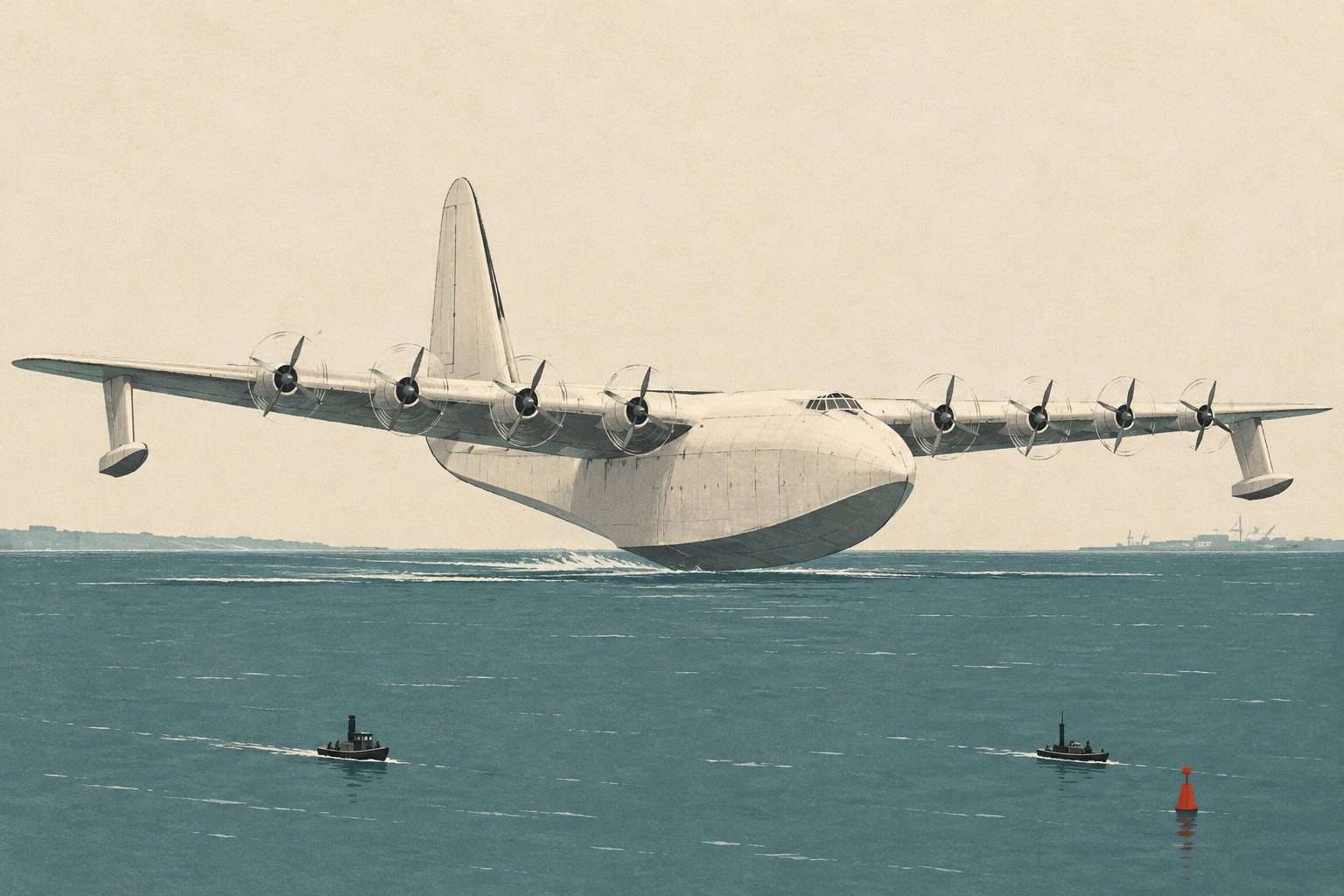
The Hercules arrived too late for the war and lost its future before its first flight, but a few seconds over the water were enough for Hughes to claim victory.
On Sunday, November 2, 1947, thousands of spectators gathered along Long Beach Harbor to watch the largest aircraft the world had ever seen make a test run.
Eight engines rose to a deafening roar as the enormous hull accelerated across the water. Then, suddenly, the pounding of the waves fell silent. The Hughes H-4 Hercules had lifted clear of the surface. It flew very low over the harbor for only a few dozen seconds before touching down again. It never flew again.
The largest aircraft of its time taking off only once sounds like the punchline to a story about extravagance, vanity and technological excess. Yet that brief flight was intended for an audience far removed from the crowds gathered on the California waterfront. The real audience was sitting in Washington, on a Senate committee investigating where the government’s money had gone...
An aircraft built for a war that ended before it did
The story began in 1942, when German submarines were sinking Allied ships in the Atlantic. Henry Kaiser, an American industrialist and shipbuilder known for the rapid mass production of Liberty cargo ships, envisioned a colossal flying transport. Instead of exposing troops and equipment to torpedoes, it would carry them across the ocean by air.
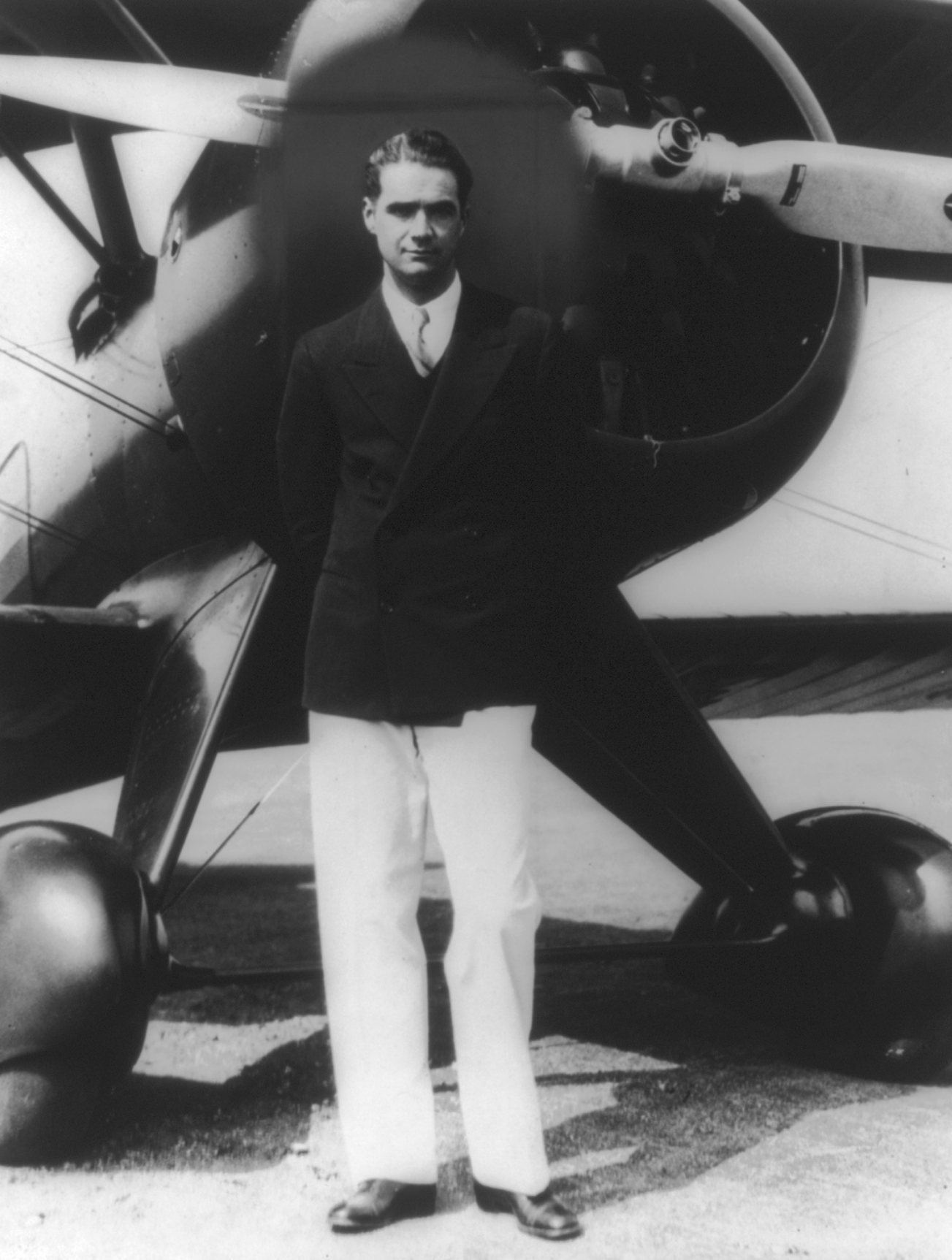
Kaiser chose Howard Hughes as his partner. Hughes was an American industrialist, film producer and aviator who had already broken several speed records. In 1938, he had flown around the world in just over 90 hours. He was precisely the kind of man who might embrace a project that experts considered barely feasible — rich enough to absorb the risk and obsessive enough to take rejection personally.
The US government approved $18 million for three prototypes, on the condition that their construction consume none of the aluminium needed for military aircraft. Hughes’s engineers therefore turned to Duramold, a process that bonded thin layers of wood using resin, heat and pressure. The result was not some primitive wooden aircraft but a vast composite structure whose joints had to meet almost obsessively exacting tolerances.
Journalists nicknamed the aircraft the "Spruce Goose." Hughes despised the name and insisted on calling it the Hercules, or simply the Flying Boat. He had a sound technical reason to be annoyed: the aircraft contained almost no spruce and was made primarily from birch. The nickname was therefore botanically wrong but devastatingly effective. In two rhyming words, it reduced years of engineering work to the mocking image of an ungainly wooden bird.
Photographs struggle to convey the scale of the machine. Its wingspan was nearly 98 metres, while its tail rose to the height of an eight-storey building. Its eight engines produced a combined 24,000 horsepower. The Smithsonian describes it as nearly six times larger than any aircraft of its day. It was designed to carry hundreds of soldiers and vast quantities of military equipment.
What the Hercules was meant to carry
The military specification for the Hercules did not merely call for "a large quantity of cargo." It demanded an aircraft capable of carrying around 68 tonnes of freight, 750 fully equipped soldiers or two M4 Sherman tanks. Its enormous internal deck was therefore conceived as a flying warehouse, with separate fuel tanks and watertight compartments below and, above them, enough space to carry men and equipment across the Atlantic without exposing them to submarines.The figure of 750 soldiers becomes clearer when compared with the Douglas C-47, the workhorse of Allied air transport. A C-47 could carry 28 paratroopers. Transporting in a single mission what the Hercules was designed to carry would have required almost 27 C-47s for the troops, or around 25 for the equivalent weight in cargo. Hughes’s aircraft was not simply an enlarged transport plane. It was an attempt to compress an entire small-scale airlift into a single machine.
That extraordinary capacity also contained the project’s central paradox. One Hercules might theoretically replace dozens of smaller aircraft, but it concentrated all the risk in one exceptionally complex machine with eight engines, a gigantic wooden hull and operational requirements that had never been tested. Its specifications perfectly matched the drama of the wartime problem. The project never reached the stage at which anyone could discover whether it was equally well suited to everyday military use.
When an aircraft reshapes a city
Even moving the components from the factory in Culver City to the harbor became an infrastructure project in its own right. Planning took two years. Roads were closed and utility lines raised, while 21 utility companies had to remove and reinstall more than two thousand electrical and telephone cables. The aircraft had yet to fly, but it was already temporarily reshaping the city through which it passed.
The problem was that time was moving faster than Hughes’s project. Kaiser withdrew in 1944 because of the delays. The war in Europe ended the following year, and the Hercules was not completed until 1947. An aircraft conceived as an answer to German submarines had lost its race against the calendar.
Why the future looked like a ship
In the early 1940s, the flying boat was not a technological dead end. For large transoceanic aircraft, water offered something that was still scarce on land: an immense area for takeoff and landing, with no need to build an exceptionally long and durable runway. A boat-shaped hull could withstand the impact of touching down on water, while an aircraft encountering trouble on a long journey could at least theoretically land at sea. Pan American’s Clippers had already shown that oceans could be crossed from harbors rather than airports.The war then erased that very advantage. The Allies built a worldwide network of long runways, while faster and more efficient land-based aircraft acquired ever greater range. Immediately after the war, international routes were taken over by the DC-4, the Lockheed Constellation and, soon afterward, the DC-6 and other large aircraft that did not have to carry the weight of a hull designed for water. Harbors ceased to be the answer to a shortage of airports because airports had become part of the wartime infrastructure along virtually every important route.
The Hercules had therefore lost its future before its first flight. When the idea was conceived in 1942, the vast ocean could still appear to be the world’s largest runway. By the time the aircraft finally skimmed over Long Beach in 1947, the industry had already turned toward land-based transports, pressurized cabins and the approaching jet age. Hughes did not complete a pointless machine. He completed a plausible answer to a problem that five years of technological and infrastructural acceleration had rendered obsolete.
A flight that had to prove only one thing
By then, the project had become the subject of a Senate investigation into wartime contracts. Critics wanted to know how millions of dollars in public money had produced only one enormous aircraft that had yet to fly. Hughes, who had also invested millions of his own dollars in the project, tied his reputation to the fate of the Hercules in his testimony before the senators. If the aircraft proved to be a failure, he declared, he would probably leave the United States and never return.
That gave the test run on November 2 the character of a technical trial, a political performance and a personal duel all at once. Hughes told reporters that he had no intention of taking off. After several runs across the water, however, he called for takeoff flaps and increased the power. Whether he made the decision at that moment or had planned it all along has never been entirely clear. The fact that he had invited journalists aboard at least suggests that he did not want any possible success to go unwitnessed.
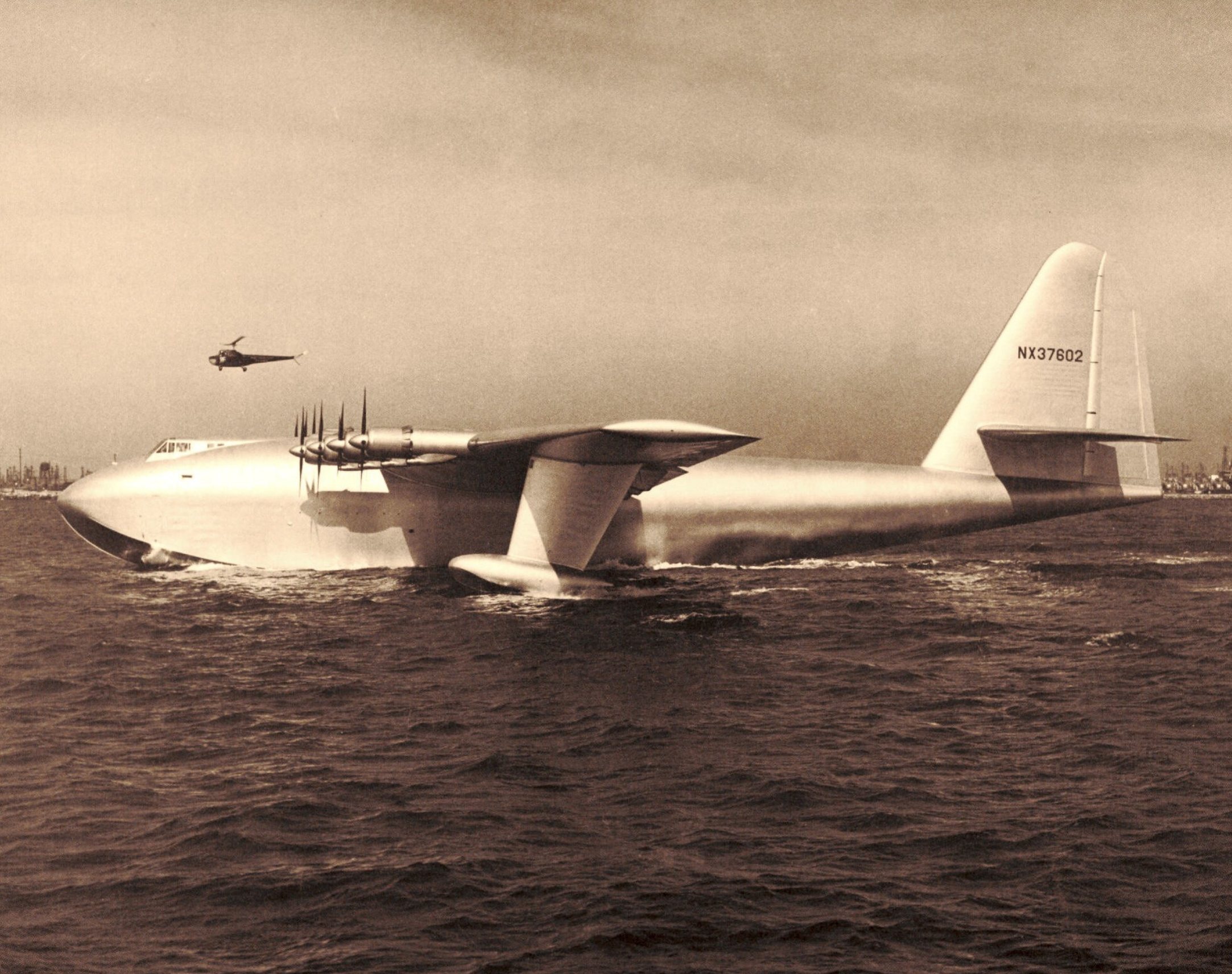
The Hercules remained within ground effect, where proximity to the surface increases lift. The flight therefore did not prove that a fully loaded aircraft could climb to a safe altitude, cross the Atlantic and perform its intended role on a regular basis. It proved only that the enormous machine could lift clear of the water. In technical terms, this was merely the beginning of testing. In the political world, which prefers a simple answer to the question of whether something flies or does not, it was enough.
A verdict postponed for three decades
What followed was stranger still. Hughes had a climate-controlled hangar built and retained a crew to keep the aircraft ready for another flight. Its systems were inspected, its engines regularly started and its controls further refined. This continued until his death in 1976. Perhaps, for a time, he genuinely considered returning it to the air. Or perhaps he simply could not allow a machine so closely bound to his identity and reputation to become a dust-covered monument to a finished failure. As long as the Hercules remained ready to fly, the final verdict could be postponed.
A 1972 US government report revealed just how much the world had changed in the meantime. It referred to the aircraft as a "flying lumberyard," while proposals for its future included turning it into a museum, flying it as part of the United States bicentennial celebrations or converting its hull into a taco stand. A strategic project intended to outwit Hitler’s submarines had become an administrative problem that no one knew where to put.
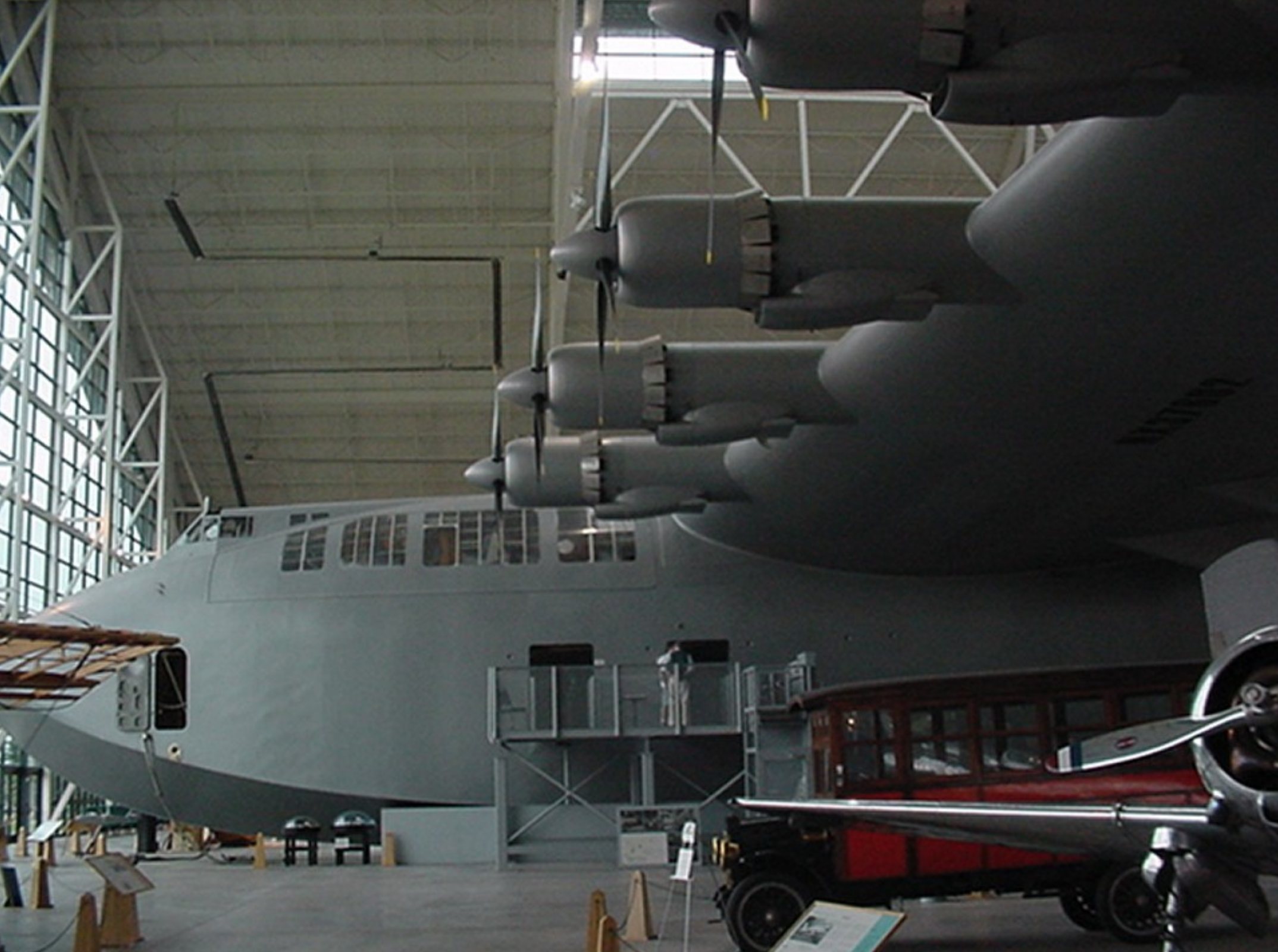
After Hughes’s death, the Hercules finally emerged from its hangar. It was displayed in Long Beach for a time, then dismantled and transported by barge to Oregon. Today it dominates the museum in McMinnville, where visitors can walk beneath the wings of a machine once intended to usher in a new era of transoceanic transport.
Hughes did not build a fleet of transport aircraft. He built an argument weighing approximately 136 tonnes. On November 2, 1947, its true cargo was neither soldiers nor military equipment, but the reputation of the man at the controls. The Hercules carried that burden for less than two kilometres — exactly as far as Howard Hughes needed it to go that day.
Sources
- North American Aerospace Museum The Spruce Goose Lives On! https://www.evergreenmuseum.org/exhibit/the-spruce-goose/
- Smithsonian National Air and Space Museum Hughes H-4 (HK-1) Hercules ("Spruce Goose") Photo Album https://airandspace.si.edu/collection-archive/hughes-h-4-hk-1-hercules-spruce-goose-photo-album/sova-nasm-1997-0017
- American Society of Mechanical Engineers The Spruce Goose Still Wows After Nearly 80 Years https://www.asme.org/topics-resources/content/the-spruce-goose-is-a-wooden-wonder
- Library of Congress Published Congressional Hearings https://guides.loc.gov/legislative-history/published-congressional-hearings
- National Museum of the United States Air Force Douglas C-47D Skytrain https://www.nationalmuseum.af.mil/Visit/Museum-Exhibits/Fact-Sheets/Display/Article/196271/douglas-c-47d-skytrain/
- Smithsonian National Air and Space Museum How World War II Killed the Flying Boat https://airandspace.si.edu/stories/editorial/how-world-war-ii-killed-flying-boat
- Los Angeles Almanac Spruce Goose Hughes H-4 Hercules https://www.laalmanac.com/history/hi404f.php
- TIME TRANSPORT: It Flies! https://time.com/archive/6784775/transport-it-flies/
Comments