
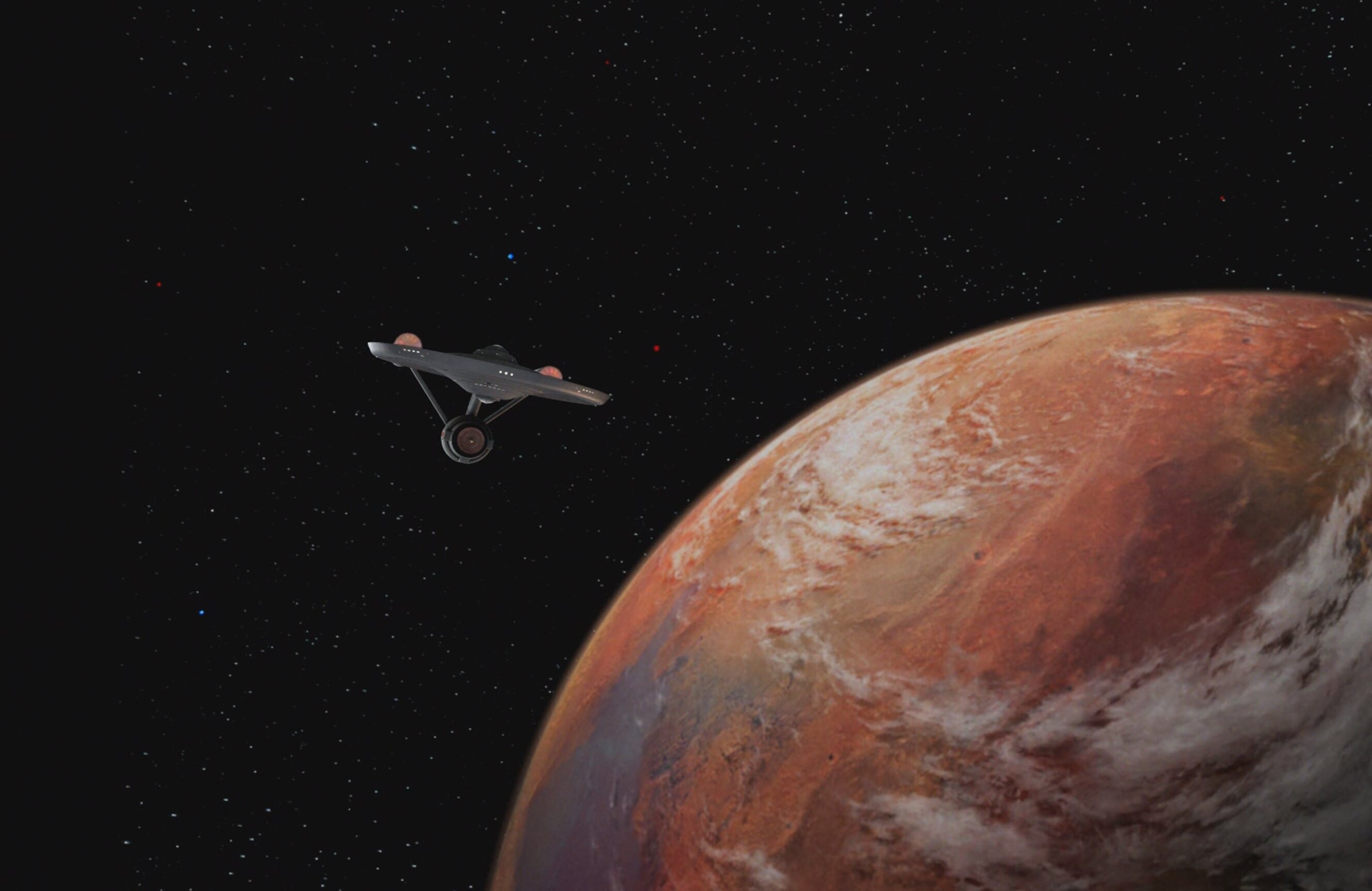
The day before the Enterprise first crossed American television screens, the Pentagon announced that 49,200 men would be drafted in October—the largest monthly call-up since the Korean War. Four days after the premiere, Gemini XI blasted off. Two days later, it reached the highest altitude yet achieved by a crewed spacecraft. Between a war spreading across Earth and a frontier opening in space, NBC aired the American premiere of Star Trek on September 8, 1966.
In the space of a few days, America was presented with three different visions of the future: the jungles of Vietnam, a real capsule in orbit, and a fictional starship cruising through the 23rd century. Yet the strangest thing on the bridge of the Enterprise was not Spock’s ears, the glowing controls, or the monster that fed on salt from human bodies. It was the extraordinarily optimistic assumption that humanity not only had a future, but might one day become worthy of it.
NBC wanted a monster
The Man Trap, the episode that launched the series, was actually the sixth one produced. NBC chose it from among the completed episodes because it seemed scarier and easier to market. Along with a shape-shifting creature that drained salt from its victims, however, the network also got something rather harder to advertise: political philosophy disguised as adventure.
That disguise had been built into the project from the beginning. American writer and producer Gene Roddenberry—a former military and commercial pilot who had also worked as a police officer—pitched the series as a "wagon train to the stars." Westerns were reliable television, so he described the galaxy in terms that the people controlling the budgets could understand. Each planet could become an island from Swift’s Gulliver’s Travels: distant enough to appear exotic, yet familiar enough to say something about Earth.
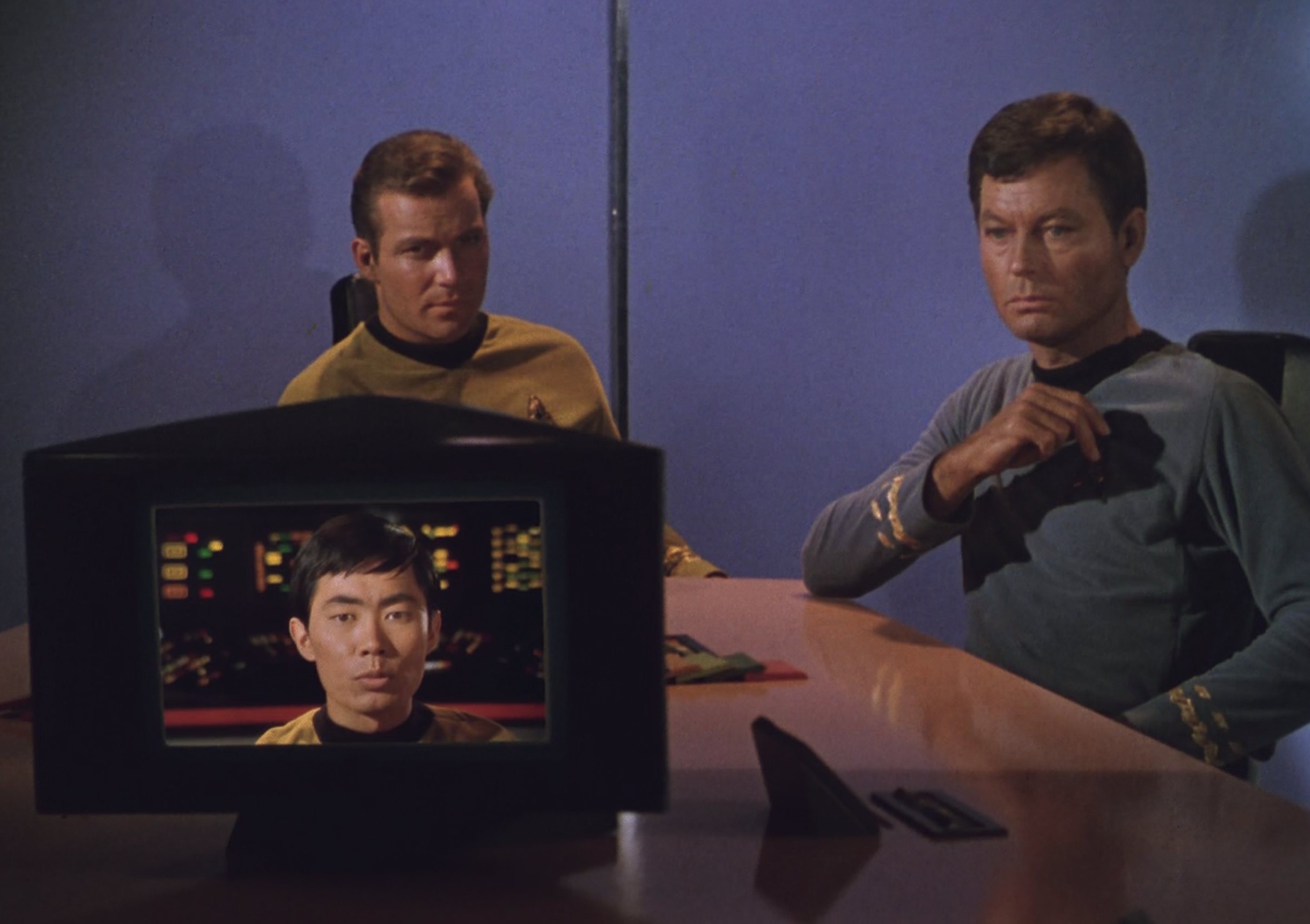
NBC rejected the first pilot, The Cage, as "too cerebral" and short on action. Yet the network took the rare step of commissioning a second pilot, after which the series was finally given the green light. Television first sold audiences a space vampire, then used the opening to smuggle in debates about war, racism, and power.
Science fiction offered the perfect hiding place for such subjects. A direct story about American intervention might have alarmed sponsors. A story about Klingons arming a distant planet was merely a story about Klingons. The censors knew the map of the United States very well, but their jurisdiction did not yet extend across the galaxy.
The most radical special effect was the bridge itself
On that bridge, Lieutenant Uhura, a Black communications officer, and Sulu, a Japanese-American helmsman, went about their work as though there were nothing unusual about it. Yet there is a remarkable—and dark—detail behind Sulu’s presence. George Takei, the actor who played him, had spent part of his childhood in the internment camps where the United States confined Japanese Americans during the Second World War. Two decades later, he sat at the controls of a ship that belonged to no single nation. In the second season, Russian navigator Pavel Chekov joined the crew. In the middle of the Cold War, the future—even more remarkably—spoke with a Russian accent.
This was not perfect equality. Uhura was often given too few lines, female characters were sexualized, and positions of command generally remained in male hands. The series did not escape 1966 simply by placing its sets three centuries in the future. Yet the image of a competent Black woman serving on the bridge was already a political statement in its time.
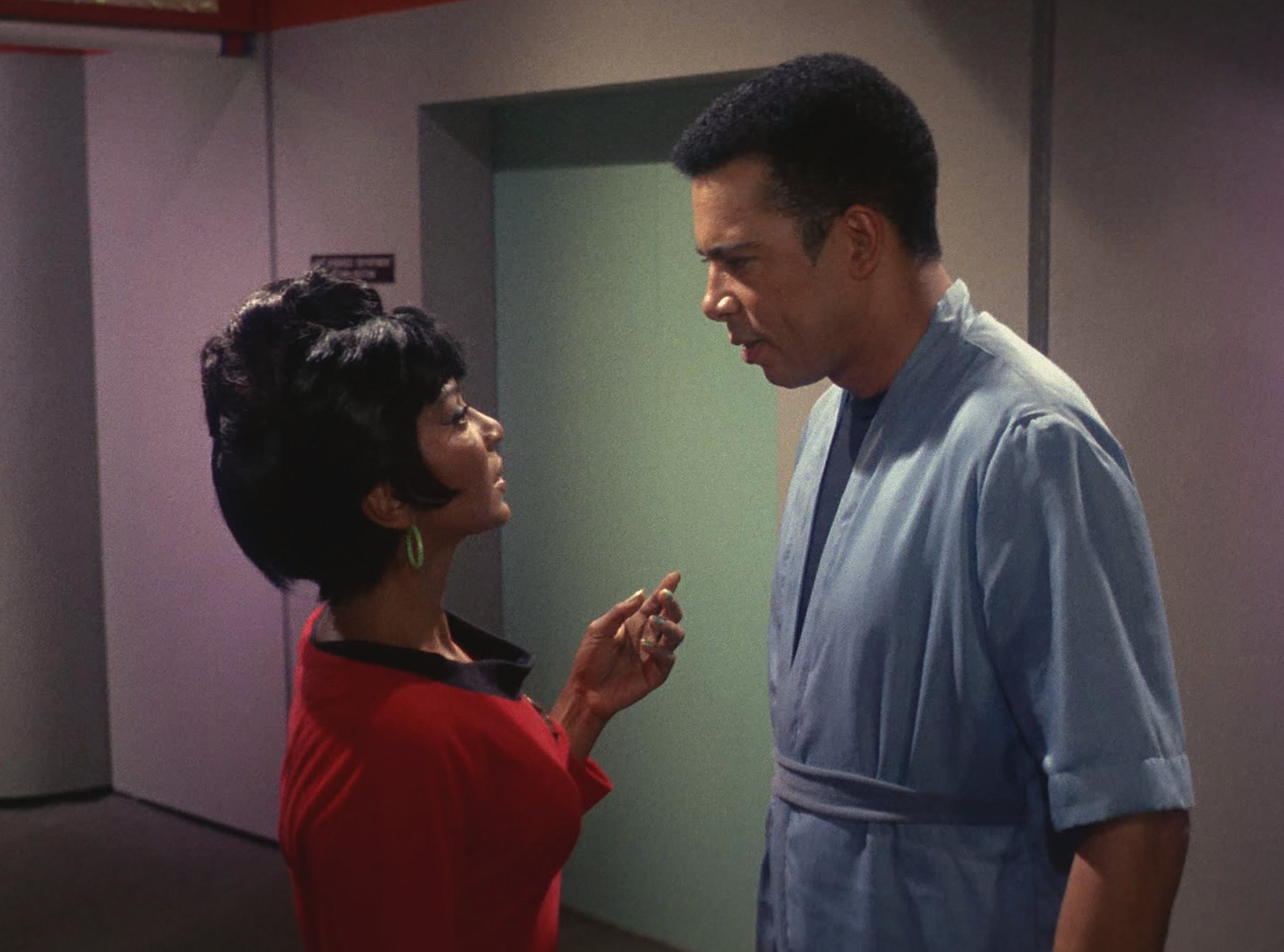
Nichelle Nichols later recalled that she had intended to leave the series for Broadway after its first season. According to her account, Martin Luther King Jr. persuaded her to stay. He explained that Uhura presented a Black woman as an equal participant in humanity’s future. The civil rights movement showed America what it was, Uhura showed it what it might become.
Here lay the true originality of Star Trek. Its inventions would later be compared to mobile phones and medical scanners, but its boldest creation was not technological. It was a society in which different kinds of people trusted a shared institution—and regarded exploration as reason enough for enormous collective investment. The Enterprise was no billionaire’s yacht. Today, that may sound more exotic than the transporter.
Optimism without innocence
To call Star Trek a pacifist utopia would be to view it through a distinctly rose-tinted visor. The Enterprise was an armed vessel with a command structure modeled on the navy. Its officers preached noninterference, then regularly decided that, on this particular occasion, intervention happened to be necessary. The Federation often resembled an idealized version of Kennedy-era America: powerful and convinced that its values must surely be universal.
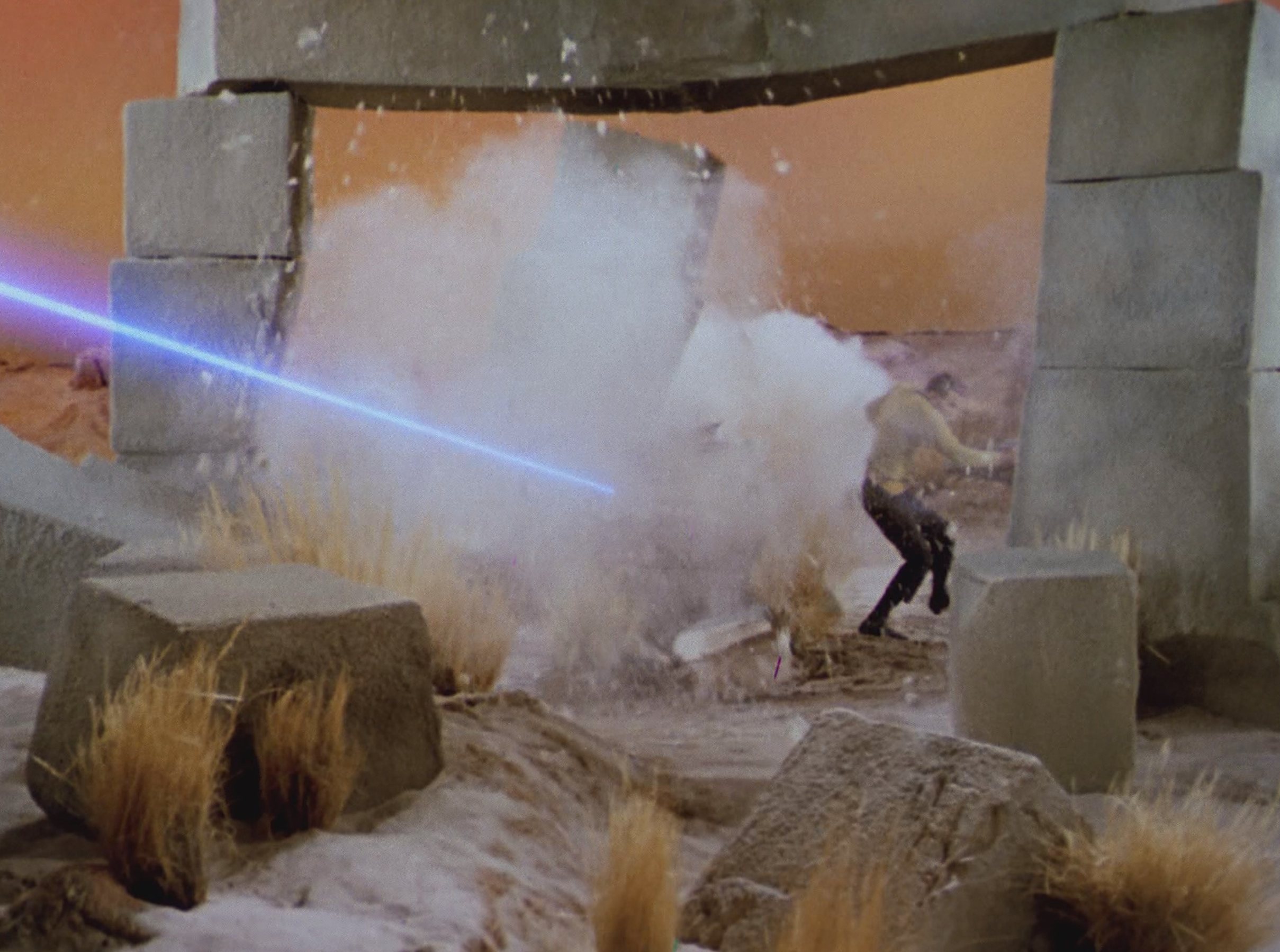
That contradiction is especially clear in the 1968 episode A Private Little War. The Klingons arm one faction, so Kirk gives identical weapons to the other in order to restore the balance. It is Vietnam translated into the language of space opera, but hardly a straightforward antiwar lesson. Kirk may be creating an endless conflict, but he still chooses intervention. The series, one might say, shared the dilemma of a liberalism that desired peace yet feared the consequences of withdrawal.
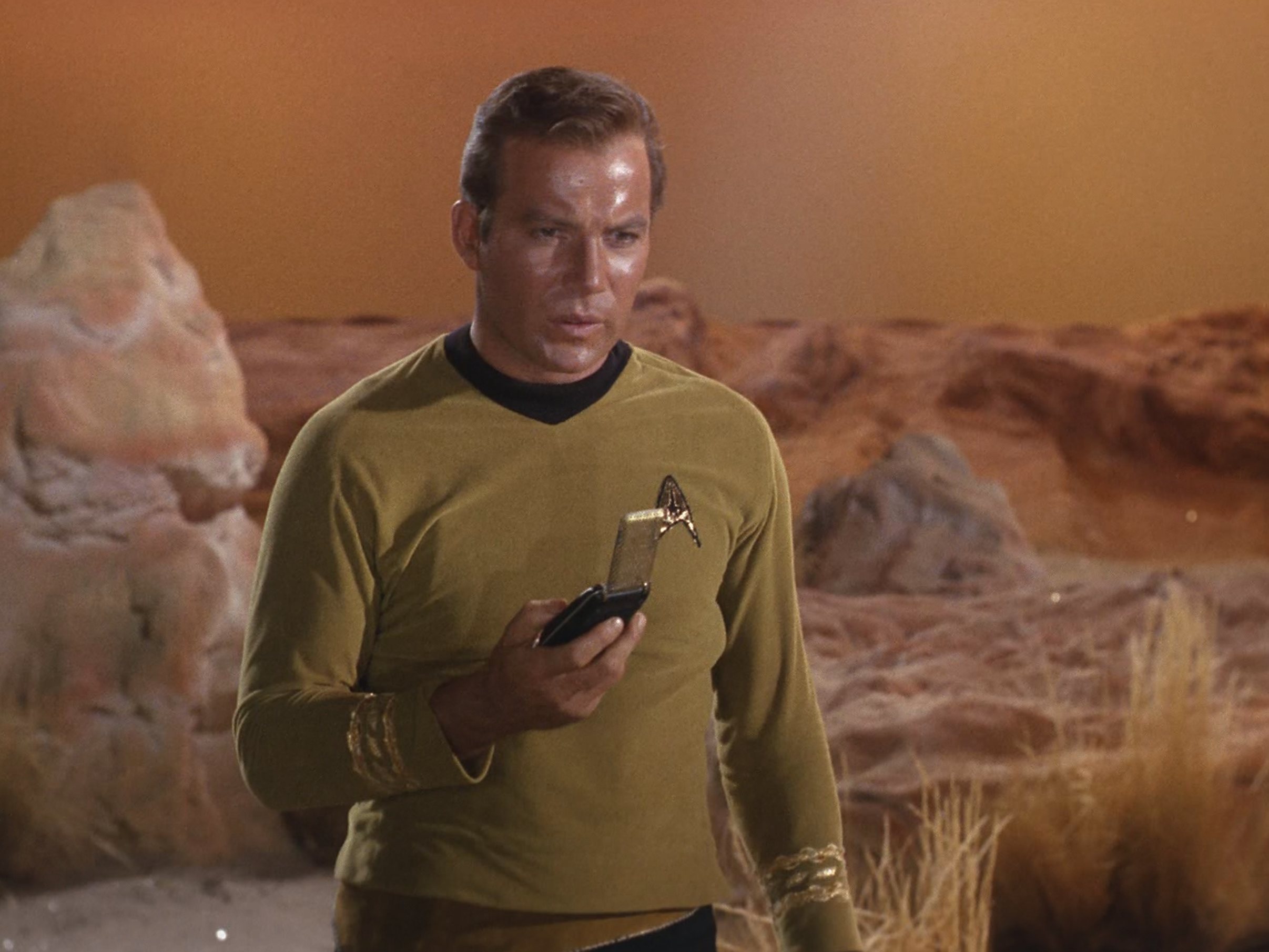
In A Taste of Armageddon, two planets have waged a computer-simulated war for centuries. Their cities remain intact, but anyone whom the computer registers as a casualty of a simulated attack must report to a disintegration chamber. War has become clean and administratively efficient—and therefore no one has any reason to end it. Behind the cardboard rocks lay a deeply unsettling idea: technology does not abolish barbarism, it can simply make barbarism more tolerable for those who administer it.
The show’s optimism did not rest on the belief that danger would disappear. Almost every week brought a new threat or another human failure. Its hope lay in the conviction that reason, empathy, and cooperation could overcome the first impulse to destroy whatever seemed alien. In its best episodes, the crew did not prevail through superior firepower, but by realizing that the supposed monster was suffering—or merely trying to protect its young.
The transporter was invented because the Enterprise could not land within budget
One of the most famous technologies in science-fiction history was not conceived as a daring prediction about the future of physics. It began as the solution to a production problem. If the crew of the Enterprise was to visit a new planet every week, the series would have to show either the enormous ship itself landing or the crew traveling in a smaller spacecraft. For 1960s television, that meant miniatures, new sets, and expensive optical effects. In other words, the future was too expensive for the show.Gene Roddenberry therefore embraced a more elegant solution: the ship would not land at all. The crew would simply disappear from one place and reappear in another. The transporter saved money as well as precious screen time. Instead of watching a craft launch, travel, and land, Kirk and his crew could find themselves in the middle of trouble by the second page of the script. The transporter bypassed both the production bills and the potentially dull parts of the story.
The effect itself was almost comically modest compared with what it represented. The actors would first be filmed on the set, followed by an identical shot of the set without them. The two images were then blended together with a dissolve. The familiar cloud of sparkling light was created separately by filming illuminated aluminum powder against a black background. One of the 23rd century’s greatest technological wonders was thus assembled from editing, metallic dust, and a camera held very carefully in place.
The idea of transporting matter had existed in science fiction long before Star Trek, but the series turned it into a fixture of popular culture. More importantly, a production shortcut soon became the source of fascinating stories in its own right. The transporter could malfunction, duplicate a person, send someone into a parallel reality, or raise the question of whether the individual who appeared at the destination was truly the same person who had vanished.
There is a miniature history of television creativity in all this. One of the most extravagant visions of the future was born from the constraints of a very real budget.
The future was still a public project
Science fiction in 1966 was certainly neither naïve nor innocent. Orwell and Huxley had already written their dystopias, nuclear annihilation had entered popular culture, and The Twilight Zone had warned viewers that monsters were often found inside human beings.
Roddenberry began developing the series in 1964, a year marked by victories for the civil rights movement, new social programs, and an accelerating space race. Faith that public institutions could improve the world was still alive. By the time the series premiered in 1966, that faith was already breaking apart in Vietnam. Star Trek was like a delayed message from the last confident moment of postwar liberalism—early enough to believe in progress, yet late enough to recognize its cost.
A rocket could carry a nuclear warhead, but it could also carry a human being toward the Moon. The future still appeared to be a political choice, rather than a product that would arrive only once someone found a way to make it profitable. The show’s optimism was not a matter of cheerful sentiment. It was a claim that humanity could build institutions worthy of its technology.
Contemporary science fiction often signals seriousness with ruins, surveillance, and all-powerful corporations. It is not our faith in the power of technology that has weakened, but our confidence that its benefits will belong to everyone. Dystopia has a dramatic advantage: a collapsing system immediately creates a plot, while a functioning society must first be imagined convincingly. Star Trek sent its conflicts to distant worlds but kept at its center an institution that mostly worked. That was its more daring thought experiment.
The Federation was not perfect, and the series carried American frontier mythology—and its paternalism—into space. Even so, it stubbornly insisted that history did not have to be merely a more sophisticated way of repeating the same massacres.
NBC canceled Star Trek in 1969 after three seasons and 79 episodes—the same year humanity first set foot on the Moon. Reruns then brought it back to life, introducing the series to a mass audience only after its cancellation. It turned out that the future simply needed a little longer to find its time slot.
Sixty years later, the communicators look like charming ancestors of the mobile phone. Yet the most distant invention remains that bridge on which people from different backgrounds assume that they share a common mission. We still want to believe in that vision of the future, even if it is no longer offered to us as readily as it once was. But for those of us who refuse to give up, there will always be reruns.
Sources
- Tandfonline.com Liberals in space: the 1960s politics of Star Trek https://www.tandfonline.com/doi/abs/10.1080/17541328.2012.721584
- Origins.osu.edu Star Trek | Origins https://origins.osu.edu/milestones/september-2016-star-trek
- Computerhistory.org September 8: The First Episode of Star Trek Airs | This Day in History | Computer History Museum https://www.computerhistory.org/tdih/september/8/
- Jstor.org "Star Trek" in the Vietnam Era https://www.jstor.org/stable/4240304
- Time Magazine A Bold Vision: How Star Trek First Made It to the Screen https://time.com/4406710/star-trek-history-excerpt/
- Airandspace.si.edu Star Trek - Boldly Preserving the Artifacts of Cultural History https://airandspace.si.edu/explore/stories/star-trek
- Theasc.com Star Trek 50 Part I — Original Series Effects https://theasc.com/article/star-trek-50-part-i-original-series-effects/
Comments