
How Was Modern Saudi Arabia Created? The Kingdom Is Younger Than the Empire State Building, and Instead of Petro-Dollars, We Could Have Had Petro-Rubles
Before oil and petrodollars, there were desert raids, British interests, and an army that Ibn Saud had to defeat after it helped him win.
Published
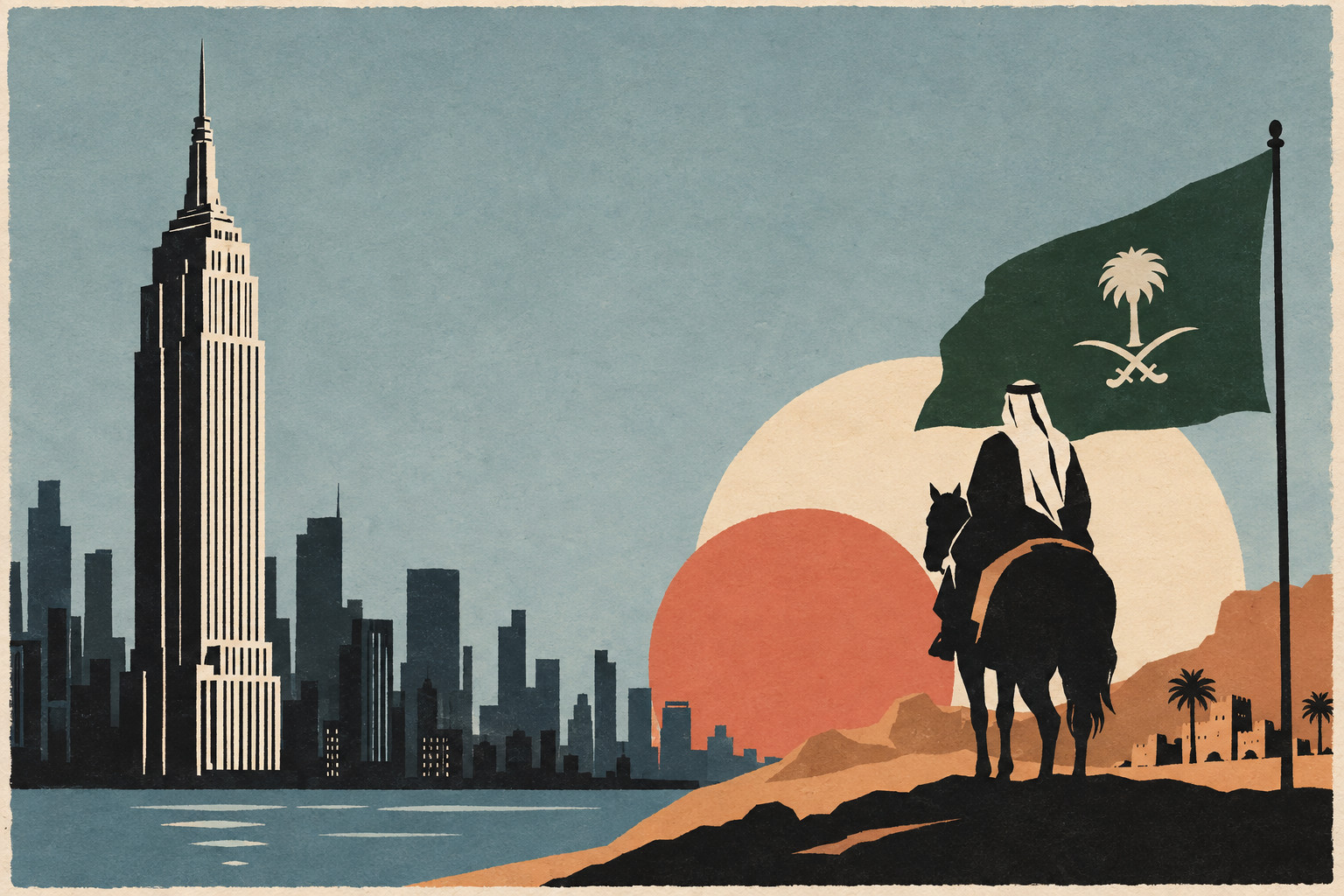
When Saudi Arabia acquired its present name, the Empire State Building had already been towering over Manhattan for more than a year. It was not until September 23, 1932, that a royal decree came into force, transforming a realm composed of the Hejaz, Nejd and their dependencies into the Kingdom of Saudi Arabia. The country that now appears to be an ancient monarchy is younger than one of the modern world’s most famous skyscrapers.
More importantly, an oil kingdom was not born that day. Commercial quantities of oil would not be discovered for another six years. The future land of the petrodollar emerged before the petrodollar itself, forged through three decades of war, negotiation and carefully constructed alliances. Abdulaziz ibn Saud did not inherit Saudi Arabia. He first had to conquer it, then bind it together, and only then name it after his dynasty. The imperial powers, of course, were involved.
The dynasty was old. The state was not
The Saudi dynasty itself was nothing new. In the mid-18th century, Muhammad ibn Saud, ruler of the small town of Diriyah, formed an alliance with the religious reformer Muhammad ibn Abd al-Wahhab. The ruler offered the preacher protection and military power, the preacher gave the dynasty religious legitimacy. From that alliance arose the first Saudi state, destroyed in 1818 by Egyptian forces acting under Ottoman authority. A second Saudi state was established several years later, but it was eventually torn apart by internal family conflict and the rise of the rival Rashidi dynasty. After its final defeat in 1891, the House of Saud took refuge in Kuwait.
Saudi historiography therefore describes the present-day kingdom as the third Saudi state. That historical continuity is real, but it can also be misleading. The dynastic tradition was relatively old, the borders, administration and state proclaimed in 1932 were something new.
The raid that began the return
The comeback began in January 1902. Abdulaziz reached Riyadh with several dozen followers and seized Masmak Fortress, the seat of the Rashidi governor, in a surprise attack. Later legend told of a spear that remained embedded in the fortress gate during the fighting, what is said to be its broken tip is still shown there today. The details changed with each retelling, but the story’s political power did not. The opening scene in the history of modern Saudi Arabia is not a coronation, but a daring raid led by a man whose family was living in exile.
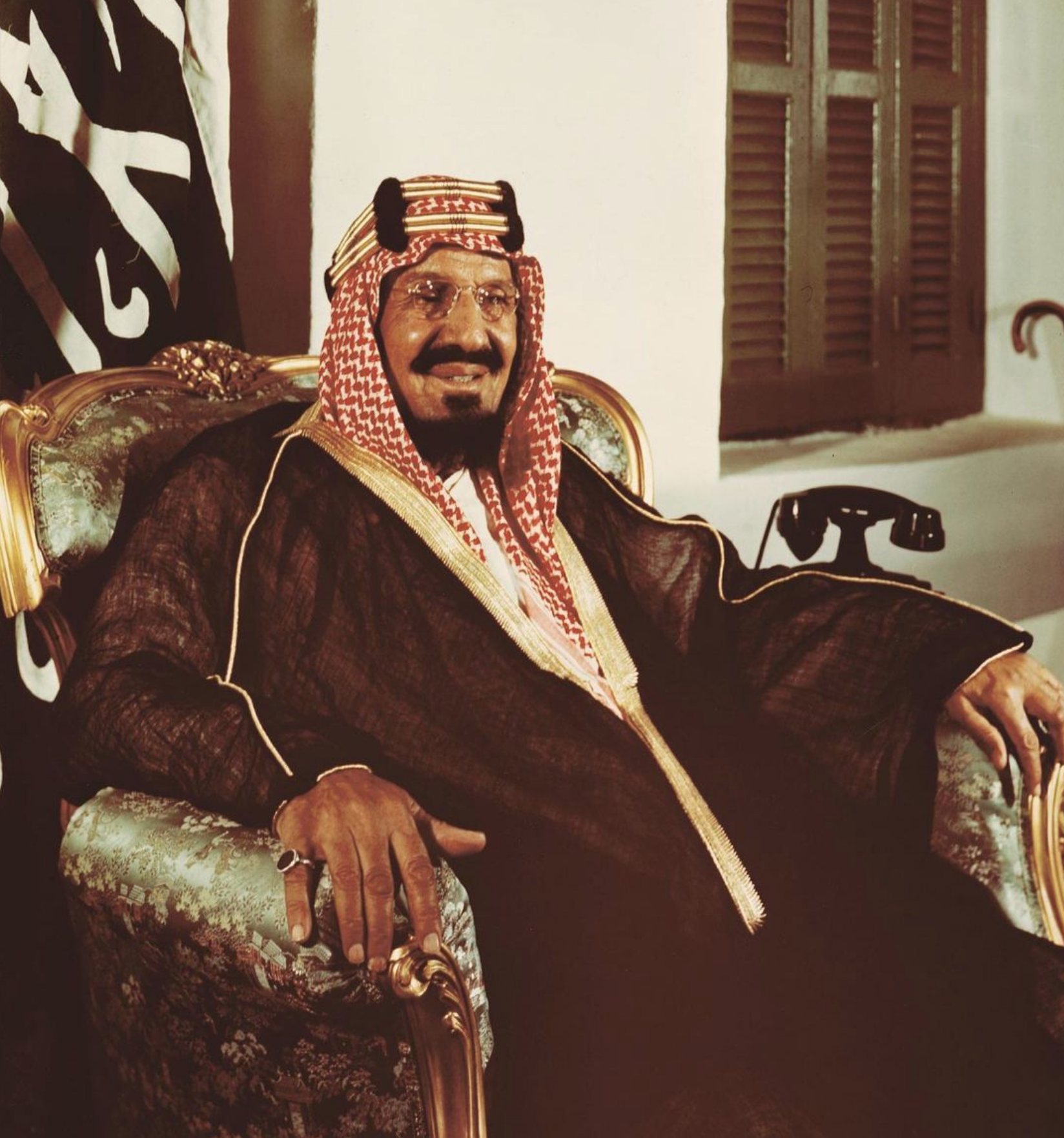
Riyadh, however, was merely a foothold. Abdulaziz spent years consolidating his rule in Nejd and pushing back the Rashidis. In 1913, he expelled the Ottoman garrison from al-Hasa in the east. This did not yet bring him oil—the region’s reserves were still unknown—but it did give him oases, a coastline on the Persian Gulf and a substantial Shia population. The fall of Ha’il in 1921 brought an end to the Rashidi state of Jabal Shammar, the House of Saud’s greatest dynastic rival.
Warrior, imam and cold-blooded diplomat
Abdulaziz did not prevail by force alone. He knew when to pardon defeated enemies, bind them to him with money or incorporate them into an extensive network of marriages. At the same time, he presented himself as a religious leader and negotiated with the great powers. At one moment he was a desert warrior, at another an imam, and at another a remarkably cool-headed diplomat. It was precisely this ability to move between roles that set him apart from rivals who knew how to conquer territory but not how to keep it.
Britain was not necessarily the "creator" of Saudi Arabia, but nor was it a disinterested observer. In a 1915 treaty, London recognized Abdulaziz’s authority over his expanding territory, provided him with money and supplied him with weapons. In return, Britain expected to influence his foreign policy and secure his cooperation against the Ottomans. Yet the British were also supporting Sharif Hussein of Mecca, the future king of the Hejaz and leader of the Arab Revolt. As empires tend to do, Britain invested in several potential winners at once.
Abdulaziz’s most important military force became the Ikhwan, or "brothers"—a movement not to be confused with Egypt’s Muslim Brotherhood. Bedouin groups were settled in permanent agricultural and religious communities, where they adopted strict discipline and a reformist interpretation of Islam. The Ikhwan gave tribal warriors a common ideology. Its fighters did not see conquest merely as an expansion of political power, but as the purification of Arabia from practices they considered un-Islamic.
The Hejaz: the holy cities as the greatest prize
The greatest prize lay in the west. The Hejaz was not simply another stretch of desert, but a distinct Hashemite kingdom containing Mecca, Medina and the port of Jeddah. It faced the Red Sea and had been shaped by centuries of pilgrimage, commerce and Ottoman administration. Compared with the more isolated Nejd, it was almost a cosmopolitan world.
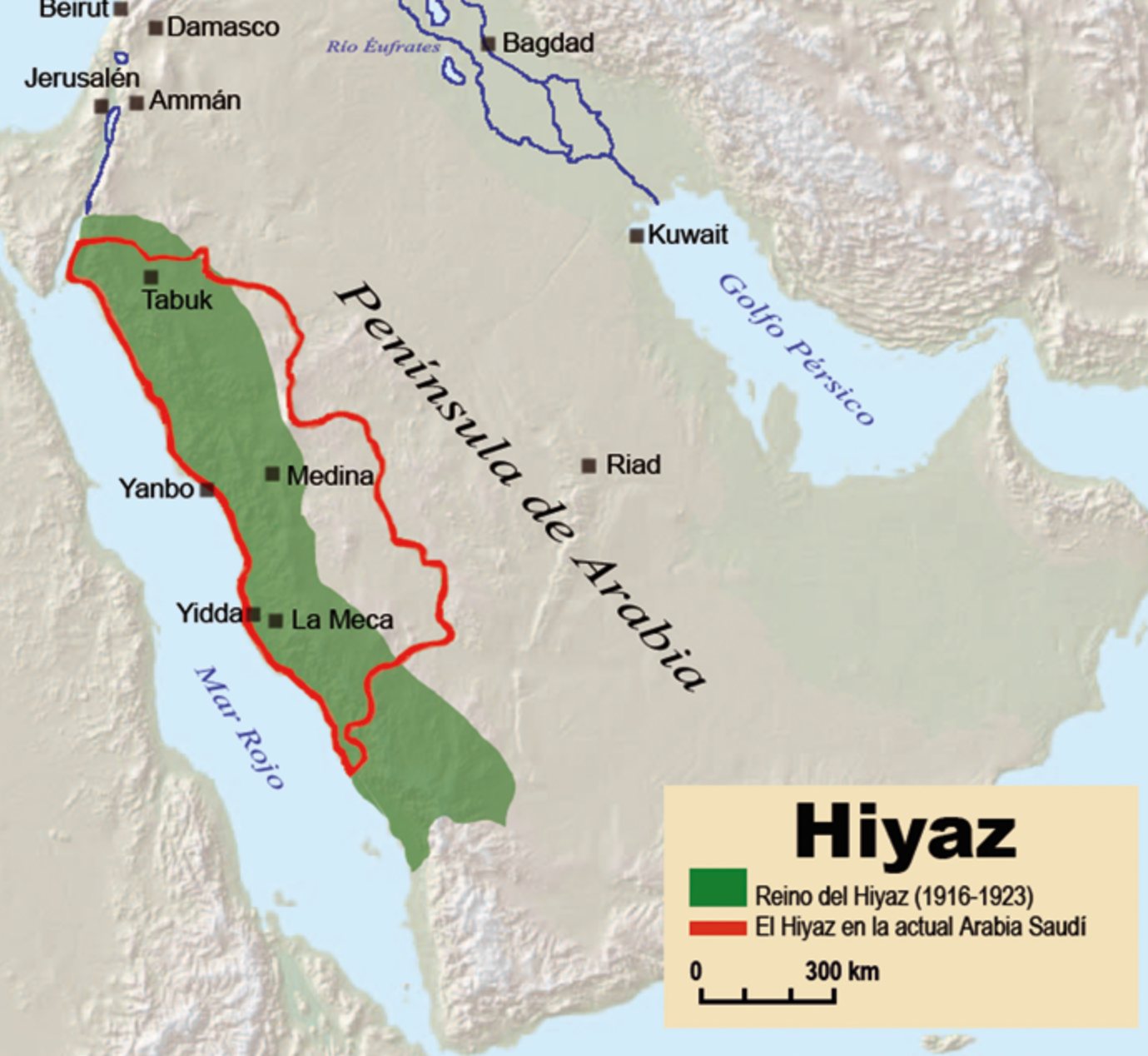
Hussein bin Ali, Britain’s wartime ally, even proclaimed himself caliph after the Ottoman caliphate was abolished in 1924. Within months, his kingdom began to collapse before Abdulaziz’s forces. The conquest involved severe violence, particularly in Taif, while Mecca was taken with little fighting. Medina and Jeddah surrendered in 1925. The Hejaz gave Abdulaziz what Nejd alone could never provide: the holy cities, revenue from the Hajj and the attention of the entire Muslim world.
Abdulaziz became king of the Hejaz in 1926, while retaining the title of sultan in Nejd. A year later, he became king of both territories, although they continued to maintain separate administrative identities. Under the 1927 Treaty of Jeddah, Britain recognized his full independence, while he agreed to halt raids against neighbouring British protectorates.
The Red Pasha at Ibn Saud’s court
When Soviet consul general Karim Khakimov arrived in Jeddah in August 1924, the city was still ruled by Sharif Hussein. Within months, it was under siege by Abdulaziz’s forces, and the diplomat—a Muslim of Tatar origin—was presented with an opportunity unavailable to Western envoys. In April 1925, he travelled to Mecca to perform the Umrah and personally met the conqueror of the Hejaz. The encounter went so well that Khakimov soon became one of the few foreigners Abdulaziz trusted.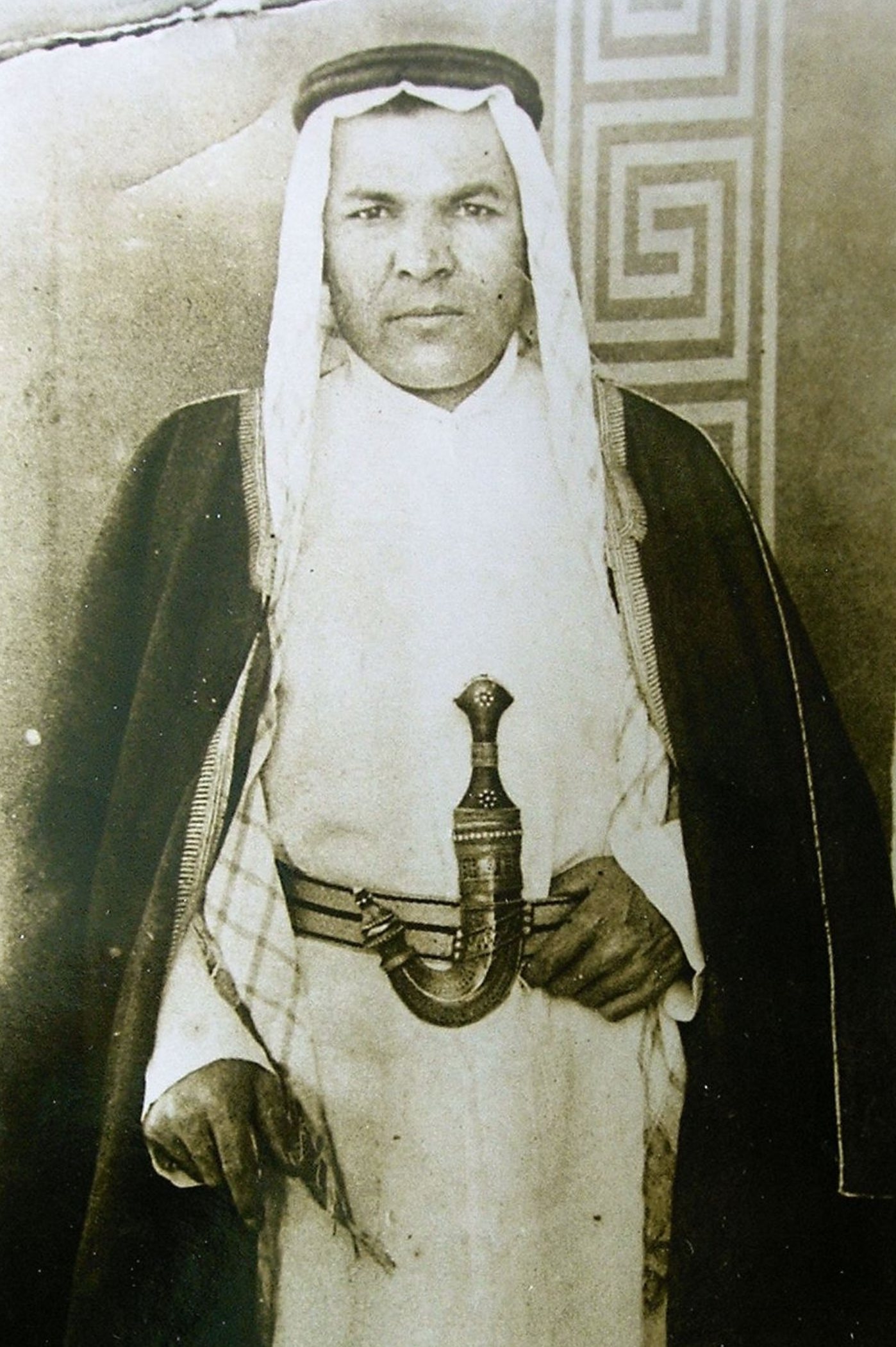
The unlikely friendship did not survive Stalin’s purges. Khakimov was recalled to Moscow in 1937, arrested and executed in early 1938. Abdulaziz refused to receive the Soviet diplomat sent to replace him, the mission soon closed, and relations remained severed for more than half a century. The later US–Saudi alliance was therefore never a foreordained outcome. For one brief period, the man known as the "Red Pasha" brought Moscow closer to Ibn Saud than the later history of the Cold War might suggest.
In retrospect, Stalin squandered a historic opportunity. In another version of history, perhaps we would not be talking today about a world ruled by the petrodollar, but by the petrorouble!
The army that became an obstacle to the state
It was Abdulaziz’s acceptance of borders that provoked part of the Ikhwan to rebel. To him, borders had become a condition of international recognition. To his most radical warriors, they were an impediment to further campaigns into Iraq, Kuwait and Transjordan. They also resented his tolerance of telephones, cars and other innovations. At the Battle of Sabilla in 1929, Abdulaziz’s machine guns inflicted a decisive defeat on the rebels, and the last resistance was crushed in early 1930. The king had conquered much of Arabia with the Ikhwan’s help—and then had to defeat the Ikhwan in order to govern his conquests as a state.
How the desert acquired its straight borders
In December 1922, Britain’s high commissioner for Iraq, Percy Cox, convened a conference at al-Uqair, a small port and fort on the Persian Gulf. What lay on the table was not merely a map, but a question that still sounded strange at the time: where exactly did the authority of one desert ruler end and that of another begin? Tribes moved in search of water and pasture, their loyalties shifted, and wells and seasonal routes mattered more than the straight lines European powers wanted to draw across the map.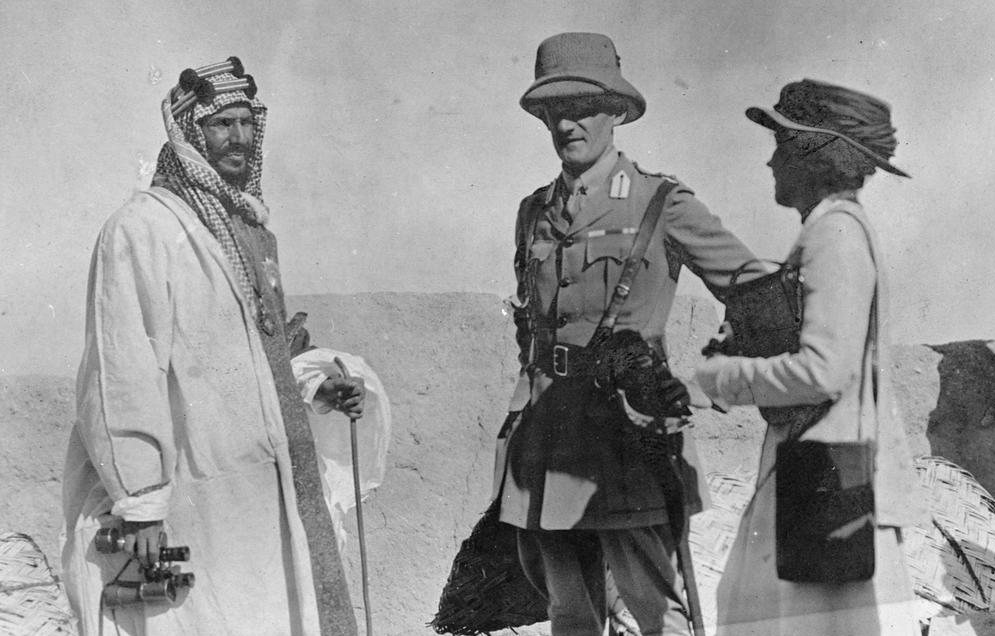
To prevent a single line from cutting off access to wells and grazing lands, the agreement created two neutral zones: one between Nejd and Iraq, and another between Nejd and Kuwait. On paper, this was an attempt to adapt borders to nomadic life. Politically, however, it marked the transformation of a once-porous steppe into a space divided among states. Land that then appeared almost worthless acquired an entirely different significance once oil was discovered in the Saudi–Kuwaiti zone. The lines drawn at al-Uqair—before Saudi Arabia even existed under that name—outlived the men who negotiated them.
A name for the conquered and united realm
Only then came the decree establishing a unified kingdom. Issued several days earlier, it was publicly read in Mecca on September 23, 1932, by Prince Faisal on behalf of his father. The cumbersome Kingdom of the Hejaz and Nejd and its Dependencies became Saudi Arabia. It was an almost unique political signature: an entire country received an adjective derived from the name of its ruling house.
"Unification" is the word used by the official calendar, but "conquest" remains just as indispensable to the history. The decree did not erase the differences among the regions, nor did it immediately settle every border. War with Yemen and an agreement over the south-western territories followed only in 1934. Yet a single name now covered a realm stretching from the holy cities on the Red Sea to the Shia oases on the Persian Gulf.
The new kingdom was poor. The Great Depression had severely reduced pilgrimage revenues, and the state possessed only the most rudimentary administration. A concession was awarded to an American company in 1933, while a major oil field was not discovered near Dammam until 1938. Oil, then, did not create Saudi Arabia. It gave a previously conquered and united state the money to become a regional power.
Modern Saudi Arabia is therefore not a remnant of the Middle Ages that somehow survived into modernity. It is a 20th-century state built from much older materials: dynasty, religion and tribal ties, but also the presence of imperialism. Its holy cities are ancient, and the House of Saud is centuries old. The kingdom under a single name, however, has existed only since 1932. Those are not the same thing, although its founder’s ability to present the new as a restoration of the old was one of his greatest political victories.
Sources
- Royal Embassy of Saudi Arabia History of Saudi Arabia https://www.saudiembassy.net/history
- Encyclopaedia Britannica Ibn Saud | Biography, History, Children, & Facts https://www.britannica.com/biography/Ibn-Saud
- Aramco Our history https://www.aramco.com/en/about-us/our-history
- Saudi Press Agency Saudi-Russian Relations: Alignment of Visions and Mutual Interests https://spa.gov.sa/en/N2009894
- Akademik Bak??
- Omniatlas Uqair Protocol | Historical Atlas of Southern Asia (2 December 1922) https://omniatlas.com/maps/southern-asia/19221202/
- Journal of Arabian Studies
- TIME The Empire State Building Opened During the Great Depression. Its Survival Story Holds a Lesson for Today https://time.com/5955419/empire-state-building-history/
Comments