
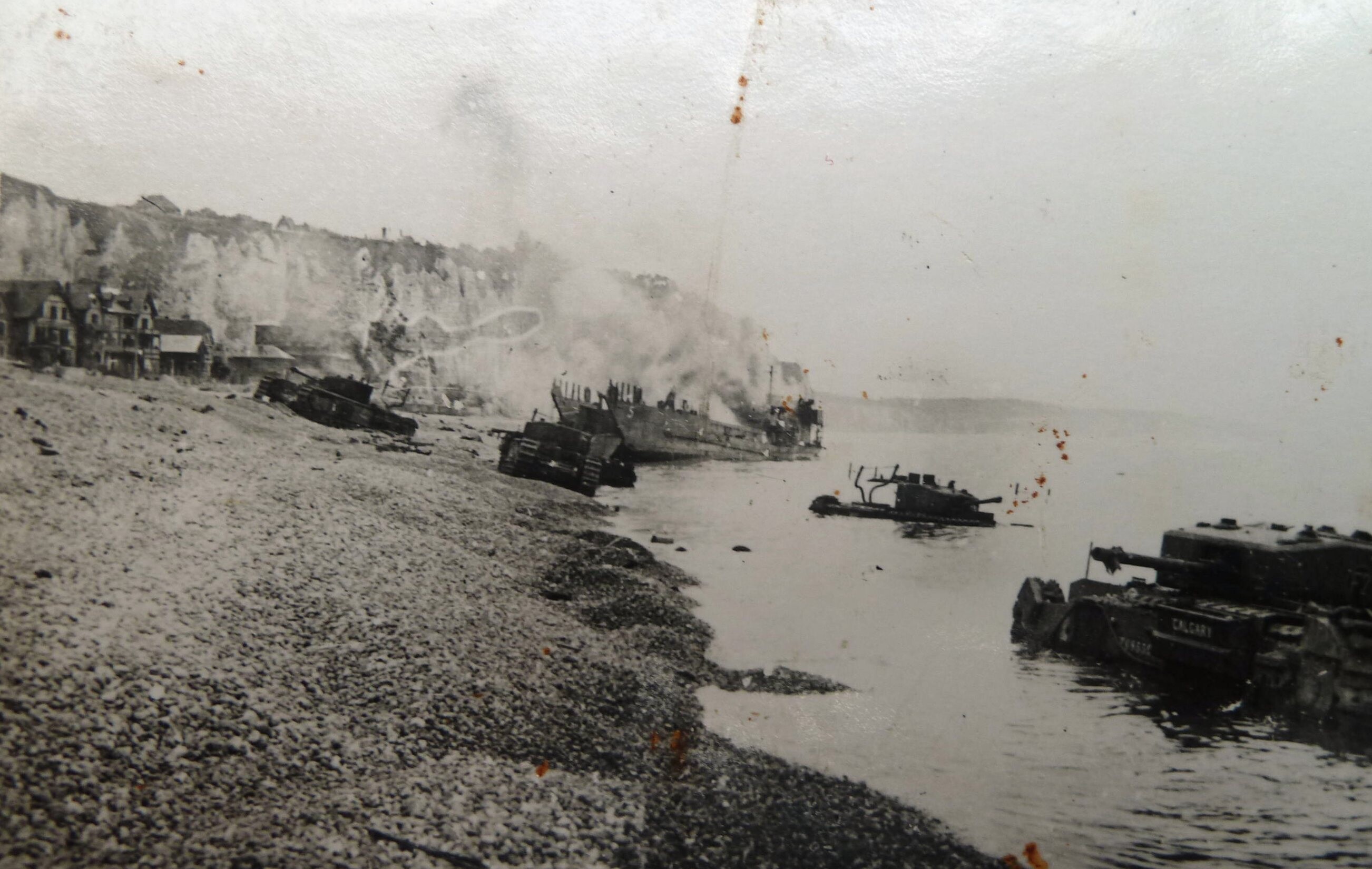
The beach at the French port of Dieppe was nothing like the broad sandy stage that popular culture would later associate with Allied landings. It was covered in large pebbles, hemmed in by a seawall and squeezed between high ground from which defenders could fire almost as if they were at a shooting range. At dawn on 19 August 1942, Canadian soldiers headed toward it. Within a few hours, the Allies would acquire what they later called invaluable knowledge. The Canadians paid for it with their bodies.
Of all the consolations war can offer, one of the most dangerous is the belief that catastrophe must have served some higher purpose. For decades, Dieppe was therefore remembered as the bloody rehearsal for D-Day, the defeat from which victory in Normandy would eventually emerge. There is a great deal of truth in that claim, but also a fair amount of retrospective absolution. Operation Jubilee certainly changed the way the Allies thought about amphibious landings. What it did not prove was that such an attack had been necessary. What it proved was how bad the plan had been.
The summer of 1942 offered little reason for Allied confidence. Germany controlled almost all of Western Europe, its armies were advancing deep into the Soviet Union, and the British in North Africa had been pushed back toward Egypt. Moscow was demanding a second front. London was not yet capable of opening one, but it needed to show that it was doing something. At the same time, Canadian units had spent years training in Britain without seeing serious combat. The political need for action and the soldiers' desire to finally enter the war created an especially dangerous combination.
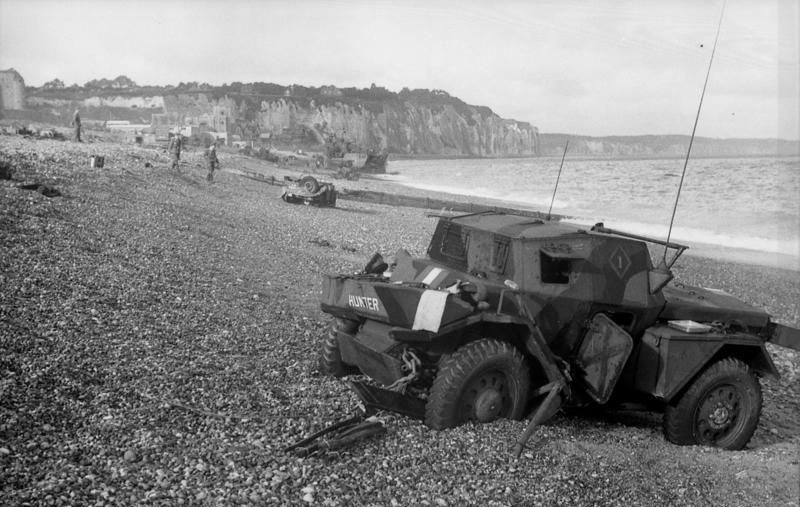
The original plan was called Operation Rutter. Bad weather forced its cancellation in July, after thousands of men had already been briefed on its details. British general Bernard Montgomery believed the operation should be abandoned permanently because secrecy had been lost. Lord Louis Mountbatten, the British admiral who headed Combined Operations, nevertheless resurrected it under a new name. The objective of Jubilee was to seize Dieppe temporarily, destroy defensive and port facilities, gather intelligence and then withdraw. One German officer later summarized the problem more precisely than many Allied reports ever did: the operation was too large to be a raid and too small to establish a genuine foothold.
The plan depended on surprise because it lacked sufficient firepower. Heavy bombing was rejected out of concern for French civilians, the possibility that rubble would block the town's streets and the risk of sacrificing secrecy. The Royal Navy was unwilling to expose major warships, leaving eight destroyers to provide direct support. Success therefore depended on almost perfect timing: commandos had to silence coastal batteries, flank landings had to seize the high ground, and infantry and tanks had to arrive in front of the town at precisely the right moment. War, as usual, showed little respect for the timetable.
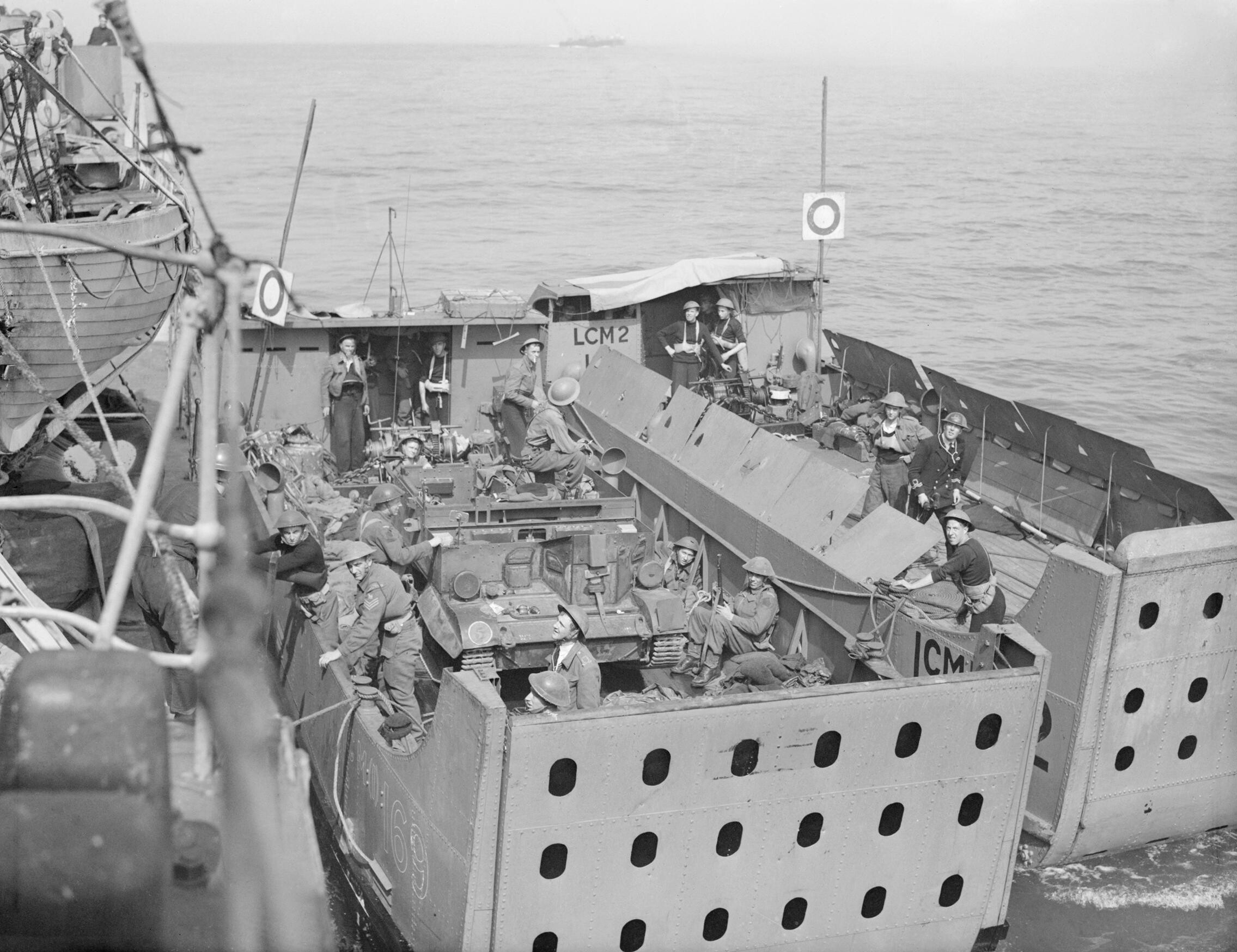
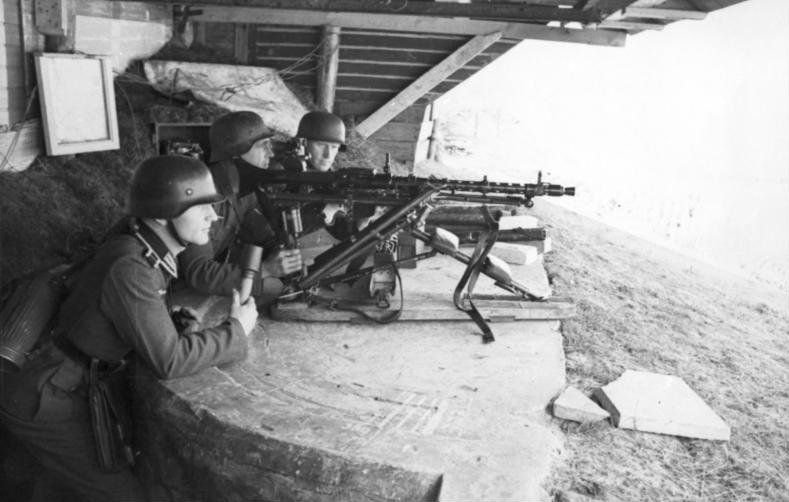
The eastern force encountered a small German convoy while approaching the coast. The brief naval clash alerted the defences around Berneval and Puys. At Puys, men of the Royal Regiment of Canada, delayed on the way in, emerged from their landing craft in daylight onto a narrow beach dominated by cliffs. Almost no one managed to get beyond the wall and barbed wire. In the west, British commandos successfully destroyed the battery near Varengeville, an important detail: Dieppe did not prove that every operation of this kind was impossible. It showed that a tightly defined mission could succeed where a vast improvisation failed.
The man who went to Dieppe with personal guards ordered to kill him if necessary
Among the thousands of men heading toward Dieppe on 19 August 1942 was one whose mission was neither to storm the beach nor capture the town. British RAF sergeant Jack Nissenthall was a radar specialist and one of the men so deeply familiar with Britain's most sensitive radar technology that the knowledge inside his head was itself a military asset. He was sent to France to get close to the German Freya radar station near Pourville and learn as much as possible about its technology.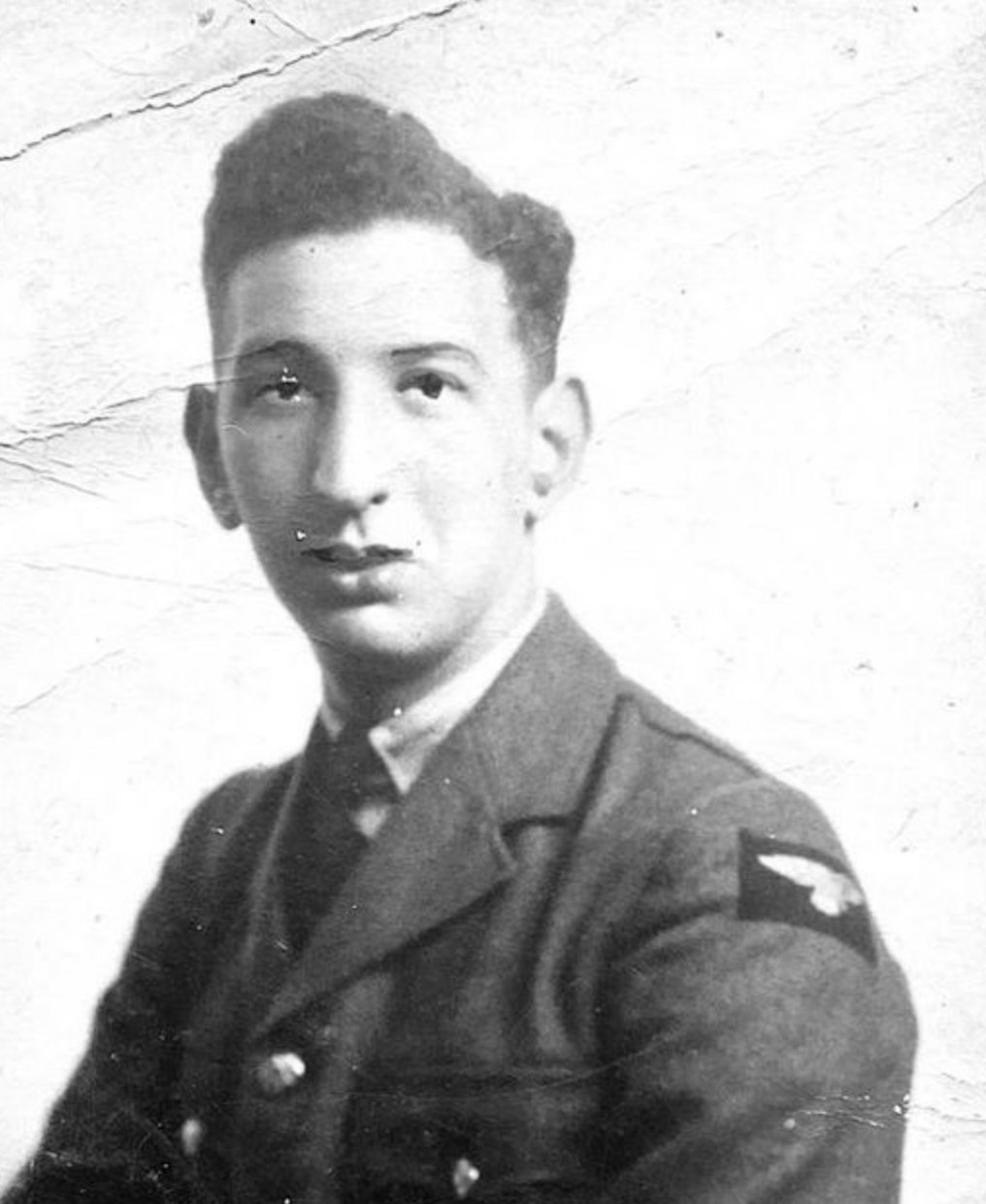
They never managed to reach the radar station itself. German defences stopped the Canadians, but Nissenthall got close enough to cut the telephone lines connecting the station. The German operators were forced to switch to radio communications, which British listening stations on the other side of the English Channel could intercept. So even as the operation around him descended into disaster, it still produced a measure of valuable intelligence.
Nissenthall survived Dieppe and continued working on British radar systems and countermeasures against German radar after the raid. For years he was forbidden from speaking publicly about his role under the Official Secrets Act. After the war he shortened his surname to Nissen, married and moved to South Africa. In 1978 he moved to Canada, where he lived until his death in 1997. He later described his experiences in the memoir Winning the Radar War. Remarkably, the man considered so valuable in 1942 that he could not be allowed to fall alive into German hands never received an official military decoration for his mission at Dieppe.
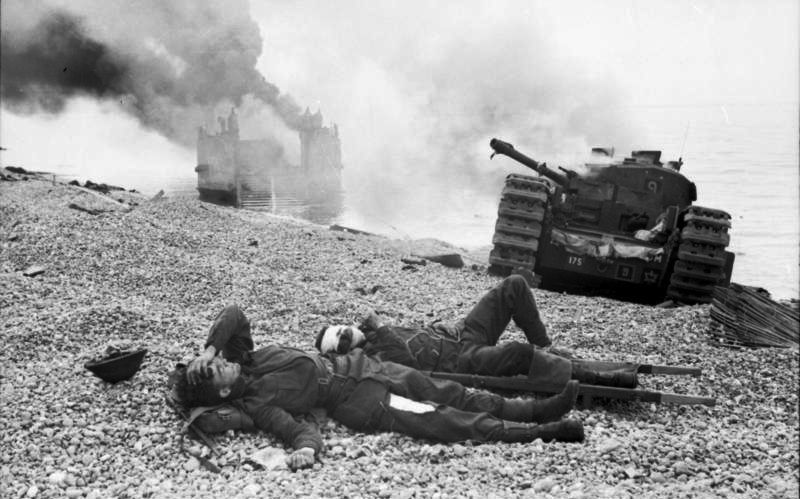
The main assault landed in front of the town's promenade. The infantry immediately came under machine-gun and mortar fire, while the Churchill tanks arrived about ten minutes late. The popular image is that the pebbles swallowed them all, but the reality is more interesting. Of the 29 tanks that attempted to land, 27 made it ashore and 15 crossed the seawall. There they encountered concrete barriers blocking access into the town. Without engineers able to reach them and clear the obstacles, the tanks became little more than stationary gun positions. They were not useless, but they could no longer do what they had been sent there to do.
Command and control was even worse. Headquarters aboard ship received incomplete reports and misread them. Canadian general J. H. Roberts, commander of the ground forces, concluded that elements of the Essex Scottish had broken into the town and sent in the reserve Fusiliers Mont-Royal. Instead of reinforcing a success, they landed on a beach that had already become a trap. It was a textbook demonstration of what happens when a complex operation loses contact with reality but continues following its own schedule anyway.
By early afternoon, it was all over. Of the 4,963 Canadians who took part in the attack, only 2,210 returned to England, many of them wounded. They suffered 3,367 casualties in total, including 1,946 taken prisoner, while 916 were killed. Amid the institutional failure were extraordinary acts of individual courage. Military chaplain John Foote spent eight hours tending to the wounded, then stepped out of a boat that could have carried him to safety and voluntarily entered captivity so he could remain with the men of his regiment.
An Allied report compiled two months later identified overwhelming fire support as the single most important lesson. By June 1944, that lesson had been translated into industrial-scale warfare. Nearly 7,000 vessels took part in Operation Neptune. Battleships, cruisers, destroyers and rocket-firing landing craft pounded the defences. Specialised engineering tanks had been developed to demolish obstacles, lay bridges and clear mines. Amphibious tanks were intended to arrive with the first assault waves, while the command and communications structure was incomparably more sophisticated. Normandy was not simply a better-executed version of Dieppe. In many ways, it was its opposite.
The second major lesson concerned ports. Dieppe showed that a frontal assault on a fortified harbour was an excellent way to lose men before gaining access to the docks. In Normandy, the Allies therefore landed on open beaches and brought their own artificial Mulberry harbours with them. The idea had not originated solely because of Dieppe, but the disaster powerfully reinforced the need for it. The strategic irony was complete: after the raid, the Germans became even more convinced that the Allies would first attempt to seize a major port, while the Allies increasingly planned around the idea of not needing one at all, at least in the opening stages.
Still, it would be far too neat to say that Dieppe alone created D-Day. The Allies also learned from later campaigns in North Africa, Sicily, Salerno and the amphibious landings across the Pacific. Some lessons from Dieppe were genuinely new; others were merely brutal confirmation of what more cautious commanders had already suspected. Mountbatten later claimed that the battle for D-Day was won on the beaches of Dieppe.
On 1 September 1944, the Canadian 2nd Division returned to Dieppe. The Germans had withdrawn the previous day, allowing the first Canadian reconnaissance troops to enter without resistance. The town that had cost so many dead, wounded and captured men in 1942 was liberated without another great assault. It is a fitting ending, but not a simple justification. Dieppe may have saved lives in Normandy. Yet the fact that a catastrophe produced useful lessons does not mean the catastrophe was necessary. History often finds meaning in sacrifice. It asks far less often whether the bill ever had to be paid at all.
Sources
- Canada.ca OPERATION "JUBILEE": The Raid on Dieppe, 19 Aug 42. Part I: The Preliminaries of the OPERATION. https://www.canada.ca/en/department-national-defence/services/military-history/history-heritage/official-military-history-lineages/reports/military-headquarters-1940-1948/operation-jubilee-raid-dieppe-19-august-1942-part-i.html
- Veterans.gc.ca The Dieppe Raid | Veterans Affairs Canada https://www.veterans.gc.ca/en/remembrance/military-history/second-world-war/dieppe-raid
- Warmuseum.ca WarMuseum.ca - Democracy at War - Dieppe Raid, 19 August 1942 - Operations https://www.warmuseum.ca/cwm/exhibitions/newspapers/operations/dieppe_e.html
- Scholars.wlu.ca The German View of the Dieppe Raid August 1942 https://scholars.wlu.ca/cmh/vol21/iss4/2/
- Junobeach.org The Dieppe Raid https://www.junobeach.org/canada-in-wwii/articles/the-dieppe-raid/
- Nationalww2museum.org Operation Jubilee: The Raid at Dieppe https://www.nationalww2museum.org/war/articles/operation-jubilee-dieppe-raid-1942
- Scholars.wlu.ca The Calgary Tanks at Dieppe https://scholars.wlu.ca/cmh/vol4/iss1/6/
- Collection.nam.ac.uk Dieppe, August 1942 | Online Collection | National Army Museum, London https://collection.nam.ac.uk/detail.php?acc=1990-06-3-1
Comments