
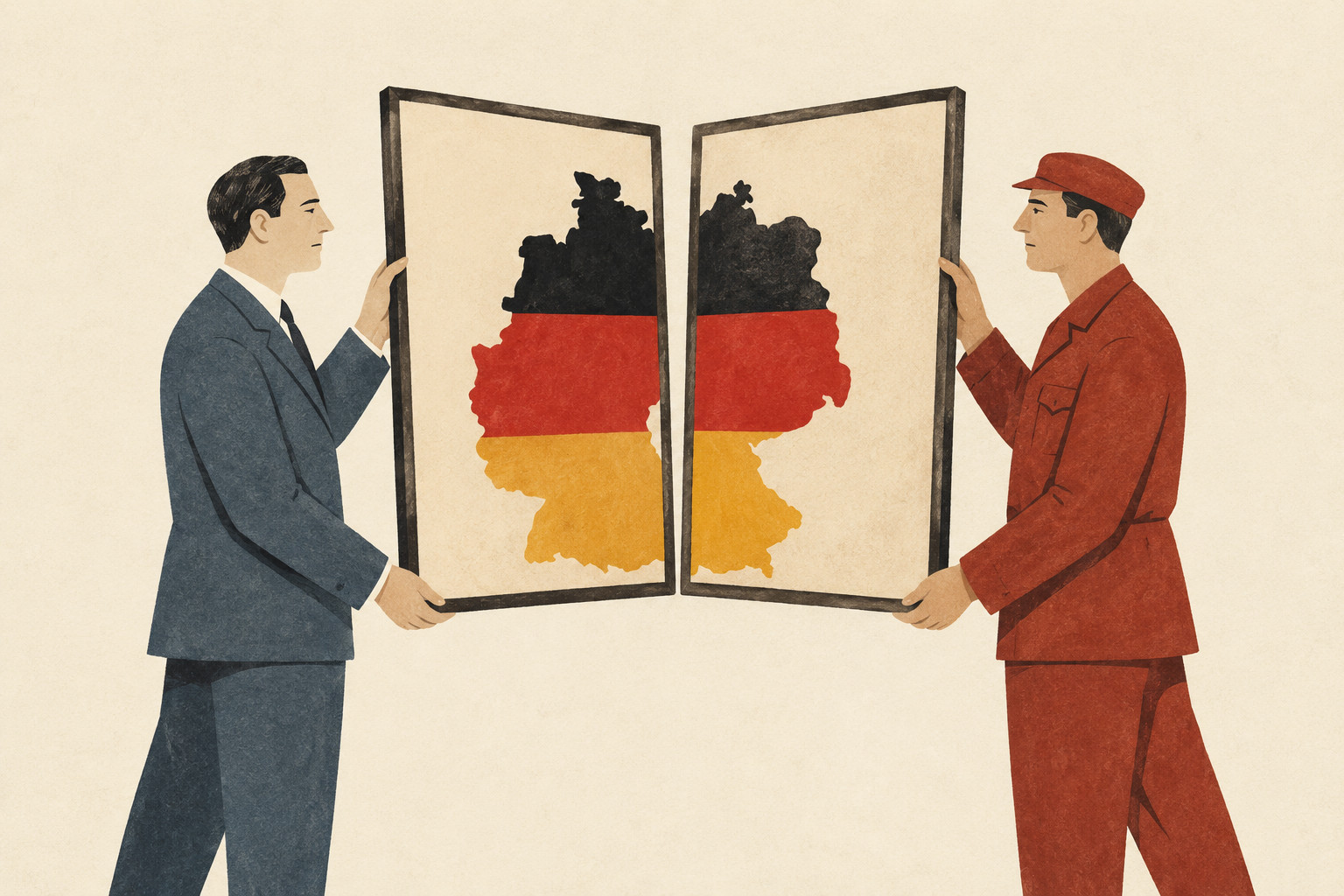
On October 7, 1949, Germany acquired a second state—but neither was willing to accept being the second Germany. Inside the former Nazi Ministry of Aviation building in East Berlin, the German People’s Council declared itself the Provisional People’s Chamber and enacted the constitution of the German Democratic Republic. The document’s very first article asserted something that was already plainly untrue that morning: Germany was an "indivisible democratic republic." A state born of division thus began its life by declaring that division nonexistent.
An even more fitting symbol of this contradiction appeared several weeks later. Poet Johannes R. Becher and composer Hanns Eisler wrote the anthem "Auferstanden aus Ruinen"—Risen from Ruins. It did not celebrate East Germany, but "Germany, our united fatherland." When the GDR abandoned the prospect of imminent reunification in the 1970s, the authorities resolved the problem in an almost perfectly bureaucratic fashion: the anthem continued to be played, but its words were no longer sung. The state had to silence its own founding song because it promised something that no longer suited it.
Two states, each claiming to be the real Germany
Four years earlier, Germany had not had a state at all. It was divided into American, British, French and Soviet occupation zones. Joint Allied administration gradually broke down, the western zones became economically integrated, and currency reform and the Soviet blockade of Berlin made the division tangible. The Federal Republic of Germany was established in the West in May 1949. The GDR followed that October as the Soviet response, but it was also the product of a deeper dispute over what kind of Germany could be permitted to exist after Hitler.
Bonn based its legitimacy on free elections, parliamentary democracy and constitutional government. East Berlin argued that the right to represent Germany came from a decisive break with Nazism, the old industrial elite and the great landowners. To the East German leadership, the West German state represented the restoration of the capitalism that had enabled Hitler’s rise. The GDR presented itself as the antifascist, peaceful and socially just Germany—not the country’s eastern half, but the nucleus of a future, united socialist state.
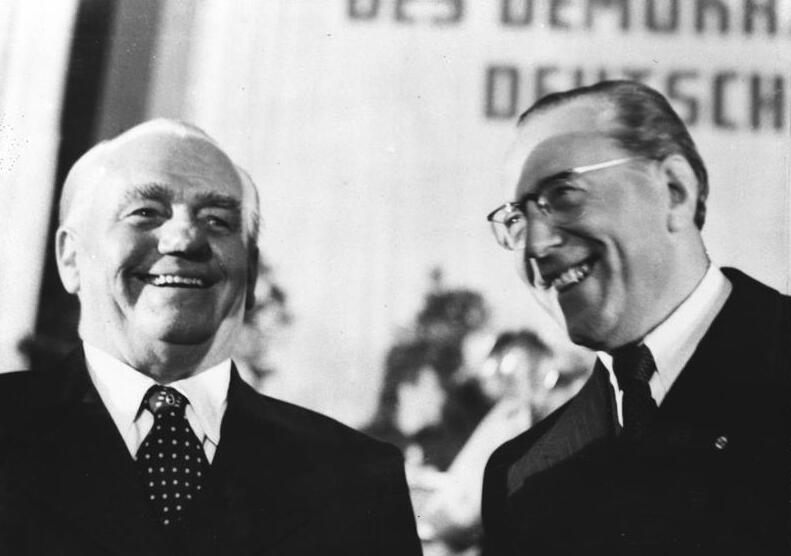
The problem was that the people had never freely chosen that role. The People’s Council had not emerged from open elections, while the Socialist Unity Party of Germany, known as the SED, had been created in 1946 through the forced merger of the Communist and Social Democratic parties under intense Soviet pressure. Communist Wilhelm Pieck became president, former Social Democrat Otto Grotewohl became prime minister, and Walter Ulbricht soon emerged as the true center of power. The constitution promised civil rights, secret ballots and equality for women. Yet from the outset, the political system was designed to ensure that the SED could never lose power at the ballot box.
And yet the GDR’s antifascism was not merely a propaganda invention. The East carried out a more radical institutional break with the old regime than the West did. It attracted German communists, artists and intellectuals returning from exile, including Bertolt Brecht, Anna Seghers and Hanns Eisler. While numerous people with deeply troubling Nazi pasts returned to West German courts, ministries and businesses, the GDR could plausibly claim that it was building a different Germany.
A socialist showcase under the gaze of the West
Soviet policy, however, was hardly a simple tale of generously creating a socialist showcase. Moscow initially extracted reparations from its occupation zone. Thousands of factories were dismantled, while several of the most important enterprises were transferred into Soviet ownership. Only when it became clear that the contest between the two German states would also be fought over living standards did the GDR become socialism’s principal display window facing the West. Every evening, its citizens could turn on their televisions and watch a wealthier country speaking the same language. In such a contest, every empty shop became an ideological incident.
Despite its unfavorable starting position, the GDR became one of the most industrially capable states in the Eastern Bloc. Companies such as Carl Zeiss in Jena retained an international reputation, while a strong technical education system produced skilled engineers and workers. The state guaranteed employment, subsidized basic goods and kept rents exceptionally low. Full employment concealed low productivity and surplus labor, but job security was not worthless to millions of people simply because it came at an economic cost.
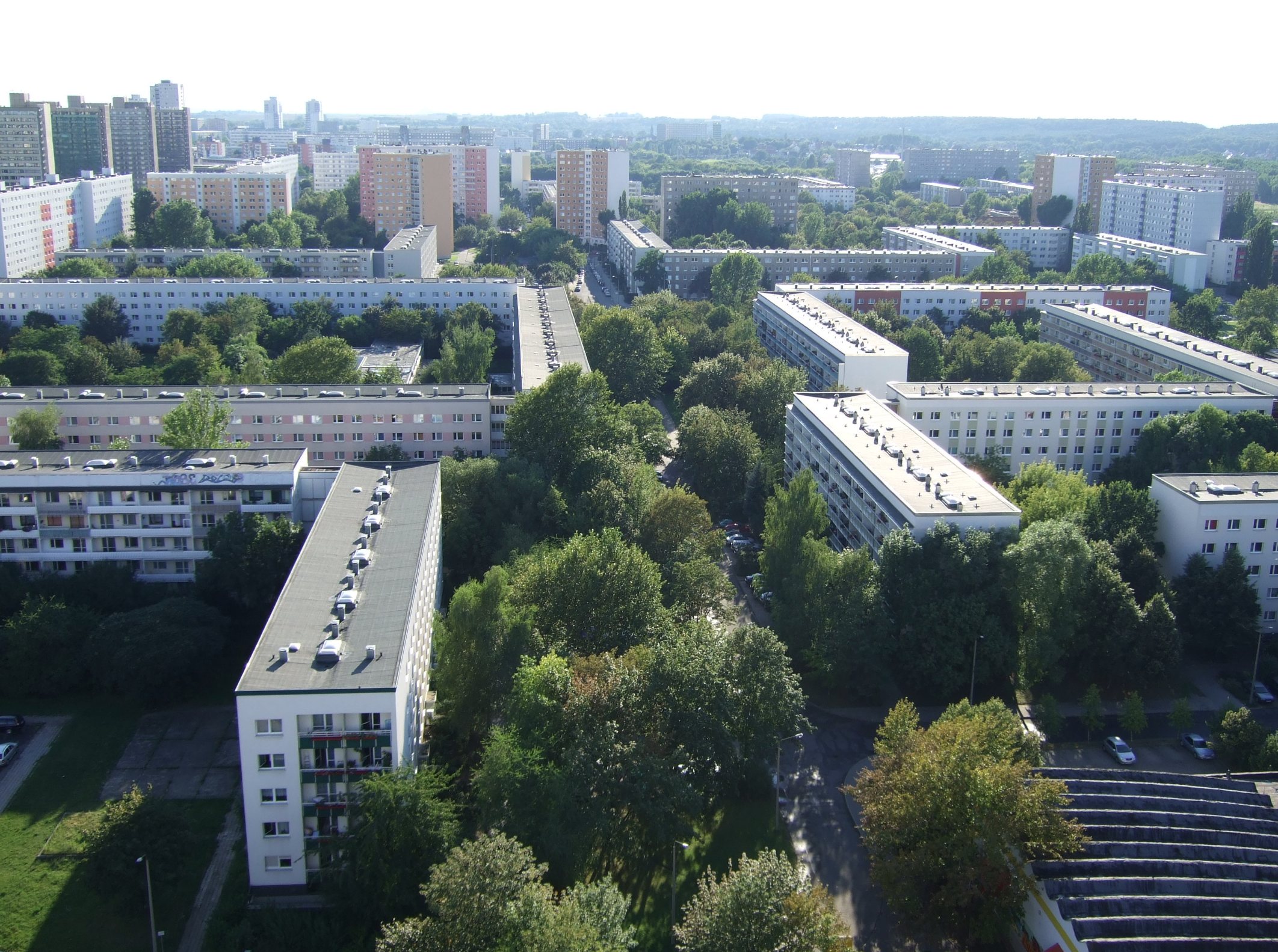
The same is true of housing policy. Prefabricated estates are easily reduced today to images of drab gray apartment blocks, but for many families, moving into a home with a bathroom, hot water and central heating represented genuine material progress. The problem was that the state financed the mass construction of new housing by neglecting older urban neighborhoods. Housing was inexpensive and tenants were protected, but people sometimes waited years for a suitable apartment. The GDR knew how to socialize security, though not always quality. Even so, compared with families today who cannot realistically hope to obtain any home at all, the advantages of the old East German system are difficult to ignore.
When social rights were more than a slogan
The most enduring achievement concerned the position of women. A dense network of nurseries, kindergartens and after-school programs enabled mothers to continue working, and by the late 1980s more than 90 percent of women were either employed or in education. At a time when West Germany still clung to the male breadwinner model, women in the GDR had incomes of their own and far greater economic independence. This did not abolish patriarchy—housework remained largely women’s responsibility, while the upper ranks of politics were almost entirely male. But this was not merely propaganda. The difference was so profound that the effects of the contrasting family and employment models in eastern and western Germany can still be felt today.
Education opened doors to the children of workers and farmers that had been closed to their parents, especially during the country’s early decades. Schools placed considerable emphasis on mathematics, science and practical work. A system of outpatient clinics provided accessible healthcare with a strong focus on prevention. Books, theater and music were heavily subsidized. The price of all this was political control: admission to university could depend on a family’s loyalty, while culture remained accessible only as long as it refrained from asking questions the party considered dangerous.
The Palace of the Republic: a home for the people and their parliament
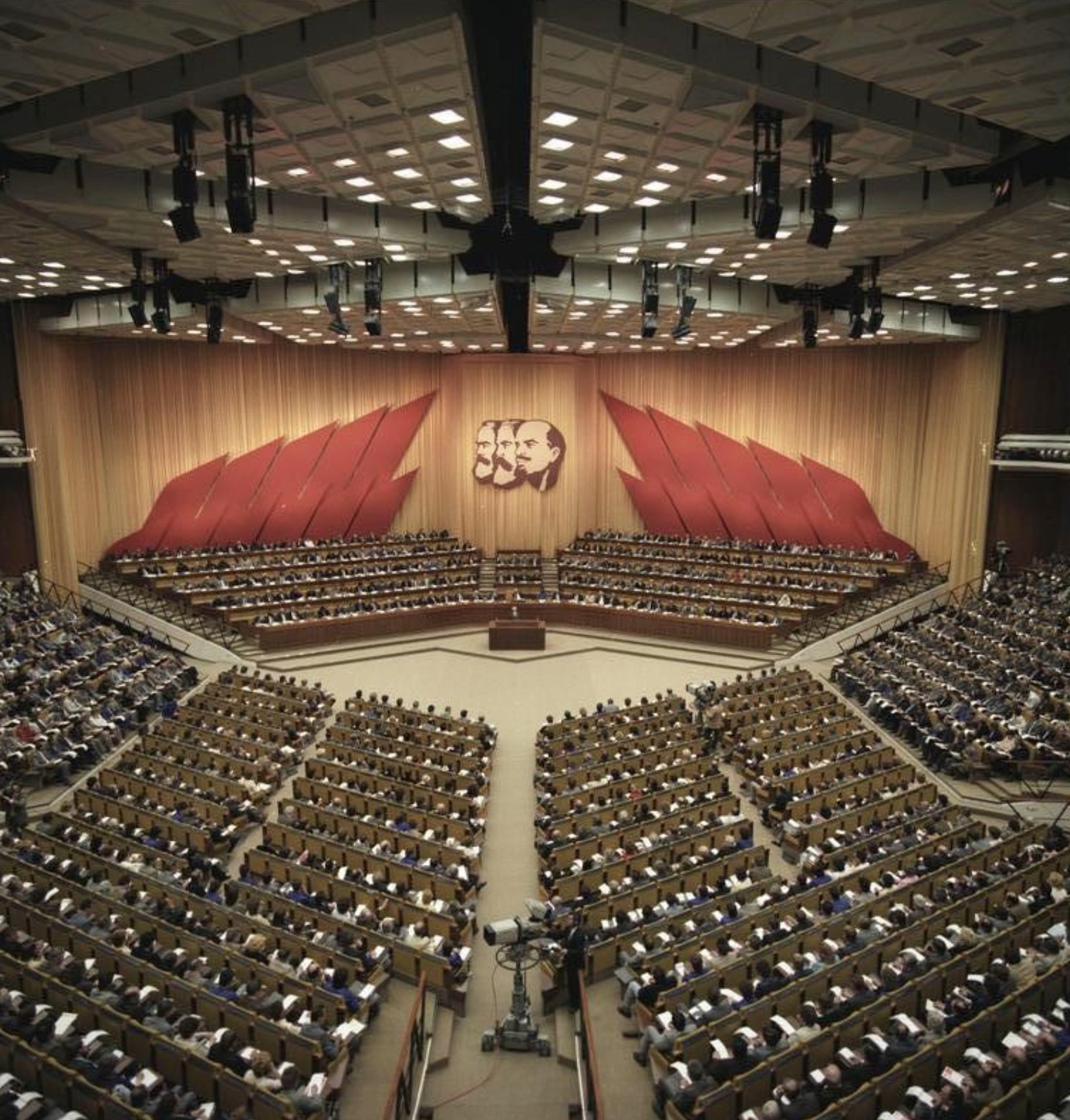
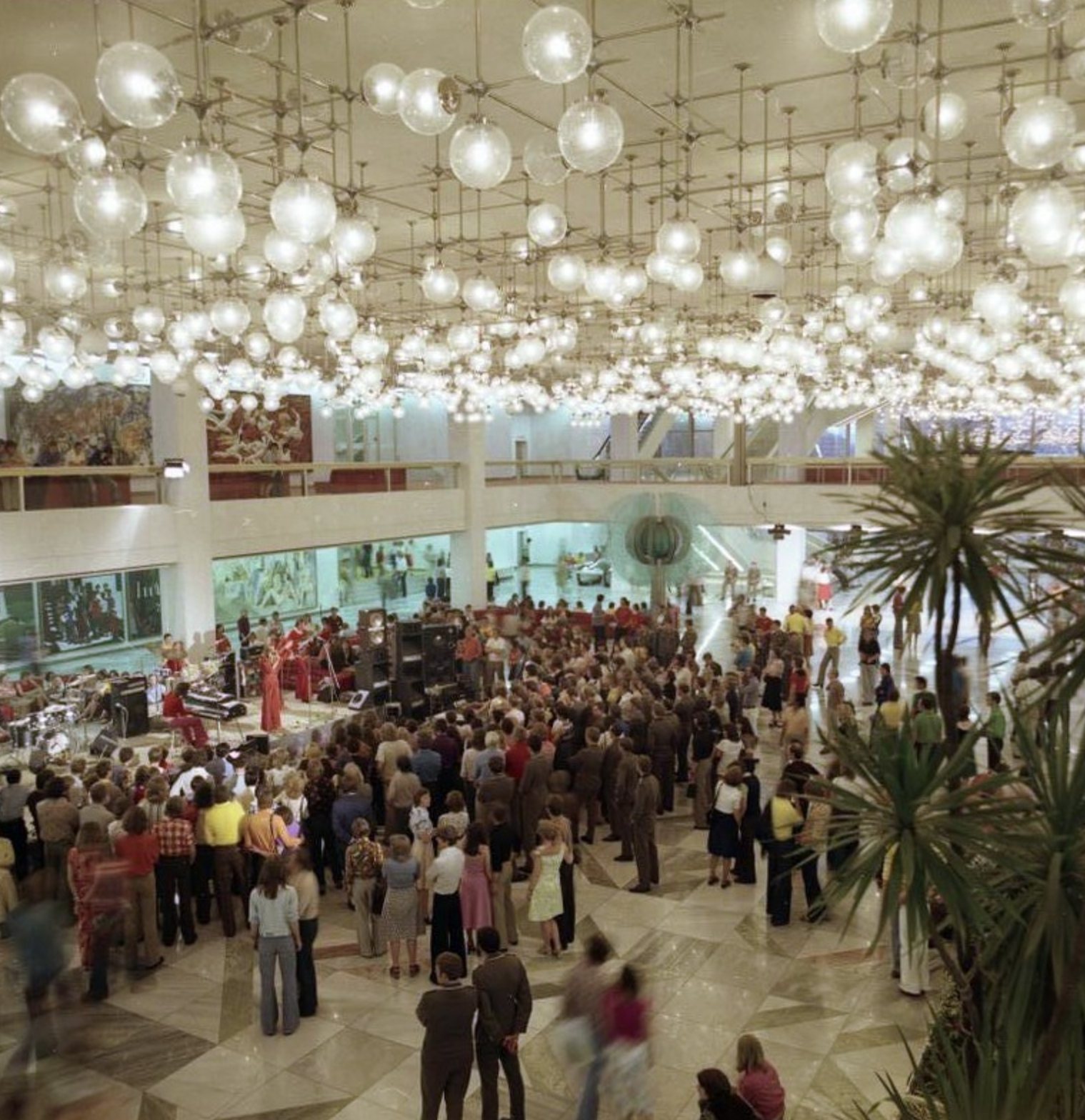
When the Palast der Republik opened in April 1976, it was intended to be far more than the seat of the People’s Chamber. Behind its bronze-tinted glass were a grand hall, a theater, galleries, numerous restaurants and bars, a nightclub, a bowling alley and even a post office that opened on Sundays. People did not go there merely to watch state ceremonies. They came for concerts, dinners, dancing and family outings, entering a space whose marble, thousands of spherical lamps and enormous glass sculpture offered a rare taste of public luxury.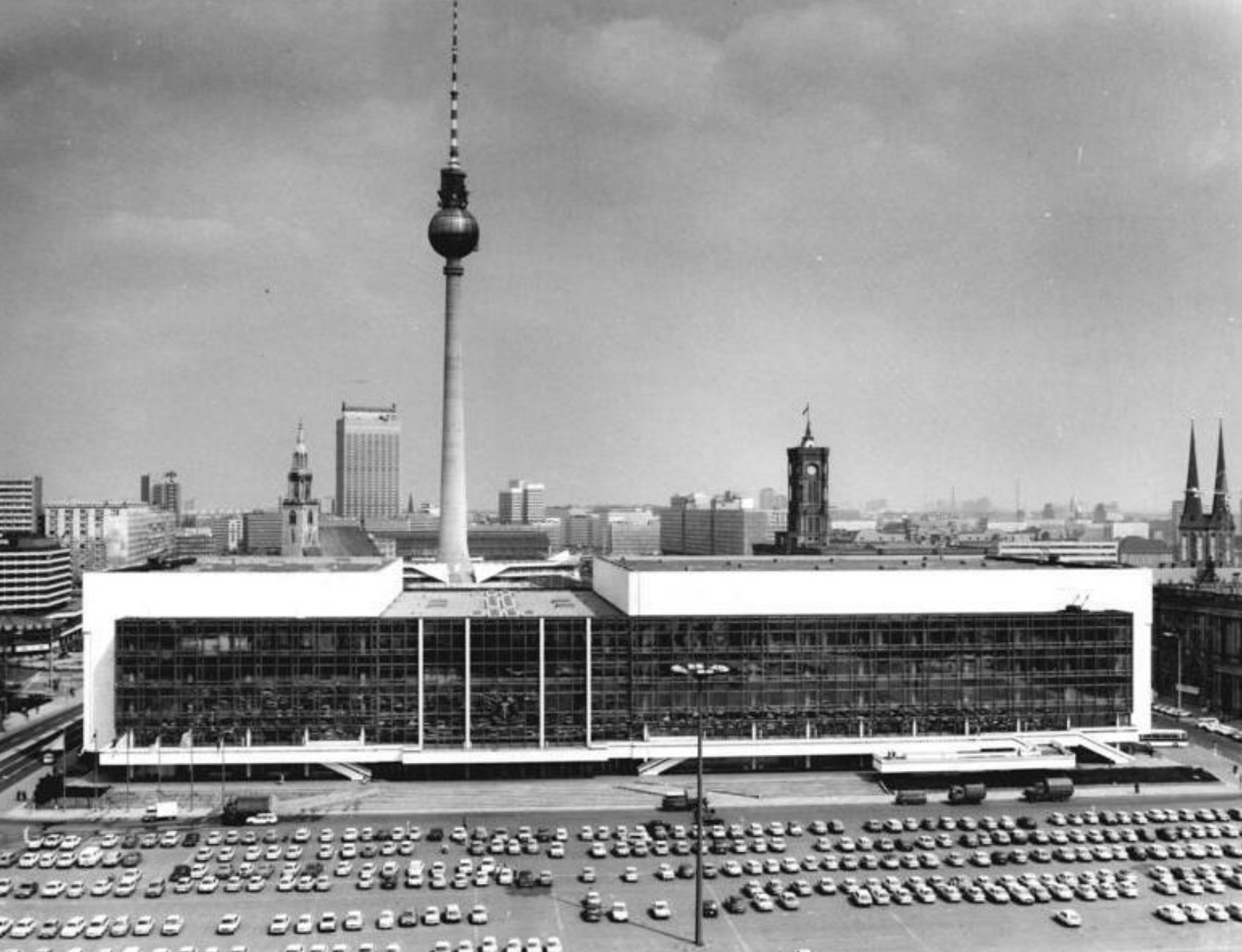
A workers’ state against its own workers
The GDR’s deepest contradiction erupted as early as June 1953. Construction workers rebelled against higher production quotas, and the protest grew into an uprising involving nearly a million people. A state that called itself a workers’ state was saved from its own workers by Soviet tanks. By August 1961, approximately 2.7 million people had fled the GDR. The Berlin Wall halted the exodus, but it also passed judgment on the system: a state convinced of its own historical superiority had to physically prevent its population from leaving.
From that point on, social security and repression did not exist separately. The jobs, housing, doctors and childcare were real. So were censorship, travel restrictions and the Stasi’s intrusion into private relationships. East Germans did not live in constant fear, nor were their lives merely scenery in a political drama. They loved, worked, created art and built communities. But the state demanded political obedience as the price of the security it provided.
The Ampelmännchen outlived the state
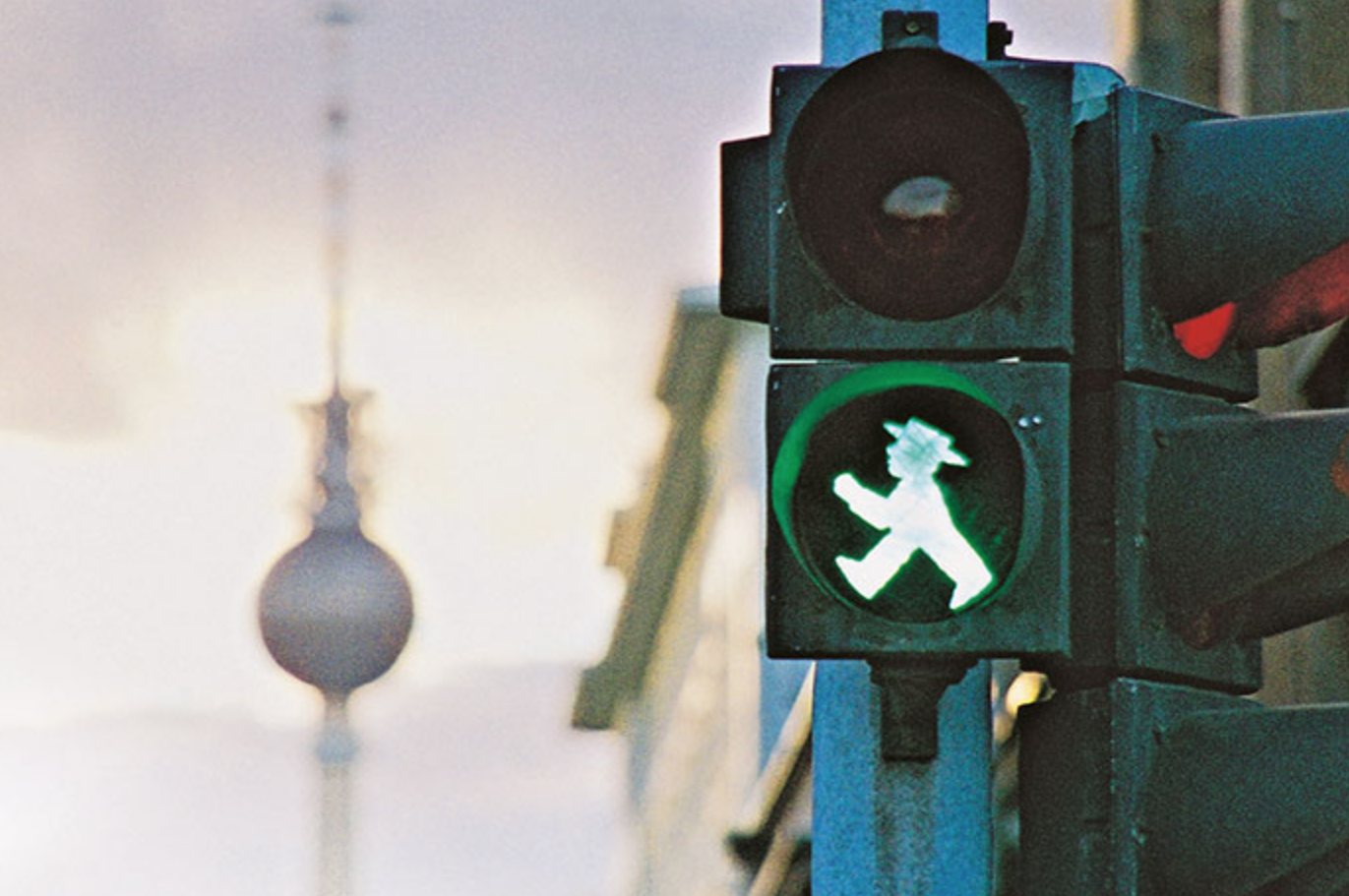
In 1961, the East German Ministry of Transport commissioned traffic psychologist Karl Peglau to design clearer pedestrian signals. His solution was not a set of abstract lines, but two stocky little men wearing hats: the red figure stretches his arms wide to physically block the way, while the green one strides purposefully forward. After years of testing, the figures first appeared in East Berlin in 1969 and later spread throughout the GDR. They were endearing, but their design also served a practical purpose: the large, easily distinguishable silhouettes were meant to be clearly understood by children, older people and those with impaired vision.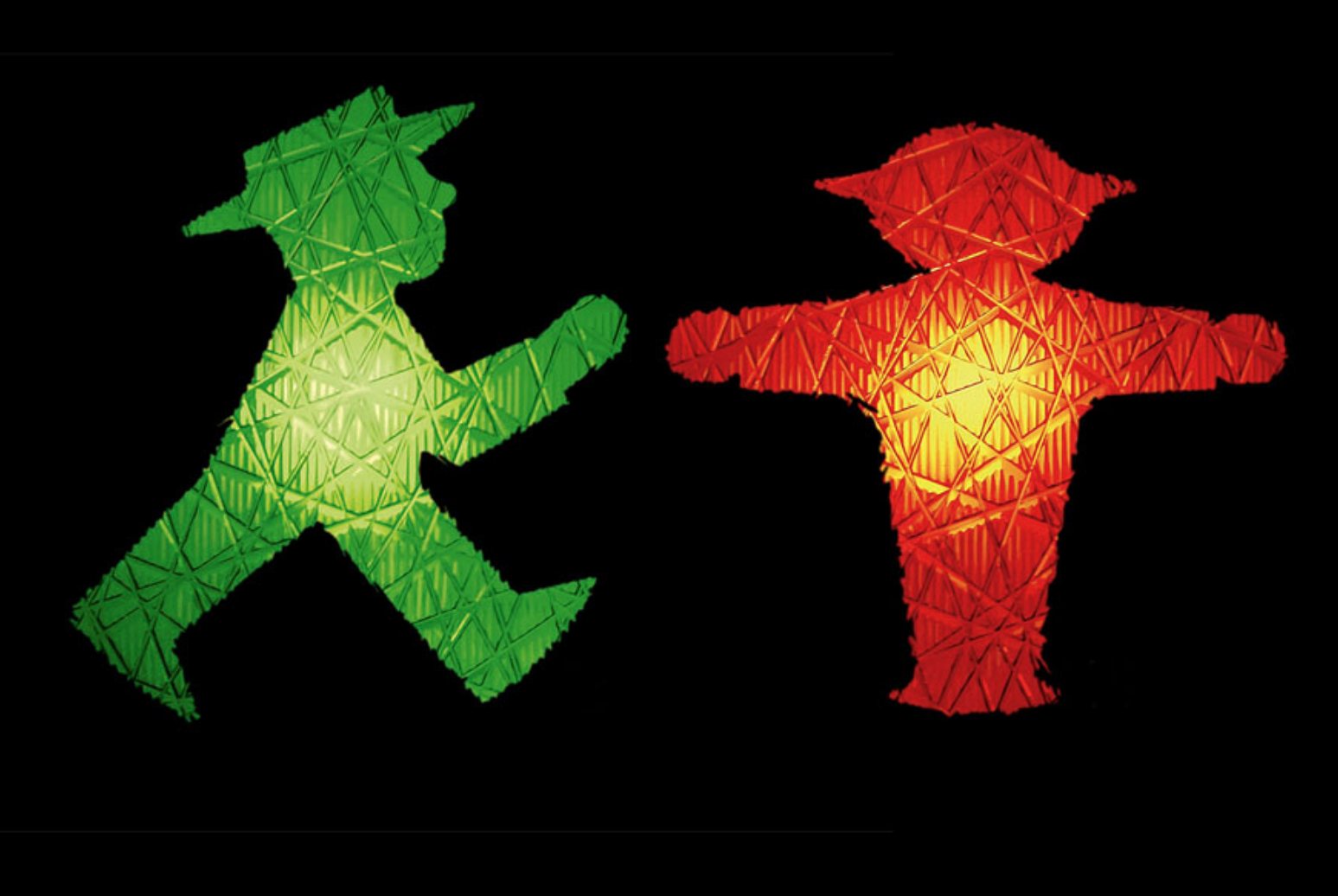
Freedom without security, security without freedom
The GDR should therefore be remembered neither as a lost socialist paradise nor as a forty-year waiting room for admission into the Federal Republic. Its greatest insight was that political freedom without material security remains an empty promise for many people. Its fatal delusion was the belief that material security could replace political freedom.
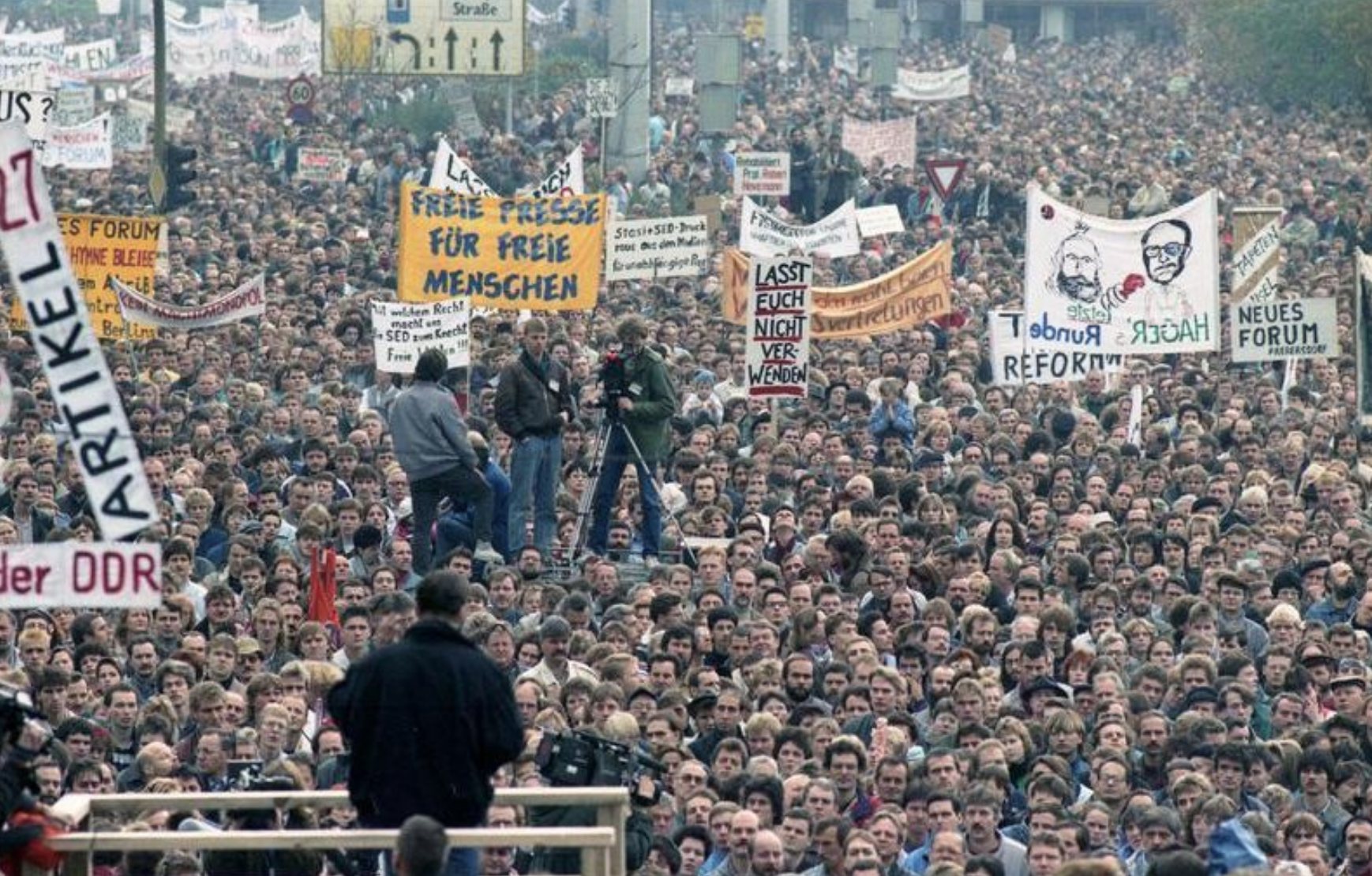
On October 7, 1949, the second Germany declared itself the true Germany. Forty-one years later, it disappeared, and the West German order expanded eastward. That did not prove that every promise made by the GDR had been false. The Wall deserved to fall, but affordable housing and accessible childcare did not deserve to be buried beneath it. Nor should the idea have disappeared that a woman must possess economic independence of her own, and that work should protect people from poverty. History decided which Germany would survive. It did not answer every question the other Germany had raised.
Sources
- Federal Ministry of Finance The founding of the East German state in 1949 https://www.bundesfinanzministerium.de/Content/EN/Video/History/founding-gdr/founding-gdr.html
- German History in Documents and Images Constitution of the German Democratic Republic (October 7, 1949) https://germanhistorydocs.org/en/occupation-and-the-emergence-of-two-states-1945-1961/constitution-of-the-german-democratic-republic-october-7-1949
- German Bundestag The German Democratic Republic (1949 - 1990) https://www.bundestag.de/en/parliament/history/parliamentarism/gdr/gdr-200348
- Konrad-Adenauer-Stiftung History of the GDR 1949 to 1990 https://www.kas.de/en/history-of-the-gdr-1949-to-1990
- Federal Agency for Civic Education Gleichberechtigung https://www.bpb.de/themen/deutsche-teilung/ddr-kompakt/521468/gleichberechtigung/
- DDR Museum The Palace of the Republic: Between Splendour and Controversy https://www.ddr-museum.de/en/blog/2023/the-palace-of-the-republic-between-splendour-and-controversy
- DDR Museum The East German traffic light man https://www.ddr-museum.de/en/blog/2016/what-remains-of-the-gdr-the-east-german-traffic-light-man
- Cambridge University Press Beginnings, Crises, and Reforms https://www.cambridge.org/core/books/abs/east-german-economy-19452010/beginnings-crises-and-reforms/745554D694207DA970B095F2ECE96461
Comments