
In a city that sells violence as heritage, the only being with no choice becomes the main attraction - and the ultimate measure of our humanity.
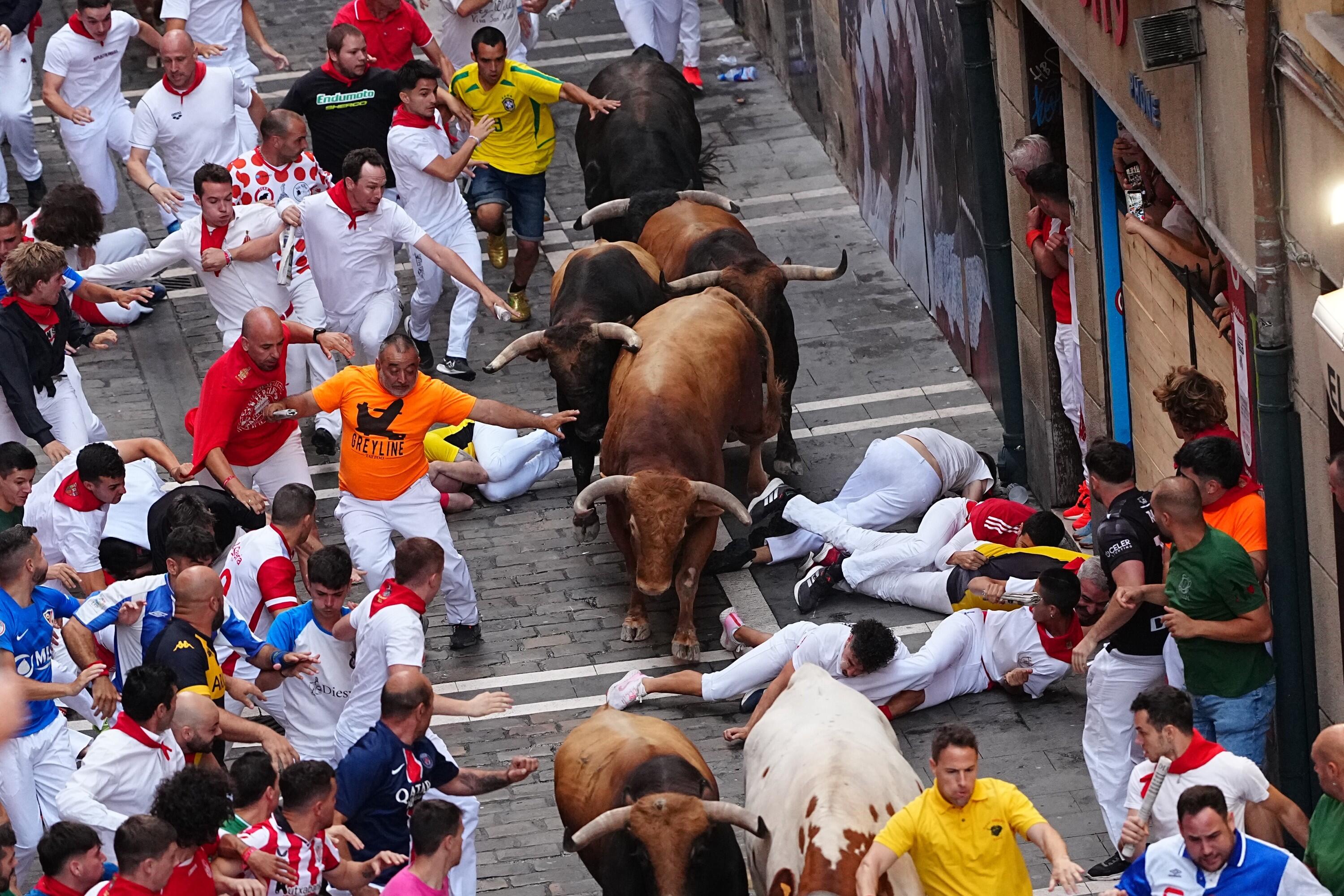
At eight in the morning, Pamplona looks like a city that has swapped its alarm clock for a rocket. People dressed in white, red scarves tied around their necks, crowd into the narrow streets of the old town. Then a gunshot cuts through the air, and six bulls charge toward the arena. When someone falls, the camera moves closer—especially when a horn finds flesh. Everything has been arranged down to the last wooden barrier, except for one small detail: the consent of the animal at the center of this cruel spectacle.
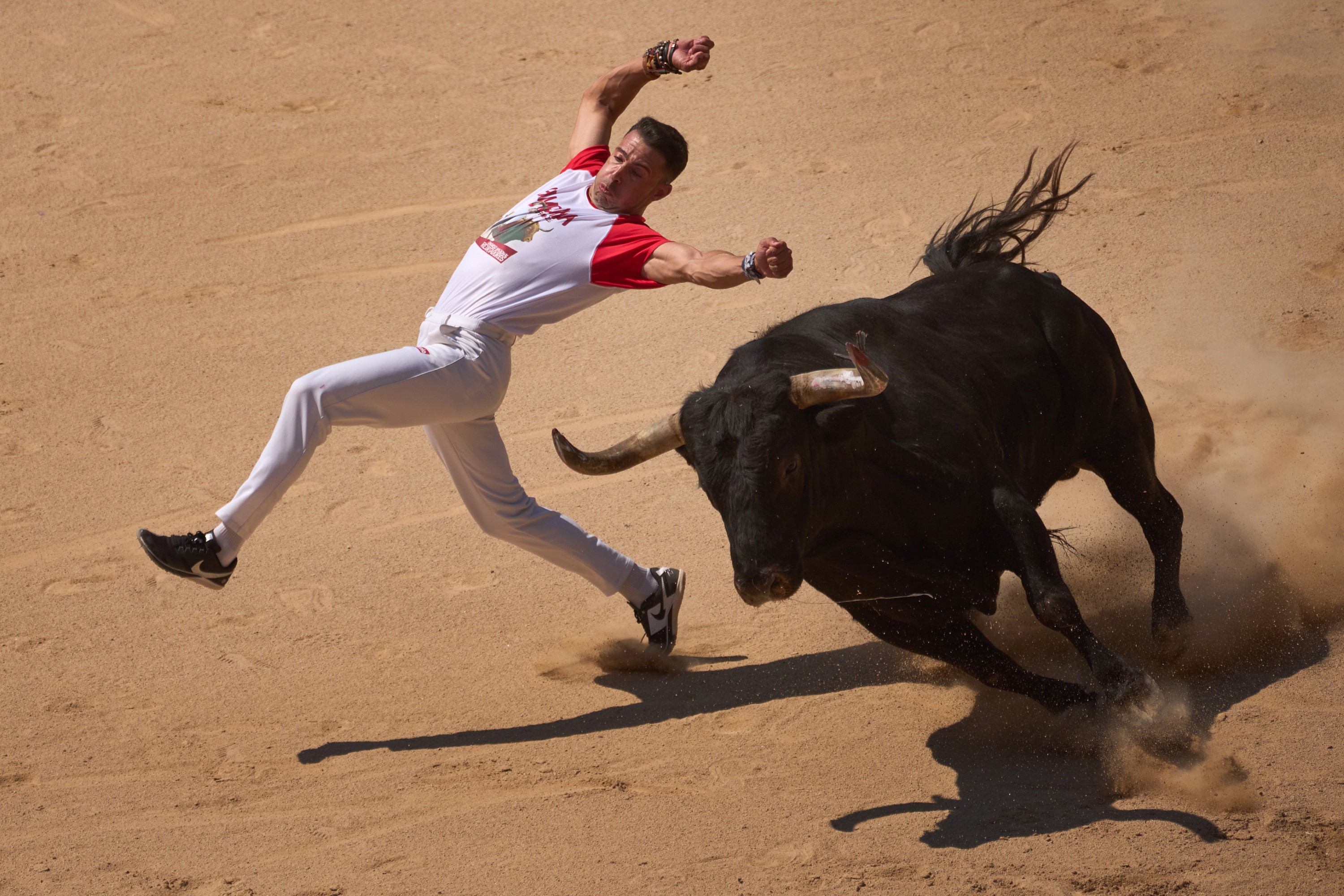
The most uncomfortable—and perhaps paradoxically the most humane—part of the entire scene is that many people secretly root for the bull. Not because they want to watch a human being die, but because it takes only a few seconds to grasp the moral architecture of the event. The runner came willingly. The spectator paid for a balcony, the organizer erected the barriers, and the television crew claimed the best angle. The bull chose neither the street nor its opponent, and certainly not the afternoon appointment with its own death. When it fights back, it does not look like an attack. It looks like a brief malfunction in a system rigged against it from the start.
The encierro takes place every morning from July 7 to 14. At eight o’clock, six fighting bulls, accompanied by tame steers that guide them, cover just under 900 meters from the Santo Domingo pens to the bullring. The entire run usually lasts around two minutes. This is where the tourist footage generally ends, as though the bulls then wander off for breakfast. They do not. The same animals enter the bullring later that day, where matadors kill them. The morning run is not a mischievous folkloric prelude to the festival—it is a procession toward an execution.
Defenders of the custom readily reach for the word "tradition," that elegant form of soundproofing so often used to muffle the suffering of others. The encierro does indeed have a long history. It developed from the practical need to move livestock into the city, and Pamplona’s municipal authorities note that local young men and butchers were already running in front of the bulls in the 16th century, defying official bans. But history explains how we arrived somewhere. It does not prove that we should remain there. The age of a custom may give it a patina, but not moral immunity.
Pamplona owes much of its worldwide fame to Ernest Hemingway, the American writer who turned the festival into one of the stages upon which he constructed his mythology of masculinity. His novel The Sun Also Rises was published in 1926, making this year its centenary. The book did not merely depict Pamplona—it sent new participants there for decades. Bill Hillmann, an American literature professor and Hemingway scholar, read it at the age of 19, decided to become both a writer and a bull runner, and went on to take part in hundreds of similar runs, despite once being nearly killed by a horn. Literature did more here than create atmosphere. It recruited bodies.
Hemingway’s achievement was not that he invented the violence, but that he helped give it style. The white clothes and red scarves, the stone façades, the bells and invocations of a saint transform an animal’s suffering into a cultural product. Were the same scene to unfold behind a warehouse, without music or municipal flags, few would defend it as heritage. But place it in a historic city center, add several centuries and enough tourism revenue, and cruelty acquires a logo. Civilization, among its many talents, is exceptionally gifted at designing attractive packaging for its own vices.
As early as 1789, Jeremy Bentham, the English philosopher and one of the founders of utilitarianism, reduced the question of humanity’s treatment of animals to a few words. What matters is not whether they can speak or reason as we do. What matters is this: "Can they suffer?" Pamplona goes to extraordinary lengths to avoid asking that question. Instead, it speaks of the courage of the runners, the skill of the matador and the "dignity" of the ritual. The moral spotlight follows the man in the red scarf, while the animal with no way out remains part of the scenery.
The danger to humans is real. Since official records began in 1910, 16 runners have died, the most recent in 2009. During the fifth run of this year’s festival, on July 11, one man was gored in the face and another 12 required medical attention. That is horrifying, but human suffering does not transform the event into a noble act. It merely reveals how badly the spectacle has been designed. The runner’s risk is voluntary and temporary. The bull’s is imposed and ends in death.
Secretly rooting for the bull, then, need not be an expression of sadism. More often, it is an instinctive rejection of a script that asks the audience to sympathize exclusively with the participant who had a choice. What stood out during this year’s run was how often the bulls tried to move through the crowd rather than seek people out. Some runners were simply pushed aside as the animals continued toward the arena. The creature we have declared violent often appears to be the only participant whose sole desire is to find a way out of this hell.
It is entirely possible to feel sympathy for a man pierced by a horn while understanding why moral concern shifts toward the bull. Maturity does not lie in choosing a single victim whose pain deserves our attention. It begins with acknowledging that the runner should never have been injured, but neither should the bull have been driven into the street, turned into a prop and then killed. The difference is that only one of those forms of suffering is built into the program.
Defenders of tauromachy like to speak on behalf of all Spain, as though a country of tens of millions shared a single red scarf. Yet the latest survey by Spain’s Ministry of Culture, covering 2024 and 2025, found that only around 8 percent of the population had attended one of these events during the year. That does not mean the custom lacks deep local roots. It simply means that the word "national" is often used as a megaphone for a minority taste. A tradition can be authentic and still be wrong. Authenticity has never been synonymous with innocence.
The most humane reform of San Fermín, therefore, is not a higher fence, a better medical team or another set of safety instructions for tourists. It is an empty route. The music can remain, along with the processions and fireworks. What need not remain is an animal whose terror supplies the entertainment with its essential thrill. Yet it immediately becomes clear that a tradition which collapses the moment cruelty is removed may never have been much more than cruelty with a dress code.
That is why it is not difficult to root for the bulls. What is harder is admitting that their only true victory would not be a human body lying in the street, but a July morning when no one drives them toward the arena.
Comments